PART 2 THE B&W DOCUMENT: RESEARCH

SOCIALLY COMMITTED B&W PHOTOGRAPHERS

Do your own research into the work of the socially committed B&W photographers discussed so far, both British (Exit Photography Group, Chris Killip, Nick Danziger, Bill Brandt) and American (Jacob Riis, Lewis Hine). Was this social documentary work their prime focus? How does it fit with other work done by these photographers? Make notes in your learning log or blog. (Open College of the Arts, 2014:34)

As I have previously researched the Exit Photography Group: https://nkssite5.photo.blog/category/coursework/part-2-the-bw-legacy/project-legacy-for-social-change/exercise-2-2-survival-programes/

and some of Bill Brandt’s work https://nkssite5.photo.blog/category/exercise-2-3-brandt/

which I add to a little here. Then I will look at those I’ve not researched before……

BILL BRANDT (1904-1983)

He had a multifaceted carer, shaped initially by a circle of friends in the surrealist movement in France, including spending time in the studio of Man Ray; he later moved into fine art photography.

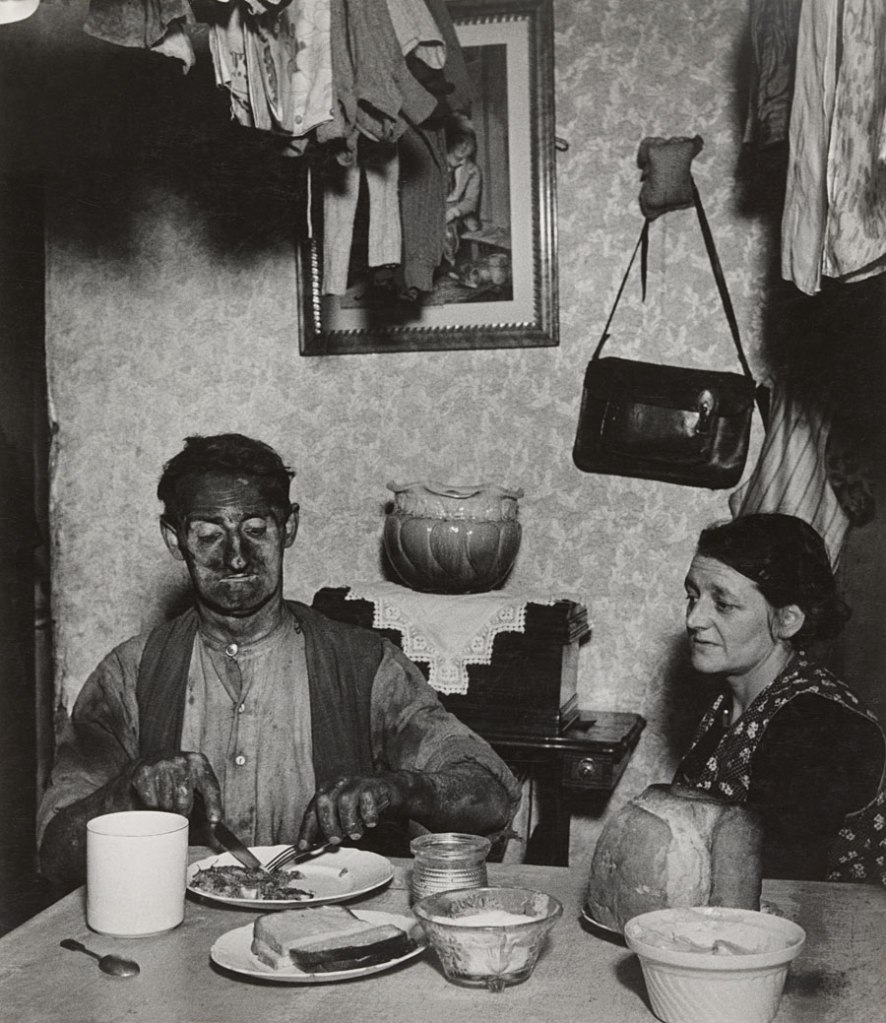
His work The English at Home exposed ironies in the British Class system (Johnson, 2012) and his book A Night in London also looks at the British class system. Brandt also photographed the depression compassionately in the North, especially the miners in Northumberland:
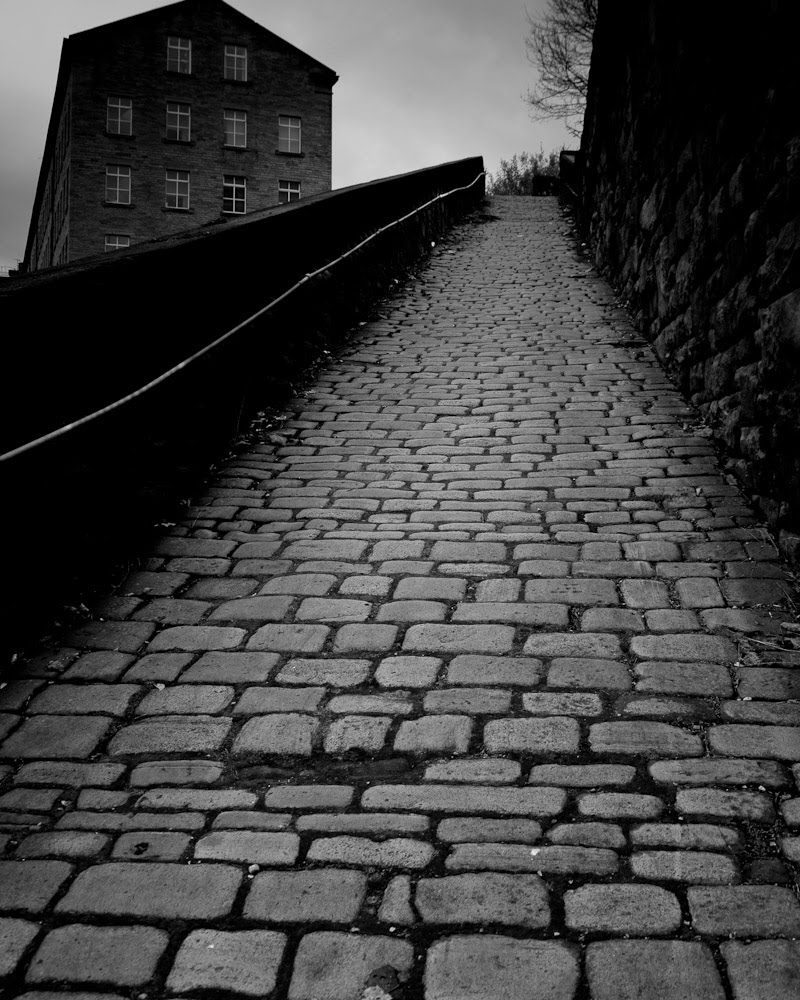
1937 A Snicket in Halifax (Bunyan, 2020)
Northumbrian Miner at His Evening Meal 1937 (Bunyan, 2020)

 He was commissioned to take photographs of the many underground bomb shelters during the second World War:
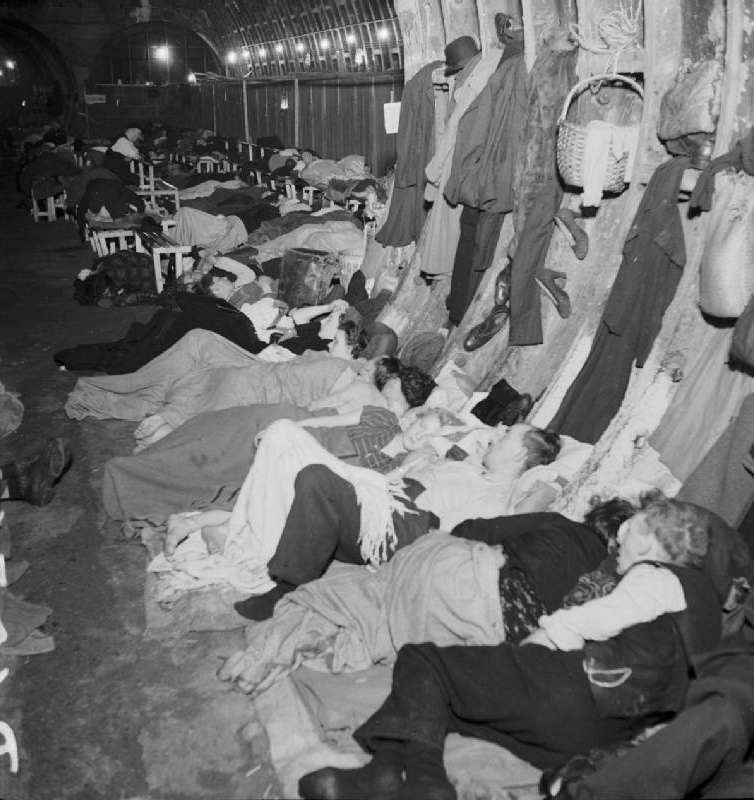
Liverpool Street Underground Station Shelter (Bunyan, 2020)

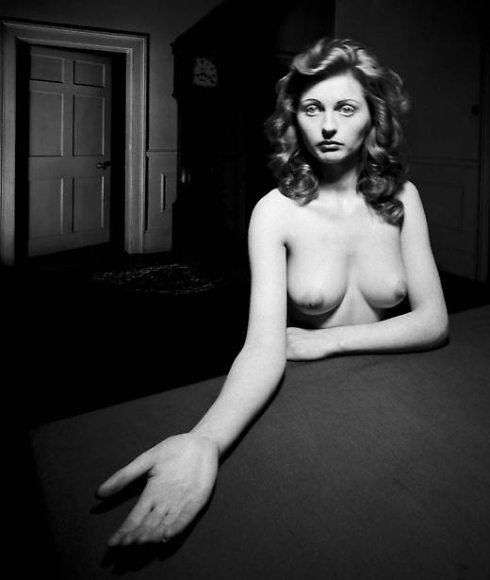
 After WW2 he investigated themes portraying poetic sensibilities displayed in contemporary art photography and as he increasingly arranged things for the camera, he took the nude from the studio and placed in domestic situations , even  on the beaches of England and France. He used a wide angle camera lens so that he could photograph whole rooms; and was recommended one but he found that it distorted and the images of distorted abstract nudes came from this accident, he describes them as abstract sculpture. His surrealist abstract photographs were not popular at the time but are now. He describes some of them as lucky finds but I believe it is down to his eye.

nude London 1952


(Bill Brandt, 2020)

However despite his photographs of the Depression and social class, I’m not convinced that his work went beyond the artistic portrayal of their sooty blackened bodies and wouldn’t label him as socially committed.

Chris Killip (b1946)

Photographed the heavily industrialised areas of the north during the 1972 and 80s, steel works, shipyards and coal mines; these were published in his book “In Flagrante” (1988). He spent a long time in a place whilst photographing, sometimes years, often in closed communities, but not always of those he knew. He says his photographs changed as he got to know people. He says “history is written, my pictures ae what happened” ( Smyth, 2017)     ). Killip says that he was interested in recording people as part of history rather than to blame politicians. He seems to me to be a socially committed photographer as he portrays in an unromantic straightforward way what he sees and knows from learning about a place and people.
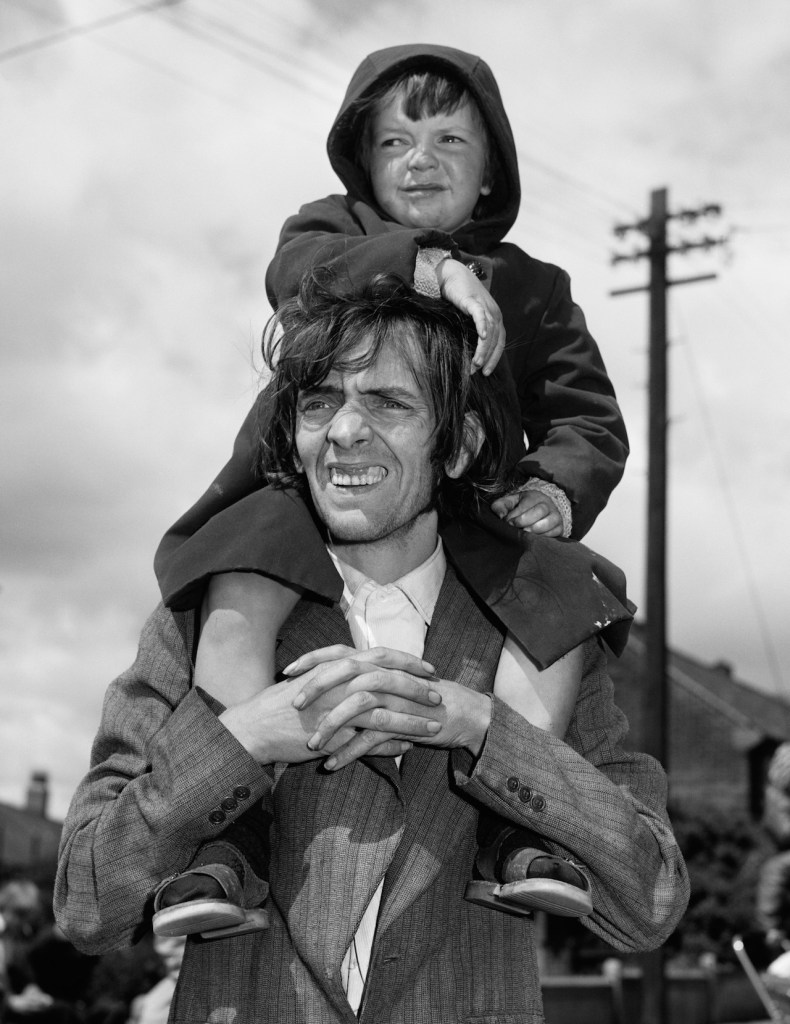
(Smyth, 2017)

Nick Danziger (b1958)

Danziger’s Britain was published in 1996, it focused on under privileged members of society; he lived among the homeless and unemployed in many of the ruined manufacturing “no-go” areas of Scotland, Wales, Northern Ireland and England where he slowly won the trust of the street children and got to hear the stories of hundreds of society’s outsiders; it was a powerful and disturbing documentary.  

The British (2001) contrasted the worlds of the upper and under class, showing the inequalities and polarisation in the upper and underclass; a vivid portrayal. In 2003 Danziger travelled with Times editor Peter Stothard for a month to document visually the Prime minister Tony Blair; here President George W. Bush and Blair make eye contact as if both are looking into a mirror, taken the day before American troops had entered Baghdad, this was an important document of history.

President Bush and Prime Minister Blair at Hillsborough Castle, 2003  (Nick Danziger | Widewalls, 2020)

He establishes close relations to his subjects, though not impartial; however he does aim to give those who rarely feature in the media a voice.  He believes that photography can bring positive social change for individuals and local communities.

He has done much of his work abroad often in war torn places, recording the ordinary people caught up in the conflicts; here you can see his social commitment.

References:

Bill Brandt (2020) At: https://www.houkgallery.com/exhibitions/bill-brandt-the-nude-a-centenary-exhibition?view=slider (Accessed 19/05/2020).

Bill Brandt | The Nude: A Centenary Exhibition – Exhibitions – Edwynn Houk Gallery (2020)

Bunyan, D. M. (2020) Bill Brandt Packaging Post for the War – Art Blart. At: https://artblart.com/tag/bill-brandt-packaging-post-for-the-war/ (Accessed 19/05/2020).

Johnson, W. et al. (2012) A History of Photography: From 1839 to the Present. Taschen.

Nick Danziger | Widewalls (2020) At: https://www.widewalls.ch/artists/nick-danziger (Accessed 06/07/2020).

PhotoVoice (2016) Ten Questions with… Nick Danziger – Ethical photography for social change | PhotoVoice. At: https://photovoice.org/10-questions-with-nick-danziger/ (Accessed 06/07/2020).

Rob Hooley (2013) Bill Brandt BBC Master Photographers (1983). At: https://www.youtube.com/watch?v=o3KuY0quBsk (Accessed 19/05/2020).

Smyth, D. (2017) Now Then: Chris Killip and the Making of In Flagrante. At: https://www.bjp-online.com/2017/06/now-then-chris-killip-and-the-making-of-in-flagrante/ (Accessed 06/07/2020).

NEXT POST: https://nkssite5.photo.blog/category/coursework/part-2-the-bw-legacy/project-legacy-for-social-change/exercise-2-5-marcus-bleasdale/

PART 2 THE B&W DOCUMENT: LEGACY FOR SOCIAL CHANGE

Exercise 2.4 Discussing Documentary

Read the introduction and first section (pp.105–10) of the article ‘Discussing Documentary’ by Maartje van den Heuvel (Documentary Now! 2005). Write a short summary in your learning log. (Open College of the Arts, 2014:33).

Mirror of visual culture

A summary:

The author believes that the debate about documentary in an art context should take visual literacy as a starting point to enable the value of documentary photography in art to be better assessed; are these practices effective and legitimate or has the border into fiction been blurred too much?

  • Much of our experience is not direct but found through the media so we are becoming more visually literate and able to interpret things
  • Documentary images are part of a wider movement including journalism, advertising, games, pop culture and film where art is functioning increasingly as a mirror of visual culture

The author reviews the classical documentary tradition and then shares examples that show a documentary remix, as artists free themselves from traditional documentary images:

  • 2 historical visual traditions: Western Anglo-Saxon human-interest film and photography and the Eastern Communist/socialist Russian and German.
  • Documentary as a militant eyewitness, from around 1900: Jacob Riis (1849-1914), Lewis Hine (1874-1940) with reformist ambitions
  • Documentary was connected to film, when John Grierson designated a film non-fiction. Documentary as a realistic counterpart to fiction as film a recorder of social conditions: FSA, Walker Evans, Dorothea Lange. Magazine images in Life, Picture Post magazines, and the investigations of the Magnum agency.
  • Documentary as a picture tradition in communist and socialist countries to support revolution for the working class.
  • Documentary for left wing activism in the 50s and 60s with coarse grainy black and white 35 mm film images
  • Documentary as art as from the 1970s moved from a belief in realism and transparency with the easy accessibility of TV and advertising in different forms as people learnt that media images could be manipulated. A move away from the traditional black and white grainy images previously associated with authenticity awareness of subjectivity in documentary
  • Documentary with technical, stylistic or narratives, sharp detail and colour: Thomas Struth, Andreas Gursky and Thomas Ruff. This included functional directions such as topographical or architectural photography.
  • Documentary with social narratives: martin Parr on the middle class, Karen Knorr on the wealthy. Nan Goldin on her own surroundings
  • Documentary with depth: Allan Sekula’s project on economic and trading routes, Fazel Sheikh on people (Ramadan Moon). Giles Peress on the genocide in Rwanda (The silence)
  • Documentary photographers focusing on the publicity and distribution channels of photography: Susan Meiselas on Kurdistan (In the shadow of history)
  • Documentary using inside knowledge: Julian Germain collaborating with Don McCullin (Steelworks)
  • Documentary questioning images: Hiroshi Sugimoto on how the suggestion of reality is constructed, and any artificiality that simulating documentary images in artificial surroundings such as waxworks and any artificiality that suggest reality
  • Documentary that is staged: Jeff Wall imitating media pictures.
  • Documentary through re-enacting: Pierre Huyghe Third Memory; it has three layers of time and imagery, original journalistic media about a bank robbery, the 1975 film (Dog day Afternoon) and his own images of a re-enactment of the robbery. Christoph Draeger (Catastrophes) where he imitates disaster scenes, and his Black September on the terrorist hijacking and murder of Israeli athletes during the 1972 Olympic games

The author suggests though the artists differ as to how much their work reflects upon he documentary tradition, what these works have in common is that they analyse and comment on the structure and effect of documentary images in the mass media which testifies to increased visual literacy amongst the artists and appeals to the viewers to be visually aware also.

MY LEARNING

  • I should consider carefully visual literacy and how much the viewer has.
  • It was really useful to have these suggested stages/categories of documentary set out, it helps to clarify things for me. I may use this as a starting point to develop some ideas for assignment 2, in particular to research further, documentary as art and manipulation and documentary for questioning images.

Reference: Open College of the Arts (2014) Photography 2: Documentary-Fact and Fiction (Course Manual). Barnsley: Open College of the Arts.

NEXT POST: https://nkssite5.photo.blog/category/research/a2-research/socially-committed-photographers/

PART 2 THE B&W DOCUMENT: LEGACY DOCUMENTARY FOR SOCIAL CHANGE

Exercise 2.3

Read ‘Bill Brandt’s Art of the Document’ by David Campany. Write a short summary in your learning log. How did B&W become such a respected and trusted medium in documentary? (Open College of the Arts, 2014:32).

 (The Met, 2020)

 This article illustrates how on image can play different roles at different times especially when presented in different ways, or as Company calls it “mobile images” (Company, 2006: p51). It also gives an insight into the career of Bill Brandt.

The image that the article discusses is shown above “Parlour maid and under-parlour maid Ready to Serve Dinner”. It first appeared in Brandt’s first book “The English At Home” (1936) a pictorial survey across the social classes. The book presents images from across a social divide through pairings of images, though it is not an in your face revolutionary document as the previous work I discussed “Survival Programmes: In Britain’s Inner Cities”, Brandt clearly presented these disparities in one book for a viewer to see if they wished to see. Company calls this “poetic realism” pictorial artfulness that tried to assume social authority. However, in this one image in particular you can see the tension between classes contained in one photo. Company says that The English at Home was a picture of the English that they struggle to recognise themselves (Company, 2006:54).

In 1938 Brandt published in Verve photo- essay styled as “day in the life of” though this image was not included essay style, possibly as he thought the image too powerful; these images work together but not on their own. After the 1940s Brandt moved away from the photo-essay either to singular images or those juxtaposed to add strength to his meaning. This image was reprinted in “Shadow of Light” (1966) and placed opposite an image of a Kensington drawing room, emulating the juxtaposed images in his 1936 book.

I was interested to read that Brandt changed to a more surrealistic approach to the photographic document as he was not convinced that a photograph could give straightforward social description and was wary of its use for social reform. Surrealists approached documentary in a more ambiguous way leaving more room for viewers to make their own responses. Company explains how Brandt is sometimes viewed as a historical and sometimes a contemporary artist, sometimes a documentary photographer and sometimes and artist though he would call him documentary artist.

I’m not sure how this article relates to the back and white document, though it does mention that black and white defines the details in a photograph. Also, perhaps to say that there is no such thing metaphorically as a black and white image and that as Brandt always worked in black and white. It has however reopened my eyes to Brandt’s work and reminded me of the fluidity of images over time.

MY LEARNING

  • Remember the ability of a photograph to be presented for different purposes
  • Research Brandt further
  • Research Surrealist photographers further

References:

Bill Brandt | Parlour maid and Under-Parlour maid Ready to Serve Dinner | The Met (2020) At: https://www.metmuseum.org/art/collection/search/265464 (Accessed 14/05/2020).

Company, D. (2006) The career of a photographer, the career of a photographer: Bill Brandt’s art of the document

Open College of the Arts (2014) Photography 2: Documentary-Fact and Fiction (Course Manual). Barnsley: Open College of the Arts.

NEXT POST: https://nkssite5.photo.blog/category/project-psychographies/exercise-2-4-discussing-documentary/

PART 2 THE B&W DOCUMENT: LEGACY DOCUMENTARY FOR SOCIAL CHANGE

Exercise 2:2 Survival programmes

Read the article ‘Survival Programmes’ in Eight magazine (V5N1, June 2006). (Open College of the Arts, 2014:32).

Between 1974 and 1979 three British photographers Nicholas Battye, Chris Steele-Perkins and Paul Trevor set up the Exit Photography Group to record life in some of Britain’s inner-city areas. This work was published their work in the book Survival Programmes in Britain’s Inner Cities (1982). They chose black and white photography as they thought its seriousness and visual authority would add to the seriousness of their message of the need for social reform for race, religion, class and justice. the medium would strengthen the message.

In aiming to create a lasting testimony that would resonate beyond the immediate political circumstances of the time, the three Exit photographers developed a complex and multi-layered response to the situation” (Survival Programmes: In Britain’s Inner Cities – Exit Photography Group, 2020).

All images © Nicholas Battye, Chris Steele-Perkins or Paul Trevor

Sharing the same position that inner city poverty was endemic and leading to social disorder, they used oral evidence (people’s interviews) to capture such experiences. They worked in different cities, contacting community groups, walked around deprived districts, talked to people on the streets, and knocked on doors; Nicholas Battye commented that back then people were happy to talk to photographers. The images were sequences from frustration to anger on 4 chapters: through growth, promise, welfare to reaction. The book gave the same space to the interview transcripts as images, which they discussed and chose from together. I was interested to learn that they shot in black and white to save money. Their work certainly brought viewers really close to the truth.

MY LEARNING POINTS

  • Although times were different then they still must have worked hard to build relationships and trust with the communities that they photographed to get so close to them
  • Reminds me again of the responsibility of the photographer to shoot with Integrity, the images are intimate but respectful.
  • The benefits of working as a team and having a shared ethos
  • The impact that sharing the truth can have when laid bare

References:

New Writing: Exit Photography Group | Photoworks (2014) At: https://photoworks.org.uk/exit-photography-group/ (Accessed 13/05/2020).

Open College of the Arts (2014) Photography 2: Documentary-Fact and Fiction (Course Manual). Barnsley: Open College of the Arts.

Survival programmes in: Ei8ht magazine 5 (1) pp.12–19. Available online at: https://www.oca-student.com/sites/default/files/Foto85.1_SurvivalProgrammes.pdf (accessed 13.5.20)

Survival Programmes: In Britain’s Inner Cities – Exit Photography Group (2020) At: https://www.amber-online.com/collection/survival-programmes/ (Accessed 13/05/2020).

NEXT POST: https://nkssite5.photo.blog/category/exercise-2-3-brandt/

PART 2 THE B&W DOCUMENT: LEGACY DOCUMENTARY FOR SOCIAL CHANGE

Exercise 2.1

Read the 1939 article on documentary photography by Elizabeth McCausland. Write a short bullet list of McCausland’s main points in your learning log. Explain in your own words, in a single paragraph, why this article is relevant to this part of the course. (Open College of the Arts, 2014:31)

Notes on Elizabeth McCausland’s article:

  • Documentary photography has arisen from “creative impulses”
  • It uses photography to chronicle the external world, to expose serious issues, unlike previous applications which were comparatively romantic
  • Documentary photography uses realism using new eyes
  • Facts are more important to represent than a photographer’s personality though he can control the aesthetics by giving the facts a form
  • There are many opportunities for publishing honest images of everyday life
  • The work of the Farm Security Administration and the Federal Art Project “changing New York” series by Bernice Abbott ae the strongest precedent for documentary photography as the government has been the best sponsor of knowledge
  • Photography may have been confused with painting, is it art for instance; however, it is bound to realism, photographs give us truth.
  • Society now wants truth and even in art wants content and something that has something to say to an audience.
  • Photography can reveal much all at once and is not limited
  • Every subject is significant, and a documentary photographer should use technical ability to present in a simple and modest way the wider world, to inform people in a serious and sometimes shocking way.

My response: The premise of McCausland’s beliefs about documentary photography are that truth and honesty are paramount and that this takes precedence above a photographer expressing his personal voice. It must be recognised that this comes after the relaxed period of the 1920s before the serious times of WW2.

Nevertheless, this is mostly how documentary photography is perceived today. Truth, honesty and a message to communicate in the work holds true. I do believe however that we are now aware that it is naïve to believe that camera cannot lie and that a documentary photographer will always present absolute facts; in fact even in the work of the FSA cited as an exemplar by McCausland editorship and purpose was used to drive a certain narrative. Today we are more alert to the possible influences of purpose, editorship, audience and presentation on the bald facts. This article does however remind me of the importance of holding to an intention and my responsibility to the subject as a documentary photographer.

References:

McCausland, E. (1939) ‘Documentary Photography’ At: https://www.oca-student.com/sites/default/files/oca-content/key-resources/res-files/photonotes.pdf

Open College of the Arts (2014) Photography 2: Documentary-Fact and Fiction (Course Manual). Barnsley: Open College of the Arts.

NEXT POST: https://nkssite5.photo.blog/category/coursework/part-2-the-bw-legacy/project-legacy-for-social-change/exercise-2-2-survival-programes/

PART ONE INTRODUCING DOCUMENTARY: MY LEARNING

Project Defining documentary:

  • Don’t set limitations as they create preconceptions
  • Boundaries of documentary are being pushed already
  • Be aware of factors that may distort the purpose of images

Project What makes a document?

  • Walton: On the nature of photographic realism – photography as a way of showing and seeing rather than just representing, we see the world through the photograph
  • Every photograph is a document but with time can be more
  • Photographs have a message about the event/subject photographed and a message about the shock of discontinuity (separation from context), this makes all photographs ambiguous (Berger)
  • Photographs are often used with words to fill this broken continuity
  • The general meaning of an image is not instantaneous but is found during connections (Berger).
  • The truth in a photograph may be limited by the photographer

Project A postmodern documentary

  • Postmodernism provides a new framework for considering photographic truth and objectivity
  • Consider my intentions when photographing and remember my responsibilities to truth
  • When accessing truth and objectivity remember to consider all influences, cultural, contextual, editorship…
  • Photojournalism should show the intention of the photographer
  • Quieter stories can be effective
  • Embrace a broader view of photojournalism

Next post: https://nkssite5.photo.blog/category/research/a1-research/a1-own-research/

PART 1 INTRODUCING DOCUMENTARY: A POSTMODERN DOCUMENTARY

Exercise: A decisive moment

Read Simon Bainbridge’s article on the 2011 Hereford Photography Festival. Core resources: Hereford_Bainbridge.pdf. Select one of the bodies of work in the article and write a 200-word reflective commentary in your learning log. (Open college of the arts, 2014:30)

Simon Bainbridge’s Time & Motion Studies presents work that results from deliberate and sustained observation. The five photographer’s concepts with carefully considered strategies are more prominent than their aesthetics. They are communicating ideas about subjects that aren’t necessarily photogenic. Each work has appeared in the British Journal of Photography.

Donald Webber’s Interrogations are real ones of suspected criminals in Ukraine, ‘the result of his personal quest to uncover the hidden meaning of private, unpleasant encounters with unrestricted Power.’ For this Webber worked hard to access to his subject.

Robbie Cooper’s work Immersion is acollection of stills and videos that show the various expressions appearing on people’s faces as they play video games and watch YouTube. In this case Cooper collaborated with psychologists and learnt new technologies to capture his images.

Manuel Vasquez work Traces is based on surveillance culture, images captured mainly in anonymous public places.

I was most interested in the work of George Georgiou (The Shadow of The Bear, 2009-10) and that of his partner Vanessa Winship (Georgia 2009-10) as they shot in the same places at the same time but with completely different agendas.

Georgiou’s project looks at the aftermath of the peaceful ‘colour’ revolution that took place in Ukraine, against a backdrop of Russia resurging as a major international power and is interested in the ongoing interference in both their sovereign and domestic affairs. It shows how people of Georgia and the Ukraine negotiate the space that they find themselves in, individually though with their shared history in the Soviet Union. Georgiou, whilst staying hidden, captures people in their everyday lives and shoots repeatedly from the same vantage point. If there is a decisive moment in his work it comes when he edits from hundreds of his images. The images are sequential but he disrupts the sequences when he presents them, another way that he forms decisive moments.

(IN THE SHADOW OF THE BEAR, 2020)

Vanessa Winship shoots the same subjects but in the open, with their knowledge and usually engages them with a direct stare seeking a connection. Her subjects are usually shot with minimal context and look vunerable. Winship describes their existence as a “Kind of fantasy of sorts” as “there is a kind of melancholia, an underbelly that almost inevitably sets itself against such exuberance”; this is especially so when she visits after a summer of war .

“I found my friends exhausted but very much alive, alive in a way that is only possible when one is so close to the possibility of death” (Agence, 2020). Against this backdrop she says that she searched for those that represented this romanatic fantasy, dancers, wedding guests and so on. Her work explores memory, identity and history (Agence, 2020).

My work explores concepts of borders, land, memory, desire, identity and history,” wrote Vanessa Winship in 2011. She is a thoughtful photographer who moves between genres – reportage, documentary, portraiture, landscape. Her most memorable images are quiet and luminous.

(Agence, 2020)

I find Winship’s work reflective in a melancholy and enigmatic way both on the place and the people. Whilst I find Georgiou’s work more brutal and honest possibly. The work of these two photographers illustrates how motive affects the way that subjects are captured, edited and presented to form the decisive moment in their work.

References:

Agence, V. U. (2020) Georgia, A small piece of Eden – Winship / Agence VU. At: https://www.agencevu.com/stories/index.php?id=697&p=148 (Accessed 01/05/2020).

IN THE SHADOW OF THE BEAR, UKRAINE | prospekt | photographers (2020) At: http://www.prospektphoto.net/stories/george-georgiou-in-the-shadow-of-the-bear-ukraine/ (Accessed 01/05/2020).

Open College of the Arts (2014) Photography 2: Documentary-Fact and Fiction (Course Manual). Barnsley: Open College of the Arts.

Next, listen to Jon Levy, founder of Foto8, talking about documentary in the art gallery at http://oca-student.com/node/100127 Note down your reactions to Levy’s comments in your learning log (Open college of the arts, 2014:30).

Jon Levy on the intention of the photographer

He talks about the intent of the magazine Foto8 being about storytelling, not fictional but as reports of issues that are out there. His main criteria for photojournalism is being able to see the intention of the photographer, and this before the work is presented; this for him is the judge of whether a photograph is photojournalism. He suggests that bringing in work that isn’t obvious photojournalism is useful (for instance local, personal stories) as they can initiate a wider understanding of photojournalism. Sometimes the quieter and sometimes emotional stories can reveal important issues and connect more. Levy says it’s how they work that really matters, rather than how they look, that should decide whether they are photojournalism. Photojournalism has tended to be a western view of the rest of the world, but this shouldn’t necessarily be so; the trend for vernacular photography, which can be at home not in the rest of the world can be effective. Levy suggests that if you want to tell a story whether you have your own point of view or bring an outside point of view, both are equally valid. Accessibility has broadened photography and gives more points of view and different perspectives which can only be good.

A summary of Levy’s perspective:

  • Its an interesting comment that photojournalism should clearly show the intention of the photographer.
  • Quieter stories can be equally effective at revealing issues and connect with viewers better.
  • It is how stories work that is important; I guess whether they work or not rather than whether they are conventional photojournalism.
  • Photojournalism should just be that that is viewed as a Western view of the world.
  • Both inside and outsider views are equally valid for photojournalism.
  • We should embrace the broadened view of photojournalism that greater accessibility brings.  

My thoughts:

I don’t feel qualified at the beginning of this course and my first forays into documentary photography to do much except take notes of these ideas. However going forward I will take serious note of the importance of showing the intention of my work, and comfort in the notion that quieter can be good at revealing issues and connecting with an audience, and to be aware that t is how stories work that is important.

References:

Open College of the Arts (2014) Photography 2: Documentary-Fact and Fiction (Course Manual). Barnsley: Open College of the Arts.

In Transit (2020) Hereford Photography Festival. At: http://georgegeorgiou-intransit.blogspot.com/2011/10/hereford-photography-festival.html (Accessed 01/05/2020).

Next post: https://nkssite5.photo.blog/category/learning-log-research-and-reflection/reflection/a1-reflection/a1-my-learning/

PART 1 INTRODUCING DOCUMENTARY: A POSTMODERN DOCUMENTARY

EXERCISE: THE MYTH OF OBJECTIVITY

Write a 250-word reflective commentary on the above quotes by André Bazin and Allan Sekula. Briefly compare their respective positions and record your own view on the issue of photographic objectivity (Open College of the Arts, 2014:28)

This is the quote supplied from André Bazin:

 “For the first time, between the originating object and its reproduction there intervenes only the instrumentality of a non-living agent. For the first time an image of the world is formed automatically, without the creative intervention of man…in spite of any objections our critical spirit may offer, we are forced to accept as real the existence of the object reproduced, actually, re-presented…” (Bazin and Gray, 1960).

 In this article Bazin compares the differences between film/photography and painting/sculpture, asking “what are they?” and “what do they mean?” He was particularly interested in the nature of reality, and thought that painting and sculpture could only represent with expression, and so might not be realistic. Though he admitted the presence of the personality of the photographer and that their option to choose their purpose for photographing; Bazin sees the process as scientific rather than artistic, that it reproduces reality, and that the camera is objective  (through an object), credible and without evidence of the human hand. He also sets out that photography is able to present something in such a realistic way that y0u will look at it afresh.

This is the quote from Allan Sekulla:

If we accept the fundamental premise that information is the outcome of a culturally determined relationship, then we can no longer ascribe an intrinsic or universal meaning to the photographic image.” (Sekula, 1997, p454).

He believes that every photograph carries a message, and this is dependent on its cultural definition as information is a culturally determined relationship. He says that photographic literacy is learned and semantic properties cannot live in the image alone and therefore you can’t ascribe a universal meaning to a photograph.

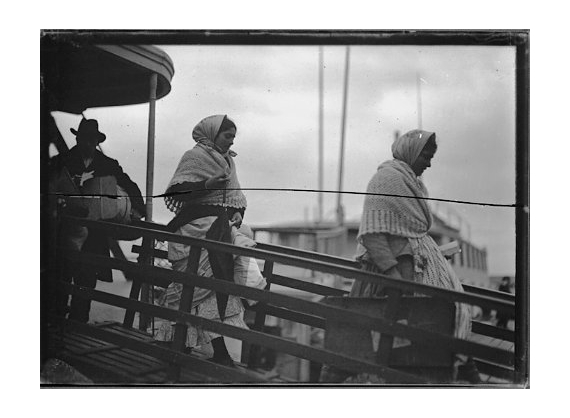
To illustrate his belief Sekula deconstructs Stieglitz’s photograph “Steerage” (1911) alongside Lewis Hine’s “Immigrants going down the gangplank” (1905) to show the effect that context and culture/ history have on the meaning of an image.

(Stieglitz, 2020)    

(Hine, 2020)

Their subject matter is very similar but Sekula argues that the social and historical contexts of the photographers were different and therefore so were their intentions. Stieglitz’s “Steerage” was first published in Camera work magazine where photographs were considered artistic. On the other hand Hines was a Sociologist, Sekula describes him as an aesthetic realist, and his photograph appeared in a social-work journal. Sekula describes Hine’s as more like a report, but even so Sekula notes that he is expressing concern rather than just documenting fact. Sekula refers much to Barthes and in doing so points out that as the conative function of a photograph may be culturally determined it may sometimes give a photograph the status of a document.

My view:

The positions of Bavin on the status of the photograph “we are forced to accept as real the existence of the object reproduced, actually, re-presented…”(Bazin,1945, p7) and Sekula that information is the outcome of a culturally determined relationship, then we can no longer ascribe an intrinsic or universal meaning to the photographic image(Sekula, 1997, p454) are quite different.

Having read them I am directed back to Berger who asked, whether photographs are an artefact, or a trace left by light that has passed through an object (Berger, 2013).

I cannot share Bavin’s view, and that commonly held at the time when documentary photography was in its golden age that a photograph is an unquestionable true representation of something. Bavin is excluding from the photographic process the effect of purpose, preparation, subjective capturing and processing; and this is increased now by digital and citizen photography and journalism. The photographic image is also biased by Editors and Curators, amongst others post shooting. However it is still true that many viewers are unaware of the potential for the bias in photographs outside manipulated processing.

I think like Sekula that it is actually more complicated than art photography versus documentary photography in terms of an image’s realism or expressionism. As genres become blurred we must be aware of all the influences acting on an image including cultural and contextual when we are assessing objectivity.

References:

Alfred Stieglitz/ The Steerage  | 33.43.419 | Work of Art | Heilbrunn Timeline of Art History | The Metropolitan Museum of Art (2020) At: https://www.metmuseum.org/toah/works-of-art/33.43.419/ (Accessed 09/03/2020).

Barthes, R 1964, ‘Rhetoric of the Image’, in J Evans, S Hall (eds.), Visual Culture:the reader, Sage PublicaEons, London

Bazin, A. and Gray, H. (1960) ‘The Ontology of the Photographic Image’ In: Film Quarterly 13 (4) pp.4–9. 

Berger, John. (2013). Understanding a Photograph. 1st ed. New York: Aperture Foundation

Hine Lewis | Immigrants Going Down Gang Plank From Ferry Boat That Lands Them On Ellis Is. | MutualArt 2020.) At: https://www.mutualart.com/Artwork/Immigrants-Going-Down-Gang-Plank-From-Fe/18423F7C3CBB7E61 (Accessed 09/03/2020).

Open College of the Arts (2014) Photography 2: Documentary-Fact and Fiction (Course Manual). Barnsley: Open College of the Arts.

Sekula, A ( 1997) ‘On the Invention of Photographic Meaning’, 1997, p.454) At: https://zscalarts.files.wordpress.com/2013/12/on-the-invention-of-photographic-meaning-sekula.pdf (Accessed 10.3.20)

Next post: https://nkssite5.photo.blog/category/coursework/part-1-introducing-documentary/a-postmodern-documentary/exercise-a-decisive-moment/

PART 1 INTRODUCING DOCUMENTARY: A POSTMODERN DOCUMENTARY

Exercise: In and around afterthoughts

Read the article ‘In, Around and Afterthoughts (on Documentary Photography)’ by Martha Rosler in Bolton, R. (ed.) (1992) The Contest of Meaning. Cambridge, MA: MIT Press (p.303). This is available as a core resource on the student website at: http://www.oca-student.com/resource-type/course-specific-resources/contest-meaning-pg-303. Make notes in your learning log or blog. (Open College of the Arts, 2014:27)

Notes:

Rosler asks “how can we deal with documentary photography as a photographic practice and what remains of it now?” (Rosler,1992:333).

Documentary came to represent the social conscience of liberal sensibility presented in visual imagery and had its place in a war on poverty as journalist attention was brought to working class lives and slums; although it was often perceived as muckraking and obtained by unethical means.

Documentary photography may have appeared moralistic and yet the notion of charity that it inspired actually preserved wealth was not at odds with reformist documentary which argued for giving a little to subdue the dangerous lower classes, but was essentially victim photography.

Rosler cites Szarkowski who said that a generation ago documentary photographers were serving a social cause to persuade others to make things better but were then superseded by those who used the approach and manipulated for their personal ends; liberal documentary looking for change was in the past Rosler agrees. She calls for a “radical documentary that exposes.

Rosler states that a documentary image has 2 moments, the immediate and then the conventional aesthetic-historical moment, as your response to an image is rooted in social knowledge.

Susan Meiselas (a photographer who worked for magnum and covered the war in Nicaragua) as a response to Rosler’s comments suggests documentary practise was contaminated by underlying assumptions of imperialism and colonialism and couldn’t ever be radical (Strauss, p15). Meiselas also suggests that Rosler relies on assumptions of how documentary work is actually received (Strauss p 17).

The liberal pseudo reformist documentary that exposed poverty and slums has now gone and has been replaced by documenting other issues. However reading her essay has made me think harder about my intentions when I photograph and the responsibility that a photographer has.

References:

Open College of the Arts (2014) Photography 2: Documentary-Fact and Fiction (Course Manual). Barnsley: Open College of the Arts.

Rosler in Bolton, R. (ed.) (1992) The Contest of Meaning. Cambridge, MA: MIT Press (p.303).

Strauss, D., 2014. Words Not Spent Today Buy Smaller Images Tomorrow. new york: aperture.

Next post: https://nkssite5.photo.blog/category/coursework/part-1-introducing-documentary/a-postmodern-documentary/exercise-the-myth-of-objectivity/

PART ONE: INTRODUCING DOCUMENTARY – WHAT MAKES A DOCUMENT?

EXERCISE: DISCONTINUITIES

Make a selection of up to five photographs from your personal or family collection. They can be as recent or as old as you wish. The only requirement is that they depict events that are relevant to you on a personal level and couldn’t belong to anyone else. Using OCA forums such as OCA/student and OCA Flickr group, ask the learning communities to provide short captions or explanations for your photographs. Summarise your findings and make them public in the same forums that you used for your research. Make sure that you also add this to your learning log (Open College of the Arts, 2014:22).

My message to forums:

Hi all

Please would you help me with an exercise in part 1 Documentary for which I have selected 5 photos from my personal album and ask you to give short captions or explanations for them. Later I’ll summarise the effect that the discontinuity (absence of time/context) seems to have on their interpretation.

Many thanks in advance

Niki 

These are the captions that my peers suggested:

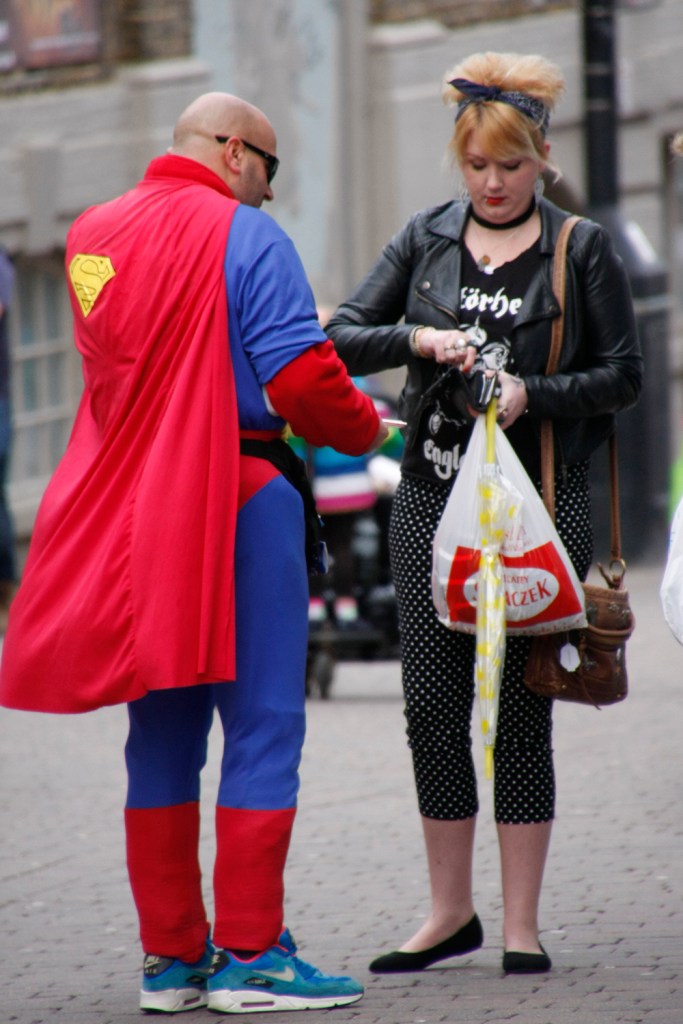
Image 1:

  • Can you spare any change for the phone box?
  • Penny for the guy
  • I thought all your good deeds were for free – now you want a tip?!
  • Here’s your dinner money, so run along now
  • And I thought my outfit was tight.
  • Thank you, love, you’re a diamond.
  • It’s since they recruited more police officers.            
  • Back in the day, saving the world from villains paid good money.

Image 2:

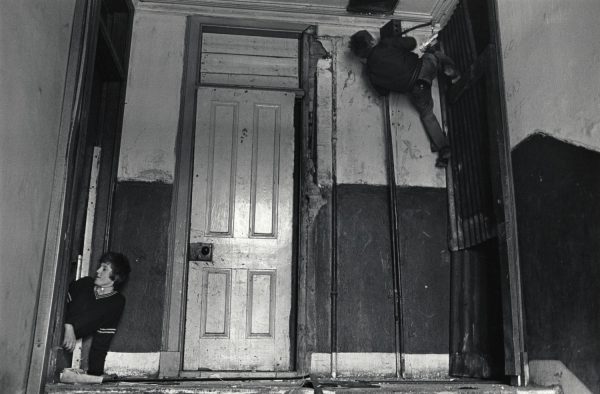
  • Riding piggyback.
  • Lee wished he could take a sandwich to school like the other kids.
  • Magic beans.
  • I wonder if he knows he is on the way to the market?
  • Down back there.
  • Security has a nose for these things.
  • Bringing home the bacon.

Image 3:

  • Greta sat patiently in the canoe and hoped she would make the conference in time.
  • Gatecrasher.
  • Just all bums and legs.
  • Colin decided being an extra on Hawaii Five-o wasn’t worth it.
  • I told you water doesn’t run up hill.
  • This kite is rubbish. Who sold it to you?”.
  • All hands on hull.

Image 4:

  • Horseman of the Apocalypse Outfitters.
  • We come in peace.
  • The invisible men.
  • This gig’s not worth losing our heads over.
  • Invisibilty was an unexpected side effect of corona virus survival.
  • Everyone saw right through them.
  • Sadly, nobody was able to pick out the infamous “Invisible Man”. in the hastily arranged identity parade.

Image 5:

  • Daily bread.
  • Elliot Erwin always makes riding a bike in France look so easy.
  • All this for a loaf of bread.
  • Up hill struggle.
  • One competitor was a Head in the uphill section.
  • He was determined to make it to the scissor shop if it killed him.

My reflections:

John Berger in the chapter Appearances (Berger, 2008:60) explains the difference between what an image shows/evidences and the reason it was taken. Berger maintains that every photograph contains two messages, that of the event photographed and one about the shock of discontinuity, the chasm between the moment of the capture and the time we view it; though we rarely register the second message. It is this discontinuity that gives images ambiguity which all have as they are all taken out of continuity. As Berger explains, in general meaning is not instantaneous or discovered through facts but is found through connections.

The personal photographs that shared with the forums and the responses to them confirm his ideas:

  1. On a street in Basingstoke. In this image my viewers sought to make meaning out of what they could see: money changing hands and a man in a superman outfit; in the event they were not too wide of the mark as “superman” was collecting money for something, there was no more to the image than that and the silliness of a man dressed as superman out of any context.
  2. At a market in Northern Vietnam. Again meaning is made from even from the little being shown; most viewers correctly commented on it in the context of a market, and the bizarreness of the situation to a westerner, which was spot on.
  3. A surf boat upturned at the end of a race to release water taken on board. The context in this was harder to fathom, as it required inside knowledge I think and the captions given it were amusing but were a distance from the actual truth of events.
  4. Street artists in Rome. Again the context here would be hard to guess and the captions given were amusing but general.
  5. Steep hill in Lincoln, aptly named. Two viewers attached meaning to it based on the Hovis advert which was in a similar setting albeit some years ago. Others were able to attribute meaning to it based simply on the evidence of a steep hill. Interestingly because the context was easier/more familiar captions were slightly more serious.

So the captions ascribed to my images show that when an event in an image is simple to decipher because clear context is given a reasonably sensible interpretation can be made, however when less context is available then interpretations fall wide of the mark as the discontinuity of the image blurs understanding.

References:

Berger, J. (2008) Ways of Seeing [Kindle Edition]. From: Amazon.co.uk (Accessed on 30.4.20) UK.

Open College of the Arts (2014) Photography 2: Documentary-Fact and Fiction (Course Manual). Barnsley: Open College of the Arts.

Next post: https://nkssite5.photo.blog/category/coursework/part-1-introducing-documentary/a-postmodern-documentary/exercise-in-and-around-afterthoughts/