To view my final assignment submissions click on the “SUBMISSIONS” tab, select the relevant assignment from the drop down menu. This category also includes Tutor reports and reflections on formative feedback.
To view the draft assignments click on the “LEARNING LOG: ASSIGNMENTS” tab, select the relevant assignment from on the drop down menu and then the horizontal “Assignment _ Draft” tab.This includes a learning log entry for each assignment and my self-reflection against assessment criteria.
To view my Learning log research and reflections click on the “LEARNING LOG: RESEARCH AND REFLECTION” tab and chose from the drop-down menu. There is a link here to my Documentary Journal, all extra research, photographer talks, events, and relevant meetings.
To view my Coursework click on the “COURSEWORK” tab and select from the drop down menu.
MY DIGITAL SUBMISSION HAS BEEN UPLOADED TO MY ALLOCATED G DRIVE:
Document with a link to assignment 1 on my blog with artist statement, commentary, and thumbnails of images (they will open expanded in a new tab when clicked on).
Images #1 to #10.
Assignment 1 “Provisioning and Protecting”:
Document with a link to assignment 1 on my blog with artist statement, commentary, and thumbnails of images (they will open expanded in a new tab when clicked on).
Images #1 to #10.
Assignment 3 “Breathe in Breathe out”:
Document with link to assignment 3 on my blog with, artist statement, commentary, and blurb book as a video.
PDF of book for clearer versions of the images and back up.
Back up link to mp4 video of the book should the blog links not work.
Assignment 5 “Layers of Truth”:
Document with links to assignment 5 on my blog with artist statement, commentary, and video of slideshow of work.
Back up mp4 video should the link not work.
Assignment 4 – Critical review essay:
“It is one thing to write about seeing the world in a grain of sand, and an eternity in a flower, etc., and another thing to make a convincing picture of it” (Szarkowski, 1976:174). How does this apply to the work of Minor White?
I chose to take this documentary course as I thought it would be a contrast to the landscape course which I’d enjoyed so much, and to extend my knowledge base and photographic toolkit.
Reflecting now, this is exactly what it did, though I’ll admit I struggled to enjoy it until I reached assignment 3, when my learning and research began to propel me forwards.
I started the course exactly at the beginning of the UK Covid pandemic (a context that continued throughout), which initially forced me to change my subject for assignment 1. I felt constrained and tense, but adapted, and photographed my own community at home. This began my documentary journey, as both a participant and observer, photographing the mundane. I am surprising how meaningful these images are 18 months on, and having seen many Covid19 series since, I appreciate that my work is less cliched than I first feared. This work signalled themes that were to continue and develop in my work throughout the course: personal response, funnelled observation, attention to the banal, and a desire to trigger responses in others.
Peer support and critiquing were crucial to my progression during the course. The first half of the course was completed over a longer period than usual due to unusual domestic and family occurrences, and a mid-way loss of my initial tutor. These events interrupted my workflow, however as I increasingly shared with peers, and in turn challenged and supported others in their work, my confidence and creativity grew; retrospectively I can see how this helped to shape my work and contributed to developing my own voice.
Part way through assignment 3 I found I was able to immerse myself again; this either coincided or resulted in a growing enjoyment in my learning. I was motivated as I felt I had a story to tell and relished turning another mundane subject into a visual narrative. I had confidence in my concept, contextualised more intuitively, used my personal and local understanding, applied recent and broader knowledge of other practitioners, thought creatively about presentation, and realised I did have my own voice, personal and visual style.
The period of the course was a time of rich learning, especially as so much was available virtually. Assignment 4 was a welcome springboard, where I was able to build on themes from my coursework and other research, but particularly at that time, the Lumix festival talks which concentrated my thoughts on how visual storytellers can create impact with their photographs. My tutor feedback challenged me to go narrower and deeper with the critical review, and this helped me to focus and substantiate my conclusions on how documentary photographs can move beyond just highlighting issues, to benefiting those they photograph.
As I began to work into assignment 5, I felt it was all “coming together”. My fascination with the representation of truths led me into my personal project “Layers of Truth”. By that point I had the tools to realise a personal project which I had been working on since the outset of the course. I extended previous work by researching more deeply, using my insider-outsider position, considering ethics, different truths and choosing a method to present the project that would provoke thought.
Throughout the course I focused on the mundane, observing the extraordinary in the ordinary. Though this and my subject matter of local communities remained throughout the course, as did the context of the Covid19 pandemic, my perspective shifted as did my methods of presentation. These were greatly influenced as I learned about the practices, motives and ethics of other photographers, which enabled me to think hard about my own practices. The cultural and political space of the photograph, and how people can take control of it, has become clear to me. I now have a greater understanding that documentary photography can provide different representations of reality, and am motivated to make conceptual, creative, and visual choices as well as communicate concisely for my audience, to encourage viewers to ask questions of images and give meaning to my work. I am also minded to be clear about the role of any project; should it seek to change or just highlight something?
When asked for learning tips by students at an event, I shared that feedback from tutors and peers helps to force you out of your comfort zone, whilst talking with others helps you to focus your thoughts. I also shared that I’ve learned to have confidence in my own ideas, experiment and trust my instincts; this how I have begun to find my own voice.
Below are the links to my learning log entries that support the stated course learning outcomes.
LO1 Demonstrate detailed knowledge of visual and conceptual strategies in documentary practice and be able to explore your own critical documentary photographic projects.
Early in the documentary course I attended a virtual event at the Photographer’s Gallery which reacquainted me with the visual technique of “slow looking”, that has now become an integral part of my practice. This led me to the Artist talk by Mark Neville, whose work had been to subject of this session. The concept behind his practice became an inspiration to my documentary work, for reasons detailed in my blog entry learning points from his talk, but most especially the last four learning points I have bulleted in bold type; the last 2 of these influenced the direction of my 5th assignment and I believe these particular concepts will figure strongly in my level 3 work as well: https://nkssite5.photo.blog/category/learning-log-research-and-reflection/photographer-talks/mark-neville-4-3-20/
LO2 Demonstrate an awareness of the wider social and cultural contexts in which documentary photography operates and be able to discuss relevant ethical perspectives in relation to your own practice.
LO5 Demonstrate increasing autonomy and a developing personal voice and exercise your communication skills confidently and interact effectively within a learning group.
I have participated in many student led learning groups throughout the course. The following post merely evidences four of the student led documentary hangout group meetings that I’ve been a part of regularly. It also contains links to the other meetings of that group and my meetings with a regional OCA group. It also shows where these interactions have helped to shape my practice:
How to be a creative learner. Facilitated by OCA tutor Andrea Norrington- 19th May 2021
I was asked by Andrea Norrington to be on the panel of 4 students at different points in their studies, to share our experiences of learning with other students -this was a new experience. Whilst preparing for the session and then when contributing to the discussions, and answering questions asked by OCA students, it caused me to reflect on my studies to date and I recorded items that I thought would be useful when I write my end of course reflections.
Below are the thoughts that I shared whilst on the panel:
Transitioning between courses/levels of study
Q Looking back at your studies, where do you think you noticed a shift in level of study?
Documentary assignment 2 & 3 where the levels of reading and research increased noticeably.
Approaching level 3, talking to students on level 3, I am aware that there is quite a change in approach and expectations at level 3.
Others mentioned essay writing, but I didn’t find this such a challenge.
Q Thinking particularly about Level 2 – how did you decide on courses?
Great to have more personal choice in level 2 than level 1.
I chose courses that I thought would challenge me and broaden my learning, not necessarily the ones that I naturally leant towards.
Peer support
Q Can you tell us about how useful peer support has been as you complete the final part of your degree?
Invaluable. It has been good to be a part of various groups, regional, module specific, and course specific.
Q Where have you found peer support most useful and when do you think it really started to appear as part of your study?
Though I realised its value during level 1 it was during my first level 2 course that I noticed the peer support feeding into my work and was helping to shape my assignments. This probably coincided with my growing confidence to share and challenge others to challenge me in my work.
Certainly, in level 2 tutors have frequently commented on the value that my working with peer support groups has added to my own work.
It has been useful in many ways: Critiquing of my work, learning how to critique other’s work, for technical support, and general support. The more you give the more you benefit.
Q Are there any pitfalls in peer support?How do you think OCA can assist here – is there also a place for self-sufficiency?
I have learnt to be discerning about peer groups. I initially found that level 1 groups were generally not challenging enough. However, as I have moved through my studies, I have found the peer support groups increasingly useful.
I have found being both general and specific when sharing work when asking peers questions about my work is effective.
The OCA could consider running facilitating courses for some and/or sitting in on occasional sessions to model facilitation.
Looking forward I should look to as the level 3 student suggested support groups outside of the OCA, locally and possibly professional groups.
Responding to feedback
Q – Have you had to deal with feedback either from a tutor or from formal assessment that you have been disappointed with? How do you move forward from this?
I have never had feedback that has been unfair. It always causes you to reflect, and thus move your work and practice forwards.
Feedback usually forces you out of your comfort zone which is good, and I think only then can you begin to find your own voice.
Q – When (if ever) do you think you understood the role of critical feedback in allowing your work to progress and evolve?
I have learnt to reflect on feedback at a general level for at least a few days before acting on it; this way I usually find that my brain slowly filters it and finds a way forward. Then I return to break the feedback down and address specifics.
Q – One top tip that you wish you had known when you started studying.
Have confidence and value your own ideas and opinions, don’t feel you should follow others, but at the same time be open to other’s ideas. The more you trust your instincts and experiment you will develop your own voice.
It was a new but valuable experience sharing insights with students that I don’t know, and an interesting exercise preparing with the rest of the panel and Andrea beforehand. The reflection it involved made me more aware of the journey that I’ve been on during the documentary course, and the experience that I’ve gained along the way. It was good to be in a situation where I was confidently giving to other students also, and I am well aware that I have benefited great from other students sharing their insights and experience with me in various forums along the way.
The feedback given has been amalgamated into the finished projects.
As I reworked each assignment the growth in my engagement with them is apparent.
It is good how I have also reflected on the feedback given to me.
The reworked essay was much improved on the draft.
Though she considers that I began documentary well, my improvement during the course is obvious.
She suggested that:
I ensure that I have explained fully why I have made the decisions during re-working that I have (for instance the choice of my final images in assignment 3).
ACTIONS:
Revisit all that I will submit and check that I have been explicit about the reasons for my decisions.
Complete the assignment 6 feedback template and send to tutor.
2. ASSESSMENT PREPARATION
Appraise and present as if the work is an exhibition of my work that hasn’t been seen before.
Don’t assume my Tutor will be an assessor.
Consider using assignment 1 instead of assignment 2 for creative content and revisit to see if any of it is of use for my Los. Use ass 4 critical review for LO 2.
3.DISCUSSIONS ON PROGRESSING TO LEVEL 3:
My tutor gave me the link to the level2/3 groupwork on theory and practice on OCA learn as well as the level 3 forum link, which I will join when I can.
The progression meeting will either be with Ariadne or Dan Robinson. I should submit my photography for it (new and previous) and they will ask about my interests, currently:
Landscape
History
Culture
Working in a small defined location
Different ways of seeing
Layers – truth- time – context…….
I should consider what interests me photographically, in life, and what questions are there that I’d like to answer with my work, but not worry if I don’t have a defined idea yet for level 3, as its good to start out with a broad idea.
Level 3 is 2 units simultaneously:
Body of work – at different stages of development.
Contextual studies (dissertation part): this follows the body of work but is not the same, it contextualises it.
I asked about choosing a tutor and was told they will be recommended by what your interests are.
This Pre-Assessment Review gave me a valuable opportunity to revisit my reworked assignments, most after a good period of time has elapsed. Here I summarise the process and results of my reworks, each assignment has a link at the end to the reworked submission on my blog.
ASSIGNMENT 1: LOCAL COMMUNITIES – PROVISIONING AND PROTECTING
During the making of this assignment, I learnt to be adaptable. The sudden onset of the pandemic caused me to start the assignment again as circumstances changed dramatically. My second draft was my personal response to surviving both the threat of the pandemic, our withdrawal, and the need to protect my community. The windows represent the physical and emotional barriers that grew. The subject matter was mundane, my plan was to engage viewers in the detail of the ordinary.
My tutor’s feedback didn’t suggest any reworking and was very positive; possibly so because I reworked a lot as I drafted the assignment. I made many changes along the way suggested by peer critiquing. I was keen to move on from this assignment which was already a second draft and I had spent much time on, and believe that it still achieves what I set out to. I did however take my tutors suggestion of considering the presentation of the work, which I outlined in my reflections on my formative feedback: https://nkssite5.photo.blog/category/submissions/assignment-1-submission/a-reflection-on-formative-assessment/ . I concluded that if representing the work in a gallery I would seek one where I could set up in a rectangular central shape. Here I would place the images around the outside, so the viewers could walk around them – as if they are viewing my house through windows, as in my work. I believe this would give a good opportunity for activating viewers memories and responses through the detail in the ordinary represented, whilst also reinforcing the feeling of barrier that I was keen to convey.
ASSIGNMENT 2: SINGLE IMAGE NARRATIVE – ECONOMIC SCARRING
By the time I shot this assignment I was able to leave my house, most businesses were still closed, which I depended on for my outcome; so I shot with tight time constraints, as businesses they were due to open again shortly. My concept was economic scarring, in the context of Covid 19, and my narrative was that of something not quite right.
My use of stitched scars alongside the location images was central to my concept, but my tutor feedback pointed out that I needed to communicate this more fully. I wrote in my reflections on formative feedback, that the scarring is not only seen on commercial premises but is also felt by the people affected by the interruption to the economy and these businesses:
https://nkssite5.photo.blog/category/submissions/assignment-2-submission/a2-reflection-on-formative-feedback/ . For submission I added in the commentary accompanying the images that each image, “is accompanied by a flesh wound as a hashtag, to reinforce the human pain caused by the economic scarring. The stitching represents a holding together and hope of recovery”. I also made reference to the wounds in my submission artist statement.
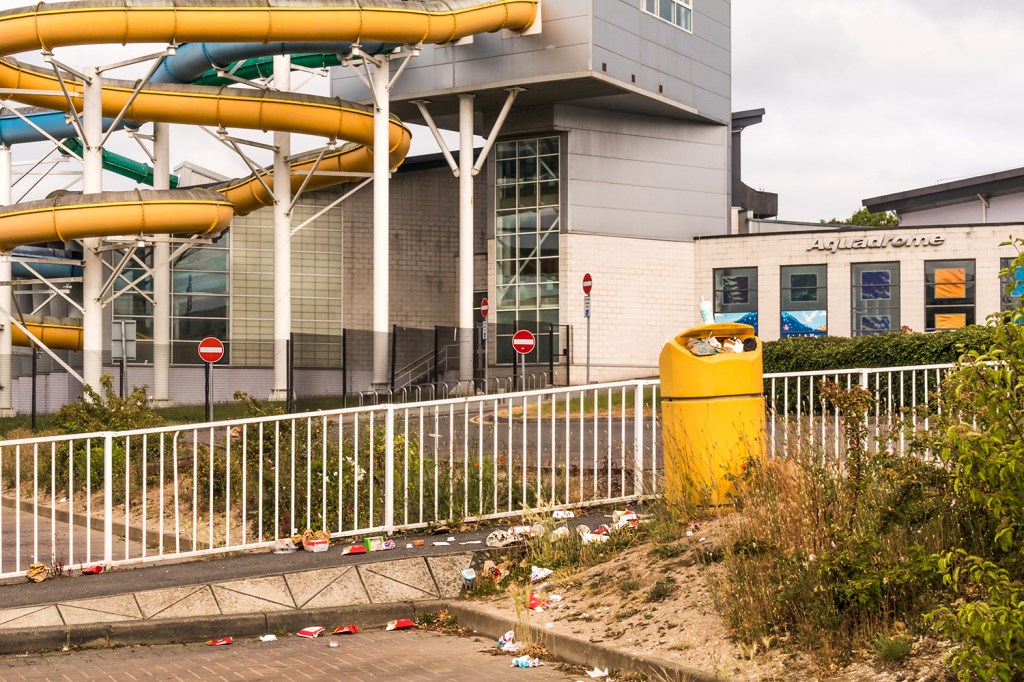
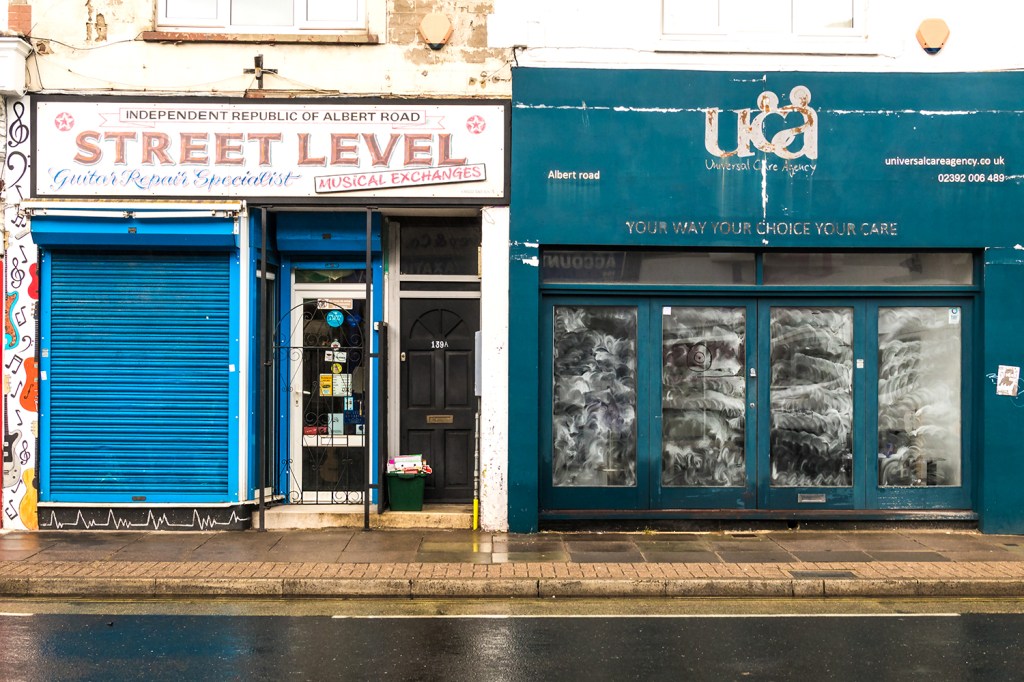
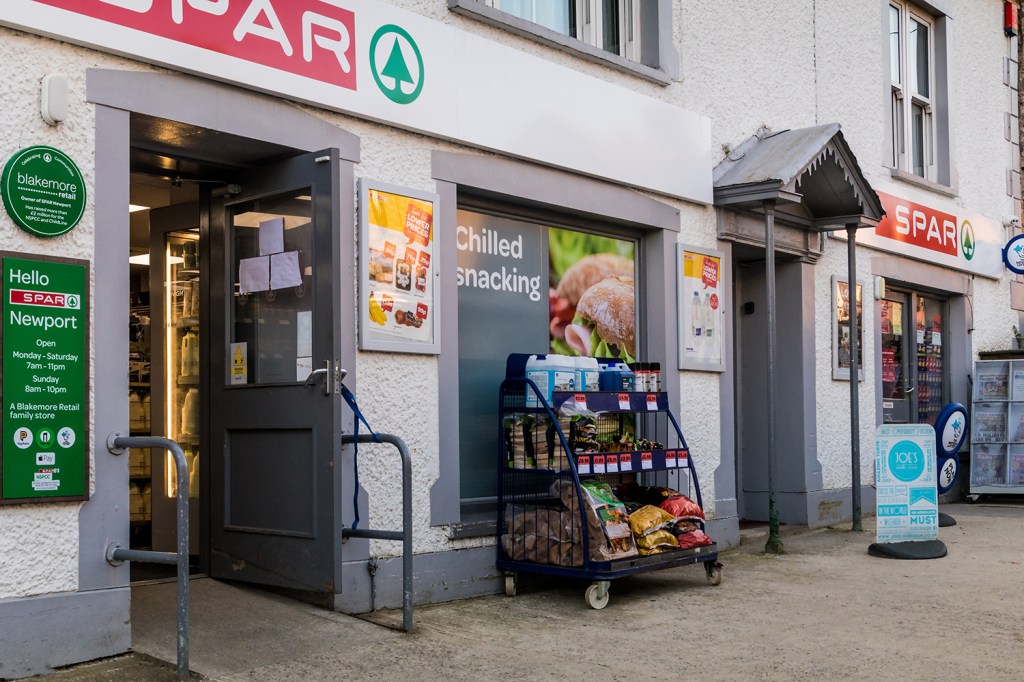
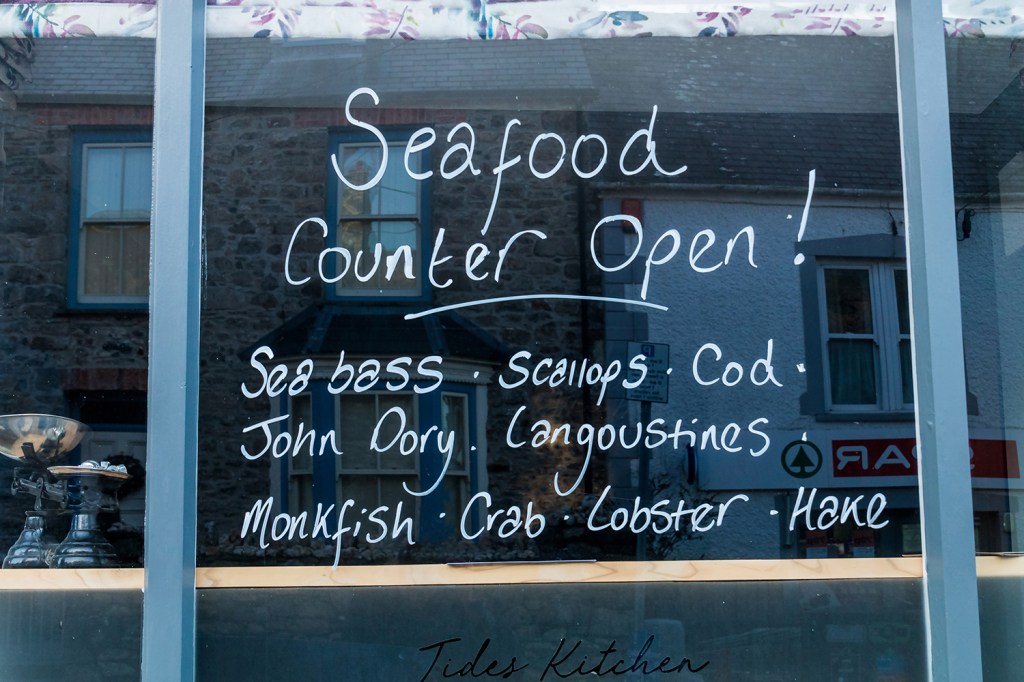
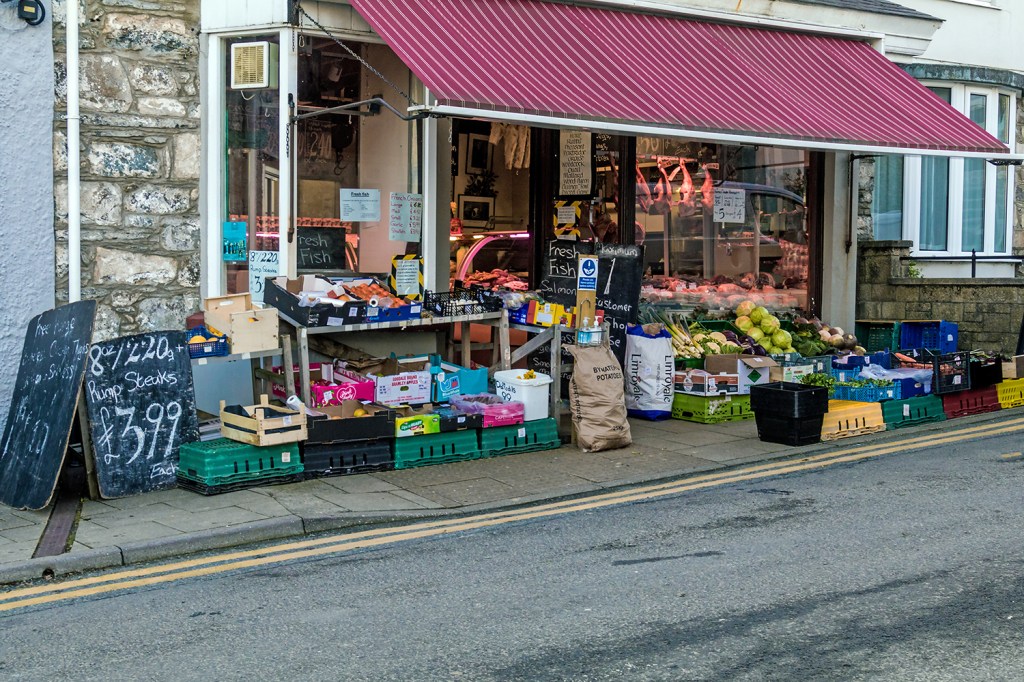
I also acted on my tutor’s suggestion to reassess the images, to incorporate some more subtle ones leaving more room for viewer interpretation. In my rework I replaced the shop front and aquadrome images with more subtle ones I’d earlier rejected, see below-which I think do show more subtle signs of abandonment, and neglect.
ASSIGNMENT 3: VISUAL STORYTELLING – BREATHE IN BREATHE OUT
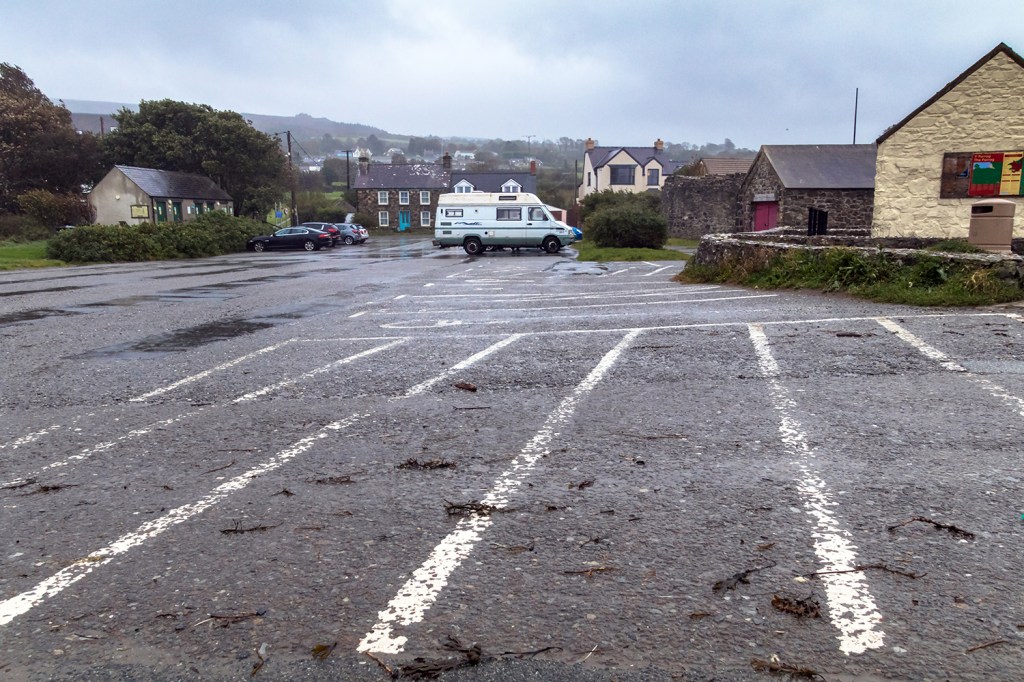
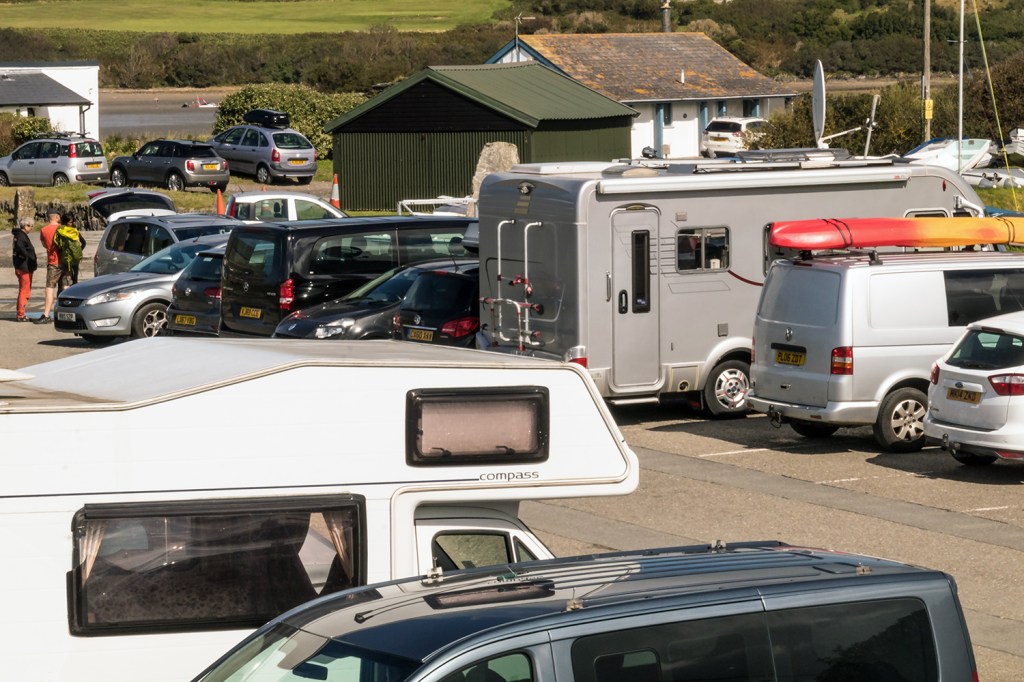
I had a strong idea from the outset for the location of this project but did explore many styles of images and presentation before completing the assignment, influenced by photographers researched in the coursework and others. My focus was a local car park, as a manifestation of the seasonal change in visitors to the area, from presence to absence. This was presented as a book dummy as asked for in the brief. As in my previous assignments I shared my work with various peer groups before I even submitted my draft and so made many changes during the process, which are documented in my learning log. When constructing the narrative I presented the images sequentially increasing in size on the page to emphasis the breathing in and out of the car park.
In my final reworking of the assignment for submission, I rephotographed and replaced the final image, to show an empty car park:
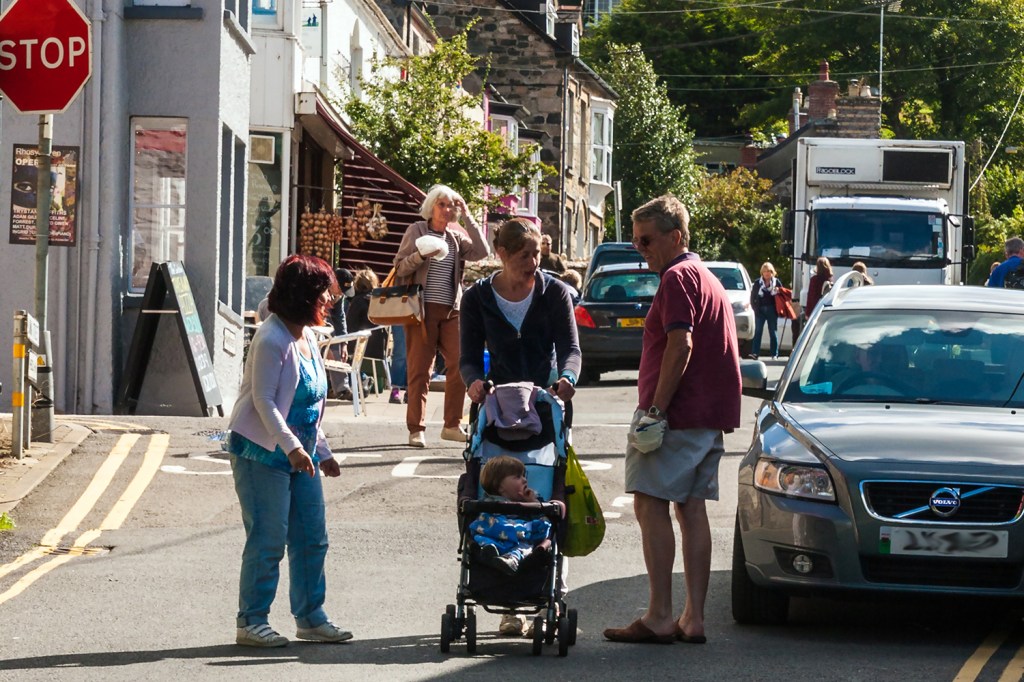
I also re-photographed the 8th image to use as the last empty car park image, but ultimately chose not to end with 3 empty car park images, which would have looked like this:
In my critical review I explored how documentary photography can be effectively used for the benefit of the communities that it is photographed in.
Following my tutor feed-back, I identified these areas to action:
Reduce the breadth of my writing by “control and editing of sources”, this will enable me to:
Give more in depth analysis
Articulate my critical engagement, to describe how my sources support my view and have developed my argument and thesis.
Describe how my research has led me to my end thesis – How I get to my ideas.
Provide more in-depth image analysis. The activists that I describe in my sources are visual activists, so I need to articulate how they provoke a response through the lens, the response they provoke, as the audience is not passive.
In my rewrite of the critical review I narrowed down the material that I’d used and explored what remained in more depth, using the broader material to retain the context, placing these sources in a bibliography. I also reviewed the images and analysed those I used in the submission to show their part in visual activism. I can see now that this has resulted in a more detailed but succinct and cohesive essay which develops more effectively towards my conclusion.
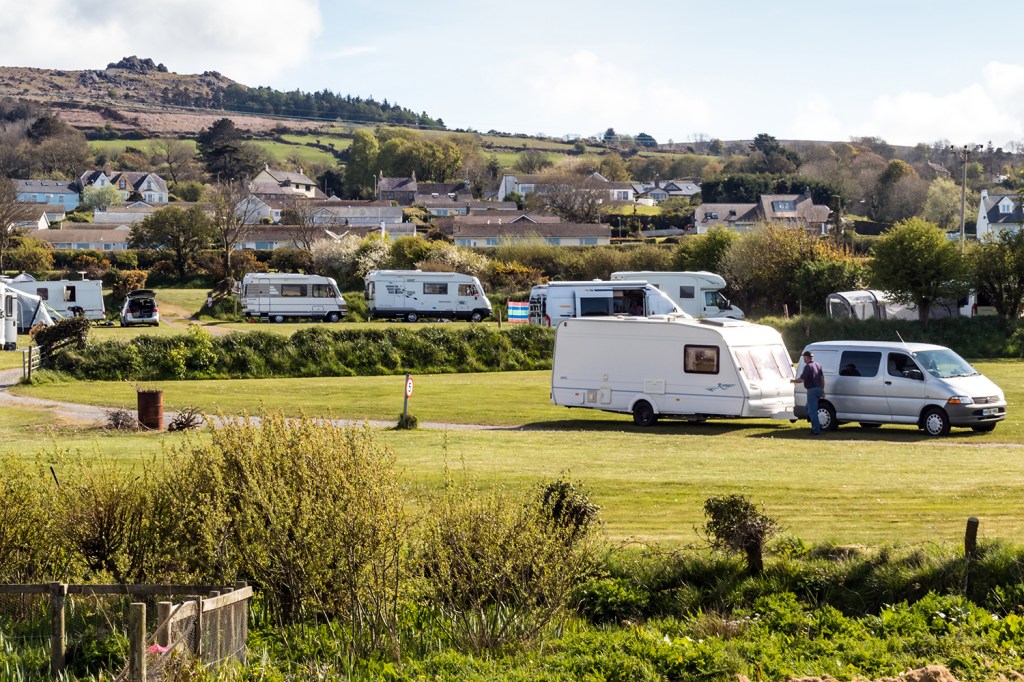
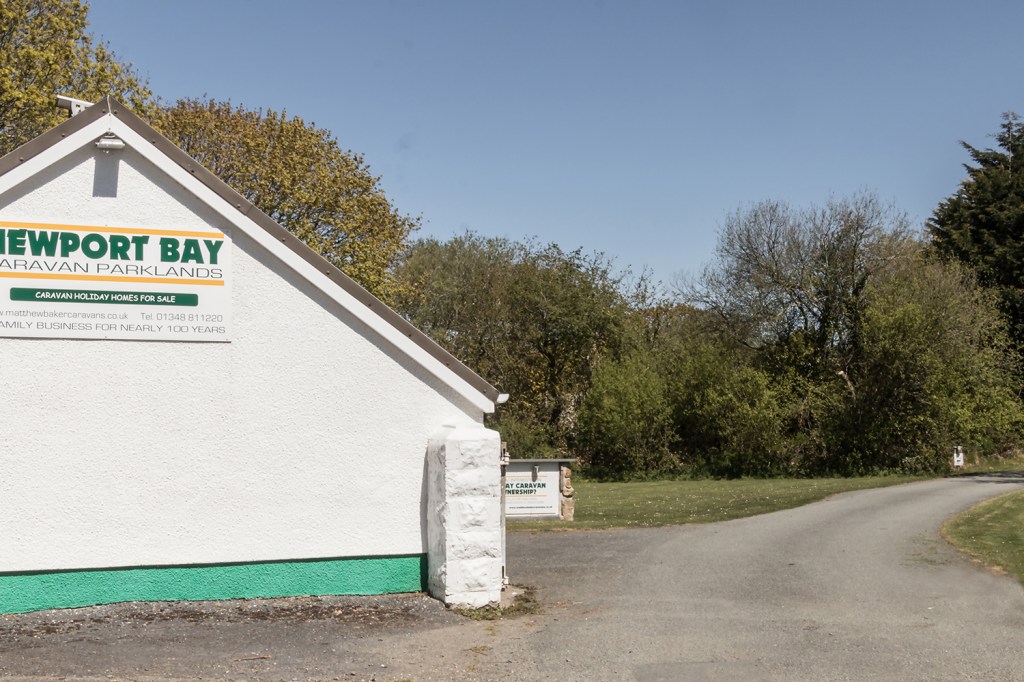
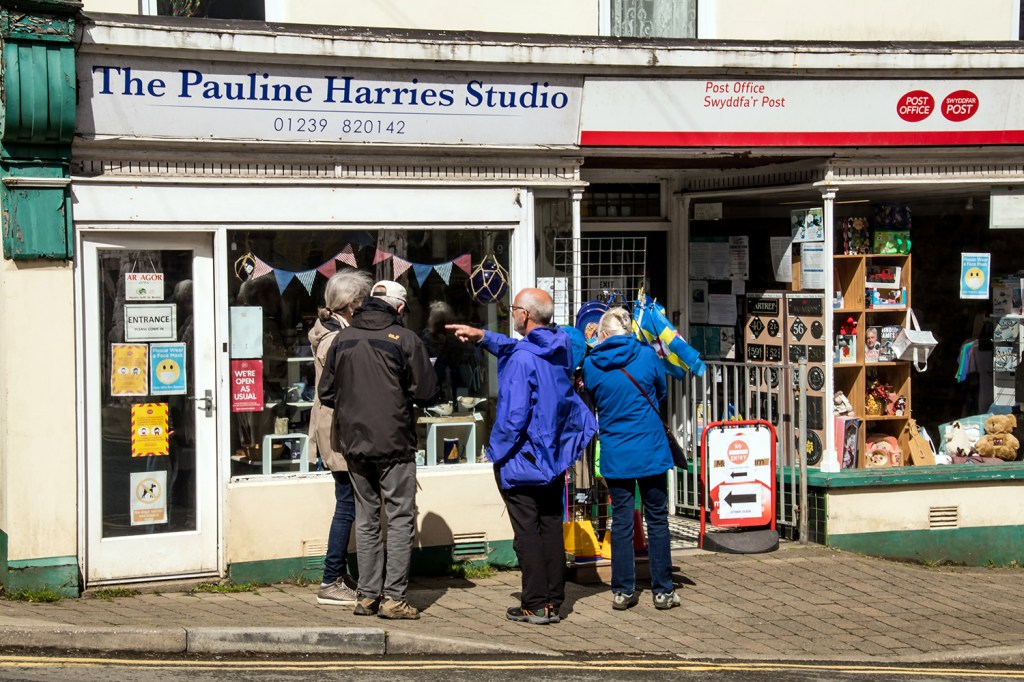
This was a project based upon extending my assignment 3, for which I proposed a working title of Tensions arising from visitors. The concept was different truths. I shared that I intended to photograph local contentious subjects such as, caravan parks, holiday houses, shops, and roads, and present my images with short text/captions from my research, to exemplify the various notions of truth around visitors to the locality.
My draft proposal was rightly challenged by my tutor; though recognising the potential, she questioned the clarity of my proposal and how I would extend my previous work. I could then see that I hadn’t overtly set out my methodology in my proposal. This was useful and enabled me to clarify my approach. During a follow up video chat I shared that:
My intent is to move from the subjective social media comments that I have collected from face book, to collecting data and facts from various sources (e.g. Town council, Government, Press releases, property companies, census, and business owners. Also to include facts on home ownership, house prices, rental opportunities, business demographics, and tourist demographics, to ascertain facts about the impacts of visitors to the community.
This will give me a better intellectual understanding of the situation, and enable me to decide on my stance on the various issues. At the heart of this is a synthesising of the various voices, messages and information- the different truths, so that I can communicate my understanding of the concerns.
I described how this work is a progression from my assignment 3 work and is of a much wider scope; assignment 3 was connotative of the issues, this expanded work allows me to denote more fully the concerns and issues arising from this phenomenon.
Following the submission of my assignment draft, my tutor’s feedback suggested that I could challenge the layers of truth further. She suggested as well as presenting a face book/press statement and an opposing evidential image, I could possibly juxtapose these images with opposing evidential images from the Facebook quotes. I immediately saw that by doing so would extend the representation of various truths, and challenge viewers further. My dilemma was how to achieve this, as the original Facebook posts didn’t contain any supporting images, which was interesting in itself. I decided to photograph opposing images myself, to add to the layers of truths. This also proved challenging, but in most areas, I was able to achieve what I wanted eventually.
This resulted in adding 7 contradictory images, and 2 provoking media images to the slideshow, which I achieved this without lengthening the duration of the slideshow. Where I now have 2 images preceding facebook/media text, I have faded one image into another to simulate the transplanting of truths.
Continue working on your personal project and produce a photo essay of 15 images. Your work should demonstrate good research, a methodical approach and a wider scope than previous assignment work.
Decide on the best submission format for your work. Discuss your ideas with your tutor while you do the projects and exercises in Part Five. (Open College of the Arts, 2014:120)
LAYERS OF TRUTH
Background information:
This personal project spans a year of reflection on the village of Newport (Tredraeth) Pembrokeshire. At the beginning of this time I was a second home owner, “exiled” from the village by the pandemic lockdown, observing the “temperature” of the place from afar. Mid way through the year I relocated there permanently. I have been an insider/outsider observer of the place for many years, known and accepted by many. Now that I have become a local, other’s experience tells me that it will take me years to be recognised as such.
As with everything this year, emotions have magnified, and voices have become louder. To rationalise what I was reading on social media and the press, I researched for facts to seek the cultural, political, social, and economic truths about the impact of visitors and second homeowners to this rural area, during the pandemic lockdown, and more generally as well.
Having discovered my “truth” I considered how to share this visually. My background reading of those such as Sekula, Tagg, Berger, Levi Strauss and Borge, increased my awareness that photographs are only representations of reality, part captured in the moment and the rest supplied by the photographer. Whilst I carry the responsibility and accountability of a documentary photographer to present reality, in this story I present various layers of truth, material, moral, impression and form. Images are never neutral, but having synthesised much information, as well as emotion, I have recorded and presented the truth as I understand it. I have recorded what my eyes saw. The text that accompanies the images is to support the truths I have discovered, rather than appropriate the images, as well as to provoke thoughts.
Photographs are not predictable communicators “they cannot carry meanings in any straightforward way” (Campany, 2020:8), but I have announced my path to this truth, and my position in it, though do hope that viewers will question the truths that I share.
References:
Campany, D. (2020) On Photographs. London: Thames and Hudson.
Open College of the Arts (2014) Photography 2: Documentary-Fact and Fiction (Course Manual). Barnsley: Open College of the Arts.
Artist statement:
This work is a personal reflection on aspects of a village, over a year. Though this has been an unusual time, the feelings and opinions felt and expressed, are simply magnifications of continued underlying tensions between locals and visiting outsiders. I have sought to uncover the truths that lie beneath these emotions, and share them here. These layers of truths are presented with integrity and research, though just as I have formed my own relationship with them, so may you.
It is personal project which began a year ago. I was in lockdown in England and not allowed to travel to my then “second home” in Wales. During this time I observed many discussions on social media about visitors to our “second” town, as well as Welsh national media highlighting lockdown infringements. The coverage was mostly one-sided and uncomfortable to read. As the year progressed and I travelled to my second home, I was able to gauge the real breadth of feeling from local residents to visitors; though not “local” I am well established in the community here and talk to people on both sides of the divide.
The second part of this year I have been resident here in what is now my only home. My research has continued, capturing media articles and comments, knowing I would probably use the material for assignment 5. I have added to this notes on conversations had, overheard and related. Now I need to research the facts behind the issues, widely around the philosophy of truth in photography, adjust if necessary my personal stance and then develop a visual photographic response to this personal, and socio-political study. I intend to explore layers of truth, something that has interested me increasingly as I have progressed through the documentary course. Though my research has been during the coronavirus year 2020-2021, I don’t intend the work to focus on this; the project highlights local/societal/nationalist issues that exist normally, such as the economy, resources, housing, tourism, and hospitality businesses.
Working title: Tensions arising from visitors.
Theme: Different sides of a story.
Methodology and work flow: Collate social media comments → Research facts/data → Read and research on the philosophy of truths in photography → Reflect/synthesise (decide my stance on the issues) → Photograph visual representation of issues → Chose social media comments and facts to use with images → decide on presentation of images and text and my voice.
Audience: Myself. Depending on the outcome I might release to the community later as a healing tool; currently it would inflame the situation locally.
Approach: A slideshow sharing images with overlaying text either supporting or contradictory to each photograph, a second layer of factual text and a third layer communicating my perspective on issues.
The feedback was positive and encouraging and helpfully incisive. My tutor’s feedback suggests that I consider presenting not only a face book/press statement and an opposing evidential image, but possibly juxtapose these images with opposing evidential images from the face book quotes. I can see that by doing so would extend the representation of various truths enabling viewers to face more of a challenge when interpreting the truth.
Most of all I am pleased that my tutor acknowledges that my voice and gaze are evident here, and also that my research is well integrated into my work, as I guess that this will help me when I start level 3 shortly.
Actions:
My dilemma is how to achieve this as the original face book posts don’t contain any supporting images, this I find interesting in itself. So I will photograph opposing images myself, to add to the layers of truths represented in the work. The challenge will be firstly in collecting the material, and secondly integrating it into the slideshow effectively and without increasing it’s duration too much.
I have confirmed that I will be ready to submit assignment 6 by 1.6.21
I have also confirmed my intent to submit for November 2021.
I observed for some time before beginning to photograph.
During my time of observing as when shooting, because of the Welsh Pandemic Lockdown, I was in an area of very restricted movement and only able to explore on foot. This limited my photographic area unless I was out running, at which times I shot exploratory images or occasionally as with the police car in the beach car park, had to shoot for the project with my I phone.
Once I’d completed my research, I had themes to focus on, and within a location I wanted to catch them as quiet as possible – though that was generally not hard.
When framing I kept in mind that there is a difference between what an eye sees and a camera records. However, I didn’t have to exclude from the frame items that would have changed the meaning; places were quiet and empty, but I did have to ensure that what I put in the frame would tell an obvious story, and to exclude any peripheral detail.
As a visual strategy I chose to present the images within a PowerPoint so that I had control over the way the images and text are viewed, so that I retain some control over the message, which is my voice. This I think was the best way to present the work on my blog as I must, however I am sure that if I were to show the images and text withing a gallery setting I could achieve the effect that I want.
I made a lot of changes to my first draft, mainly in response to my peer’s comments, though I knew that it contained too much material myself. I reduced the text, in some places separated text from the visuals, to let the visuals speak for myself, so that the images become my voice. I abandoned my initial idea of presenting facts with a white background, and opinions on grey background as that hadn’t worked and believe with my simpler presentation this separation will be self-evident. I did however present the press comments as in a newspaper column.
The photographs are extremely mundane, but it is the presentation that makes them interesting.
I have respected the visual elements and not added or subtracted from them.
Quality of outcome:
Once I had my concept it was challenging to think how to present it. I decided to take a tongue in cheek perspective, as I could then photograph what I saw, and shared the other layers of truth with the context and text I presented along-side the images.
The brief forced me to plan and execute the project methodically, this helped me to realise the project in a focused, timely, and coherent manner.
The brief of 15 images, when my plan suggested 4 to 5 themes, pushed me to find variations on subjects to achieve my plan.
I proved that the project had a wider scope than my previous work, both in the way that I expanded my search for context with research and recorded relevant information over a long duration.
Presenting my “truth” with just some trace of all the research that I’d done proved challenging. Initially I packed too much in, and then spent time paring the textual information down, discerning what was essential and what was distracting.
I hope that the current form and choice of images and text conceptualises my ideas effectively, and provides a complex narrative that viewers will be able to engage with it and even question.
Demonstration of creativity:
This was from the outset a personal project, chosen because the uncomfortableness of a situation, that gave me a purpose to look for the truth in of aspects of it.
I realised that as both an insider and outsider I was in a unique position to report on the issues and capitalised on this unusual position.
I knew that there were layers as well as shades of different types of truths contained in the opinions expressed by others, my feelings and the facts available. I decided to represent these layers of truth in a “tongue in cheek” style, to show my voice and to stimulate a response from the viewers.
My personal voice is represented in the images that I share, the text that I have chosen to accompany the photographs, and the way I have presented the work.
I have shown that images are open to those that want to take charge of them. However, I do think I’ve taken a risk and trodden a fine line as there must be some belief in the truth of photographs or they lose their value. I hope that the work does encourage questions.
The subjects photographed are mundane, but this is often the way with documentary photography- I hope the way I present them makes them interesting.
Context:
I believe that this time as I completed coursework and additional reading, I have traced the development of some of my thoughts and linked it to previous work and readings. This has helped me to contextualise my learning.
I have shown that I can synthesis and analyse information from many sources.
I really enjoyed the contextual research that I did, it was good to do self-directed research that served a self-designed purpose. I balanced information from the social media and press with more factual information from government sources and statistical reports. To obtain this balanced contextual background I covered political, social, and economic themes and enjoyed reading more widely around the truths in photography. This gave me a real meaning to the “cultural and political space of the photograph”. I was the author of the work in an knowledgeable and ethical manner.
As usual I reflected throughout the process, but more so as I contemplated the results of my research and moved into forming the presentation of my work.
Sharing with OCA peer groups throughout the process gave me challenge and support and encouraged regular reflection on my emerging work.












 Photography 2: Documentary