PART FOUR: ETHICS AND LOOKING AT THE OTHER

PROJECT DOCUMENTS OF CONFLICT AND SUFFERING

Exercise 4.4

Read the articles ‘Walk the Line’ by Max Houghton (Foto8, issue 23, pp.143–4) and ‘Imaging War’ by Jonathan Kaplan (Foto8, issue 23, pp.142–3). Core resources: Foto8#23_Kaplan&Houghton.pdf

Write down your reactions to the authors’ arguments. (Open College of the Arts, 2014:86)

My reaction to their arguments:

Kaplin has been a doctor and surgeon in hospitals and battlefields across the world as well as an author and photographer. He relates the learning of photojournalism to that of transforming from a doctor to a surgeon, after some learning from studying eventually you have to immerse yourself in the practice of it; this is something he is in a position to do but I feel that a medical professional will have more training and preparation for the later experiences than a photojournalist and it more likely to be shocked by what they encounter in the field. In exploring what kind of images of the human body are suitable for publication he concludes that this is whatever persist at the time of publication, though he says that you can be too close to a subject.

Houghton is a MA course leader in Photojournalism and documentary. Whilst picture editors have to grapple with which images are suitable for publishing, according to taste and ethics, she points out that taste and ethics are personal, just as are where we set our boundaries.  She quotes Sophie Batterbury, the picture editor of the Independent on Sunday, who believes that the goriest images aren’t the best at telling the story as the gore detracts from the emotion of the picture. Houghton conversely mentions Greg Whitmore picture editor of the Observer who used a graphic picture in black and white that was then reproduced in colour in the Telegraph in colour; he justified the use of the image partly because his first publishing inspired the observer journalist to investigate the story further. This investigation meant that the image was then combined with a narrative of the event. I’m surprised that there was only one complaint received about the image. Apparently the Observer draws the line at publishing images of severed heads, although there was a reason that this line was nearly stepped over recently so it is not sacrosanct. Houghton illustrates that when Kaplin was asked to contribute images to a book on the effects of landmines and their clearing, Kaplin then agreed when the images were dropped. The images were dropped as it was thought they might be off putting to buyers/readers and then value of the rest of the publication might then be missed; this points out that boundaries appear for different reasons – this was a commercial not ethical decision. Houghton explains that he was shocked when the decapitated heads of “Uday and Qusay” were displayed as trophies, in the Guardian 2003, which indicates that there is a line for him. He shares the various reactions at a conference to disturbing conflict images such as the “falling Man” and Luc Delahaye’s “Dead Taliban solider”; issues of respect for their families were raised but again the responses were personal.

Reading these articles raises issues such as:

  • How far should we go with publishing images of war and disasters?
  • What images are suitable?
  • What criteria should be used?
  • Are there any lines to be crossed?
  • Are feelings and emotions important?

Are the answers defined by ethic, commerce, respect for individuals or their families, politics, relationships between media companies and governments, or are they simply personal?

I am in the position that I can form and operate with my own standards but I acknowledge that it is hard for photographers/editors/publishers to set a line that is appropriate. No one person has control over the way images will be shared, but ultimately it is the photographer who must be mindful of the way the images may by used, and at the time of shooting I believe should act respectfully. Ultimately whether an image should be used or not I think comes down to whether using the image adds impact to the story, for me assuming it has been obtained ethically and respectfully. Reading these articles has brought more questions for me that answers at this stage, but will make me more reflective as I read and view such articles and images from hereon.

References:

Houghton,M. (2008) “Walk the Line” In: Foto8 (23) Spring/summer pp133-134

Foto823_KaplanHoughton.pdf (2021) At: https://www.oca-student.com/sites/default/files/Foto823_KaplanHoughton.pdf (accessed 2/1/21)

Kaplan, J. (2008) Imaging War. In: Foto8 (23) Spring/2008 pp132-133 At: https://www.oca-student.com/sites/default/files/Foto823_KaplanHoughton.pdf (accessed 2/1/21)

Open College of the Arts (2014) Photography 2: Documentary-Fact and Fiction (Course Manual). Barnsley: Open College of the Arts.
Next Post: https://nkssite5.photo.blog/category/coursework/part-four-ethics-and-looking-at-the-other/the-ethics-of-aesthetics/exercise-4-5-imaging-famine/

PART FOUR: ETHICS AND LOOKING AT THE OTHER

PROJECT DOCUMENTS OF CONFLICT AND SUFFERING

Exercise 4.3

Listen to Don McCullin talking about his exhibition Shaped by War on Radio 4’s Excess Baggage: www.bbc.co.uk/radio/player/b00qlgzg (Open College of the Arts, 2014:86)

  • McCullin is clear that the purpose of the war photograph is to enlighten the viewer who aren’t there what war is like.
  • When asked about the title of the exhibition “Shaped by war”, what effect has war had on you as a person? He answered that he wanted the photos to create a response; though he feels that the fact that he has to talk so much about his photos is slightly defeating as the images should be talking for themselves and if viewers need supplementing what, where, why, the what was their purpose?
  • In retrospect he realised that war photos should be about civilian suffering as they are those that are  done unto.
  • McCullin says wanted to be the voice of the people in these images, and sees the images as a window into other peoples lives, a form of communication. He sounds weary in the interview and it is clear that he is still very affected by his experiences and that is still suffering close to his mind whatever he is photographing now.
  • He believes that he gave his subjects some dignity by photographing alone
  • He notes that you need a reflective attitude towards the suffering you portray, a knowledge and personal investment, though the goriest images don’t necessarily tell a story well.

References:

Open College of the Arts (2014) Photography 2: Documentary-Fact and Fiction (Course Manual). Barnsley: Open College of the Arts.
Shaped by War, Photographs by Don McCullin (2010) At: https://www.youtube.com/watch?v=T5SLVAxt7NI&feature=youtu.be (Accessed 02/01/2021).

Next Post: https://nkssite5.photo.blog/category/coursework/part-four-ethics-and-looking-at-the-other/4-4-walk-the-line/

PART FOUR: ETHICS AND LOOKING AT THE OTHER

POJECT GAZE AND CONTROL

Exercise 4.2

Read the article ‘The Photograph as an Intersection of Gazes: The Example of National Geographic’ by Catherine Lutz and Jane Collins. Core resources: NationalGeographic_gaze.pdf

In what ways does the idea of the gaze apply to your photography? What are the implications of this for your practice? Write a short reflective commentary in your learning log. (Open College of the Arts, 2014:84)

Notes on reading:

This is a academic paper that analyses the way that they gaze appears in the images of the National Geographic magazine, where the captured view of another is also a place where many gazes intersect, and the significance of them. The authors identify seven types of gaze:

  1. The photographer’s gaze: represented by the camera’s eye and structures the image. There may be an alienation of the photographer from the subjects and an insecurity which the photographer overcomes by putting the camera between themselves. The photographer and the viewers gaze may overlap.
  2. The magazine gaze (institutionalised, cropped). The gaze chosen for emphasis and use which is directed by the commissions, editing choices, cropping, manipulation, presentation and captioning.
  3. The reader’s gaze: the reader’s interpretation. The reader’s gaze is affected by their experience and imagination, cultures, the form and the context of the reading (browsing or detailed reading).
  4. The non-western subject gaze: confrontational/distanced look/off centre look/ absent gaze. The direct look could acknowledge the camera, be aggressive, assent to the photographing, indicate intimacy and communication. The non westerner gazing at something within the frame or into the distance or where there is no visible gaze are also explored.   
  5. Explicit western looking– often framed with locals. It used to give an authenticity to an image but seems to occur less than in the past as westerners withdraw more to behind the camera.
  6. Returned or refracted gaze. In National geographic images this would usually be with mirrors or cameras which are described as tools of self-reflection and surveillance.
  7. Academic gaze which is a subtype of the reader’s gaze.

Reflections

The gaze is explored here through the example of the National Geographic and is reflected on by anthropologists who are particularly interested in the way people behave, especially how the westerner perceives the non-westerner.

I have long been interested in the photographic gaze, but had not realised how many types of them there actually were nor that “The multiplicity of looks in and around any photo is at the root of its ambiguity” (Lutz and Collins, 1991:146). I’d not thought either about the effect of these gaze relationships on power within a photograph. I was interested in the author’s footnote 6 where they point out that some contemporary photographers are experimenting with the conventions of point of view and framing, which invite viewers to interpret them rather than accepting the photographers gaze as their own – this is as I thought.

With regards to my own photography, I can first reflect on how I have used some of these gaze relationships and typologies in my Documentary assignments so far.

In assignment one where I represented my home in lockdown ”Provisioning and Protecting” as a viewer peering I from outside I assigned the camera and viewpoint of the photographer’s, a magazine’s and a reader’s gaze. The photographer’s gaze defined the viewpoint and content, whilst my editing and presentation was as a magazine’s institutionalised control over the output, however the reader’s personal gaze allows some room for their interpretation. My assignment two “Economic scarring”, I offered the same gazes, though with the artists statement and the “hash tags” of scarring I think I reduced the element of the readers gaze.

Assignment three “Breathe In Breath Out” offers more variety of gazes. The approach was voyeuristic and involved surveillance and involved human subjects; so it incorporated the gaze of subjects, though all western, unlike the National Geographic work. The presence of viewers certainly affected my photographer’s gaze in fact I feel that I lost some control/power to the subjects as I adjusted my perspectives around them. I also had to employ a stronger Magazine gaze to produce what I wanted to and allow for the subject’s influence on my viewing and capturing. This assignment may have a slightly anthropological approach but my photographer’s and academic eye is present so it is definitely not unbiased work.

In this assignment as in much of my work I am certainly aware of the issue of voyeurism and surveillance; however I will now be even more aware of the power play within the various types of gazes and am even more alert to the ethics of image capturing furtively. So there are different approaches in different projects but I will be more aware going forward of the interplay and relationships of the various gazes and their potential effect on the viewer, and the ambiguity in the work in particular.

References:

Lutz, C and Collins, J. (1991) the photograph as an intersection of gazes: the example of the National Geographic. Available at: https://www.oca-student.com/resource-type/nationalgeographicgaze (accessed 1st January 2020).

Open College of the Arts (2014) Photography 2: Documentary-Fact and Fiction (Course Manual). Barnsley: Open College of the Arts.

Next Post: https://nkssite5.photo.blog/category/coursework/part-four-ethics-and-looking-at-the-other/project-documents-of-conflict-and-suffering/4-3-don-mccullin/

PART FOUR: ETHICS AND LOOKING AT THE OTHER

PROJECT GAZE AND CONTROL

Exercise 4.1

Read the article ‘On Foucault: Disciplinary Power and Photography’ by David Green (The Camera Work Essays, 2005, pp.119–31). Core resources: OnFoucault.pdf

Summarise the key points made by the author in your learning log (Open College of the Arts, 2014:83)

Reading On Foucault: Disciplinary Power and Photography by David Green

Green’s intention is to share with wider audiences French historian and philosopher Foucault’s ideas. I have to say I found this a challenge to read and interpret however after some persevering the key points that I can extract from his paper are:

On Power:

  • It is difficult to place Foucault’s work in academic disciplines because he didn’t acknowledge the boundaries of them.
  • His main ideas are in the history of ideas, especially the history of science.
  • There are two themes in his investigations, firstly forms of rationality with man positioned as the subject and object of knowledge: secondly the complex relations bonding power and knowledge which are implicit to rationality.
  • Power should be seen in in a positive form when it enables knowledge.

On Disciplinary Power:

  • His most read work was Discipline and Punishment (1975), where he describes a new form of power- “disciplinary society”; where punishment is seen as reform rather than retribution.
  • He talks of mechanisms of surveillance as a “technology “of disciplinary power , and the Panopticon (an architectural building which enabled surveillance without the observer being seen) in particular.
  • The carceral network of disciplinary institutions such as prisons and hospitals have supported the normalising of power.

On The Politics of the Body

  • Foucault asserts that man is surveyed so that his body can be used as an object of knowledge and that power is used to extract knowledge.
  • On this basis the body becomes political and economic commodity and is subject to medical and psychological examination and the mechanisms of surveillance.

On Photography and Power:

  • Photography has become one of the mechanisms of surveillance to observe and classify people to normalise disciplinary power.
  • The gaze of the camera on the body enables close scrutiny and what he terms the mapping of depravity.

Green concludes that although Foucault presents power as all pervasive and impossible to resist, we should develop alternative ways of working with photography.

References:

Green, D (2005) On Foucalt: disciplinary Power and Photography [Online] available at: https://www.oca-student.com/sites/default/files/OnFoucault.pdf (accessed 30.12.20)

Open College of the Arts (2014) Photography 2: Documentary-Fact and Fiction (Course Manual). Barnsley: Open College of the Arts.

Next post: https://nkssite5.photo.blog/category/coursework/part-four-ethics-and-looking-at-the-other/exercise-4-2-intersection-of-gazes/

ASSIGNMENT THREE SUBMISSION: VISUAL STORYTELLING

THE BRIEF:

Produce a photo story of 10 images that, as a set, tells a story and conveys a narrative.

  • Engage at local level.
  • Do this assignment in colour.
  • This is not a visual chronology unless your theme naturally has one. Structure your visual story as you would a written story. Present your viewer with the theme, further developments and complications and, finally, a resolution – or non-resolution that poses further questions. Edit and sequence your work accordingly.
  • Go for visual variety – use a variety of lenses, viewpoints and compositions – but ensure visual and conceptual consistency across the images.                                                                          (Open College of the Arts, 2014:83)

Nicola South Student number: 514516

BREATHE IN BREATHE OUT

COMMENTARY

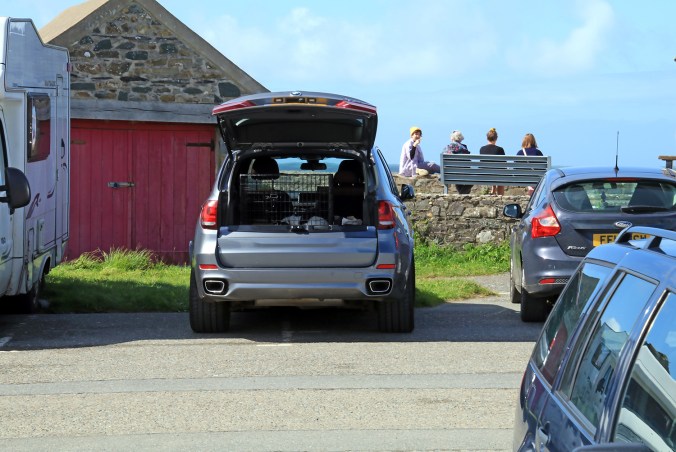
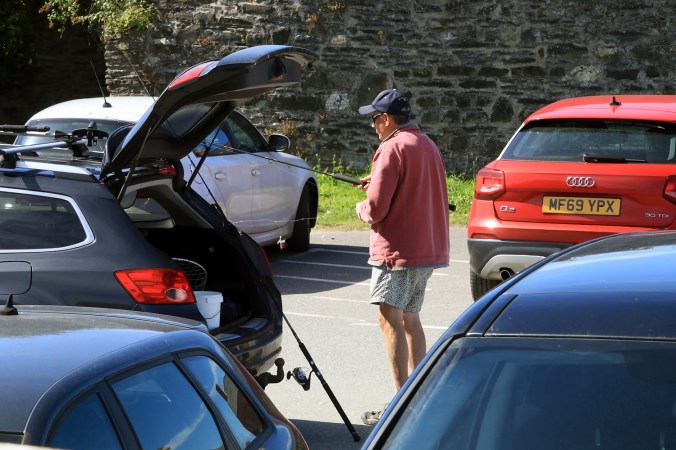
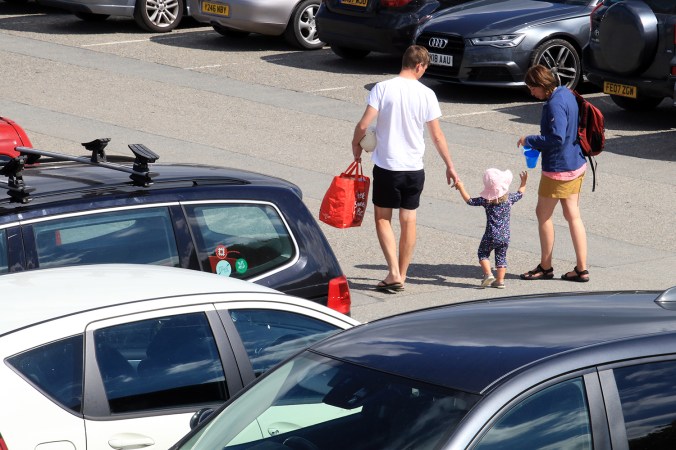
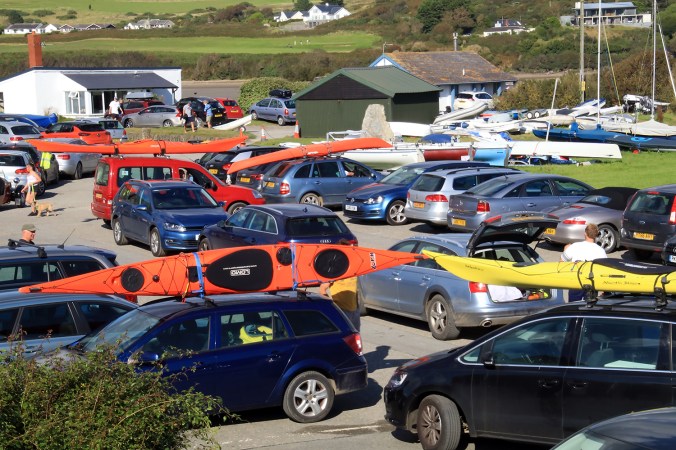
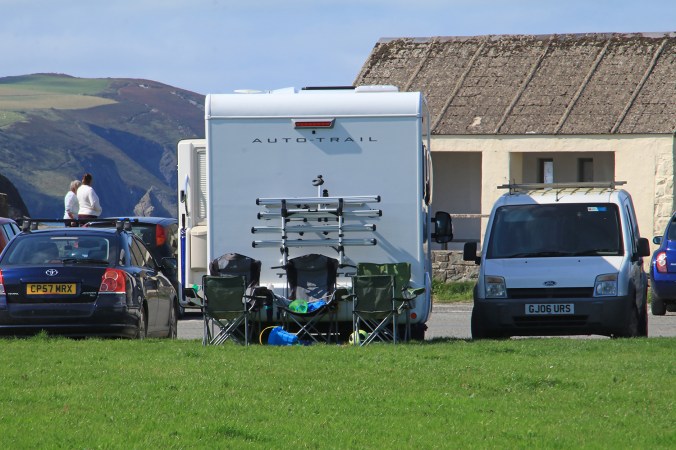
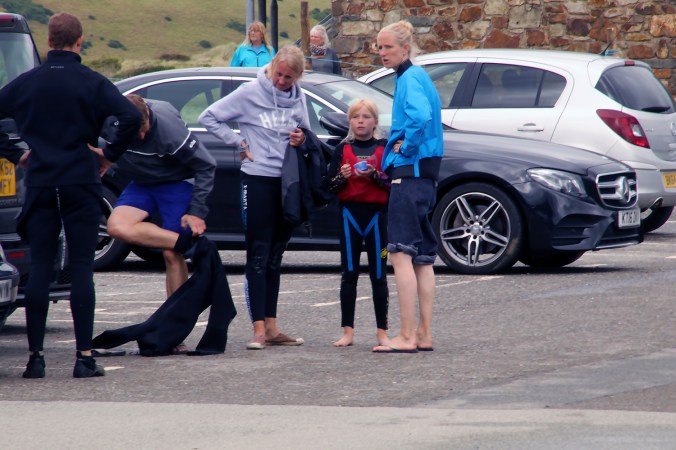
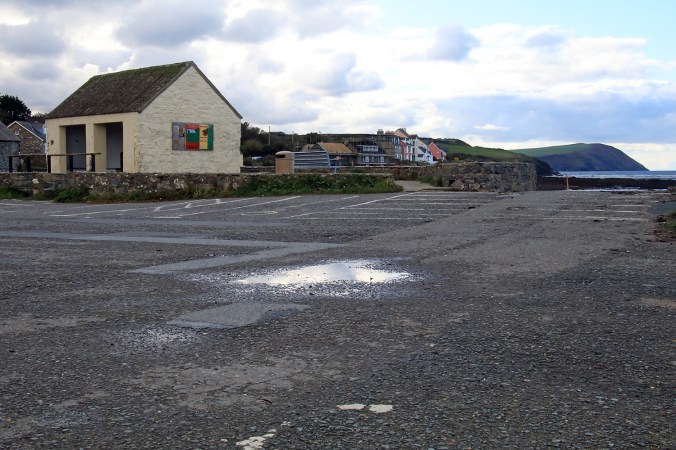
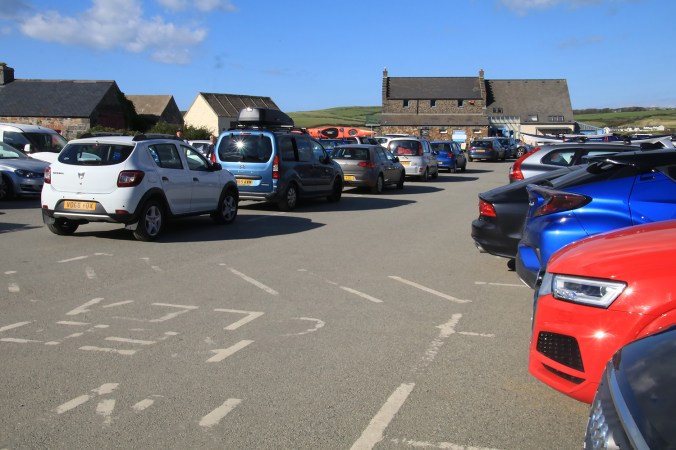
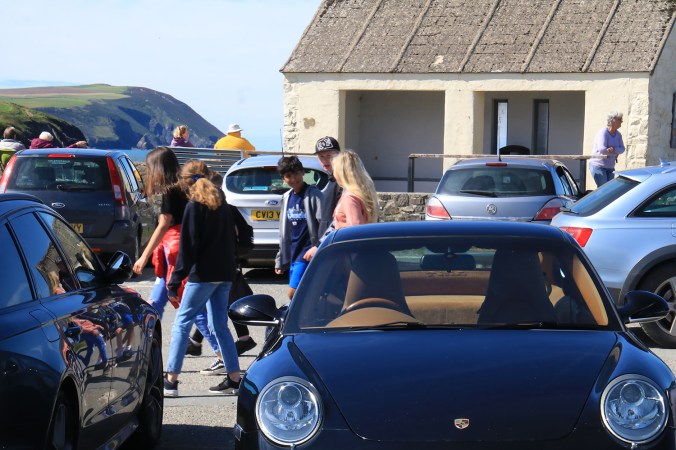
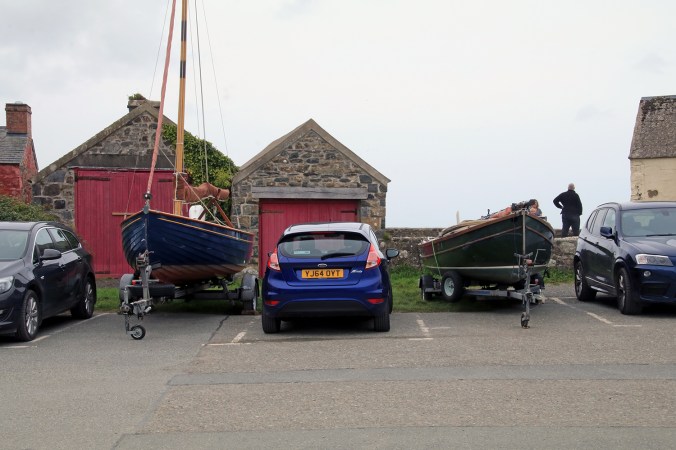
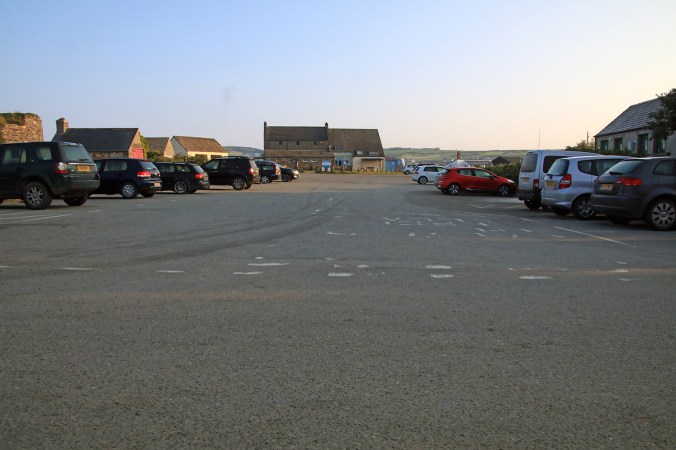
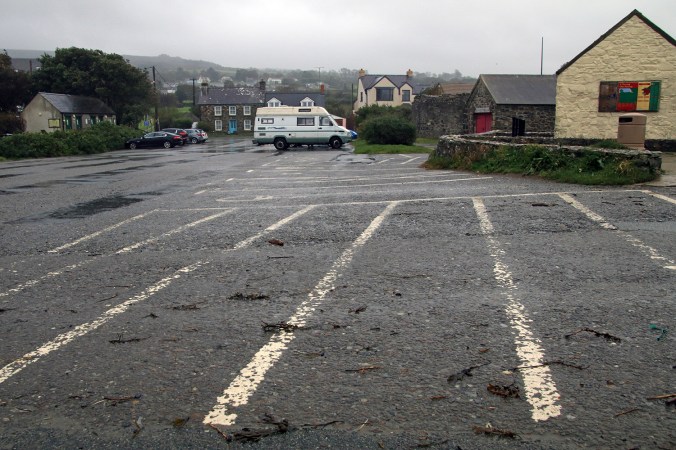
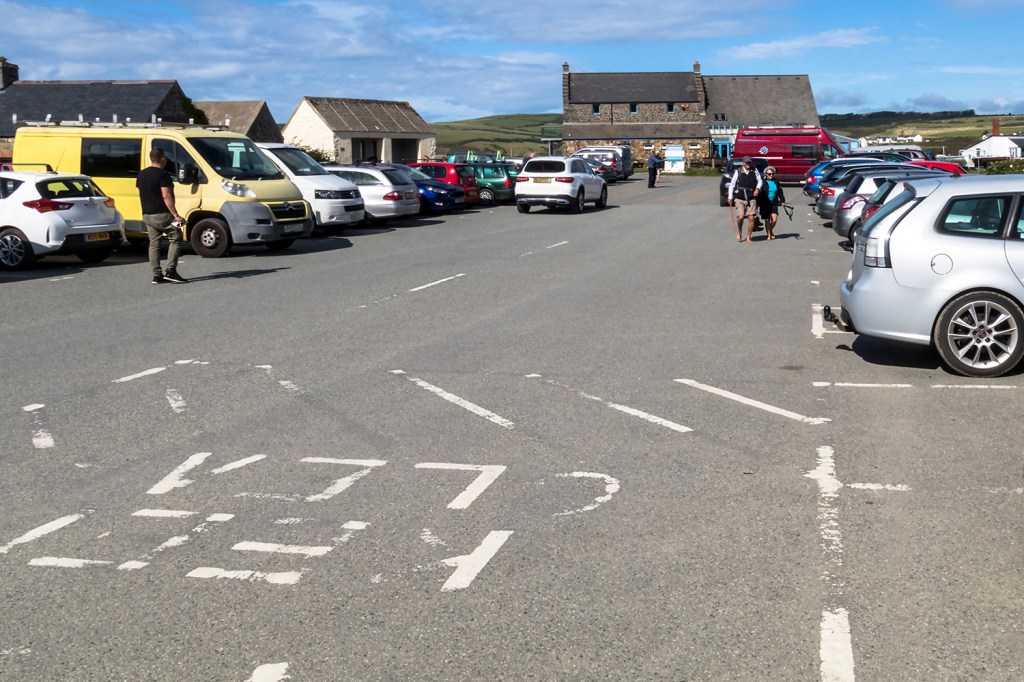
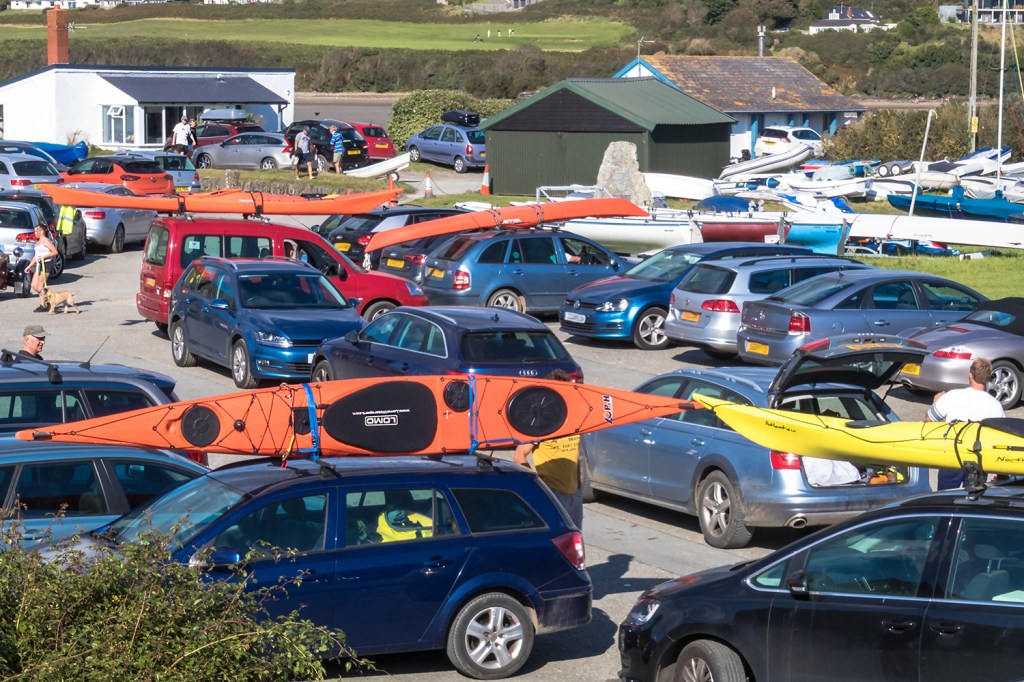
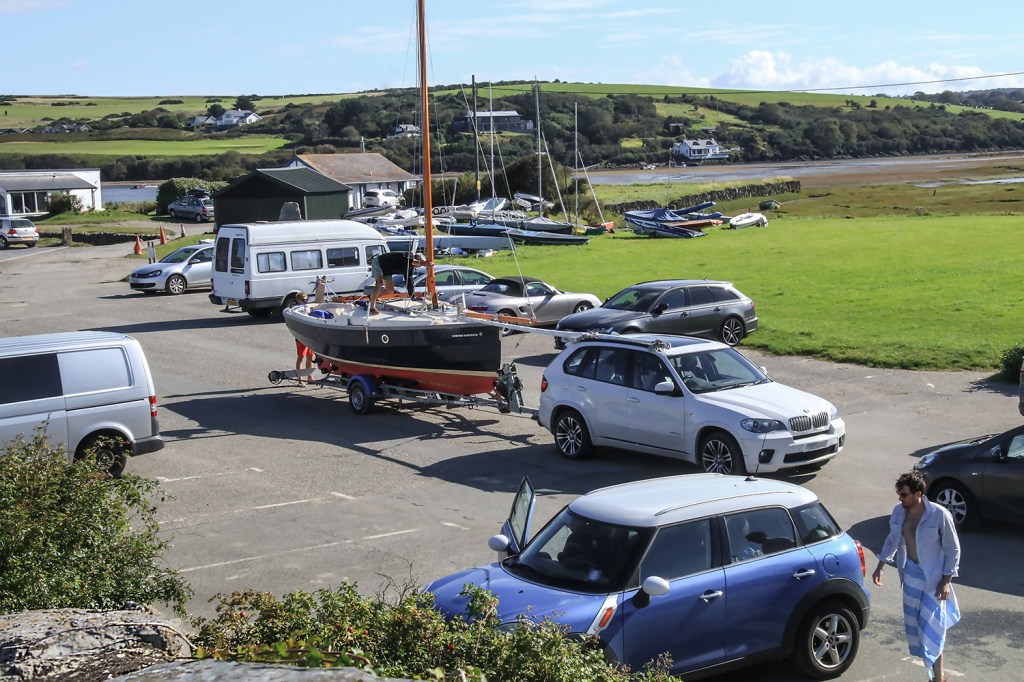
To engage at a local level, I focused in on a small car park, near the water and a boat club in my village in Pembrokeshire. My choice was influenced by the current national and local circumstances. The UK had just come out of a national lockdown and tourists were beginning to move around again. The village, the beach and waterside in particular, changes from sleepy in the winter to comparatively busy over the summer months. This car park is the springboard for many activities local and tourist and as such is a barometer of this transition.

I am currently both and insider and an outsider here, having just made this my main home when it has been my second home for many years. This gives me a unique perspective. I have enough inside information to have a photographer’s gaze rather than a tourist gaze; I understand both the frustrations and joys that the bustle brings to the area, but also share the excitement visitors experience on arrival and their sadness when they leave.

My research gave me much to consider; I have been deliberate in my framing, mindful that what is outside the frame is as important as what I am showing; what Paul Reas calls a conscious ordering of information. My narrative is linear in time though I have also used criteria such as colour to underline the transformation I am sharing. I have not used any text believing that in my framing, composing, choice of images and sequencing I have said what I want to, leaving some room for viewers to interpret the work.

It is a mundane place and my story documents mundane events, yet the feelings evoked and experienced there are rarely insignificant.

References:

FfotonWales (2019) Paul Reas — ffoton. At: https://www.ffoton.wales/interviews/2019/4/paul-reas (Accessed 16/09/2020).

Open College of the Arts (2014) Photography 2: Documentary-Fact and Fiction (Course Manual). Barnsley: Open College of the Arts.
ARTIST STATEMENT

On a physical level the this is story of a car park, however the car park is also a manifestation of the seasonal increase in tourists which alters both the environment of the car park and the nature of the locality. This was a story I particularly wanted to tell this year, when combined with the impact of Coronavirus, lock downs, travel bans and social distancing, the arrival of visitors was felt more keenly by locals. It is a tale of two halves: absence and presence, hushed and busy, lively and dull, and peace and pressure.

BREATHE IN BREATHE OUT

https://vimeo.com/user105657443/review/497293623/a8f706d1bd

Next Post: https://nkssite5.photo.blog/category/coursework/part-four-ethics-and-looking-at-the-other/exercise-4-1-foucault/

ASSIGNMENT 3 SUBMISSION: VISUAL STORYTELLING

REFLECTIONS ON FORMATIVE FEEDBACK

Tutor report: This was written feedback

I was pleased with the feedback from my new tutor, most especially as I seem to be living with this assignment for months; this has given me some distance which helps with reflection, but I was worried that it may have distorted my vision so to speak.

She suggested that I think about a variation to the story theoretically (as it probably wouldn’t fulfil the assignment criteria), such as documenting small specific areas of the car park and documenting their change – I will experiment with this as a side project, which I may well do using my I phone initially to access its usefulness.

For my submission I have rephotographed my final image and replaced it as my Tutor agreed with my reflection that it would be better as an empty car park. I have also rephotographed the 8th image which is the one I think my tutor suggested to try as an empty car park, without the van; however, having tried this in the sequence below I am choosing to stay with my original image. For my narrative I prefer to show the car park transitioning from full/busy to empty/quiet and I think that 3 empty car parks at the end is too much.

The sequence with empty 8th and 10th images as well as the 9th:

With the side-project mentioned above I will continue to experiment with the subject matter to explore further visual narratives.

Next post: https://nkssite5.photo.blog/category/submissions/a3-submission/

ASSIGNMENT THREE DRAFT: REFLECTIONS AGAINST ASSESSMENT CRITERIA

Demonstration of technical and visual skills

  • This assignment was shot over a few months and I observed the space much more than I shot, my observational skills sharpened as I worked into the project.
  • My framing became more deliberate through the shooting period, especially my awareness of what was outside of the frame.
  • I tried a variety of lens, perspective and shot at different times of day, in different weathers and through seasonal changes, to give visual variety; I had to learn to accommodate rather than hide inconsistencies in lighting and colour. My visual strategy incorporated these inconsistencies moving from saturated to less saturated duller images through the sequence.
  • To communicate my concept, I chose to present the images as small and “compressed” for the busy season to larger images gradually to larger images for the quiet season to narrate the feeling of breathing in to breathing out that occurs during this transition.
  • In retrospect I would make the text smaller on the cover,

Quality of outcome

  • My concept is straightforward but communicating it took quite a bit of experimenting. I settled on sharing the transition just from busy to quiet rather than beginning from quiet initially. I think this communicates the transition more strongly.
  • Campbell (2010) says that events have their meaning formed by the narrative, I hope my choice of images (edited many times) combined with the sequencing helps to give meaning.
  • I would like to reshoot the final image as a completely empty car park – which I am in a position to do.
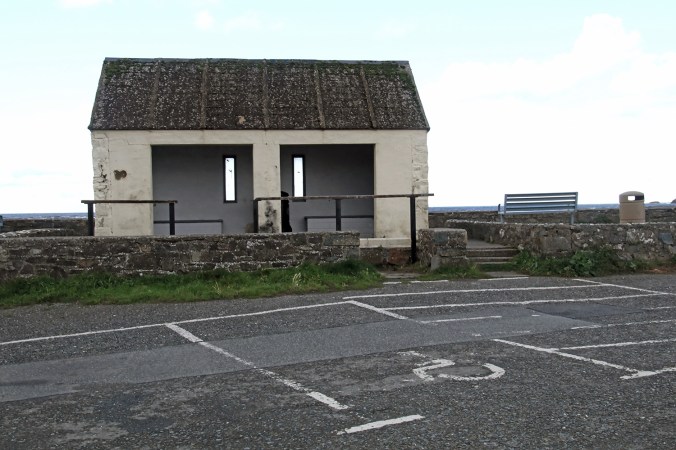
  • It was important to me to have it recognised as being one space, one car park and I anchored this by including fixed elements such as the bus shelter in most images.
  • Though I considered using text I believe the book presentation of the images, sequencing, colour and size provides as much meaning as I need to; I think adding text would have over controlled interpretation.
  • If I had settled on my perspective earlier on when shooting I would have had more “busy” shots which fulfilled my needs; I had plenty but had to choose from only those which focused on the feeling of the space being compressed, rather than English/Welshness or surreality which I started out shooting,

Demonstration of creativity

  • With a conceptual starting point, I experimented with different ways of representing the issue, initially playing as Matt Stuart, Peter Dench, Paul Reas, and Marin Parr do with saturated colour and a slight irreverence to their subjects. I then moved onto exploring Englishness (and Welshness) influenced by Martin Parr, Simon Roberts and Anna Fox; but eventually settled on my own style, a quieter one. 
  • Though I say that I am in an unusual position understanding both the local and visitor response to the seasonal change, you can see my emotional response in the work. Parr says, “it’s the subjectivity not the subject matter that is important”,and I believe my personal voice is evident.
  • As I worked into the project the car park took became a character for me, and the bus shelter also as a part of the landscape. I could almost feel their tenseness during the busy time and their relief when their space became quiet again.

Context

  • This was a personal context to me from the outset. It explored a local issue but one that I was at this precise time able to see both as an insider and outsider being in the throes of transferring from a second homer to a resident. I had been excluded during the lockdown and returned as this ended to become a resident. I was privy to the local resentment to the tourists and to the excitement of the visitors. This transformation was heightened this year, and there will be a discontinuity to the work later however the issue will remain at a lesser level.
  • Though I understood the local issue from both sides as Campbell (2010) suggested it seemed impossible to present this objectively. I think my personal stance shows through in the document, but it will be interesting to see if the document is interpreted in different ways.
  • Personal circumstance meant that this was shot over a longer period than I planned but I used this to my advantage reflecting at length between shooting and between that and editing/presenting.
  • I reflected and fed my learning from my coursework and research into my work and was able to share my work with various OCA peer groups as it developed; this is evidenced in my learning log. As well as the research I have mentioned I was affected by that I did on senses of place Alex Webb, Mikael Subotzy, Marco Van Duyvendik, Laurel Chor, and Hannah Reyes Morales who underlined the importance of knowing a place well to capture it effectively. I also visited photographer’s work which though interesting was not relevant to my project though a similar subject matter such as Stephen Shore, Brice Gilden, Ed Ruscha and Martin Parr’s “Parking Spaces”; all research as an influence but it’s knowing which to discount as well as be led by.

My main regret is the time that it took me to complete this project due to events in my personal life. Looking for the positives, it did give me an extended shooting time, plenty of time to research and experiment and time to reflect between shooting and presenting the work.

References:

David Campbell – Narrative, Power and Responsibility (2010) At: https://soundcloud.com/mattjohnston/david-campbell (Accessed 15/08/2020)

Potter (2018) ‘Martin Parr interview (The World According To Parr, 2003) At: https://www.youtube.com/watch?v=MCRyB2SFQZ4&feature=youtu.be (Accessed 25/10/2020).

Next Post: https://nkssite5.photo.blog/category/submissions/a3-submission/

ASSIGNMENT THREE DRAFT: VISUAL STORYTELLING

THE BRIEF:

Produce a photo story of 10 images that, as a set, tells a story and conveys a narrative.

  • Engage at local level.
  • Do this assignment in colour.
  • This is not a visual chronology unless your theme naturally has one. Structure your visual story as you would a written story. Present your viewer with the theme, further developments and complications and, finally, a resolution – or non-resolution that poses further questions. Edit and sequence your work accordingly.
  • Go for visual variety – use a variety of lenses, viewpoints and compositions – but ensure visual and conceptual consistency across the images.                                                                          (Open College of the Arts, 2014:83)

BREATHE IN BREATHE OUT

COMMENTARY

To engage at a local level, I focused in on a small car park, near the water and a boat club in my village in Pembrokeshire. My choice was influenced by the current national and local circumstances. The UK had just come out of a national lockdown and tourists were beginning to move around again. The village, the beach and waterside in particular, changes from sleepy in the winter to comparatively busy over the summer months. This car park is the springboard for many activities local and tourist and as such is a barometer of this transition.

I am currently both and insider and an outsider here, having just made this my main home when it has been my second home for many years. This gives me a unique perspective. I have enough inside information to have a photographer’s gaze rather than a tourist gaze; I understand both the frustrations and joys that the bustle brings to the area, but also share the excitement visitors experience on arrival and their sadness when they leave.

My research gave me much to consider; I have been deliberate in my framing, mindful that what is outside the frame is as important as what I am showing; what Paul Reas calls a conscious ordering of information. My narrative is linear in time though I have also used criteria such as colour to underline the transformation I am sharing. I have not used any text believing that in my framing, composing, choice of images and sequencing I have said what I want to, leaving some room for viewers to interpret the work.

It is a mundane place and my story documents mundane events, yet the feelings evoked and experienced there are rarely insignificant.

References:

FfotonWales (2019) Paul Reas — ffoton. At: https://www.ffoton.wales/interviews/2019/4/paul-reas (Accessed 16/09/2020).

Open College of the Arts (2014) Photography 2: Documentary-Fact and Fiction (Course Manual). Barnsley: Open College of the Arts.

ARTIST STATEMENT

On a physical level the this is story of a car park, however the car park is also a manifestation of the seasonal increase in tourists which alters both the environment of the car park and the nature of the locality. This was a story I particularly wanted to tell this year, when combined with the impact of Coronavirus, lock downs, travel bans and social distancing, the arrival of visitors was felt more keenly by locals. It is a tale of two halves: absence and presence, hushed and busy, lively and dull, and peace and pressure.

BREATHE IN BREATHE OUT

Next Post: https://nkssite5.photo.blog/category/learning-log-research-and-reflection/reflection/a3-reflection/assignment-3-assessment-against-assessment-criteria/

LEARNING LOG: ASSIGNMENT 3

Assignment 3 learning log: Visual storytelling

In preparation we were asked to listen to a lecture on documentary and narrative by Professor David Campbell.

The brief: Produce a photo story of 10 images that, as a set, tells a story and conveys a narrative.

  • Engage at local level.
  • Do this assignment in colour.
  • This is not a visual chronology unless your theme naturally has one. Structure your visual story as you would a written story. Present your viewer with the theme, further developments and complications and, finally, a resolution – or non-resolution that poses further questions. Edit and sequence your work accordingly.
  • Go for visual variety – use a variety of lenses, viewpoints and compositions – but ensure visual and conceptual consistency across the images. (Open College of the Arts, 2014:83)

Planning

My initial idea was to focus on a small local car park, by the waterfront here, which is quiet and empty much of the year but becomes extremely busy in the summer season. I thought it would be interesting to observe and record this process from spring to Autumn as a manifestation of the invasion of tourists into an otherwise sleepy place.  

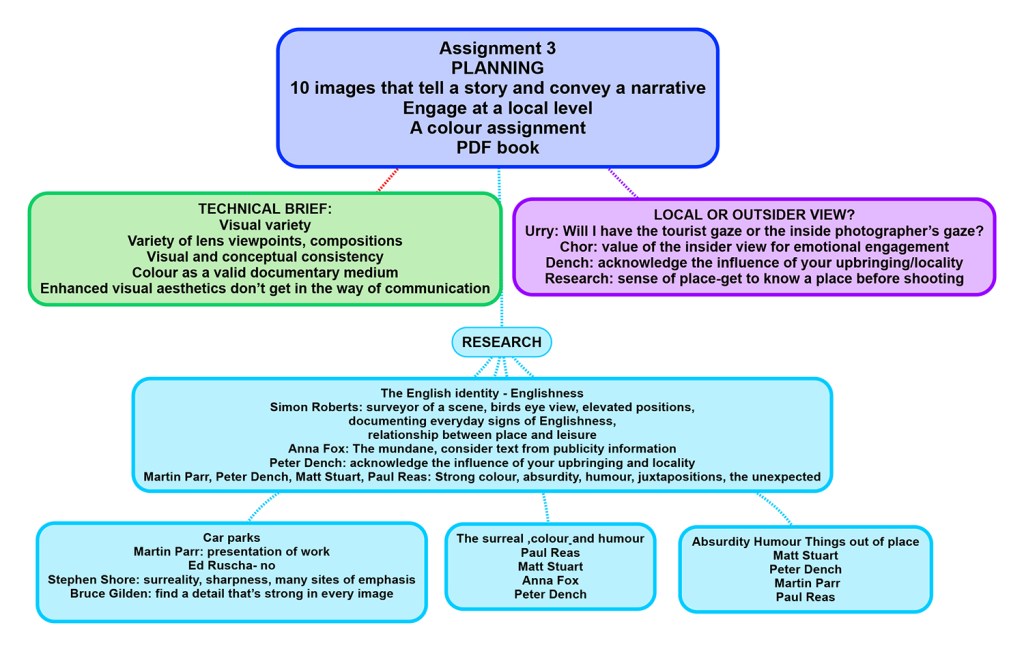
I was influenced initially by Simon Roberts work, where he surveys scenes, often from elevated positions particularly his work We English (2009) documenting everyday signs of Englishness (1985/86) and by Anna Fox’s work Basingstoke (1985/86) particularly her emphasis on the mundane; however, by the time I started shooting I had researched the street photography of Peter Dench, Matt Stuart and Paul Reas and this fed into my first few shoots; thus, I strayed from my original intention focusing more on people in the car park subconsciously looking at characterising their tourist role.

I shared these images with some peers:

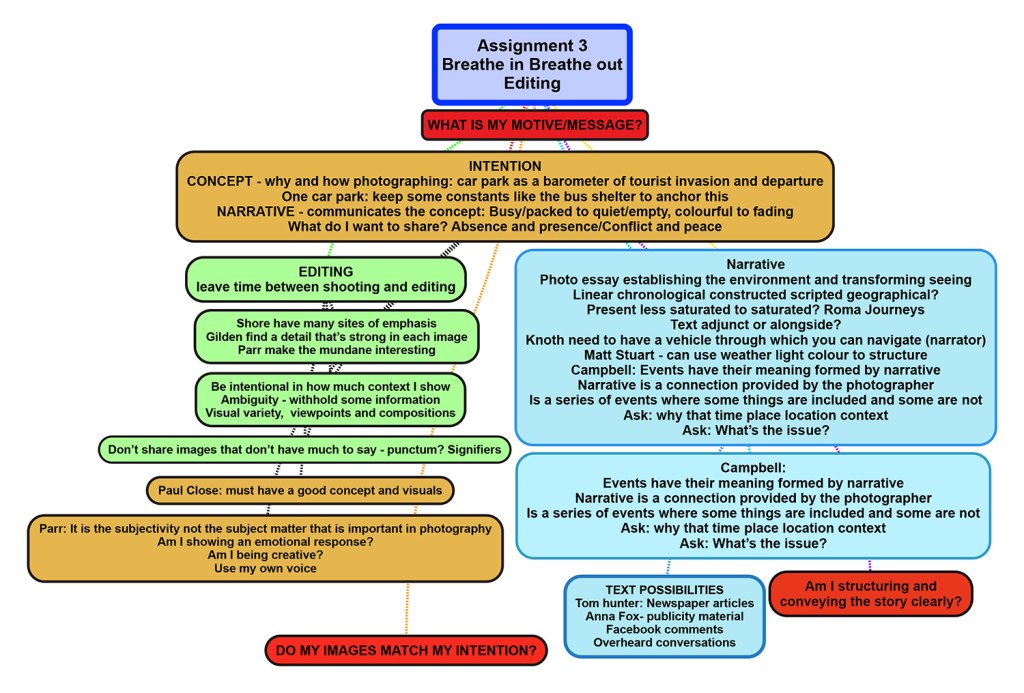
Planning mind map:

Shooting

Following peer feedback and my reflections I decided that I should return to my original intention and focus on the car park rather than the people, exploiting signs of presence and absence. I revisited my research on Martin Parr and Stephen Shore’s colour photographs of car parks noting the sharp detail, high colour saturation, and using the mundane to create meaning. I also considered how to show that this is one car park, whilst using a variety of viewpoints as required in the brief and decided to feature the bus shelter in most images to anchor this.

I thought more about my technical approach:

  • To use colour, vibrancy or the lack of it to communicate mood
  • Try different lens
  • Frame more forcefully, with an eye on what’s outside of the frame
  • Use good depth of field
  • Use perspective to magnify subtleties and choregraph information

These were the next set of images shared with peers on my documentary OCA hangout 8.10.20:

Shooting Mind map:

Editing

Because of personal events I had plenty of time between shooting and editing, which is not a bad thing, though I did feel my work was rather staccato. I made sure that I returned to my intention when choosing images and sequencing.

I thought about narrative seriously at this point, as this communicates the concept. David Campbell’s insights on narrative were helpful, that it is, to relay information, make sense of things, provide connections, and overall that the “event” is not what happens but what is narrated.

I asked myself whether my images match my intention, a car park as a barometer of absence and presence, invasion and peace and considered how to order them to get best effect and meaning. I had intended to show the process from quiet to busy to quiet again but realised that I could achieve my intention by simply starting from busy (which is actually when I started shooting) through to the quiet season.

I also asked myself whether the images made the mundane interesting as Parr suggests, had strong details in them (Gilden), different sites of emphasis (Shore), had visual variety, and that I was intentional in how much context I gave and ambiguity that then remained.

When I thought about sequencing, I considered not only the content but also colour, remembering how in the Roma Journeys (Eskildsen and Rinnes, 2007) images were presented less to more saturated; this has happened more or less in my work but as a consequence of the weather deteriorating and the light falling as the busy season exits, a natural consequence.   

Editing mindmap:

Presentation

I had considered text that I could use at various points of the project: press statements as we went in and out of lockdown, publicity from tourist/local articles/Trip advisor, snippets I’d overheard in the car park, letters or Facebook comments from residents; but ultimately decided to let the images and their sequencing speak for themselves – to keep it simple and not impose my meaning on the viewer. I employed the technique of sequentially increasing the size of images on the book pages to emphasis the “breathing out” of the car park.

I’d had useful book making discussions with peers and decided to create mine in lightroom. I sent the book to blurb to see how it looks as a book and have taken screen shots of this, but also made a PDF which gives better quality images.

I then shared these with peers: Hangout 26.11.20. One asked me about how the visuals connect with the concept of breathing in and out, and questioned should there be one busy, then one quiet image to mimic breathing in and breathing out. My feeling and the group consensus was that this would destroy the flow and narrative. Following their comments, I did exchange the positions of the 4th and 5th images. I also considered creating a “flip” book with the breathe in at the front flipping the book upside down to the breathe out at the back; this seemed overcomplicated so in the end decided to move the title text completely to the front of the book, instead of having breathe in at the front and Breathe out at the back as I had originally.

2nd draft

Editing and presenting Mind map:

References:

Anna Fox (2020) At (Anna Fox (2020) At: https://annafox.co.uk/ (Accessed 29/10/2020). Accessed 15/9/2020).

Eskildsen, J. (2020) Joakim Eskildsen Photography At: http://www.joakimeskildsen.com/default.asp?Action=Menu&Item=104 (Accessed 28/10/2020).

Open College of the Arts (2014) Photography 2: Documentary-Fact and Fiction (Course Manual). Barnsley: Open College of the Arts.

We English (2020) Eight Magazine issue 25, summer 2009 At: http://www.simoncroberts.com/work/we-english/ (Accessed 05/09/2020).

Next Post: https://nkssite5.photo.blog/category/learning-log-assignments-2/assignment-3-visual-storytelling-learning-log-assignments/assignment-3-draft/

REFLECTION AND RESEARCH: ASSIGNMENT 3

David Campbell- Narrative, Power and responsibility  (2010)

He talked about the theory and concepts behind storytelling and narrative:

  • The point of narrative is to relay information.
  • Narrative is about making sense of something
  • Events have their meanings formed by the process of narration – the event is not what happens but what is narrated.
  • Narrative is about the relationship of story to an event, place or person which the photographer makes by providing a connection.
  • Context is important to narrative as mediation and representation- The event is not what happens but what is narrated.
  • There are limits to the narrative that can be given to certain events as narrative is based on a series of events where some things are included and somethings are not; the narrator will have a perspective and the narrative will never be complete.
  • Be aware of these limits and reflect on these
  • He commented that news happens in a day and is reported as a discrete event but is often not linked to context.

Traditional forms of narrative:

  • Time: Linear, or non-linear that breaks up time in certain ways
  • Characters/personification: who drive the story forwards
  • Connected events & drama
  • Space: Location
  • Causality: Accounts about how things came about
  • In narrative there will be moments of: Exposition – where things ae revealed or made clear
  • Conflict – climax or resolution
  • Campbell believes the most important thing in narrative is the relationship between characters and the context, how they reveal the story.

ASK YOURSELF, WHAT IS THE STORY YOU WANT TO TELL?

Why that place, location, time? What is the issue that motivates you? What are the characters? What is the context?

On power and responsibility and an image’s capacity for change and effect on the world:

  • Campbell suggests the more you can attend to context the more chance there is of change.
  • The amount of research that goes into a story will maximise the outcomes and prospect for change

My thoughts:

  • Any ideas of objectivity in documentary are false.
  • It was interesting that he mentions Marcus Bleasdale whose work I researched recently as a photographer whose work actually instigated change
  • I should follow up by researching Tod PapaGeorge’s work that he uses as an example.  

Reference:

David Campbell – Narrative, Power and Responsibility (2010) At: https://soundcloud.com/mattjohnston/david-campbell (Accessed 15/08/2020).

Next Post: https://nkssite5.photo.blog/category/learning-log-assignments-2/assignment-3-visual-storytelling-learning-log-assignments/a3-learning-log/