Read the article ‘Images that Demand Consummation: Postdocumentary Photography, Art and Ethics’ by Ine Gevers (Documentary Now! 2005). Core resources: IneGevers.pdf
Summarise in your learning log the key points made by the author. (Open College of the Arts, 2014:105)
Ine Gevers is a Dutch art curator, activist and writer. Here she suggests that documentary should engage with the world not just record it. Where photographer, viewer and subject come together in a “consummation of the image”.
Here is a summary of her main points:
Since the 70’s there has been a blurring of the boundaries between photography as document and as art- she calls this post-documentary photography.
She is particularly interested in how image makers are stretching the boundaries of perception, expanding aesthetics.
Aesthetics and ethics have been considered opposites post-documentary artists are trying to restore their former connection.
She probes the concept of aesthetics, suggesting that it broadens and makes you notice what you’ve not before. However, that old style aesthetics can constrict viewing and viewpoints.
Photography can open up our world by sharing experiences, but it can close down our view by turning subjects into objects and “murdering their individuality”. Sontag called this numbing our conscience.
Photography can be democratising as it creates a reality that is more real than real, even though there are always efforts to expose the limits of representation.
Martha Rosler is cited as one who though not a documentary photographer she regularly uses documentary photography in her work subverting objectivity in photography.
Allan Sekula is also cited, who has appropriated documentary photography, using it aesthetically to show its ambiguity.
She explains how the horrors of subjects such as the twin towers attacks made us look beyond instant immediately consumed images that cause one- dimensional reactions. Examples given are black pictures, with sound (Moore’s documentary), Alfredo Jaar’s images of the Rwanda atrocities that were all, but one contained in closed boxes for his installation (Lament of the images, 2002).
Alain Badiou’s philosophy is shared- where artists remain faithful to personal truths, even in opposition- exemplifying artists and ethics being intertwined. He argues for interventionist ethics that are situation specific as the truth is an event, not an opinion.
Photographs carry no weight in themselves but by acquiring meaning they can unleash a truth process, which can be followed by a process of completion encompassing artist, image and viewer. The viewer then as co author gives weight to the image.
She suggests this may align with Barthes punctum, the extra that may seem to be added to an image.
Gevers suggests that this truth moment, makes the viewer come alive, and teach viewers to perceive differently. This sets in motion something other than the observable, enabling “one that consummates to become someone”. For this the viewer must be able and willing to consummate the image. Then when the viewer is involved in the image, they can become autonomous, and ethics and aesthetics can be a partnership.
My learning:
To consider that it may be the way that images are consumed, viewed and interpreted that gives documentary photography its autonomy.
Listen to Jim Goldberg talking about Open See and his exhibition at the Photographers’ Gallery: http://vimeo.com/22120588
Visit Goldberg’s website http://www.opensee.org and reflect on how or if it works as a documentary project within the gallery space. (Open College of the Arts, 2014:105)
The interview
This short clip shows preparation for an exhibition. He was part of a magnum team sent to photograph different aspects of Greece for the 2004 Olympics, his focus was immigrants. He talked of the immigrants he came across from various countries, some trafficked, some economic migrants, and some prostitutes. He shared his images and annotations of their stories, but with no idea given about the number of images and how they fitted into the final exhibition.
Goldberg’s website
This functions as a gallery space for images and text of displaced, economic migrants, illegal migrants, and refugees. The front page presents images in a compact montage, as if on gallery walls, guiding the viewer across them.
The side bar tabs:
Wilhelm-Hack-Museum: annotated images of immigrants and their stories.
Tate: A video how to fold a single sheet of images into a book, which is useful; probably an interactive activity at the Tate exhibition.
Deutsche Borse: Another video with a story about a refugee boat, and how to make a paper boat.
Objects: such as torture files to support obtaining amnesty, wallets of the dead, fake adverts and interviews.
Resources: with website links that informs about the issues of many of his subjects.
Reflections:
It is interesting but again lacks information for instance a summary and detailed context. The images are small, and I expected to be able to click on them and they would open in their own windows so I could have closer look, but this was not possible.
Overall, though fragmentated there is a lot of information presented: documents of people’s journeys. The work is collaborative, he uses a variety of media and has unusual narrative techniques. Though disjointed the work together tells a themed story and is a good example of a balance between expression and information in a gallery and could be shared and articulated in an art gallery space.
I can compare this with my viewing of his work see previously, “Raised by wolves” (1989) which documented the lives of runaway teenagers living on the streets of San Francisco and Los Angeles from 1987 and 1993. In this he used photographs, video stills, found documents, and handwritten texts by the subjects themselves. Here he also tells the story in different ways: a traveling art gallery exhibit, a book, a website, and an experience, though most of the book is photographic as even the handwritten notes are photographed using these texts and his imagery to share their experiences.
What struck me then was the huge variety of presentation that he has used in this project and the same is apparent in his website. The mixed media he uses adds an earthiness and reality to the narrative in the photojournalistic style.
Read the article ‘The Judgement Seat of Photography’ (in Bolton, 1992, pp.15–48)
Core resources: TheJudgementSeat.pdf
Add to your learning log the key research materials referenced in the text. (Open College of the Arts, 2014:103))
The essay describes The Museum of Modern Art’s (MOMA) evolving relationship with the photograph as art. Curators/directors of MOMA have strongly influenced attitudes to photography generally and the MOMA in particular. Phillips focuses on three influential people in the history of the MOMA and its photography department.
In Walter Benjamin’s essay “The work of Art in the Age of Mechanical Reproduction” (1936) he proposes the terms “cult value” (arts origins in magical or religious rituals) and “exhibition value” (the changing function of a work of art as it becomes portable and can be duplicated). This then leads to greater availability and a lessening of a work’s aura.
Theodor Adorno was sceptical about Benjamin’s arguments but in 1932 the MOMA showed photographs for the first time in “Murals by American painters and Photographers”.
It was Beaumont Newhall’s (the first curator of the museum) exhibition Photography 1839-1937 that was the first major acceptance of photography as museum art; he focused on the techniques that evolved rather than aesthetics. Barr’s “Cubisim and Abstract Art” (1936), and “Fantastic Art, Dada, and Surrealism” (1936) as well as “Bauhaus 1919-1928” (1938) also showed MOMA’s modernised thinking. Newhall’s catalogue essay articulates his judgement that photographs when taken out of the realms of documentary and journalism, should focus on the qualities of prints and techniques. Newhall suggested that photography should be looked at in terms of the Optical (details) and chemical laws (tonal fidelity). Newhall’s first exhibition as curator was “60 photographs: A survey of Camera Aesthetics’”, which concentrated on authenticity, and personal expression.
Moholy Nagy shared the same photographic vision as Newhall as did Ansel Adams. Later Newhall became the director of photography and Edward Steichen the head of the department; apparently Newhall failed to elevate photography to the status of fine art. Steichen’s approach was different, less the photographer as an autonomous artist and more curators as “orchestrators of meaning” with exhibitions “The impact of War” (1951), “The road to victory”, “The family of man” and “The bitter years” (1962). Steichen’s installations were more about design, and popularising photography, than the photographer’s eye or the individuality of images. I first looked closely at Steichen’s work at the Tate Modern exhibition The radical eye. Modernist photography from the Sir Elton John collection (November 2016). I was fascinated by his portrait of Gloria Swanson which looks almost 3 dimensional. Here Steichen shows how he evolved from photographing in soft focus to a modernist crisp focus. As a curator he was responsible for showing that photography could be channelled into mass media, but weakened the “cult value” of photography as fine art.
John Szarkowskisucceeded Steichen in 1962 as director of MOMA’s department of photography and returned to a more formal museum space and revives Benjamin’s “cult value” of photographic work. Szarkowski reconstructed a modernistic aesthetic for photography, photography in its own aesthetic realm; he presented his ideas on photography’s formal properties in his book The Photographers Eye (1964), and the individual qualities of photographers. I read his book a while ago when first studying how to read photographs. Szarkowski set out his intention for his book as “an investigation of what photographs look like, and of why they look that way” (Szarkowski, 2009).
I found it interesting how he makes clear that photography invaded the territory of art, could not work to old standards and had to find its own ways of making its meaning clear. Photography was invented by scientists and painters but the professional photographers it produced were varied in their skills and had increased vastly by the early twentieth century. There was a deluge of pictures, describing new things and in new ways, most especially the ordinary. Szarkowski listed five issues he believed are inherent in photography and organised his selected images in these groups: the thing, the detail, the frame, the time, the vantage point. This gave me another way to look at images and I asked myself them whether any were more influential on a photographer than another. A few years on I realise that these will of course vary according to purpose, mood and inclination. Szarkowski prepared the way for a photographers “aestheticized authorial voice” and re-elevated photography as art in its own right.
Peter Glassi’s (curator at the MOMA) 1981 exhibition “Before Photography” supported Szarkowski’s idea that photography is its own entity.
My learning:
I have a greater awareness now of the impact of directors and curators of museums on the position of photography in art; I was surprised how much influence the MOMA had on isolating and culturally differentiating photography as an art form. It was also good to set in context some previous learning and reading. Today there are many more factors beyond museums and books, such as social media, the internet, that will determine the photograph’s place in the art world.
References:
Benjamin, W. (1935) Art in the age of mechanical reproduction
Newhall B. (1949) A history of photography from 1939 to the present day. The museum of modern art, distributed by Simon and Shuster, New York.
Open College of the Arts (2014) Photography 2: Documentary-Fact and Fiction (Course Manual). Barnsley: Open College of the Arts.
Phillips, C. (1982) The Judgement Seat of Photography. October, Vol22 9Autumn, 1932), pp27-63. At: http://www.jstor.org/stable/778362.The MIT Press. (Accessed 20/02/2021).
Szarkowski, J. (2009). The photographer’s eye. The Museum of Modern art. New York.
Look at the Cruel + Tender brochure for yourself. Core resources: Cruel &Tender.pdf Listen to interviews with two of the featured photographers, Rineke Dijkstra and Fazal Sheikh:
Add relevant notes to your learning log. (Open College of the Arts, 2014:101)
Cruel and Tender
The brochure is a teacher’s guide to the exhibition Cruel+ tender: The real in the 20th century photograph (5th Jun –7th September 2003). The exhibition explores ways of representing “the real” through documentary photography including, portraiture, the notion of truth, the role of the viewer, using a series of images. There were 4 themes in the exhibition:
Occupied spaces– the way that photographers have selected specific people to photograph, and how and where they are shown affects our perception of the images, including the work of August Sandar, Walker Evans, and Paul Graham.
On the Road – Urban and rural space and travelling photographers, Walker Evans records of changing landscapes, Robert Frank’s snapshot style, and Stephen Shore’s attention to detail.
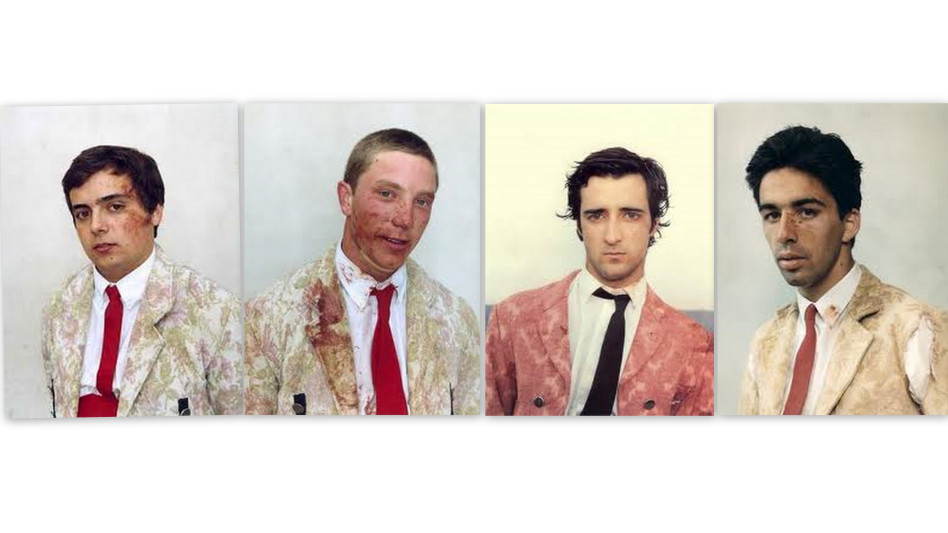
Exploring vulnerability – the cruelness of the intense scrutiny of the camera and the ethics, politics and morality of works. Rineke Dijkstra Matadors and the Mother’s series, Diane Arbus’s photographs revealing private lives and Boris Mikhailov’s series “Case History”.
Industrialisation and consumerism– Photographers who mapped the changing industrial landscape and decline such as the Bechers, Andreas Gursky, and Louis Baltz.
Life stories– Dignified portraits like Fazal Sheikhs.
It would have been good to have seen the exhibition, but I was able to discover more by reading the Tate post on the exhibition (Tate,2003). The photographers in the exhibition were chosen as they have a sense of “tender cruelty”, with a swaying between estrangement and engagement in their work which results in realistic observational photography.
The links to the interviews with Rineke Dijkstra and Fazal Sheikh no longer work so I have instead watched interviews with them about their work elsewhere:
Fazal Sheikh: His interest in photographing refugee communities began in Kenya, South Africa in the late 80s; in his work “Ether”, he developed mode of expression he was comfortable with no preconceptions, stepping back, and remaining receptive about what the people and place has to offer. His was able to do this as he spent weeks living in the camps amongst the refugees. Making work that is politically. socially and otherwise helpful to the communities that create the work, a platform for them to speak. through and further a conversation. To encourage viewers to be open and to think more deeply about other communities. He treats subjects as individuals, giving text alongside images that offers their names and political circumstances.
Rineke Dijkstra: is known as portrait photographer who primarily uses a large format camera, so you see a lot of detail, though she minimises visual contextual details, this isolation make you focus on only the subject. She odes though provide a lot of contextual detail in text accompanying her portraits.
I have come across her work several times previously, but I’ve now learnt that she has also taken self- portraits; these were photographed immediately she had finished swimming and was exhausted, so that she would capture her raw emotional state. A useful reminder to use yourself to experiment with ideas. From this Dijkstra developed her work with photographs of Portuguese bull fighters straight after they have come out of the “ring”. She “finds rawness and vulnerability in people who are physically exhausted, such as mothers who have given birth, or matadors who have just left the bullfighting ring” revealing their fragility as human beings (Letson, 2016); she says it’s difficult to capture natural unguarded portraits normally. Her work emphasises the individual and her empathy for them.
(Letson, 2016)
Both these photographers show respect for their subjects by acknowledging them as individuals and providing as context for viewers their stories.
Write a 2,000-word critical essay on one of the many debates that you’ve explored so far in this course. You may use any of the research materials you’ve collated so far or do further research. (Open College of the Arts, 2014:95)
For assignment 4 I decided to explore how documentary photography can be effectively disseminated for the benefit of communities that it is photographed in. This was initially sparked when I first encountered the work of Mark Neville in: The Port Glasgow project, Deeds not words, Parade, and battle against stigma, when I was at a virtual artist’s talk at the Photographers Gallery in April 2020. Since then I have taken a particular interest in other photographers and photography projects that work with communities that try to ensure that the work benefits the people photographed.
In her feedback my tutor queried several points about my draft critical review. She was positive about my choice of topic, my understanding and my research which has allowed me to contextualise and make perceptive theses; however she points out that the breadth of my research and writing has prevented me from closely analysing my sources. She also pointed out that though my photographs are relevant I haven’t evaluated their potential to make change. I can see now as she says that my “critical engagement and analysis are hinted at rather than exemplified”.
My action plan for a reworking of the critical review
1. Reduce the breadth of my writing by “control and editing of sources”, this will enable me to:
Give more in depth analysis
Articulate my critical engagement, to describe how my sources support my view and have developed my argument and thesis.
Describe how my research has led me to my end thesis – How I get to my ideas.
2. Provide more in-depth image analysis. The activists that I describe in my sources are visual activists so I need to articulate how they provoke a response through the lens, the response they provoke, as the audience is not passive.
My rework
I narrowed down the material that I used so that I could explore what remained in more depth. I have concentrated my review on fewer practitioners, but was able to use the other material that I’d previously used and read to retain my broader understanding of the issues. I have placed these references in my bibliography. I was then able to express how I developed my argument.
I also revisited the images that I’d included and included more background details on the images that I’d used and how they exemplified my thesis.
I can see that I have now formed a more detailed but also succent and cohesive essay which develops more effectively towards my conclusion.
I have not found it as easy to evaluate the critical review against the assessment criteria as it is photographic assignments, however:
Context and demonstration of technical and visual skills
I have researched using secondary source material: facts, images, ideas, quotations, through reading, listening and participation in talks and lectures.
I have analysed the material and used it critically to construct and support my opinions about my subject.
In the essay I have brought in and engaged in some of the theoretical and particularly ethical issues I encountered during the course such as power, respect, context, intent, social and a photographer’s responsibilities.
My choice of subject was driven by learning during the coursework and interest that grew from several photographic talks form a year ago; particularly the Lumix Festival talks in June 2020 which focused on reconsidering perspectives in documentary photography.
The essay also grew from being inspired by the working ethics of particular photographers such as Mark Neville and Robert knoth whom I heard speak virtually; as well as commentators on documentary photography such as Fred Ritchen Michelle Borge and Stephen Mayes.
Demonstration of creativity
My personal thoughts on photographic practice stimulated by the course guided my choice of topic.
I chose my critical review subject so that I could delve deeper into particular types of working in documentary photography that I encountered during the course.
Following my research and analysis I have formed and given my own opinions on how a photographer can benefit the communities that they photograph.
I redrafted at the end of my writing many times to try to give my personal voice as well as using the work and practice of others for examples.
Quality of outcome
I have shared ideas of photographic practice to demonstrate how photography can helped communities photographed.
To do this I have related to wider social political and economic issues.
I have structured the essay using subtitles and signposting to guide the reader.
I have written the essay in an academic style and referenced all material used.
I have included photographic images as suggested in the brief although I don’t feel that they are essential to the critical review.
I hope that I have communicated my ideas and evidence clearly.
Write a 2,000-word critical essay on one of the many debates that you’ve explored so far in this course. You may use any of the research materials you’ve collated so far or do further research. (Open College of the Arts, 2014:95)
For assignment 4 I decided to explore how documentary photography can be effectively disseminated for the benefit of communities that it is photographed in. This was initially sparked when I first encountered the work of Mark Neville in: The Port Glasgow project, Deeds not words, Parade, and battle against stigma, when I was at a virtual artist’s talk at the Photographers Gallery in April 2020. Since then I have taken a particular interest in other photographers and photography projects that work with communities that try to ensure that the work benefits the people photographed.
When researching for my assignment, amongst others I identified the photographers below who I have researched in more detail to analyse where their work and practices would fit into my critical review.
Nick Danziger(b1958) is a British photographer and film maker.
He has photographed disadvantaged across the world and has been recognised as “raising public understanding of contemporary social, political and environmental issues through documentary films and photography”(Danziger, 2021). Whilst doing this he often steps away from impartial reporting in order to “give a voice to those who rarely feature in the media” (Widewalls, 2021).
In 2001 he made a photographic study of people living in extreme poverty in eight countries to share the impact of armed conflict on women; this was to see what progress was being made towards meeting the eight ‘Millennium Development Goals’ set by the United Nations to eradicate poverty, end hunger, save lives and improve education by 2015. This work “Eleven Women Facing War” provided a powerful insight into the world of women caught up in vicious conflict in Bosnia, Kosovo, Israel, Gaza, Hebron (West Bank), Sierra Leone, Colombia and Afghanistan. Danziger said
“We often talk about the victims of war,…I hope these images and stories are a tribute to these women’s indomitable spirit, endurance and bravery” (Imperial War Museum, 2016).
The International Red Cross (and promoter of international humanitarian law) called the images “incredibly powerful and a true testament to the horrors of war and the power of the human spirit” (Imperial War Museum, 2016). His images are illuminating:
However the power comes from their testimonies that he provides alongside his images. It is not clear from his images how other than by raising awareness, he has created impact; but there is evidence of impact. 10 years later he followed up the subjects to reveal their stories on short films and stories. One, Mariatu, whose hands were amputated by guerrilla soldiers in Sierra Leone, is now safe and well and living in Canada and has fulfilled her dream to be a Mother. Mahu Bibi, a 10 year old from Afghanistan, looking after her brothers against all odds, unfortunately was not found. He originally shot in black and white and shot a decade later in colour to show the passage of time, a useful idea.
In 2018 Danziger photographed substance-users and treatment centres around the world, focusing on issues surrounding substances that are often not illegal. His work was exhibited at the commission on Narcotic Drugs event in Vienna. He hopes that policy makers will be affected by the images “because of the people within the pictures…I think it’s really important to understand how …it shows a variety of individuals that have been users, or currently are dependent and receiving treatment” (anyoneschild, 2018), as a greater understanding could bring possibilities of rehabilitation through treatment centres where those are available – He hopes his pictures and the exhibition may lead to policy changes.
I have reported on Mendel before when I attended an AOP breakfast Club meeting in June 2020 (South, 2020). My subsequent research has shown Mendel to use visual activist alternative ways of storytelling. When discussing his work he said he still believes that photography “has the ability to make positive change in the world”. His photographic projects have challenged apartheid in South Africa, perspectives on AIDS/HIV globally and latterly climate change (Tank Magazine, 2012).
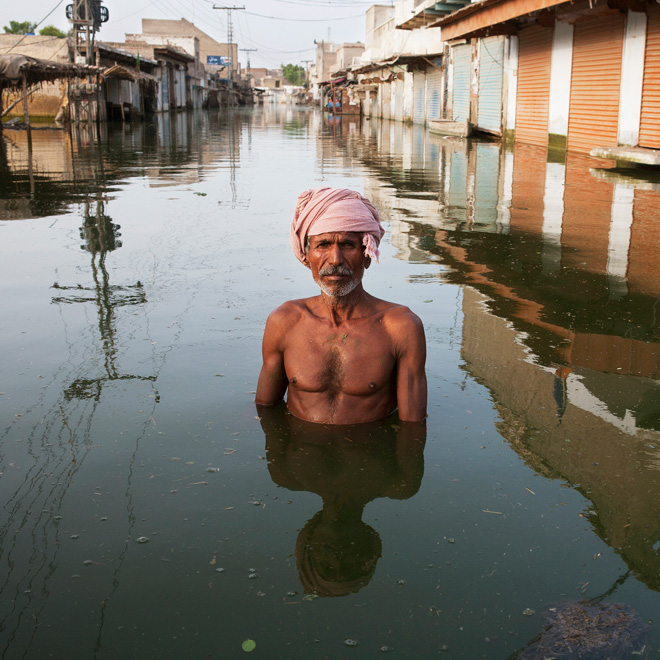
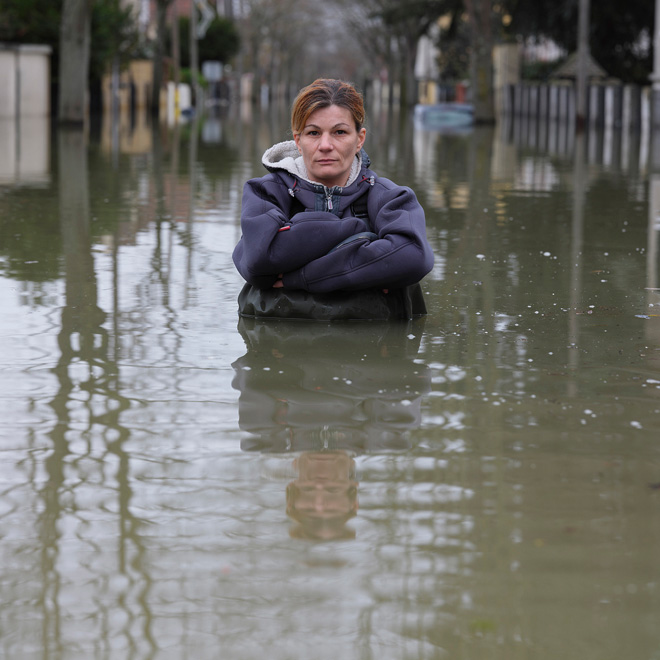
His work Drowning World begun in 2007 which he describes as an art and advocacy project about flooding, his personal response to the climate crisis (Mendel, 2021). This work has been used in climate change activism in collaboration with Greenpeace and Extinction Rebellion, exhibited in galleries and published in magazines. Interestingly Mendel combines conceptual and metaphorical photography with activism. Initially he shot images of two floods, one in the UK and one in India, but has since captured flood zones worldwide, poor and affluent. His work includes “submerged portraits”, symmetrical liquid reflections, water damaged photographs, video footage, as well as photographs of his images in actual demonstrations.
(Mendel, 2021)
In his video installation The Water Chapters explores individual, family and community responses to flooding, which also gives environmental context.
In the 1990s Mendel used an award to help him fund his work “Broken Landscape” documenting HIV/AIDS. He says that just as his ways of story telling broadened so he shifted from photojournalist to visual activist; in particular including individual’s stories in their own words with their own images.
A chapter of this work “Framing aids” was made into 13 posters which were used by organisations to raise awareness about HIV issues. Part of this project “We are living here” documents the effect of lifesaving antiretroviral treatment on poor rural communities, one of the key projects that established a model for widespread rollout of HIV treatment across South Africa. Mendel’s showcase of the positive impacts of the Anti-viral program set up by NGOS and the local health department, “provided a model that others could learn from and a reason to expand similar programs” (Ritchen, 2013).
In 2003 he was approached by the HIV/AIDS alliance to photograph some of their projects world-wide, where he made documentary images to show their works including, testing, counselling, providing clean needles to injecting drug users and educational programs. The final chapter of this work “Through Positive Eyes” was a collaborative global advocacy project; here he gave the camera to HIV subjects, in seven cities around the world, so they could tell their own stories and add another layer to their representation to try to reduce the stigma which stops many from accessing medication.
(Mendel, 2021a)
Mendel says “I feel a personal responsibility to make this project speak as loudly as possible” (Mendel, 2021b). He shows long term commitment in his work and uses alternative ways of story telling to reach audiences, raise awareness o issues and stimulate others to take action.
Ritchin, F. (2013) Bending the frame: Photojournalism, Documentary, and the Citizen. (s.l.): Aperture New York.
Marcus Bleasdale (b1968)
A British documentary photographer who increasingly uses his work to influence decision makers and global policy makers worldwide. He focuses on human rights issues using photographs to highlight issues and engage people, the issues are more important to him than the photographs (Durbanova, 2017).
His work on the conflict in the Democratic Republic of Congo, highlights the effects on the people of the exploitation of natural resources in a book “One Hundred Years Of Darkness” (2002). “The Rape of the Nation” (2009) documents his work on the issues around minerals, their use in technical products and how they finance conflict. “The Unravelling” (2015) documents the brutal conflict in the central African Conflict.
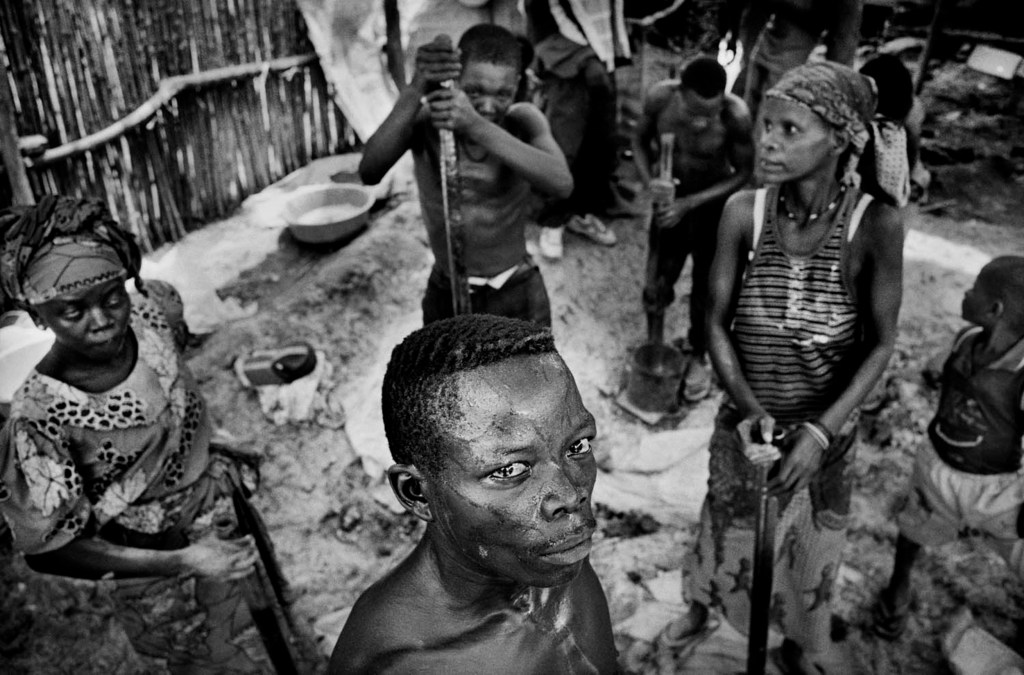
Bonded workers crush rocks in Mongbwalu, eastern Congo. Whole families work in slave conditions for warlords, controlling huge amounts of land, where gold is extracted to finance their military campaigns. 2004
The rape of the Nation, 2004 (Bleasdale, 2021)
Bonded workers crush rocks in Mongbwalu, eastern Congo. Whole families work in slave conditions for warlords, controlling huge amounts of land, where gold is extracted to finance their military campaigns.
Gold at a mine near Mabari. The rebels claim a share for “security”. Gold is plentiful in the Central African Republic, but corruption and political instability have kept the profits from benefiting the people.(Bleasdale,2021)
The Unravelling, 2005 (Bleasdale, 2021) A Muslim rebel stands guard as men and boys dig for
He is a frequent collaborator with NGOS such as, Human rights Watch, Medecins Sans Frontieres. His previous profession in banking gives him useful insight into audiences, he gave up his half a million pound a year job to pursue photojournalism. When Bleasdale worked with Human Rights Watch on the exploitation of Gold Miners In the Democratic Republic of Congo he exhibited it in Geneva to the financiers of the industry (Ritchen, 2013:105). He believes its important to work with Human rights lawyers and advocacy groups and that the media should have a complementary relationship with them (Durbanova, 2017); then use social media and other avenues to communicate with impact.
He is great example of a photographer who knows how to target hie audiences effectively. His work on human rights and conflict has been shown at the US Senate, US House of Representatives, The United Nations and the Houses of parliament. Ritchen points out that such collaboration with NGOs helps to provide information and logistical access and credibility, “They can amplify the impact of what is produced” (Ritchen, 2013:105). In an e mail to Ritchen he explained “The work I have done over the past twelve years for Human Rights Watch is not about financial reward but about how effective we can make the work we produce” (Ritchen, 2013:105). He believes that photographers and NGOs/advocacy groups together can influence policy makers.
Ritchin, F. (2013) Bending the frame: Photojournalism, Documentary, and the Citizen. (s.l.): Aperture New York.
My learning:
This research has helped me to see different elements that exist in making impact with documentary photography.
Danziger’s work shows the power of the context, personal testimony from subjects and the text accompanying images. Mendel’s work speaks of the power of alternative ways of story telling to make impact and that of sharing positive actions. Bleasdale’s work exploits his networks and understanding of the business world to create collaboration and impact. All of these photographers believe in photographing to raise awareness of issues and collaborate with NGOS, advocacy organisations and then seek ways to communicate with impact.
VISUAL STORY TELLING WITH NGOS, FOUNDATIONS AND NON PROFITS WITH ED KASHI – vii Insider
Ed Kashi is a photojournalist, filmmaker, speaker and educator of 40 years. I found this talk on the Vii website when researching for my assignment 4 essay.
INTRO: PAUL LOWE: on Ed, he’s always thinking about his audience when working, who is he trying to reach and what’s the best way.
ED KASHI:
His motivation as a visual storyteller is to engage with the world and issues that he cares about. He choses the projects that he engages with underreported issues or to take new angles with issues that we think we know about. Suggests that
“we ask ourselves if we want to create work that has positive impact on the worldwork that has meaning outside of the media landscape” and says that “Sometimes its more important to reach a few thousand important people than 40 million people through the general media if you want to make change” (viiphoto.com).
He has learnt there were different outlets to get his work out, he’s a story teller not an activist ultimately but wants to effect change; so it’s important to partner yourself with the right organisations/people to effect change.
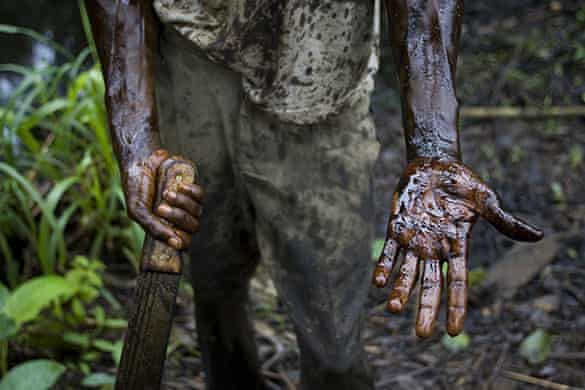
Nigeria: Niger delta 2004-2007 consciously partnered with NGOs and international organisations like, Oxfam Amnesty International, non-profit and academia, that could really make a difference to oil exploitation in West Africa; Oxfam used images from his book Curse of the Black Gold (2010) its work to advocate for a bill to create more transparency in gas and mining industries that was pending in the USA, a bill that was passed.
A report by Amnesty International suggests in the past 50 years at least 9m barrels worth of oil have leaked into land and rivers in the region
An oil spill, polluting groundwater and ruining cropland, from a well owned by Shell that had been left abandoned for over 25 years
(Tregaskis, 2010)
Vietnam: Commissioned by the Vietnam Reporting Project in San Francisco as they wanted to report on Agent Orange; this is passed down genetically. Made a film paid for by Ford which compelled the congress to give 4 million dollars to a city to clear up a contaminated pond.
As editorials budgets started to shrink and opportunities changed so he worked more with organisations like National Geographic but with a more deliberate focus on advocacy.
The open society foundation in New York commissioned him to work on police force profiling in several European countries, and how people were being impacted. He took portraits and their testimonies, which he believes is an efficient and powerful way to share a story.
Landmines in Afghanistan commissioned by UNICEF to make 3 short videos for social media
Work on the Kurds for National Geographic.
Malnutrition in Afghanistan, for UNICEF.
2013 He decided he wanted to do a project on mental health in Syrian refugee youth, as it was an issue he was aware and upset about. He knew International Medical Corporation were operating in the region; he pitched his idea to them, they financed his trip for his work and once it was done he got it published in Time magazine – an example where the paradigm was turned upside down as usually he would go to a magazine to ask if they’ll commission and finance a story; later it might filter down into non profit and NGOs to use. However some won’t publish work financd by an NGO because they think there may be a political agenda or it might not be objective.
(Kashi and Winokur, 2013)
A personal project on worldwide Chronic kidney disease around the world (CKDu a plague on the rural poor), that the Guardian have recently commissioned him to do a new piece; now there are some solutions happening.
Kashi says that when working with collaborative clients on advocacy work shine a spotlight an issue but also show how its being solved, which he sees as a more constructive form of journalism, “ solution journalism”.
He was asked whether NGO work could be seen as abandoning your journalistic stance or be biased; Kashi suggests that this can be countered by keeping your radar up for any pushing of an agenda or amplifying a problem for their fundraising, and if so making an ethical decision on whether to do the work. He’s never experienced that, and points out that there are many problems that don’t have two sides and simply exist.
Asked whether there is tension between working with different types of clients, that puts off editors commissioning him, he says he hasn’t noticed. He’s happy as long as he maintains a truthful ethical approach to his work.
The cornerstone of his work is to initiate his own ideas, but to do this he has to go after grants.
He suggests that you think/feel what you care about and immerse in that and from that work will flow. As an already successful photograher it maybe that he can afford to be less money focused in his work, but he does believe that better paid work will come from less well paid work, “If you make the work the work will come to you”.
“People out there care, and if you create powerful imagery it can make changes” (viiphoto.com).
He believes “deeply believe in the power of still images to change people’s minds. I’m driven by this fact; that the work of photojournalists and documentary photographers can have a positive impact on the world” (about- Kashi, 2021).
My learning:
It was good to hear how Kashi has suceessfully managed to work on issues that he finds important to create impact, especially with non-traditional editorial type clients.
His focus on authorship and maintaining creative independence.
How it is possible to effectively use the new paradigms for producing and financing projects and of expanding one’s skillsets to include audio and video as well as still photography. (viiphoto.com).
In a nutshell:
“It took me years to understand how my work was already having an impact, and that I could translate it more directly into collaborative relationships with NGOs, foundations, and nonprofits, and then utilize the media to reach a broader audience” (viiphoto.com).
During my research for assignment 4 critical review I listened to an interview with Ed Kashi on a podcast (Smith, 2018) and would like to add the following notes:
Kashi states that he is driven by the issue “how can I contribute something to the world that is meaningful?”, “I want to have impact”. If asked to go somewhere wants it to be something he has an impact with.
Kashi says he’s fuelled by either “an anger or belief that there’s an issue or injustice that I want to learn more about, I wanna find a way to tell a story about, to raise awareness and now increasingly to be a part of that change”.
Tries to be smarter with decisions and strategies.
He enjoys proposing ideas and getting them accepted by editorial, NGOs or others.
He knows that he must have the right partners advocate for change.
Must be open to broad range of commissions that can take his work and advocate for change.
Kashi suggest that for those starting out as a storyteller you need to create a body of work that you care about and also shoot video and collect audio. He suggests finding a grant award or crowd funding or own publication, as media is the dissemination tool but not where you’re going to make much money.









 Photography 2: Documentary