Read the article ‘In, Around and Afterthoughts (on Documentary Photography)’ by Martha Rosler in Bolton, R. (ed.) (1992) The Contest of Meaning. Cambridge, MA: MIT Press (p.303).This is available as a core resource on the student website at: http://www.oca-student.com/resource-type/course-specific-resources/contest-meaning-pg-303. Make notes in your learning log or blog. (Open College of the Arts, 2014:27)
Notes:
Rosler asks “how can we deal with documentary photography as a photographic practice and what remains of it now?” (Rosler,1992:333).
Documentary came to represent the social conscience of liberal sensibility presented in visual imagery and had its place in a war on poverty as journalist attention was brought to working class lives and slums; although it was often perceived as muckraking and obtained by unethical means.
Documentary photography may have appeared moralistic and yet the notion of charity that it inspired actually preserved wealth was not at odds with reformist documentary which argued for giving a little to subdue the dangerous lower classes, but was essentially victim photography.
Rosler cites Szarkowski who said that a generation ago documentary photographers were serving a social cause to persuade others to make things better but were then superseded by those who used the approach and manipulated for their personal ends; liberal documentary looking for change was in the past Rosler agrees. She calls for a “radical documentary that exposes.
Rosler states that a documentary image has 2 moments, the immediate and then the conventional aesthetic-historical moment, as your response to an image is rooted in social knowledge.
Susan Meiselas (a photographer who worked for magnum and covered the war in Nicaragua) as a response to Rosler’s comments suggests documentary practise was contaminated by underlying assumptions of imperialism and colonialism and couldn’t ever be radical (Strauss, p15). Meiselas also suggests that Rosler relies on assumptions of how documentary work is actually received (Strauss p 17).
The liberal pseudo reformist documentary that exposed poverty and slums has now gone and has been replaced by documenting other issues. However reading her essay has made me think harder about my intentions when I photograph and the responsibility that a photographer has.
References:
Open College of the Arts (2014) Photography 2: Documentary-Fact and Fiction (Course Manual). Barnsley: Open College of the Arts.
Rosler in Bolton, R. (ed.) (1992) The Contest of Meaning. Cambridge, MA: MIT Press (p.303).
Strauss, D., 2014. Words Not Spent Today Buy Smaller Images Tomorrow. new york: aperture.
Make a selection of up to five photographs from your personal or family collection. They can be as recent or as old as you wish. The only requirement is that they depict events that are relevant to you on a personal level and couldn’t belong to anyone else. Using OCA forums such as OCA/student and OCA Flickr group, ask the learning communities to provide short captions or explanations for your photographs. Summarise your findings and make them public in the same forums that you used for your research. Make sure that you also add this to your learning log (Open College of the Arts, 2014:22).
My message to forums:
Hi all
Please would you help me with an exercise in part 1 Documentary for which I have selected 5 photos from my personal album and ask you to give short captions or explanations for them. Later I’ll summarise the effect that the discontinuity (absence of time/context) seems to have on their interpretation.
Many thanks in advance
Niki
These are the captions that my peers suggested:
Image 1:
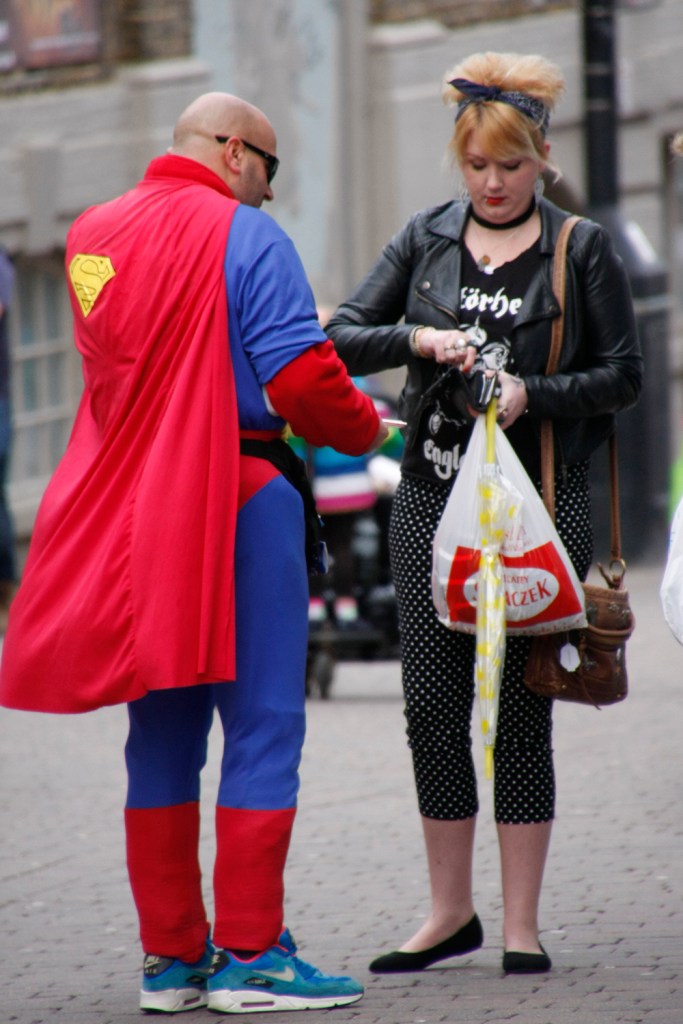
Can you spare any change for the phone box?
Penny for the guy
I thought all your good deeds were for free – now you want a tip?!
Here’s your dinner money, so run along now
And I thought my outfit was tight.
Thank you, love, you’re a diamond.
It’s since they recruited more police officers.
Back in the day, saving the world from villains paid good money.
Image 2:
Riding piggyback.
Lee wished he could take a sandwich to school like the other kids.
Magic beans.
I wonder if he knows he is on the way to the market?
Down back there.
Security has a nose for these things.
Bringing home the bacon.
Image 3:
Greta sat patiently in the canoe and hoped she would make the conference in time.
Gatecrasher.
Just all bums and legs.
Colin decided being an extra on Hawaii Five-o wasn’t worth it.
I told you water doesn’t run up hill.
“This kite is rubbish. Who sold it to you?”.
All hands on hull.
Image 4:
Horseman of the Apocalypse Outfitters.
We come in peace.
The invisible men.
This gig’s not worth losing our heads over.
Invisibilty was an unexpected side effect of corona virus survival.
Everyone saw right through them.
Sadly, nobody was able to pick out the infamous “Invisible Man”. in the hastily arranged identity parade.
Image 5:
Daily bread.
Elliot Erwin always makes riding a bike in France look so easy.
All this for a loaf of bread.
Up hill struggle.
One competitor was a Head in the uphill section.
He was determined to make it to the scissor shop if it killed him.
My reflections:
John Berger in the chapter Appearances (Berger, 2008:60) explains the difference between what an image shows/evidences and the reason it was taken. Berger maintains that every photograph contains two messages, that of the event photographed and one about the shock of discontinuity, the chasm between the moment of the capture and the time we view it; though we rarely register the second message. It is this discontinuity that gives images ambiguity which all have as they are all taken out of continuity. As Berger explains, in general meaning is not instantaneous or discovered through facts but is found through connections.
The personal photographs that shared with the forums and the responses to them confirm his ideas:
On a street in Basingstoke. In this image my viewers sought to make meaning out of what they could see: money changing hands and a man in a superman outfit; in the event they were not too wide of the mark as “superman” was collecting money for something, there was no more to the image than that and the silliness of a man dressed as superman out of any context.
At a market in Northern Vietnam. Again meaning is made from even from the little being shown; most viewers correctly commented on it in the context of a market, and the bizarreness of the situation to a westerner, which was spot on.
A surf boat upturned at the end of a race to release water taken on board. The context in this was harder to fathom, as it required inside knowledge I think and the captions given it were amusing but were a distance from the actual truth of events.
Street artists in Rome. Again the context here would be hard to guess and the captions given were amusing but general.
Steep hill in Lincoln, aptly named. Two viewers attached meaning to it based on the Hovis advert which was in a similar setting albeit some years ago. Others were able to attribute meaning to it based simply on the evidence of a steep hill. Interestingly because the context was easier/more familiar captions were slightly more serious.
So the captions ascribed to my images show that when an event in an image is simple to decipher because clear context is given a reasonably sensible interpretation can be made, however when less context is available then interpretations fall wide of the mark as the discontinuity of the image blurs understanding.
References:
Berger, J. (2008) Ways of Seeing [Kindle Edition]. From: Amazon.co.uk (Accessed on 30.4.20) UK.
Open College of the Arts (2014) Photography 2: Documentary-Fact and Fiction (Course Manual). Barnsley: Open College of the Arts.
in Understanding a Photograph, Chapter appearances (Berger, 2008)
Whilst responding to the below exercise I was directed in one of the blogs to Berger’s chapter Appearances in his book Understanding a Photograph (2013). This book is a collection of essays across 40 years. These are some of the interesting points the chapter raised for me:
All photographs are of the past and “give us two messages: a message concerning the event photographed and another concerning a shock of discontinuity” (p86) as there is a large gap between the taking and the viewing.
The ambiguity of a photograph is because of this discontinuity as they preserve a moment in time as a disconnected instant; yet meaning isn’t instantaneous but contextual and historical.
For a photograph to have meaning it must have a duration beyond itself, both a past and a future.
So all photographs are ambiguous as they are taken out of a continuity; though this can give them a unique means of expression.
Berger asks whether photographs are an artefact, or a trace left by light that has passed through an object?
A photographer only choses an instant to take the image in the present and therefore has weak intentionality. The photographer does choose the event to capture and how to represent it, this roots the intention it the context of his life and experience. But this doesn’t alter the fact that a photograph is actually just a trace of light passing through a lens and imprinting on a film.
Berger points out some differences between photographic representations and drawn ones:
Photograph
Drawing
Instantaneous
Made over time
Time is uniform across all elements in the photograph
The artist can apportion time as they wish to different elements of the image
It’s representation is not impregnated by consciousness or experience – they supply information without a language of their own
So it seems that the camera cannot lie and a photograph cannot although paradoxically the truth it tells may be limited by the photographer. Berger cites some different purposes for photographs and how this can affect their truthfulness: Scientific investigation, public communication, the media. In science the photograph supplies missing detail, where as in communication and media the truth is more complicated.
Photographs “quote from appearances” (p128), are discontinuous and therefore ambiguous though this can be reduced by text/information. You can use this discontinuity to make photographs expressive, as broken narrative causes viewers to ascribe meaning.
If I take Berger’s assertion that “a photograph is actually just a trace of light passing through a lens and imprinting on a film”, then even if taking account their context and discontinuity from the moment they are shot they are documents.
Read the post ‘What Makes a Document?’ on WeAreOCA, including all the replies to it, and write your own comment both on the blog page and in your own blog. Make sure that you visit all the links on the blog post. http://www.weareoca.com/photography/what-makes-a-document/Make sure your reply is personal and authoritative. Express your opinion on the topic of the blog and substantiate your comments with solid arguments, ideally referring to other contributions to the blog (Open College of the Arts, 2014:22)
So what does make a document?
This blog subject began in August 2011 and there have been another 8 and ½ years of comments since, and as others have said it is hard now to find something new to say on the topic.
All I can do is share what I think and respond to some of the bog post that have gone before.
To answer the question what makes a document it is necessary to visit the definition of document first of all. According to Wikipedia “A document is a written, drawn, presented, or memorialized representation of thought. The word originates from the Latin documentum, which denotes a “teaching” or “lesson”: the verb doceō denotes “to teach”. In the past, the word was usually used to denote a written proof useful as evidence of a truth or fact.
The oxford dictionary says the noun document, is a piece of written, printed, or electronic matter that provides information or evidence or that serves as an official record.
This seems quite straight forward, however the header question “what makes document” does seem to have been appropriated in the blog posts to, is a photograph a document? So according to the above definitions of a document and my own understanding of it photographs are without question documents as they are a material representation of a fact – as long as they are not tampered with of course.
In terms of “what makes a document?” I found the discussions on the importance of time and context interesting. Rob TM (27.8.11) says that his view is whatever the context a photograph is always a document even when the context changes. Others like Amano (27.8.11) believes that without context documents can be misleading and that a photograph can only be a document when there are details that give clues to more than just a representation (28.8.11). Or curriehannan (25.9.13) who feels like a photograph needs to have context explained to be a document and is not a document just by being. Personally I’d say that a photograph is a document either with or without context as it gives us evidence of something. Clarke (1997, p19) says that on a functional level a photograph depends on its context; this is true but even without context a photograph can still function just as a document.
With the issue of time and documents, Hannah fountain oca suggests that “every photograph is a document but with time can be more” (22.1.16). This ties into the argument about the importance of context as time, or rather knowing the time/history of a document can give an article context. Indeed Stan Dickinson (27.8.11) suggests that time and context are not mutually exclusive, and I would say that they are intertwined. I don’t think the actual time period or passing of time is relevant to whether a photograph is a document, however as Clarkes says time must also be important in making a photograph a document as it fixes something in time (Clarke, 1997, p 24), and therefore creates it as evidence of something that was.
I was also interested in the discourse on whether an online image is a document compared to a physical print (Judy Bach 31.7.14); this question would apply to any online evidence. I would say that as long as the document is pure (untampered with) then online evidence or representation are as much document as a physical documents.
So to answer the question “What is document?” I would say anything that represents something authentically, that is that is an accurate representation of something, however I don’t believe that we need to understand a representation or a photograph for it to be a document. As far as acknowledging that photographs are documents I agree with David Fletcher’s statement that “All photographs are in a sense documents, but not all are documentary” (5.9.17).
Reference:
Clarke, G. (1997). The photograph. London: Oxford University Press. ? (2014) Photography 2: Documentary: fact and Fiction. Barnsley. Open College of the Arts
Open College of the Arts (2014) Photography 2: Documentary-Fact and Fiction (Course Manual). Barnsley: Open College of the Arts.
EXERCISE-TRANSPARENT PICTURES: ON THE NATURE OF PHOTOGRAPHIC REALISM
Read the first three sections (pp.1–8) of the essay ‘Transparent Pictures: On the Nature of Photographic Realism’ by Kendall L Walton. Core resources: Walton_TransparentPictures.pdf Write a 200-word reflective commentary in your learning log outlining your views about Walton’s idea of photographic transparency (Open College of the Arts, 2014:20)
These are my notes from my reading:
Photography is thought to excel in being realistic. Evidenced by the use of photographs as evidence in courts, their use as evidence for extortion.
Photographs have an immediacy.
Edward Steichen amongst others said that photographs can be confusing, manipulated, subjective and falsified.
Walter suggests that they are realistic in terms of perspective, portrayal of detail and capturing the ordinary, but are they just more of what pictures possess and not so special in their realism? He says it’s not that photographs ae different but that they are just more realistic, and that is only if they aren’t blurred etc.
Andre Bazin believes there is a deeper gap between photographs and other types of pictures saying that “the photographic image is the object itself”.
Walton asserts that it is impossible that a photograph of something can “be” something as you can’t mistake a photograph of something flat but that there is a difference between photographs and pictures, in that a photograph is always a photograph of something that exists.
Walton asserts that photography is a “supremely realistic medium” and a “contribution to the enterprise of seeing” that can extend our vision and see things literally. The viewer “sees literally, the scene that was photographed. Whereas painting merely represent something.
Walton says that photographs are pictures through which we see the world and the photographed objects.
My reflections on Walton’s idea:
I have read the first three sections of this essay it is a conceptual and thought provoking article. I understand that although Walton believes that photography is a realistic medium this is actually in comparison to other methods of representation. Walton’s case for the realism of photography rests on his assertion that photographs are always of something that actually exists.
What particularly interests me about his ideas is that of photography as a way of showing and seeing rather than just representing. I was fascinated with his description of photography as similar to seeing through telescopes, mirrors and microscopes as a way of enhancing and opening up the visual world; so in essence we actually see the world through the photograph.
Reference:
Open College of the Arts (2014) Photography 2: Documentary-Fact and Fiction (Course Manual). Barnsley: Open College of the Arts.
RESEARCH POINT 1: HISTORICAL DOCUMENTARY PHOTOGRAPHERS
We were asked to research some of the historical developments in documentary photography outlined above.
I have begun my documentary research with an overview using the book The Documentary Impulse (Franklin, 2017)
Franklin talks of the documentary impulse being evident 10,000 to 50,000 years ago as self- representation, evidenced by cave drawings and inscriptions in pyramids and other tombs. As captured by Sebastiao Salgado in 1986 when he took photographs of the documentary accounts of gold mining in Brazil’s Serra Pelada dating back to 700 BCE. So before photography this “documentary impulse was sutained by representations in painting, mosaic, ceramics and sculpture (Franklin, 2017, p14).
However it was photography that became the preferred way to capture scientific discovery and exploration in the 1900s. It evolved from the photographic keepsakes of the Victorian times (miniature portraits, postcards) and franklin points out that even work by some of the 20th century documentary photographers such as Sally Mann, Eugene Smith and Elliott Erwitt were in fact f their families (Franklin, 2017, p26).
Photography made the documentation of scientific exploration more objective than the romanticised representation of paintings, these were some of the early documentary photographs:
Tromholt’s photographs of both the Northern Lights and the peoples of northern Norway.
Francis Frith’s photographs of the Suez Canal at Ismailia (c.1860)
Timothy O’Sullivan (1867-9) images of Clarence King’s geological expeditions.
Carleton Watkin’s daguerreotype stereoviews for the US Geological surveys in the Yosemite Valley.
Herbert Ponting’s photo essays of China, Japan, Korea and Burma and magic lantern slides of Captain Scott’s first expedition to the Antarctic
Franklin suggests that the term documentary was first used by Grierson in 1926 referring to a film, but had been used in France to describe films about travel and exploration as far back as 1911.
Reference:
Franklin, S., 2017. The Documentary Impulse. London: Phaidon Press.
SELECTED EARLY DOCUMENTARY PHOTOGRAPHERS
I’ve chosen at this point to research two photographers mentioned in the OCA handbook that to this point that I’ve not researched before:
Felice Beato (1832–1909)
Was among the first photographers to provide images of newly opened countries such as India, China, Japan, Korea, and Burma. As a war photographer he captured several conflicts: the Crimean War in 1855–56, where he took photographs in difficult conditions.
He photographed the aftermath of the Indian Mutiny in 1858–59, and set up studio in Calcutta and travelled behind The Army throughout India. Typical of his work is this photograph of devasted buildings in Lucknow after the Indian rebellion of 1858; in some images like the one below, adding corpses and arranged bones to heighten the dramatic effect of the massive slaughter that occurred at Lucknow.
Interior of the Secundrabagh after the Slaughter of 2,000 Rebels, Lucknow, Felice Beato, 1858 (Getty Center Exhibitions)
He also documented the Second Opium War in 1860, entering Hong Kong with British forces en-route to invading china, carrying for the 8 months the heavy equipment needed for the albumen process (chemicals and large, fragile glass plates). Once again many of his images post battle scenes were very graphic. This one of the Fort Taku captures senseless slaughter.
(Beato, The Met 2020)
The Fort was stormed following an explosion, captured as part of a long struggle by Western nations to open China to trade. Beato’s photographs, from inside the fort, shows the bloodbath carnage with a brutal directness (The Met, 2020).
Beato worked in a variety of ways including topographical and architectural views, including panoramas, as well as portraits and costume studies of the countries he visited or in which he resided. In China he photographed both Chinese and British notables and also made architectural views of the cities of Peking and Canton like the on ebelow of the shops of Treasury Street.
Treasury Street, Canton, Felice Beato (Getty Center Exhibition
Beato took probably the only photographs ever made of the interior of the summer palace north of Peking, before it was destroyed by fire, by order of Lord Elgin.
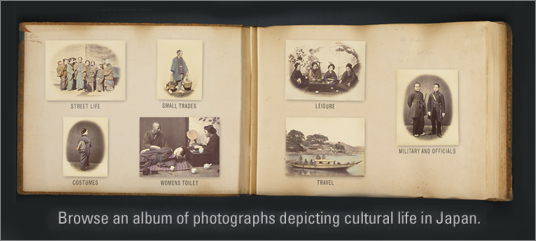
Beato then spent more than 20 years in Japan (1863–84), where he opened a gallery. Here he used the wet-collodion method, reducing the length of exposure to seconds and made the first hand-coloured photographs and albums:
Beato (Getty Center Exhibitions)
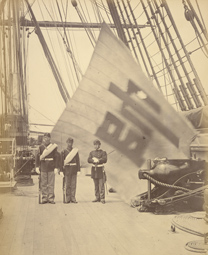
Beato accompanied the American expedition to Korea in 1871 to negotiate after an international incident; the country had been “closed”. The negotiations resulted in violence, killings and captures; Beato documented the successes of the American in the campaign like this image captures American military officers posing in front of a captured Korean flag they captured at Fort McKee.
The Flag of the Commander in Chief of the Korean Forces, Felice Beato, June 1871 (Getty Center Exhibitions)
Beato worked in Burma (1887–1905)which was a province of British India and a tourist destination for Westerners. He established himself by finding then capturing the interesting landscapes and architectural views, and combined this with portrait studies.
The Forty-nine Gautamas in the Sagaing Temple, Felice Beato, 1887–95 (Getty Center Exhibitions)
His brother Antonio Beato also a partner of james Robertson photographed Constantinople, Athens, The Crimera, Malta, and the Holy Land (1851-57). Antonia had a studio in Luxor was best known for his photographs of the Middle East whilst working with archaeologists on excavations and making views for tourists.
My reflections:I am particularly struck with the variety of his portfolio. His photographs were very varied, battle fields, architecture, portraits and records of overseas life at the end of the 19th century. Felice Beato was one of the first professional photographers to extensively document Japan and China. His style of photography of battlefields, were shockingly innovative, not only because he was the first to show images of the dead, where he pioneered a new style of war photography in a graphic way.
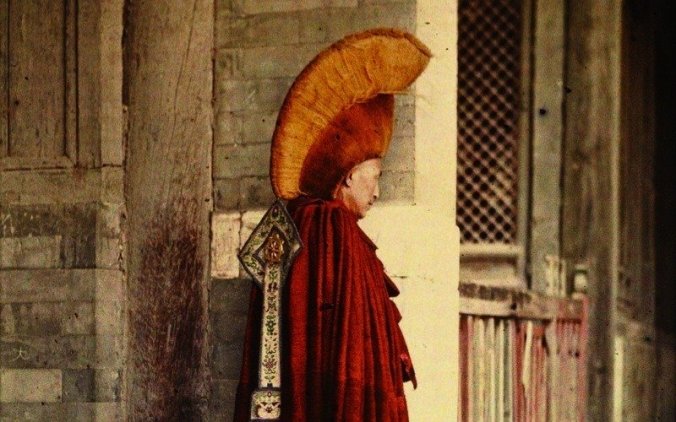
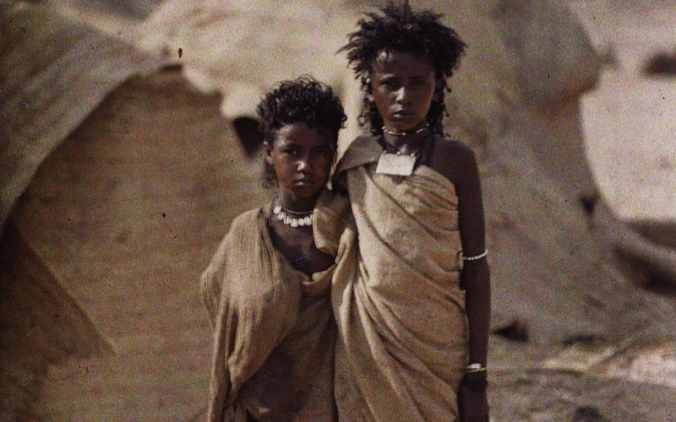
He was a French Banker and Philanthropist who from 1909 started documenting every culture of the global human family. He financed and sent a team of photographers and cinematographers to take pictures of everyday life and it’s peoples from 50 countries around the world, until 1931 an ambitious project. He used the autochrome process, the first industrial technique for coloured photographs developed by the Lumière brothers in 1907, to record 72, 000 images of cultures around the world. He kept very organised records in files at his home, now called “The Archives of the Planet” containing both films and pictures. Unfortunately, his work ended when he became bankrupt in the Great Depression.
Macedonian men photographed by Auguste Léon in 1913. Stéphane Passet’s autochrome of the Boat of Purity and Ease in Beijing, China in 1912 A Buddhist monk in Beijing, photographed in 1913 by Stéphane Passet. A Buddhist monk in Beijing, photographed in 1913 by Stéphane Passet. An autochrome plate of a Senegalese soldier made by Stéphane Passet An autochrome of the Eiffel Tower included in “Archives of the Planet.”
My reflections: Again I am most surprised at the variety of work that he commissioned and collected, although his images were more controlled and pictorial than Beato’s.
Listen to Miranda Gavin talking about documentary photography at: http://oca-student.com/node/100125 . In your learning log, write a 200-word reflective commentary setting out your reactions to Gavin’s viewpoint. (Open college of the Arts, 2014:17)
Gavin mentions some of the different approaches to documentary photography such as documentary, reportage, photojournalism. Gavin describes how the terms used are affected by access to them changing currently due to the digital platforms that are now available and an increasing number of women photographers. This means that topics are changing or being shown in new ways; consequently, the terms that we use are being probed. Gavin also talks about how the magazine separate out categories explaining that magazine sections make decisions where to place photographs difficult. She concludes that the categories need to be flexible.
To complicate things further documentary photography has had various definitions. The French word “Documentaire” was used to describe serious films about travel and exploration (Franklin, 2017). Bates highlights the growth of the term documentary to the rise of the large-scale mass press in the 1920s and 30s, photo magazines with stories of everyday life (social documentaries) which are very different to documents as simply as evidence; so even early on it’s the use of the term documentary there is a problem of definition.
Today there is also the debate over whether documentary should only include objective images, and indeed whether any image can be objective. Indeed, even placing an image within a certain section of a magazine or in a certain arena or to a particular audience is editing in itself and may render an image less neutral. However, if we don’t separate documentary into sub groups then it becomes a huge and possibly meaningless category.
If documentary photography is there to inform, with the variety of documentary forms today some thought needs to be given to why the image was taken, when decisions are made what to do with an image as placing the image exercises control over its interpretation. Like Gavin I do not believe blanket subgroups can be created with hard borders, as the subjects and audiences are constantly evolving and categorisation needs constant evaluation to be useful – an awareness of some of the factors that may distort the purpose of an image is important when documentary images are evaluated.
References:
Bate, D. (2016) Photography: The Key Concepts. New York. Bloomsbury Publishing.
Franklin, S., 2017. The Documentary Impulse. London: Phaidon Press.
Open College of the Arts (2014) Photography 2: Documentary-Fact and Fiction (Course Manual). Barnsley: Open College of the Arts.
Photography Zoom Talk 18.3.20 Tutor Andrea Norrington
This is zoom meeting for level 1 and 2 students that I’d not joined before but I was particularly interested as I’d heard good things about the meeting, also as Andrea was my Tutor for the landscape course I’ve just completed. This was the first Zoom meeting that I’d taken part in.
The title of this zoom meeting was Approaching an Assignment
Andrea shared the evolving project in John Blakemore’s Black and White Photography Workshop book, particularly Chapter 2: The Tulip Journey, Tulipomania. Here his work came out of an extended visual enquiry, underlining the suggestion that a photographer shouldn’t make judgements before they start.
Don’t get too wrapped up in the end product, get started and see where it goes.
Take photos as sketches, see “new ways of seeing” Scott, G. (2020) New Ways of Seeing: The Democratic Language of Photography, London: Bloomsbury.
Don’t worry about what’s good or what might be thought to be good, at the early stages.
Research at a start point but don’t worry if you go off on a tangent
An assignment should be a development not a one off shot; best work is likely to be when you really explore and push the boundaries of the work outwards
Use your reflective writing – Plan – review – Revise –replan
Beau lotto book on seeing differently exploring an idea Lotto, B., Cardilli, L. and Socci, L., 2018. Deviate. London: Weidenfeld & Nicolson.
“Learning to deviate innovatively…much of the engagement grows out of the obstacles of your surroundings”
“One cannot photograph experience, but to have lived it can change and develop habitual ways of seeing and of knowing…They became possible only through the extended visual enquiry that I allowed myself” (Lotto, Cardilli and Socci, 2018)
Photographer Chase Jarvis. He shows every photograph he took in each series, the video lingers on the shots that were selected. It is fast paced but you can see how ideas develop within each shoot: https://www.youtube.com/watch?v=KKK9-HEDa8I
We also spent some time discussing how we might approach assignments in light of the restrictions of the Covid19 virus. Suggestions of work to look at on isolated spaces:
OCA student: Anna Dranitzke – OCA Documentary Course – photographs within family home: https://annasphotoblog.wordpress.com/ Assignment 1, 5 and 6 are relevant
This meeting scheduled was held remotely via Zoom due to Covid19 Virus. I wondered how we would manage via zoom for at least 4 hours but it was productive time and passed quickly.
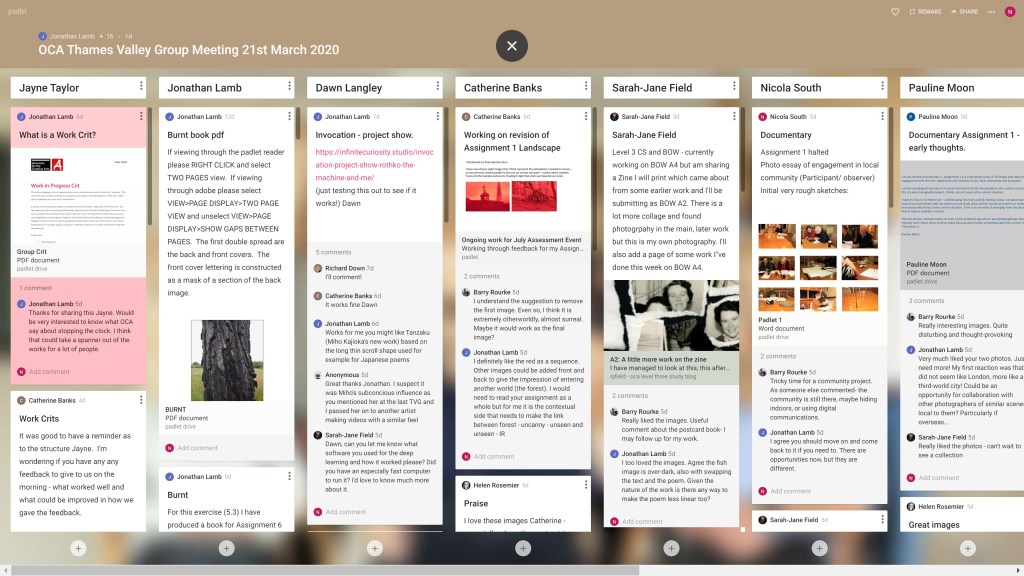
The session was facilitated by OCA Tutor Jayne Taylor. There were 13 of us, including some who can’t normally attend because of geography or Children.
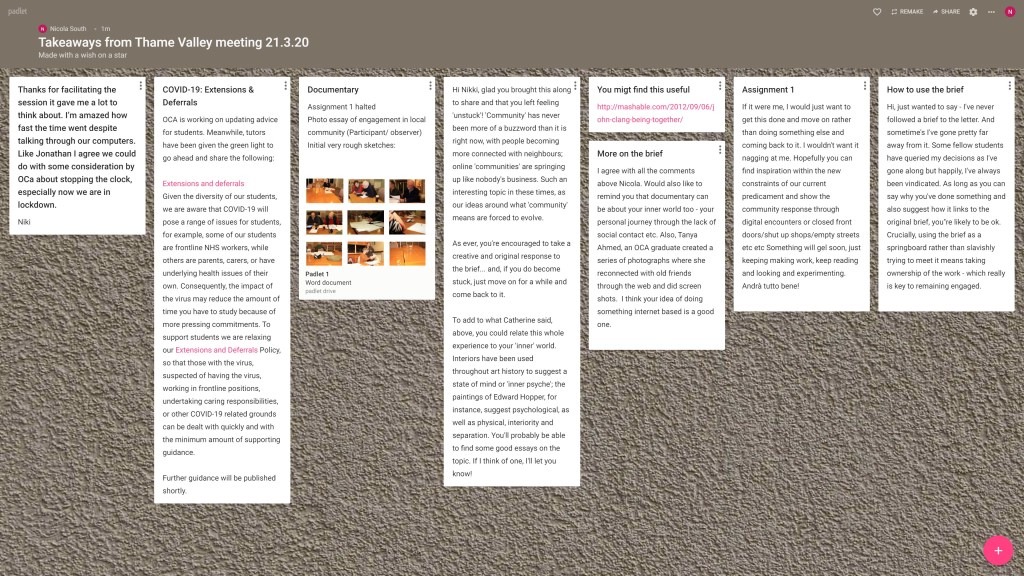
I shared that I had been working on a community project for assignment 1 which halted a couple of weeks ago because of Covid 19 and no longer having access to the people. I have dithered whether to stop, move on and return to the work later or start afresh. Generally my peers suggested moving on, and we talked about new ways in the current circumstances that I could capture community engagement (Traces of people, disruption in the community, changes in the community, barriers to engaging with the community).
My takeaways:
As usual I learnt a lot by peer sharing both their work and ideas as well as my own.
When editing consider whether weaker images dilute the strongest images
Check the narrative is clear
I learnt a lot about book making:
When placing images consider the white space around them, have more space at the bottom of the page than the top.
Consider making the space around images irregular throughout the book
Don’t use more than 80% black font
Leave most of the text until the end so that the viewers can engage with the images first.
Use some full page “full bleed” images
Explore the Cartesian perspective and photography: A separation between what’s inside and outside (see John Hall level 3 OCA)
Don’t necessarily conform to a linear narrative
That “Zine” is a type of magazine
We also discussed how we can continue to access artwork remotely during social distancing and lock down
Having had an introductory video meeting with my tutor I am going to begin to record my thought process/reflections on the first assignment. This has all spurred me to get started with both the course and the first assignment.
We discussed that I should consider what I have access to and that it should be a “less is more” approach to try to cover a small topic in depth.
Living in two locations should give me plenty of options of communities to document, however I do need to consider carefully what I choose in terms of timing and location.
I immediately thought of the boat club, and in particular the committee there that I am a part of, however I may be able to use this subject another time. My next thought is the one of five pubs in my village that is my “local” and I am well integrated with the the owners, staff and customers; I shall leave this one in the melting pot.
INITIAL IDEAS:
I ran through possible ideas for the assignment. I have 2 locations that I engage with Tredreath Pembrokeshire and Old Basing Hampshire. I think I will concentrate on Tredreath as this is where I am probably most engaged at the moment:
The Boat Club Committee (Mancom – management committee) I’m a member– lots of scope, but I might I want to use later in documentary.
Rowing club – I’m a member but it’s the wrong time of year to capture activities at the club.
Coastal footpath walkers – I’m one
The Castle Pub – I’m a regular customer and know the owners and the staff well.
I began exploring my idea of the Newport Boat Club Management committee: A committee of 13 with monthly meetings and sub group meetings between also individual responsibilities. We had a committee meeting scheduled for 28.2.20 so I decided to document it as an opportunity experiment photograph the committee to see what it might bring. Before the shoot I sent the following to all members by email:
Dear all
For those of you who aren’t aware I am in the middle of a photography degree and am currently working on documentary photography. For my next assignment I have to produce a small photo essay to demonstrate my engagement with part of the my local community and its people – something that I’m a participant in.
The theme I’d like to explore is Mancom, so I hope it’s okay with you if I take the occasional snap at committee tonight. The project will take me a while to complete so I will probably appear with my camera some more over the next few weeks – though I only submit 10 photos I have to show that I’ve done a lot of experimenting!
This work will only be shared with my tutor and will not appear anywhere else, so I hope you’ll be able to indulge me and just pretend that my camera is not with me.
Thanks in advance
Niki
There were no members that objected.
I visited the room beforehand to check lighting levels and layouts.
1ST SHOOT:
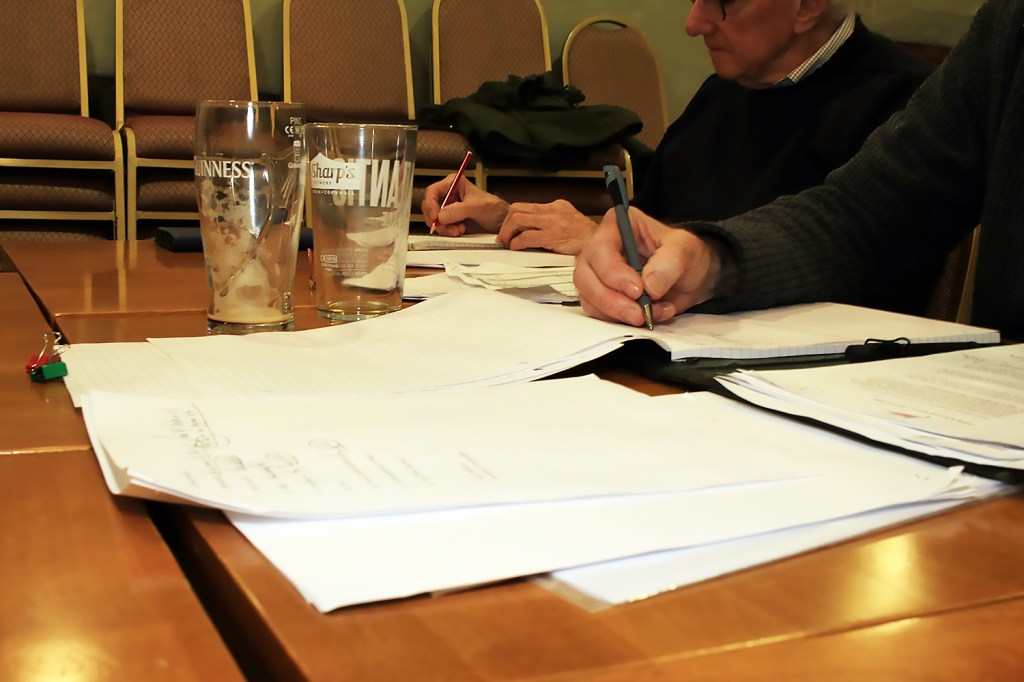
During the meeting I took images of the committee in action from the time they entered to the time that they left; these were a combination of close ups and longer shots, though they were all shot with my prime efs 24mm lens.
These images are just to treat as sketches as I discovered that more lighting was required, especially as the evening wore on. I fitted a diffuser on my strobe so as not to disrupt the meeting however this reduced the lighting too much causing the images to be taken with longer exposures than I would have liked and culminating I movement within the shots – however they were enough to help me to decide on a way forward.
Committee meeting experiments:
Reflections from the 1st shoot:
Things that I took away from this:
That I want to capture the meeting from entering to leaving as this gives a narrative
Use the prime lens at different distances
Take more pictures at table level
There is something to say with the vacant seats of those who are absent
There is something to say with way the meeting is punctuated by members pooping down to the toilet.
Correspondingly there is a story showing with the full pints at the beginning of the meeting and the empty at the end.
I noticed details such as the variety of committee papers that people used or not – some bring nothing to the meeting,
Problems:
Lighting and people moving so need to increase ISO and use flash exposure compensation set higher
Only 7 of committee attended, next meeting 26th March so can’t finish project until then
To do: Improve on committee meeting photographs:
Arriving
Pre meetings
Whole committee from table level
Empty seat esp charles
Full glasses
Leaving
Afterwards
WHILST WAITING FOR THE NEXT COMMITTEE I EXPERIMENTED WITH VARIOUS PORTRAITS OF THE COMMITTEE:
Portrait experiments:
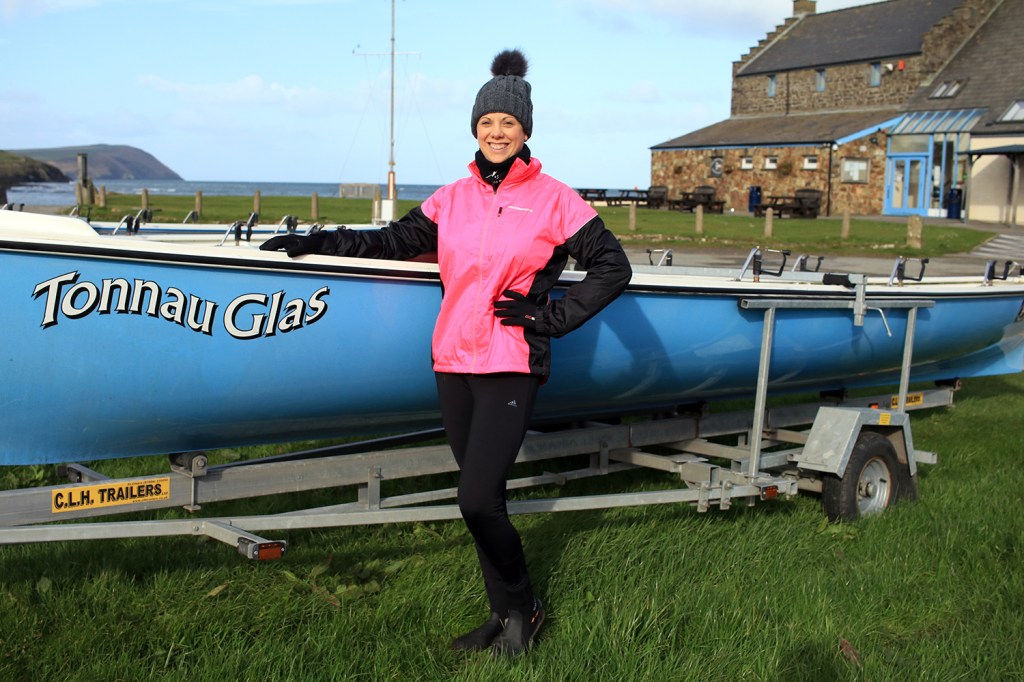
Laura/sailing and boating: Rowing boat – done
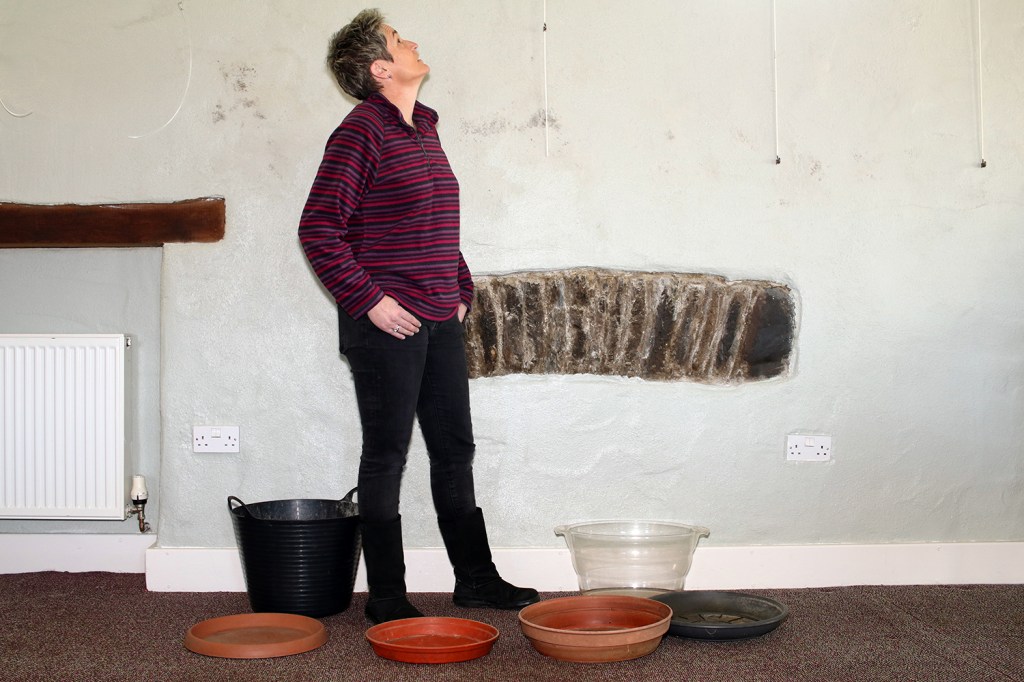
Amanda/facilities: Roof leaks – done
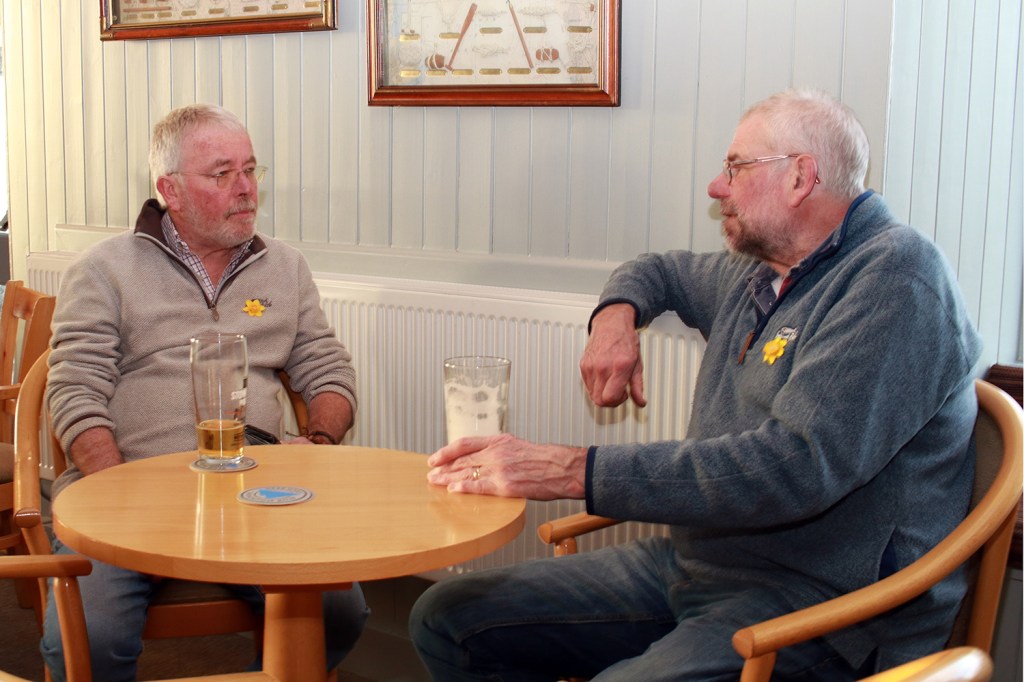
Retired commodores drinking in bar – done
Ema/Club manager: In office – done
Gaynor medals – done
Doug/Bar and social: behind bar or in kitchen -done
Tony/Commodore: flags/ensign- done
Liz/Rowing cox – not done
Secretary with archives – not done
Andrew – empty seat to represent with IT items as hes not attended this year? not done
Charles empty seat but with personal items – as he’s rarely there- not done
Charles empty seat but with personal items – as he’s rarely there
I thought I should consider whether these portraits are portrait or landscape orientation as the committee shots are, so I shot both & varied depth of fields.
This took me to the 15th of March when the impact of Covid19 began to have an effect on immediate social engagement. I had planned to return to Pembrokeshire for the next committee meeting 26th of March with a developed plan (conceptual, visual narrative) to finish the project. It quickly became evident that this would not be possible.
I shared my dilemma with the OCS Tutor led meeting 18th March “approaching an assignment” and my peers at the virtual Thames Valley OCA monthly meeting 21st March facilitated by OCA tutor Jayne Taylor, see posts:
Following these I have resolved to start again with a new idea for assignment 1, even though I’ve lost a lot of time and probably whilst I’m developing this begin working on part 2 and assignment 2 as I’m worried that if we have a “lockdown” opportunities will be even more limited.













 Photography 2: Documentary