David Campbell- Narrative, Power and responsibility (2010)
He talked about the theory and concepts behind storytelling and narrative:
The point of narrative is to relay information.
Narrative is about making sense of something
Events have their meanings formed by the process of narration – the event is not what happens but what is narrated.
Narrative is about the relationship of story to an event, place or person which the photographer makes by providing a connection.
Context is important to narrative as mediation and representation- The event is not what happens but what is narrated.
There are limits to the narrative that can be given to certain events as narrative is based on a series of events where some things are included and somethings are not; the narrator will have a perspective and the narrative will never be complete.
Be aware of these limits and reflect on these
He commented that news happens in a day and is reported as a discrete event but is often not linked to context.
Traditional forms of narrative:
Time: Linear, or non-linear that breaks up time in certain ways
Characters/personification: who drive the story forwards
Connected events & drama
Space: Location
Causality: Accounts about how things came about
In narrative there will be moments of: Exposition – where things ae revealed or made clear
Conflict – climax or resolution
Campbell believes the most important thing in narrative is the relationship between characters and the context, how they reveal the story.
ASK YOURSELF, WHAT IS THE STORY YOU WANT TO TELL?
Why that place, location, time? What is the issue that motivates you? What are the characters? What is the context?
On power and responsibility and an image’s capacity for change and effect on the world:
Campbell suggests the more you can attend to context the more chance there is of change.
The amount of research that goes into a story will maximise the outcomes and prospect for change
My thoughts:
Any ideas of objectivity in documentary are false.
It was interesting that he mentions Marcus Bleasdale whose work I researched recently as a photographer whose work actually instigated change
I should follow up by researching Tod PapaGeorge’s work that he uses as an example.
This research came just after I began test shooting for assignment 3 focusing on the narrative of a small local car park. I was initially influenced by the work of Simon Roberts, in particular where he surveys scenes from elevated positions, Anna Fox’s focus on Englishness and the work of street photographers Peter Dench, Matt Stuart and Paul Rees.
I looked for other photographers and work to inspire me when this wasn’t working for me, and I realised I had strayed from my original idea of focusing on the car park rather than the people – It was then that I researched wider as below, and found the following photographer’s work:
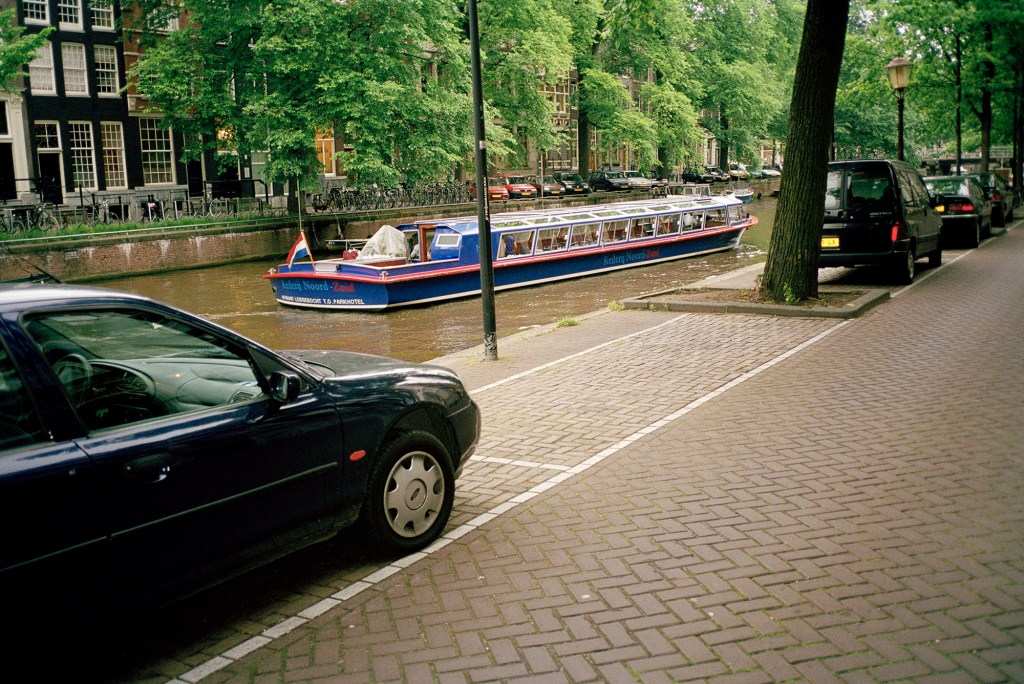
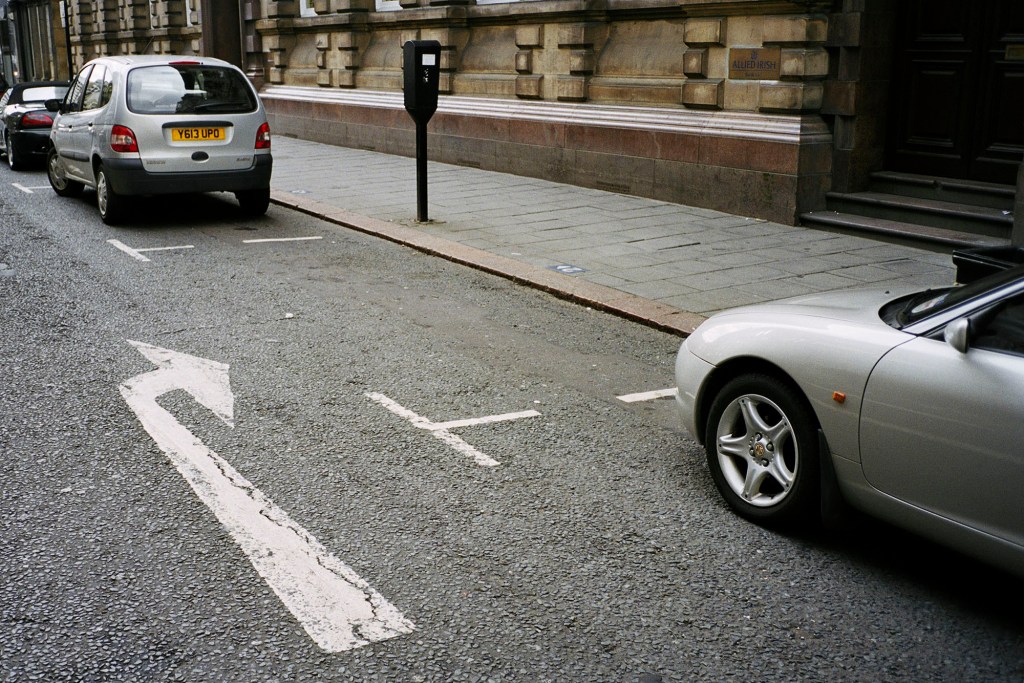
Martin Parr The last car parking space
Between 2002 and 2007 Parr looked at the problem of where to park a car and photographed the last car parking space in 41 countries; the frustration of finding a car parking space is apparently a global unifier of the middle classes (photo-eye Bookstore, 2020). His usual use of high-saturation colour produces images that may at first glance may seem mundane, but given a context they are profound.
HOLLAND. Amsterdam. From ‘Parking Spaces’. 2002.
TURKEY. Istanbul. From ‘Parking Spaces’. 2002.
GB. England. Newcastle. From ‘Parking Spaces’. 2002.
(A Mini Tour of World Parking with Photographs from Martin Parr (2020)
(VIKA, 2020)
I particularly like his design concept where the book is presented as a wedding album, as something precious, just like a last parking space; this is genius. It points me towards more creative considerations of how to present m work.
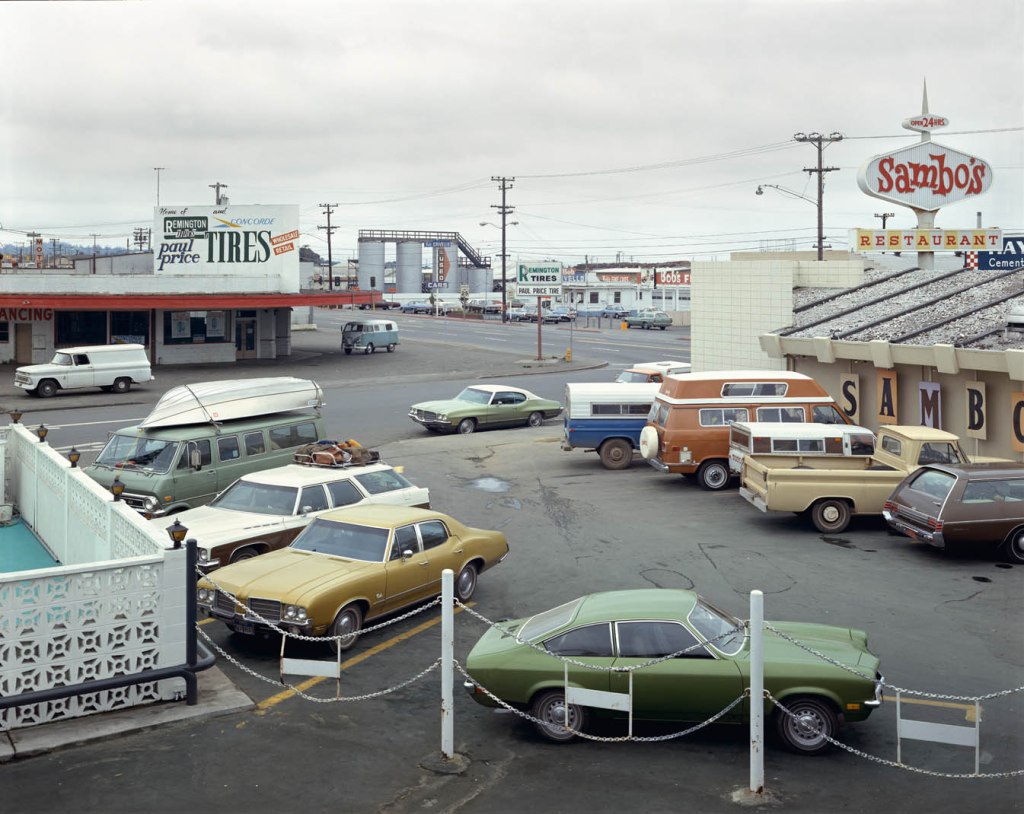
This book of 61 photographs of 1970s America Uncommon Places (1982) included images of parking lots. He was at the forefront of using colour when many thought it vulgar.
Bengal, R. (2020) Edward Clay, D. (2018)
These images work much better in colour than they would in black and white, the colour adds a sureality and increases the already sharp detail I think. Shore describes how his then new large format camera made him work differently, with longer preparation time, allowing him to process large amounts of information which “condenses into an incredibly saturated and detailed image” (Editorial @ ASX, 2020); his work does have many sites of emphasis in each image, which takes time for viewers to unpack. Vogue described this as a time of seeing things in a new way (Bengal, 2020) in fact Shore described the work himself as “an autobiography of seeing” “the capture and projection of the delights of seeing” (Editorial @ ASX, 2020), which he transforms into fine art.
Bruce Gilden- People with masks grocery shopping during the Coronvirus Pandemic (2020)
Gilden has photographed people crossing parking lots during Covid 19. It was interesting to read how his work here changed from his usually candid style to him slightly directing subjects; particularly that he feels that subjects accept being photographed more so when wearing a mask and yet with that aspect missing it is harder for him to make a good picture, “you always need to find a detail that’s strong in any picture” (What Bruce Gilden Learnt Photographing in Grocery Store Parking Lots During COVID-19, 2020)
USA. Hudson Valley, NY. 2020. People with masks grocery shopping during the Coronavirus Pandemic.
USA. Hudson Valley, New York. April 27, 2020. Shawn with a mask grocery shopping during the Coronavirus Pandemic.
USA. Hudson Valley, NY. 2020. People with masks grocery shopping during the Coronavirus Pandemic.
(What Bruce Gilden Learnt Photographing in Grocery Store Parking Lots During COVID-19, 2020)
He is know for getting up close to his subjects but of course he couldn’t do this quite so much in this work. I admire his forceful photography, but it is definitely not my style.
Ed Ruscha -Thirtyfour Parking Lots in Los Angeles 1967
This is aerial views of parking lots in black and white but not relevant o my current work
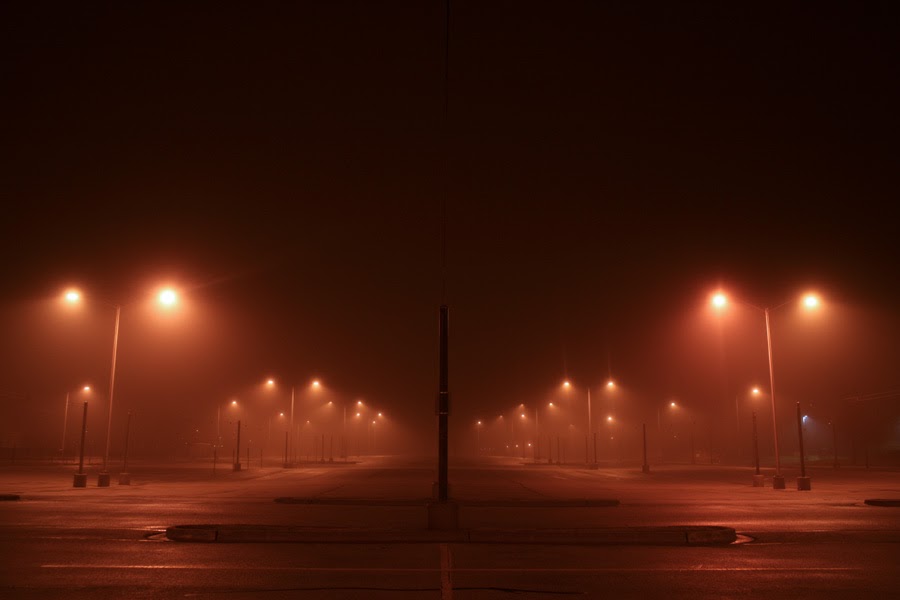
Chuck Anderson – Places you can’t imagine
In my search for photographic work based in car parks I came across this work. Anderson is a multi media artist who here has digitally manipulated this image with tungsten streetlights often with creating rainbow splashes of colour and light in an empty parking lot. Again not relevant to my current project.
(How One Parking Lot Photograph Conquered The Internet, 2020)
This concluded my research into parking lots as I realised I should look beyond the subject matter to my concept.
Research Continued with a suggestion from a peer:
Jack Latham – parliament of Owls:
It was suggested I looked at this work by a per when I was discussing how my work is essentially about absence and presence. Latham’s work does explore what happens when there is a vacuum of context. It focuses on Bohemia Grove an elite men’s club, which is shrouded in secrecy, which Latham only gives brief glimpse to. It was interesting to read about and “The idea of a context vacuum is a fascinating one,” (Roberts, 2019) says Jack Latham, but the work isn’t relevant to my current project, though it make me think about how much context to provide, or not.
I think I’ve now disappeared down enough rabbit holes with this extra research; with the research that I’ve done in my course work as well as the many photographers and photography panel talks that I’ve covered and commented on over the period I’ve been developing my project I have more than enough background to complete my assignment 3.
My learning for this research:
Shore: “use many sites of emphasis in each image, which takes time for viewers to unpack”.
Gilden: “you always need to find a detail that’s strong in any picture”
Parr: How you can make the mundane appear very interesting.
The importance of a good concept, especially when you take this through to the presentation of a project.
Generally: The strength of saturated colours, to add to surreality and sharpness of detail.
POSTSCRIPT December 2020
Following this research I was more aware of the colour or lack of it in my subject/location and used this to communicate mood in assignment 3. I consciously tried both using many points of emphasis when shooting as well as looking for a detail that’s strong in each image, this wasn’t easy in a mundane subject. I asked myself the “Parr” question, how to make the mundane interesting?
Investigate Murrell’s Constructed Childhoods and Starkey’s Untitled series. How do these photographers employ imaginative and/or performative elements to construct their narratives? In what sense is the end result ‘real’? What aspects of their work might you consider adopting in your own practice?(Open College of the Arts, 2014:81)
Hannah Starkey
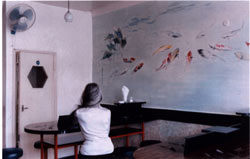
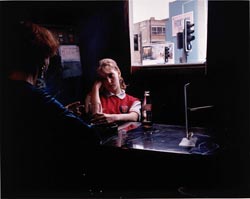
Hannah Starkey’s photographs reconstruct everyday scenes with actors, usually of women pictured in banal daily routines, often placed as lonely figures “segregated with metaphoric physical divides such as tables or mirrors” (Saatchi, 2020). She repeatedly turns her subjects backs to viewers or puts them in heavy shadow, clouding identity features.
Starkey uses a filmography approach, large scale photographs carefully constructed with film lighting; though constructed her images are dynamic “their charge comes from the possibilities and surprises only a still image can yield, from the pleasures and challenges of looking carefully at an arrested moment” (Strong Women, 2020). The images are best seen at the scale she intended, approximately 4 by 5 feet, when you can see the small details they contain.
Her work is mostly “untitled”, with a date only which connects to a memory. Starkey says that she reimagines what she has observed and by carefully reconstructing them she can capture “the small gestures and glances of everyday experience while also subverting traditional notions of documentary and street photograph” (O’Hagan, 2018). She explains that she combines “documentary with the slickness of advertising and the observational style of street photography. I think I’ve become more reflective and considered, but the performative element has been a constant”(O’Hagan, 2018).
(Saatchi, 2020)
Is her work real? Her work blurs fiction and reality. Starkey says that she is more interested in psychological truth than the photographic truth (O’Hagan, 2018). Like Wall she is using the opportunity to recreate moments real and imagined in her own time so that she can present them in a controlled way. Like Wall she is honest about her manipulation, angled mirrors, perspective, acting, placing small details and post digital manipulation after the fact.
I feel much the same way about her work as I do Wall’s. It provokes questions about whether it is documentary, which for me rests on whether they are accurate reconstructions or seductive interpretations; from what I read they are the later and therefore for me not documentary.
Charlie Murrell
In her work Constructed Childhoods she explores the impact of images that surround children’s everyday lives, found in magazines, on TV, the Internet, adverts, and even products. All these images constantly present ideals and can negatively impact on their self-image and esteem.
Murrell’s images are Tableaux constructed in her and the children’s homes. The children are acting in adult roles, in adult poses, she reinforces the gender roles in her images by the use of pink and blue. The images are a mixture of children acting in a studio shot and manipulated exterior shots, but both are strange and cause you to look hard to interpret them.
Are these manipulated images real? The idea or problem of the projection of ideals is a reality, however these images are constructed. These images are documenting a reality but I believe are over manipulated to be documents; they too are images that provoke thoughts about truth, they may expose realities, but the photographs are fictional representations.
So with regard to the work of Starkey and Murrell:
They use imaginative and performative elements to construct their narratives. Though based in varying degrees of reality they are constructed stories, which may have a place on the edge of documentary as they point viewers towards real issues, I classify them as performative photography rather than documentary photography.
I’m not at this stage interested in using performative approaches in my photography, however I will consider some of the elements that they carefully employ, perspective, signs and symbols, small details when constructing my “real-time” images.
Do some independent research into the work of some or all of the photographers discussed in this project.
Compare and contrast the strategies that these photographers adopt in conveying a sense of local identity. Do you think this type of work is easier or harder if you come from the place that you’re documenting? Can you find any evidence for the view that ‘the same geographical space can be different places at the same time’? (Open College of the Arts, 2014:73).
Before starting on more in depth research I looked briefly at the work of Marco van Duyvendijk, Jens Olof Lasthein, Philip Cheung and David Goldblatt; from this I decided to expand my research on the photographers below to identify strategies used to convey sense of place and local identity.
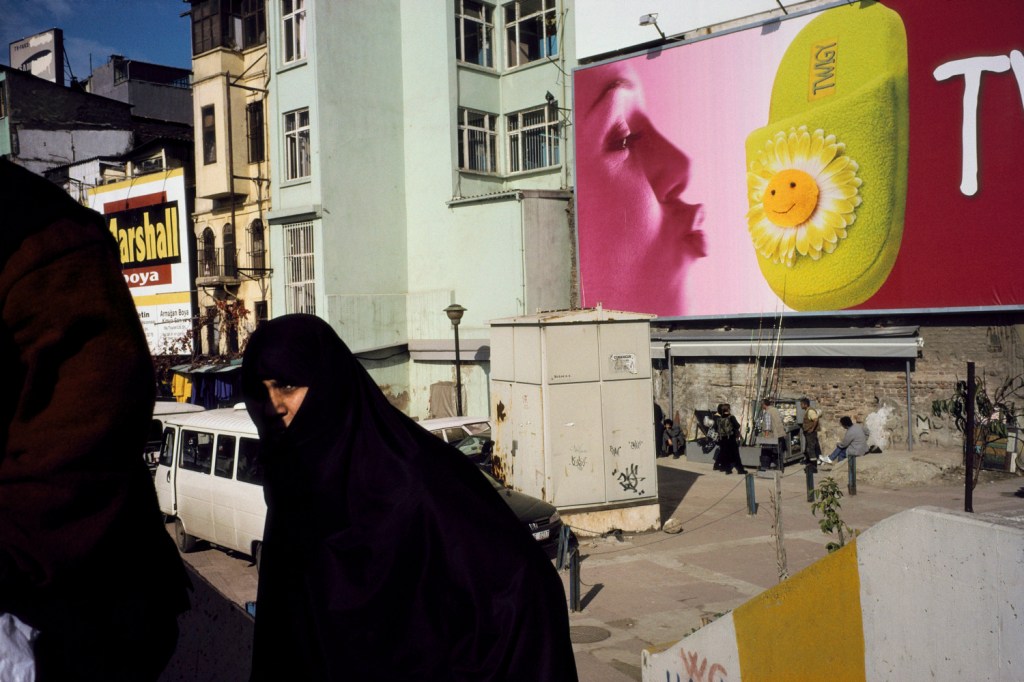
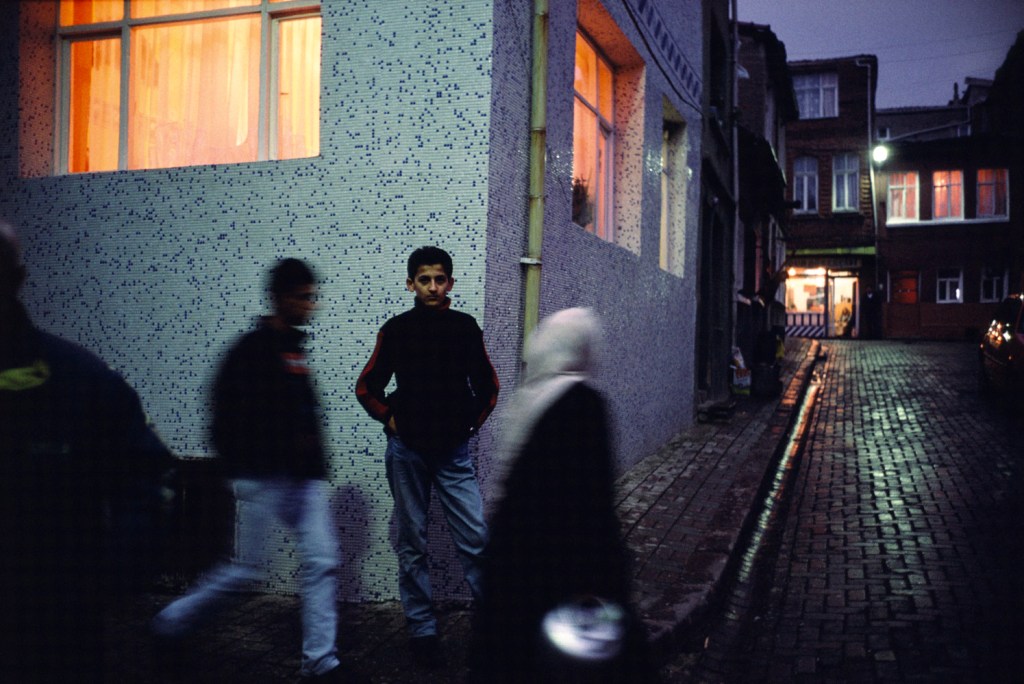
Alex Webb– Istanbul: A city of a hundred names
Was born a raised in the USA and began as a photojournalist. He is best known for his colour photographs often in places with socio-political tensions. He has worked in many places the U.S.-Mexico border, Haiti, Istanbul, and a several U.S. cities. He says that his work is questioning, exploratory, and ambiguous (Alex Webb,2020, 1).
I have looked closely at his work “Istanbul: city of a hundred names” (2007), begun in 1998. Webb says “For thirty-some years as a photographer I have been intrigued by borders, places where cultures come together, sometimes easily, sometimes roughly”, Istanbul has certainly led a blended existence (Alex Webb 2,2020). In this work he definitely leans towards documentary art in a surrealist way, however he does give an everyday unposed pictures of everyday life there and exposes elements of their identity. Webb does through the colourful urban landscape address the history of the place, religion, politics and economy through the way people work and live.
TURKEY. Istanbul. 2001. View from a barbershop near Taksim Square.
TURKEY. Istanbul. 2001. Street scene in Ayvansaray.
TURKEY. Istanbul. 2004. Children playing in Cihangir.
(Alex Webb 2, 2020)
His strategy for conveying a sense of place and identity is very much in the style of street photography. He captures quickly, frames abruptly and uses colour to his advantage. It is his choice of subject matter that captures identity and place using this style.
Mikhael Subotzy- Beaufort West
Subottzy is South African born post-apartheid but his work is about the legacy of it. He moved into a showroom apartment called “future slick”, part of “Ponte” the regenerated tallest residential building in South Africa. With British Artist Patrick Waterhouse; he intended to document life in the tower before and after the transformation; Their work the book Ponte City, is described by Magnum as “An intimate social portrait of Johannesburg’s iconic Ponte City and its community of residents” (Ponte City (2018).
(Ponte City, 2018)
The work at first takes on an architectural style, but showcases the lives and identities there that the building is integral to. He uses a range of approaches, documents, design blueprints, and portraits to reinforce the connections of the people there. Subotzy photographed each of the 467 apartment doors, and the views from them, and also portraits in elevators, a good way of meeting people, often lit by the fluorescent lights of the elevator. These were both awkward and intimate portraits; later he photographed more intimately from within their homes.
S
(Ponte City, 2018)
Subotzy explains that the building represents the residents and those outside, and is a microcosm of the broader city. He describes how the “project was always about these stories, the mythology and the ideology were just containers that, while of course interesting in themselves, were a way of containing the project.” (Ponte City, 2018)
His earlier work Beaufort West, was of rural South Africa, where he combined characters and social landscapes. This town is along a great highway; it has a prison in the middle of the town which is what first caught his eye.
(Mikhael Subotzky archive, 2020)
His pictures also captured those living outside the prison, some who rotate in and out of it. Here again his images capture the peoples lives and the injustices,
(Mikhael Subotzky archive, 2020)
He obviously takes time to gain trust and understand and becomes close to his subjects and communities as the images are not critical or exploitative.
Marco Van DuyvenDijk
A Dutch photographer who has photographed many places worldwide, especially Children and young people, such as Rumania, Mongolia, China and Japan. His work shows tradition, change and contemporary elements. His work in Mongolia we are told in our course book was commissioned by the Mongolian consulate to document the nation’s shifting identity.
(Marco , 2020)
He says that he sees art, and his own photography, as a means of communication between East and West, however these images speak to me more of aesthetics than getting under the skin of the people who live in a place.
I chose also to review his images of Manila as it is a place and people I know well:
(Marco, 2020)
I can see in his images some stories of their everyday lives, however they appear to me more as a traveler’s photography rather than someone who has taken time to engage, gain trust and become intimate with their lives to portray their identity; maybe the outcomes of his work depends on whether it’s being commissioned for something in particular as his work in Mongolia was.
Reflections:
You would think that this type of work would be more effective if you come from the place you’re documenting. Subotzy and Webb get underneath the skin of their own countries; Van Duyvenduk doesn’t achieve this as effectively. To me it seems that capturing a sense of place is dependent not on whether a photographer is local or not, but gaining a shared understanding of place a people is dependent on sensitivity, patience and empathy as well as a great eye. Because of this I believe that the same geographical space can appear to be a different place at the same time, when represented by different photographers.
My learning:
This underlines the importance of taking time to really get to know a place before and when photographing.
Before you start this exercise visit Peter Dench’s website www.peterdench.com. Analyse Dench’s style, looking particularly at his use of surrealism.How effective is surrealism as a visual and conceptual strategy in Dench’s documentary photography? (Open College of the Arts, 2014: 66)
I have explored Peter Denche’s work on his website which is predominantly highly saturated; both visually and conceptually surrealism seems to be central to his style, as is the subject of the English and Englishness.
In his work Sun Sea and Covid-19 (2020) he utilises the Surrealist elements of:
Juxtaposition
Juxtaposition
Ridicule
Humour
The bizarre
And similarly in his work Alcohol and England (2016, comissioned by the Sunday Times Magazine) he uses:
Juxtapostion
Juxtapostion
Ridicule
(Neon Sky Creative Media System, 2020)
In this series he starts rather gently but moves quickly onto sad and seedier situations which he does not flinch from representing honestly.
Rather like Parr he highlights elements of Britishness, but in a very “in your face way”. The highly saturated colours in his work both draw you to it and jolt your senses, rather like some of the subject matter. I find his use of surrealism effective but rather irreverent and obvious.
After writing this I listened to an interview with him and this helped me to understand his work style better:
Told that photojournalists should have an idea and then find material for it; he disagrees with this preferring to have an rough idea but developing work as he finds it.
When working on a long term project he breaks it down into themes such as alcoholism, weather, love…
He has produced 3 books in 11 months and at the point of the interview was finishing off all lose ends and taking time to decide what projects he wants to do in his next few years.
His work has been influenced by the locality where he grew up, where poverty alcoholism and so forth were obvious.
He talked of the importance of “blending” when photographing and consequently as he gets older his subject matter is changing.
The humour in his work comes from his upbringing by the sea and seaside humour; he recognises that pictures can’t be funny alone but should have an effect/message; he believes this can be achieved by dropping images in between them that are different/serious/have impact. He beieves that people respond favorably to his humour because most can identify with it.
Dench believes that honesty is important in photography and helps to interest people.
His work uses surrealism and colour in a very effective way but I don’t identify with all of his humour and find some of of his images too harsh.
My learning:
Think about themes when developing a long term project
Acknowledge the influence of your upbringing and/or locality
Research point: Surrealist elements in colour documentary
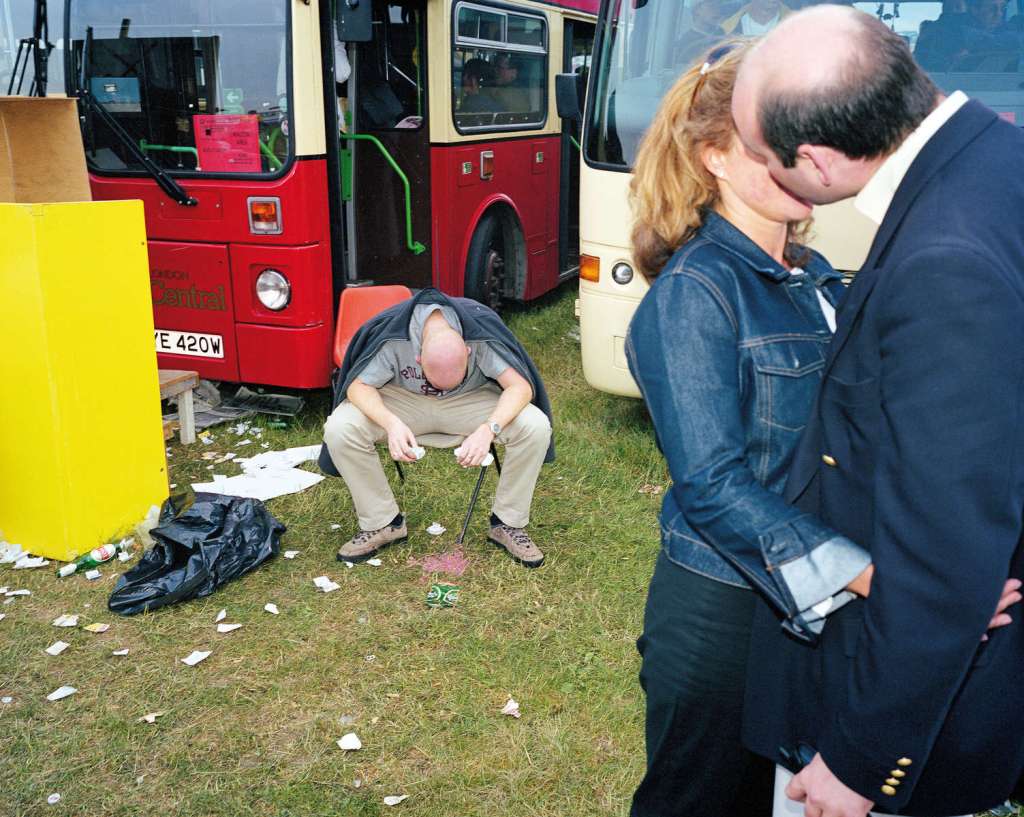
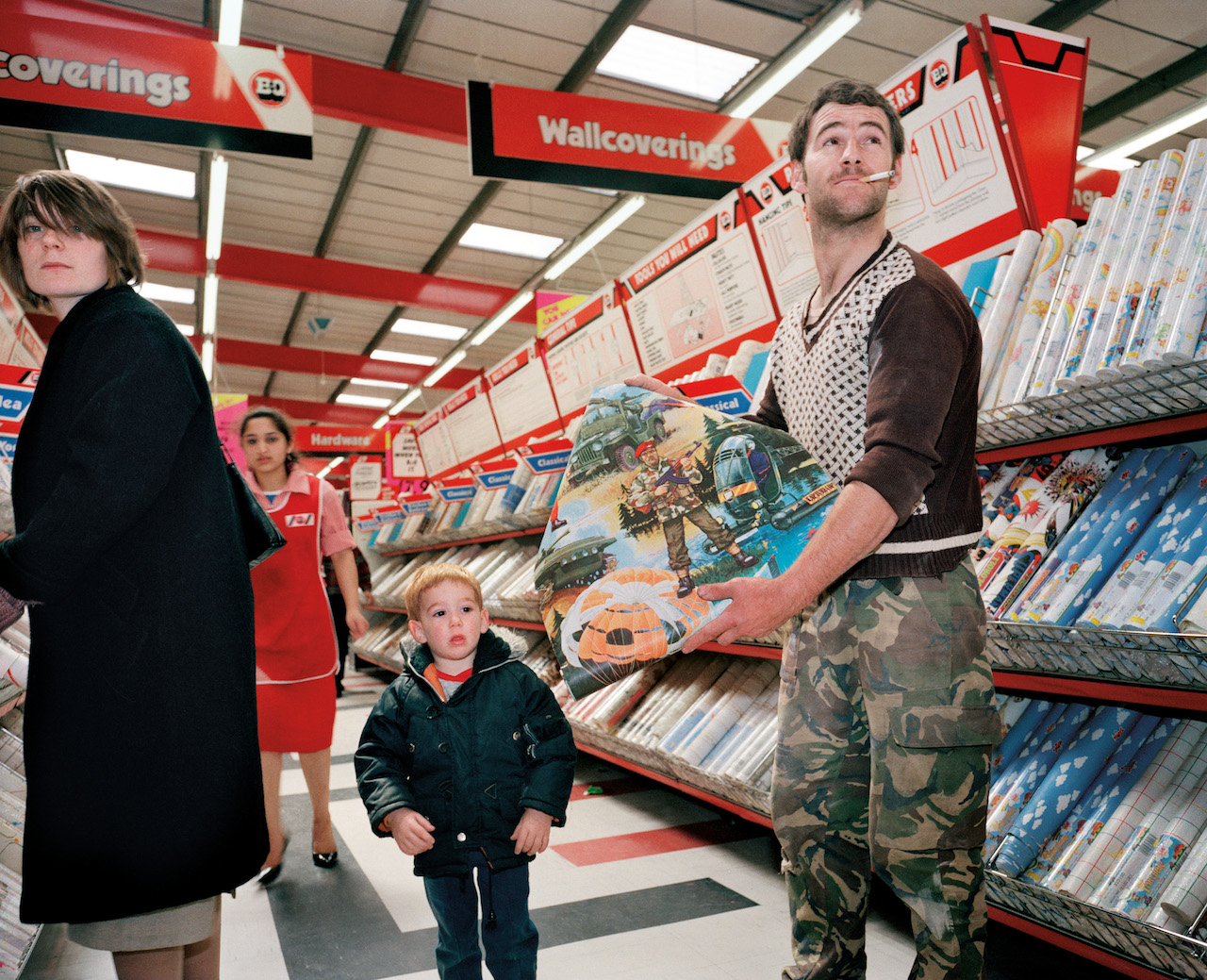
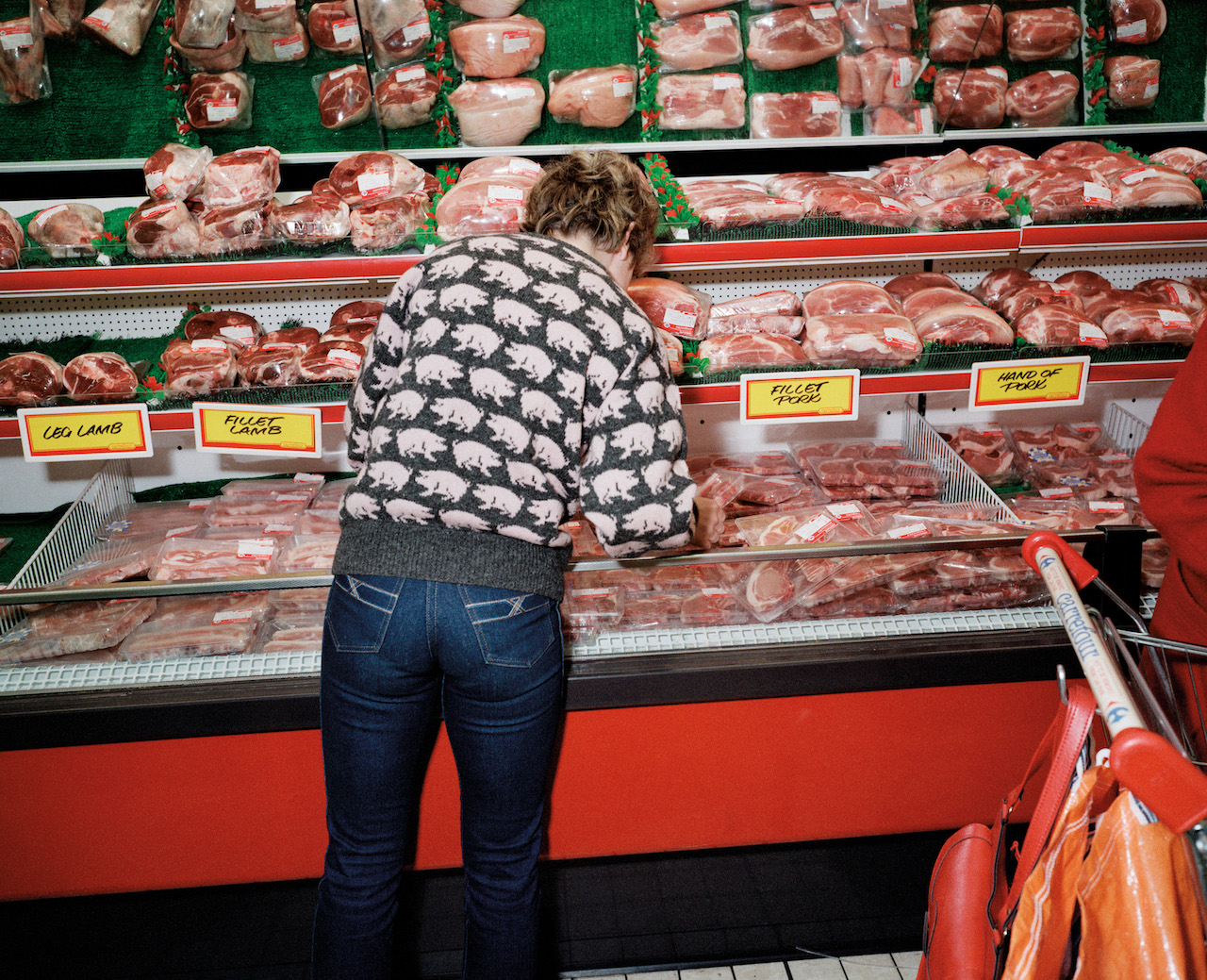
Paul Reas
Reas is one of the pioneering generation of social documentary photographers like Paul Graham, Martin Parr and Anna Fox, who depicted and critiqued British class and culture in the 1980s and 90s in colour. Reas’s tutor was Martin Parr who saw that he had the ability to go beyond literal photography to show more “ambiguous, illusory drama from the everyday narrative unfolding in the room” (Smyth,2018). His work was popular with picture editors and advertisers,
Like Peter Dench Reas was very much influenced by his working class background. Reas says “ “as a photographer, although you’re photographing other things, actually you’re only photographing your own life and your own experience” (Smyth,2018), because that’s where your interests lie.
His book I Can Help (1988) helped to establish him as one of the new style British documentarists, showing people’s real lives in an edgy way. This was his first project in colour which focused on the rise of consumer spending and new shopping malls, on the edges of cities. – the new cathedrals of consumption.
Here he used his sharp observation and humour. He was critised as mocking people in his work, as with many others using colour photography in the 1980s, and admits that they were very consciously using irony and humour and satire, however he didn’t intend to mock, “I was just reflecting the circumstances people found themselves in, in a way that was sometimes a bit unpalatable” (Smythe, 2018).
Whilst researching him I came across a podcast Ffoton Interviews hosted by David Hurn wich gave me further insights into his work. He greatly respects those who research their subject fully before photographing. They discussed this image that was pivatal to Reas:
(The Guardian, 2018)
It was interesting to hear that he didn’t recognise its interest value at the time he took it. They agreed that you should move forward on pivotal moments immediately; Hurn added that tomorrow is never the same. .Reas remembers the day Parr picked the image out and he realised how “transforming” photography could be, photographing the real, but in some way occupying the space in a different way. Parr encouraged him to look at Winogrand, Freidlander, and Tony Ray Jones,
This is when his work stepped away from the different classes of photograph essays that David Hurn mentions: single pictures/portraits, relationships, those that establish the environment, to those that aspire to transform seeing. I love the way Reas describes the act photography as the conscious ordering of information, putting a rectangle or a square around the world in which we live, then managing the information that is contained in it and trying to choreograph it in some way that makes sense – essentially photography is about conveying information. Reas went on to say that he thinks the most effective photographers withhold information, provide ambiguity, and that what they don’t show in a situation is more important than they show. He also describes this a photographs that asks lost of questions but gives very few answers.
A theme that ran throughout this interview was his lack of confidence, which is one of the things that he says led him to photography as he can hide behind the camera.
The photographers he says that he most respects ae, Don McCullin Eugene Smith, Winogrand, Friedlander, Tony Ray Jones, Martin Parr, Taryn Simon (for her intellectual rigour).
My learning:
Sharp observation is key.
Subtle ambiguities can be magnified by perspective and even more so colour I think.
I am learning where what I call irreverence comes from a photographer’s background as well as their intentions.
Photography is transformative, it transforms seeing.
What is in the frame is as important as what is outside of it, this is not new to me but a reminder.
Research Tony Ray Jones (especially his Wimbledon man on steps photo Reas mentioned) and Taryn Simon.
When you have a pivotal moment move on them immediately.
Think of photo essays as classes of: single pictures/portraits, relationships, those that establish the environment, and those that aspire to transform seeing.
Think of the act photography as consciously the ordering of information, putting a rectangle or a square around the world in which we live, then managing the information that is contained in it and trying to choreograph it in some way that makes sense – essentially photography is about conveying information.
It’s very effective to withhold information, provide ambiguity, and what’s not shown in a situation is more important than what’s shown.
Aim for photographs that ask lots of questions but gives few answers.
To be a photographer you’ve got to be somewhere, you must be out and about. – tomorrow is never the same.
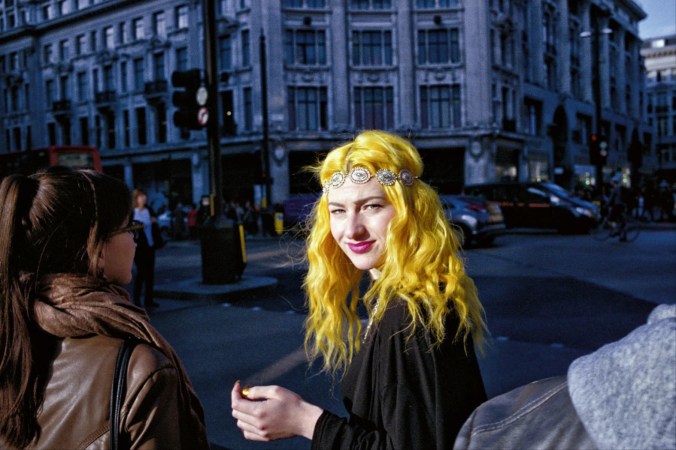
Is a British street photographer. He says he has a fascination with people and the way they live their lives and likes to make an honest, believable picture. He shoots his own personal work everyday rather than taking assignments. There is an obvious attraction of colour to him, he says that this is the most important thing to him:
(Lunn, 2016)
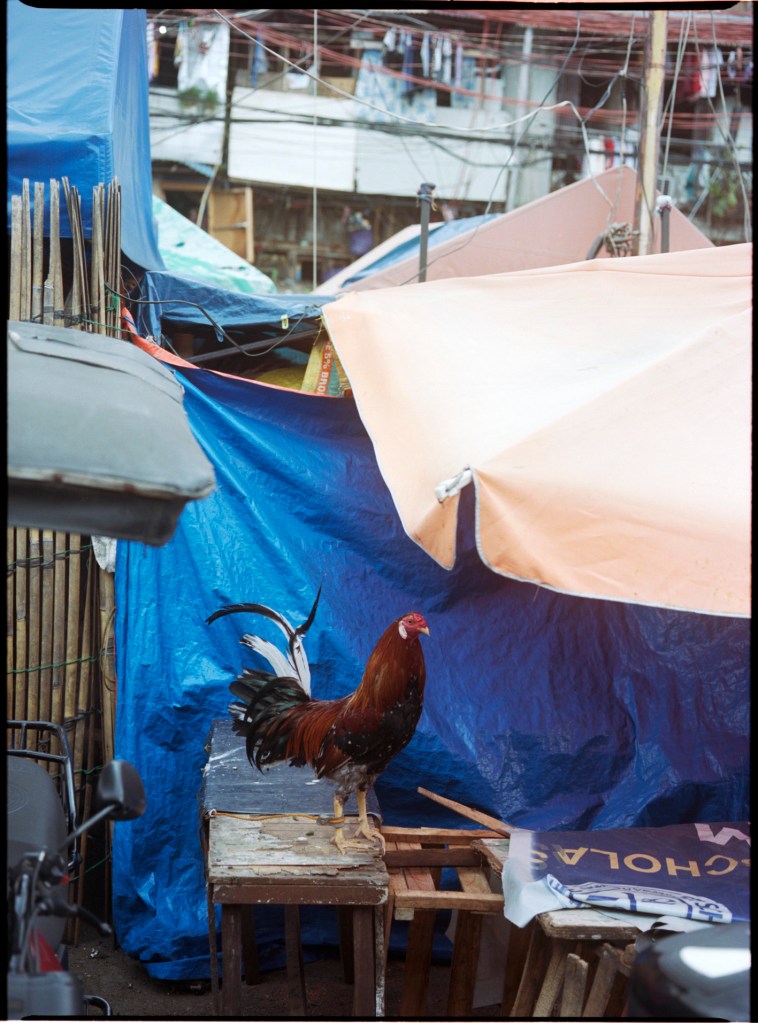
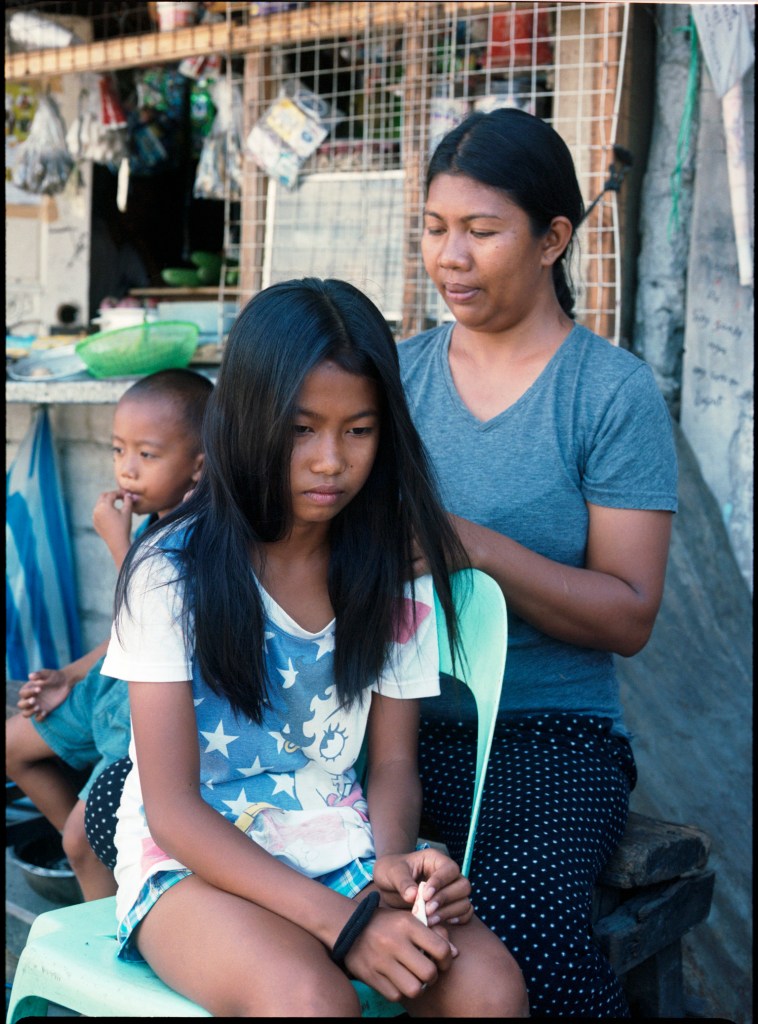
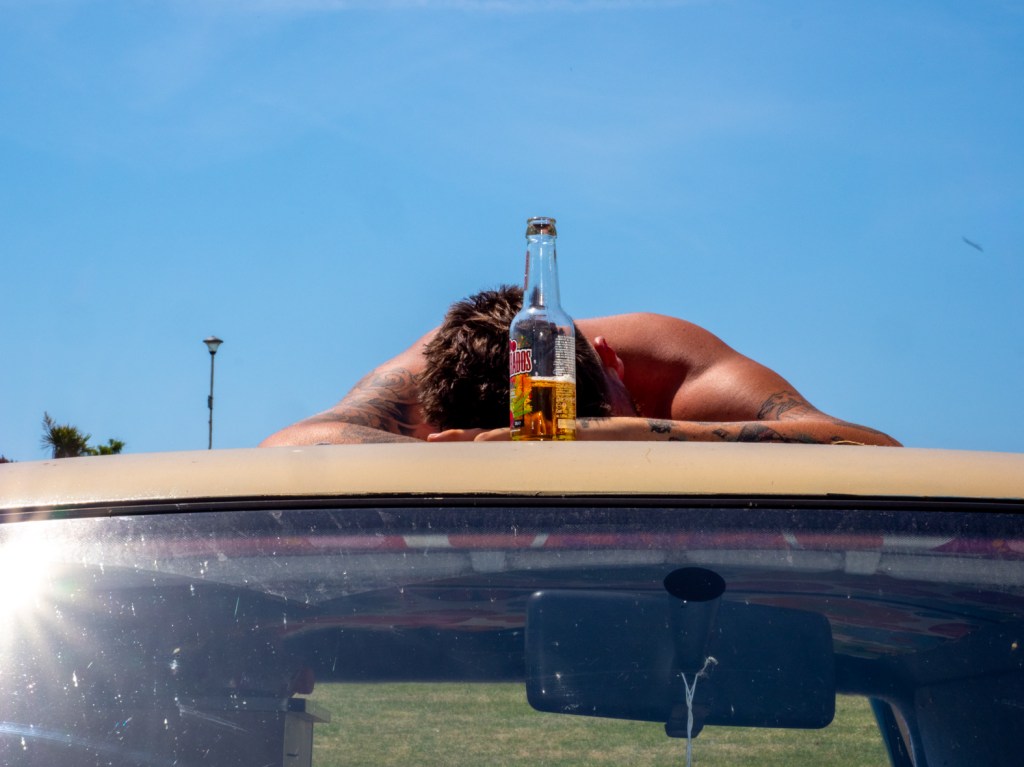
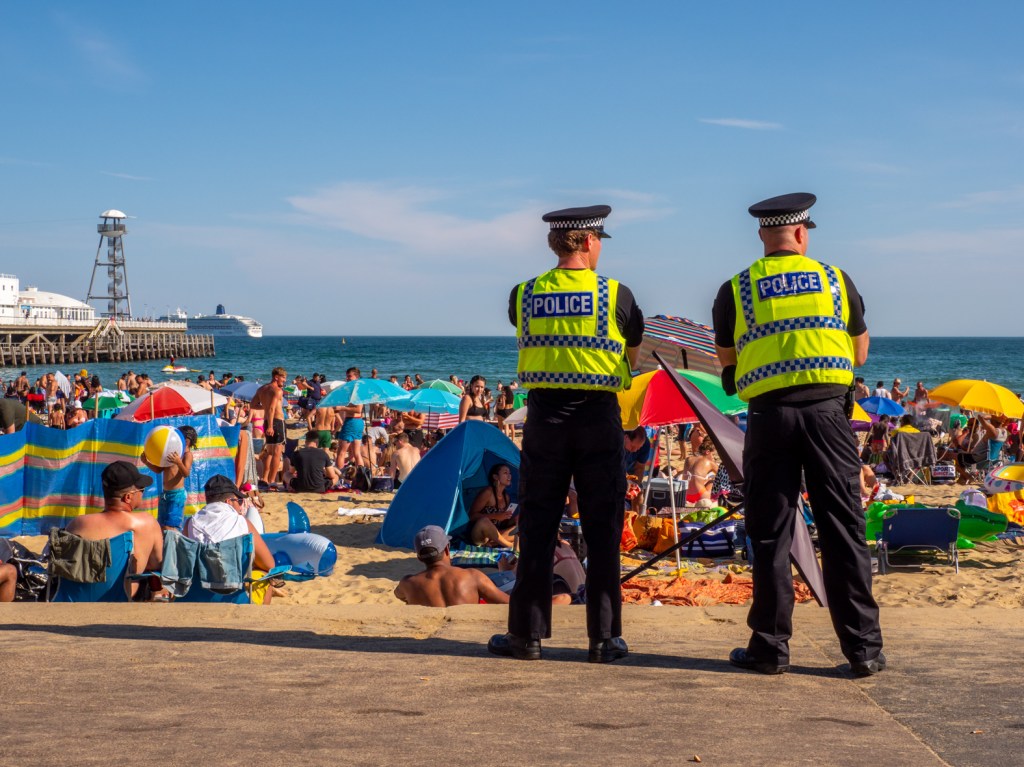
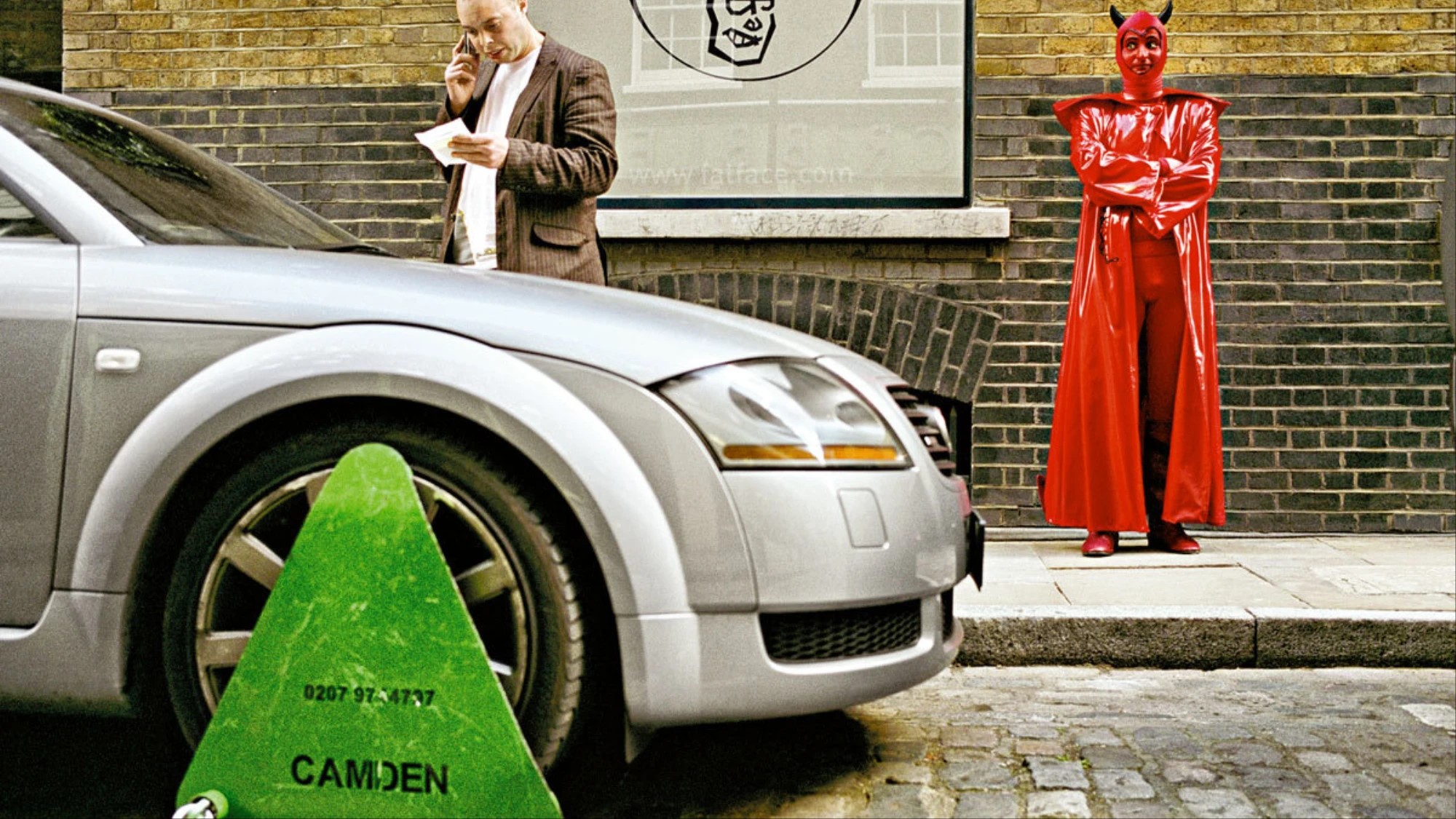
Stuart says in the photo above “I took that picture because there was a lot of colour that was coming at me” (Lunn, 2016). He explains that often something pops out at you, and when you look closer something else is going on.
It is obvious that he looks very closely at things and sees things that might easily be missed; this helps the viewer to slow down and appreciate what’s in front of us.
GB. England. London. 2008. Hyde Park.
GB. England. London. 2013.
(All That Life Can Afford, 2020)
I was particularly interested in the advice he gives by describing how he photographs strangers. Stuart says he has learned to be quick and discreet and If ever stopped he tries to be polite and move on as quickly as possible (All That Life Can Afford, 2020); he also advices, smile!
He believes that everything is fair game to photograph anything as long as you don’t interfere with it (Lunn, 2016). Stuart applies some of the lessons that he learnt when skateboarding to street photography: keep trying, have fun, keep a positive attitude, look hard, forget about time and get into the zone, and even anticipate what might happen.
Stuart talks of the 3 F’s in street photography: Fish for photos (wait a long time), follow (take a short time following something), fuck (capture it right now). He also says you’ve got to give yourself time and keep a camera with you at all times.
My Learning:
Be confident when shooting strangers, smile and move on – easier said than done
When building a book build a narrative, even single images such as street photography you can use various criteria, weather, light, colour…
A book title should intrigue and beckon people to pick up the book.
I have picked out some things that are pertinent to here surrealist colour photography.
Her first body of work Basingstoke 1985/86 was a story of Thatcher’s Britain in which . Here she uses colour, flash and humour like Parr. These images with texts which are captions taken from publicity material, were also influenced by her love of comedy and literature. Workstations the subject of Office life in London, again in Thatcher’s Britain, used images and texts, parodying the style of magazine journalism, giving a satirical view of contemporary Southern England.
(Fox, 2020)
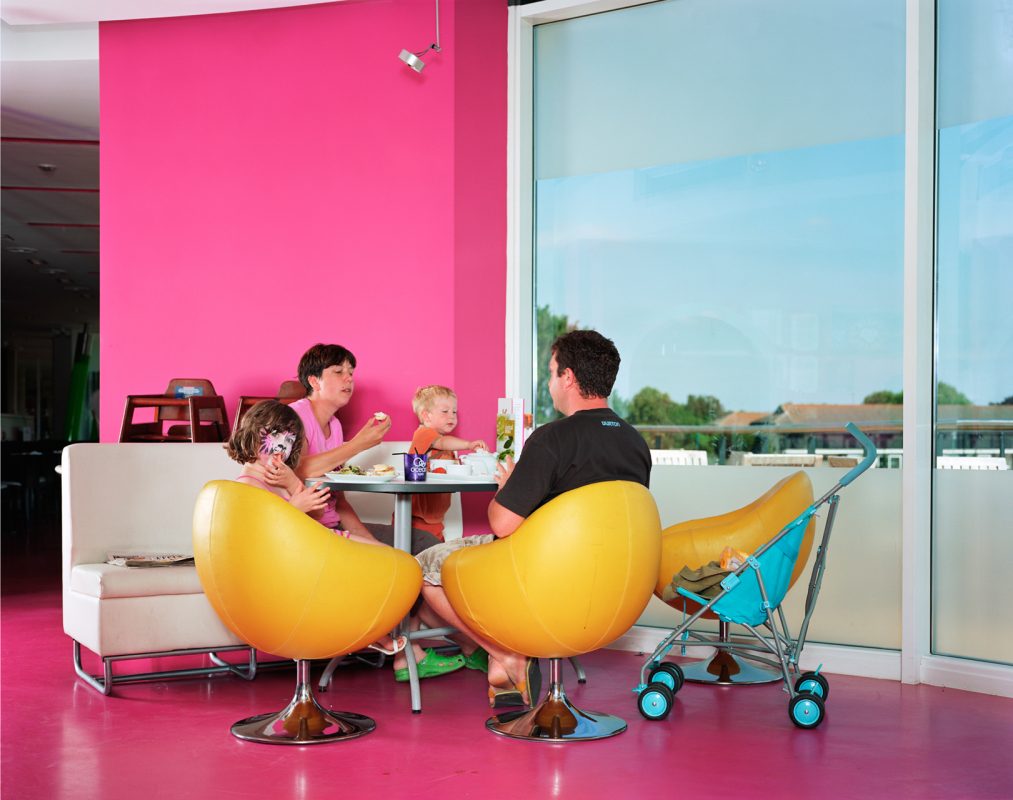
Fox’s work Resort 1 and 2 made at Butlins (Anna Fox,2020) shows similar use of colour whist she depicts the theatrical nature of the place.
(Fox, 2020)
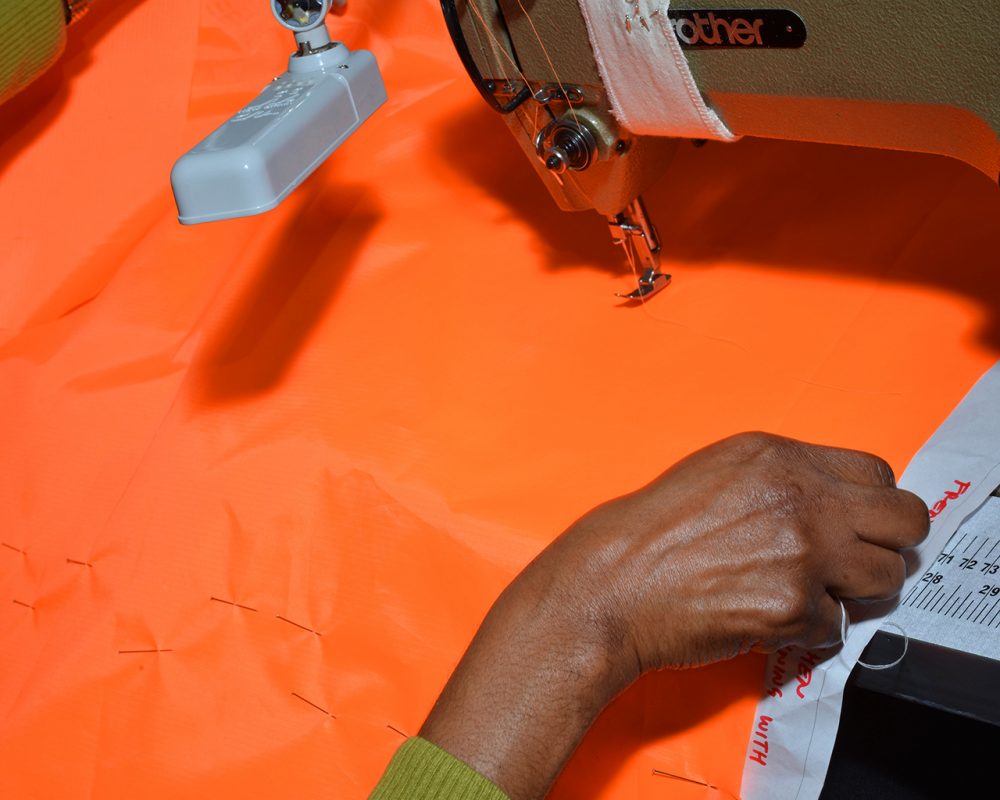
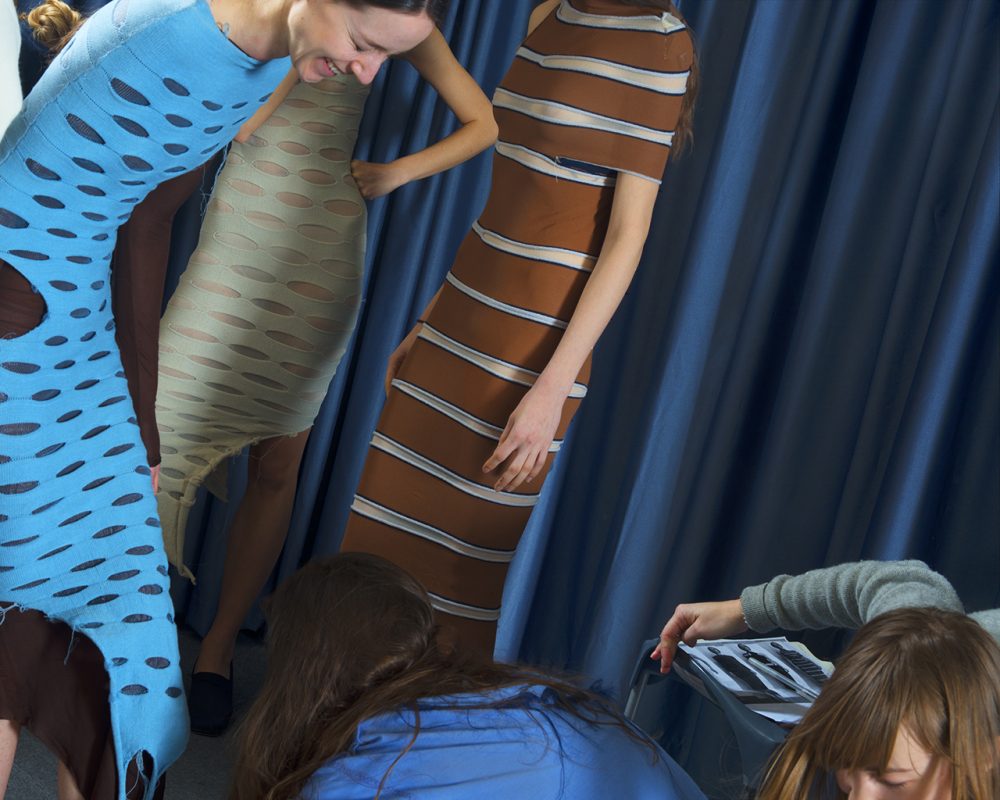
Her more recent work Blink, which documents The final MA student collections at St Martins, captures in colour the frenetic build up to their show; Fox uses abstract snippets of the work going on framing moments in unorthodox ways.
My Learning: Consider using publicity material for my assignment 3 book
Reference: Anna Fox (2020) At (Anna Fox (2020) At: https://annafox.co.uk/ (Accessed 29/10/2020). Accessed 15/9/2020).













 (Lunn, 2016)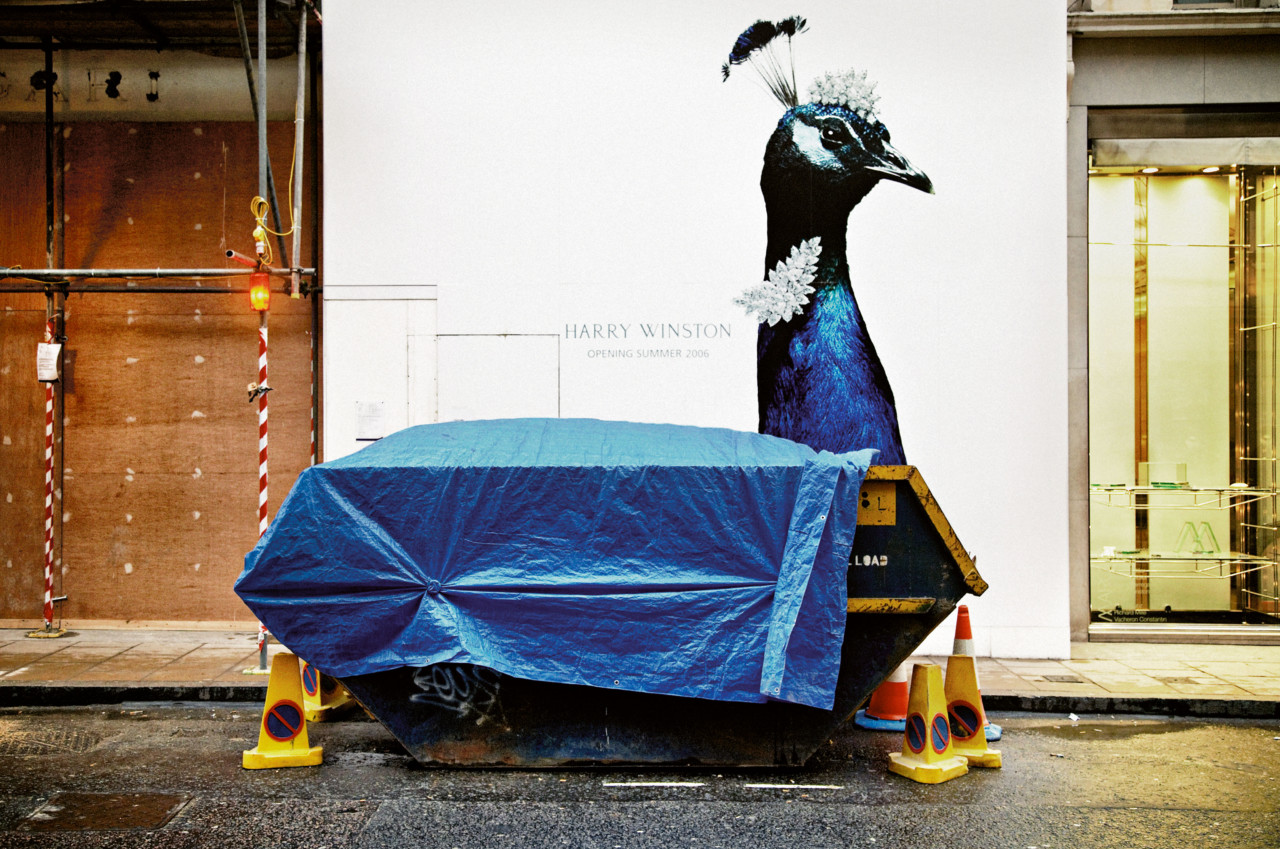



 Photography 2: Documentary