Preparing for assignment one I looked at photographers who had photographed the home as well as those who had photographed through windows.
ANNA FOX My mother’s cupboard’s (1999)
I have looked at this work before but returned to it as I thought of it whilst preparing for my assignment 1 work on safety at home where I intend to photograph everyday objects.


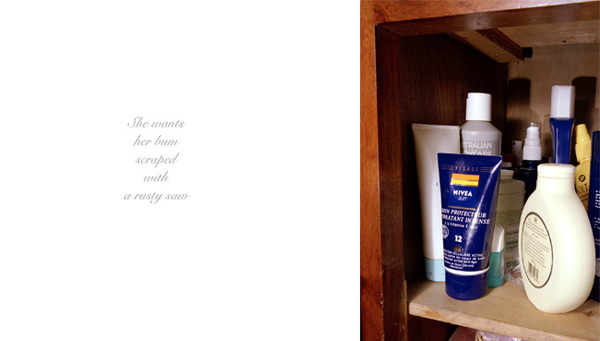

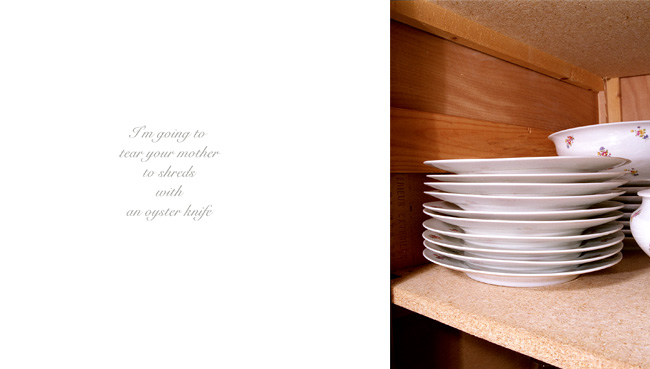
(Anna Fox 1999)
(Anna Fox ,1999)
This was originally designed as a miniature book using images and texts with “My Father’s words” as a way of narrating about family relationships. The juxtaposition of her Father’s harsh words next to her mother’s collection of ordinary household objects in her cupboards forms an intimate sharing of her family life. Fox describes her work as “Colour photographs of my mother’s tidy cupboards together with excerpts from my father’s rantings” (Fox, 1999).
I am particularly interested in how Fox has framed the objects in the cupboards; it seems that they are all portrait orientated and shot from a slight angle including either a shelf or the floor each time and mostly a part of the cupboard roof interior. I notice that in her work “Cockroach diary”(Fox, 2000) she similarly maintains the same perspective in each shot (this time a downwards, squeeued perspective).
References:
My Mother’s Cupboard : Anna Fox (1999) At: http://www.annafox.co.uk/work/my-mothers-cupboards/ (Accessed 01/04/2020).
Cockroach Diary : Anna Fox (2000) At: http://www.annafox.co.uk/work/cockroach-diary/ (Accessed 01/04/2020).
I was lucky to open issue 238 of Aperture 2020 and find it dedicated to HOUSE AND HOME a consideration of the meanings and forms of domestic spaces, this was very timely. It formed a starting point for research on a number of photographers who have used the home as “an emblem of the moment”.
FUMI ISHINO – LOOM (2018)
“In Japan, a Photographer finds there’s No Stanger Place than Home”
On returning from college in the US Ishino describes a feeling of “zure”, lop-sidedness, slippage – that his locality of Tokyo was neither home or foreign “a frame on the wall ever so slightly crooked”.
He photographed ordinary places that usually went unnoticed, and asks Fumi Ishino’s photographs asks what happens when a house becomes unfamiliar.
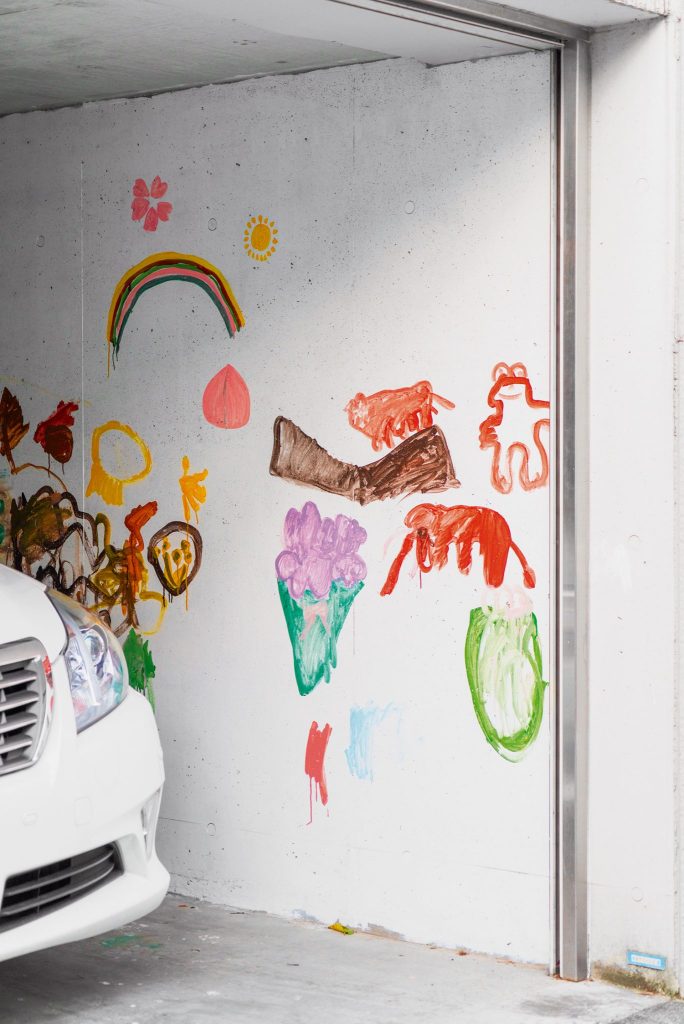
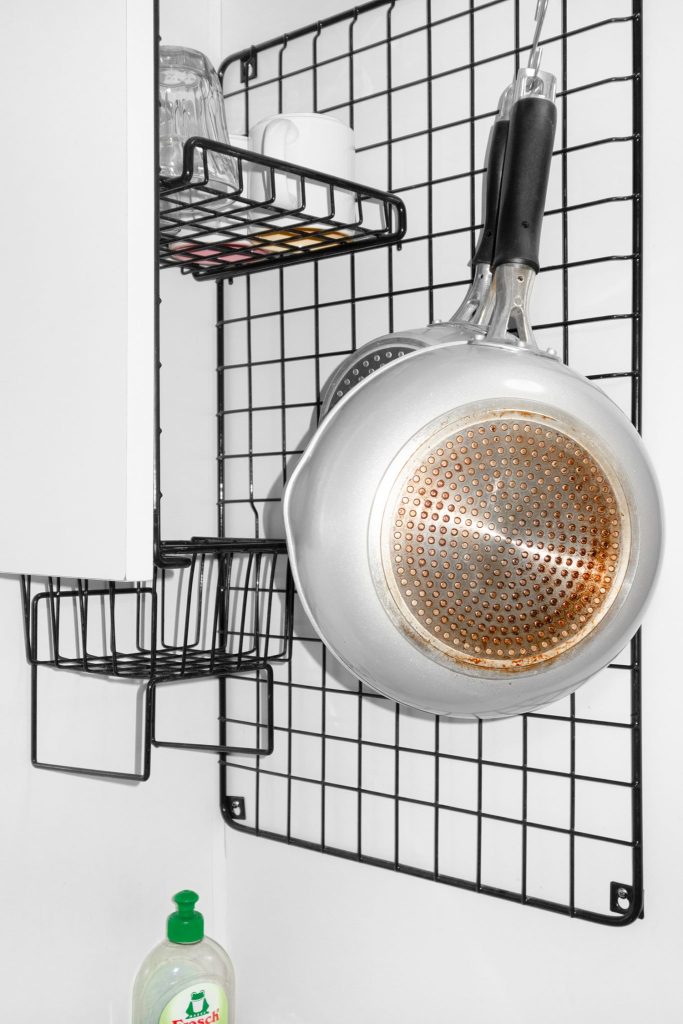
(Fumi Ishino, from the series Loom, Japan, 2018)
This series are all predominately shaded a cold white but interrupted with bursts of colour in the debris left by people.
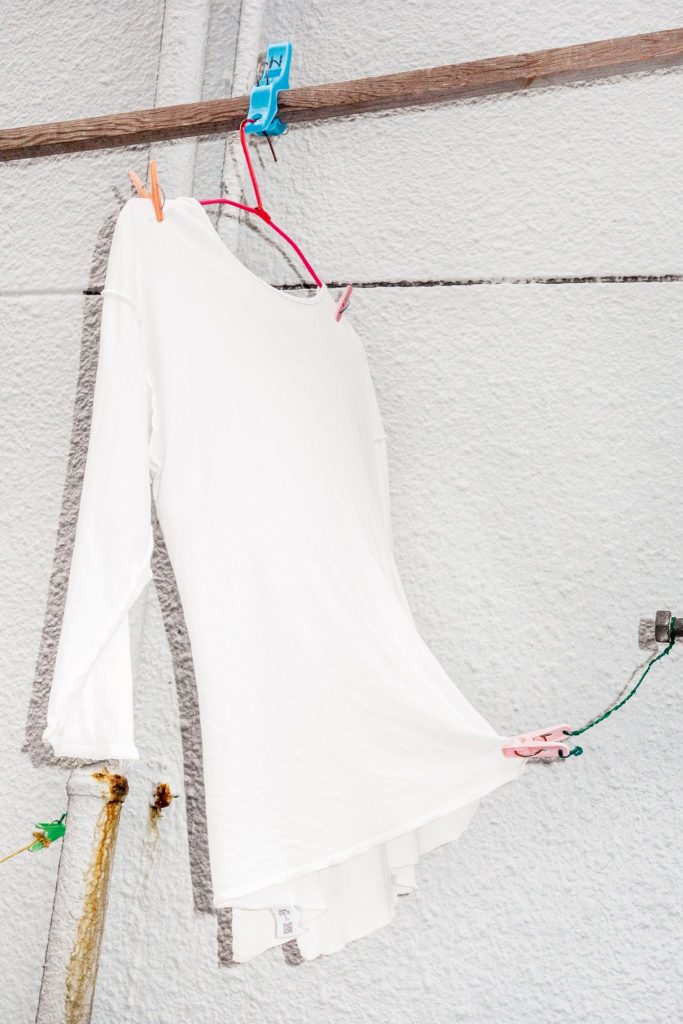
Fujii (2020) beautifully describes the image above as an “aethethics of suspension, a gentle balance upheld amid buffeting forces”. It is the feelings that he is trying to express in his images that interests me, and this reminds me that I should consider what feeling I’m trying to convey in my assignment 1.
Reference:
Fujjii, M. (2020) ‘In Japan, a Photographer Finds There’s No Stranger Place than Home’ In: Aperture (228) At: https://aperture.org/blog/japan-home-fumi-ishino/
Robert Adams – Photographs from Colorado (1970)
In this work Adams “with his quiet and observant eye” looks for the “beauty and emotion in everyday homes” (2020). In these images he does bring to our attention the ordinary and often overlooked in a sympathetic way.
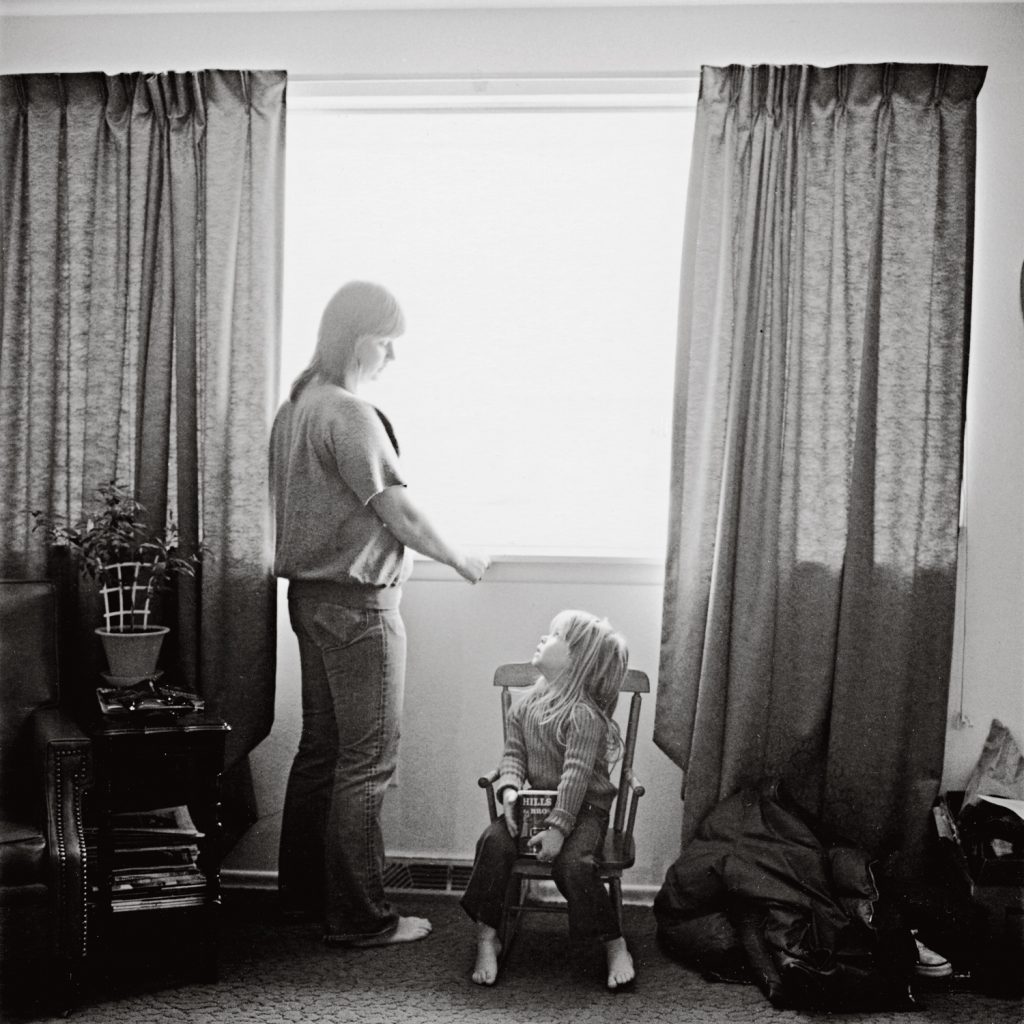
Robert Adams, Untitled, 1973–74 
Robert Adams, Colorado, ca. 1973 
Robert Adams, Lakewood, Colorado, 1973–74
The images do have an Edward-Hopper like emptiness and sense of abandonment and therefore those without humans in particular give a sense of a room left behind by humans and the atmosphere and feelings. Says that “absence can fill us up as much as presence does” and that Adams taped into the something that remains even as we come and go” (Iyer, 2020).
Adams apparently said that he “wanted just to show what lay within the houses that were a part of my primary subject…I also hoped, however, to find evidence of human caring”. In this work of Adams again it is the emotion of the scenes that he captures that interests me.
Reference:
The Quiet Majesty of Robert Adams’s Domestic Interiors (2020) At: https://aperture.org/blog/robert-adams-domestic-interiors/ (Accessed 14/04/2020).
ARTICLE IN APERTURE VOLUME 228
Minimal. Messy, or Melancholic? The many faces of home in Japanese photography
Lena Fritsch
I was interested in this article as a follow on from the work of Ishino as it explains some of the words and concepts attached to Japanese homes as well as the beauty of the images of the ordinary.
The Japanese idea of home depends on the context:
- Furusato defines a nostalgic sense of one’s own home
- Katei defines the house spatially
- Kazoku defines the family and household
An example of Furusato is Ishiuchi Miyako’s Apartment #50 (1978) below:

Her apartment photographs are linked to her childhood memories and are human as they show visible traces of their inhabitants, stains, cracks, fingerprints:
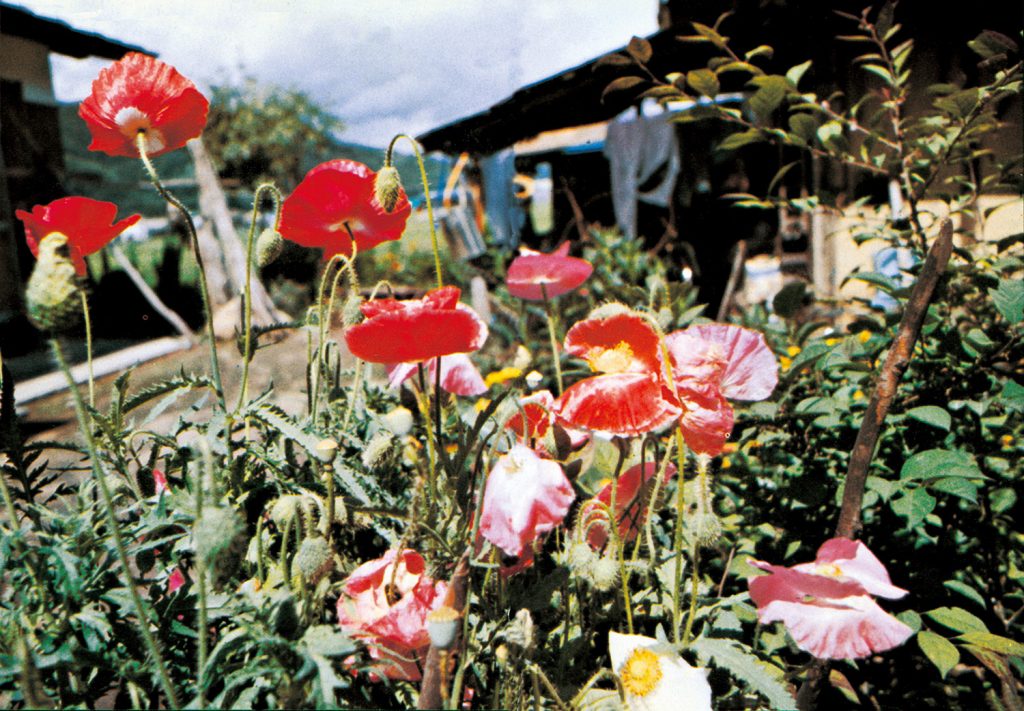
Another example of Furusato is shot by Moriyama in Tales of Tono (1976) reflects Japan’s interest in folklore, blurry, grainy, mysterious, suggesting that the scenes appear quickly and then disappear rather like nostalgic memories.:
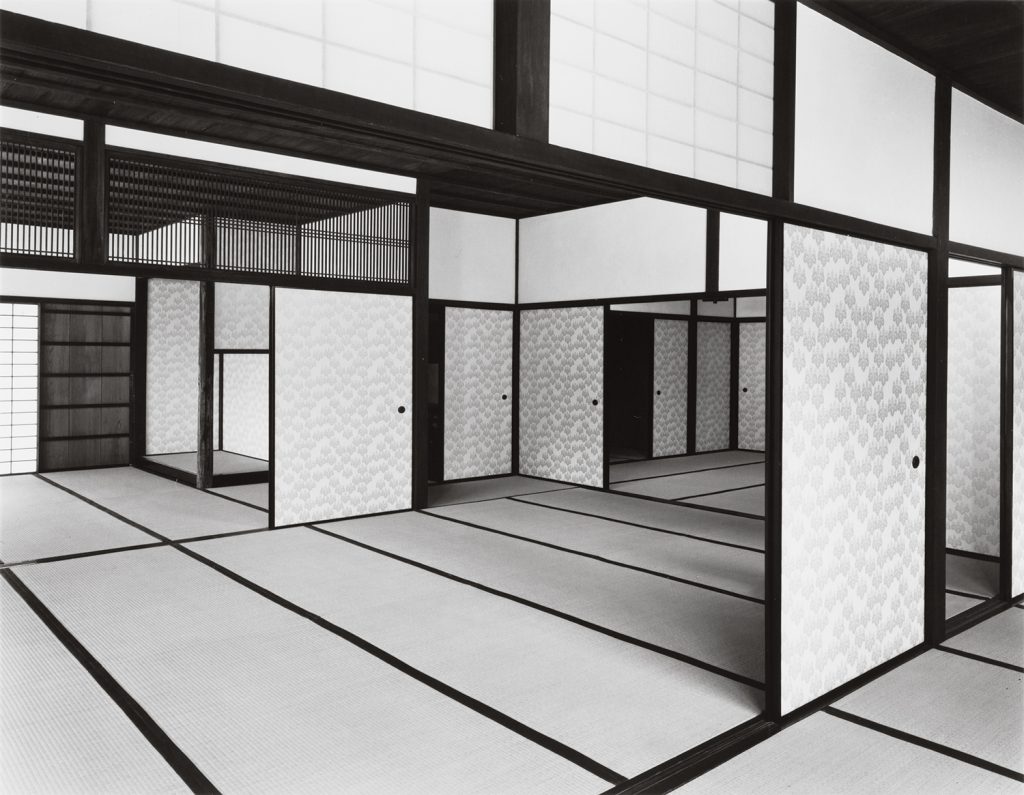
Yasuhiro Ishimoto’s photographs of carefully framed abstract architectural spaces, with clear lines and geometric forms illustrate the concept of Katei Home as a space:
Tsuzuki’s photographs Tokyo Style Japan (1993) are more of an example of Kazoku, realistic interiors of small homes.
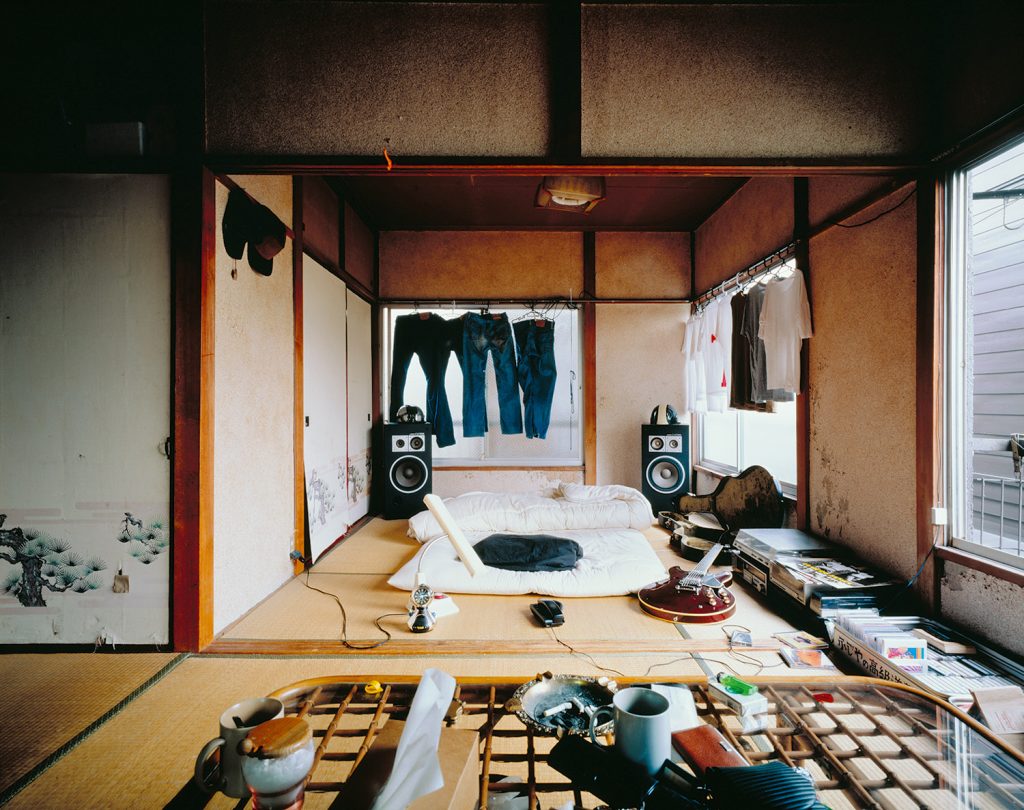
Kazoku where home means family are shown in images where there is a narrative quality describing people’s homes and domestic habits such as Takashi Homma:

This article and the information on the different concepts surrounding a home made me reflect on what part of home I was sharing in my assignment one “Staying safe at home”.
Reference:
Fritsch, L (2020) The Many Faces of Home in Japanese Photography (2020) At: https://aperture.org/blog/home-japanese-photography/ (Accessed 14/04/2020).
I ALSO CONSIDERED PHOTOGRAPHERS WHO HAD WORKED WITH OR THROUGH WINDOWS:
JENNIFER BOLANDE – Globe sightings (begun 2001)
Bolande photographed globes that she spotted in windows; I found this an interesting concept for work, rather like collecting but not everyday occurrences – or maybe they are when you are looking for them? The work is also a map of her physical journey and is a topological inquiry also.

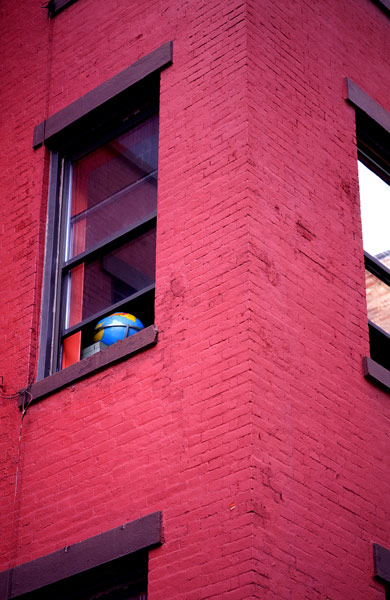
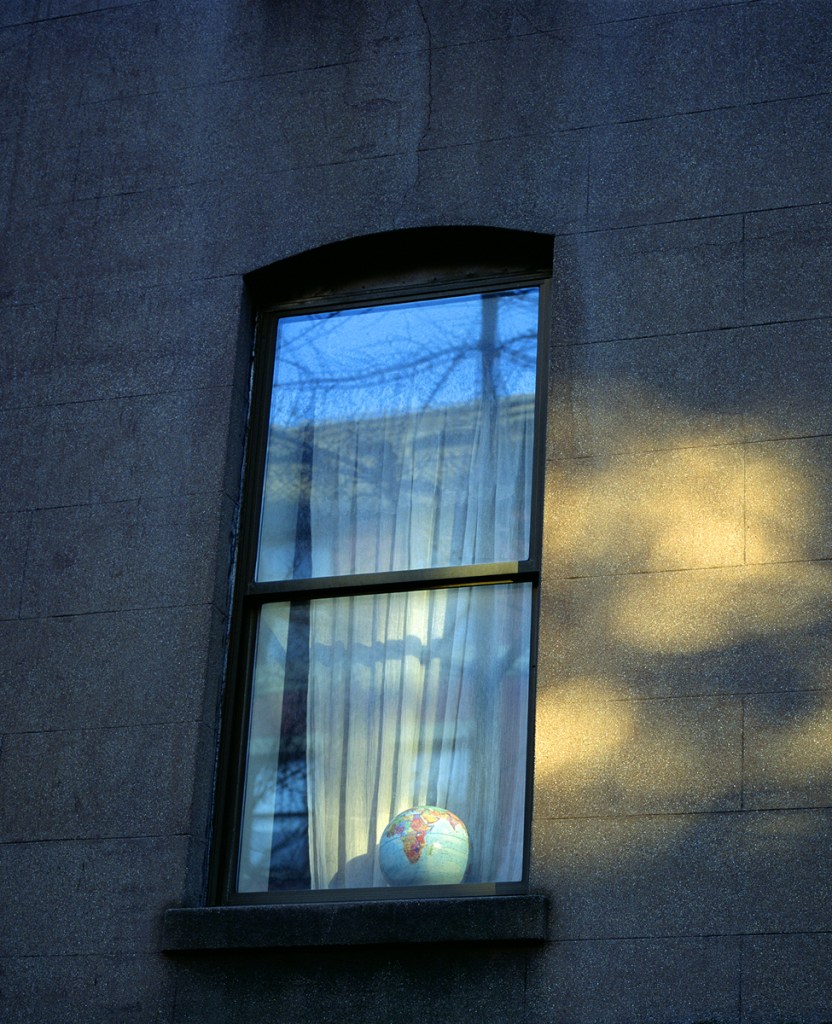
(Globe Sightings, 2000)
Bolande followed this up with her sculpture Mountain (2004) where she used ‘Globe Sightings’ images as the foundation for a three-dimensional topography; in this she removed the globes from their original context, this magnifies the differences between the globes, as does the work below Global Tower:
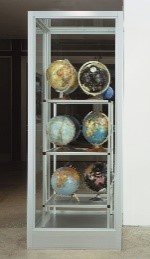
The work shows me how even when collecting like items as they viewed from different vantage points, different perspectives will appear unless you remove the context as she has in her sculptures of the work. The continuity in these photos are the globes, whilst the focal distance, the window being open or closed, the time of day, curtains blinds or no window dressing changes and the series seems the stronger for the variables.
I will definitely return to look at more of her work, her concepts look fascinating.
Reference:
Globe Sightings, 2000 (2000) At: https://jbolande.com/portfolio/globe-sightings-2000/ (Accessed 15/04/2020).
JOSEF SUDEK (1896-1976)
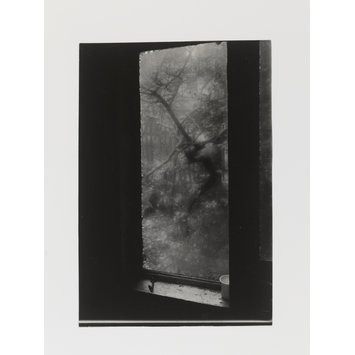
Sudek’s work combines 20th century photographic styles of Pictorialism, and Modernism with Surrealism. He was know as the poet of Prague, and apparently his images are “primarily poetic statements, to be read as a metaphor for the boundaries between the exterior and interior world, thought and observation, clarity and mystery and the material and the ephemeral” (V and A Collections 2020), he was injured in the war and his work also reflects his feelings about immobility and disconnection from the outside world. This reminds me of the work of Edward Westin and Alfred Stieglitz.
This series “From the window of my studio” of twilight scenes and images of windows, showcases this concept. The shadowy areas and low-key prints enhance the expressiveness of the images. He did explain the motive behind his work “I like to tell stories about the life of inanimate objects, to relate something mysterious: the seventh side of a dice,” (Shankar, 2016), this strikes me as same as the objective of my assignment 1.
There were two windows in his studio, one overlooking an unimpressive line of buildings the other a more scenic small courtyard, with a twisted apple tree. He photographed these views over 14 years at different times of day, seasons, and weather. There are an amazing amount of variations and the work shows how ultimately photography is all about light. He was obviously fascinated about how glass reflects and bounces light, as well as creates shadows. His images also often include vases with water and reflective table-tops.
Scaldaferri, G. (2020) 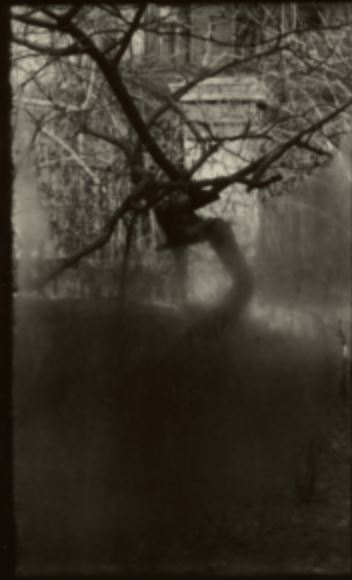
(Getty Museum, 1940) 
(Josef Sudel, 1944-1953) 
(Josef Sudel, 1944-1953)
Reviewing Sudek’s ideas and work makes me realise why my explorations shooting through windows have been so challenging, maybe I should go with the reflections rather than try to minimise them?
References:
V and A Collections (2020) The Window of My Studio | Sudek, Josef | V&A Search the Collections. At: http://collections.vam.ac.uk/item/O1277029 (Accessed 15/04/2020).
Scaldaferri, G. (s.d.) Photographer Josef Sudek: The Poet Of Prague. At: https://theculturetrip.com/europe/czech-republic/articles/photographer-josef-sudek-the-poet-of-prague/ (Accessed 15/04/2020).
The Window of My Studio (Getty Museum) (1940) At: http://www.getty.edu/art/collection/objects/35730/josef-sudek-the-window-of-my-studio-czechoslovakian-1940-1954/ (Accessed 15/04/2020).
Josef Sudek – From the Window of My Studio, 1944-1953 | Phillips (s.d.) At: https://www.phillips.com/detail/josef-sudek/NY040118/51 (Accessed 15/04/2020).
Shankar, G. (2016) ‘Subscribe to read’ In: Financial Times 10/06/2016 At: https://www.ft.com/content/a90febb2-2e24-11e6-a18d-a96ab29e3c95 (Accessed 15/04/2020).
ANDRE KERTESZ
He shares many similarities with Sudek; born in Hungary, he was also injured in the war took psychic scars and spent some years recovering in therapeutic military facilities. Kertesz like Sudek during WW2 photographed from the inside to the outside, and from 1952 from his 12th story apartment overlooking Washington Square Park, began a series of modernist masterworks shot from his window that he continued until his death in 1985. His work shares Sudek’s sense of isolation but more so has a Voyeuristic quality. His vantage points were higher than Sudek’s and I’m guessing more windows, and he was able to capture a wider variety of subjects. Kertesz also liked to photograph objects against the inside of his window, particularly those that reminded him of his wife after her passing. This is another photographer who I should study further and it would interesting to do this in conjunction with studying Sudek.

(Kertsez Chimney 1965) 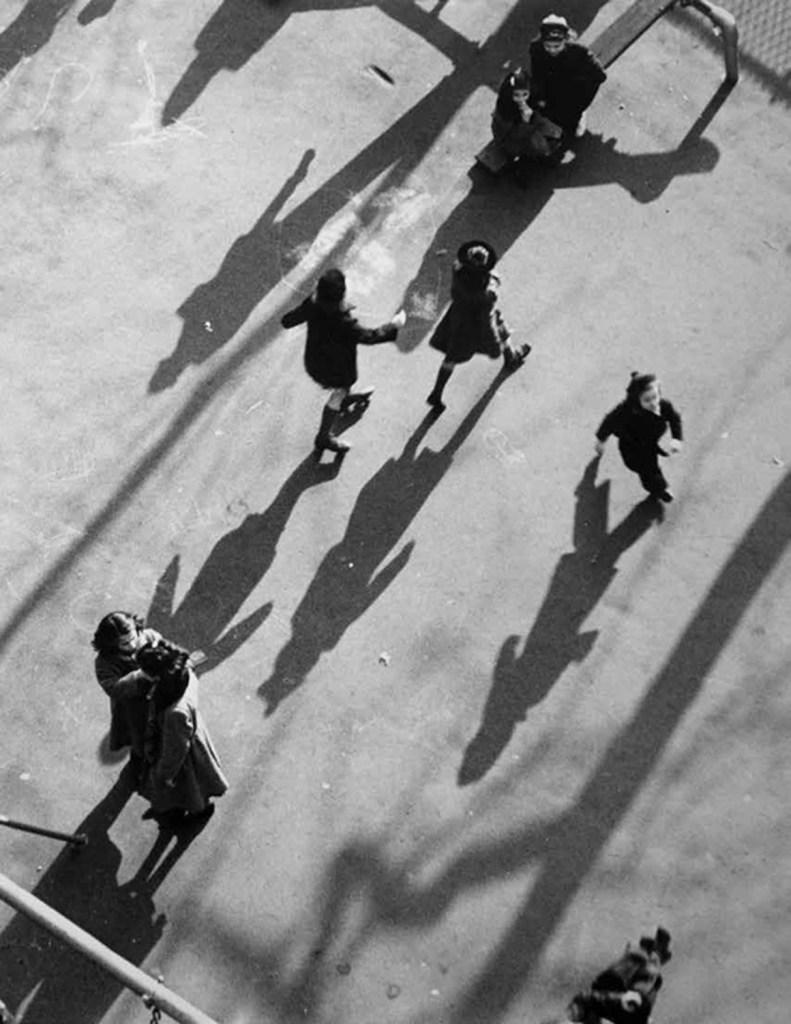
(Kertesz, Children and shadows in Park, 1951)
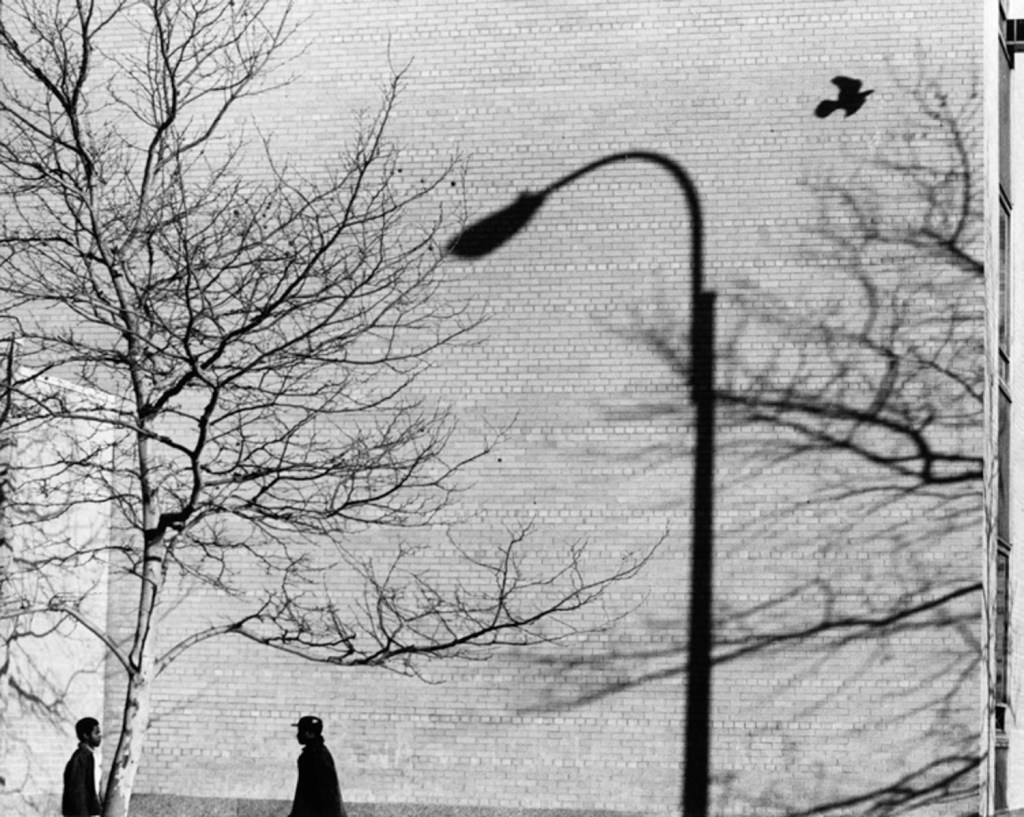
(Kertesz, New York, 1977) 
(Kertesz, Washington Square at night, 1954)
Reference:
André Kertész, From his Window – Picto NY (s.d.) At: https://pictony.com/andre-kertesz-from-his-window/ (Accessed 15/04/2020).
I revisited Nigel Shafran’s work for he everydayness of it:
NIGEL SHAFRAN
Nigel Shafran’s was initially known as a fashion photographer, yet his observation-led photography became influential in the 1980s. He is most known now for his photographs narrating everyday life. Even though his photographs are of everyday things he finds beauty in the ordinary and he likes us to accept things for the way that they are. He communicates his ideas in a simple way, and asks why complicate something as you might mess it up? (Smyth, 2018). In presenting things in a straightforward way he seems to emphasis both their detail and their ordinariness. Interestingly he calls himself a family photographer, though of course not the usual sort of one!

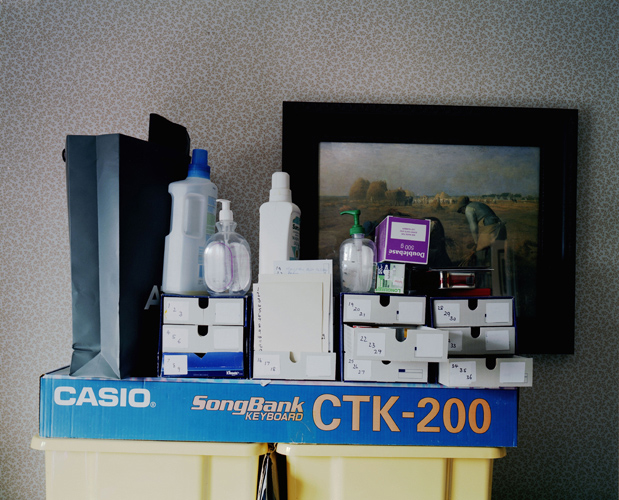
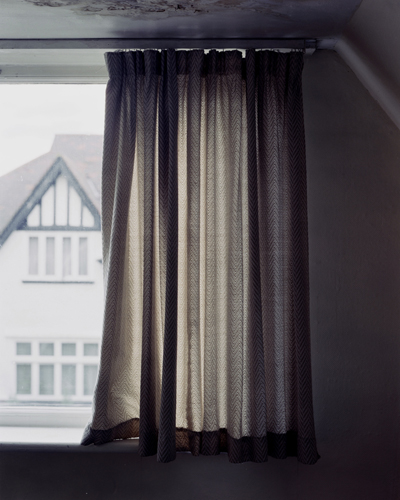
(Shafran, 2020)
References:
Nigel Shafran (2020) At: http://nigelshafran.com/ (Accessed 18/04/2020).
Smyth, D. (2018) Everyday beauty with Nigel Shafran. At: https://www.bjp-online.com/2018/05/shafraninterview/ (Accessed 18/04/2020).
RESEARCH LEARNING POINTS:
- Anna Fox: Consistent angled perspective, clarity, good d of f.
- Ischino: It is the feelings that he is trying to express in his images that interests me, and this reminds me that I should consider what feeling I’m trying to convey in my assignment 1, I particularly identify with “a frame on the wall ever so slightly crooked” and a what happens when a house becomes unfamiliar.
- Robert Adams: bring to our attention the ordinary and often overlooked in a sympathetic way, also the sense of abandonment and the sense of a room left behind by humans and the atmosphere and feelings with it. it is the emotion of the scenes that he captures that interests me.
- Fritsch article on Japanese photographs of home: the different concepts surrounding a home made me reflect on what part of home I was sharing in my assignment one “Staying safe at home”.
- Jennifer Bolande: That subjects viewed from different vantage points/perspectives will (which you usually have unless you remove context)appear unless you remove the context The continuity can be the subject itself even if the focal distance, the window being open or closed, the time of day, curtains or blinds or no window dressing changes and the series may be stronger for the variables.
- Josef Sudek: What interest me was that this work is “primarily poetic statements, to be read as a metaphor for the boundaries between the exterior and interior world and that his work also reflects his feelings about immobility and disconnection from the outside world. He used photography to tell stories about the life of inanimate objects, this strikes me as same as part of the objective of my assignment 1. Reviewing Sudek’s ideas and work makes me realise why my explorations shooting through windows have been so challenging, maybe I should go with the reflections rather than try to minimise them?
- Kertesz: A sense of isolation and photographs of objects against the inside of his window.
- Nigel Shafran: Beauty in the ordinary, by presenting things in a straightforward way he seems to emphasis both their detail and their ordinariness.
 Photography 2: Documentary