Read Miranda Gavin’s reviews of Anders Petersen’s French Kiss and Jacob Aue Sobol’s I, Tokyo for Hotshoe magazine and research the work of Daido Moriyama. Write a short reflective commentary about the connections between the styles of Moriyama, Petersen and Sobol. (Open College of the Arts, 2014:52).
My reflections:
I remember seeing some of Moriyama’s images at the London Photo Show last year which prompted me to buy the book Daido Moriyama (Nishi et al, 2001). As a co-founder of the 1960s magazine Provoke, he tested the conventions of photography, grainy and blurry images were more than acceptable and he pushed photography to the extreme (Nishi et al, 2001) and chaotic.
Looking at Peterson’s approach the influence of Moriyama is clear, in particular in Moriyama’s work Limited edition vintage prints; there is the same stream of consciousness in his images, one idea leaping to the seemingly unrelated next.
Jacob Aue Sobel and Anders Petersen, both Scandinavian photographers made the book “Veins”(2014) together where their work is presented in the same book but in two halves; with their subject matter and style it would be difficult to distinguish their work had it been mixed. They are both drawn to seediness, nudity, blood intimacy, and “human strangeness”, but Peterson’s work is a little softer. Sobel like Peterson uses full bleed images without captions, but they are less blurry.
Sobel said that Petersen showed him photography is a way of life in itself “Just the way he immerses himself in the subject. You look at his pictures and you feel that he had to make them. For him, photography is an obsession as well as an art form.” (O’Hagan, 2013).
Both the style of photography and some of the subject matter between the three photographers has similarities:
Interest in minutiae
Expressionist approach
Black and white format
High contrast -extremes of light and dark
Harsh tones
Strong emotion
Unconventional composition
Private/intimate and sexual connotations
Suggestive juxtaposition
Moriyama was the forerunner and Sobel created the later more contemporary work, they all photographed what could be called intimate documentary, however Peterson and Sobel developed their own styles from this. I have to say that though I was drawn to Moriyama’s work, I find Peterson and Sobel’s work disturbing and hard to find the same simplicity and beauty in.
DO SOME INDEPENDENT RESEARCH INTO STREET PHOTOGRAPHY
My response:
Street photography in the early days was staged, and was the extension of the studio, but with the advent of smaller less conspicuous cameras photographers were able to work on the street without being seen. Stephen McLaren editing “Magnum Streetwise” said the cornerstone of what is now known as street photography is “the impulse to take candid, unrehearsed pictures in the public realm” (2019).It normally features chance encounters and random accidents in public places, but doesn’t have to take place in the street. The French “Flaneur” the city walker was one of the earliest street photographers observing the streets closely for theatrical moments and inspiration. That said we are now aware that Street photography does not need the presence of a street or even an urban environment.
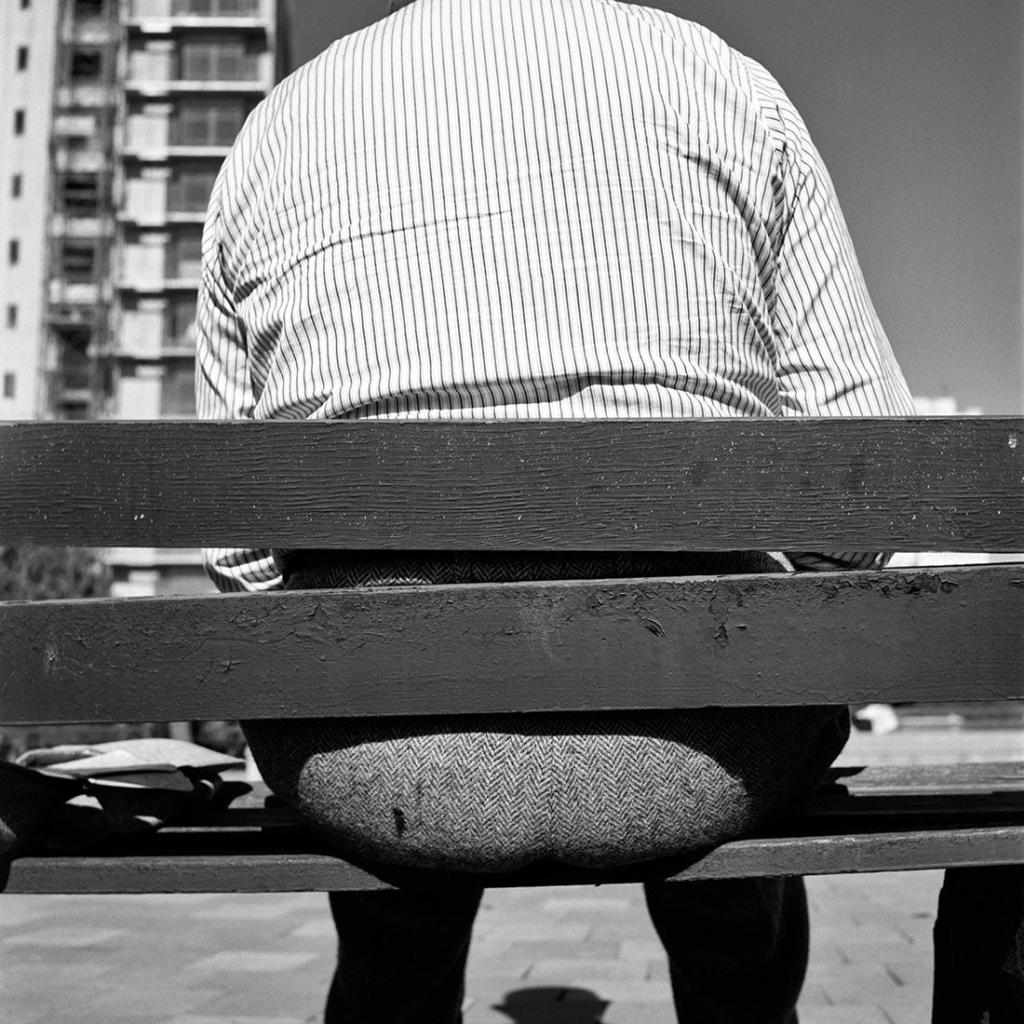
Street photography is prevalent again, with the work of photographers such as Vivian Maier, Chris Steele Perkins, and Martin Parr. I have in the past explored the photography of many photographers famous for their Street Photography; for instance Garry Winograd famous for his edgy close ups, William Klein whose work wasinnovative and intimate, often shot at eye level, Elliot Erwitt known for his wit in his images, and Cartier- Bresson of course. So here I will explore the street photography work of photographers who I’ve not researched before:
Christian Anderson
Is an American Magnum photographer who says his roots are in the classical street photography tradition especially influenced by Brice Davidson, and Moriyama. He has moved towards street photography that is relevant to him, working digitally and worrying less about the technical aspects and more about the emotional aspects of subjects. He crops hard to exclude extraneous contextual information.
USA. New York City, NY. 2014. Cherries spilled on crosswalk.
Capturing and “trying to be aware of an emotional sense of the people that I am photographing” (McLaren, 2019:48) is important to him. He describes how when working on the street he scans and then notices everything and wonders who people are and what they are thinking about. He uses the available street lighting, neon signage and smog to create atmosphere around his decontextualized subjects.
CHINA. Shanghai. 2017. Street portrait.
USA. NYC. 2017. Police in front of Trump Tower.
FRANCE. Sete. 2012. A red dot on the glass of a bus stop.
I do particularly like his use of colour as accent and for atmosphere, more especially knowing he what was naturally on the street; it’s hard to believe that some of his portraits are shot on the streets rather than in a studio.
Sergio Larrain
A Chilean photographer worked professionally only during the 1950s and 60s. He lived a solitary life, saying he only did work that he cared for. One such project was on the reclusive mafioso from the streets of Palermo, Corleone and Ustica. He believed that photography should be free of convention but not forced, you should “Don’t ever force things, otherwise the image would lose its poetry. Follow your own taste and nothing else” .(McLaren, 2019:251).
GREAT-BRITAIN. England. London. 1959.
Village on the way to Machu Picchu
Between the island of Chiloé and Puerto Montt, Chili, 1957 (Sergio Larrain, 2020)
Island of Chiloe, Chili, 1957
Santiago, Chili, 1963
His images are poetic but the thing that I take away from them the most is the unusual perspective he used, I guess this came from the freedom from constraint he valued and the value he put on following your instinct.
Constantine Manos
He shot initially in black and white, these are some of his first serious images taken when he was 18:
(Daufuskie Island, South Carolina, 1952)
Manos switched to colour after 30 years for his work “American Color” (1995), for which he deliberately sought out a different type of picture, he felt that American was waiting to be photographed differently; he continued this as he was enjoying it with American color 2:
(American Color 2, 2010)
In 2001 he shot in Havana, Cuba, 2001 walking the streets “There was much life in the streets, and people were not self-conscious. In their daily lives there was a poetry, not found in more materialistic and industrialized societies” (Havana, Cuba, 2001).
(Havana, Cuba, 2001)
He later returned to black and white with a digital Leica, he claimed he’d gone back to basics “Looking for remarkable moments that make you catch your breath” (McLaren,2019:281).
I read that he was against cropping, as he thought it made you lazy; you should move your feet instead. I feel the same way, in that I should get it right as I am looking at something, there and then. Often when you look at his photos, he has people in both the background, mid and foreground but rarely overlaps the bodies, this seems to sharpen his message. Manos said that “A successful picture is always a surprise” (McLaren,2019:281) and his images are full of ambiguity. There are a lot of small details in his photographs, maybe this is how he achieves the poetry in his images.
Jonas Bendiksen
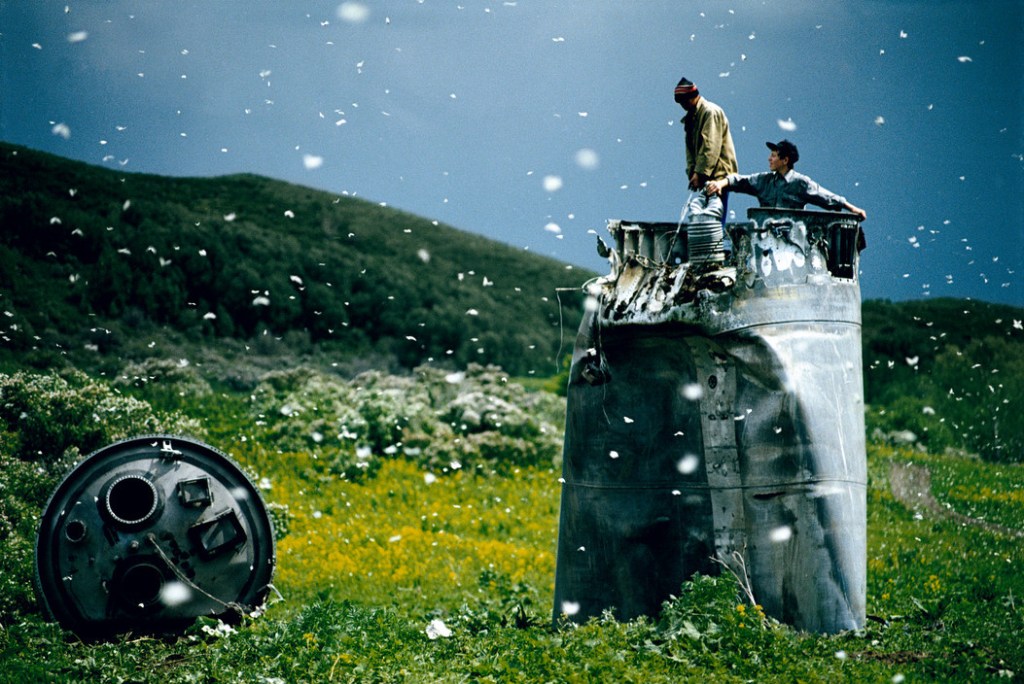
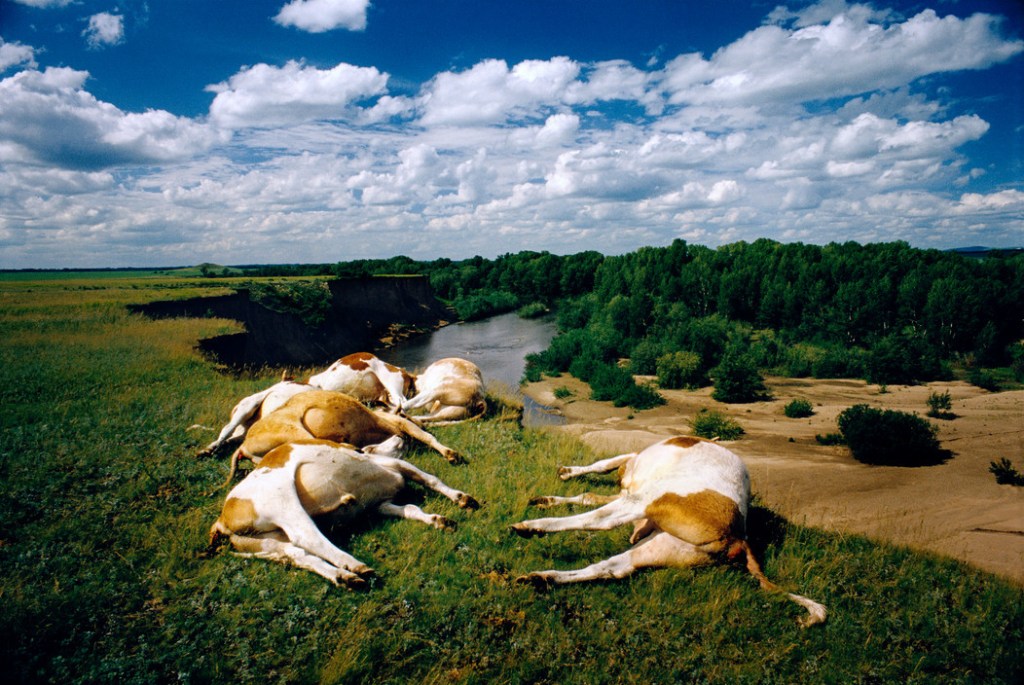
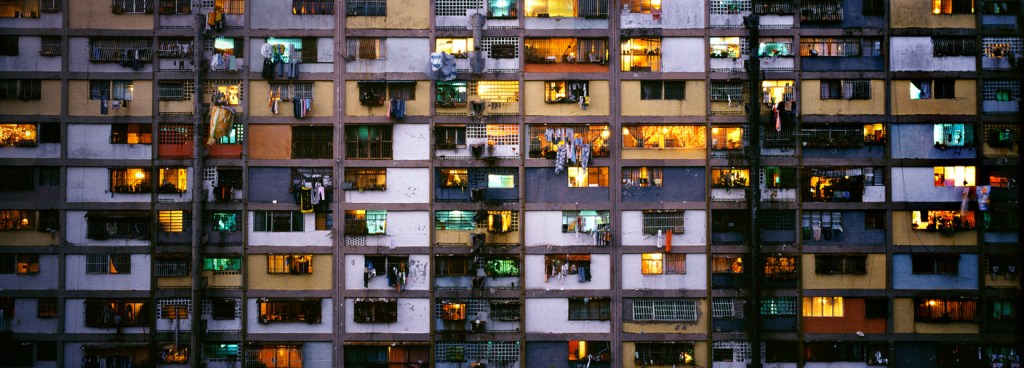
I choose to look at Bendiksen because at first look his photography seems quite different to the other photographer’s I’ve reviewed above or maybe I expected it to be because of his Scandinavian origins?
Apparently, he thinks about his approach hard before shooting, saying the research puts you into the right frame of mind, but that when he shoots “I guess I’m a fairly simple photographer. There is very little hocus-pocus about what I do” (McLaren, 2019:69), it’s fairly instinctive.
GEORGIA. Abkhazia. Sukhum. 2005. Although Abkhazia is isolated, half-abandoned and still suffering war wounds due to its unrecognized status, both locals and Russian tourists are drawn to the warm waters of the Black Sea. This unrecognized country, on a lush stretch of Black Sea coast, won its independence from the former Soviet republic of Georgia after a fierce war in 1993.
RUSSIA. Altai Territory. 2000. Villagers collecting scrap from a crashed spacecraft, surrounded by thousands of white butterflies. Environmentalists fear for the region’s future due to the toxic rocket fuel.
RUSSIA. Altai Territory. 2000. Dead cows lying on a cliff. The local population claim whole herds of cattle and sheep regularly die as a result of rocket fuel poisoned soil.
BANGLADESH. Asulia. 2010. Brick kilns marooned in water. They normally use the kilns 4-5 months a year in the driest seasons (from november approx). This type of brick kiln is ubiquitous in Bangladesh, but is a heavy polluter (as its coal-fired and ineffective), both in terms of CO2 and air quality. As I was shooting a storm came in with heavy winds and rainfall.
Workers digging up submerged bricks and throwing them up unto land for them to be collected and taken to the waiting boat.
VENEZUELA. Caracas. 2006. The facade of an apartment building in Barrio 23 de Enero. The areas apartment blocks have been home to communities of squatters since the late 1950s, and the area has played impoortant role in social and political events in the country.
I’m interested in his work on urban development and future urban development, “when I’m out on the street, I try to leave all the thinking behind” (McLaren,2019:71).
MY LEARNING:
Try to be aware of an emotional sense of the people
Consider using the available street lighting, neon signage and smog to create atmosphere around subjects.
Don’t force things,
Follow your own instincts and leave thinking behind.
Vivian Maier, whose work was only recently discovered, built a vast collection of images of life in Chicago and New York. Her main body of work, taken in the 1950s, shows clear surrealist elements. Explore the Vivian Maier website (www.vivianmaier.com) and identify five street photographs that show the influence of surrealism. Write a short reflective commentary in your learning log(Open College of the Arts, 2014:50).
VIVIAN MAIER
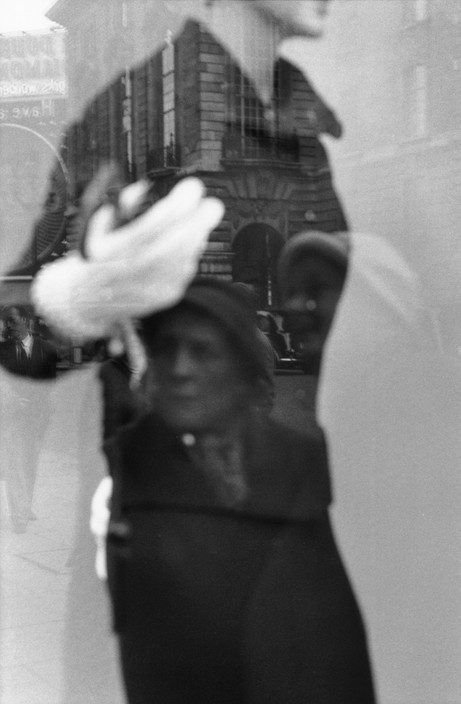
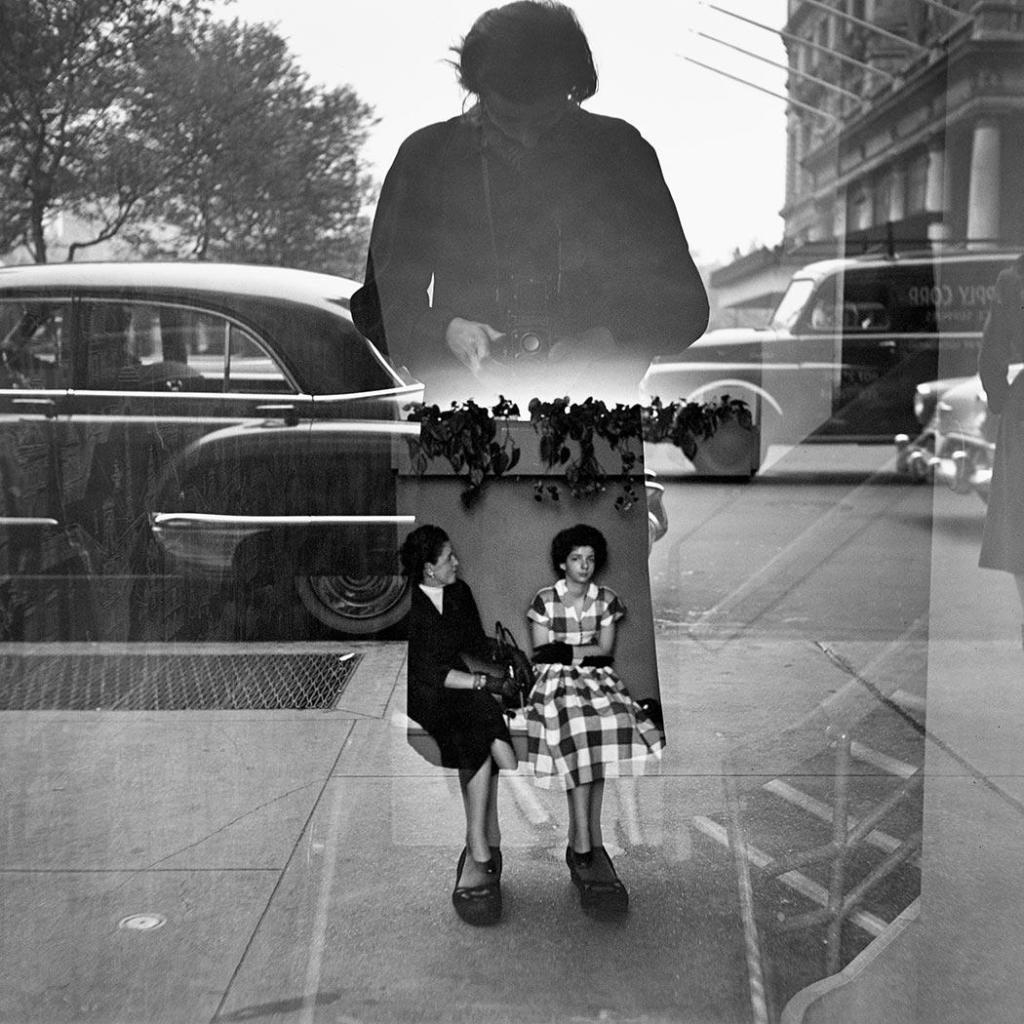
Much of Maier’s street photography shows clear surrealist elements, such as ambiguity, use of shadows, reflection, geometric patterns, unusual angles, juxtapositions, abrupt framing;some of the images are dreamlike and they certainly disrupt our perception:
September 25, 1959. New York, NY
This image from “Street 5” illustrates the use of geometry, chance, reveals the uncanny and in doing so seems surreal
1955. New York, NY
This image from “Street 5” is certainly shot from an unusual perspective revealing something we’d have not seen in the same way otherwise and the abrupt framing captures a surreal figure.
.
Self-Portrait, 1954
This self-portrait illustrates the use of reflections in a surreal way, the juxtaposition of the seated women onto her own reflection creates ambiguity.
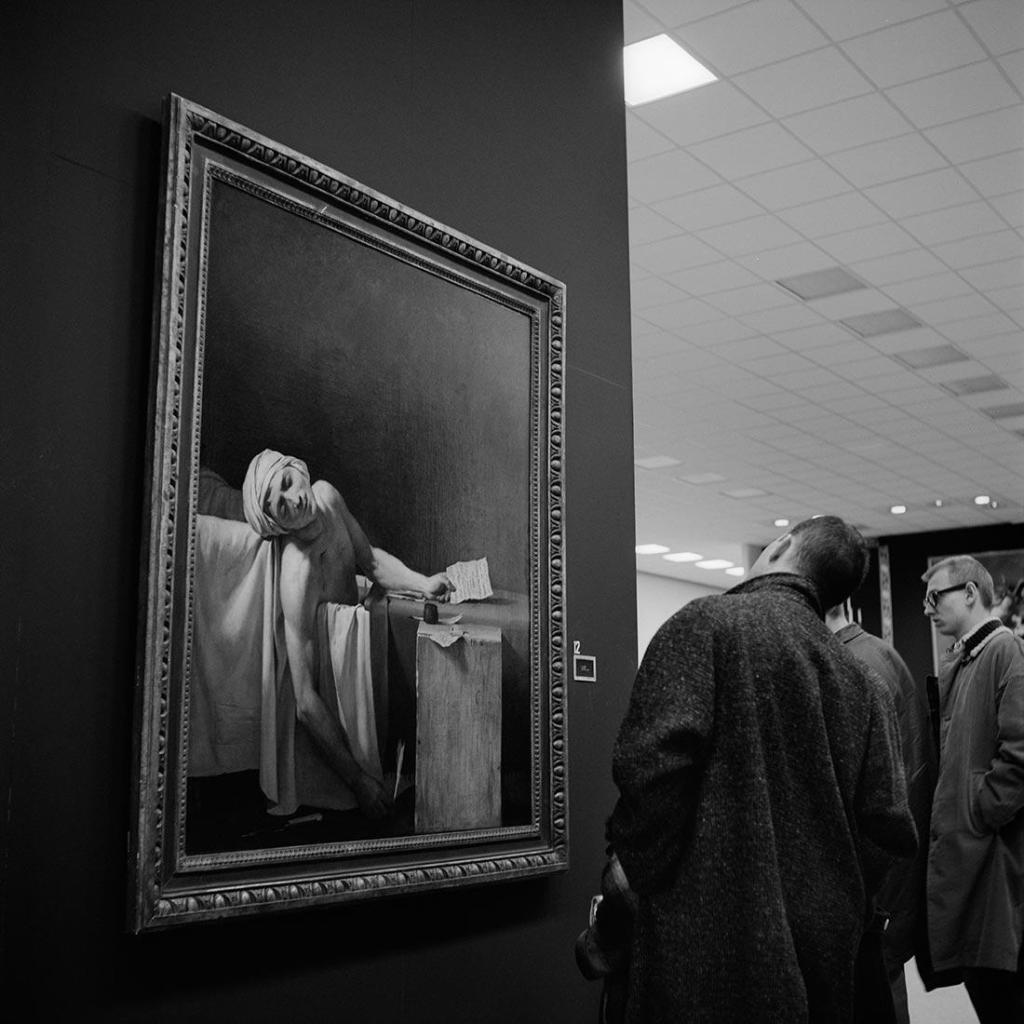
December 1962. Chicago, IL
Again, juxtaposition of the portrait and a viewer is important creating a surreal moment as he seems to reflect and adopt the portrait’s position in reverse.
August 1975
In this colour image it is the unusual angle she has shot from that is arresting at first, Maier has also seen and is sharing with us the theme of flowers not only in the bag, but on the bag and her handbag, they seem incongruous against her pristine pale skirt.
All images, Vivian Maier Photographer 2020:
I have just watched a presentation “The ever-intriguing Vivian Maier” on her work and life by Anna Sparham and Ann Marks for Photo London. It was useful to hear how some of her success came from her decisiveness and confidence; apparently, she would just take a shot and move straight on, knowing that she would have got what she needed. They describe her work as often ironic, with a sense of wit which she sometimes used colour to emphasis. They also showed many examples of her use of Juxtaposition, self-portraits using reflection and the way that her photography could in a surreal way change our perception of things.
Choose one of the weekly instructions given to contributors to the Street Photography Now Project in 2011 and build a small portfolio of B&W images on your chosen brief.
Publish a selection of five images from your portfolio on your blog. (Open College of the Arts, 2014:50)
My response:
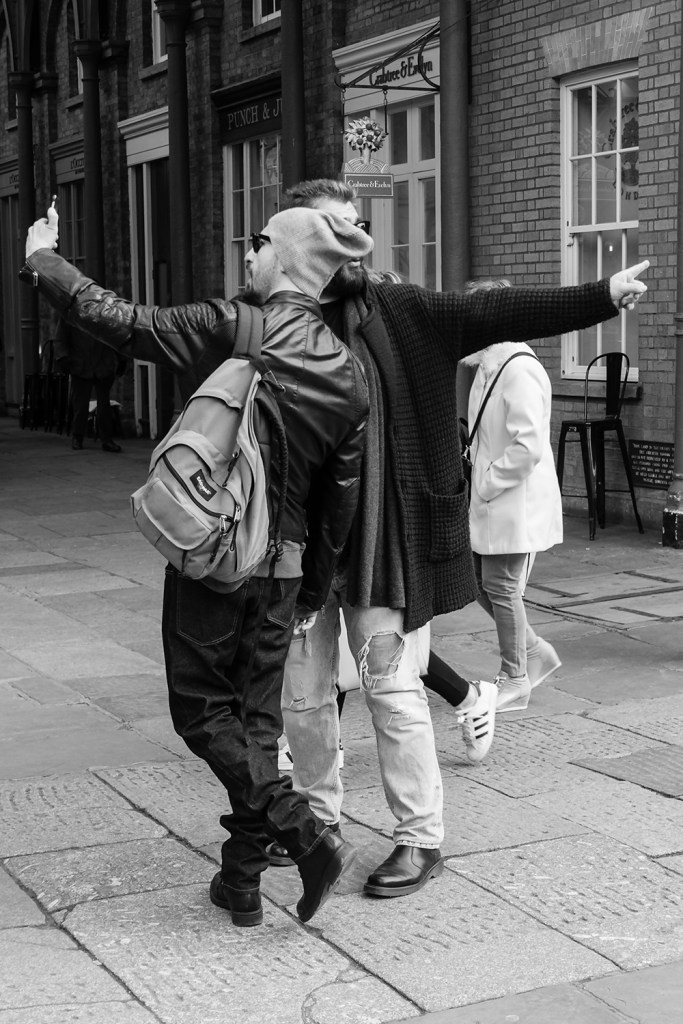
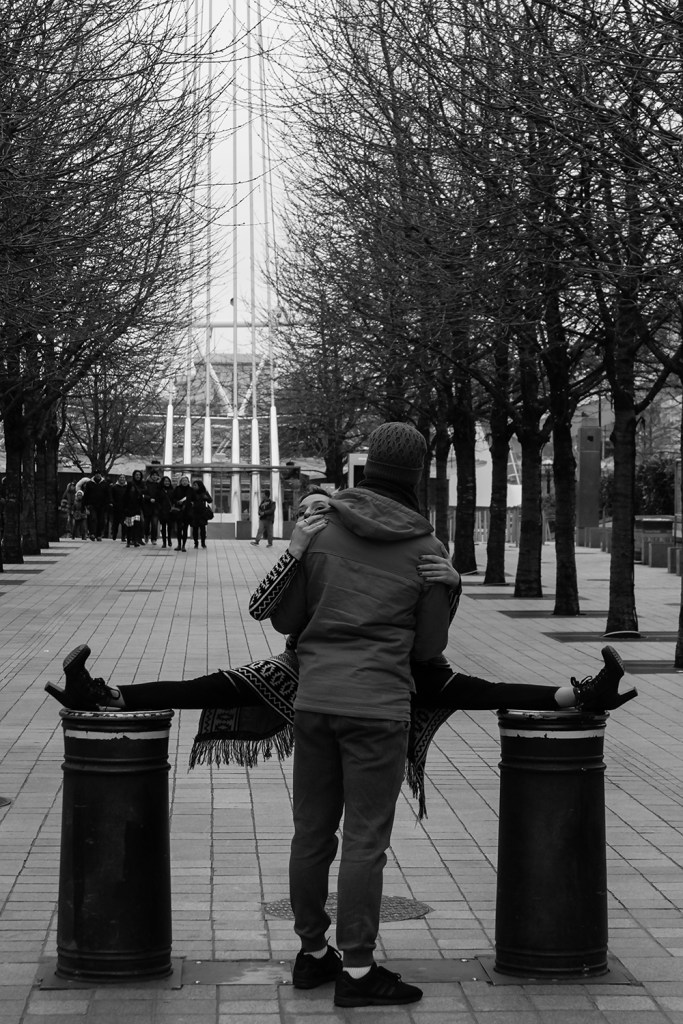
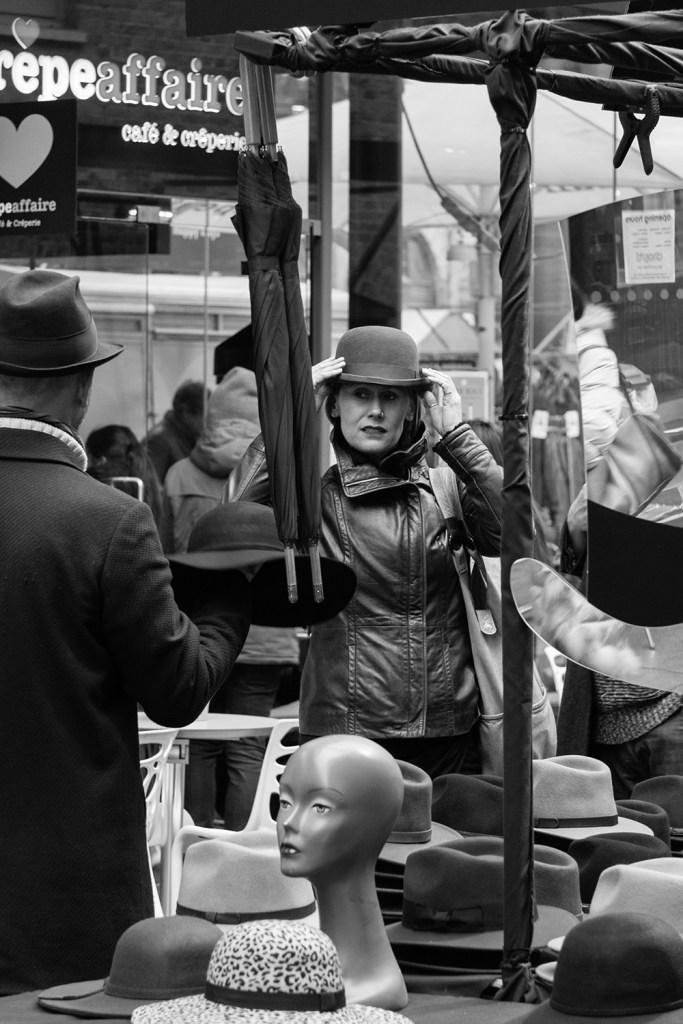
“If you can smell the street by looking at the photo, it’s a street photograph” Bruce Gilden September 15, 2010
Reference:
Open College of the Arts (2014) Photography 2: Documentary-Fact and Fiction (Course Manual). Barnsley: Open College of the Arts.
Read the introduction and first section (pp.105–10) of the article ‘Discussing Documentary’by Maartje van den Heuvel (Documentary Now! 2005). Write a short summary in your learning log. (Open College of the Arts, 2014:33).
Mirror of visual culture
A summary:
The author believes that the debate about documentary in an art context should take visual literacy as a starting point to enable the value of documentary photography in art to be better assessed; are these practices effective and legitimate or has the border into fiction been blurred too much?
Much of our experience is not direct but found through the media so we are becoming more visually literate and able to interpret things
Documentary images are part of a wider movement including journalism, advertising, games, pop culture and film where art is functioning increasingly as a mirror of visual culture
The author reviews the classical documentary tradition and then shares examples that show a documentary remix, as artists free themselves from traditional documentary images:
2 historical visual traditions: Western Anglo-Saxon human-interest film and photography and the Eastern Communist/socialist Russian and German.
Documentary as a militant eyewitness, from around 1900: Jacob Riis (1849-1914), Lewis Hine (1874-1940) with reformist ambitions
Documentary was connected to film, when John Grierson designated a film non-fiction. Documentary as a realistic counterpart to fiction as film a recorder of social conditions: FSA, Walker Evans, Dorothea Lange. Magazine images in Life, Picture Post magazines, and the investigations of the Magnum agency.
Documentary as a picture tradition in communist and socialist countries to support revolution for the working class.
Documentary for left wing activism in the 50s and 60s with coarse grainy black and white 35 mm film images
Documentary as art as from the 1970s moved from a belief in realism and transparency with the easy accessibility of TV and advertising in different forms as people learnt that media images could be manipulated. A move away from the traditional black and white grainy images previously associated with authenticity awareness of subjectivity in documentary
Documentary with technical, stylistic or narratives, sharp detail and colour: Thomas Struth, Andreas Gursky and Thomas Ruff. This included functional directions such as topographical or architectural photography.
Documentary with social narratives: martin Parr on the middle class, Karen Knorr on the wealthy. Nan Goldin on her own surroundings
Documentary with depth: Allan Sekula’s project on economic and trading routes, Fazel Sheikh on people (Ramadan Moon). Giles Peress on the genocide in Rwanda (The silence)
Documentary photographers focusing on the publicity and distribution channels of photography: Susan Meiselas on Kurdistan (In the shadow of history)
Documentary using inside knowledge: Julian Germain collaborating with Don McCullin (Steelworks)
Documentary questioning images: Hiroshi Sugimoto on how the suggestion of reality is constructed, and any artificiality that simulating documentary images in artificial surroundings such as waxworks and any artificiality that suggest reality
Documentary that is staged: Jeff Wall imitating media pictures.
Documentary through re-enacting: Pierre Huyghe Third Memory; it has three layers of time and imagery, original journalistic media about a bank robbery, the 1975 film (Dog day Afternoon) and his own images of a re-enactment of the robbery. Christoph Draeger (Catastrophes) where he imitates disaster scenes, and his Black September on the terrorist hijacking and murder of Israeli athletes during the 1972 Olympic games
The author suggests though the artists differ as to how much their work reflects upon he documentary tradition, what these works have in common is that they analyse and comment on the structure and effect of documentary images in the mass media which testifies to increased visual literacy amongst the artists and appeals to the viewers to be visually aware also.
MY LEARNING
I should consider carefully visual literacy and how much the viewer has.
It was really useful to have these suggested stages/categories of documentary set out, it helps to clarify things for me. I may use this as a starting point to develop some ideas for assignment 2, in particular to research further, documentary as art and manipulation and documentary for questioning images.













 Photography 2: Documentary