RESEARCH AND REFLECTION: PHOTOGRAPHY PANEL DISCUSSION

How to be a creative learner. Facilitated by OCA tutor Andrea Norrington- 19th May 2021

I was asked by Andrea Norrington to be on the panel of 4 students at different points in their studies, to share our experiences of learning with other students -this was a new experience. Whilst preparing for the session and then when contributing to the discussions, and answering questions asked by OCA students, it caused me to reflect on my studies to date and I recorded items that I thought would be useful when I write my end of course reflections.

Below are the thoughts that I shared whilst on the panel:

Transitioning between courses/levels of study

Q Looking back at your studies, where do you think you noticed a shift in level of study?

  • Documentary assignment 2 & 3 where the levels of reading and research increased noticeably.
  • Approaching level 3, talking to students on level 3, I am aware that there is quite a change in approach and expectations at level 3.
  • Others mentioned essay writing, but I didn’t find this such a challenge.

Q Thinking particularly about Level 2 – how did you decide on courses?

  • Great to have more personal choice in level 2 than level 1.
  • I chose courses that I thought would challenge me and broaden my learning, not necessarily the ones that I naturally leant towards.

Peer support

Q Can you tell us about how useful peer support has been as you complete the final part of your degree?

  • Invaluable. It has been good to be a part of various groups, regional, module specific, and course specific.

Q Where have you found peer support most useful and when do you think it really started to appear as part of your study?

  • Though I realised its value during level 1 it was during my first level 2 course that I noticed the peer support feeding into my work and was helping to shape my assignments. This probably coincided with my growing confidence to share and challenge others to challenge me in my work.
  • Certainly, in level 2 tutors have frequently commented on the value that my working with peer support groups has added to my own work.
  • It has been useful in many ways: Critiquing of my work, learning how to critique other’s work, for technical support, and general support. The more you give the more you benefit.

Q Are there any pitfalls in peer support?  How do you think OCA can assist here – is there also a place for self-sufficiency?

  • I have learnt to be discerning about peer groups. I initially found that level 1 groups were generally not challenging enough. However, as I have moved through my studies, I have found the peer support groups increasingly useful.
  • I have found being both general and specific when sharing work when asking peers questions about my work is effective.
  • The OCA could consider running facilitating courses for some and/or sitting in on occasional sessions to model facilitation.
  • Looking forward I should look to as the level 3 student suggested support groups outside of the OCA, locally and possibly professional groups.

Responding to feedback

Q – Have you had to deal with feedback either from a tutor or from formal assessment that you have been disappointed with? How do you move forward from this?

  • I have never had feedback that has been unfair. It always causes you to reflect, and thus move your work and practice forwards.
  • Feedback usually forces you out of your comfort zone which is good, and I think only then can you begin to find your own voice.

Q – When (if ever) do you think you understood the role of critical feedback in allowing your work to progress and evolve?

  • I have learnt to reflect on feedback at a general level for at least a few days before acting on it; this way I usually find that my brain slowly filters it and finds a way forward. Then I return to break the feedback down and address specifics.

Q – One top tip that you wish you had known when you started studying.

  • Have confidence and value your own ideas and opinions, don’t feel you should follow others, but at the same time be open to other’s ideas. The more you trust your instincts and experiment you will develop your own voice.

It was a new but valuable experience sharing insights with students that I don’t know, and an interesting exercise preparing with the rest of the panel and Andrea beforehand. The reflection it involved made me more aware of the journey that I’ve been on during the documentary course, and the experience that I’ve gained along the way. It was good to be in a situation where I was confidently giving to other students also, and I am well aware that I have benefited great from other students sharing their insights and experience with me in various forums along the way.

Link to recording of the session: https://oca.cloud.panopto.eu/Panopto/Pages/Viewer.aspx?id=219ac7e0-cb5e-4b67-8098-ad2e00a10f6f

Link to the padlet for the series and this May session: https://oca.padlet.org/andreanorrington/laq2kvhc5mpg

Next post: https://nkssite5.photo.blog/2021/07/31/assessment-learning-outcomes/

RESEARCH AND REFLECTION: STUDENT LED HANGOUTS

OCA Documentary Student led Hangouts 18.2.21- 1.4.21

1.4.21

I was able to share my first draft with the group. I have written this up in my learning log but here is an extract:

I asked the group:

Should I give more context, perhaps in the title?  but was told to keep the ambiguity.

Whether they could see my voice and what they thought my message was?

  • Some did realise that I was taking a tongue in cheek position and that the visuals are opposed to the text.
  • The fact that one peer asked me where I sat in the whole thing told me it wasn’t clear enough.
  • Some thought the message was about spreading corona virus, holiday homes
  • So I realised that my message wasn’t clear, nor was my voice.
  • No one had realised that I had put the subjective Facebook comments on a grey background and facts on white background.

We discussed what I wanted to convey and how I could adjust to achieve this and to ensure the visuals come through. There were suggestions to:

  • Reduce the text
  • Separate the text in some places from the visuals
  • Put the facebook comments on ticker tape under the images
  • Present some facts without visuals on a text only page.

Afterwards I thought more about how to make it clear what my position is:

  • I need to really think about where I am in the story.
  • Let my voice speak in the visuals.
  • Make sure the work is really tongue in cheek.

18.3.21

Much general discussion and sharing of resources, events, talks and books.  

We also spent time discussing the pros of printing from lightroom and various paper that people prefer.

4.3.21

We spent a long time discussing printing. The useful part of this for me was that I will soon be changing my PC and getting a monitor. I made some useful notes on suggestions for good photographic monitors and have since researched. Currrently I have noted I should get a Eizo 24” at just over £500 recommended by Bob our resident group technical guru, though others are happy with their BenQ monitors.

Judy Bach joined us for the first time, she is close to the end of level 3.

I discussed my plans for my assignment 5 presentation, and asked the group if they thought I could use just 4 images appearing 4 to 5 times with varying text to show layers of truth. I can to the conclusion that I will need to use 4-5 images maybe for times to cover my themes which will give the required 15 images for the brief.

18.2.21

Many of our documentary group are now working on level 3. Much of our discussion this session was around level 3 work. This does give me some insight into level 3 which is approaching for me later this year.

We also gave peer feedback to Jonathan on his Documentary assignment 3.

Link to my OCA regional student meetings: https://nkssite5.photo.blog/category/learning-log-research-and-reflection/thames-valley-oca-meetings/

Link to my other Student led hangouts: https://nkssite5.photo.blog/category/learning-log-research-and-reflection/zoom-oca-meetings/oca-student-led/

Next Post: https://nkssite5.photo.blog/2021/04/08/research-and-reflection-reading-on-research/

RESEARCH AND REFLECTION: OCA STUDY EVENT

Andrea Norrington How to be a creative learner

(5 sessions between now and July)

Session 1 24.3.20 Plan Do reflect

Plan, do reflect – record those thoughts capturing them before they’re gone

Plan act observe reflect –  revise plan act observe reflect in a circular motion

This enables you to do the work and move forwards, documenting enables you to engage with the work at a deeper level.

Planning: Creating momentum

  • Remind myself to read Austin KLeon Steal like an artist which I haveand another of his: Keep Going: 10 Ways to Stay Creative in Good Times and Bad
  • Side projects are useful: keep you going and skills fresh

Photographing- think how you can regularly photograph – this is relevant to me

Reflection should happen throughout the course

  • It’s part of the planning process and can move your work forwards
  • Work will be more focused and structured
  • Use your learning log
  • Writing the end course evaluation will be easier

Invest in your practice by planning doing reflecting

My reflections:

Not anything new here as I attended Andrea’s sessions last year however it’s always good to remind myself of ideas for good practice. My takeaway was to photograph regularly especially as I come up to the end of this course and may have a summer break before starting level 3.

Padlet for the session is at: https://learn.oca.ac.uk/mod/lti/view.php?id=10961

Next Post: https://nkssite5.photo.blog/category/learning-log-research-and-reflection/zoom-oca-meetings/oca-student-led/documentary-hangouts-18-2-21-1-4-21/

RESEARCH AND REFLECTION: OCA STUDY EVENT

Keeping Up Momentum Student Stories – 27.2.21

Keeping up Momentum is a student-led initiative designed to connect, inspire and motivate OCA students. This session features three students stories to inspire and motivate.

Speakers:

Jane Coxhill BA hons in painting:

There were lots of interruptions to her journey, personal circumstances but the OCA supported and encouraged her and she continued and has now achieved a first class degree.

Hugh Hadfield just completed level 2.

An illustrator with a practice rooted in observational drawing and an interest in reportage, documentary and “the slightly strange”.

Sarah-Jane Field 1st class degree in photography.

Sarah-Jane usually works as a photographer but also works for a local housing co-op, writing blogs She received marks of 90% for her last three modules; for Digital Image and Culture in 2019, and for Body of Work and Contextual Studies in December 2020. https://sjfsyp.wordpress.com/ and was the reason I signed up for this session flagged by course leader Dan Robinson. I have met Sarah Jane before on study events,

My notes on her practice:

  • Her work is a shift away from a western linear view of reality towards a more entangled and relational reality and a connected interest in mark making.
  • Works as a commercial photographer as well -suggests dissolving boundaries between research and personal life
  • Influenced by Judi Marshall “Living life as an inquiry” (1999), who talks about noticing if our actions end up reinforcing the systems we aim to interrogate, deconstruct and instigate change; and Sarah-Jane began to wonder if photography does this.
  • During self and other and digital image and culture made her explore the importance of other digital technology
  • Level 3:  Her final project eschews the idea of a linear forward facing time arrow and the passing of time non-linearly. Her contextual study was on other types of photography to expanded moments of production.

An interesting quote shared: “Cartier-Bresson’s style of photography is still possible, still practical and celebrated, but its importance is marginal…other types of photography have become more culturally significant, ones which often involve a shift from the single moment of capture to the expanded moments of post-production” (Daniel Palmer, 2015)

  • Currently she is looking at mark making and makes work with other people’s photographs.

Reflections on the session:

Tips on assessment:

  • Explain about what you’ve done, overcome difficulties, thought processes, the complete journey – your work doesn’t stand alone.
  • Cross discipline work.
  • Difference between the pace and depth between level 2 and 3: Need to put the work in to get creative sparks, so commit to photographing.

On Problems with momentum:

  • Doesn’t hurt to take a break at times
  • Value of the OCA to their practice
  • Use lots of lines of enquiry to inspire work
  • Study whatever interests you
  • Use your personal experience in your work and ties this into your academic questioning

Padlet and shared drive: https://oca.padlet.org/helen416376/zrlacdumwrd4za6y

References:

Judi Marshall’s Explore: Living life as an inquiry https://www.amazon.co.uk/First-Person-Action-Research-Marshall/dp/1412912148

Marshall, J (1999) Living life as an inquiry At: http://www.jmarshall.org.uk/Papers/1999%20Marshall%20LivingLifeasInquiry.pdf

Palmer, D 2015 lights, camera, algorithm: digital photography’s Algorithmic conditions in Sean Cubitt, Daniel Palmer &amp:Nate, tKacz (eds), Digital Light (London: fibreculture Book Series, Open Humanities Press, 2015), 144-62.

Next Post: https://nkssite5.photo.blog/category/learning-log-research-and-reflection/zoom-oca-meetings/oca-tutor-led/andrea-norrington-24-3-21/

RESEARCH AND REFLECTION: VIRTUAL OCA STUDY EVENT

OCA: Climacteric – 21.2.21

Moderator: Rob Townsend Intro: Derek Trillo.

This was a sharing and discussion with Jane Weinmann’s about her final year body of work for level 3 Climacteric, which has good examples of creating efficiencies in your work. The Climacteric A personal journey through the menopause.

Derek suggested that her journey was a good example of how to narrow down topics in self directed briefs:

She had no idea on what topic she would use when she started level 3. Advised to choose something that she could live with for 2/3 years. So she went out and just shot and explored. She found various strands she might follow, graffiti, paths, self portraits, mark making on images, notions of embarrassment and presented them to her tutor who told her she’d need to narrow it down.

Her images were personal and conceptual such as broken, dark, sombre objects. She realised her work was about her feelings and was going through the menopause and that she should go with this. Climacteric is the name for the menopause from the peri to the post menopause.

Her process:

  • Researched and read.
  • Created a survey posted in the OCA forum and to friends and colleagues asking about people’s feelings about the menopause. She wanted the work to resonate with people and asked them what visually came to mind for them.
  • Note the importance of referring to groups/peers. Jane presented to groups asking particularly about the use of colour, she was focusing on using the colour red.

She was then able to narrow down the strands

  • Looked at artists who had used colour in black and white work.
  • Used her contextual studies to study her ideas of using colour on black and white images.
  • Explored lots of ideas all the way through.
  • Explored beyond photography; at one point emojs were an inspiration to her, and have appeared in her final images.
  • Experimented until she found something that worked.
  • Collaborated with others and tried to interact with the local press.
  • Found her own way of doing something. Her work contains a virtual exhibition, a book, video.

There was context to her work beyond the topic and ways it could be shared/of value to others. She wanted to bring awareness education and outreach and hence created a virtual exhibition and website (used billboards in the public space to bring people in). If it had been a physical exhibition, she would have used projection as well.

My Take aways:

  • It was useful to hear the process that Jane went through form not having a clear topic to her body of work to the final exhibition; especially as at the memonet  have no ideas myself for level 3.
  • It was good to hear that through experimentation and research you can narrow down ideas and come to a worable and interesting focus.
  • I liked her Tutors suggestion that you should write an artist statement, what you want to do with it and why at the beginning/part way through and refer to it throughout to keep you focused. Maybe I should do this on my assignment 5 to help me keep my work/research relevant. Ask yourself: Is what I’m doing adding or distracting from my work?
  • It was good to hear her advice to find a group with good intent and ask for feedback throughout. I have 2 good OCA groups for this and should make sure I keep contributing to them, Documentary/level 3 hangout group and Thames Valley OCA group.
  • Derek Trillo shared that Simon Norfolk suggests that for a successful body of work you need to draw viewers in, keep them there for a while (possibly with humour), hold their attention and then they might linger and take something away with themselves. I need to remember not to make my work too dry.

References:

Gallery – The Climacteric – a photographic journey through the menopause (2021) At: https://www.climacteric.ch/climacteric-i (Accessed 21/02/2021).

Next Post: https://nkssite5.photo.blog/category/learning-log-research-and-reflection/zoom-oca-meetings/oca-tutor-led/27-2-21-keeping-up-momentum/

RESEARCH AND REFLECTION: VISUAL ARTS DATA

Discovering images using Visual Arts Data Service (VADS) OCA: webinar 11.2.21

This session was run by the University for Creative Arts. I’d not heard of the VADs resource before. VADS is managed by the Library at the University for the Creative Arts (UCA). 

Here is what I learnt:

  • Can be accessed by anyone for non-commercial use but must reference the images
  • 1400 images form 300 UK art and design collections available , it is a service of the library ogUniversity of creative arts
  • Unique images (often not found elsewhere), specialist collections, detailed descriptions (reliable sources), British design, European paintings.
  • How to browse/search by collections
  • How to reference
  • J peg images not high resolutions but are suitable for essays etc.
  • Can save images to favourites
  • “Mirador” (right hand small box) can be used to open an image viewer and add others from other repositories/places to compare them.

Information given in the Q & A session was useful:

  • Am I allowed to use a VADS image in a non-commercial exhibition? Although in the UK it is not an infringement of copyright to put an artistic work on public display, it is likely for that you will need to reproduce images in high resolution for the purposes of an exhibition.  We would recommend contacting the relevant collection owner to gain permission and obtain high quality versions of the images. 
  • Can I use a VADS image in a Thesis? It is permissible to use VADS image in your thesis for educational purposes as long as it includes a full acknowledgement.  However if you intend to make your thesis available online then it is considered a published work and you will to conduct some research to see if there are any commercial licences attached to the images.  If you have checked and can’t trace any commercial licence, then it may be possible to rely on a legal exception.
  • Are students more likely to go to Google to find images? How is VADS ranking in the Google search results? It is an ongoing priority for us as librarians at UCA to promote the use of quality image collections that can be used in education, and not just searching via Google.  Nevertheless, VADS is indexed on Google search results down to the individual item level.  VADS has a lot of links from quality websites such as universities that should also improve its Google ranking.
  • Can the Getty Museum images be used for free? The J Paul Getty Museum website states that: “The Getty makes available, without charge, all available digital images to which the Getty holds the rights or that are in the public domain to be used for any purpose. No permission is required.” https://www.getty.edu/about/whatwedo/opencontent.html

A useful source to remember, especially if I want detailed information.

Reference:

University for The Creative Arts (2021) VADS At: https://www.vads.ac.uk/ (Accessed 11/02/2021).

Next Post: https://nkssite5.photo.blog/category/learning-log-research-and-reflection/zoom-oca-meetings/oca-tutor-led/21-2-21-climacteric-study-event/

RESEARCH AND REFLECTION: ASSESSMENT DROP IN

Photography and Moving Image assessment advice drop in Zoom meeting: 26.1.21

I thought it was time that I engaged in preparing for assessment as I’ve not looked at submitting online assessment yet, as it has will be for my next assessment. I have heard peers discussing their online submissions and picked up some information.

Prior to this learning session I looked briefly at the digital assessment guideline.

Things that I noted:

  • Overall be intentional about what you share – self curate
  • The narrative about my assessment can be given in the learning log
  • On the creative 3 pieces of work: they can be across the course, no maximum of images
  • There was a question on the size of images (pixels) to submit which Dan couldn’t answer then – though apparently the G drive can easily cope with large image sizes.
  • Showing self-curation is important throughout the process; for instance you can share a body of work but cut down the number of images in it.
  • Upload images don’t give as links to learning log/blog, but then can link/ref to learning log; also could add relection/narrative why chosen these images in narrative presentation.
  • The learning log can be 12 entries, including 2-3 entries for each learning objective.
  • 1 learning log entry can be a guide to what I’m presenting. Or I can upload a document in the creative work folder (word doc) to act as a guide.
  • Word count / time limit for reflective presentation or evaluation is 6 mins, or 750 words Actions:

I should keep an eye on the forum for assessment: https://discuss.oca-student.com/t/2021-photography-assessment-support-forum/13817

March assessment drop recording: https://discuss.oca-student.com/t/photography-specific-adaptations-to-covid-19/11641/67

Padlet for assessment: https://oca.padlet.org/assessment4/a3ccu7pfbp21aivb

I must look again at the new OCA web site, especially as I will submit my next assignment on it.

Sign up for the 27th February study event where Sarah Jane Field (student) talks about her experience of assessment.

Next Post: https://nkssite5.photo.blog/category/research/a4-research/ed-kashi/

REFLECTION AND RESEARCH: STUDENT LED HANGOUT

OCA Documentary hangouts

4.2.21

We peer reviewed Neil’s assignment 5 work, bird hides in Scotland, in particular the colour treatment of them; its always good to hear other’s views. We often share work between meetings online so it has become a very supportive group.

I shared some initial thoughts about my assignment 5. I am considering using text that I’ve collected over the past year from social media and the press, mainly about the tensions between locals and tourists. I shared that I thought I would juxtaposition the text against local images that don’t support text. His idea was received positively. I then asked for ideas how I could present the work as a book was the obvious choice to me, but I was wary of presenting it as a book because assignment 3 had been a book. There were ideas that I could do it as a slide show with either text or audio overlaying it. Using power point and sound files was suggested as better than doing in lightroom, apparently each slide can have its own audio (soundbites). I always find the group useful for technical support.

7.1.21

We peer reviewed Bob’s project for assignment 5. It was useful to hear how he’d mocked up a whole gallery to show his work in virtually using photoshop and a perspective tool.

Then we discussed Jonathan’s work which I just contributed some personal text as a caption to one image, as he’d previously shared it at the a Thames Valley OCA meeting. We had a lively discussion about the possible interpretations of one image, which he’s now rethinking.

Some of the documentary students have now moved onto level 3 and we spent quite a bit of time discussing level 3 work and studying; for me looking ahead this is useful.

I’m already thinking ahead to level 3 and what I could base my work on; I’ve not had any significant brainwaves but am getting a flavour of what is required and this might help me.

As I’m working on my critical review no I had no work to share.

Next Post: https://nkssite5.photo.blog/category/learning-log-research-and-reflection/zoom-oca-meetings/oca-tutor-led/assessment-drop-in-26-1-21/

REFLECTION AND RESEARCH: OCA DOCUMENTARY STUDENT LED HANGOUTS

Hangouts 2.7.20 – 8.10.20

I have been involved in this group since I started Documentary, there are usually 6-8 of us in the discussion (1 member is now on level 3) and we have formed quite a close group. 2 more members have now submitted for assignment but we are going to stay as a group and it is already useful having conversations with peers who are working at level 3 as well as peers outside of the UK.

I normally post these sessions on my blog individually but thought I would post them in one chunk here as the form a useful digest of my learning progress whilst working n part 3.

Documentary fact and fiction hangout 2.7.20

We had some useful discussions on:

  • Putting images to music (Jack)
  • Personal voice
  • Blurb books versa lightroom for book making (Bob)
  • The recent Documentary Reconsidered zoom talk which some of us watched

I shared the scars that I’m intending to use for hash tags in assignment 2, they were found to be very lifelike which is good.

Documentary fact and fiction hangout 13.8.20

Bob shared his assignment 3 work based around his cat with dementia and we gave him feedback.

We spent much time discussing digital assessment. Jack particularly enjoyed curating his work for digital assessment and has subsequently built his own website (using Ben Smith from Small Voice podcasts). However Bob feels that printing your photographs is central to putting yourself into your work and its disappointing that we aren’t able to submit prints.

I should stay open to different approaches to exhibiting and curating work, especial for level 3.

I shared some initial thoughts that I’ve had on my assignment 3 work.

OCA Documentary photography hangout 24.9.20

I was booked on this hangout but my mother had been taken badly ill and consequently I’d not re-edited a series to show since my Thame Valley Meeting the previous week, so I was intending to just say hello and apologise and leave the hangout. In the event I stayed for the hangout, when I explained my position everyone was really supportive.

I had also just picked up the message from the OCA that my Tutor is no longer available, so I was in a bit of a spin, with that and all sorts of circumstances conspiring against me.

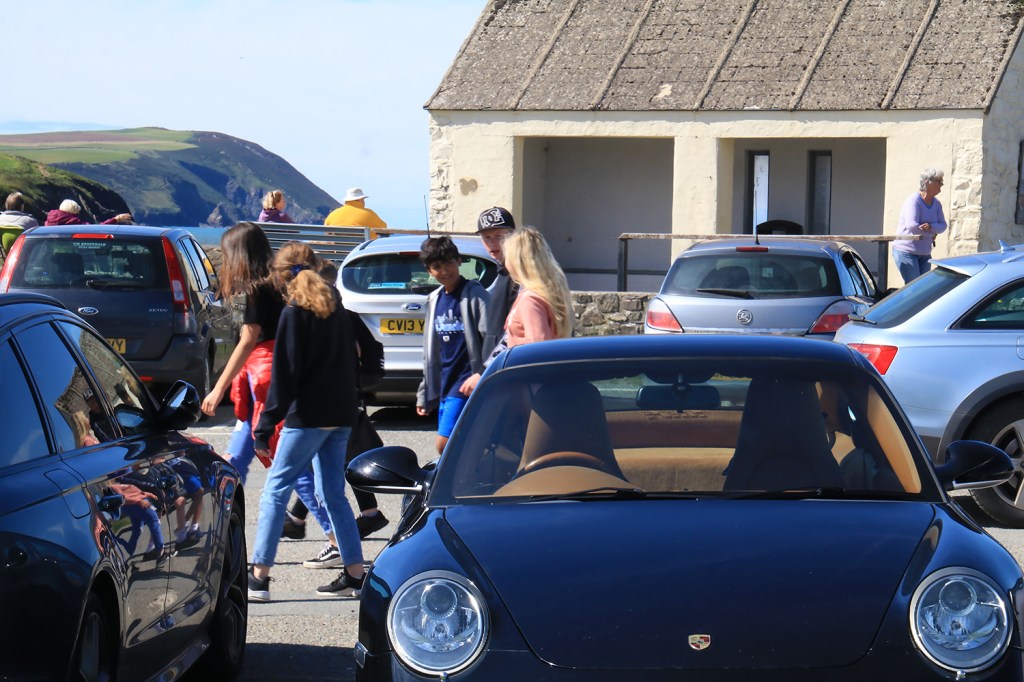
I talked about my intentions to return to photographing the carpark to exploit its mundaness, with the story being how it transitions from quiet, to busy, to quiet. Through this ideas came up such as places in vacuum (Jack Latham was suggested ) and those with no context and transience.

We also talked about possible text to put with the images, in particular incidents in carparks and what I’d been overhearing.

I’m going to follow up on a couple of works suggested: Jack Latham “Parilment of Owls” and Jan Svobada.

I’m also going to email to ask for  a Tutor to submit to, and to contact Dan Robinson to ask for breathing space in view of circumstances should I need it.

OCA Documentary photography hangout 8.10.20

We talked a lot about level 3 work and one note I have made is possibly to link my assignment 5 to something that will share the work, like Instagram or even the village telegraph pole.

It was useful to talk about bookmaking; we discussed flipbooks, blurb books, and books made in lightroom, some feel the later are better quality than the pdf produced in draft for blurb.

I also reminded myself to look out the learning objectives and refer to these rather than the assessment criteria.

Since the last hangout I had returned to Pembrokeshire and had been able to photograph again for assignment 3.

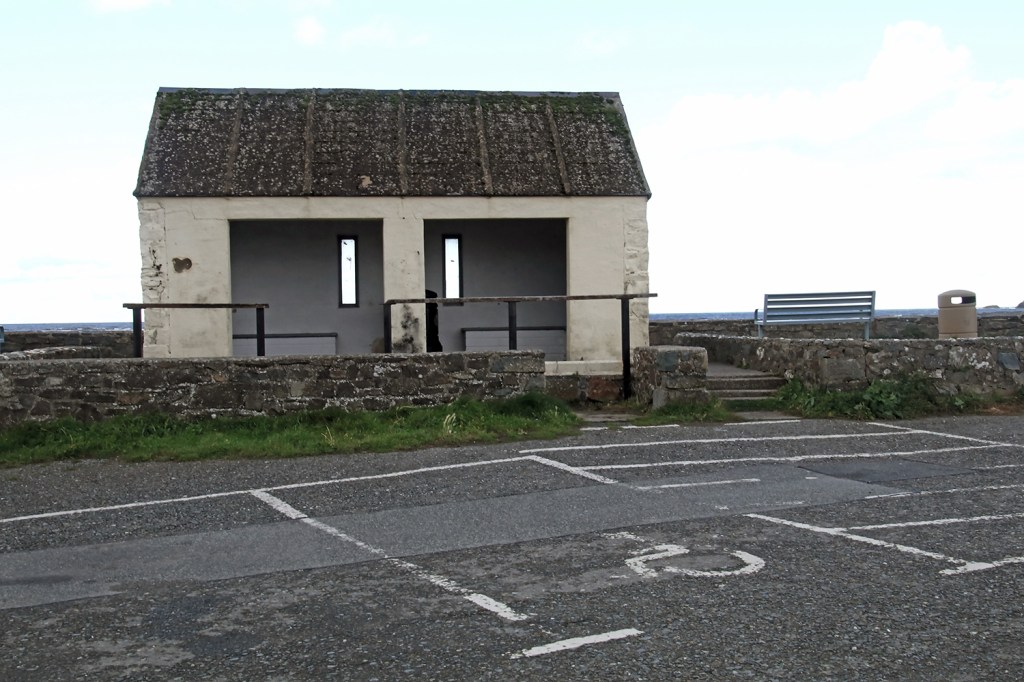
Following from the TVG meeting I introduced my reworked draft “Breathe in Breath out”. Since the TVG meeting I’d returned to my original idea of the car park as an entity to showcase the way the area goes from quite to busy to quiet; making the car park not the people my focus. I have also tried to contrast the flatness of the car park in bad weather as a contrast to the vibrancy of the height of the season shots. 

I have also considered how to show that it is only one car park and have done this by including in most images the bus shelter to anchor the location; it now seems that this has become a monitor of the “breath in breathe out”.

Suggestions and questions:

  • Could I begin with the vibrant busy images and work down to the empty quiet images?
  • Do I need to have 10 images as briefs seem to be more flexible?
  • Consider exploiting the lines seen and no lines seen
  • Really focus on absence and presence

Actions following the meeting:

  • Rework again starting with the Kayak image, then review my contact sheets for other images.
  • Text wise I am still considering whether I should use statements from the press about lockdown or the local area a bit like Anna fox did in her Basingstoke work using press statements about the town.

Next Post: https://nkssite5.photo.blog/category/research/a3-research/additional-research/

REFLECTION AND RESEARCH: OCA PHOTOGRAPHY ZOOM TALK

It’s all in the edit: Narrative and storytelling Tutor led 28.10.20

This is the last of a series of OCA tutor led talks which have been really useful.

The act of taking a picture is an act of editing, “I think photography is the art of editing” (Alec Sloth)

in the end creativity isn’t just the things we chose to put in, it’s the things we chose to leave out” (Austin Kleon Show your work)

How to approach:

  • Leave time between shooting and editing
  • Don’t edit in camera – can make really bad choices
  • Live with projects in process, small prints, dummy books (play with the order of things) use issuu.com, book wright, apple pages then print to pdf, lightroom book tsb is alongside develop and print
  • You have to have a body of work to be able to edit

Plan:

  • Think what is the primary nature of the project? Subject matter or how to present?
  • Do you need to reshoot to fill a gap or change presentation to fit with images that you have?
  • Write about your decisions in your learning log as you produce.

Go with the flow: A writer of crime dramas shared she doesn’t know who is the victim when she starts

Narrative: Can be personal, scripted/constructed, linear/geographical/chronological, visual, or other

Do the research: Look at how other photographers work- Make notes when you look at work: Is there more than one narrative going on? Was it a planned structure or did it evolve or come from the editing process?

Story telling – to use text or not? Look at how other projects use text: Does the text adjunct? Are the images and text separate entities sat alongside each other

Functions of storytelling can be :

  • Within the work
  • About the work
  • About the production of the work
  • Watch photography discussions online listen to the narrative they use to discuss

Examples:

  • For most of it I have no words – Simon Norfolk.
  • Survivor– Harry Bordon. Photographs of survivors of the holocaust. Their story in their own words and biographies of those photographed
  • Gregory Crewdson article and video on An Eclipse of Moths
  • Hart Island– Melinda Hunt and Joel Sternfield – Andrea wrote about this project here and the significance of the mass graves footage in 2020.

If you do nothing else: • Stay open to new ideas, Keep exploring, Disappear down the rabbit holes …

To do:

Watch wonderful storytelling, The Museum of Four in the Morning, i to see marvelous storytelling in action. (https://www.ted.com/talks/rives_the_museum_of_four_in_the_morning#t-28931 )

Andrew Jackson blog talking about photography “Not every story is ours to tell” Andrew Jackson.

This is very timely as I am on a final edit of my assignment 3 images and it gives me some useful reflections:

  • I have left time between shooting and editing my images which is good
  • When editing I need to keep in mind what is the primary nature of the project
  • I need to move onto making the book with dummies
  • My narrative might be linear, chronological, geographical constructed or scripted
  • I should look at other’s books
  • I still need to consider how I’m going to use text, adjunct or alongside?

References:

Borden, H (2017) Survivor: A Portrait of Survivors of the Holocaust, Cassell.

Hennemuth, B (2020) ‘The Photography of Gregory Crewdson—And Why Cate Blanchett Is Here for It’ In: Vanity Fair 08/10/2020. At: https://www.vanityfair.com/hollywood/2020/10/cate-blanchett-talks-withphotographer-gregory-crewdson (Accessed 28/10/20).

Lotto. B (2017) Deviate: The Creative Power of Transforming Your Perception, Weidenfeld & Nicholson: London

Norfolk, S (1998) For Most of It I Have No Words, Dewi Lewis.

Norrington, A (2020) Hart Island – Melinda Hunt and Joel Sternfeld, At: https://www.andreanorrington.com/journal/2020/4/10/hart-island-melinda-hunt-and-joel-sternfeld (Accessed 28/10/2020)

Next Post: https://nkssite5.photo.blog/category/learning-log-research-and-reflection/thames-valley-oca-meetings/19-9-20-virtual/