ASSIGNMENT 5 SUBMISSION: PERSONAL PROJECT

Reflections on formative feedback

Tutor report: This was written feedback

My reflections

The feedback was positive and encouraging and helpfully incisive. My tutor’s feedback suggests that I consider presenting not only a face book/press statement and an opposing evidential image, but possibly juxtapose these images with opposing evidential images from the face book quotes. I can see that by doing so would extend the representation of various truths enabling viewers to face more of a challenge when interpreting the truth.

Most of all I am pleased that my tutor acknowledges that my voice and gaze are evident here, and also that my research is well integrated into my work, as I guess that this will help me when I start  level 3 shortly.

Actions:

  • My dilemma is how to achieve this as the original face book posts don’t contain any supporting images, this I find interesting in itself. So I will photograph opposing images myself, to add to the layers of truths represented in the work. The challenge will be firstly in collecting the material, and secondly integrating it into the slideshow effectively and without increasing it’s duration too much.
  • I have confirmed that I will be ready to submit assignment 6 by 1.6.21
  • I have also confirmed my intent to submit for November 2021.

Next Post: https://nkssite5.photo.blog/category/submissions/assignment-5-submission-personal-project/a5-proposal/

ASSIGNMENT FIVE: DRAFT

REFLECTIONS AGAINST ASSESSMENT CRITERIA

Demonstration of technical and visual skills:

  • I observed for some time before beginning to photograph.
  • During my time of observing as when shooting, because of the Welsh Pandemic Lockdown, I was in an area of very restricted movement and only able to explore on foot.  This limited my photographic area unless I was out running, at which times I shot exploratory images or occasionally as with the police car in the beach car park, had to shoot for the project with my I phone.
  • Once I’d completed my research, I had themes to focus on, and within a location I wanted to catch them as quiet as possible – though that was generally not hard.
  • When framing I kept in mind that there is a difference between what an eye sees and a camera records. However, I didn’t have to exclude from the frame items that would have changed the meaning; places were quiet and empty, but I did have to ensure that what I put in the frame would tell an obvious story, and to exclude any peripheral detail.
  • As a visual strategy I chose to present the images within a PowerPoint so that I had control over the way the images and text are viewed, so that I retain some control over the message, which is my voice. This I think was the best way to present the work on my blog as I must, however I am sure that if I were to show the images and text withing a gallery setting I could achieve the effect that I want.
  • I made a lot of changes to my first draft, mainly in response to my peer’s comments, though I knew that it contained too much material myself. I reduced the text, in some places separated text from the visuals, to let the visuals speak for myself, so that the images become my voice. I abandoned my initial idea of presenting facts with a white background, and opinions on grey background as that hadn’t worked and believe with my simpler presentation this separation will be self-evident. I did however present the press comments as in a newspaper column.
  • The photographs are extremely mundane, but it is the presentation that makes them interesting.
  • I have respected the visual elements and not added or subtracted from them.

Quality of outcome:

  • Once I had my concept it was challenging to think how to present it. I decided to take a tongue in cheek perspective, as I could then photograph what I saw, and shared the other layers of truth with the context and text I presented along-side the images.
  • The brief forced me to plan and execute the project methodically, this helped me to realise the project in a focused, timely, and coherent manner.
  • The brief of 15 images, when my plan suggested 4 to 5 themes, pushed me to find variations on subjects to achieve my plan.  
  • I proved that the project had a wider scope than my previous work, both in the way that I expanded my search for context with research and recorded relevant information over a long duration.
  • Presenting my “truth” with just some trace of all the research that I’d done proved challenging. Initially I packed too much in, and then spent time paring the textual information down, discerning what was essential and what was distracting.
  • I hope that the current form and choice of images and text conceptualises my ideas effectively, and provides a complex narrative that viewers will be able to engage with it and even question.

Demonstration of creativity:

  • This was from the outset a personal project, chosen because the uncomfortableness of a situation, that gave me a purpose to look for the truth in of aspects of it.
  • I realised that as both an insider and outsider I was in a unique position to report on the issues and capitalised on this unusual position.  
  • I knew that there were layers as well as shades of different types of truths contained in the opinions expressed by others, my feelings and the facts available. I decided to represent these layers of truth in a “tongue in cheek” style, to show my voice and to stimulate a response from the viewers.
  • My personal voice is represented in the images that I share, the text that I have chosen to accompany the photographs, and the way I have presented the work.  
  • I have shown that images are open to those that want to take charge of them. However, I do think I’ve taken a risk and trodden a fine line as there must be some belief in the truth of photographs or they lose their value. I hope that the work does encourage questions.
  • The subjects photographed are mundane, but this is often the way with documentary photography- I hope the way I present them makes them interesting.

Context:

  • I believe that this time as I completed coursework and additional reading, I have traced the development of some of my thoughts and linked it to previous work and readings. This has helped me to contextualise my learning.  
  • I have shown that I can synthesis and analyse information from many sources.
  • I really enjoyed the contextual research that I did, it was good to do self-directed research that served a self-designed purpose. I balanced information from the social media and press with more factual information from government sources and statistical reports. To obtain this balanced contextual background I covered political, social, and economic themes and enjoyed reading more widely around the truths in photography. This gave me a real meaning to the “cultural and political space of the photograph”. I was the author of the work in an knowledgeable and ethical manner.
  • As usual I reflected throughout the process, but more so as I contemplated the results of my research and moved into forming the presentation of my work.
  • Sharing with OCA peer groups throughout the process gave me challenge and support and encouraged regular reflection on my emerging work.
  • My summary reflections on my research for Assignment 5, demonstrates my understanding of some of the wider social and cultural contexts in documentary photography, particularly those that I took into this assignment : https://nkssite5.photo.blog/category/research/a5-research/a5-additional-research/summary-of-readings/

Next Post: https://nkssite5.photo.blog/category/learning-log-research-and-reflection/reflection/a5-reflections-against-formative-feedback/

ASSIGNMENT 4 SUBMISSION: CRITICAL REVIEW

REFLECTIONS ON FORMATIVE FEEDBACK

Tutor report: This was written with a follow up conversation

Response to formative feedback

In her feedback my tutor queried several points about my draft critical review. She was positive about my choice of topic, my understanding and my research which has allowed me to contextualise and make perceptive theses; however she points out that the breadth of my research and writing has prevented me from closely analysing my sources. She also pointed out that though my photographs are relevant I haven’t evaluated their potential to make change. I can see now as she says that my “critical engagement and analysis are hinted at rather than exemplified”.

My action plan for a reworking of the critical review

1. Reduce the breadth of my writing by “control and editing of sources”, this will enable me to:

  • Give more in depth analysis
  • Articulate my critical engagement, to describe how my sources support my view and have developed my argument and thesis.
  • Describe how my research has led me to my end thesis – How I get to my ideas.

2. Provide more in-depth image analysis. The activists that I describe in my sources are visual activists so I need to articulate how they provoke a response through the lens, the response they provoke, as the audience is not passive.

My rework

I narrowed down the material that I used so that I could explore what remained in more depth. I have concentrated my review on fewer practitioners, but was able to use the other material that I’d previously used and read to retain my broader understanding of the issues. I have placed these references in my bibliography. I was then able to express how I developed my argument.

I also revisited the images that I’d included and included more background details on the images that I’d used and how they exemplified my thesis.

I can see that I have now formed a more detailed but also succent and cohesive essay which develops more effectively towards my conclusion.

Next Post: https://nkssite5.photo.blog/category/submissions/assignment-4-submission-critical-review/a4-submission/

ASSIGNMENT FOUR DRAFT: REFLECTIONS AGAINST ASSESSMENT CRITERIA

REFLECTIONS AGAINST ASSESSMENT CRITERIA

I have not found it as easy to evaluate the critical review against the assessment criteria as it is photographic assignments, however:  

Context and demonstration of technical and visual skills

  • I have researched using secondary source material: facts, images, ideas, quotations, through reading, listening and participation in talks and lectures.
  • I have analysed the material and used it critically to construct and support my opinions about my subject.
  • In the essay I have brought in and engaged in some of the theoretical and particularly ethical issues I encountered during the course such as power, respect, context, intent, social and a photographer’s responsibilities.
  • My choice of subject was driven by learning during the coursework and interest that grew from several photographic talks form a year ago; particularly the Lumix Festival talks in June 2020 which focused on reconsidering perspectives in documentary photography.
  • The essay also grew from being inspired by the working ethics of particular photographers such as Mark Neville and Robert knoth whom I heard speak virtually; as well as commentators on documentary photography such as Fred Ritchen Michelle Borge and Stephen Mayes.

Demonstration of creativity

  • My personal thoughts on photographic practice stimulated by the course guided my choice of topic.
  • I chose my critical review subject so that I could delve deeper into particular types of working in documentary photography that I encountered during the course.
  • Following my research and analysis I have formed and given my own opinions on how a photographer can benefit the communities that they photograph.
  • I redrafted at the end of my writing many times to try to give my personal voice as well as using the work and practice of others for examples.

Quality of outcome

  • I have shared ideas of photographic practice to demonstrate how photography can helped communities photographed.
  • To do this I have related to wider social political and economic issues.
  • I have structured the essay using subtitles and signposting to guide the reader.
  • I have written the essay in an academic style and referenced all material used.
  • I have included photographic images as suggested in the brief although I don’t feel that they are essential to the critical review.
  • I hope that I have communicated my ideas and evidence clearly.  

Next Post: https://nkssite5.photo.blog/category/submissions/assignment-4-submission-critical-review/a4-reflections-on-formative-feedback/

RESEARCH AND REFLECTION: LEARNING PART 4

THIS IS A SUMMARY OF THE MAIN LEARNING THAT I HAVE TAKEN AWAY FROM PART 4

PROJECT GAZE AND CONTROL

Reading On Foucault: Disciplinary Power and Photography by David Green (Exercise 4.1)

  • I had not thought of photography as a mechanisms of surveillance to observe/and classify people in order to normalise disciplinary power.
  • As Green suggests if this is so, we should develop alternative ways of working with photography.

The Photograph as an Intersection of Gazes ((Exercise 4.2)  

The seven types of gazes identified gives me something to reflect on I my work going forward:

  1. The photographer’s gaze: the camera’s eye which structures the image.
  2. The magazine gaze: chosen by editing for emphasis.  
  3. The reader’s gaze: a reader’s interpretation, influenced by their experience & imagination.
  4. The non-western subject gaze: confrontational/distanced look/ absent gaze.
  5. Explicit western looking: which is unusual as westerners usually look off camera.
  6. Returned or refracted gaze: usually by mirrors or cameras
  7. Academic gaze: a subtype of the reader’s gaze.

It’s an interesting concept that some photographers are experimenting inviting viewers to interpret them rather than accepting the photographers gaze as their own. I will be more aware going forward of the interplay and relationships of the various gazes and their potential effect on the viewer, and the ambiguity in the work in particular.

PROJECT DOCUMENTS OF CONFLICT AND SUFFERING

Reading  the articles ‘Walk the Line’ (Houghton, 2008) and ‘Imaging War’ (Kaplan, 2008( (Exercise 4.4) raises issues such as:

  • How far should we go with publishing images of war and disasters?
  • What images are suitable?
  • Are there any lines to be crossed?
  • Are the answers defined by ethic, commerce, respect for individuals or their families, politics, relationships between media companies and governments, or are they simply personal?

It is the photographer who must be mindful of the way the images may by used. I believe whether an image should be used or not I think, comes down to if using it adds impact to the story.

THE ETHICS OF AESTHETICS

‘Imaging Famine’ (Exercise 4.5) This research project in 2005 highlights issues that persisted in images of famine:

  • Stereotypical images of victims
  • Could positive images of people in need be presented?
  • Can photographers provide images with context, understanding and explanation?
  • Does immediacy enabled by technology cause simplified compositions?
  • Can just one picture share a good understanding of issues?
  • Are photographers simply image makers or do they have wider responsibilities?

To print or not to print (Exercise 4.7)  

When choosing what to include in an image I would:

  • Think about what I consider decent, is there consent?
  • Consider privacy, is it a public occasion seems to be the crux of this
  • Ask would the presence of the camera invite violence?

This was the first time that I’ve read The National Press Photographers Association, code of ethics (2017), in particular it  states that our primary role is to report visually on the significant event and varied viewpoints in our common world….the faithful and comprehensive depiction of the  subject at hand”. When photographing as documentary I must remember this.

REFLECTING ON THE WAR PHOTOGRAPHS

Has made me consider topics such as journalist embedding, staging for cameras, rapid publishing, post camera manipulation and their effects on the quality of media images.

PROJECT POST-COLONIAL ETHNOGRAPHY

It was good for me to reflect on colonial and post-colonial world especially certain “traps” that have been identified:

  • Nostalgia – Romanticism of primitive beauty
  • Imbalances of power between photographer and subjects
  • Disciplinary cataloguing and comparing
  • Primitivism
  • Decontextualising
  • Infantising of non-industrial people

I was pleased to find photographer’s work such as David Ju/’hoansi Bushmen (2021), George Rodgers (En Afrique, 2016) and Eduardo Masferré (1909 – 1995) who had avoided most of these traps – I will now be alert to them when viewing such work again.

Next Post: https://nkssite5.photo.blog/category/learning-log-research-and-reflection/zoom-oca-meetings/oca-student-led/7-1-21-4-2-21/

ASSIGNMENT 3 SUBMISSION: VISUAL STORYTELLING

REFLECTIONS ON FORMATIVE FEEDBACK

Tutor report: This was written feedback

I was pleased with the feedback from my new tutor, most especially as I seem to be living with this assignment for months; this has given me some distance which helps with reflection, but I was worried that it may have distorted my vision so to speak.

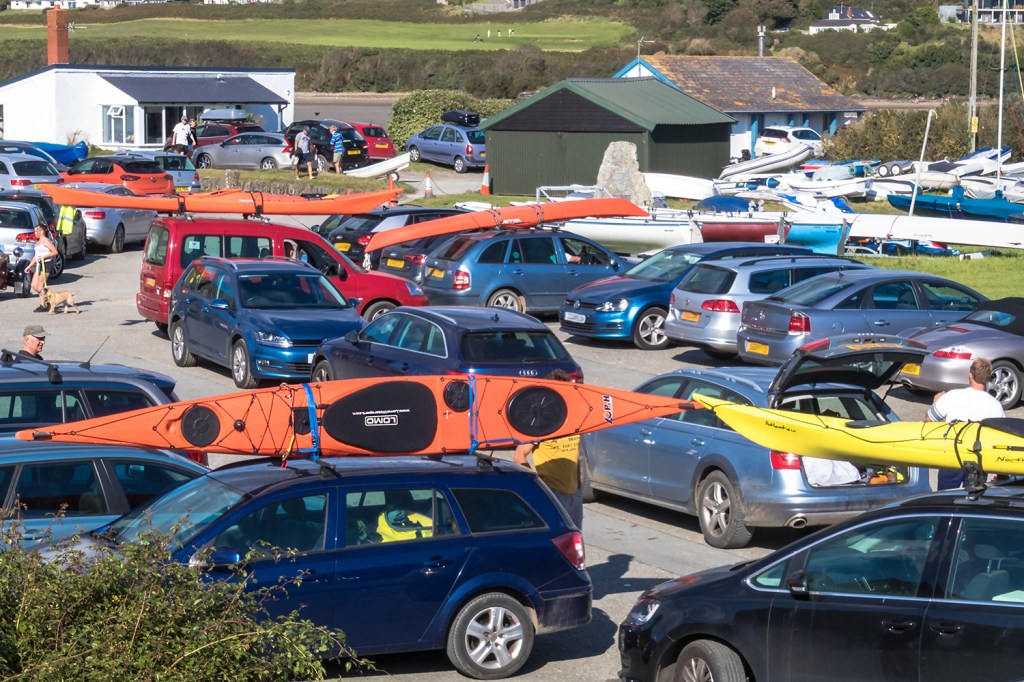
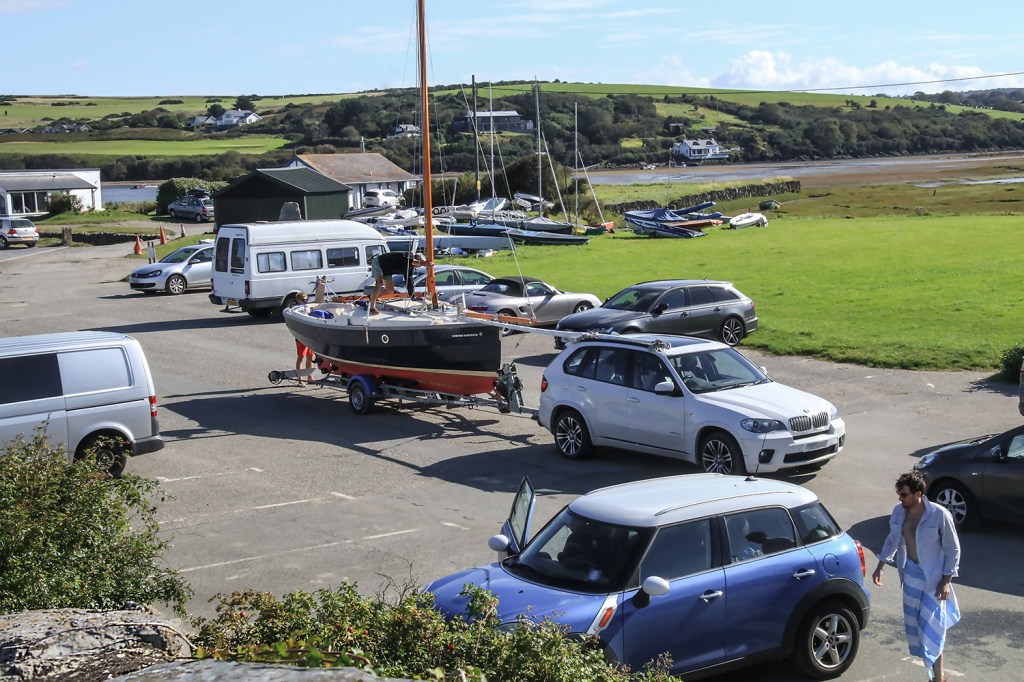
She suggested that I think about a variation to the story theoretically (as it probably wouldn’t fulfil the assignment criteria), such as documenting small specific areas of the car park and documenting their change – I will experiment with this as a side project, which I may well do using my I phone initially to access its usefulness.

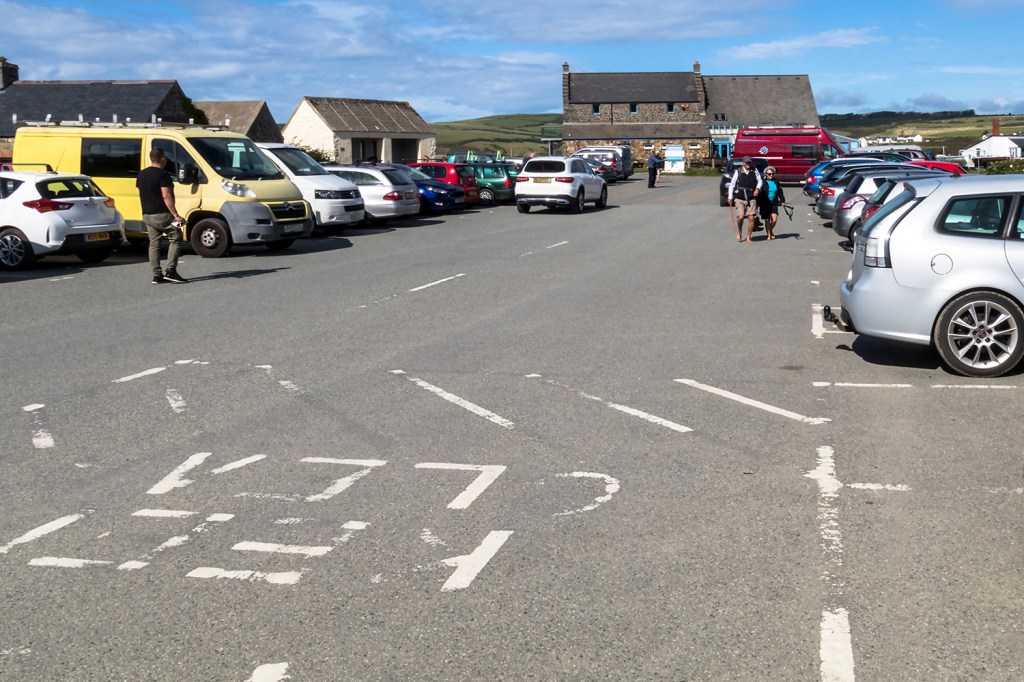
For my submission I have rephotographed my final image and replaced it as my Tutor agreed with my reflection that it would be better as an empty car park. I have also rephotographed the 8th image which is the one I think my tutor suggested to try as an empty car park, without the van; however, having tried this in the sequence below I am choosing to stay with my original image. For my narrative I prefer to show the car park transitioning from full/busy to empty/quiet and I think that 3 empty car parks at the end is too much.

The sequence with empty 8th and 10th images as well as the 9th:

With the side-project mentioned above I will continue to experiment with the subject matter to explore further visual narratives.

Next post: https://nkssite5.photo.blog/category/submissions/a3-submission/

ASSIGNMENT THREE DRAFT: REFLECTIONS AGAINST ASSESSMENT CRITERIA

Demonstration of technical and visual skills

  • This assignment was shot over a few months and I observed the space much more than I shot, my observational skills sharpened as I worked into the project.
  • My framing became more deliberate through the shooting period, especially my awareness of what was outside of the frame.
  • I tried a variety of lens, perspective and shot at different times of day, in different weathers and through seasonal changes, to give visual variety; I had to learn to accommodate rather than hide inconsistencies in lighting and colour. My visual strategy incorporated these inconsistencies moving from saturated to less saturated duller images through the sequence.
  • To communicate my concept, I chose to present the images as small and “compressed” for the busy season to larger images gradually to larger images for the quiet season to narrate the feeling of breathing in to breathing out that occurs during this transition.
  • In retrospect I would make the text smaller on the cover,

Quality of outcome

  • My concept is straightforward but communicating it took quite a bit of experimenting. I settled on sharing the transition just from busy to quiet rather than beginning from quiet initially. I think this communicates the transition more strongly.
  • Campbell (2010) says that events have their meaning formed by the narrative, I hope my choice of images (edited many times) combined with the sequencing helps to give meaning.
  • I would like to reshoot the final image as a completely empty car park – which I am in a position to do.
  • It was important to me to have it recognised as being one space, one car park and I anchored this by including fixed elements such as the bus shelter in most images.
  • Though I considered using text I believe the book presentation of the images, sequencing, colour and size provides as much meaning as I need to; I think adding text would have over controlled interpretation.
  • If I had settled on my perspective earlier on when shooting I would have had more “busy” shots which fulfilled my needs; I had plenty but had to choose from only those which focused on the feeling of the space being compressed, rather than English/Welshness or surreality which I started out shooting,

Demonstration of creativity

  • With a conceptual starting point, I experimented with different ways of representing the issue, initially playing as Matt Stuart, Peter Dench, Paul Reas, and Marin Parr do with saturated colour and a slight irreverence to their subjects. I then moved onto exploring Englishness (and Welshness) influenced by Martin Parr, Simon Roberts and Anna Fox; but eventually settled on my own style, a quieter one. 
  • Though I say that I am in an unusual position understanding both the local and visitor response to the seasonal change, you can see my emotional response in the work. Parr says, “it’s the subjectivity not the subject matter that is important”,and I believe my personal voice is evident.
  • As I worked into the project the car park took became a character for me, and the bus shelter also as a part of the landscape. I could almost feel their tenseness during the busy time and their relief when their space became quiet again.

Context

  • This was a personal context to me from the outset. It explored a local issue but one that I was at this precise time able to see both as an insider and outsider being in the throes of transferring from a second homer to a resident. I had been excluded during the lockdown and returned as this ended to become a resident. I was privy to the local resentment to the tourists and to the excitement of the visitors. This transformation was heightened this year, and there will be a discontinuity to the work later however the issue will remain at a lesser level.
  • Though I understood the local issue from both sides as Campbell (2010) suggested it seemed impossible to present this objectively. I think my personal stance shows through in the document, but it will be interesting to see if the document is interpreted in different ways.
  • Personal circumstance meant that this was shot over a longer period than I planned but I used this to my advantage reflecting at length between shooting and between that and editing/presenting.
  • I reflected and fed my learning from my coursework and research into my work and was able to share my work with various OCA peer groups as it developed; this is evidenced in my learning log. As well as the research I have mentioned I was affected by that I did on senses of place Alex Webb, Mikael Subotzy, Marco Van Duyvendik, Laurel Chor, and Hannah Reyes Morales who underlined the importance of knowing a place well to capture it effectively. I also visited photographer’s work which though interesting was not relevant to my project though a similar subject matter such as Stephen Shore, Brice Gilden, Ed Ruscha and Martin Parr’s “Parking Spaces”; all research as an influence but it’s knowing which to discount as well as be led by.

My main regret is the time that it took me to complete this project due to events in my personal life. Looking for the positives, it did give me an extended shooting time, plenty of time to research and experiment and time to reflect between shooting and presenting the work.

References:

David Campbell – Narrative, Power and Responsibility (2010) At: https://soundcloud.com/mattjohnston/david-campbell (Accessed 15/08/2020)

Potter (2018) ‘Martin Parr interview (The World According To Parr, 2003) At: https://www.youtube.com/watch?v=MCRyB2SFQZ4&feature=youtu.be (Accessed 25/10/2020).

Next Post: https://nkssite5.photo.blog/category/submissions/a3-submission/

ASSIGNMENT 2: REFLECTION AGAINST ASSESSMENT CRITERIA

Demonstration of technical and visual skills

  • I went out looking and ready to shoot. with great curiosity, it was like looking with new eyes with a heightened awareness. It is possible that having been in hibernation my viewing was naturally enhanced.
  • Observation was everything to me in this project. I searched to find examples of economic scarring, that were accessible to me, and with time constraints with businesses able to open in 10 days, I made the most of every opportunity, looking carefully and at details.
  • I wanted to present images that a viewer would feel they’re looking themself rather than viewing a photograph; so once I found a subject I moved around a lot experimenting used framing, perspective, and depth of field  to construct an image that showed only what had caught my attention.
  • Interestingly I have since done hardly any cropping, maybe just a bit of straightening on one or two images. I used the framing as I shot to control what I show the viewer.
  • I believe that each image has enough elements to communicate its own individual narrative.

  Quality of outcome

  • One thing I picked up between assignment 1 and 2 is that when you’re feeling stuck or constrained it’s important to do work that’s meaningful for you.
  • Though “Economic scarring” is a concept, I was concerned whether it was abstract enough for the brief. However I felt strongly that this was something that needed recording, I could feel the scarring on this landscape myself when shooting and needed to share it; so I may have taken some licence form the brief but hope to anchor it by the way it’s presented.
  • I think there is also some discernment in the work because I stayed away from obvious Covid19 signs and clichés, though this introduces ambiguity and may mean that overtime there is some discontinuity,
  • Intention is important; I feel a huge concern for the future, especially the next generation and this brought an urgency to capture what I was seeing, and yet I had to combine this with patience to get it right.
  • I hope that these images will give the audience something to reflect on; I believe that they each show a sense of something not quite right, and I feel that this gives most some punctum.
  • When editing and forming the series I hope that the signs and symbols in the images along with the way I’ve presented them anchors my concept.

Demonstration of creativity

  • I was firm in my concept from the outset but kept my options on the style of the outcome fluid.
  • This was useful as I had taken on board so much photographic stimulus whilst in lockdown (mainly via zoom) that it gave it time to seep through me as I photographed.
  • Though I went out for my first shoot with the idea of using a surrealist style, I went with the flow and followed my instincts and my work developed its own style.
  • I have committed to my intuition this assignment, where normally I question myself and am not so confident in using my own style.
  • I had been keen following photographer talks such as Anna Fox to try some “FRICTION” (fact and fiction) but the only construction I needed here was in shaping the audiences view.
  • This was fortunate as something else I heard from photographers and the coursework across these weeks was the importance of integrity, and I’d managed to keep my photography honest.
  • I feel I have exercised my creative muscle.

Context

  • This was a very reflective period in my life, with so much changing all around me and this naturally carried into my work.
  • I engaged many times with students as usual but with wider networks as well, curtesy of zoom; in fact too much came to me via my laptop portal and in the end I had to call a stop to extra research and learning, so that I could post it and my work and my assignment.
  • I have digested and reflected on much extra research as well as the directed and my knowledge base has broadened considerably. 
  • Hence the context for the concept here is current and topical but my thought processes behind the work has been broad.

NEXT POST: https://nkssite5.photo.blog/2020/10/28/assignment-2-submission-single-image-narratives/

RESEARCH AND REFLECTION PART 2

MY LEARNING PART 2

Mark Neville Artist talk 4.4.20

This was an amazingly interesting and thought provoking interview. I think it will help to give me some extra purpose going forward and especially working towards and possibly when choosing my level 3 project:

  • Documentary photography can connect art and social documentary practices.
  • Tension between the moment/chance and construction can be very effective in documentary images.
  • It can be effective to mix several visual and practical styles within one body of work (e.g. staged, sly on the wall, fashion or classical painting in style).
  • Consider many different types of references for your own work, design, painting, fashion, newspaper….
  • Try using fill flash from the top side when taking portraits on the go (I could do this with a strobe and small soft box – maybe I need to get a stick to attach it to).
  • Can use lightening to align your work with your references for images.
  • Documentary photography may be about getting a good depth of field as documentary photography is about revealing detail.
  • A huge variety of material can be contained with a photographic project: images, texts, essays, letters, eye-witness accounts and so forth.
  • Think about the local role of any project – if it is about reality should it seek to change or just highlight something? Ask yourself should the photographs to service the community they are shot in?
  • There are many ways to exhibit work other than in a gallery.
  • It reminded of something I have discovered myself, that photographic work can be therapeutic to yourself.
  • Make sure you are really interested and believe in a project that will take a lot of time and energy before you start it.
  • Don’t worry if I change my mind where I’m going with a project once I immerse myself in it.

Anton Kusters Artist talk 30.4.20

  • Consider alternative ways of seeing
  • Give the opportunity for activating memory
  • Consider ways of exploring the limits of understanding and things that ae difficult to represent
  • Not to expect answers
  • Maximize the importance of a physical aspect of work and the possibility this changes
  • The importance of the presentation and the possibility of change in this to reactivate responses

Photography general student led virtual hangout 3.5.20

On personal voice:

  • Your voice is the how you’re recognized by others
  • It speaks to your values and the perspective and skill that you bring to the work
  • Often forged by following the inspiration on your influences and commit to your intuition

Stages to finding your voice might be:

Discovery phase– seeds are planted, often disappointed with your work, you so ask yourself:

  • What new ideas or skills are obsessing me right now?
  • Who are the practitioners that I can learn from here?
  • Emulation phase: Think about other’s work to immerse yourself in and how to practice the skills I want to improve/learn

Divergence phase – Once you’ve achieved enough mastery then you move on from emulation:

  • take intuitive steps and bend or break the rules you’ve learned.
  • Push yourself out of your comfort zone

Crisis phase – 

  • Push yourself out of your comfort zone even if it exposes vulnerabilities
  • refuse to settle for good enough- hone your skills

For motivation in these challenging times, Clive said that its important to do work that’s meaningful for you, find your bliss and follow it – I think that’s what I’m struggling with at the moment!

We were reminded by Clive that you can have mastery of techniques and/or mastery of voice.

The Photographers gallery Slow Looking Mohamed Bourouissa 16.5.20:

  • It can be difficult to tell whether a photograph is staged or not
  • A reminder to look carefully and at details
  • Examples of ways to act out your concepts including historical emulation
  • A reminder to be creative about how to show exhibit your work and possibilities to do it in relevant local ways
  • Interesting following the artist talk with Anna Fox and our discussions on whether it’s appropriate to stage images – in these cases it was integral to the concepts
  • Can photographs by connecting to your own habits
  • Your own locality can be a useful starting point and you can do something useful
  • The impact of ambiguity

13.5.20 OCA Tutor led hangout – Andrea Norrington – How to research:

  • It’s definitely okay to copy to learn
  • Remember to be critical of all sources
  • Use the OCA librarian as a resource
  • Note to self to make a personal index of research done on photographers across all courses
  • Checkout Evernote for storing you tube links?
  • Be curious – don’t let the course work stifle my curiosity; don’t feel guilty about taking time now to access all the virtual material available even if it slows me down

Thames Valley OCA meeting 16.5.20 – Anna Fox Photographer:

I learnt a lot about the possibilities for “FRICTION” the fusion of fiction and documentary photography. I also picked up many other ideas:

  • Consider using fiction to support ideas for my photography When using text and images integrate as one body of work.
  • Consider carefully, sentence breaks, font and emphasis.
  • Be aware of the variety of types of staging possibilities.
  • Think about all possibilities of book design, suit the design to the project.
  • Keep project proposals fluid, so that you can change it as it develops and then evaluate to justify your changes.
  • Remember that even for experienced photographers it can take a long time to get an effective shot.
  • Don’t forget to fully articulate your research.
  • Intention and integrity in your work is important
  • Ensure your work gives people something to speak about.

International Guest Lecture: Susan Bright – Collaboration and Creative Practice OCA 27.5.2To consider more carefully the role the curator plays

  • To consider working collaboratively – Though I do increasingly as I participate more and more in forums, hangouts and zoom meeting outside of the OCA.
  • Think creatively when planning gallery layouts – consider adapting work to suit the space it is showed in.

Tutor led session on research 17.6.20:

  • Keep taking risks, keep trusting your intuition and choices,
  • Remember to exercise my creative muscle
  • Take photographs that are like looking with conscious heightened attention.

AOP Breakfast Club Webinar 18.6.20 Carol Allen-Storey in conversation with Julia-Fullerton Batten, Othello De’ Souza-Hartley, & Lottie Davis -Fine Art Photography:

  • Stay simple in your approach
  • Use what’s around you
  • Build collaborations
  • Consider photography as a part of an installation in the future
  • Consider multi-media approaches
  • Let unexpected events like Covid release new creative journeys

AOP Breakfast Club – 23.6.20 Carol Allen-Storey in Conversation with Gideon Mendel, Simon Roberts, Jillian Edelstein, Liz Hingley- impact of Covid on work:

  • The benefits of having long term commitments photographic commitments
  • The benefits of collaboration
  • I am not so different to these photographers; the Covid situation stopped my creativity and productivity for a while, it has made me reflect on the importance and meaning of photography going forward.
  • Even professional photographers do not find it easy to engage people collaboratively on the street

AOP Breakfast Club – 23.6.20The impact of Covid on work

  • The benefits of having long term commitments photographic commitments
  • The benefits of collaboration

•  I am not so different to these photographers; the Covid situation stopped my creativity and productivity for a while, it has made me reflect on the importance and meaning of photography going forward.

RESEARCH

SOCIALLY RESPONSIBLE PHOTOGRAPHERS

RESEARCH POINT Surrealist photographers -key visual & conceptual characteristics:

  • Ambiguous images
  • Juxtapositions
  • Use of negative space
  • Use of shadows
  • Use of geometric patterns
  • Shot from unusual angles
  • Framed abruptly
  • Accidental compositions, use of chance.
  • Break traditional photographic rules of composition
  • See things differently and show us things differently
  • Disrupt our perceptions
  • Reveal the uncanny
  • Some dream like imagery
  • Fusion between the real and the imaginary
  • Capture surreal moments

Independent research into contemporary street photography:

  • Try to be aware of an emotional sense of the people
  • Consider using available street lighting, neon signage and smog to create atmosphere around subjects.
  • Don’t force things,
  • Follow your own instincts and leave thinking behind.
  • Crop lightly
  • Use ambiguity and surprise the viewer
  • Research to put you in the right frame of mind

COURSE EXERCISES:

PROJECT LEGACY FOR SOCIAL CHANGE

Exercise 2.2 Survival programmes

  • Although times were different then they still must have worked hard to build relationships and trust with the communities that they photographed to get so close to them
  • Reminds me again of the responsibility of the photographer to shoot with Integrity, the images are intimate but respectful.
  • The benefits of working as a team and having a shared ethos
  • The impact that sharing the truth can have when laid bare

Exercise 2.3 Bill Brandt

  • Remember the ability of a photograph to be presented for different purposes
  • Research Surrealist photographers further

Exercise 2.4 Mirror of visual culture

  • I should consider carefully visual literacy and how much the viewer has.
  • It was really useful to have these suggested stages/categories of documentary set out, it helps to clarify things for me.
  • I may use this as a starting point to develop some ideas for assignment 2, in particular to research further, documentary as art and manipulation and documentary for questioning images.

Exercise 2.5 Bleasdale

  • Consider taking inspiration from writers and fiction
  • Be aware of the power there can be in a single image when it comes from a part of a longer project
  • I come back again that respect for those you work with and them for you is paramount for the success of an image

PROJECT NARRATIVE

Exercise 2.6 Martin Shields

A reminder of the power of text to anchor an image or also the power of an image to be used perhaps out of context and have its meaning misappropriated.

Research point Semiotics – Short in summary suggests considering when presenting images:

  • Will the audience see all the images at once?
  • Do you want them to follow an identifiable sequence?
  • Will some pictures take more prominence than others?
  • Do you need a lead picture that sums up the intention?
  • Do you want to use visual punctuation? (size or shape)

“Ultimately the aim of narrative technique is to provide or anchor meaning and coherence for the image and its audience” (Short, 2011:109).

Short suggests these points should be considered with signs and symbols:

  • What is their function?
  • Are you introducing a new twist on an existing sign or symbol?
  • How do you introduce the meaning of the symbol?
  • Is it a reoccurring motif or symbolShould the audience have prior knowledge of the meaning of the sign or symbol? How are you framing their context?
  • Using any dynamics such as juxtaposition?

The pace and flow of narrative can be orchestrated by signs and symbols either significant in an image or a looser link in the overall visual language between images

Exercise 2.7/8 Robert Frank:

Really just a reminder about the possible use of symbols and how they can function within images.

Exercise 2.9 Mexican photographers:

  • Salgado represents his community picturesquely, though also showed alienation & estrangement. 
  • Salgado is and Lopez focused on death in common with other Mexican photographers.
  • Salgado shows the landscape as distressed.
  • Alvarez Bravo treats the landscape with humour.
  • Salgado put universal and eternal symbols above specifics in an image
  • Pedro Meyer captures juxtapositions relying on the decisive moment more than immersion
  • Salgado says reality is full of depth of field
  • Salgado went beyond the stereotypes to show the struggles of communities
  • Salgado used minimal explanations and context to allow viewers to form their own opinions

Exercise 2.10 Daniel Meadows:

  • Use curiosity about the world as a driver
  • Engage with others and mediate other’s stories
  • People will talk about their lives
  • The effectiveness of “actuality recording”
  • Listen carefully as silence is as telling as the spoken word

Exercise 2.12 Avedon and Oestervang – Documentary practice is a question of:

  • Context
  • Control
  • Manipulation
  • stereotyping
  • Bias
  • Social responsibility

I guess the important thing is to be aware of these issues and to take the approach that you think is socially and morally appropriate.

“Worktown” research Learning:

The intention, ethics and methods of photographing affect the validity and reception to a project.

Exercise 2.14 Curtis provides a useful framework for assessing a documentary photograph:

  • Who is the audience? As images can be moulded to fit the expectations and prejudices of the audience.
  • Why was the photograph taken- Motives?
  • How was the photograph taken – Equipment, Lighting, other restrictions?
  • What can companion images tell us – more background information and additional clues?
  • How was the photograph presented – Captions and text can direct the viewer?

FSA & exploitation:

  • Curtis suggests that documentary photographers posed as “fact gatherers” but were consciously persuading others.
  • The FSA photographers manipulated images to achieve their ends.
  • Did raise awareness of the impact of the Great Depression and raised investments for improvement projects.
  • The question of exploitation depends on the way in which it was done; Generally photographed their subjects with dignity, I doubt they felt exploited.
  • Acknowledge the photographers didn’t have editorial control over their images.
  • More questions should be directed towards Stryker where integrity is being questioned

Research point surrealist photographers – key visual and conceptual characteristics:

  • Ambiguous images
  • Juxtaposition
  • Use of negative space
  • Use of shadows
  • Use of geometric patterns
  • Shot from unusual angles
  • Framed abruptly
  • Accidental compositions, use of chance.
  • Break traditional photographic rules of composition
  • See things differently and show us things differently
  • Disrupt our perceptions
  • Reveal the uncanny
  • Some dream like imagery
  • Fusion between the real and the imaginary

Research point -Vivian Maier:

Much of Maier’s street photography shows clear surrealist elements, such as ambiguity, use of shadows, reflection, geometric patterns, unusual angles, juxtapositions, abrupt framing; some of the images are dreamlike and they certainly disrupt our perception.

The importance of her decisiveness and confidence.

Research point – Street photography:

  • Try to be aware of an emotional sense of the people
  • Consider using available street lighting, neon signage and smog to create atmosphere around subjects.
  • Don’t force things,
  • Follow your own instincts and leave thinking behind.
  • Crop lightly
  • Use ambiguity and surprise the viewer
  • Research to put you in the right frame of mind

Exercise 2.16 – Moriyama, Petersen and Sobol

The style of photography and some of the subject matter of the three photographers has similarities:

  • Interest in minutiae
  • Expressionist approach
  • Black and white format
  • High contrast -extremes of light and dark
  • Harsh tones
  • Strong emotion
  • Unconventional composition
  • Private/intimate and sexual connotations
  • Suggestive juxtaposition

NEXT POST: https://nkssite5.photo.blog/category/learning-log-assignments-2/assignment-2-single-image-narratives/a2-learning-log/
ASSIGNMENT 1 SUBMISSION: LOCAL COMMUNITIES

Nicola South         Student number: 514516

REFLECTIONS ON FORMATIVE FEEDBACK

TUTOR REPORT: This was written feedback:

MY REFLECTIONS:

I was pleased with my feedback. My tutor was positive about my images, my solution to shooting in the lockdown situation, the concept, and the narrative technique.

I look forward to discussing with my tutor clarifying what he means about possibilities for “direct controlled observation” and “playful narrative peformances”.

Due to the circumstances this was in shot it would be a difficult assignment to reshoot and I don’t think the feedback suggests that I should do this. However I have actioned below my tutor’s suggestion to think about the form of the final work and how it might be delivered, especially in the light of the new learning I’ve taken onboard in the intervening period.

A physical representation would be good, in a gallery. I realise that exhibitions have to be adapted for the gallery space, so I would look for a gallery where I could set up a rectangular shape in the middle of the gallery.

With a rectangular central space, where the images are placed around the outside, and the viewers could walk around the outside of a house – as if they are viewing my house through windows, as in my work. This would give a good opportunity for activating viewers memories and responses.

NEXT POST: https://nkssite5.photo.blog/2020/07/03/assignment-one-submission-local-communities/