AOP Breakfast Club 3. Zoom Webinar Fine Art Photography 18.6.20 via zoom
Carol Allen-Storey (AOP) in conversation with guests with Julia-Fullerton Batten, Othello De’Souza-Hartley, Lottie Davis
QUESTIONS POSED:
How have you meshed your fine art brand of photography to create the images and planned work during the COVID-19 lockdown?
Julia Fullerton Batten
Hyper-realism and cinematic are characteristic descriptions of her images. They are often set in unexpectedly surreal settings with dramatic lighting, communicating simultaneously both tension and mystery. During the lockdown she has photographed people inside their homes from the outside, using vintage clothes, directed lighting, and showing a mask in different ways to indicate lockdown. She pre-wrote letters explaining the work she wanted to do, and dropped them through letter boxes she thought would be interesting. She has tried to shoot through windows in ways to show different situations of what could be done by a window. The more interesting images were twilight. She also interviewed people with the same 5/6 questions: political viewpoints, political viewpoints, and this accompanies the work on her website. After lockdown, she was able to take an assistant to help with lighting shots, which shortened the shoots to about 3 hours (apparently this is a short time for her).


(LOOKING OUT FROM WITHIN, 2020 PHOTOGRAPHY FROM JULIA FULLERTON-BATTEN, 2020)
At first she worked with anyone who would be photographed, but as time went on became more selective of people, but is now reaching out to specific people that she like their look.
Othello De’Souza-Hartley
is a visual artist, his practice encompasses photography, film, performance, drawing and painting. De’Souza-Hartley work explores a range of issues from gender, masculinity, identity, politics, the body and emotions.
After the death of his father with Covid he transferred the grief into a personal project; he deals with death and trauma by internalising and then expressing in a creative way. He visited his room after his death, to capture his presence. He later got a commission from Autograph (A gallery in Shoreditch) to record this time. He had also been noticing local details much more as confined to local area himself. This work will be a Multimedia practice; he photographed his Dad’s room, placing himself on his bed, with views of the tree outside his room, as it has had a calming effect on him. It was interesting to hear about his proposal for the work and how the proposal process worked, which was about the positives about seeing things more clearly in lockdown.

He has found lockdown a great time to reflect, it has helped him step away from his work, think about what he’s done before and what he wants in the future. His advice when addressing a project’s going forward is to stay simple, which reflects how our lives have simplified
Lottie Davies
is a photographer and writer based in London and Cornwall.
Her show Quinn at the Herbert gallery closed after 3 weeks of a 4 month run, however she is relieved that managed to get it installed. She had planned a performance with Quinn’s actor reading from the diary, but it was done virtually, which is online – so the audience has expanded. The project is based on fiction; Quinn is seen walking the coast across England after returning home from the war, in large format images, with a written narrative, Quinn’s diary. The Exhibition is installed in the spaces in different ways: videos of his 3 year journey, mixed in archive items from the gallery collection with constructed items of Quinn’s. The installation has a boarding room bed where he might have been writing the diary, with extracts from his diary presented on the opposite wall.

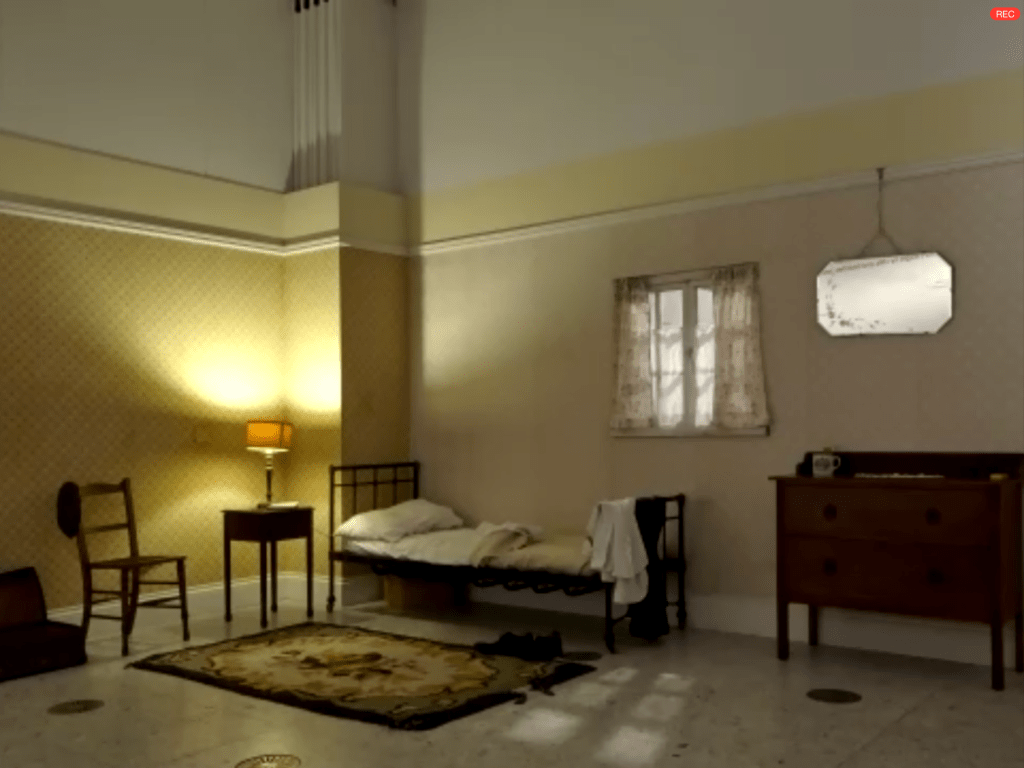
It seems very personal and it’s hard to believe it’s fictional. The work reworks our visual vocabulary, and plays on our notions of nostalgia and visual conventions that evokes a sense of recognition. There is a lot of ambiguity, why he is walking this journey? There are parallels with migrants, moving and re-establishing and so is past and contemporary.
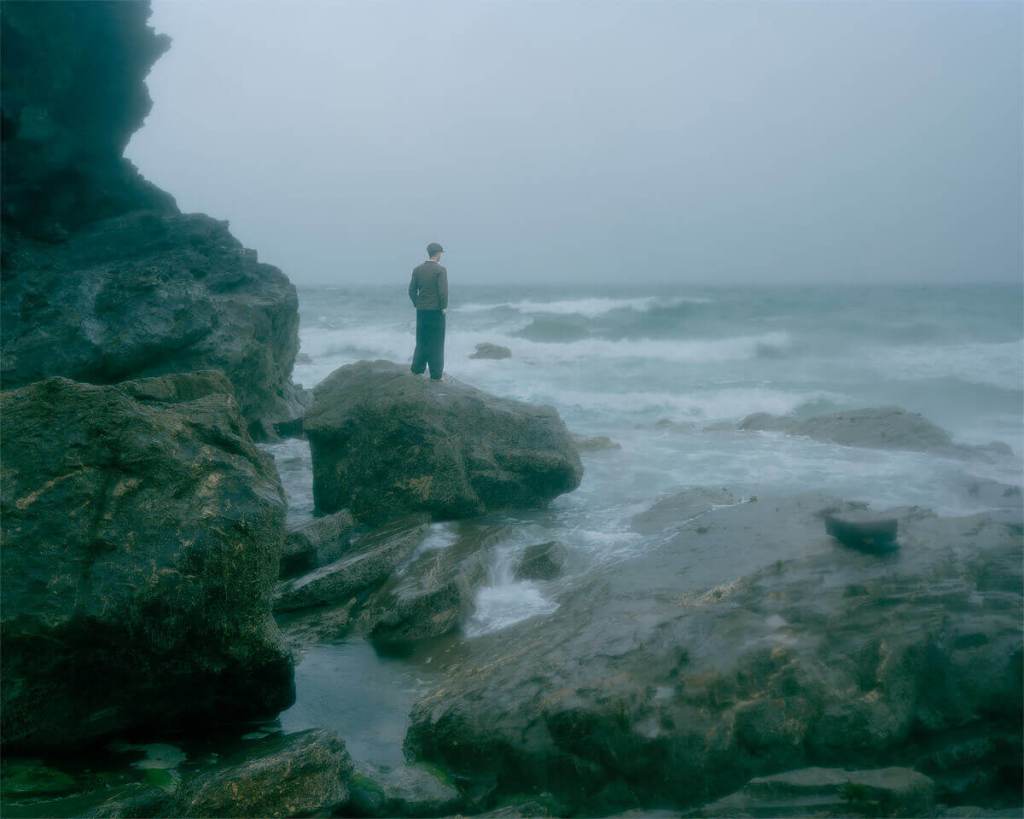


(all-about-photo.com, 2020)
During lockdown she has expanded her work into new ideas, installation, writing and has been thinking about a book form.
This installation reminded me of my visit to Tim Walker’s related this work to the Tim Walker installation, very much multimedia.
My learning:
- Stay simple in your approach
- Use what’s around you
- Build collaborations
- Consider photography as a part of an installation in the future
- Consider multi media approaches
- Let unexpected events like Covid release new creative journeys
References:
all-about-photo.com (2020) Quinn: A Journey. At: https://www.all-about-photo.com/photo-articles/photo-article/640/quinn-a-journey (Accessed 24/06/2020).
HOME | jillian-edelstein (s.d.) At: https://www.jillianedelstein.co.uk/ (Accessed 24/06/2020).
LOOKING OUT FROM WITHIN, 2020 PHOTOGRAPHY FROM JULIA FULLERTON-BATTEN (2020) At: https://www.juliafullerton-batten.com/projectmenu.php?catNo=1&gallNo=96 (Accessed 24/06/2020).
Othello De’Souza-Hartley :: Personal Projects (s.d.) At: https://www.othellodesouzahartley.com/index.php/personal-projects (Accessed 24/06/2020).
Quinn | Lottie Davies – Artist, Photographer, Writer (s.d.) At: https://www.lottiedavies.com/PROJECTS/Quinn/1/thumbs (Accessed 24/06/2020).
 Photography 2: Documentary