The brief for our 1st assignment tells us to read the section entitled ‘The Photographic Brief’ in Short, M. (2011) Creative photography: context and narrative. Lausanne: AVA Publishing, pp.20–26.
THESE ARE MY NOTES:
The brief defines the context of the final output
May contain relevant information regarding the conceptual approach
It can be simple: what you are taking a photograph of, where and why.
Give yourself time to develop your idea through practice
The Student brief:
Usually a defined period, possibly loose briefs to enable personal responses.
They should initiate, develop and articulate ideas translating them into photography.
Research and take photographs soonest to share with peers to get feedback – this encourages
Read brief carefully
Clarify own learning aims
Reference:
Short, M., 2011. Context And Narrative. Lausanne: AVA Publishing SA.
25/06/2020 AOP Webinar Best Practice – Shooting experiences in the time of COVID-19
Nick Dunmur, in conversation with professional photographers, in a discussion about the realities of making commissioned work in the time of coronavirus and the challenges that they all encounter:
Commercial perception of risk and risks of litigation
Sometimes working with many subjects at once
Sometimes with large crews
Problems with working with gloves
What happens if photographer gets it/symptoms
Suggested to send literature out about expectations
Everybody in the shoot needs to be comfortable
It was interesting to get an insight into the world of professional photographers and the current challenges.
23.6.20 Breakfast AOP talk
The impact of Covid 19 on work
Documentary photographer Simon Roberts: Questioning how he will he make work in the future and how will we carry on as visual artists?
I learnt I am not so different to these photographers in the challenges Covid 19 has brought me; the Covid situation stopped my creativity and productivity for a while, and it has made me reflect on the importance and meaning of photography going forward.
18.6.20 AOP breakfast talk
Photographer Gideon Mendel: let unexpected events like Covid release new creative journeys
Lock down takeaways
28.4.20
1854 ACCESS: IN CONVERSATION with Fiona Rogers, Hannah Watson, Shoair Mavlian: Director of Photography Galleries and organisations,
The panel discussed the industry at large and how the photography community is coping with the pandemic: covering programming and initiatives affected by the lockdown, how organisations are responding to and managing at this challenging time, and highlighting initiatives that have come out of the isolation period.
Ideas that came out of this discussion that echoed with me:
Now there are no geographical boundaries for talks and sharing which opens so much up
Will we get fatigued by what’s being produced? Content and the initiatives are hard to keep up with? I know I’m struggling to keep up with all the online opportunities and free ones at that!
Currently we are consuming by being in the middle of the crisis how will the legacy look out of the context later?
There have been many different technologies to get to grip with – will we use them later?
It is possible that photography has lost some of its value in its digitalisation and is there a need for tactile experiences as we get fed up of seeing things on screens; however one doesn’t have to replace with another physical and digital can exist together.
Possibly something good will happen for creative processes, there’s lots of room for experimentation and this is a time where people will be forgiving and processes can be refined.
23.4.20
Student led OCA documentary hangout
We spent most of the session discussing Steven Young’s preparatory work for assignment 3. This gave me another way of looking at documentary and the Covid19 situation in particular. Steven is looking at ways of representing Covid19 as lack of attention to our planet.
21.4.20
1854 PRESENTS IN CONVERSATION WITH MARTIN PARR 21.4.21
Q: How is lockdown affecting your work? Is it important to keep photographing? Yes of course but a challenge. The Marin Parr Instagram foundation has set challenges for photographer. Parr suggests obviously photographing at home and is currently doing a bird table challenge himself. He suggest we should consider whether it make people more or less interested in documentary photography? People may want to escape into a different world?
Q: How do you think changes in travel habits will impact on your work? Parr is happy photographing in the UK and he can express his love/hate relationship through the ambiguity in his photographs.
Q: Simon asked him about the challenges of photographing locally. Yes there is virtue in the challenge of photographing locally rather than strangers.
18.4.20
THAMES VALLEY OCA VIRTUAL MEETING
We discussed the current restrictions on photography and the benefits of working directly with I phones for those who can photograph whilst outside. 4 of us shared our work with our peers for their comments:
My post meeting reflections:
“Thanks to everyone today – sharing my work gave me sometime
for extra reflection and I realised that I feel double isolated at
the moment; this is because I am not allowed to live currently in
my second home (which is emotionally my first home, especially
this time of year) and I am not so integrated now in my local
community here, hence the double isolation! I think this comes
across in my work and my attitude towards it – I shall write this
into my evaluation. Cathartic reflection!
9.4.20 OCA Documentary student hangout
We discussed how were are managing our photography during our lockdowns; it was bizarre that with one OCA member in Canada and one in Australia as well as us in the UK we are all experiencing the same situation – this was a homogenising experience in that normally our cultural/seasonal/time differences are evident, however now it is more like we are all sat in the very same building. It really made me feel that photographically, I am not alone!
15.4.20
1854 Presents: In conversation with Laura Pannack – London based portrait, social documentary work photographer.
Subject: The challenges faced by photographers during lockdown alongside themes of separation in her work. She works a lot with connections, engagement
Q: How to photograph during a lock down?
Keep working
Shift your project from what it was to something that fits
Remove the pressure on the end product
Generate a community
Look for other inspiration such as poetry, magazines, Ted talks,
Projects on connection and changed social contact
Think about immediate post covid projects – reuniting, new connections,
Trial and error
Finding inspiration elsewhere
9.4.20
Mark Neville Artists Talk the photographer’s gallery
We asked him:Do you think your work will change after Covid19? Almost all his photos are of people however he thinks it’s slightly irresponsible of people to go out and take photos during Covid19, as photography has got to be safe and respectful.
My takeaways for the Covid19 situation:
Tension between the moment/chance and construction can be very effective in documentary images.
That it is possible and can be effective to mix several visual and practical styles within one body of work: staged, some sly on the wall, fashion or classical painting in style.
A huge variety of material can be contained with a photographic project: images, texts, essays, letters, eye witness accounts and so forth.
Think about the local role of any project – if it is about reality should it seek to change or just highlight something?
There are many ways to exhibit work other than in a gallery.
It reminded of something I have discovered myself, that photographic work can be therapeutic to yourself.
Don’t worry if I change my mind where I’m going with a project once I immerse myself in it.
There is a difference about viewing the images in reality and as a copy, details easier to see – I hope to see the actual photographs after restrictions lift.
23.3.20 0CA
The OCA sent some guidelines on “ Reinterpreting learning activities”
“Given the latest Government guidelines on social distancing, we are aware that many learning activities are suddenly more difficult to do. For example, working outside or in public spaces. We are asking students to interpret and undertake activities within these guidelines. While this may be restrictive, it is also an opportunity to be creative, and find new ways of achieving the same learning aims. The forums provide a space to share ideas and get inspiration from others, and your tutors and Programme Leaders are there to help, if you need it.”
18.3.20 Zoom meeting led by Tutor Andrea Norrington
Some of the soundbutes abd advice I took away for photgraphing during a lock down were:
Learn to deviate innovatively…much of the engagement grows out of the obstacles of your surrounding
We spent some time discussing how we might approach assignments in light of the restrictions of the Covid19 virus. There were various suggestions of work to look at on isolated spaces, Raymond Moore, Andre Kertesz (photographed from a window( , Jusef Sudek (The window of my Studio), Timothy Van Zundert (OCA Level 3 student – isolated spaces Blog post), Anna Dranitzke (OCA student – photographs within family home), Nick Waplington (Living Room), Anna Fox, Keith Arnatt, Robert Adams and my own landscape work!
We discussed embracing the constraints and creating other worlds.
This meeting was held remotely via OCA’s Zoom account due to Covid19 Virus. There was no tutor present this month, but there were 8 of us attending. Work was loaded up to OCA’s Padlet in advance, so we had a chance to review and make comments or prepare questions before the meeting and were also able to exchange comments via the Chat facility, which was archived along with a video record of the meeting .Padlet allowed us to make comments on each other’s work along with general comments on how the meeting went and was archived and remains as a record of the meeting.
We discussed the current restrictions on photography and the benefits of working dicretly with I phones for those who can photograph whilst outside. 4 of us shared our work with our peers for their comments:
Jonathan is finishing landscape and shared hs land art project. We had some interesting discussions on how to present the work in a virtual gallery.
Miriam is beginning an assignment for digital image and culture. We reflected on what digital identity is and how to represent it photographically.
Pauline has just started documentary and shared her Covid 19 street photography. Most of our discussions revolved about how to pull it into a series, where would the emphasis be going forward. Unlike me Pauline is able to walk to built up places to photograph.
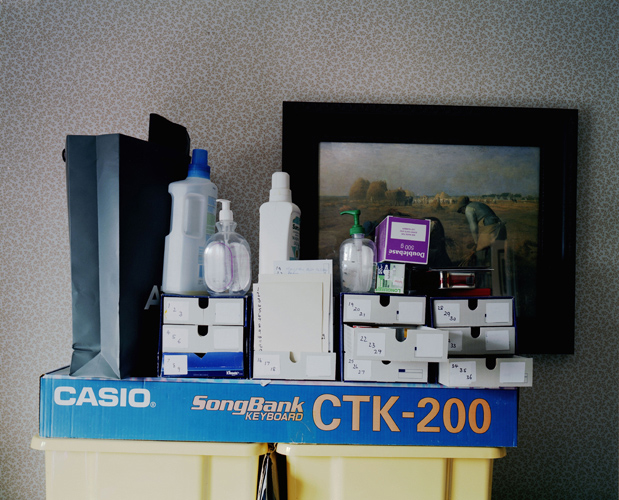
I shared my new attempt at assignment 1. My peers didn’t seem to find it as dull as I thought they would. The women seemed to identify the most with the images and thought that there was also a theme of being a Mum and a provider there. It was also commented that there was a feeling of barriers – so hopefully I have inspired some emotional reaction to the images.
Whilst I was preparing to share the work I reflected that the work is also a response to me withdrawing from the world not only for my safety but also as I feel isolated from my second home (which emotionally is my first home) which I am not allowed to visit currently and that I am not integrated as with the local community that I am living within currently I am feeling double isolated. Cathartic reflection!
Since my documentary hangout 9.4.20 I had re-photographed the laptop on a desk at closer range and had substituted the full bottles of wine taken through a window, for empty bottles outside (as I thought that this was more realistic). Once again the consensus was that the laptop on the desk was the image that didn’t fit the series, but the paracetamol close up image was said to fit well – this meshed with what I thought.
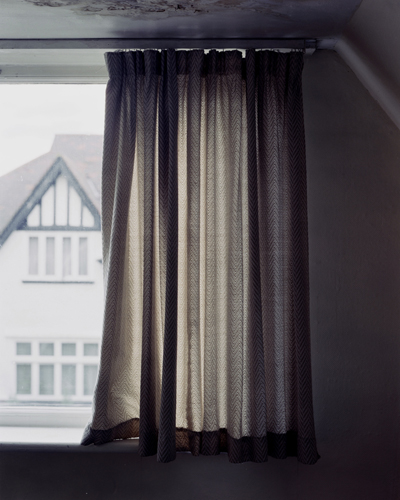
It was queried that I have a variety of perspectives on the windows but I explained that I photographed different viewpoints and experimented with keeping a flat or angled perspective but prefer the mixture.
Remembering the benefit of sharing with others to get an outsider’s perspective
There’s nothing wrong with a simple approach
Being able to finalise the series and the assignment
My post meeting reflections:
Thanks to everyone today – sharing my work gave me sometimefor extra reflection and I realised that I feel double isolated atthe moment; this is because I am not allowed to live currently inmy second home (which is emotionally my first home, especiallythis time of year) and I am not so integrated now in my localcommunity here, hence the double isolation! I think this comesacross in my work and my attitude towards it – I shall write thisinto my evaluation. Cathartic reflection!
This was my first documentary hangout. I have been used to joining landscape hangouts once a month but it took me until now to cross over to the documentary group; in fact several of the members like myself were still active on the landscape hangout and so we have shared our early thoughts about documentary there.
There were six of us onthe hangout tonight and we began by discussing how were are managing our photography during our lock downs; it was bizarre, but comforting, that with one OCA member in Canada and one in Australia as well as us in the UK we are all experiencing the same situation.
We also discussed looking ahead to level 3 with one student who has just finished documentary.
I shared my initial series “Staying safe at home”. My peers generally gave positive feedback on my images.
I asked them the following questions:
Which of the eleven photographs should I drop t make the series of ten as the brief required?
Which of the two sink/cleaning fluid images should I chose, the one with the straight window sill or the diagonal perspective?
Is it okay to have mixture of closed and open windows?
Is the narrative clear with the images posted between the glove on the front door and the empty shopping bag at the front door?
The consensus that I was given was that I should remove the paracetamols at a distance on a coffee table and the laptop which is a distance from the window.
The group thought that it is okay to mix the open and closed windows.
All agreed that my narrative is clear.
I shared that I think that some of the images are rather obvious and lack the ambiguity that I have come to like; however after one false start prior to lock down on this assignment, (because of being confined to my house due to Covid19) and having effectively lost about a month’s work, I am now keen to finish assignment 1 and move on. The group didn’t seem to share my concerns and encouraged me to proceed.
This virtual conversation and work sharing has helped me in my editing process to change my series of images slightly.
1854 ACCESS: IN CONVERSATION with Fiona Rogers, Hannah Watson, Shoair Mavlian. 28.4.20
Fiona Rogers: Director of Photography and Operations at Webber Represents and Webber Gallery;
Hannah Watson: Director of TJ Boulting Gallery
Shoair Mavlian: Director of Photoworks.
The panel discussed the industry at large and how the photography community is coping with the pandemic: covering programming and initiatives affected by the lockdown, how organisations are responding to and managing at this challenging time, and highlighting initiatives that have come out of the isolation period.
The first couple of weeks people didn’t know how to respond exhibitions like Photo London in May were abandoned, photographers didn’t know what to photograph and sales platforms changed. But now people are reaching out in different ways, from physical exhibitions, sales, networking and are changing to online instead.
Photoworks have responded well as they don’t have a venue and have always had a digital presence, now they have Instagram live because photoworks has a big audience on already – so use what you’ve got. In terms of showing work its about overcoming restrictions and maybe doing so on a budget.
Ideas that came out of this discussion that echoed with me:
Now there are no geographical boundaries for talks and sharing which opens so much up
Will we get fatigued by what’s being produced? Content and the initiatives are hard to keep up with? I know I’m struggling to keep up with all the online opportunities and free ones at that!
Currently we are consuming by being in the middle of the crisis how will the legacy look out of the context later?
There have been many different technologies to get to grip with – will we use them later?
It is possible that photography has lost some of its value in its digitalisation and is there a need for tactile experiences as we get fed up of seeing things on screens; however one doesn’t have to replace with another physical and digital can exist together.
Possibly something good will happen for creative processes, there’s lots of room for experimentation and this is a time where people will be forgiving and processes can be refined.
1854 PRESENTS IN CONVERSATION WITH MARTIN PARR 21.4.21
Martin Parr in conversation with Simon Bainbridge British Journal of Photography Editorial Director in 4th week of lockdown. This was a live stream event set up to discuss photo books and how to create meaningful work amidst social isolation.
I saw some of hIs work first hand recently at the National museum Cardiff , his show “Martin Parr in Wales“.
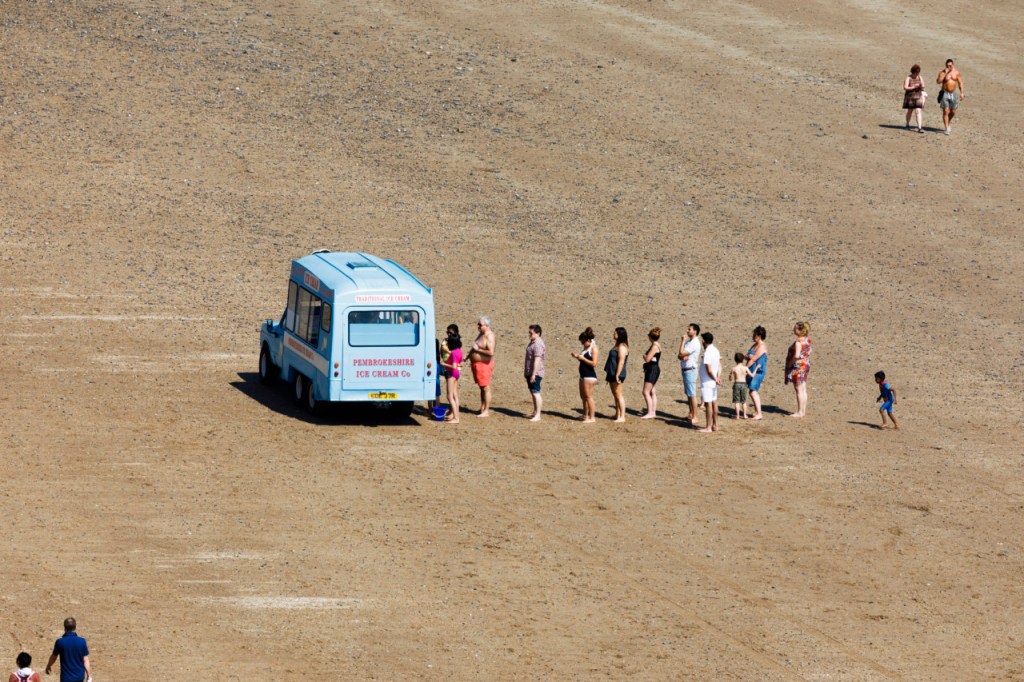
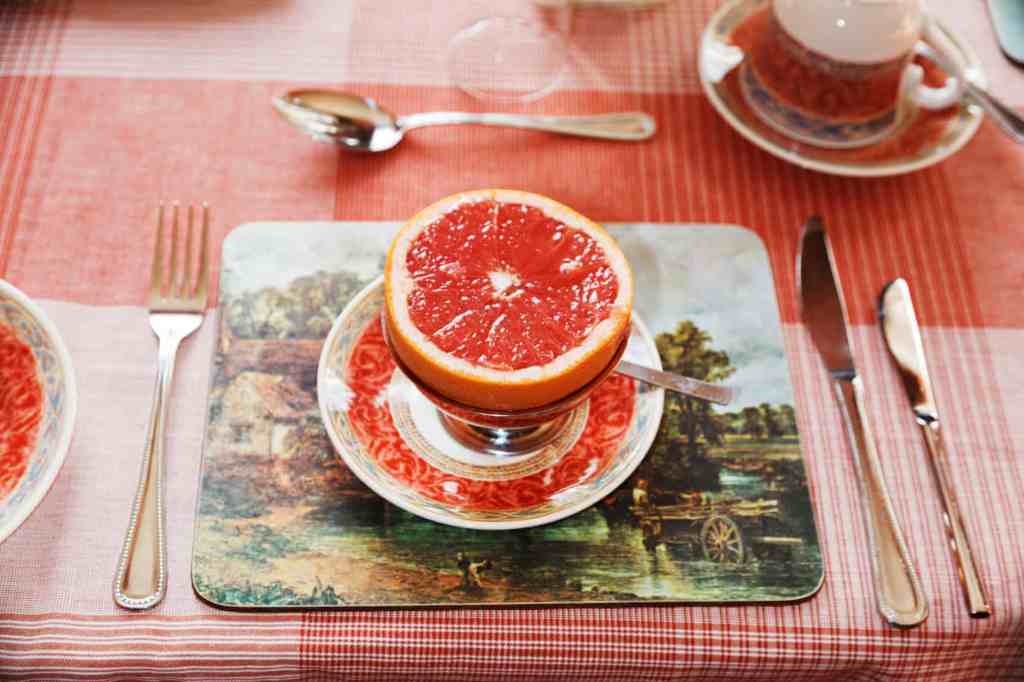
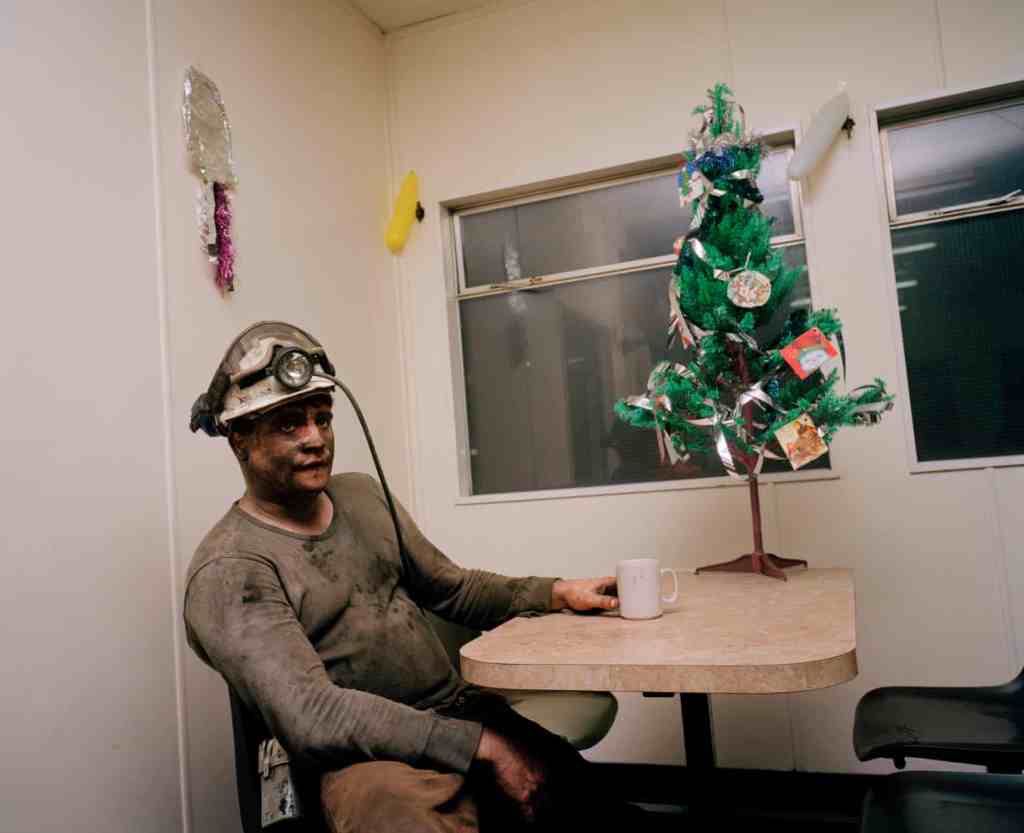
Here though his work focused just on images taken of Wales I was able to see his usual focus on the ordinary but quirky found in local cultures shown in garish colours; he shared his familiar themes of leisure and food, bingo, including beach scenes, local shows along with some images of miners. I recall him commenting there that I also recall him saying at his exhibition that he likes to give order to chaos in his photographs
(Moss, 2019)
In this conversation Parr reveals he has been using telephotos on beaches the past 5 years which he called beach therapy (his experimental lab), instead of a macro lens he used previously.
Q: What would you like to be seen as your legacy? “The last resort (2009) and “Common sense” (1999) and the Martin Parr foundation.
Q: You came out of the Thatcher era, what was the influence of this? the colour school of photography took off and the world of independent photography came through. The opening of the Photographers gallery in 1971 was very important, this was the first photography gallery
Q: How is lockdown affecting your work? Is it important to keep photographing? Yes of course but a challenge. The Marin Parr Instagram foundation has set challenges for photographer. Parr suggests obviously photographing at home and is currently doing a bird table challenge himself. He suggest we should consider whether it make people more or less interested in documentary photography? People may want to escape into a different world.
Q: How do you think changes in travel habits will impact on your work? Parr is happy photographing in the UK and he can express his love/hate relationship through the ambiguity in his photographs.
Q: Simon asked him about the challenges of photographing locally. Yes there is virtue in the challenge of photographing locally rather than strangers.
Q: Can you share work that you have: Larry Saltern “Pictures from home”.
Q: Tell us about your book “Sign of the times” (1992): An exploration of people’s taste and middle class expose rather like “The cost of living” (1999).
Q: What pictures do you have on your walls? Chris Killip print of Father and son.
Q: Are we at peak photography? It may be more difficult to earn a living but you don’t have to earn a living to appreciate photography.
Q: What happens if someone objects to a photo? It’s an occupational challenge
Q: What are your thoughts about this generation of photgraphers? The diversity, energy and brilliance as it is difficult to invent the new. He admires Steven Gill’s The pillar, a compelling simplicity.
Key things I took away from this:
“It is the subjectivity rather than the subject matter that is important in photography”.
His suggestion that the challenge of photographing locally, rather than strangers is good.
“you don’t have to earn a living to appreciate photography” something I’ve been telling my husband for years.
I must watch out for:
He is working on a festival concept for Bristol next spring (May?) where many venues will be showing photography at once.
He is planning a photography book festival in October, though it may be moved to the spring.
1854 Presents: In conversation with Laura Pannack – London based portrait, social documentary work photographer 15.4.20
Subject: The challenges faced by photographers during lockdown alongside themes of separation in her work. She works a lot with connections, engagement
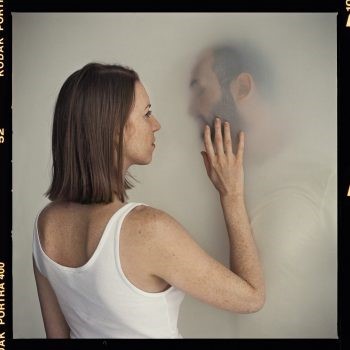
Laura is a London-based photographer, known for her portraiture and social documentary artwork, who seeks to explore the complex relationship between subject and photographer. Interestingly for these lock down times Laura has completed a project based on Brexit called separation, a different type of separation to that which we now face but with some similarities. I am interested in how she has treated this:
(Laura Pannack, 2020)
I also like the fact that her work is research driven and tries to be as truthful as possible; she says that ““time, trust and understanding” are most important to achieve this.
Laura is currently gathering ideas and taking time away from the screen- she comments:
Q:How do you find approaching people on the street? Be confident, don’t overthink. Be transparent
Q: How to photograph during a lock down?
Keep working
Shift your project from what it was to something that fits
Remove the pressure on the end product
Generate a community
Look for other inspiration such as poetry, magazines, Ted talks,
Projects on connection and changed social contact
Think about immediate post covid projects – reuniting, new connections,
Trial and error
Finding inspiration elsewhere
Q: How did you get started? Curiosity, the support of others/community, building a network.
Q: Have you ever felt frustrated with a project not well received and how do you cope with this? Change your intention. Would be frustrated if can’t get feedback to move forwards, otherwise treat it as a learning curve.
Q: Do you consider yourself a social commentator or a participant? Doesn’t feel she has the right or the intelligence to comment but does like to be present. Struggles to dip in and out of places
Q: Do you feel being a woman has hindered or helped you in your practice? Neither but wouldn’t let it hold her back.
Q:One piece of advice for creativity: Pass ideas on to create a chain of creativity. Not selfish desire but about a circle of energy.
Her work is very interesting and I must look at more of it once I have finished assignment 1. This was the first Zoom 1854 in conversation that I’ve taken part in so it was a learning curve for me in using the technology to interact and pose questions to the artist. It was a useful session and was the beginning of a more positive attitude for me make positives from the current lockdown situation for my photography
Preparing for assignment one I looked at photographers who had photographed the home as well as those who had photographed through windows.
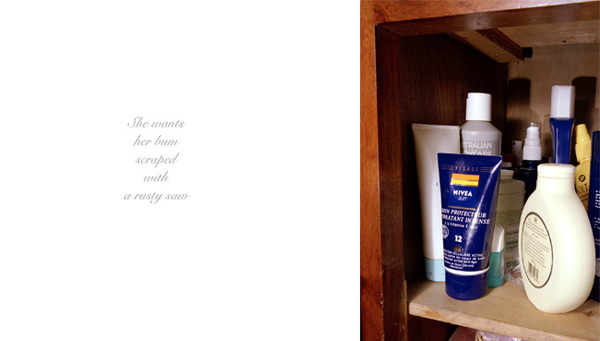
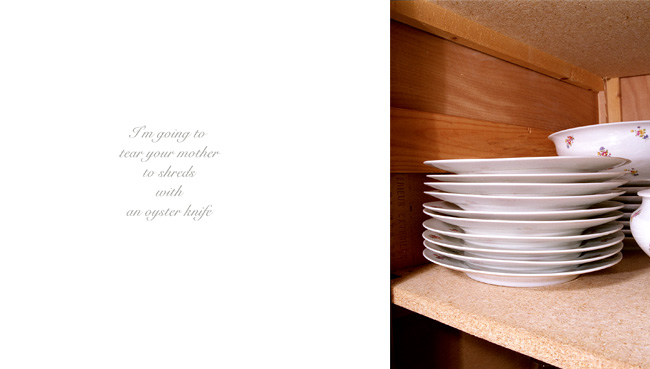
ANNA FOX My mother’s cupboard’s (1999)
I have looked at this work before but returned to it as I thought of it whilst preparing for my assignment 1 work on safety at home where I intend to photograph everyday objects.
(Anna Fox 1999)
(Anna Fox ,1999)
This was originally designed as a miniature book using images and texts with “My Father’s words” as a way of narrating about family relationships. The juxtaposition of her Father’s harsh words next to her mother’s collection of ordinary household objects in her cupboards forms an intimate sharing of her family life. Fox describes her work as “Colour photographs of my mother’s tidy cupboards together with excerpts from my father’s rantings” (Fox, 1999).
I am particularly interested in how Fox has framed the objects in the cupboards; it seems that they are all portrait orientated and shot from a slight angle including either a shelf or the floor each time and mostly a part of the cupboard roof interior. I notice that in her work “Cockroach diary”(Fox, 2000) she similarly maintains the same perspective in each shot (this time a downwards, squeeued perspective).
I was lucky to open issue 238 of Aperture 2020 and find it dedicated to HOUSE AND HOME a consideration of the meanings and forms of domestic spaces, this was very timely. It formed a starting point for research on a number of photographers who have used the home as “an emblem of the moment”.
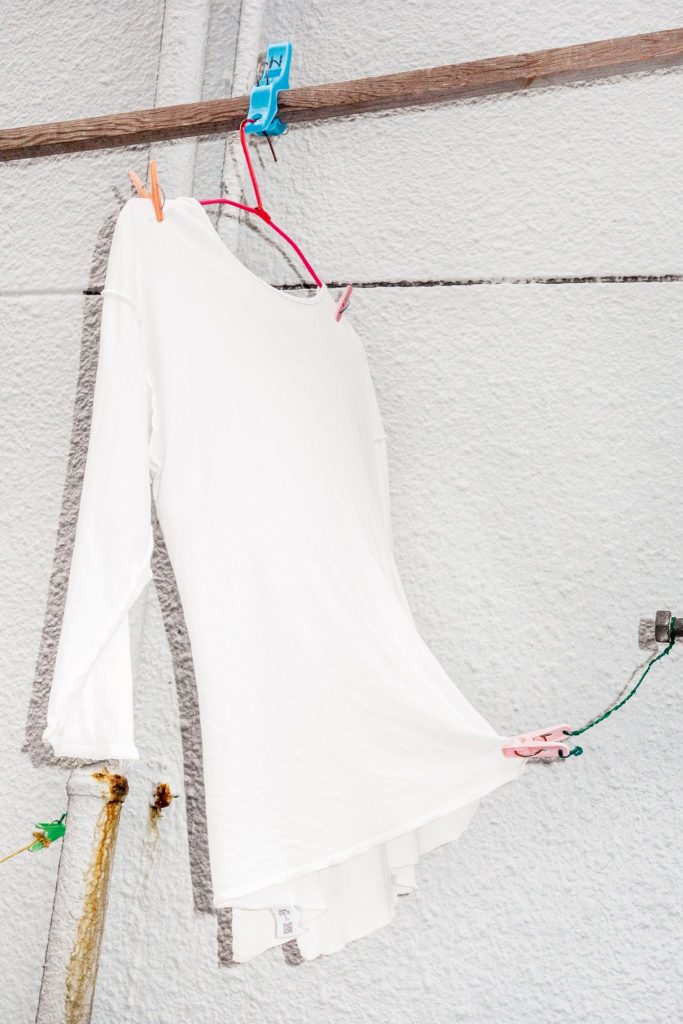
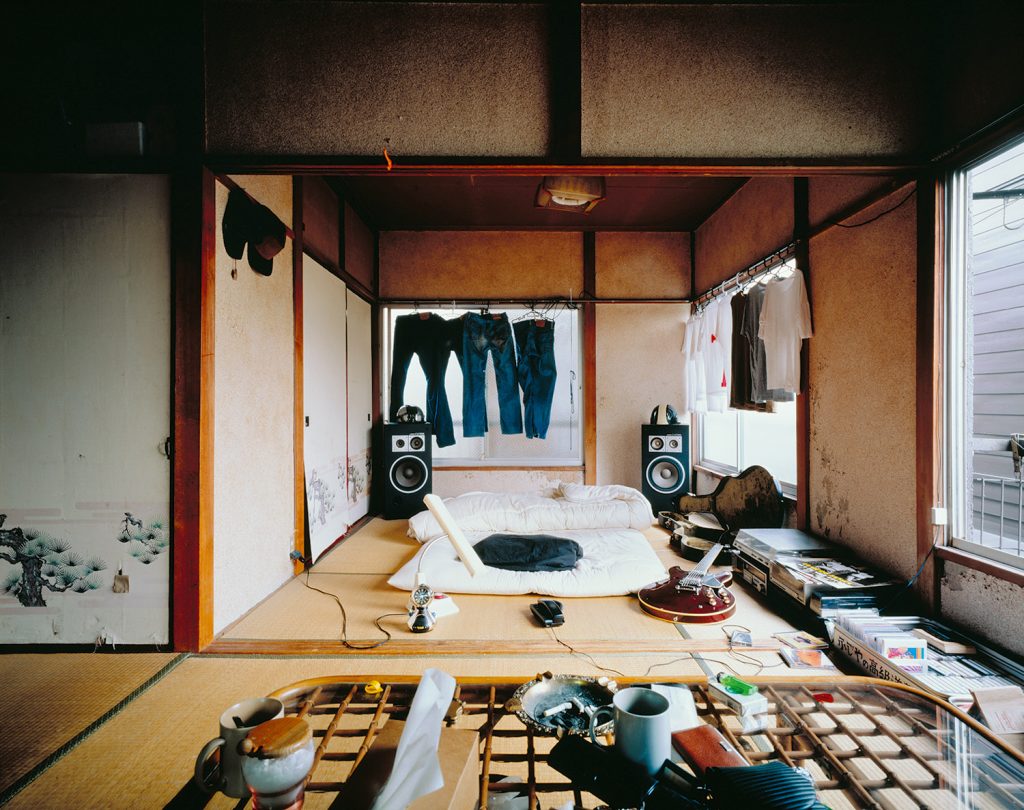
FUMI ISHINO – LOOM (2018)
“In Japan, a Photographer finds there’s No Stanger Place than Home”
On returning from college in the US Ishino describes a feeling of “zure”, lop-sidedness, slippage – that his locality of Tokyo was neither home or foreign “a frame on the wall ever so slightly crooked”.
This series are all predominately shaded a cold white but interrupted with bursts of colour in the debris left by people.
(Fumi Ishino, from the series Loom, Japan, 2018)
Fujii (2020) beautifully describes the image above as an “aethethics of suspension, a gentle balance upheld amid buffeting forces”. It is the feelings that he is trying to express in his images that interests me, and this reminds me that I should consider what feeling I’m tryingto convey in my assignment 1.
The images do have an Edward-Hopper like emptiness and sense of abandonment and therefore those without humans in particular give a sense of a room left behind by humans and the atmosphere and feelings. Says that “absence can fill us up as much as presence does” and that Adams taped into the something that remains even as we come and go” (Iyer, 2020).
Adams apparently said that he “wanted just to show what lay within the houses that were a part of my primary subject…I also hoped, however, to find evidence of human caring”. In this work of Adams again it is the emotion of the scenes that he captures that interests me.
Minimal. Messy, or Melancholic? The many faces of home in Japanese photography
Lena Fritsch
I was interested in this article as a follow on from the work of Ishino as it explains some of the words and concepts attached to Japanese homes as well as the beauty of the images of the ordinary.
The Japanese idea of home depends on the context:
Furusato defines a nostalgic sense of one’s own home
Katei defines the house spatially
Kazoku defines the family and household
An example of Furusato is Ishiuchi Miyako’s Apartment #50 (1978) below:
Her apartment photographs are linked to her childhood memories and are human as they show visible traces of their inhabitants, stains, cracks, fingerprints:
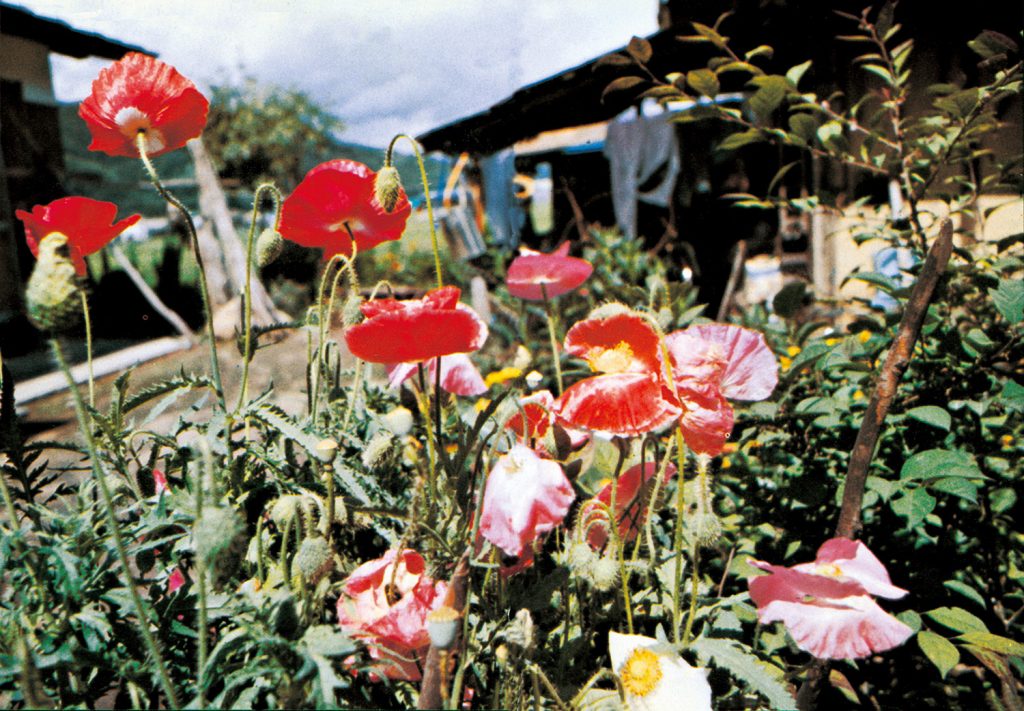
Another example of Furusato is shot by Moriyama in Tales of Tono (1976) reflects Japan’s interest in folklore, blurry, grainy, mysterious, suggesting that the scenes appear quickly and then disappear rather like nostalgic memories.:
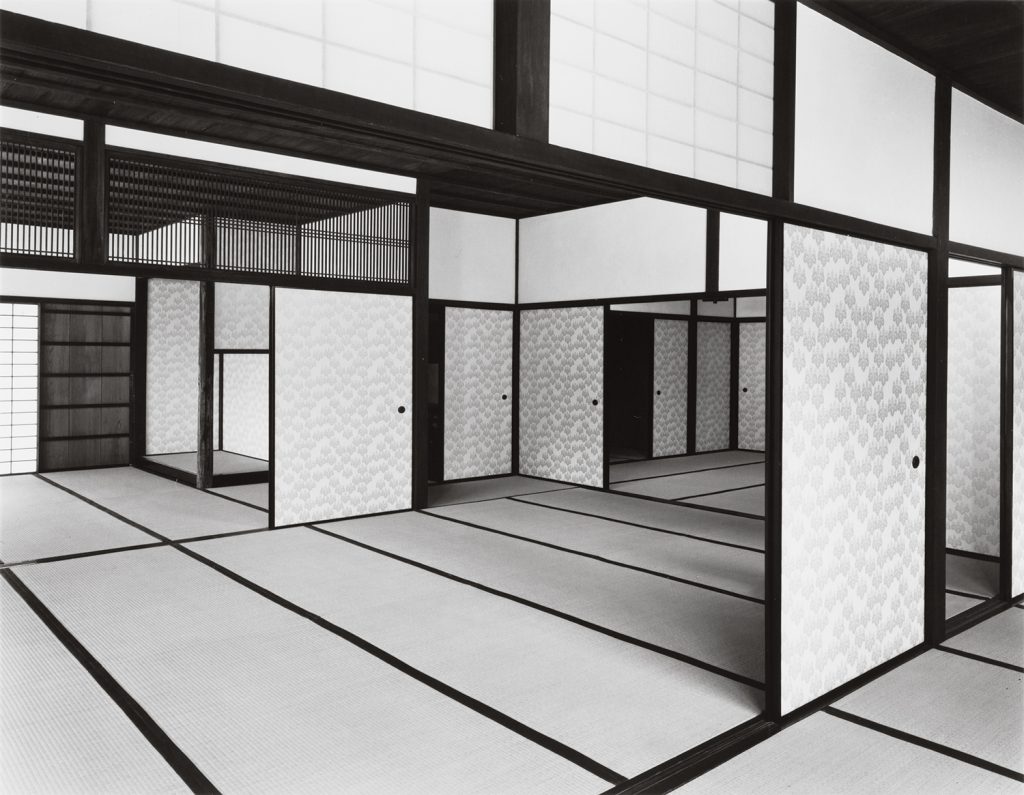
Yasuhiro Ishimoto’s photographs of carefully framed abstract architectural spaces, with clear lines and geometric forms illustrate the concept of Katei Home as a space:
Untitled, 1981-82 from the series Katsura Imperial Villa
Tsuzuki’s photographs Tokyo Style Japan (1993) are more of an example of Kazoku, realistic interiors of small homes.
Kazoku where home means family are shown in images where there is a narrative quality describing people’s homes and domestic habits such as Takashi Homma:
Tokyo and my Daughter (2006)
This article and the information on the different concepts surrounding a home made me reflect on what part of home I was sharing in my assignment one “Staying safe at home”.
I ALSO CONSIDERED PHOTOGRAPHERS WHO HAD WORKED WITH OR THROUGH WINDOWS:
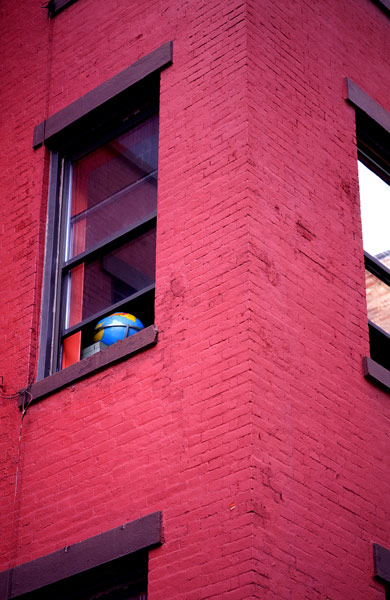
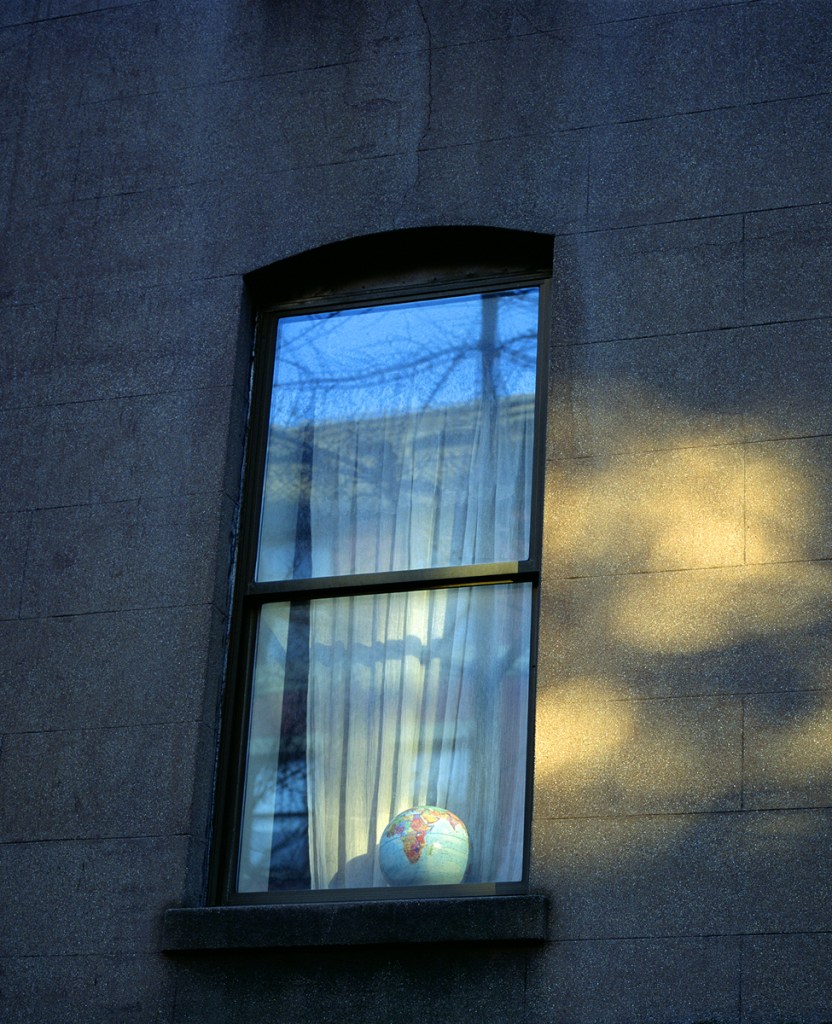
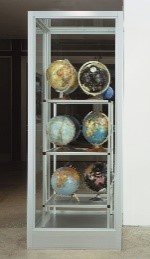
JENNIFER BOLANDE – Globe sightings (begun 2001)
Bolande photographed globes that she spotted in windows; I found this an interesting concept for work, rather like collecting but not everyday occurrences – or maybe they are when you are looking for them? The work is also a map of her physical journey and is a topological inquiry also.
(Globe Sightings, 2000)
Bolande followed this up with her sculpture Mountain (2004) where she used ‘Globe Sightings’ images as the foundation for a three-dimensional topography; in this she removed the globes from their original context, this magnifies the differences between the globes, as does the work below Global Tower:
The work shows me how even when collecting like items as they viewed from different vantage points, different perspectives will appear unless you remove the context as she has in her sculptures of the work. The continuity in these photos are the globes, whilst the focal distance, the window being open or closed, the time of day, curtains blinds or no window dressing changes and the series seems the stronger for the variables.
I will definitely return to look at more of her work, her concepts look fascinating.
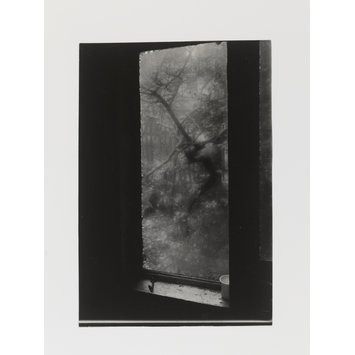
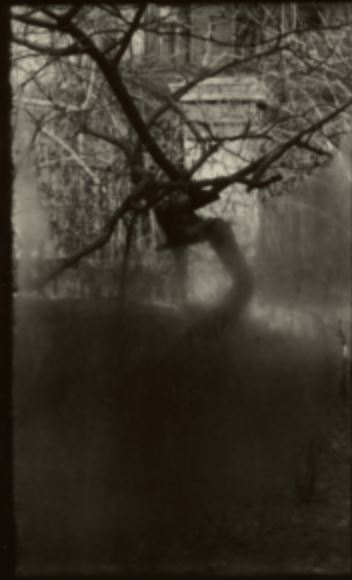
Sudek’s work combines 20th century photographic styles of Pictorialism, and Modernism with Surrealism. He was know as the poet of Prague, and apparently his images are “primarily poetic statements, to be read as a metaphor for the boundaries between the exterior and interior world, thought and observation, clarity and mystery and the material and the ephemeral” (V and A Collections 2020), he was injured in the war and his work also reflects his feelings about immobility and disconnection from the outside world. This reminds me of the work of Edward Westin and Alfred Stieglitz.
This series “From the window of my studio” of twilight scenes and images of windows, showcases this concept. The shadowy areas and low-key prints enhance the expressiveness of the images. He did explain the motive behind his work “I like to tell stories about the life of inanimate objects, to relate something mysterious: the seventh side of a dice,” (Shankar, 2016), this strikes me as same as the objective of my assignment 1.
There were two windows in his studio, one overlooking an unimpressive line of buildings the other a more scenic small courtyard, with a twisted apple tree. He photographed these views over 14 years at different times of day, seasons, and weather. There are an amazing amount of variations and the work shows how ultimately photography is all about light. He was obviously fascinated about how glass reflects and bounces light, as well as creates shadows. His images also often include vases with water and reflective table-tops.
Scaldaferri, G. (2020)
(Getty Museum, 1940)
(Josef Sudel, 1944-1953)
(Josef Sudel, 1944-1953)
Reviewing Sudek’s ideas and work makes me realise why my explorations shooting through windows have been so challenging, maybe I should go with the reflections rather than try to minimise them?
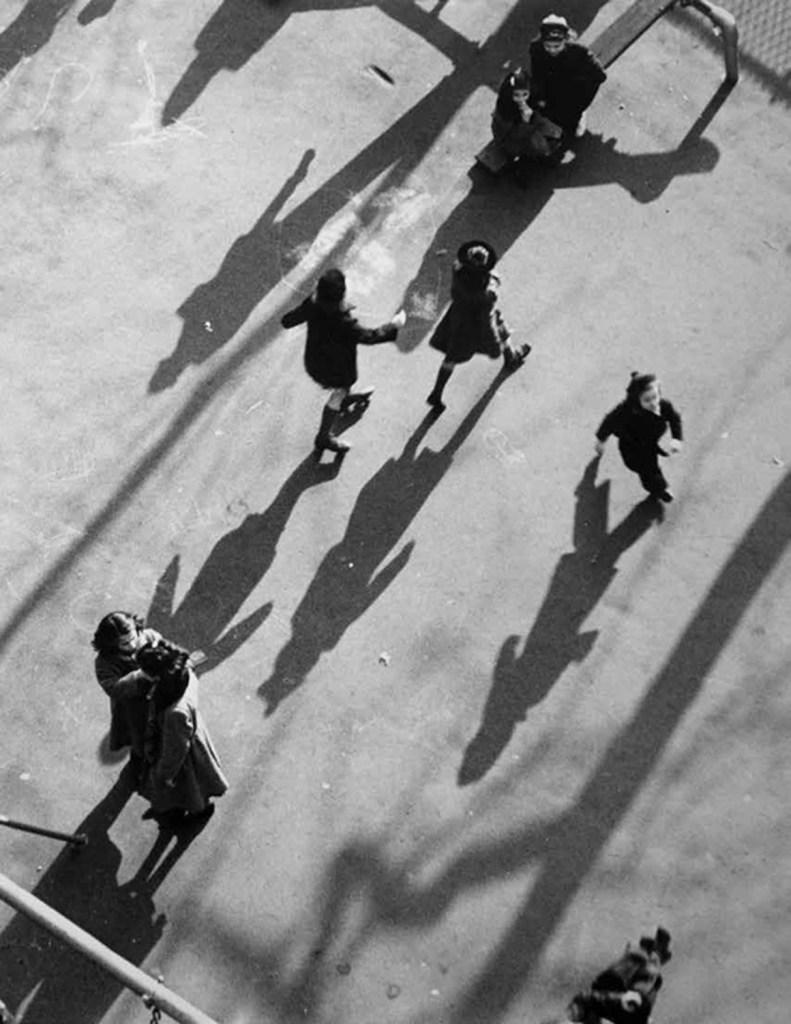
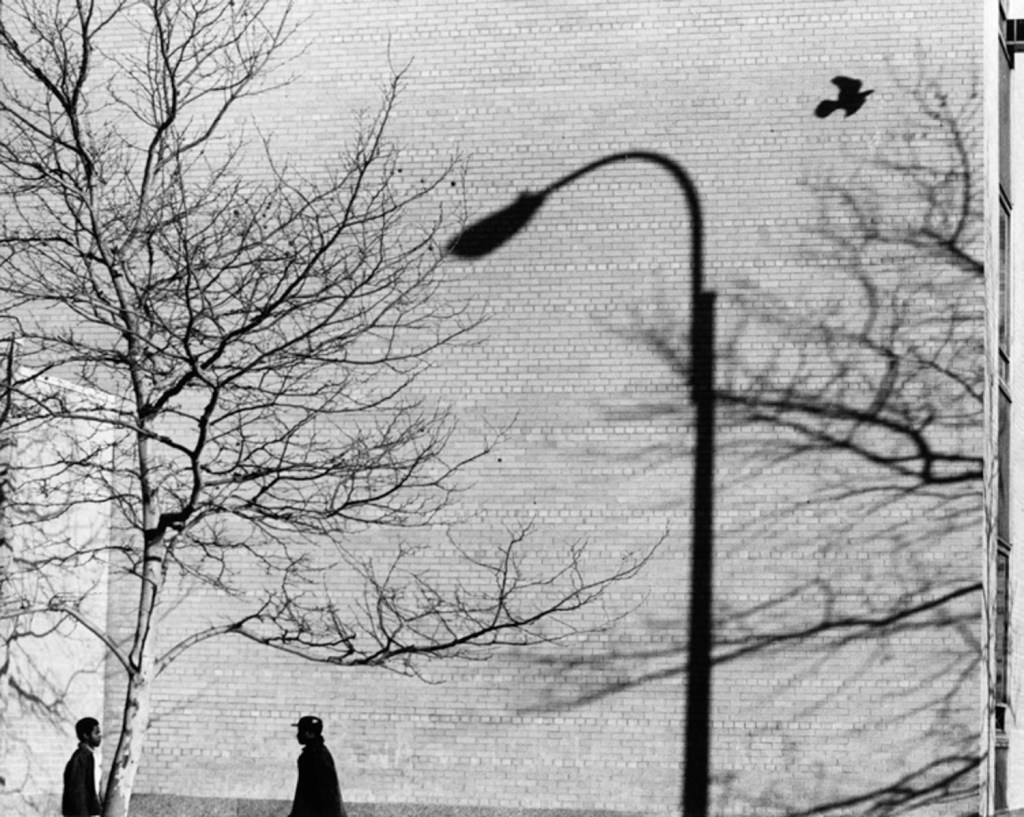
He shares many similarities with Sudek; born in Hungary, he was also injured in the war took psychic scars and spent some years recovering in therapeutic military facilities. Kertesz like Sudek during WW2 photographed from the inside to the outside, and from 1952 from his 12th story apartment overlooking Washington Square Park, began a series of modernist masterworks shot from his window that he continued until his death in 1985. His work shares Sudek’s sense of isolation but more so has a Voyeuristic quality. His vantage points were higher than Sudek’s and I’m guessing more windows, and he was able to capture a wider variety of subjects. Kertesz also liked to photograph objects against the inside of his window, particularly those that reminded him of his wife after her passing. This is another photographer who I should study further and it would interesting to do this in conjunction with studying Sudek.
I revisited Nigel Shafran’s work for he everydayness of it:
NIGEL SHAFRAN
Nigel Shafran’s was initially known as a fashion photographer, yet his observation-led photography became influential in the 1980s. He is most known now for his photographs narrating everyday life. Even though his photographs are of everyday things he finds beauty in the ordinary and he likes us to accept things for the way that they are. He communicates his ideas in a simple way, and asks why complicate something as you might mess it up? (Smyth, 2018). In presenting things in a straightforward way he seems to emphasis both their detail and their ordinariness. Interestingly he calls himself a family photographer, though of course not the usual sort of one!
Anna Fox: Consistent angled perspective, clarity, good d of f.
Ischino: It is the feelings that he is trying to express in his images that interests me, and this reminds me that I should consider what feeling I’m trying to convey in my assignment 1, I particularly identify with “a frame on the wall ever so slightly crooked” and a what happens when a house becomes unfamiliar.
Robert Adams: bring to our attention the ordinary and often overlooked in a sympathetic way, also the sense of abandonment and the sense of a room left behind by humans and the atmosphere and feelings with it. it is the emotion of the scenes that he captures that interests me.
Fritsch article on Japanese photographs of home: the different concepts surrounding a home made me reflect on what part of home I was sharing in my assignment one “Staying safe at home”.
Jennifer Bolande: That subjects viewed from different vantage points/perspectives will (which you usually have unless you remove context)appear unless you remove the context The continuity can be the subject itself even if the focal distance, the window being open or closed, the time of day, curtains or blinds or no window dressing changes and the series may be stronger for the variables.
Josef Sudek: What interest me was that this work is “primarily poetic statements, to be read as a metaphor for the boundaries between the exterior and interior world and that his work also reflects his feelings about immobility and disconnection from the outside world. He used photography to tell stories about the life of inanimate objects, this strikes me as same as part of the objective of my assignment 1. Reviewing Sudek’s ideas and work makes me realise why my explorations shooting through windows have been so challenging, maybe I should go with the reflections rather than try to minimise them?
Kertesz: A sense of isolation and photographs of objects against the inside of his window.
Nigel Shafran: Beauty in the ordinary, by presenting things in a straightforward way he seems to emphasis both their detail and their ordinariness.
Don’t set limitations as they create preconceptions
Boundaries of documentary are being pushed already
Be aware of factors that may distort the purpose of images
Project What makes a document?
Walton: On the nature of photographic realism – photography as a way of showing and seeing rather than just representing, we see the world through the photograph
Every photograph is a document but with time can be more
Photographs have a message about the event/subject photographed and a message about the shock of discontinuity (separation from context), this makes all photographs ambiguous (Berger)
Photographs are often used with words to fill this broken continuity
The general meaning of an image is not instantaneous but is found during connections (Berger).
The truth in a photograph may be limited by the photographer
Project A postmodern documentary
Postmodernism provides a new framework for considering photographic truth and objectivity
Consider my intentions when photographing and remember my responsibilities to truth
When accessing truth and objectivity remember to consider all influences, cultural, contextual, editorship…
Photojournalism should show the intention of the photographer
RESEARCH POINT 1: HISTORICAL DOCUMENTARY PHOTOGRAPHERS
We were asked to research some of the historical developments in documentary photography outlined above.
I have begun my documentary research with an overview using the book The Documentary Impulse (Franklin, 2017)
Franklin talks of the documentary impulse being evident 10,000 to 50,000 years ago as self- representation, evidenced by cave drawings and inscriptions in pyramids and other tombs. As captured by Sebastiao Salgado in 1986 when he took photographs of the documentary accounts of gold mining in Brazil’s Serra Pelada dating back to 700 BCE. So before photography this “documentary impulse was sutained by representations in painting, mosaic, ceramics and sculpture (Franklin, 2017, p14).
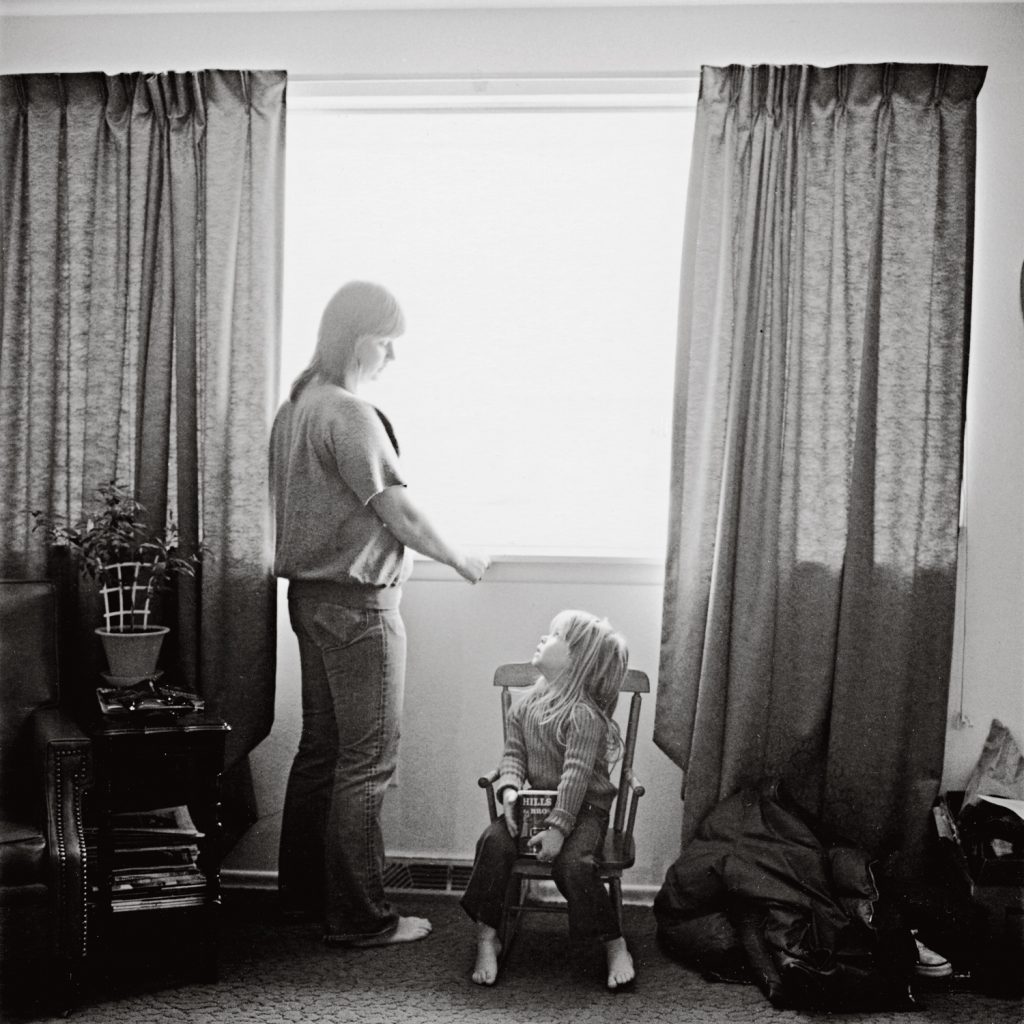
However it was photography that became the preferred way to capture scientific discovery and exploration in the 1900s. It evolved from the photographic keepsakes of the Victorian times (miniature portraits, postcards) and franklin points out that even work by some of the 20th century documentary photographers such as Sally Mann, Eugene Smith and Elliott Erwitt were in fact f their families (Franklin, 2017, p26).
Photography made the documentation of scientific exploration more objective than the romanticised representation of paintings, these were some of the early documentary photographs:
Tromholt’s photographs of both the Northern Lights and the peoples of northern Norway.
Francis Frith’s photographs of the Suez Canal at Ismailia (c.1860)
Timothy O’Sullivan (1867-9) images of Clarence King’s geological expeditions.
Carleton Watkin’s daguerreotype stereoviews for the US Geological surveys in the Yosemite Valley.
Herbert Ponting’s photo essays of China, Japan, Korea and Burma and magic lantern slides of Captain Scott’s first expedition to the Antarctic
Franklin suggests that the term documentary was first used by Grierson in 1926 referring to a film, but had been used in France to describe films about travel and exploration as far back as 1911.
Reference:
Franklin, S., 2017. The Documentary Impulse. London: Phaidon Press.
SELECTED EARLY DOCUMENTARY PHOTOGRAPHERS
I’ve chosen at this point to research two photographers mentioned in the OCA handbook that to this point that I’ve not researched before:
Felice Beato (1832–1909)
Was among the first photographers to provide images of newly opened countries such as India, China, Japan, Korea, and Burma. As a war photographer he captured several conflicts: the Crimean War in 1855–56, where he took photographs in difficult conditions.
He photographed the aftermath of the Indian Mutiny in 1858–59, and set up studio in Calcutta and travelled behind The Army throughout India. Typical of his work is this photograph of devasted buildings in Lucknow after the Indian rebellion of 1858; in some images like the one below, adding corpses and arranged bones to heighten the dramatic effect of the massive slaughter that occurred at Lucknow.
Interior of the Secundrabagh after the Slaughter of 2,000 Rebels, Lucknow, Felice Beato, 1858 (Getty Center Exhibitions)
He also documented the Second Opium War in 1860, entering Hong Kong with British forces en-route to invading china, carrying for the 8 months the heavy equipment needed for the albumen process (chemicals and large, fragile glass plates). Once again many of his images post battle scenes were very graphic. This one of the Fort Taku captures senseless slaughter.
(Beato, The Met 2020)
The Fort was stormed following an explosion, captured as part of a long struggle by Western nations to open China to trade. Beato’s photographs, from inside the fort, shows the bloodbath carnage with a brutal directness (The Met, 2020).
Beato worked in a variety of ways including topographical and architectural views, including panoramas, as well as portraits and costume studies of the countries he visited or in which he resided. In China he photographed both Chinese and British notables and also made architectural views of the cities of Peking and Canton like the on ebelow of the shops of Treasury Street.
Treasury Street, Canton, Felice Beato (Getty Center Exhibition
Beato took probably the only photographs ever made of the interior of the summer palace north of Peking, before it was destroyed by fire, by order of Lord Elgin.
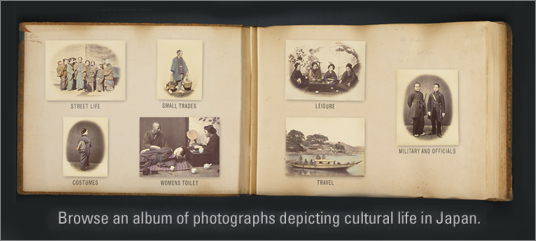
Beato then spent more than 20 years in Japan (1863–84), where he opened a gallery. Here he used the wet-collodion method, reducing the length of exposure to seconds and made the first hand-coloured photographs and albums:
Beato (Getty Center Exhibitions)
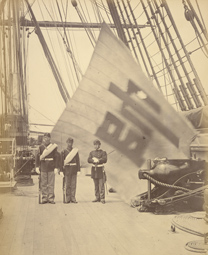
Beato accompanied the American expedition to Korea in 1871 to negotiate after an international incident; the country had been “closed”. The negotiations resulted in violence, killings and captures; Beato documented the successes of the American in the campaign like this image captures American military officers posing in front of a captured Korean flag they captured at Fort McKee.
The Flag of the Commander in Chief of the Korean Forces, Felice Beato, June 1871 (Getty Center Exhibitions)
Beato worked in Burma (1887–1905)which was a province of British India and a tourist destination for Westerners. He established himself by finding then capturing the interesting landscapes and architectural views, and combined this with portrait studies.
The Forty-nine Gautamas in the Sagaing Temple, Felice Beato, 1887–95 (Getty Center Exhibitions)
His brother Antonio Beato also a partner of james Robertson photographed Constantinople, Athens, The Crimera, Malta, and the Holy Land (1851-57). Antonia had a studio in Luxor was best known for his photographs of the Middle East whilst working with archaeologists on excavations and making views for tourists.
My reflections:I am particularly struck with the variety of his portfolio. His photographs were very varied, battle fields, architecture, portraits and records of overseas life at the end of the 19th century. Felice Beato was one of the first professional photographers to extensively document Japan and China. His style of photography of battlefields, were shockingly innovative, not only because he was the first to show images of the dead, where he pioneered a new style of war photography in a graphic way.
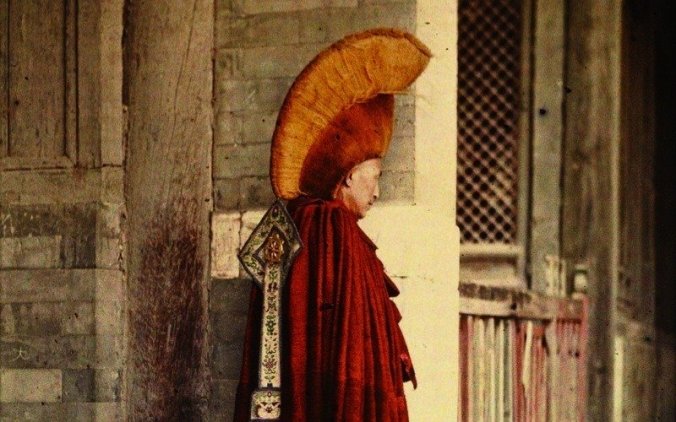
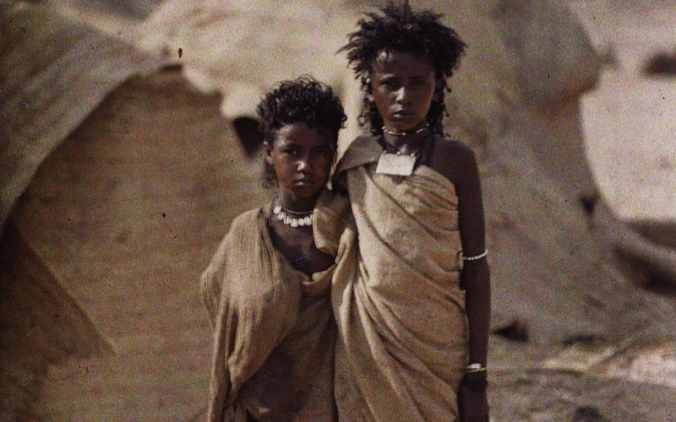
He was a French Banker and Philanthropist who from 1909 started documenting every culture of the global human family. He financed and sent a team of photographers and cinematographers to take pictures of everyday life and it’s peoples from 50 countries around the world, until 1931 an ambitious project. He used the autochrome process, the first industrial technique for coloured photographs developed by the Lumière brothers in 1907, to record 72, 000 images of cultures around the world. He kept very organised records in files at his home, now called “The Archives of the Planet” containing both films and pictures. Unfortunately, his work ended when he became bankrupt in the Great Depression.
Macedonian men photographed by Auguste Léon in 1913. Stéphane Passet’s autochrome of the Boat of Purity and Ease in Beijing, China in 1912 A Buddhist monk in Beijing, photographed in 1913 by Stéphane Passet. A Buddhist monk in Beijing, photographed in 1913 by Stéphane Passet. An autochrome plate of a Senegalese soldier made by Stéphane Passet An autochrome of the Eiffel Tower included in “Archives of the Planet.”
My reflections: Again I am most surprised at the variety of work that he commissioned and collected, although his images were more controlled and pictorial than Beato’s.




















 Photography 2: Documentary