Photography general STUDENT LED VIRTUAL HANGOUT 3.5.20
This forum is student led but was joined by photography tutor Clive White, which is what interested me. Again it was nice to put some names I’ve seen online to faces.
It speaks to your values and the perspective and skill that you bring to the work
It is often forged as you follow the inspiration on your influences as well as commit to your intuition
Virginia Woolf “Your voice is the confluence of inspiration, dedicate practice, and strategic risk”.
Stages to finding your voice might be:
Discovery phase: Its when seeds are planted and you are often disappointed with your work, you might have ideas but clear ways forward, so ask yourself:
What new ideas or skills are obsessing me right now?
Who are the practitioners that I can learn from here?
Emulation phase: Think about other’s work to immerse your self in and how to practice the skills I want to improve/learn
Divergence phase: Once you’ve achieved enough mastery then youll want to move on from emulation:
to do this take intuitive steps and bend or break the rules you’ve learned.
Push yourself out of your compfort zone
Crisis phase:
be careful that you push yourself out of your comfort zone even if it exposes vulnerabilities
refuse to settle for good enough- hone your skills
We then discussed how to stay motivated in these challenging times, Clive said that its important to do work that’s meaningful for you, finding your bliss and follow it – I think that’s what I’m struggling with at the moment!
We also discussed landscape assignment 6, one said it was a waste of time, I disagreed with that and said that I thought it brought a lot of personal growth.
Some with assessment looming asked for ideas on how to show work in a virtual exhibition, there were some suggestions:
Though I both gave and got something from this group hangout it was less useful/stimulating that the other hangouts/groups that I attend so I wont attend again for a while but the nuggets that I took away I have highlighted.
Slow Looking: Anton Kusters The Photographers Gallery –Virtual event 25.4.20
A session looking at and reflecting on the work facilitated by Caroline Dawson an access and inclusivity consultant working with museums, galleries and artists to improve access to art for everyone.
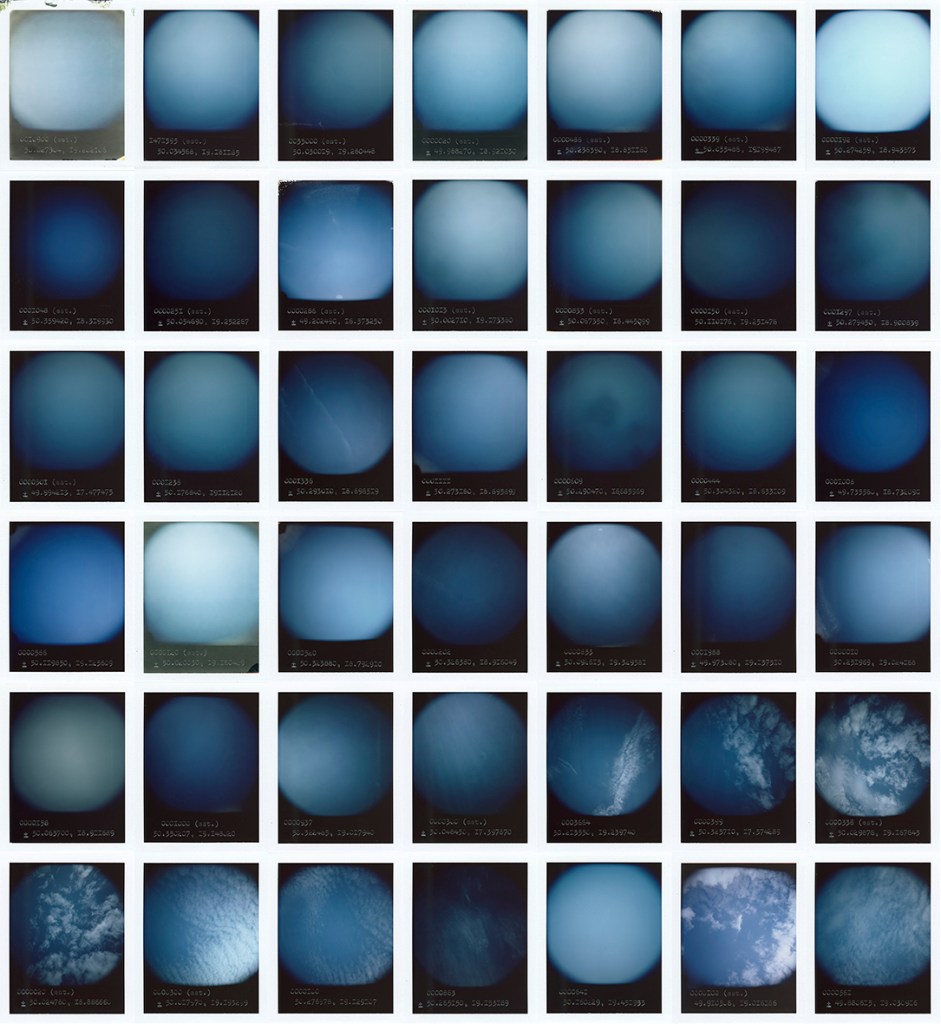
Anton Kusters Deutsche Börse 2020 Nominee who is shortlisted for his exhibition The Blue Skies Project exhibited at Fitzrovia Chapel, London, UK (15-19 May 2019). This is now exhibited at The Photographers Gallery London.
‘I employ a documentary approach to explore the limits of understanding, the difficulties of representing trauma, loss of the experience of place, and the act of commemoration. More often than not, I end up with no answers whatsoever. I’ve come to understand that answers are seldom there.’ – Anton Kusters (Deutsche Börse 2020 Nominee: Anton Kusters , 2019)
Anton Kusters (b. 1974 in Belgium) makes conceptual photographic projects often investigating the representation of trauma; “he proposes alternative ways of seeing and activating audiences to continue the process of memory” (Deutsche Börse 2020 Nominee, 2019). This work enables viewers to engage with trauma, human rights and genocide.
This is the information given at the gallery:
“His Blue Skies Project is an installation containing 1078 polaroid images. All the images show an upward view of a blue sky shot at the last known location of every former Nazi run concentration or extermination camp across Europe during WWII. Over six years, Kusters researched and photographed these often forgotten sites of violence using a simple analogue photographic process of peel-apart instant film. The resulting images were then blind-stamped with the number of victims at that side and its GPS coordinates.
The installation also features a 13 year-long generative audio piece by Ruben Samama, which recreates in sound and length, the period between 1933 and 1945 when the camps operational”.
Caroline gave fantastic audio descriptions, I include them here as this was the first part of my learning:
“The work is on a plinth painted the same colour as the walls so the images look as as they ae floating. The plinth is L 466.5cm, W 260.6 cm, H 90cm (nicely compared to the hieght of a kitchen work surface, the length of an estate car and the width of a London routmaster bus). There are 22 rows of 49 polaroids spaced 1 cm from each other. It feels as if the polaroids are floating in the middle of the space, each image 1 cm spaced from each and the edge, all identical 8.6cm x 10.8 cm in size around the same size as a greeting card”. The sound is an audio piece, it plays a single sound, a soft ping; the pitch changes depending on a pre-defined factors, the pattern of sounds are organically irregular. Each sound represents a victim of one of these camps”.
Each image is the tracking of 1078 blue skies from the 1078 camps of 1933 to 1945 when the concentration camps were open (nearly 13 years 4432 days). These images are reproductions of the originals. Each image is blind stamped with the number of victims and the GPS location.
This was a great introduction to the project. She then went on to describe some of the images:
A camp in Poland
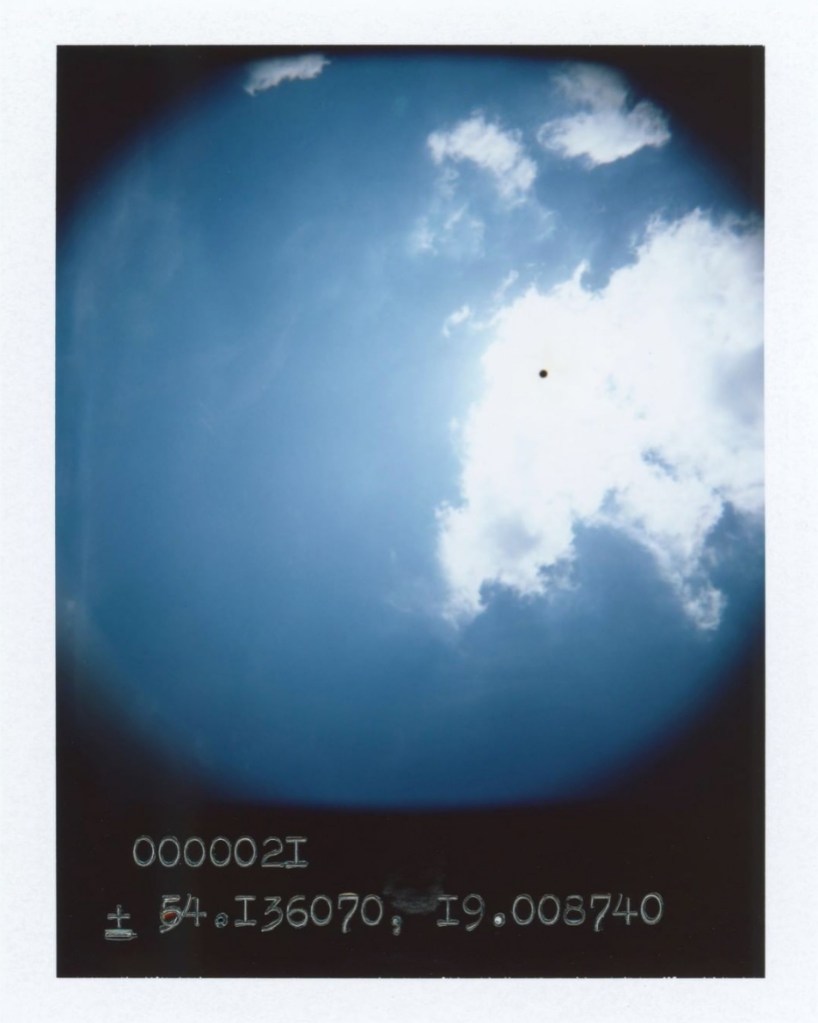
Work 1 – Anton Kusters, Neuteich 0000021 54.136070, 19.008740 (co) from The Blue Skies Project 2019
“Framed with a thin white border which is equal I cm depth all around. Within the border is a black rectangle, the majority is filled with an upshot of the sky, the corners of the rectangle is black and the coloured part of the image is roughly circular in shape, almost as if a fish eye lens has been used the corners are black, a blue summers blue sky roughly circular in shape, blue like light denim jeans, a collection of clouds are swirling around one larger cloud this cloud seems to be bleached white by the sun. The bottom of the polaroid is black where it has been blind stamped with information”.
A camp in central Germany one of the first and largest.
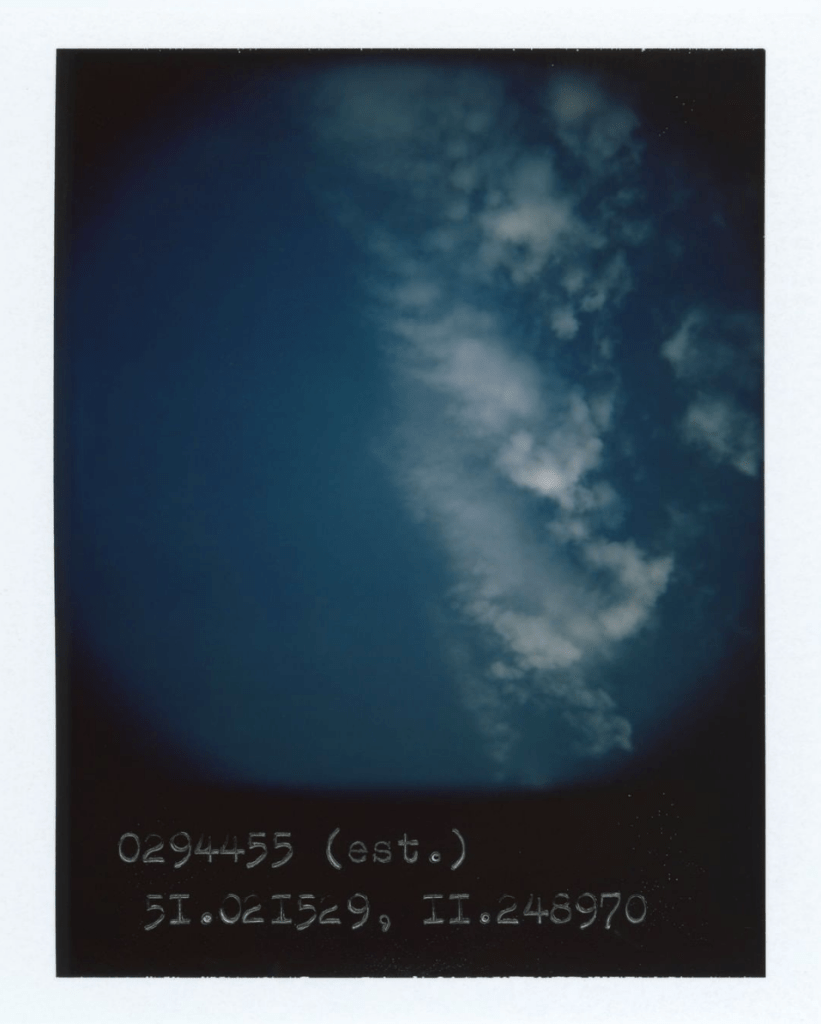
Work 2 – Anton Kusters, Buchenwald 0294455 (est.) 51.021529, 11.24897 (ex) from The Blue Skies Project, 2019
The description is similar except: “the sky within this circle is dark it looks almost unnatural almost like when there is about to be a thunderstorm and the sky turns an unusual dark shade of blue. Spreading across the right side of the image is a network of thread like misty clouds that all seem to be joined together by thin clouds and misty areas. The clouds themselves are so papery that they appear to be lighter versions of the sky in colour”.
A camp in South Germany
Work four Antom Kusters, Thansau 0000050 (est.) 47.827194, 12.154291 (co) from The Blue Skies Project
“The majority of rectangle filled with an upshot of the sky. Unlike the other polaroids described the blue of this one is so dark that it fills the majority of the rectangle making it impossible to decipher the edge of the circle that frames it. The inky blue seamlessly merges with the black. There are no clouds, it looks like it was taken at dusk or perhaps even later, it is so concentrated that when I look at it reminds me of looking into a blue fountain pen ink cartridge”.
Missing image Work 4 – Anton Kusters, Poniatowa 0028000 (est.) 51.178257, 22.061046 (co) from The Blue Skies Project, 2019
A camp in south eastern Poland
“The sky within this circle is again an inky blue…almost the colour of dark denim, but unmistakably an image of the sky, due to the very faint wispy clouds across the top of the photograph, like flour dusted on a kitchen work surface. At the bottom left of the sky area a smaller more concentrated smaller area of white cloud I the vague shape of a triangle”.
Installation description:
“There is enough space between the walls and each side of the plinth to walk around. As I move around the space and try to take in the vast spread of polaroids I am struck by intensity of the project, 1087 polaroids is a lot of photographs and although visually the subject is simple conceptually there is a lot to take in. This sea of 1087 blue rectangles, each one representing a place of trauma, with each one recording the number of victims of each concentration camp, the sheer vastness of it, combined with the sound piece, which to me begins to feel like an assault of noise as I consider that each sound represents a victim, history comes very close. Here Kusters provides space for the audience to consider their own place in history and engage in with the evolving dialogue around trauma human rights and genocide”.
MY LEARNING FROM LISTENING TO THE AUDIO DESCRIPTIONS:
I have been fascinated by Caroline’s audio descriptions previously but what struck me here was how much audio description she was able to give of a simple image. I noticed that she gives useful comparisons to add her descriptions like:“like the height of a kitchen work surface, the length of an estate car and the width London routemaster bus” and “around the same size as a greeting card”.
She also uses lots of similes: “blue like light denim jeans”, “like flour dusted on a kitchen work surface”
And other visual comparisons: “so concentrated that when I look at it reminds me of looking into a blue fountain pen ink cartridge”
Overall I am reminded how one should look long and closely at an image to take in all parts of it.
THESE ARE THE QUESTIONS WE ASKED CAROLINE AND TGP:
Q: Why the blue skies? This was answered in the artist talk another day, he said he asked himself what his Grandfather have would seen if he had been taken The solace of the endless sky landscape.
Q: Was he on location or did he use google planet? He travelled to each location.
Q: Regarding the relationship between image and the spoken word, why does Caroline describe with equivalents and their pheromonal comparisons? When writing an audio description she writes as if writing for a visually impaired audience and says it’s important not to take authorship of the piece.
Q: Why are the numbers and coordinates blind stamped rather than written? A suggestion was that blind stamping is embossing and it is probably difficult to find an annotating process that will last on a polaroid. Apparently Kusters expectation is that in 13 years the polaroid’s will fade but the blindstamping will remain. Somebody suggested that it replicates the tattooing process in the camps.
Q: Why are the polaroids displayed on a table? Previously have been displayed on walls but was shortlisted from its appearance at another gallery which was a church space on a table and so was displayed here in a similar way. It was commented that it gives them a greater physical presence, like a memorial, also like the feeling of having an horizon.
Q: What has caused the vignette? Do you have any information on the camera used? No but it must be the lens masking part of the image as he takes the photograph. The artist later answered that He used a very cheap polaroid camera, hence the huge vinaigrettes.
Q: What do you think is behind the circular effect, in terms of feeling? These were some responses:
It looks to me almost like they are taken through a telescope, Like the sun? The moon? The universe? I find there’s something almost claustrophobic about them, it feels more intimate, It makes me feel like I’m captive and looking out, the idea of claustrophobia is interesting particularly in relation to the condition of the prisoners in the camp, like you’re trapped, it would make sense if it were a pinhole camera – the simplicity of the process also suggests a very direct connection to the site
Q: Is there any logic in the sequencing? Not known but Kusters answered this in his talk; he tried different ways of sequencing but none of those felt right, so he used a computer to generate 1078 random order and the images are always displayed in this way.
Q: Why is the size of these polaroids are different to the normal? Not known although they are described by the gallery as peel-apart instant film.
This slow looking event was followed in a few days by a live artist’s talk which gave us to ask him some of our unanaswered questions
DEUTSCHE BÖRSE 2020 NOMINEE: ANTON KUSTERS: VIRTUAL TALK AT THE PHOTOGRAPHER’S GALLERY 30.4.20
‘I employ a documentary approach to explore the limits of understanding, the difficulties of representing trauma, loss of the experience of place, and the act of commemoration. More often than not, I end up with no answers whatsoever. I’ve come to understand that answers are seldom there.’ Anton Kusters (Deutsche Börse 2020 Nominee: Anton Kusters , 2019)
Kusters explained:
The work was inspired by the recent knowledge that his Grandfather was almost taken by the Nazi but had a narrow escape. Kusters doesn’t know which camp this was to so he visited them all over 5 ½ years travelling he visited every concentration camp, and to be there when there was blue sky, photograph and then move on. Often there were no visual remains of the camp sites he visited. There were 42,000 camps in Europe of a variety of types: extermination, ghettos, concentration, work… Only the location of 140 camps are known exactly, 250 known approximately, for only 200 the area but not the location was known.
The size of the camp hasn’t determined the voice of the victims so that they have an equal voice; however he did spend a whole day in each of the 23 main camps but a very short time in the others. Kusters was able to visit in excess of 15 camps per day because the camps were built in 23 clusters within 100km with 3-120 subcamps.
The fading of the images is significant to the work whilst the blind stamped numbers that fell within that particular sky and the GPS coordinates won’t. Kusters expects the abstractness will makes you uncomfortable because it isn’t telling you anything about the work. That viewers should make sense of the work in their own way and shouldn’t be pushed to think. It was noted that you cannot escape being seen in the work as you will reflect in the surface of the polaroid.
Kuster explained that he met Ruben Samama Music/soundtrack (writer artist and songwriter) after he had been working for a few years on the project already; they want to play the soundtrack for the 4432 days the concentration camps existed, in real time. Ruben thought about how to make the huge historic event and the idea of loss and trauma, into a soundtrack understandable for others, as everything should speak for itself; he stripped the hierarchy of the numbers and produced an organically irregular, electronic soundtrack which plays history in real time, over almost 13 years and every ping is one victim. Samama explained that he made sense of Kusters data in his own way, but wanted to help make it personal for everyone.
Kuster explained that he wants to make a collective memory of important events; if necessary he might help the images to fade so that the skies in the polaroid’s also fade over the time and there becomes an urgency to see the work as it is changing all of he time. Kusters says this change is important as every time you access something your memory changes. The blind stamping will remain. He always has a discussion with galleries so that they consider whether they use the originals and help them to age as they are engaged with, or do they use a replica which will not damage.
He was asked what went through his mind when he pressed the shutter on the last image? It was in the only camp on British soil in Alderney he drank a chocolate milk in honour of his grandfather, he still has the carton; this was the first time that he thought of himself rather than the work driving him.
I WAS ABLE TO LOOK AT LEARN IN DEPTH AT AN UNUSUAL PIECE OF CONCEPTUAL PHOTOGRAPHIC PRACTICE- This has encouraged me to:
Consider alternative ways of seeing
Give the opportunity for activating memory
Consider ways of exploring the limits of understanding and things that are difficult to represent
Not to expect answers
Maximize the importance of a physical aspect of work and the possibility that this changes
The importance of the presentation and the possibility of change in this to reactivate responses
Slow art virtual session: The Photographers gallery 4.4.20
I was interested in this meeting as I have been to a physical event like this at the gallery, because of Covid19 the meeting became a virtual one via the Zoom platform.
Caroline Dawson who facilitated the meeting is an access and inclusivity consultant working with museums, galleries and artists to improve access to art for everyone.
We met to discuss 3 pieces of work by UK photographer Mark Neville (b. 1966) Deutsche Börse 2020 Nominee, for the publication Parade (2019). Neville merges art and social documentary photography, through community-based projects, where he explores social functions of the medium, using still and moving images as well as photo books, which are specifically disseminated to a targeted audience or ‘non-art’ demographic. Started in 2016, the same day Britain voted to leave the European Union, he began a three year project based in Guingamp, Brittany (“little Britain”). Mark says:
“Notions of utopia, or ecotopia, underpin these images of farmers, nuns, Breton dancers, baton twirlers, people breeding pigs, dogs, horses, supermarket shoppers, football supporters and football players, families on the beach or attending beauty pageants. Some of the photographs seem to express a real optimism about our chances to achieve that better world, whilst others display an anxiety about the gap between the ideal and the real.’
Mark Neville (TGP website, 2020)
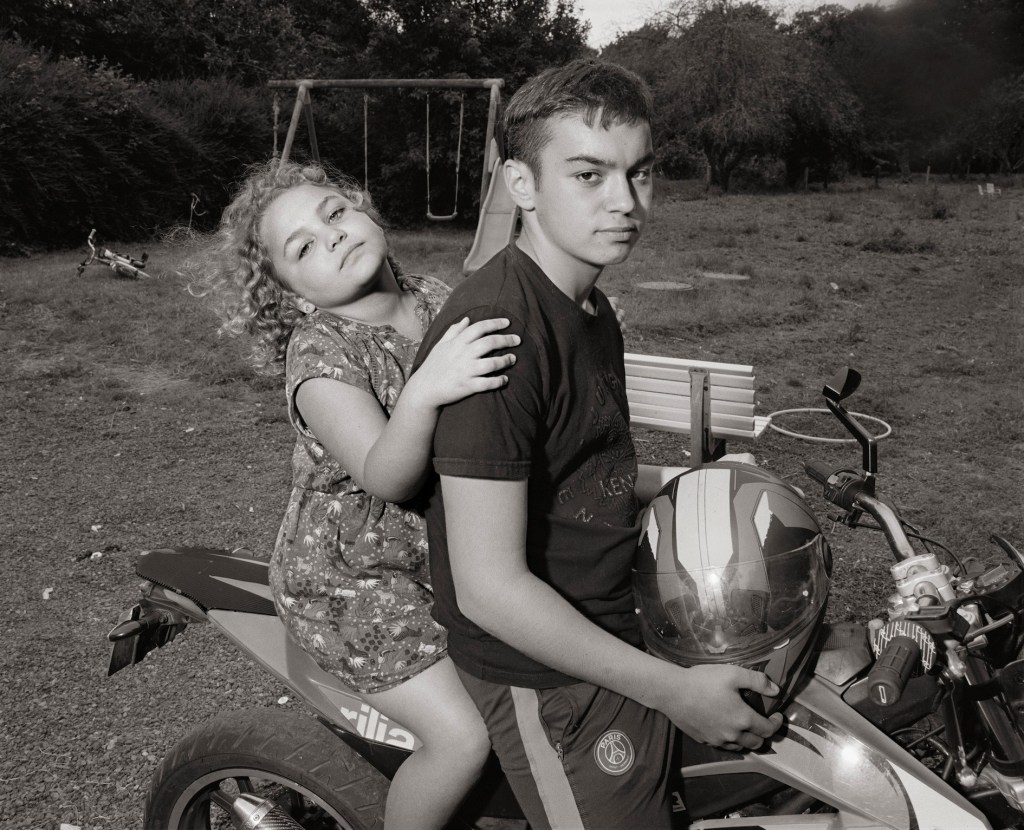
Caroline Dawson gave an audio description of an image by Mark Neville, a black and white image:
Mark Neville Parade#11
We then discussed:
How the audio description given went from a general outlook from the background first and then to the foreground detail. Caroline was taught to Split the image into horizontal lines and read left to right and to start and finish on the part of the image focused on.
Why the image is in black and white? We couldn’t reach a decision.
We commented:
Looks like might have been lit with lights rather than taken spontaneously. I later learnt that this is very much his style to use infill flash from the side
We like the movement in her hair although it looked like to image was posed.
Thought it would be difficult to ascribe context without reading the background information first.
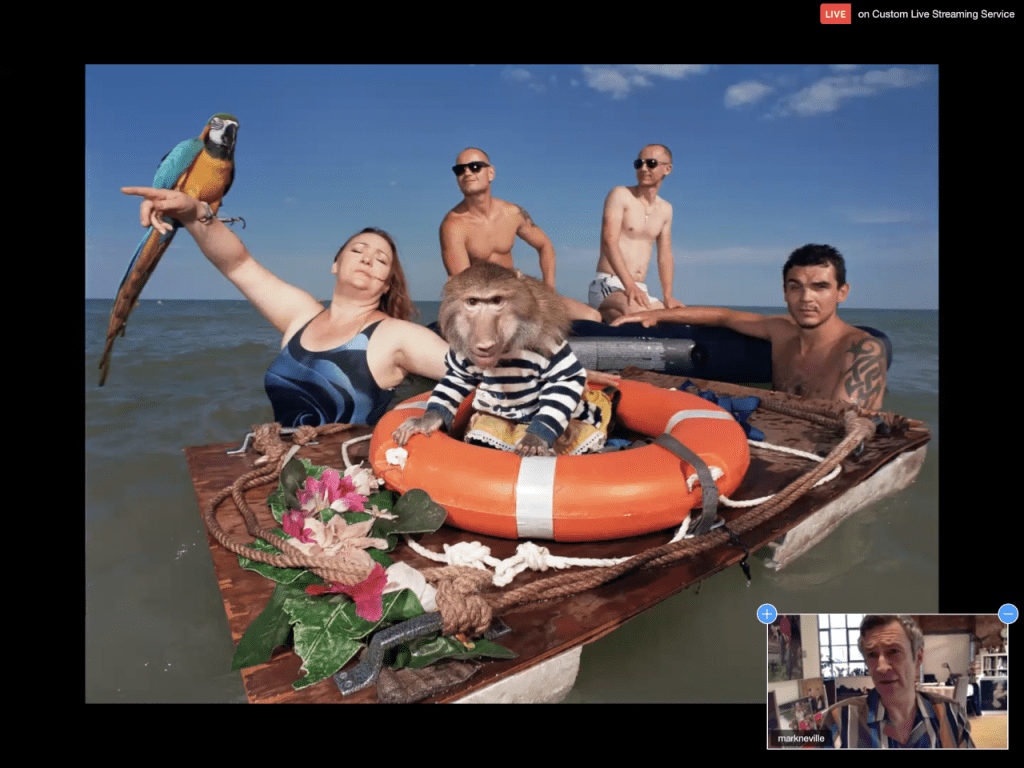
Mark Neville, Parade #7 2017
We asked and sought answers to the question:
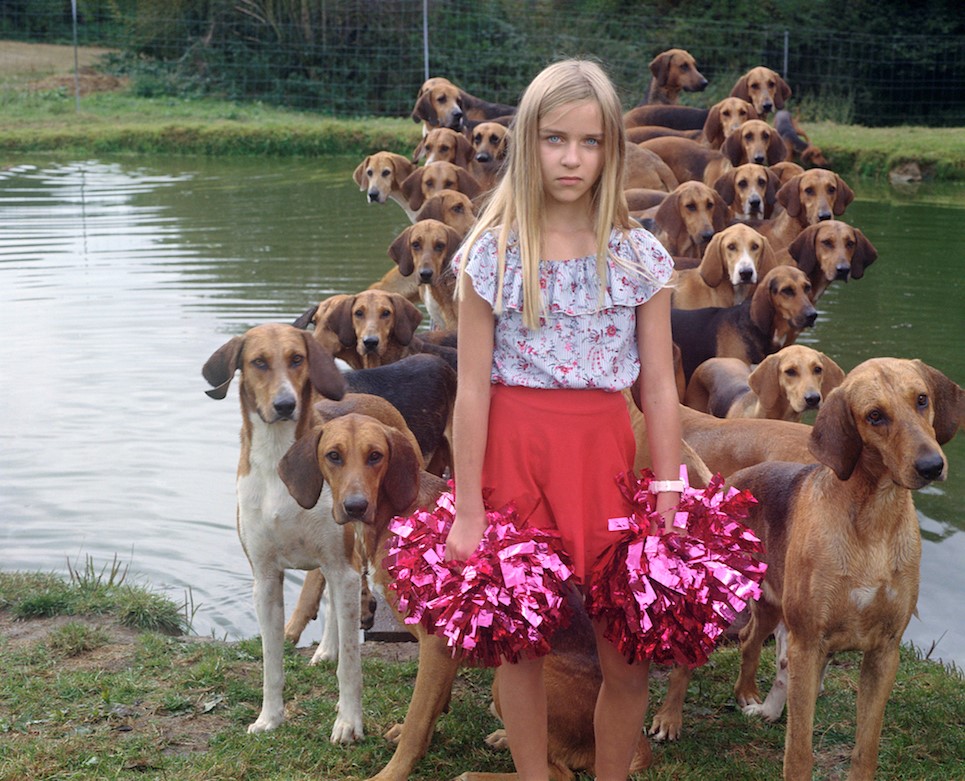
Why are the dogs on the pontoon?
We discussed:
Interesting perspective
That with her piercing blue eyes she looks like a model
How would we have felt as a child posing?
Why all the dogs?
Is it always the person at the centre of the image that holds the photographers gaze?
We were told that it took 3 sessions to achieve to get them all looking in the same direction, and yet it is still unbelievable that he achieved it.
Mark Neville, Parade #15
We discussed:
Looked to me as if he valued the horse more that the car until pointed out it’s been there a while (as no tyre tracks).
There is a difference about viewing the images in reality and as a copy, details easier to see – I hope to see the actual photographs after restrictions lift.
A strong image, makes you want to ask so many questions.
We learnt afterwards that the man is a horse whisperer who works with abused animals.
My learning points:
How to really look, dissect and correspondingly describe an image; try looking from the background first and then to the foreground detail and even to split the image into horizontal lines, then read left to right, and start and finish on the part of the image the focused is on.
Really consider if it always the person at the centre of the image that should hold the photographers gaze?
How difficult it is of be sure of an artist’s motive without knowing the context.
Mark Neville Artists Talk the photographer’s gallery 9.4.20
I was lucky to be able to follow the interest that this provoked for me in Neville’s work by attending his Artist talk to accompany his exhibition Parade at the Photographer’s gallery London; however it was also an event that was delivered by zoom, due to Covid19. This worked very well.
Mark discussed his work from a starting point of his first published photographic workPORT GLASGOW (2003) a ship building community.
This came from his desire to have a voice and visibility within the art world. He applied for a competition to make a public art project where he could make a public gift to the community of 8,000. This work is photographs of a community – a social documentary book, which tests notions of authenticity in photographs; some are staged, some sly on the wall, some fashion or staged, whilst some are based on Venetian paintings.
This was never commercially available as a book, but was produced as a book for the people in it instead of as was usual to middle class coffee tables; Neville gave the work back to the subject matter to justify it. The cost would have been £14000 to distribute 8000 of books to the community, but then asked the football club to distribute the book and gave them the money instead, which fitted with his ethos of benefiting the community a work is made in.
He asked for feedback from the community about the project; some was negative, indeed Catholics burned books as they thought there were too many protestant photographs (disappointing at the time, but it was actually a good indicator of sectarian tensions). Later outsiders asked for copies of the book but couldn’t give them it, although later unwanted copies were sold online by their owners for high amounts (Neville commented that this was good as it was a direct economic benefit for the community). Later he responded to requests from curators and exhibited however when he did so the money was again given back to Port Glasgow as were percentages of any picture sales.
Neville’s concept is that photography should always think about its local role. As it deals with reality it has to find a way to change things. His ethos is to find ways that you can use the photographs to service the community they are shot in.
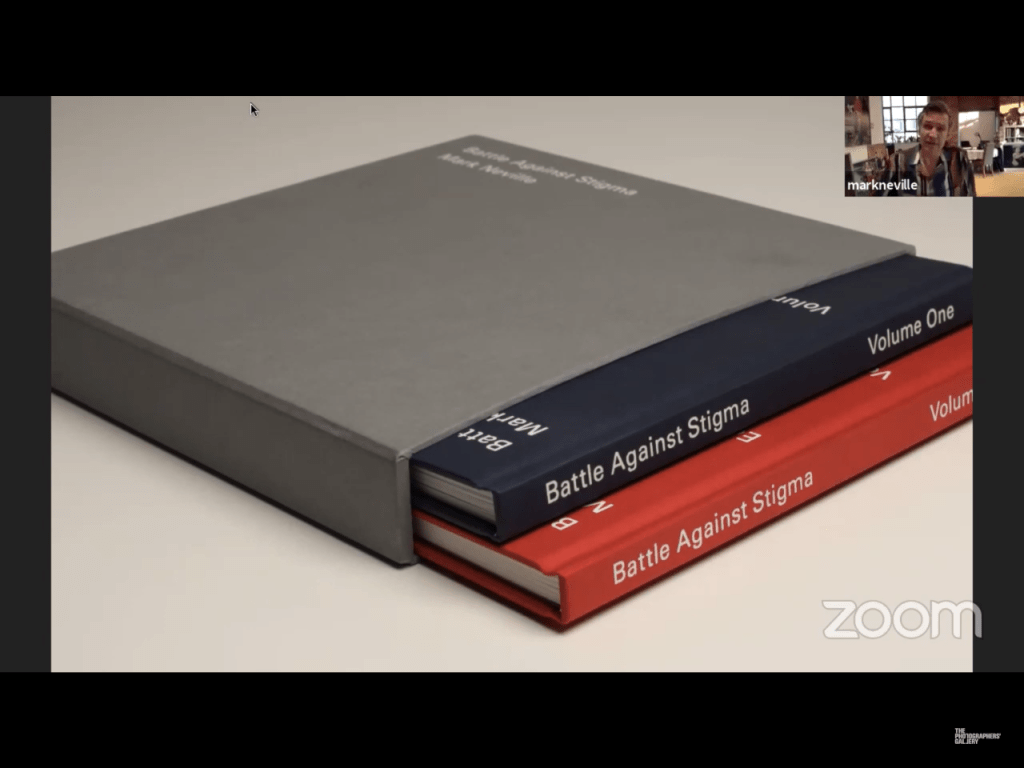
Battle Against Stigma Volume One and Two (Afghanistan 2010)
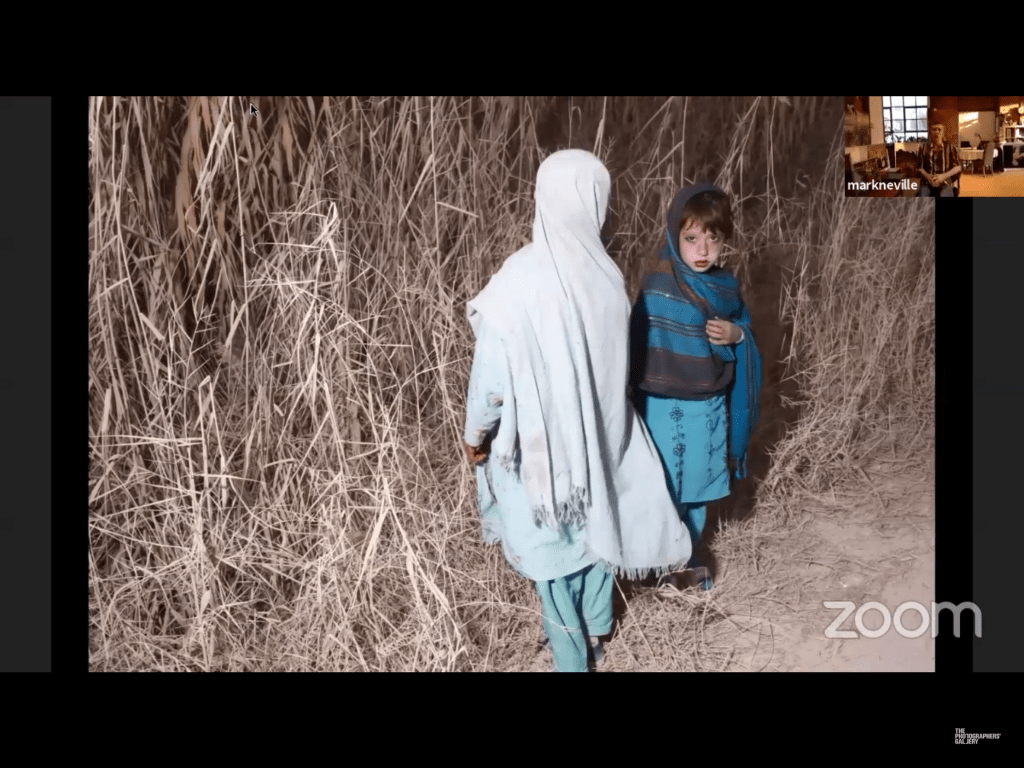
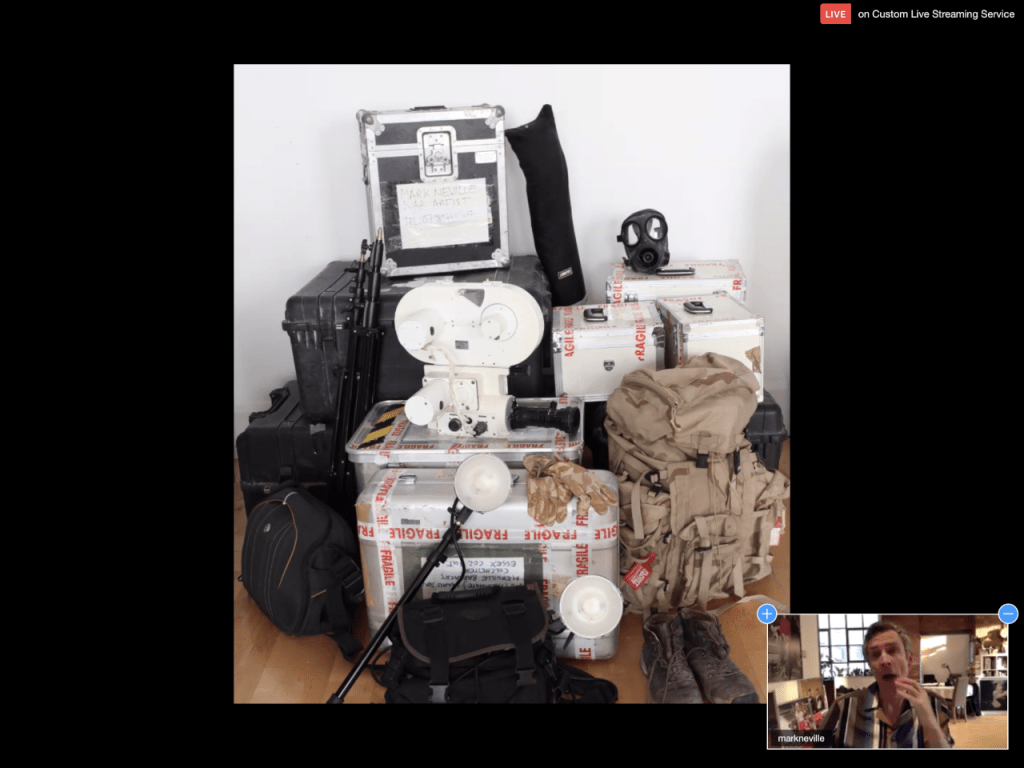
Neville was chosen by the Imperial War Museum to go to the war zone as a war artist. He accompanied the troops to the war in Afghanistan after a month’s preparation. He had to carry his heavy camera kit, maintain 2m distance between soldiers, avoid mines; it was a very stressful and confined remit for taking photographs.
In particular he was shocked how young the soldiers were, and that it was bizarre that children would suddenly appear out of nowhere unaccompanied. He also recalled how he made friends made quickly and for life.
He wanted to use his work to encourage veteran troops suffering from PDSD to come forward (as Mark he suffered adjustment disorder). It took until four years after his return to get the various permissions, funding, images and text for Battle Against Stigma. He went to ministry of Defence for support, but after initial support they forbid his PTSD essay that he’d written, and accounts from the troops to be presented with the images from the war as it might imply that each photograph is someone with PTSD; so he made it as two separate volumes in one slip case.
The first volume retells his experience when he was sent out to Helmand, the second volume contains written testimonies about PTSD and adjustment disorder from serving and ex-serving soldiers. Once published the UK border force seized the first edition of 500 in 2015; The 2nd consignment of 1000 arrived safely and he delivered them to mental health charities, homeless centres, Military Departments of Community Mental Health and Education Centres, veteran mental-health charities, probation officers, prison libraries, and directly to veterans themselves and so on to get to the veterans before the UK border forces wanted this consignment of books also.
In the Independant on Saturday 23 May 2015 Neville put the following message:
‘Battle Against Stigma’ is not being commercially distributed. If you are a former serviceman or woman who feels you may be suffering with adjustment disorder, or you know someone, a friend or relation, in pain, please write to Mark Neville in confidence at info@markneville.com, and he will send you a free copy (Neville, 2015).
Following this he received e-mails every 10 minutes asking him for copies. Neville said that this is the book that has had the most tangible effect of all his work, he believes because he tapped into hidden pain.
STOP TANKS WITH BOOKS due for publication this summer
His motive here is to try to stop the war in Eastern Ukraine with this book, where 2 million people have been displaced, one of the biggest displacement in the world. The work contains photographs, essays, sociological research into the war zone, as well as elements about life continuing, such as images taken for the New York Times of Odessa a resort in the Ukraine as well of those about displaced people. The book has been sent out to politicians and the publisher endorses this model that books can and should change lives and that people shouldn’t have to pay for them’.
Neville says he is keen on the first image as it makes connections between the Church and the Mafia.
Parade 3-4 yr. project in Brittany
Neville was opening an exhibition there for his Port Glasgow book the same day that the UK’s departure from the European Union was announced. The work that began then also had an emotional connection with Brexit.
In his work Parade Neville made a portrait of a provincial agricultural region, through 6 visits (2016-19) mainly within a 30 km diameter of the small town of Guingamp. The work is about what a community means and Ecotopia – about our relationship with nature and animals. The Breton culture, the local football team and Breton dance Fêtes are their main cultural activities. They have a small but successful football team, and so the work is exhibited in the entrance to the football stadium so ever as part of his community based ethos. Every other Saturday there is an audience of 20, 000, so the images were delivered back to the community.
Illustrating how he connects art and social documentary practices, he also photographed different agribusinesses in the community – from small holdings to large industries. The photobook, is now accompanied by a publication of essays by Brittany farmers with pearls of wisdom articulating the need for a sustainable, humane, type of agriculture, and it was sent out to UK and European ministries of agriculture and food as well as key policy makers, calling for the urgent adoption of more ecological methods of farming. This free book that Neville co-wrote “Parade texts” a pdf published in 2 languages has been sent out to schools, community centres, libraries, schools, politicians, agricultural communities; it is all about the need for access to land to produce sustainable food, so produce isn’t substandard and to encourage subsidies for small sustainable farming.
During the work he combined planned, constructed photograph, and spontaneous imagery. Neville photographed the different agribusinesses in the community from small sustainable farms with only a handful of animals to large agricultural industries.
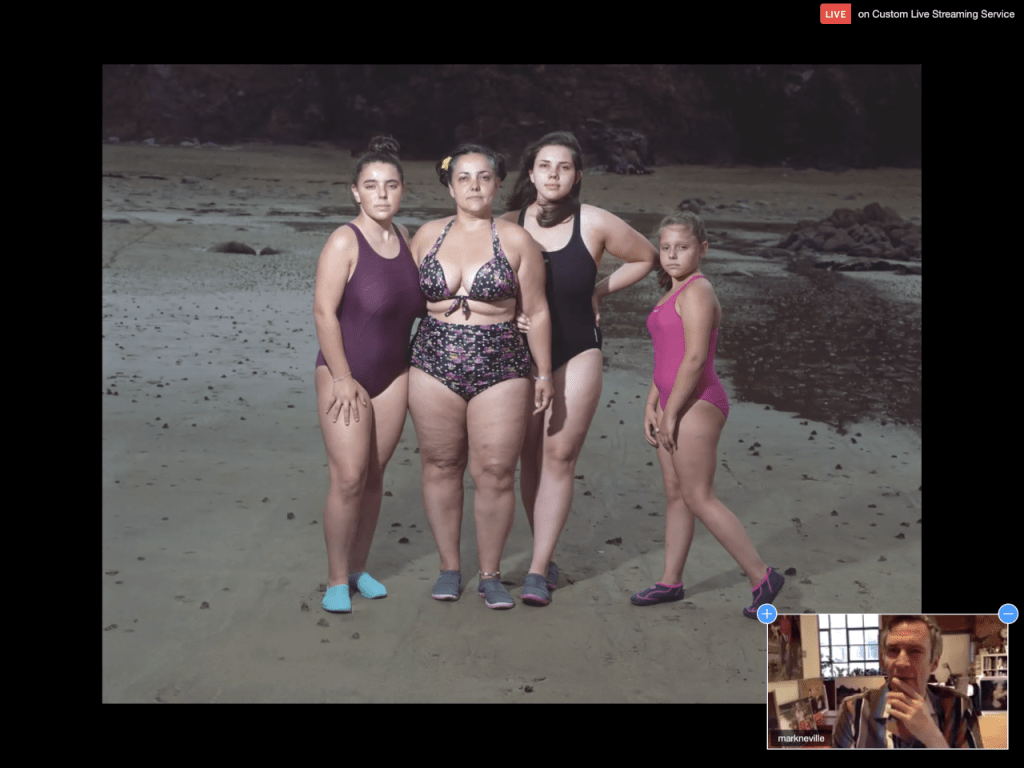
Due to his feeling about Brexit when he started the work there, he wanted the images to have a multilayered feel to them, as he viewed the work as therapeutic journey for himself rather than an end target. He thinks of terms of reference when photographing, such as new wave movies and the posture and the palette of these swimmers that are like Flemish paintings. Some images were constructed by re-visiting people and places whilst some dynamically or fluidly – there is a tension between chance and construction.
Neville talked about some of the images from Parade:
Parade#15 Man horse and car: This image already described portrays ahorse whisperer and is about establishing a bond. He trains them to stand on cars to develop this trust.
Parade #7 The baton girl and dogs previously described; he met her when she was baton twirling and asked her to pose, and he comments on her striking eyes. He also met a man who breeds hunting dogs and then chose his man-made lake as the location – which seems an odd association but was very effective. Neville thinks the image looks like a collage, as if it shouldn’t be happening; though if you look closely you can see the tension between the “construction and the moment” which he believes is essential for a good documentary image.
Here the girl that modeled stands in front of her portrait (Zoom session TPG 9.4.20)
NEVILLE THEN TOOK QUESTIONS AND WAS VERY GENEROUS WITH HIS TIME AND ANSWERS.
Do you know where you’re going to end up when you start in a community?
Neville says he asks 3 questions of himself/the project before starting:
Q1: What do I really make work about? As projects have a long life take a lot of time and energy and have to sustain him as a subject matter (a demographic, an issue, a place, a group of people, an aspect of social documentary practice or society), he has to really believe in a project to begin it.
Q2: What can I do that will be of use here? How to honestly do some good, how can what I do have some kind of social value? How people are going to benefit from it? Should they get a copy of the book, if so who should get copies of the book: MP’s, the local community, the whole of the UK, really think who the audience is. It is a photographer’s responsibility to use whatever platform we have and to use this to chip away and effect change.
Q3:Fundraising, how to find the money to make this happen?
However work does develop as Parade did initially it was about the Breton V British culture but became more about Ecotopia – about our relationship with nature and animals
What does community mean to you? It’s sort of a search for acceptance into a community he’s not of, so of course he’s never really accepted, so he goes on to the next search.
Are you trying to put a spotlight on your childhood with your pictures of children? No not at all, just an intent to spotlight inequality in society. He explained that when making these projects as a sort of search for a family, though he’s not part of it he tries to immerse himself – likes to be accepted.
How was Parade received by the community? They appreciated the work being exhibited at the stadium, but it’s been difficult to follow up on the text sent out, as the virus has halted it’s, there may be a reassessment of social values and ultimately ecology but he will chase it hard after the virus to ensure it has impact.
Do you think your work will change after Covid19? Almost all his photos are of people however he thinks it’s slightly irresponsible of people to go out and take photos during Covid19, as photography has got to be safe and respectful.
My Question: How do you finance these projects? This is difficult: grants (Like the welcome trust, The Arts Council of England), writing to charities and philanthropists, newspapers he does a lot of research to make the most from his fundraising and the networks it comes from, his own money, (Neville doesn’t benefit financially from the projects). He manipulates where he might be asked to be sent by assignments for newspapers like the New York Times, to places that he can legitimately use to fund issues that he wants to highlight.
Tell us about your photographic style and use of flashlight and almost overexposure: he showed his medium format camera with the flash attached on the top from the side which doesn’t flatten the image and isn’t as harsh as when flashed from the front; this gives you a more painterly feel when on the move camera with flash attached. It is also about getting a good depth of field as documentary photography is about revealing detail. He takes references for his images from all sorts of sources, design, paintings and uses his lighting to make these references. Some images he just sees in colour some in black and white hence the mixture in his work.
Explain the idea of the book changing the world: A book is different to the news or a print, as a book has a life and it has a value. A photobook is hard to ignore a photo book if as it has strong images in it, especially if no ulterior motive can be seen for the community; each book must have several captivating images.
MY LEARNING POINTS:
This was an amazingly interesting and thought provoking interview. I think it will help to give me some extra purpose going forward and especially working towards and possibly when choosing my level 3 project. These are points that I particularly intend to take away with me:
Documentary photography can connect art and social documentary practices.
Tension between the moment/chance and construction can be very effective in documentary images.
That it is possible and can be effective to mix several visual and practical styles within one body of work: staged, some sly on the wall, fashion or classical painting in style.
Consider many different types of references for your own work, design, painting, fashion, newspaper….
Try using a fill flash from the top side when taking portraits on the go (I could do this with a strobe and small soft box – maybe I need to get a stick to attach it to.
You can use lightening to align your work with your references for images.
Consider that documentary photography may be about getting a good depth of field as documentary photography is about revealing detail.
It reminded of something I have discovered myself, that photographic work can be therapeutic to yourself.
Make sure you are really interested and believe in a project that will take a lot of time and energy before you start it.
Don’t worry if I change my mind where I’m going with a project once I immerse myself in it.
There is a difference about viewing the images in reality and as a copy, details easier to see – I hope to see the actual photographs after restrictions lift.
There are many ways to exhibit work other than in a gallery.
Ask yourself should the photographs to service the community they are shot in?
Think about the local role of any project – if it is about reality should it seek to change or just highlight something?
A huge variety of material can be contained with a photographic project: images, texts, essays, letters, eye witness accounts and so forth.
DO SOME INDEPENDENT RESEARCH INTO STREET PHOTOGRAPHY
My response:
Street photography in the early days was staged, and was the extension of the studio, but with the advent of smaller less conspicuous cameras photographers were able to work on the street without being seen. Stephen McLaren editing “Magnum Streetwise” said the cornerstone of what is now known as street photography is “the impulse to take candid, unrehearsed pictures in the public realm” (2019).It normally features chance encounters and random accidents in public places, but doesn’t have to take place in the street. The French “Flaneur” the city walker was one of the earliest street photographers observing the streets closely for theatrical moments and inspiration. That said we are now aware that Street photography does not need the presence of a street or even an urban environment.
Street photography is prevalent again, with the work of photographers such as Vivian Maier, Chris Steele Perkins, and Martin Parr. I have in the past explored the photography of many photographers famous for their Street Photography; for instance Garry Winograd famous for his edgy close ups, William Klein whose work wasinnovative and intimate, often shot at eye level, Elliot Erwitt known for his wit in his images, and Cartier- Bresson of course. So here I will explore the street photography work of photographers who I’ve not researched before:
Christian Anderson
Is an American Magnum photographer who says his roots are in the classical street photography tradition especially influenced by Brice Davidson, and Moriyama. He has moved towards street photography that is relevant to him, working digitally and worrying less about the technical aspects and more about the emotional aspects of subjects. He crops hard to exclude extraneous contextual information.
USA. New York City, NY. 2014. Cherries spilled on crosswalk.
Capturing and “trying to be aware of an emotional sense of the people that I am photographing” (McLaren, 2019:48) is important to him. He describes how when working on the street he scans and then notices everything and wonders who people are and what they are thinking about. He uses the available street lighting, neon signage and smog to create atmosphere around his decontextualized subjects.
CHINA. Shanghai. 2017. Street portrait.
USA. NYC. 2017. Police in front of Trump Tower.
FRANCE. Sete. 2012. A red dot on the glass of a bus stop.
I do particularly like his use of colour as accent and for atmosphere, more especially knowing he what was naturally on the street; it’s hard to believe that some of his portraits are shot on the streets rather than in a studio.
Sergio Larrain
A Chilean photographer worked professionally only during the 1950s and 60s. He lived a solitary life, saying he only did work that he cared for. One such project was on the reclusive mafioso from the streets of Palermo, Corleone and Ustica. He believed that photography should be free of convention but not forced, you should “Don’t ever force things, otherwise the image would lose its poetry. Follow your own taste and nothing else” .(McLaren, 2019:251).
GREAT-BRITAIN. England. London. 1959.
Village on the way to Machu Picchu
Between the island of Chiloé and Puerto Montt, Chili, 1957 (Sergio Larrain, 2020)
Island of Chiloe, Chili, 1957
Santiago, Chili, 1963
His images are poetic but the thing that I take away from them the most is the unusual perspective he used, I guess this came from the freedom from constraint he valued and the value he put on following your instinct.
Constantine Manos
He shot initially in black and white, these are some of his first serious images taken when he was 18:
(Daufuskie Island, South Carolina, 1952)
Manos switched to colour after 30 years for his work “American Color” (1995), for which he deliberately sought out a different type of picture, he felt that American was waiting to be photographed differently; he continued this as he was enjoying it with American color 2:
(American Color 2, 2010)
In 2001 he shot in Havana, Cuba, 2001 walking the streets “There was much life in the streets, and people were not self-conscious. In their daily lives there was a poetry, not found in more materialistic and industrialized societies” (Havana, Cuba, 2001).
(Havana, Cuba, 2001)
He later returned to black and white with a digital Leica, he claimed he’d gone back to basics “Looking for remarkable moments that make you catch your breath” (McLaren,2019:281).
I read that he was against cropping, as he thought it made you lazy; you should move your feet instead. I feel the same way, in that I should get it right as I am looking at something, there and then. Often when you look at his photos, he has people in both the background, mid and foreground but rarely overlaps the bodies, this seems to sharpen his message. Manos said that “A successful picture is always a surprise” (McLaren,2019:281) and his images are full of ambiguity. There are a lot of small details in his photographs, maybe this is how he achieves the poetry in his images.
Jonas Bendiksen
I choose to look at Bendiksen because at first look his photography seems quite different to the other photographer’s I’ve reviewed above or maybe I expected it to be because of his Scandinavian origins?
Apparently, he thinks about his approach hard before shooting, saying the research puts you into the right frame of mind, but that when he shoots “I guess I’m a fairly simple photographer. There is very little hocus-pocus about what I do” (McLaren, 2019:69), it’s fairly instinctive.
GEORGIA. Abkhazia. Sukhum. 2005. Although Abkhazia is isolated, half-abandoned and still suffering war wounds due to its unrecognized status, both locals and Russian tourists are drawn to the warm waters of the Black Sea. This unrecognized country, on a lush stretch of Black Sea coast, won its independence from the former Soviet republic of Georgia after a fierce war in 1993.
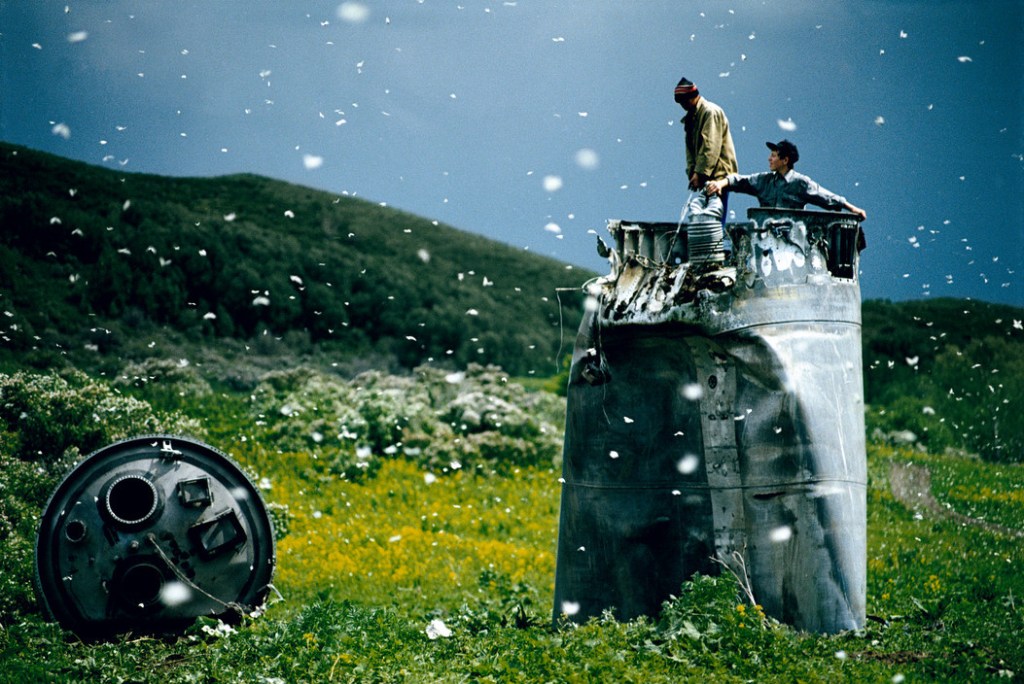
RUSSIA. Altai Territory. 2000. Villagers collecting scrap from a crashed spacecraft, surrounded by thousands of white butterflies. Environmentalists fear for the region’s future due to the toxic rocket fuel.
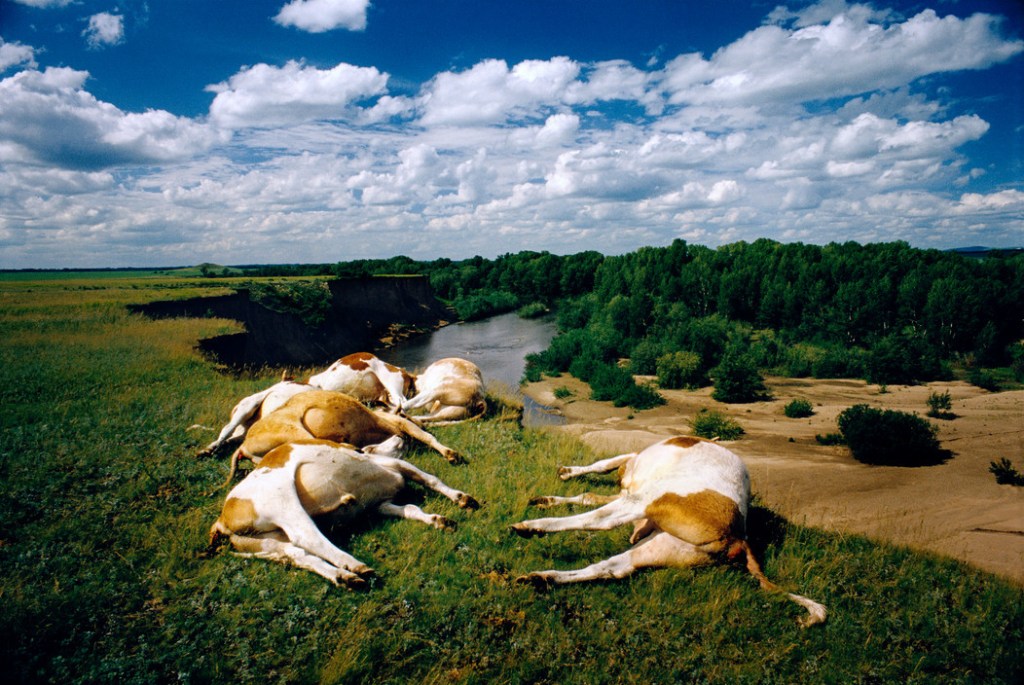
RUSSIA. Altai Territory. 2000. Dead cows lying on a cliff. The local population claim whole herds of cattle and sheep regularly die as a result of rocket fuel poisoned soil.
BANGLADESH. Asulia. 2010. Brick kilns marooned in water. They normally use the kilns 4-5 months a year in the driest seasons (from november approx). This type of brick kiln is ubiquitous in Bangladesh, but is a heavy polluter (as its coal-fired and ineffective), both in terms of CO2 and air quality. As I was shooting a storm came in with heavy winds and rainfall.
Workers digging up submerged bricks and throwing them up unto land for them to be collected and taken to the waiting boat.
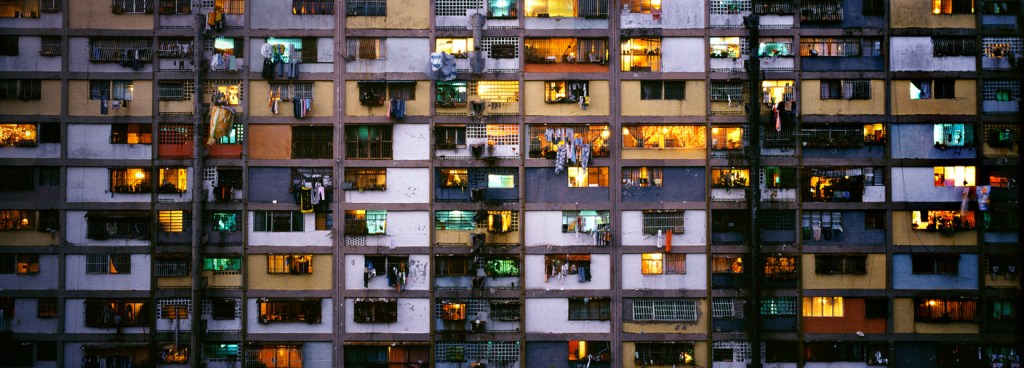
VENEZUELA. Caracas. 2006. The facade of an apartment building in Barrio 23 de Enero. The areas apartment blocks have been home to communities of squatters since the late 1950s, and the area has played impoortant role in social and political events in the country.
I’m interested in his work on urban development and future urban development, “when I’m out on the street, I try to leave all the thinking behind” (McLaren,2019:71).
MY LEARNING:
Try to be aware of an emotional sense of the people
Consider using the available street lighting, neon signage and smog to create atmosphere around subjects.
Don’t force things,
Follow your own instincts and leave thinking behind.
Read the article ‘Cannon Fodder: Authoring Eugène Atget’ by Abigail Solomon-Godeau (in Photography at the Dock, 2009, pp.28–51). This article is provided as an Appendix at the back of this course. NOTE: If you are viewing this course digitally, and you do not have a copy of this recomended book, please email enquiries@oca.ac.uk to ask for a copy to be sent in the post. (Copyright restrictions allow single photocopies only) Research the work of the surrealist photographers mentioned above. In your learning log write a bullet list of key visual and conceptual characteristics that you think their work has in common.(Open College of The Art, 2012:48)
MY RESPONSE:
This essay though challenging to read led me to begin researching surrealism, something I admit I didn’t know much about. I think this is the beginning of a journey…
Surrealism emphasised artistic processes whereby the imaginary when recorded “would offer insights into the world of “thought” and therefore disrupt taken-for-granted perceptions and frames of reference” (Wells, 2015:315). Rather like replicating the world of dreams which were thought to be repressed by reason.
French poet Andre Breton the founder of the movement, called surrealism a desire to bring clarity to the “passionate consciousness of the world perceived by the senses” (Wells, 2025:316). Wells (2015) suggests that surrealism was radical because it aimed to disorientate the spectator, push conventional ways of seeing and challenge rational frameworks.
Surrealism seeks to reveal the uncanny beneath familiar everyday things, it encourages us to see the world differently; Dali said “Nothing proves the truth of surrealism so much as photography” (Franklin, 2016:151). Franklin suggests that surrealism sat easily with photography as the camera can instantly catch juxtapositions and incongruities that we don’t always see, as well as the ambiguity and visual poetry that photography can provide. It was embraced because of other … such as geometry, subversion, scope given to the subconscious, the role of chance and a reason the dawdle like a flaneur.
Certainly some of the roots of surrealism can be traced back to the 19th century idea of the “flaneur” or dawdling observer, and Surrealism offered the growing movement of street photography freedom from previous photographic traditions. The surrealists were inspired by Atget’s photographs of Paris. Atget’s focus in Paris was medieval and local, where everything was significant and there to be recorded. Atget’s Paris is mostly empty of human figures, showing only traces only of human habitation. Clarke (1997:91) calls it psychological mapping of the cities secrets, suggesting that Atget’s photographs “imbibe rather than photograph the city” citing the image Cour 41 Rue Broca (1912) as an example of attention to detail, lack of human figures, strange and expectant atmosphere and slightly surreal:
Cour 41 Rue Broca (1912 (Bunyan, 2020)
Atget does seem to be a forerunner of Surrealism shooting juxtapositioned reflections in shop windows and statues seemingly coming to life, indeed Franklin (p152) says that much of the visual language of street photography was invented by him. Indeed as the OCA coursebook explains Cartier-Bresson, André Kértész, George Brassaï and Man Ray all continued and developed some elements of the photographic style that Eugène Atget had experimented with in Paris a couple of decades previously.
References:
Wells, L. (2015) Photography: A Critical Introduction. Abingdon: Routledge.
Franklin, S. (2016) The Documentary Impulse: Phaidon Press.
Clarke, G. (1997) The Photograph: Oxford University Press.
Man Ray grew up in New York as a child and drawing and painting as he discovered artistic life, including the gallery of Alfred Stieglitz, who promoted artists as Cézanne, Matisse and Picasso. As he began painting he was cubist inspired. He moved to Paris in the 1920s, though originally a painter tending towards abstraction, he turned to photography in the 1920’s. He was a neighbour of Atget and part of the first joint surrealist exhibition in Paris; in 1925 he bought 42 photographs from Atget as he saw a surrealist style in the work. André Breton once described Man Ray as a ‘pre-Surrealist’; certainly in the mid 1920s, his work, influenced by Marcel Duchamp, had Surrealist undertones, and he continued to draw on surrealism, and is part of the first surrealist exhibition in Paris at the gallery Pierre with Jean Arp, Max Ernst, André Masson, Joan Miro and Picasso.
During the 1920’s, Man Ray revolutionised photography with his photogram technique he called “Rayography”, a way to make photography without camera, giving a ghost-like aspect as a result of three-dimensional effects of objects shadows. He photographed portraits for personalities as well as fashion photography. In 1931, Man Ray exposed a photographic negative for the second time by mistake, which was the beginning of his Sabattier effect, often mistaken for Solarisations; this appealed to surrealist demands for a fusion between the imaginary and the real as if dreams. In 1940, during the Military Occupation in Paris, Man Ray returned to the United-States.
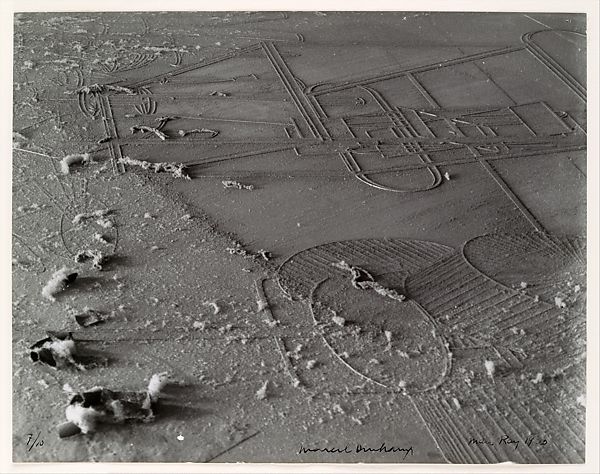
Dust Breeding 1920
I found it difficult to find what I would call documentary images from Man Ray, but as inspiration for abstract and conceptualism I have included the above image which is fascinating. This image is attributed to Man Ray and Marcel Duchamp. He was asked to photograph an artists work which was not exciting to him, he practiced on a sheet of glass with a year of dust on it with a 2 hour long exposure; from this image he removed the edge of the dusty glass and a little of the studio beyond from the original negative so that it became a separate entity.
Man Ray made much use of negative spaces, accidental compositions, and broke photographic rules. Mann ray said that he painted what couldn’t be photographed and photographed what couldn’t be painted, and it does seem that he consolidated a photographic style that Eugène Atget began.
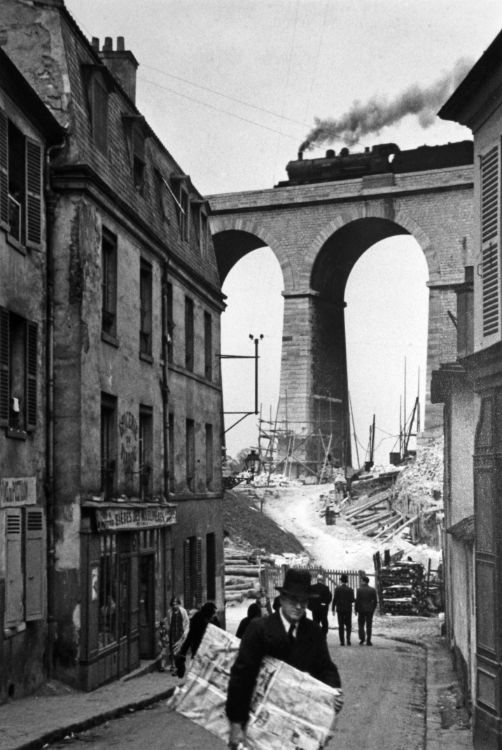
He arrived in Paris in 1925 from Budapest and joined in with its bohemian culture. In the 1920’s he met many of the Dadaists including the artist Piet Mondrain. He photographed both from his hotel window and by moving in the streets in the daytime. Clarke says that Kertesz “works on the margins and borders of our visual and mental awareness”, with chance juxtapositions and “unresolvable ironies” (Clarke, 1997: 92). It also seems that Kertesz has the perspective of an outsider, observing instead of showing that he knows the city well. He combined geometry and formal elements with suggestion and enigma resulting in ambiguous images that represented not just what his eye saw but what he felt. He observed subjects from various angles until the composition pleased his eye and valued emotional impact above technique.
Pont Des Arts, 1929 The Daisy Bar, Montmartre,
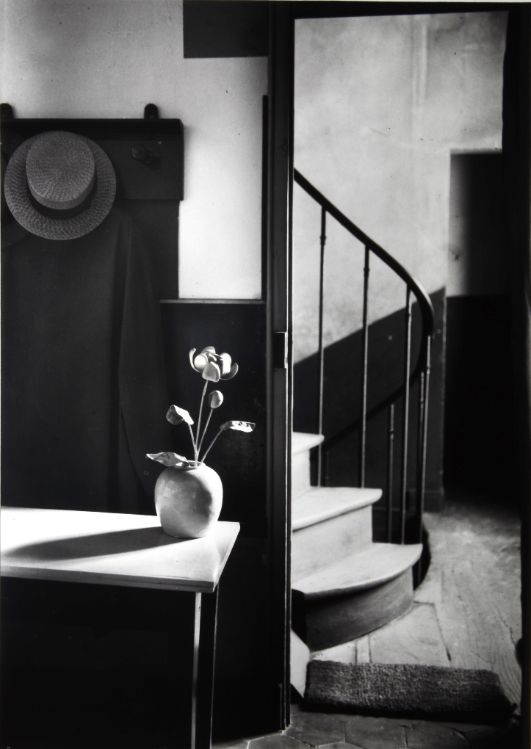
Chez Mondrian, Paris, 1926Paris, 1930 Meudon, 1928
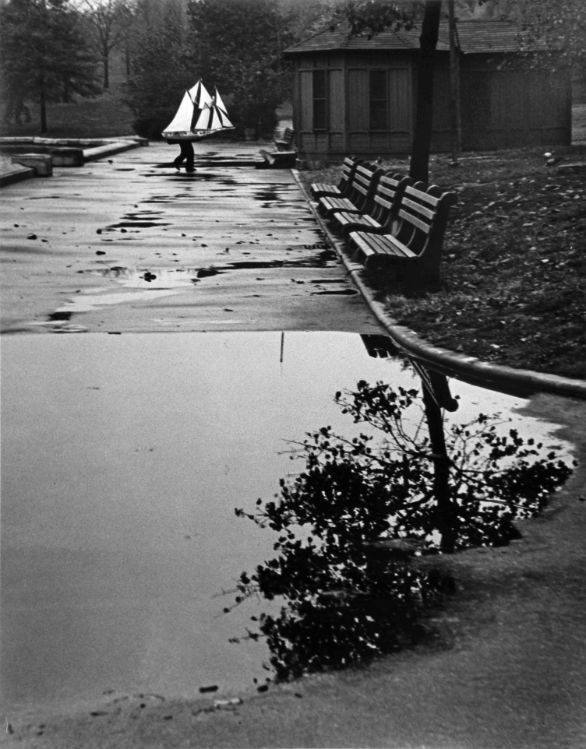
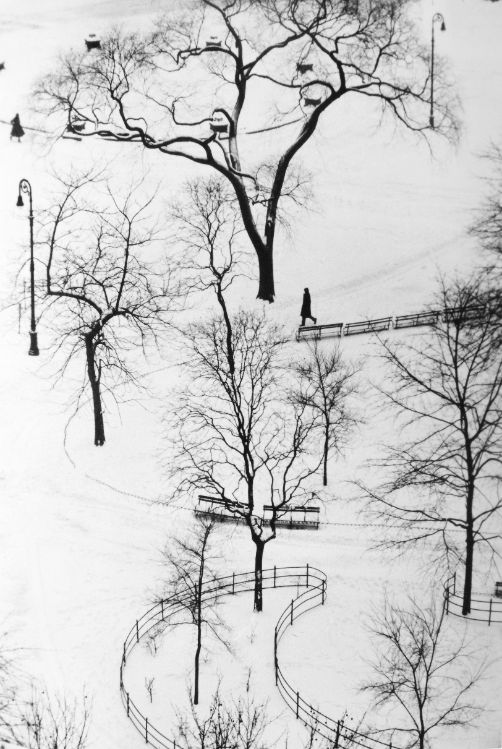
Eventually he fled France and it’s Jewish persecutions, emigrating to the United States. When in New York, Kertész he captured images of people reading, particularly in outside spaces such as parks, window ledges and balconies, particularly from the window of his 12th floor apartment near Washington Square.
Homing Ship, New York, 1944 Washington Square, New York, 1954
(André Kertész, 2020)
Using a telephoto lens, his views of snow-covered tracks and silhouettes became some of his best known images . After his wife’s death he was reclusive and relied on his telephoto lens to see the world, and took some of his most interesting, abstracted cityscapes. He also created surreal, still-life photographs of his possessions with a polaroid camera. His compositions are dynamically geometric and great examples of seeing things in a different way. All of this and he didn’t consider himself a surrealist but called himself a realist; he certainly made use of ambiguity, interesting framing, juxtapostions, geometric patterns and lines, imagery and negative space.
Brassai is well known for his images of Parisian life between the two world wars, which reveals the complexities and hidden sides of French society and culture. He was tutored by Andre Kertesz a fellow Hungarian and was friends with the city’s creative avante -garde such as Pablo Picasso, Salvador Dalí, and Henri Matisse, among others—and the city’s creative avant-garde.
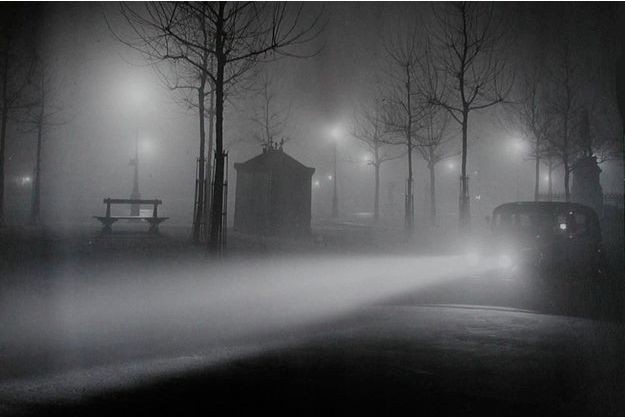
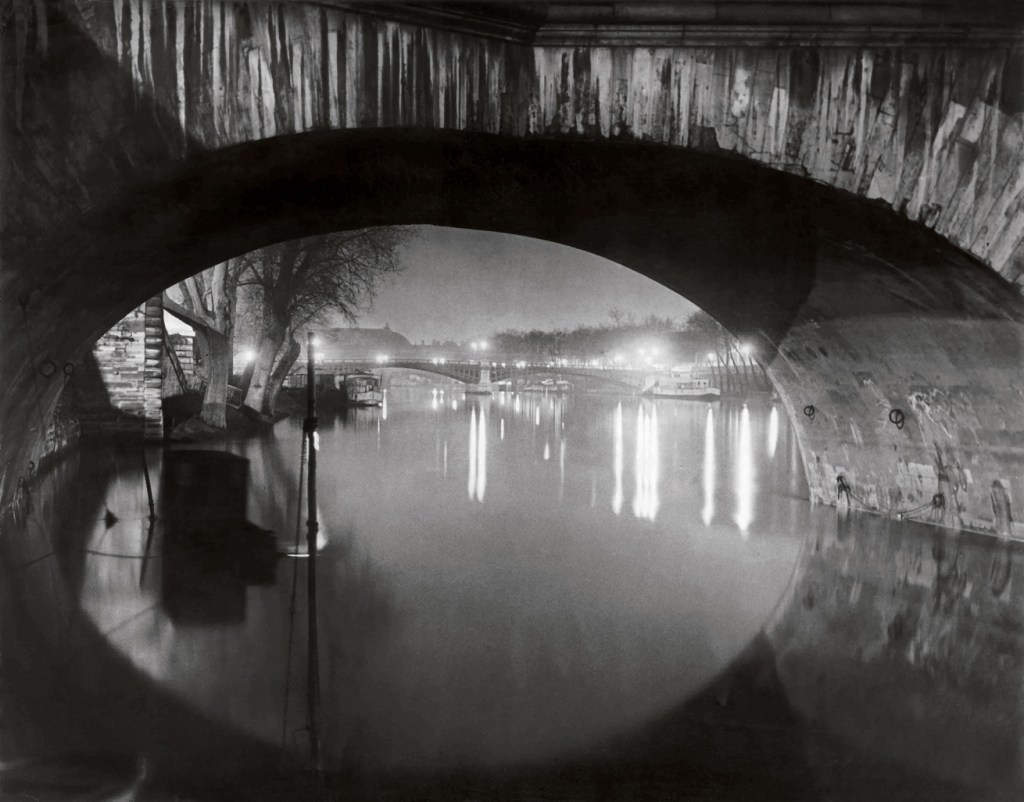
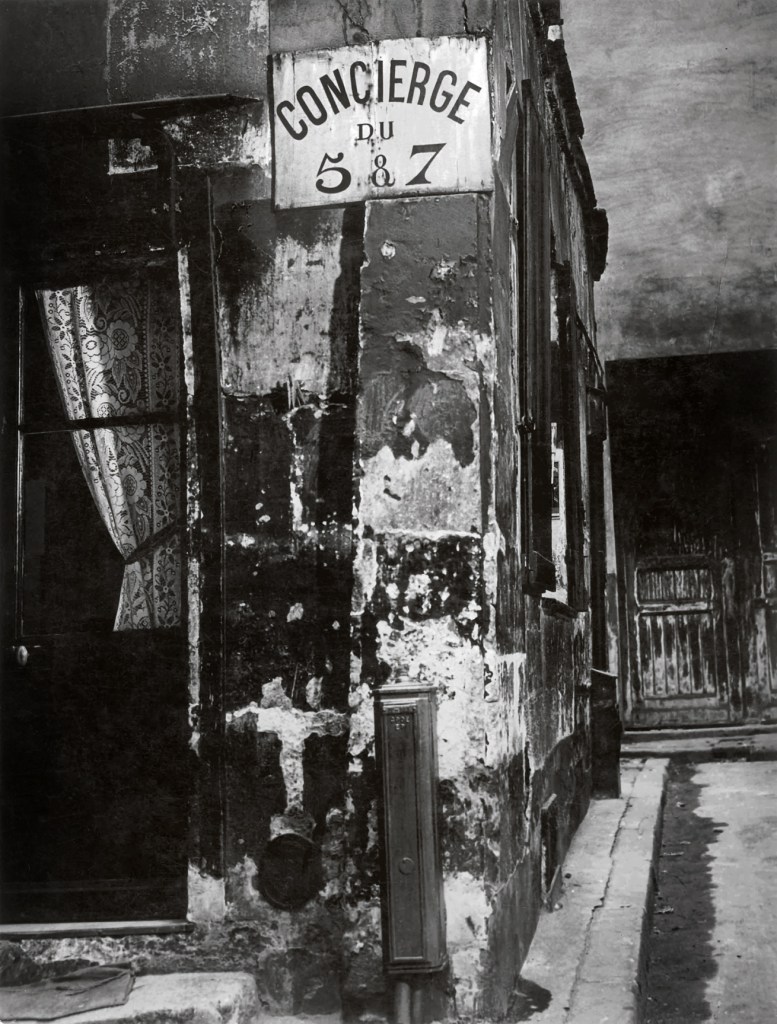
Brassai photographed like a voyeur on the streets of Paris, rather as Atget and Kertesz did, his work came to life at night when he took pictures of lovers, prostitutes, workers, social gatherings as well as empty streets and parks. Brassai explained “Night does not show things, it suggests them. It disturbs and surprises us with its strangeness. It liberates forces within us which are dominated by our reason during the daytime” (Bunyan, 2020). Clarke suggests that Brassai viewed Paris as a surreal event, bizarre and unexpected photographing at night “to suggest the darkest and deepest of the city’s needs and desires” (Clarke, 1997:92). From his series Paris after Dark (1933) this image allows the imagination psychological space and leaves a viewer uneasy:
(Photographer Brassaï at SFMOMA , 2020)
View through the pont Royal toward the pont Solférino c. 1933 Concierge’s Lodge, Paris 1933
The Eiffel Tower seen through the Gate of the Trocadéro 1930-32
(Bunyan, 2020)
Images like the above have a heavy atmosphere communicating much more than the eye can see alone. Brassai himself said ““In certain photographs, objects take on a particular light, a fascinating presence. Vision has fixed them “as they are in themselves” […]. It confers a density that is entirely foreign to their real existence.” (Brassaï, undated note).
Though the night was his greatest inspiration he also shot many images of the city in daylight, monuments, and details of everyday life. His Photographs from the thirties show his keenness for
geometric styles or abrupt cuts, shown in his famous cobblestone images of city streets.
(Lebowitz,2016)
Brassai was very interested in composition, where he combined documentary clarity with aesthetic experimentation; he shot from unusual angles, caught surreal moments and unstaged subjects, but with poetic intimacy. He shows how everything is worthy of portraying for those who know how to look as he captured the everyday, the magical, and the mysteries of common life, and made them into art. Brassaï saw things clearly, so that we can see them now:
“Most of the time I have drawn my images from the daily life around me. I think that is the most sincere and humble appreciation of reality, the most everyday event leads to the extraordinary” (Johnson et al,2012:535).
Having studied Cartier-Bresson much before I have confined myself here to the surrealist elements of his life and work.
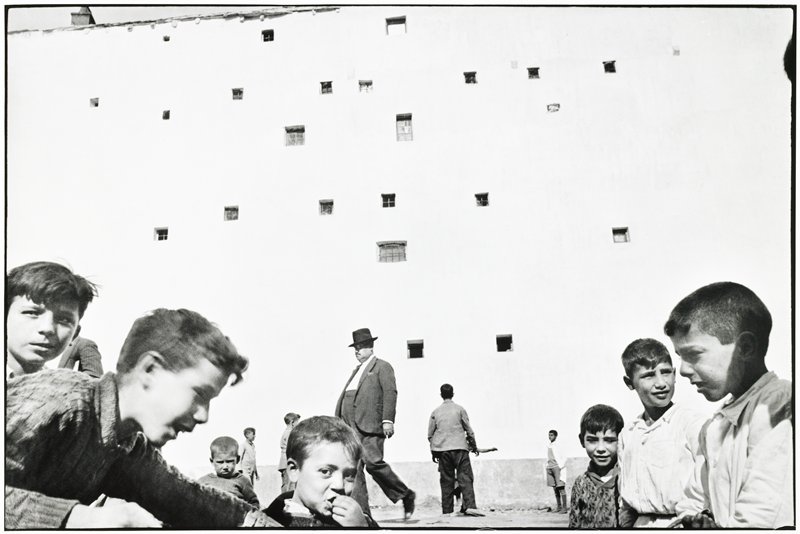
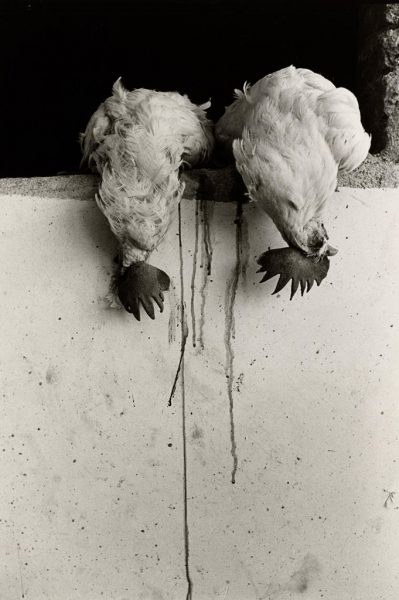
Cartier Bresson had connections to Atget and Man Ray, he was influenced by both Andre Breton (the founder of the surrealist movement who had travelled to Mexico in 1938) and the cubist painter Lhote who apparently taught him about the satisfaction in geometry, which he used along with the rules of the golden ratio (Franklin, 2016). Many of his images show that Cartier- Bresson embraced Surrealism using geometry, subversion, the subconscious, the role of chance and a reason to explore like a flaneur (by his decisive moments); however it is not so in all of his work especially his early reportage work for life magazine. These works show a surrealistic influence:
Henri Cartier-Bresson | Srinagar, Kashmir (1948) (Artsy, 2020) & V and A Children Playing in Ruins, Seville, Spain 1933 (Collections, 2020)
Arena at Valencia, Spain, 1933 (Minneapolis Institute of Art, 2020) & Madrid 1933 (Minneapolis Institute of Art, 2020.)
Cartier-Bresson wrote “I owe an allegiance to Surrealism… because it taught me to let the photographic lens look into the rubble of the unconscious and of chance “(Franklin, 2016:156). It has been suggested that the strength of Cartier-Bresson’s street photography is in “the perceptive grasp of the human condition and their ambiguity” (Franklin, 2016:156). Cartier-Bresson however said that he wasn’t totally focused on geometry as aesthetics, preferring a striving for “elegance”. I had not considered before the amount that surrealism influences are apparent in his work.
References:
Franklin, S. (2016) The Documentary Impulse. (London): Phaidon Press.
Collections (2020) Andalucía. Seville. 1933 | Cartier-Bresson, Henri | V&A Search the Collections. At: http://collections.vam.ac.uk/item/O93840 (Accessed 01/06/2020).
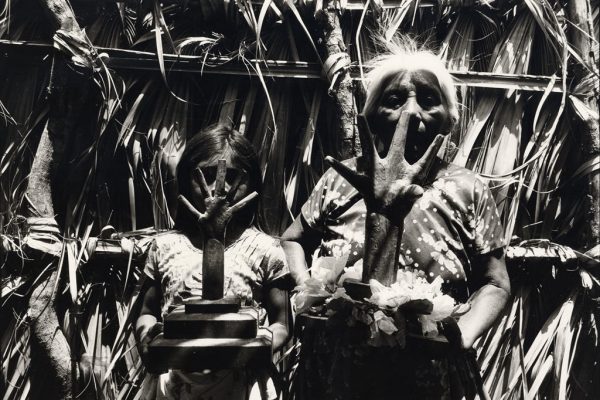
She photographed in Mexico fifty years after Cartier-Bresson. Her photography can be described as documentary, but fall into the genre of the constructed image and shows elements of surrealism.
GRACIELA ITURBIDE (2020)
Her images of Mexican society are both personal and poetic, while capturing everyday life visually. She was taught by Manuel Bravo Alvarez another photographer I need to explore more.
KEY VISUAL AND CONCEPTUAL CHARACTERISTICS IN THE WORK OF THE ABOVE PHOTOGRAPHERS
Ambiguous images
Juxtapostioning
Use of negative space
Use of shadows
Use of geometric patterns
Shot from unusual angles
Framed abruptly
Accidental compositions, use of chance.
Break traditional photographic rules of composition
See things differently and show us things differently
Disrupt our perceptions
Reveal the uncanny
Some dream like imagery
Fusion between the real and the imaginary
Capture surreal moments
MY LEARNING:
I have also read much about the surrealist movement in art at the same time as researching these photographers. I have always been particularly interesting in different ways of seeing, and unconscious ones in particular and so this has broadened my knowledge. It will be interesting how this might trickle into my photography.
Do your own research into the FSA project and the work of the photographers listed here and others.(Open College of the Arts, 2014:44).
The Farm Security Administration Photographic Project (1935-1942), the most famous of America’s documentary projects, was among President Roosevelts efforts to fight the depression as a rural relief effort. It began under the Resettlement Administration in 1935, that became the Farm Security administration (FSA) in 1937. Roy Stryker was the head of the historical section in the RA Information division and supervised roughly 20 people to make a pictorial record of the impact of the Great Depression on the people; his actual brief was to gather photographic evidence of the agencies good works and give these to the press (Marien, 2006:278) . Eighty thousand pictures were taken to “document the problems of the depression so that we could justify the New Deal Legislation that was designed to alleviate them” (Curtis, 2020:4).
Stryker understood the value of making a visual record and said that he could show depression without showing social strife, for instance strikes, however to me many of the images do exactly that. I have researched many of the FSA photographers before, such as Walker Evans, Dorothea Lange, Margaret Bourke-White and Arthur Rothstein, though I have turned up one or two new facts in this research. Walker Evans was dismissed after a year because his images were too uplifting and picturesque; whilst Rothstein was accused of fakery when he moved a Steer’s skull to make a better image and many of the photographers were charged with altering their photographs for impact. I had not heard before of Gordon Parkes and Esther Bubley, who were employed when the focus changed from rural to urban life, Parkes photographed the office cleaner and Esther Bubley women workers.
Ultimately many of the 175,000 images weren’t used especially if they didn’t fit Stryker’s objectives. Of the FSA photographers many such as Walker Evans, Paul Taylor and Dorothea Lange moved into gallery photography afterwards.
After my reading of Curtis’s piece below I am more aware that these documentary photographers posed as “fact gatherers” and were consciously persuading others.
References:
Curtis, J. (2020) ‘Making sense of Documentary Photography’ In: History Matters Making sense of Evidence series pp.1–24. (Accessed 29.6.20)
Open College of the Arts (2014) Photography 2: Documentary-Fact and Fiction (Course Manual). Barnsley: Open College of the Arts.Curtis, J. (2020) ‘Making sense of Documentary Photography’ In: History Matters Making sense of Evidence series pp.1–24. (Accessed 29.6.20)
Explore the website Humphrey Spender’s Worktown. Briefly reflect in your learning log on Humphrey Spender’s documentary style and the themes of Worktown, with particular emphasis on the ethics and purpose of the project. (Open College of the Arts, 2014:42).
Spender was the main photographer for the Mass observation project. This was begun by Tom Harrison, anthropologist and Humphrey Jennings, surrealist painter and Charles Madge, poet, in Bolton in 1937. It aimed to record the lifestyles of ordinary people and was dubbed “Anthropology at home”; He took approximately 850 images in Bolton and Blackpool between 1937 and 1938, its scale was unique.
Spender was keen that people shouldn’t be influenced by the presence of the camera as they might react artificially and also intended to avoid preconceived theories; so they shot in concealed ways which led to them being called “spies, pryers, mass-eavesdroppers, nosey-parkers, peeping toms, lopers, snoopers, envelope-steamers, keyhole artists, sex-maniacs, sissies, society playboys.” (Spender quoted on Bolton Worktown). He used a rangefinder camera with 35mm film which was unusual then as most were using large format cameras.
Library reading room, April 1937. Photograph: Humphrey Spender/Bolton Council, from the Collection of Bolton Library and Museum Services
The Mass Observation (MO) was influenced by various elements. Harrison believed in close observation and lived in the slums of Bolton with others who made daily observation. Whilst Spender had a strong social conscience and was concerned about social injustice (Bolton Worktown, 2020); he knew that his photographs could draw attention to inequalities in society. His photographs and did draw attention and he was recruited by the Daily Mirror as a travelling photographer. It has been said that their work laid the foundations for the welfare state (Jackson, 2015).
This style of candid photography is still popular today, however you could take it further and claim that the MO was a forerunner of today’s surveillance culture. I think that it is it’s firstly intention that ameliorates this; Harrison and Spender aimed to use the project to expose and educate the rest of the country and society to the realities of life in some places/sectors. I also think that the way Spender has recorded the issues that concerned him, with objectivity and integrity also ratifies his images and his contribution to the project.
It is probable that had they been overt in their methods of collecting and recording everyday life the results would not have been so honest.
My Learning:
The intention, ethics and methods of photographing affect the validity and reception to a project.
References:
Bolton Worktown – Photography and archives from Mass-Observation (2020) At: https://boltonworktown.co.uk/ (Accessed 29/06/2020).
Do your own research into the work of the socially committed B&W photographers discussed so far, both British (Exit Photography Group, Chris Killip, Nick Danziger, Bill Brandt) and American (Jacob Riis, Lewis Hine). Was this social documentary work their prime focus? How does it fit with other work done by these photographers?Make notes in your learning log or blog. (Open College of the Arts, 2014:34)
which I add to a little here. Then I will look at those I’ve not researched before……
BILL BRANDT (1904-1983)
He had a multifaceted carer, shaped initially by a circle of friends in the surrealist movement in France, including spending time in the studio of Man Ray; he later moved into fine art photography.
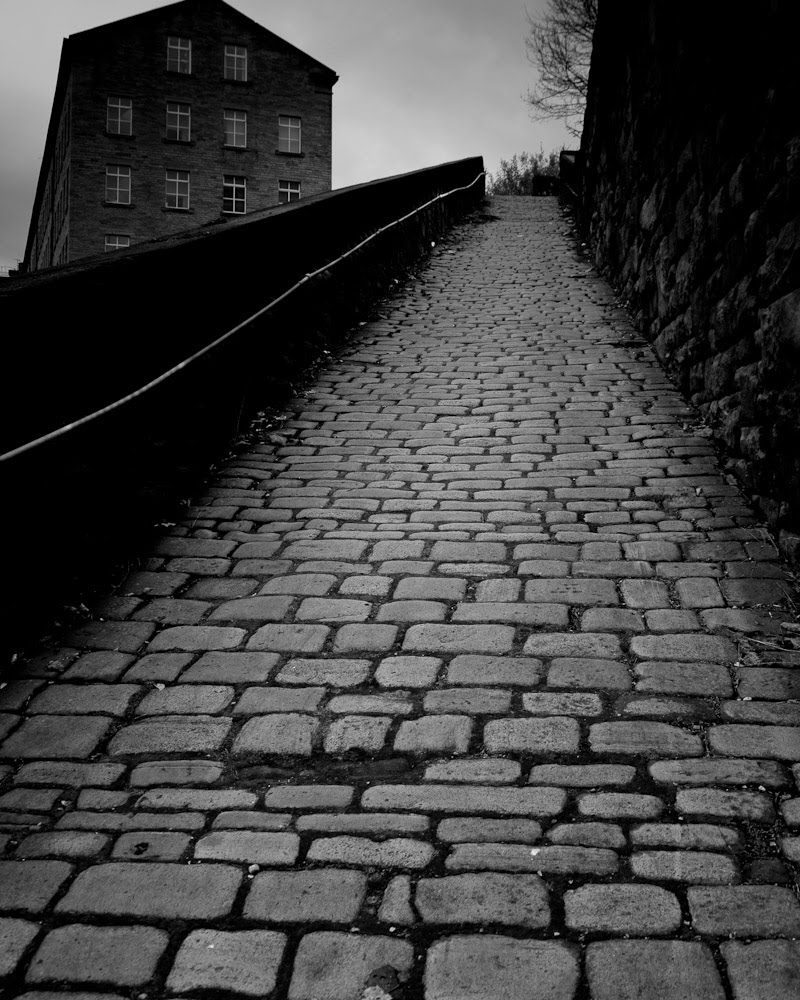
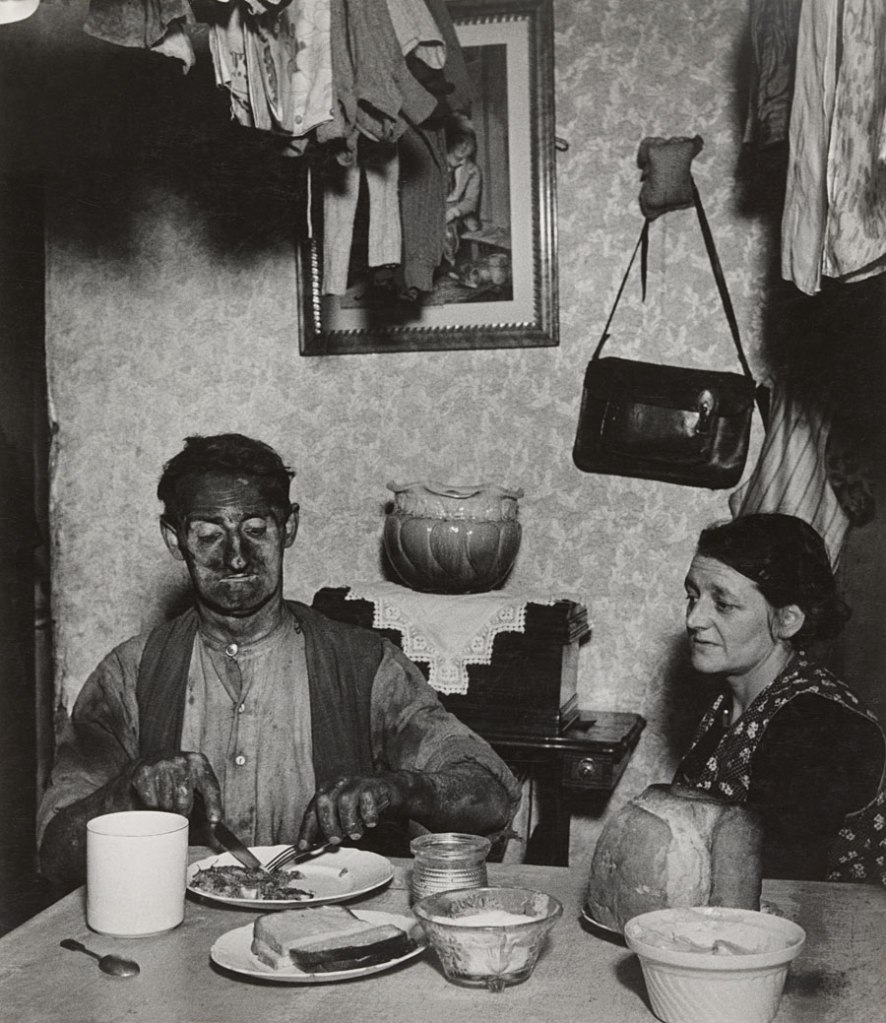
His work The English at Home exposed ironies in the British Class system (Johnson, 2012) and his book A Night in London also looks at the British class system. Brandt also photographed the depression compassionately in the North, especially the miners in Northumberland:
1937 A Snicket in Halifax (Bunyan, 2020)
Northumbrian Miner at His Evening Meal 1937 (Bunyan, 2020)
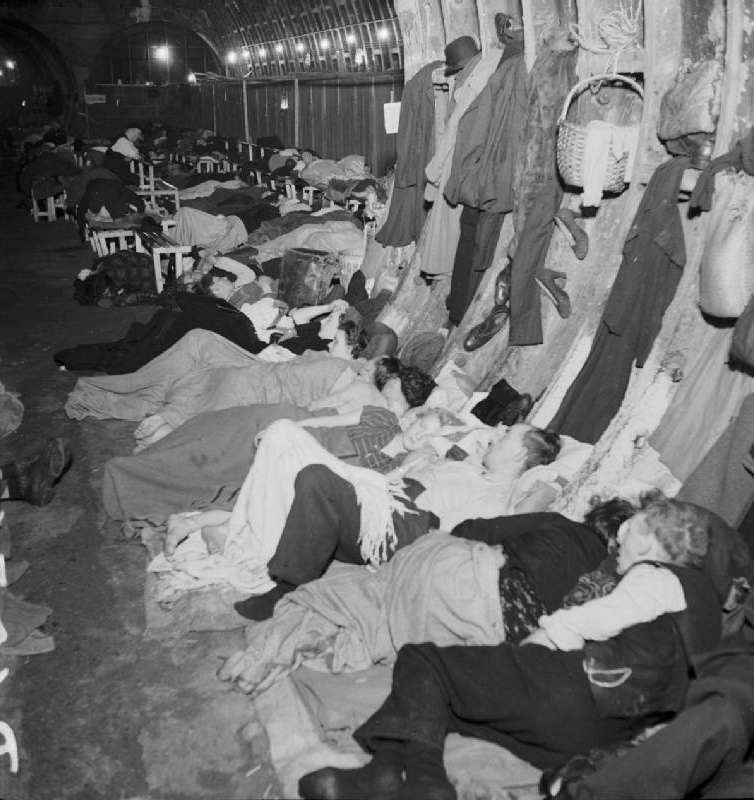
He was commissioned to take photographs of the many underground bomb shelters during the second World War:
Liverpool Street Underground Station Shelter (Bunyan, 2020)
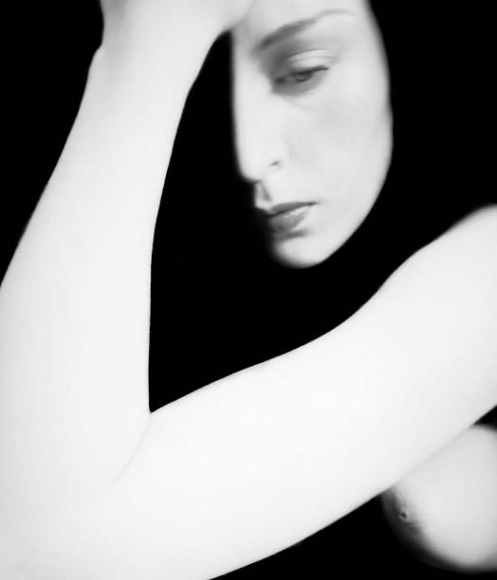
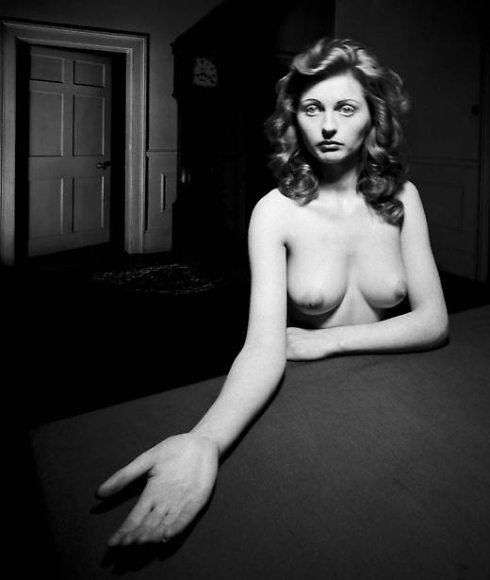
After WW2 he investigated themes portraying poetic sensibilities displayed in contemporary art photography and as he increasingly arranged things for the camera, he took the nude from the studio and placed in domestic situations , even on the beaches of England and France. He used a wide angle camera lens so that he could photograph whole rooms; and was recommended one but he found that it distorted and the images of distorted abstract nudes came from this accident, he describes them as abstract sculpture. His surrealist abstract photographs were not popular at the time but are now. He describes some of them as lucky finds but I believe it is down to his eye.
nude London 1952
nude Hampstead London 1952
Nude Micheldever Hampshire 1948
(Bill Brandt, 2020)
However despite his photographs of the Depression and social class, I’m not convinced that his work went beyond the artistic portrayal of their sooty blackened bodies and wouldn’t label him as socially committed.
Chris Killip (b1946)
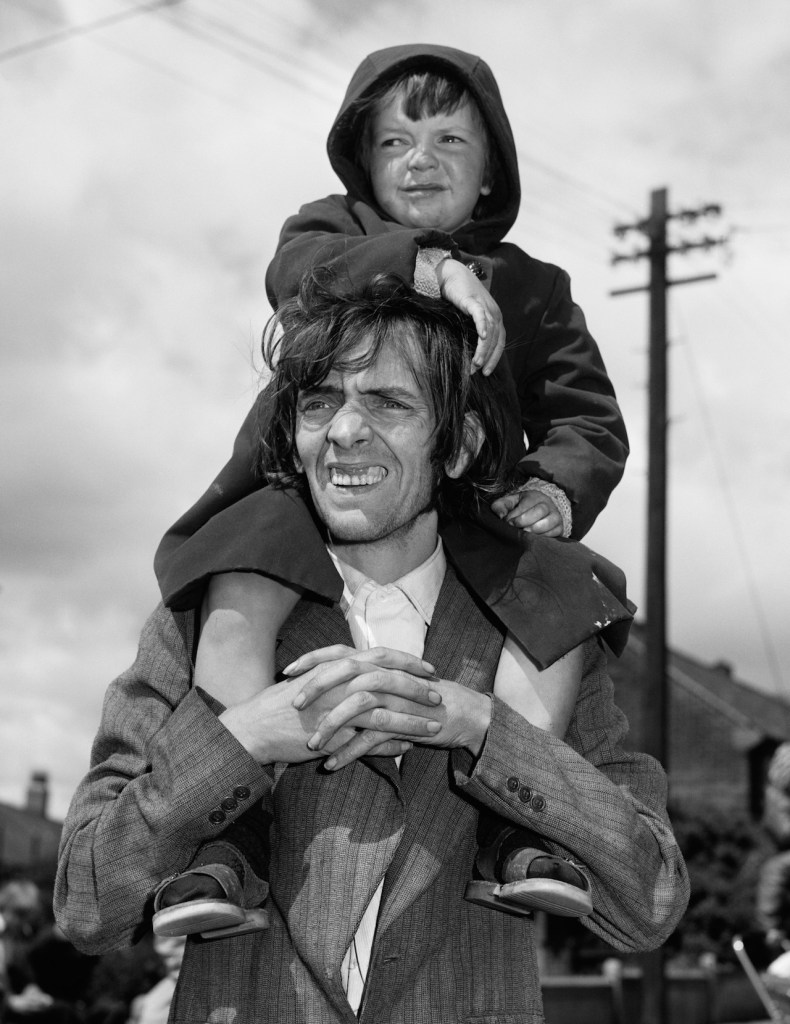
Photographed the heavily industrialised areas of the north during the 1972 and 80s, steel works, shipyards and coal mines; these were published in his book “In Flagrante” (1988). He spent a long time in a place whilst photographing, sometimes years, often in closed communities, but not always of those he knew. He says his photographs changed as he got to know people. He says “history is written, my pictures ae what happened” ( Smyth, 2017) ). Killip says that he was interested in recording people as part of history rather than to blame politicians. He seems to me to be a socially committed photographer as he portrays in an unromantic straightforward way what he sees and knows from learning about a place and people.
Father and Son Watching a Parade, West End, Newcastle; Chris Killip (British, born 1946); Newcastle, England; negative 1980; print 1986; Gelatin silver print; 34.7 × 26.5 cm (13 11/16 × 10 7/16 in.); 2014.36.22
Youth on Wall, Jarrow, Tyneside; Chris Killip (British, born 1946); England; negative 1976; print 1986; Gelatin silver print; 27.5 × 34.1 cm (10 13/16 × 13 7/16 in.); 2014.36.14
(Smyth, 2017)
Nick Danziger (b1958)
Danziger’s Britain was published in 1996, it focused on under privileged members of society; he lived among the homeless and unemployed in many of the ruined manufacturing “no-go” areas of Scotland, Wales, Northern Ireland and England where he slowly won the trust of the street children and got to hear the stories of hundreds of society’s outsiders; it was a powerful and disturbing documentary.
The British (2001) contrasted the worlds of the upper and under class, showing the inequalities and polarisation in the upper and underclass; a vivid portrayal. In 2003 Danziger travelled with Times editor Peter Stothard for a month to document visually the Prime minister Tony Blair; here President George W. Bush and Blair make eye contact as if both are looking into a mirror, taken the day before American troops had entered Baghdad, this was an important document of history.
President Bush and Prime Minister Blair at Hillsborough Castle, 2003 (Nick Danziger | Widewalls, 2020)
He establishes close relations to his subjects, though not impartial; however he does aim to give those who rarely feature in the media a voice. He believes that photography can bring positive social change for individuals and local communities.
He has done much of his work abroad often in war torn places, recording the ordinary people caught up in the conflicts; here you can see his social commitment.
I was pleased with my feedback. My tutor was positive about my images, my solution to shooting in the lockdown situation, the concept, and the narrative technique.
I look forward to discussing with my tutor clarifying what he means about possibilities for “direct controlled observation” and “playful narrative peformances”.
Due to the circumstances this was in shot it would be a difficult assignment to reshoot and I don’t think the feedback suggests that I should do this. However I have actioned below my tutor’s suggestion to think about the form of the final work and how it might be delivered, especially in the light of the new learning I’ve taken onboard in the intervening period.
A physical representation would be good, in a gallery. I realise that exhibitions have to be adapted for the gallery space, so I would look for a gallery where I could set up a rectangular shape in the middle of the gallery.
With a rectangular central space, where the images are placed around the outside, and the viewers could walk around the outside of a house – as if they are viewing my house through windows, as in my work. This would give a good opportunity for activating viewers memories and responses.
Focusing on traces of an isolating community from the outside, my visual strategy was to shoot through windows exposing details in the mundane, keeping things simple and uncluttered and with good depth of field.
Technically my concept proved challenging to execute, working with glass is never easy. I experimented both by using reflections and eliminating them. I decided to give the simple detail I wanted, I would eliminate reflections as they would be distracting; this took patience and experimentation.
Composition and framing were led by the need to include some window frame as context and I learnt a lot as I tried different perspectives (angles, heights, distances) to achieve this.
I decided that I could vary the perspective between images if I maintained continuity of subject strongly enough.
I tried various techniques to achieve the clarity that I wanted, working always with a tripod: Good depth of field, clean windows, various times of day and weather conditions (unfortunately it was predominantly sunny for the period), polarising filter (though ultimately I didn’t use this), black fabric as a blocker to eliminate reflections, live view so I could check for shadows, colour casts and distracting details.
I used my prime lens efs 24mm to keep the focal distance constant.
I shot and revised the images over a couple of weeks until I achieved what was looking for.
Achieving consistency of colour across the series of window frames was challenging, as they do vary and of colours shooting conditions changed – I tried my best to make these uniform, but maybe more could have been achieved? Would this have been realistic though?
Quality of outcome
The outcome looks simple, but I believe it communicates on other levels as well and that viewers will empathise with the representation.
When shooting and editing I constantly returned to my intention and I think has helped to give a clear story.
I considered at one stage adding text (perhaps govt messages) to the images, but realised that discontinuity is likely to be minimal and that for a long time to come viewers should quickly connect and give meaning to the images.
Importantly I believe that the series does say something to my audience about my personal response and allows them to reflect and respond also.
My regret is a lack of punctum, I feel, except in the first image; I considered ways to go beyond the signifiers and signified to achieve this but I wanted to share the ordinary in a simple way so decided against constructing something that wasn’t there.
Demonstration of creativity
I was forced to be flexible as the Covid19 situation unfolded, as I had to restart this assignment in a different location from my first draft and under restricted conditions.
My loss of equilibrium stalled me for a while, however eventually certain advice helped to get me going again: embrace the constraints, don’t get too wrapped up in the end product, develop the project over time.
Though the series may appear simple the windows represent my feelings of isolation and barriers to my freedom, and the hiraeth I felt* whilst the subjects show my reaction to perceived threats to my community and my coping mechanisms – I have expressed my emotions.
Some of my creativity in this project was technical as I struggled to get clear shots without reflections of the subjects through glass – I tried a lot of new things.
Context
There was an awful lot of reflection over the period I worked on this project. My increased interactions with my peer groups aided this and I have recorded these, as well as my actions after such reflections. I also created a “Covid 19 thoughts” document to capture pertinent reflections and advice.
Whilst I was preparing to share the work, I reflected that the work is also a response to me withdrawing from the world not only for my safety but also as I felt isolated from my second home.
My research outside of the coursework was led by concept for my assignment but also by opportunities to attend virtual artist talks and virtual photography events.
In fact, the increased opportunities for learning online slowed my ability to submit this assignment but I believe it will be a worthwhile time investment long term. I have set out in learning log and mind maps my learning points from the research that I’ve done and advice that I’ve gathered.
I have more general research that I’ve done during this period but will post later as I don’t want to delay this assignment submission further; I suppose it is a regret that I don’t seem to have enough hours to do all the research that I would like to!
*Hiraeth (Welsh pronunciation: [hɪraɨ̯θ, hiːrai̯θ]) is a Welsh word for homesickness or nostalgia, an earnest longing or desire, or a sense of regret (Wikipedia 2020)
























 Photography 2: Documentary