RESEARCH AND RELECTION: PHOTOGRAHERS TALKS

THE PHOTOGRAPHERS GALLERY Talk: Hannah Reyes Morales (Online) 24.6.20

Hannah Reyes Morales is a storyteller, photojournalist and documentary maker. Born in Manila, as a child she looked to images to learn about the past. She uses the photograph to understand the present and the people in it. Her work, which often shows individuals in conditions of poverty, is tender and she photographs peoples with dignity aware of the social injustices and extreme inequalities there. I was attracted to this talk as I have visited and worked in the Philippines many times.

She grew up looking at images in history books that made her uncomfortable as they portrayed native Filipinos as savages; I remember seeing images like this when I visited the Philippines last year; for instance a poster about the human zoo that was set up in 1904. Though she couldn’t articulate the discomfort she felt, she understood the need to be equal with those we photograph, rather than photographing people out of context.

Hannah wanted to represent people around her, and became a photojournalist in the time of the drug war, with violence, death, mass incarceration. But she also saw life continuing and happening and wanted to help make space to show this other side: love and intimacy in a hostile environment. She described it as becoming more intentional about what she was capturing.

She reached a point where she had to do work that she aligned with even though she had to validate why her Filipino perspective was important; she explained how the Filipino perspective is unique but also global, partly because of the wide “diaspora” (a scattered population that originate from a geographic locality). Indeed her understanding of America was defined by the contents of the Balilkbayan boxes (corrugated box) containing items sent home by overseas Filipinos. 

Hannah talks about the importance of the Filipino concept of other people “Kapwa” and seeing yourself in others, a shared inner self when she is working, as this is what she aspires to when taking photographs. She recognises the humanity in herself and others and this is how she engages in the act of story telling. . Kapwa is also about sharing burdens whilst at the beginning she was answering individual questions with her photos she now thinks in general about not forgetting the past but moving forward. Hannah realises now that she has enough bodies of works that are threaded together to begin to answer questions

Roots from ashes connects her to her grandmother who along with others was interred in 1944 bythe Japanese Imperial in red house, and repeatedly raped for days. Though many of the are now dead some gathered together to tell their story through the media, in the hope of seeking support and justice.

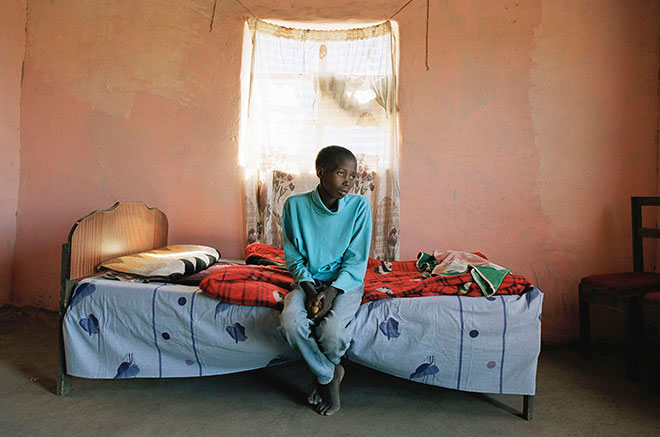
The Shelter from the storm is her work about women displaced by typhoons who wind up working in the sex trade. She remembers seeing historical news cuttings of women being used in the sex trade under Vietnamese rule as well as the American’s. The work is about how Filipino women’s’ bodies are commodified. She is also trying to understand intra generational trauma.

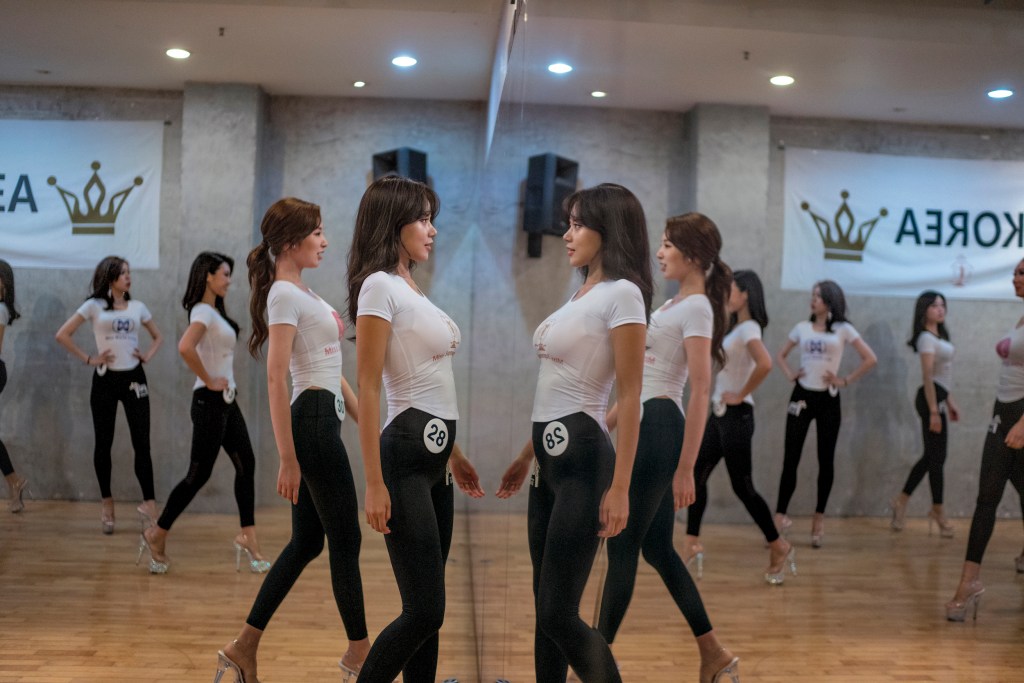
Her work on beauty culture and redefining beauty across 5 continents, focuses on how to reclaim or redefine beauty and how it is now much more inclusive:

She believes that as a photographer you need to learn when to step aside to let someone tell their own story, so a good translation is one that doesn’t alter someone else’s narrative.

In the time of Corona Virus she returns to the importance of understanding where she is in the context of history and to use photography to heal by moving forward. She hopes that the work that she’s done will have some effect on those situations. Hannah’s success is her immersion in the country is that she’s not capturing what’s literally in the photograph and that she widens the lens to open the image.  I’m interested that she thinks it is important to document your own communities but would also like to see a more inclusive landscape for photographers; for instance that there is perspectives of the Philippines from outsiders and those outside of mainstream authorship -She has hopes that all will be able to be interpreters.

My Learning:

  • When documenting someone elses story consider stepping aside to let them tell their own story.
  • Try to photgrah people in context and with dignity
  • She has varied styles of photographing I terms of colour saturation, lighting and perspective but these can still sit together well as a series.

References:

Givhan, R. and Morales, H. R. (2020) ‘The idea of beauty is always shifting. Today, it’s more inclusive than ever’ In: National Geographic 07/01/2020 At: https://www.nationalgeographic.com/magazine/2020/02/beauty-today-celebrates-all-social-media-plays-a-role-feature/ (Accessed 27/09/2020).

Talk: Hannah Reyes Morales (online) At https://thephotographersgallery.org.uk/whats-on/talks-and-events/talk-hannah-reyes-morales-online (Accessed 22/07/2020).

Hannah Reyes Morales (2020) At: https://hannah.ph/Redefining-Beauty (Accessed 27/9//2020).

Next Post: https://nkssite5.photo.blog/category/learning-log-research-and-reflection/zoom-oca-meetings/oca-tutor-led/andrea-norrington-20-7-20/

RESEARCH AND REFLECTION: PHOTOGRAPHERS TALKS

DOCUMENTARY PHOTOGRAPHY RECONSIDERED – AOP WEBINAR – 30th June 2020

Michelle Bogre moderated a panel discussion by: Stephen Mayes, Nina Berman, Ed Kashi and Paul Wenham-Clarke who presented work and then discussed how we should reconsider documentary photography during a time when it is more relevant than ever but at the same time is undergoing great changes.

Stephen Mayes who has managed top level photographers teaches and writes about the ethics and practice of photography.  He believes we should consider digital photography as a separate discipline to traditional photography, and we should be aware how audiences are changing as our world does.

Nina Berman, a documentary photographer, filmmaker, author and educator, gave examples of how to photograph with dignity, in particular in areas of sexual abuse.

Paul Wenham-Clarke applies previous skills in advertising photography to documentary; he gave good examples of ways to involve subjects and be truthful.

Ed Kashi, photojournalist, filmmaker, speaker and educator, has transformed his photography from a traditional approach into a more hybrid one using a variety of media.

Lots of questions were raised such as:

  • Is the line between documentary and Art photography indelible? 
  • Can we trust the photo or has photography been transformed into something different?
  • How does digital photography change the relationship between subject and presentation?
  • What is digital photography proof of?
  • whose truth is a photograph?
  • Do we need new ethical standards?

My learning:

This talk combined with the Lumix Festival talks that I have briefly summarised below has given me a lot of food for though for my critical essay, and hence I have only given a brief outline of the content of the discussion.

It has also led me to buy Michelle Borges book “Documentary Reconsidered” (2019) which I shall now read.

Reference:

Documentary Photography Reconsidered (2020) At: https://www.the-aop.org/what-s-on/events/current-events/documentary-photography-reconsidered (Accessed 30/06/2020).

Next Post: https://nkssite5.photo.blog/category/learning-log-research-and-reflection/photographer-talks/hannah-reyes-morales-24-6-20/

RESEARCH AND REFLECTION: PHOTOGRAPHERS TALKS

LUMIX FESTIVAL VIRTUAL TALK 22.6.20 STORYTELLERS OF THE FUTURE

Live talk with FRED RITCHIN moderated by Karen Fromm

This was the another Lumix Festival talk that I found particularly inspiring, so much so that I may build on some of the ideas for my assignment 4 critical review. The questions that are at the heart of this festival are important to me going forwards:

  • How can visual storytellers be useful in the world?”
  • “How can they make the right kind of impact with their photographs?”
  • “How do the image-makers of the future create meaningful media?”

Ritchen is a professor in photography and a co-director of the New York University Magnum foundation photography program; he’s also worked as the picture editor of the New York Times Magazine. He co-founded PixelPress (1999) an online publication experimenting with new methods of storytelling and has recieved an award for ethicl behaviours in photojournalism.

The premise of his talk was that we should do things differently to get real responses to images. He pointed out that whilst digital media is fast changing in journalism image-based storytelling still largely consists of the single photograph, slide show, and short video. He asked:

  • Can the visual storyteller act as an author who interprets issues and events with subtlety and depth, rather than be employed mainly to illustrate text or provide images to attract readers?
  • Can the journalistic photograph be used to provoke important questions?
  • Can the visual journalist be respond in addition to what they see, be proactive and aim to reduce suffering ahead of time.
  • How can readers be encouraged to be come more engaged and given more complex narrative?
  • How do we preserve what’s left of the credibility of the photograph?

To support this Ritchen gave lots of examples of good practice, rather than images that will win prizes – some of them follow below:

Images of death:

In June 1969 in Life magazine “The Faces of the American Dead, One Week’s Toll,” were published just as the simple identity card pictures only of fallen US soldiers in the Vietnam war that week. These Ritchen says provoked stronger impact than war pictures would have, saying that “it was no longer the repetitive recitation of statistics concerning each week’s dead that was sufficient, but the requirement that each person killed must be looked at and recognized as a unique individual.” (Ritchen, 2020).

(LIFE Magazine June 27, 1969, in Ritchen, 2020)

This idea was also used more recently in the New York Times “Faces of the Dead” where you could click on one of thousands of squares to see images of a U.S. soldier killed in Iraq or Afghanistan and also search for the war dead by location which enabled readers to engage more proactively with the information

On May 24, 2020 the New York Times created a front-page memorial for those Americans who have died from COVID-19 in a different manner, detailing just the names, age and hometown of the dead, and a short phrase describing something important about each individual’s life. Ritchen applauds the way this individualises those that died and worked against the fatigue with numbers. Ritchen suggest that in the Age of Image there may be more effect in the less that can be seen (Ritchen, 2020).

New York Times, May 24 2020 (Ritchin, 2020)

Ritchin also cited the work I have previously studied by Anton Kusters (https://nkssite5.photo.blog/category/learning-log-research-and-reflection/photographer-talks/anton-kusters-4-3-20/) where a beep on the soundtrack represents a death in a concentration camp, and an image of the sky above represents each concentration camp. I can see that Ritchen is promoting is methods of visually narrating that provoke thoughts of the normal lives of those dying in wars, to show that there was life beyond the image.

Ritchen also drew attention to the book “Nuclear nightmare: Twenty Years since Chernobyl” (2006)

with photos by knoth, this was particularly interesting as I’d heard a talk by Knoth the previous day (https://nkssite5.photo.blog/category/learning-log-research-and-reflection/photographer-talks/knoth-and-barnard-photography-in-a-fragmented-world-21-6-20/ ). In this work Knoth’s images supports documentation of the impact of nuclear accidents in eastern Europe, on the health of people.

Nuclear NIGHTMARES (s.d.) At: http://www.pixelpress.org/chernobyl/ (Accessed 11/07/2021).

Nuclear NIGHTMARES (s.d.) At: http://www.pixelpress.org/chernobyl/ (Accessed 11/07/2021).

The idea of a “rollover” combined with an image for additional information was new to me.

I have also since explored the Four Corners Projectconceived and compiled by Fred Ritchin, supported by the International Center of Photography and the World Press Photo Foundation. The software is open-source and free for use by the public. Users can put information into the corners of photographs, eg code of ethics, backstory, image context, links or related images. This looks like a great resource that I must try out.

These examples above align with Ritchen’s belief that we need meta-photographers who think what to do with images and how to get good coverage from them. Interestingly he suggests that photo books are probably more respectful than the swipe cultures of social media photography.

This talk by Ritchen has been really inspiring.; the last time a photographer and panel impacted me so much was the Mark Neville talk 4.4.20 (https://nkssite5.photo.blog/category/learning-log-research-and-reflection/photographer-talks/mark-neville-4-3-20/ ).

MY LEARNING:

As a documentary photographer to make a difference:

  • Be accurate, don’t add or subtract things from the visual elements or stage to make something look exciting
  • Don’t revictimize people, by replaying negative, sordid or sad scenes.
  • Contextualise accurately
  • Don’t be reactive
  • Think about the impact of work on the world
  • Avoid stereotypical images
  • Try Interactive photos” portraits
  • Show images but the reveal information, such as “Rollovers” to give delayed information
  • Value photo books
  • Try using the template from The four corners

Generally it has made me think about how a visual storyteller should do things differently to:

  • Remember I am an author when photoraphing and have a responsibility to understand properly what I am seeing/showing
  • interpret with subtlety and depth
  • provoke important questions and photograph to create reaction/response
  • Respect and collaborate
  • be proactive
  • use diverse strategies available in the digital environment, to engage the reader and allow for more complexity in the narrative

References:

Four Corners Project (2020) At: https://fourcornersproject.org/en/about/ (Accessed 22/06/2020).

Nuclear NIGHTMARES (2020) At: http://www.pixelpress.org/chernobyl/ (Accessed 23/06/2020).

Ritchen, F. (2020) Remembering the Dead, Differently. At: https://www.fotodemic.org/features/remembering-the-dead-differently (Accessed 11/07/2021).

Storytellers of the Future | Lumix Festival für jungen Bildjournalismus (2020.) At: https://lumix-festival.de/en/themen/storytellers-of-the-future/ (Accessed 23/06/2020).

Next Post: https://nkssite5.photo.blog/category/learning-log-research-and-reflection/photographer-talks/documentary-reconsidered/

RESEARCH AND REFLECTION: PHOTOGRAPHERS TALKS

23.6.20 LIVE LUMIX FESTIVAL TALK – STORYTELLERS OF THE FUTURE

This photographer and his talk was along the same theme as Fred Ritchen’s talk above and I may use some of the material for my critical essay so I’ll only post a summary here for now.

Misha Vallejo

Like Ritchen he believes we need new approaches which aren’t romantic so tha we can bring truth to photography. He researches and works in a humanistic way, and shared his project “Secret Sarayaku”, which records the struggle of the Kichwas who live in Ecuador and are defending themselves from the exploitation and destruction of the rainforest for purposes of extracting oil. He used a variety of media to document the lives of the people in Sarayaku over three years, and works in a non- linear way. His work is collaborative and empowering for the subjects.

My learning: In relation to my assignment 3 I note his comment on book making: Start the project first, and the project will suggest what the end result should be like.

I was interested that Vallejo says it is important to listen to people outside the photography world and not to need validation from the photographic world – as Ritchin said, the best work doesn’t always win prizes.

References:

Gonzalez, D. (2018) ‘At Home in the Jungle, Everything Is ‘Alive and Has a Spirit’’ In: The New York Times 20/04/2018 At: https://www.nytimes.com/2018/04/20/lens/at-home-in-the-jungle-everything-is-alive-and-has-a-spirit.html (Accessed 22/06/2020).

Home (2020) At: https://secretsarayaku.net/home?locale=en  (Accessed 22/06/2020).

Next Post: https://nkssite5.photo.blog/category/learning-log-research-and-reflection/photographer-talks/fred-ritchen-22-6-20/

RESEARCH AND REFLECTION: PHOTOGRAPHERS TALKS

I was lucky to be able to attend the lumix Festival virtually and captured 3 talks which were particularly thought provoking, this was the first one.

New Perspectives on Documentary Practices (virtual Lumix Festival 21.6.20)

HOW TO POSITION ONESELF IN A FRAGMENTED WORLD? A LIVE TALK: Iris Sikking in conversation with Lisa Barnard and Robert Knoth

The topic “New Perspectives on Documentary Practices” reflects on the changing role of journalistic photography in today’s world; current tendencies in visual-journalistic storytelling and the development of visual narrations that subvert the traditional viewing habits, expectations and stereotyping of classical documentary photographic narrative forms.

Lisa Barnard and Robert Knoth have broken away form the photojournalistic realm, finding their own visual approach in producing, conceptualising and presenting their projects. They discussed their choices for the presentation platforms, the value of in-depth research, and the tension between the hyper reality of journalism and the more abstract qualities of art and literature, which requires a self-reflexive documentary approach. The idea of fragmentation in society and representation is important in both their works.  

ROBERT KNOTH 

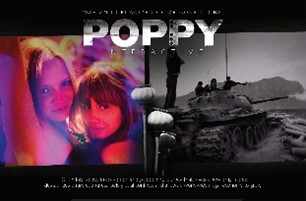
A Dutch photographer working with Antoinette de Jong produced Poppy-Trails of Afghanistan Heroin (2012) an exhibition video installation and book, then a few years later a web site:

  • The story is about the effect of heroin rather than the drugs themselves; the framework behind the heroin trade, such as the war in Afghanistan which is largely funded by drugs trafficking, as are the Somalia, Kosovo, Pakistan, Ukraine, Albania wars.
  • The Book has a non-linear timeline, with layered storytelling. It began as a show case for images of these trails, but this seemed dull, so they let go of traditional photography. They thought a visual urgency was needed for the work, and that it called for different types of photography, for instance different camera formats.
  • The Installation has 4 different screens to bombard viewers as a replication of how people today consume news from several devices at a time; the work also moves around in a random way. It is “fragmentated”, they struggled with how to make the issues clear and present a cohesive narrative so created a broader narrative on the topic to show the layered complexity of social, economic or political issues and the impact on the lives of ordinary people.
(Poppy interactive – Submarine Channel, 2020)

Q: When working on new visual language, can you predict whether galleries/editors will accept it? He never thinks about if it will be liked, his only criteria is will it work?

Q: Do you have advice for emerging photographers working on personal projects?

  • Collect your materials then get out into the field and see what works.
  • Follow your instincts as a creative person
  • Give yourself time to create your own narrative.
  • Hang around and something will happen, improvise, sometimes being flexible leads to things that are better than what you planned; he often uses material he hadn’t planned to.
  • There are always different ways of telling a story.
  • You need to have a vehicle through which you can navigate, a person, narrator

Lisa Barnard – The canary and the hammer (2015)

This work was followed by a book and exhibition (2019) it is her personal journey through the world of gold, its value today and its history:

Through a mix of image, text and archival material, Lisa Barnard provides an insight into the troubled history of gold and the complex ways it intersects with our global economy”.

The project began from the financial crisis 2008 which affected her personally. It’s essentially about whether photography can show what’s hidden. The investigative strategy, often used by photo journalists exposes a deep concern for the needs of the ordinary people, such as the “Pallaqueras” in Peru, who sort the ore on the surfaces for pieces containing gold, photographed for “The Canary and the Hammer”.

It moves in and out of the fictional and documentary narrative, because this is what happens; there are always multiple truths, hence many different styles of photography. The fragmented work signifies the impossibility of representation and getting to the truth as documentary photographers and for viewers; look at the fragments and present these, rather than shy away from a story that is easy to tell. The exhibition was intended to reveal the hidden aspects of gold in an unsettling and claustrophobic way. I was struck by the 1950s newsreel music in the video and the way you navigate it in many directions.

Barnard is less motivated by books, more by web docs, and says that work should be about the viewer. The need for funding forces you to think about your motives and intention (audience, where they will be viewing), she suggests you should be true to your concept and ideas but make them accessible (not too text heavy, too fragmented), as a visual artist the visuals have to come through. Show your work to outsiders to check it’s accessible. She also believes it’s important to give photos back to those you’ve taken.

Both these photographers realised that traditional journalism was not working for them and decided to follow a different approach; these stories are too big for papers and magazines, but galleries regard them as photojournalists.

My learning:

  • Follow your instincts as a creative person.
  • Collect your materials then get out into the field and see what works.
  • Don’t make assumptions photograph everything otherwise you’ll miss the story that emerges – See laterally around the subject, improvise, being flexible may lead to things better than those planned.
  • Give yourself time to create your own narrative.
  • Work doesn’t have just one visual output and each work responds to the medium it’s presented with, this addresses the idea of fragmentation in society. There are always different ways of telling a story. look at the fragments and present these, rather than shy away from a story that is easy to tell
  • Be true to your concept and ideas but make them accessible (not too text heavy or fragmented.
  • In an exhibition you can tell well layered stories in non-linear ways.
  • Web docs or interactive web sites are more flexible than books, as once books are done they’re done; also they make things accessible to you that is difficult to do in a book and are an important addition to the cannon of photography.
  • As a visual artist the visuals must come through.

References:

Knoth, R. and de Jong, A. (2020) Robert Knoth and Antoinette De Jong. At: https://www.knothdejong.com (Accessed 24/06/2020).

New Perspectives on Documentary Practices | Lumix Festival für jungen Bildjournalismus (2020) At: https://lumix-festival.de/en/themen/neue-perspektiven-des-dokumentarischen/ (Accessed 24/06/2020).

News : Lisa Barnard (2020) At: http://lisabarnard.co.uk/news/ (Accessed 24/06/2020).

POPPY Interactive – Submarine Channel (2020) At: https://submarinechannel.com/poppy-interactive-documentary/ (Accessed 24/06/2020).

Warner, M. (2019) Lisa Barnard’s investigation into the troubled history of gold. At: https://www.bjp-online.com/2019/08/the-canary-and-the-hammer/ (Accessed 24/6/2020).

Next Post: https://nkssite5.photo.blog/category/learning-log-research-and-reflection/photographer-talks/lumix-misha-vallejo-23-6-20/

PART 3 THE COLOUR VISION: RESEARCH

Research point: Surrealist elements in colour documentary

Paul Reas

Reas is one of the pioneering generation of social documentary photographers like Paul Graham, Martin Parr and Anna Fox, who depicted and critiqued British class and culture in the 1980s and 90s in colour. Reas’s tutor was Martin Parr who saw that he had the ability to go beyond literal photography to show more “ambiguous, illusory drama from the everyday narrative unfolding in the room”  (Smyth,2018). His work was popular with picture editors and advertisers,

Like Peter Dench Reas was very much influenced by his working class background. Reas says “ “as a photographer, although you’re photographing other things, actually you’re only photographing your own life and your own experience” (Smyth,2018), because that’s where your interests lie.

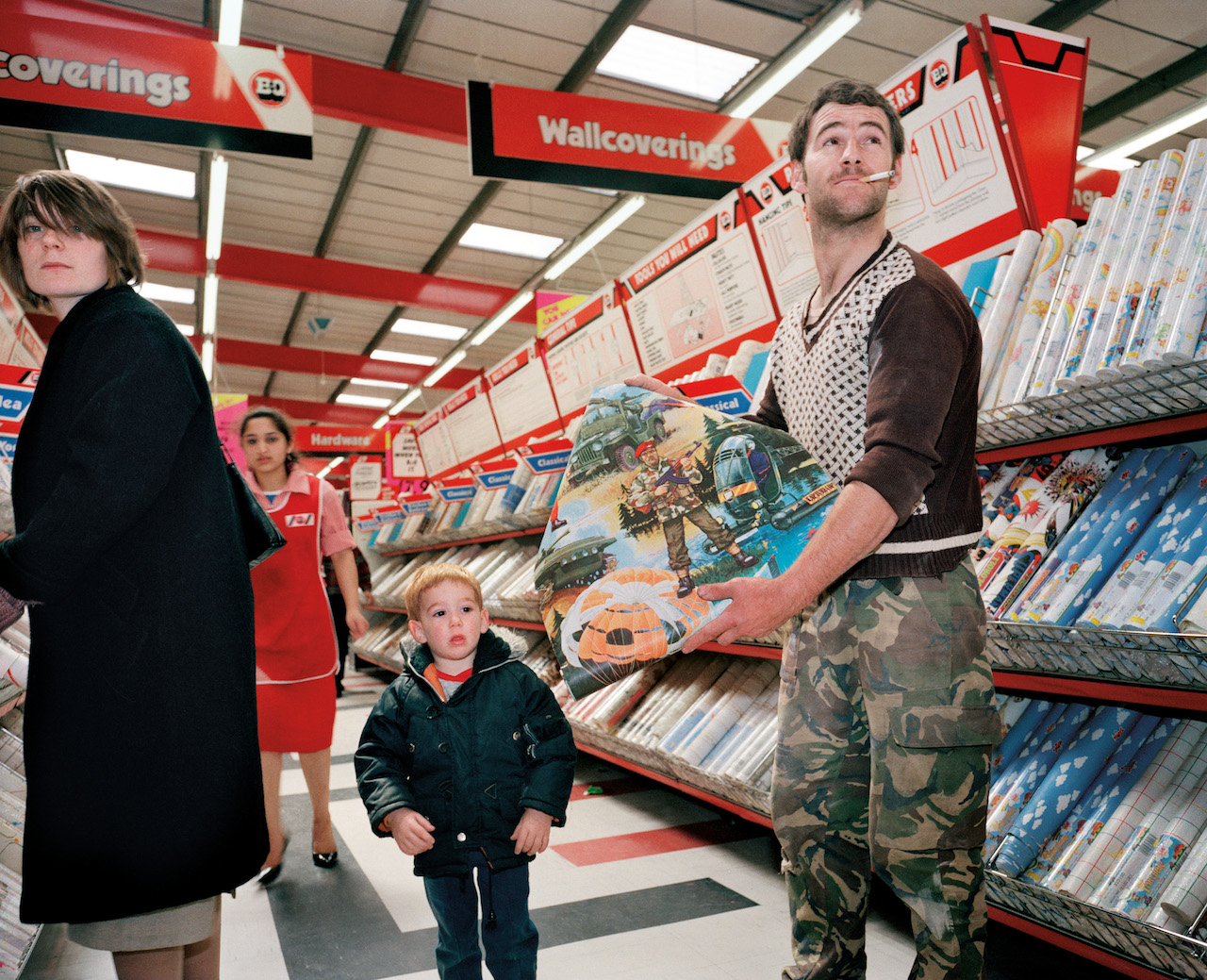
His book I Can Help (1988) helped to establish him as one of the new style British documentarists, showing people’s real lives in an edgy way. This was his first project in colour which focused on the rise of consumer spending and new shopping malls, on the edges of cities.  – the new cathedrals of consumption.

From the series I Can Help © Paul Reas (1984)

Here he used his sharp observation and humour. He was critised as mocking people in his work, as with many others using colour photography in the 1980s, and admits that they were very consciously using irony and humour and satire, however he didn’t intend to mock, “I was just reflecting the circumstances people found themselves in, in a way that was sometimes a bit unpalatable” (Smythe, 2018).

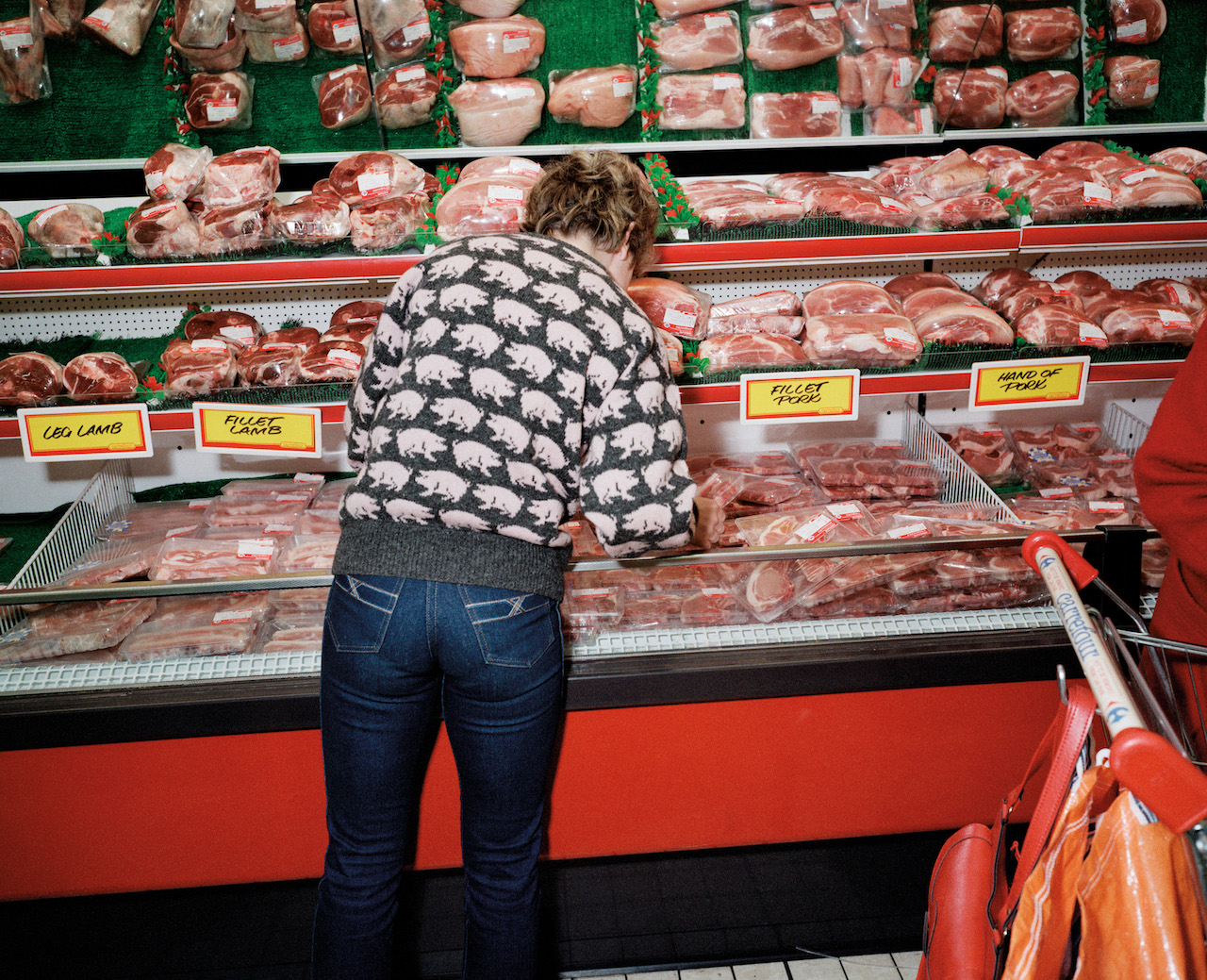
Whilst researching him I came across a podcast Ffoton Interviews hosted by David Hurn wich gave me further insights into his work. He greatly respects those who research their subject fully before photographing. They discussed this image that was pivatal to Reas:

(The Guardian, 2018)

It was interesting to hear that he didn’t recognise its interest value at the time he took it. They agreed that you should move forward on pivotal moments immediately; Hurn added that tomorrow is never the same. .Reas remembers the day Parr picked the image out and he realised how “transforming” photography could be, photographing the real, but in some way occupying the space in a different way. Parr encouraged him to look at Winogrand, Freidlander, and Tony Ray Jones,

This is when his work stepped away from the different classes of photograph essays that David Hurn mentions: single pictures/portraits, relationships, those that establish the environment, to those that aspire to transform seeing. I love the way Reas describes the act photography as the conscious ordering of information, putting a rectangle or a square around the world in which we live, then managing the information that is contained in it and trying to choreograph it in some way that makes sense – essentially photography is about conveying information. Reas went on to say that he thinks the most effective photographers withhold information, provide ambiguity, and that what they don’t show in a situation is more important than they show. He also describes this a photographs that asks lost of questions but gives very few answers.

A theme that ran throughout this interview was his lack of confidence, which is one of the things that he says led him to photography as he can hide behind the camera. 

The photographers he says that he most respects ae, Don McCullin Eugene Smith, Winogrand, Friedlander, Tony Ray Jones, Martin Parr, Taryn Simon (for her intellectual rigour).

My learning:

  • Sharp observation is key.
  • Subtle ambiguities can be magnified by perspective and even more so colour I think.
  • I am learning where what I call irreverence comes from a photographer’s background as well as their intentions.
  • Photography is transformative, it transforms seeing.
  • What is in the frame is as important as what is outside of it, this is not new to me but a reminder.
  • Research Tony Ray Jones (especially his Wimbledon man on steps photo Reas mentioned) and Taryn Simon.
  • When you have a pivotal moment move on them immediately.
  • Think of photo essays as classes of: single pictures/portraits, relationships, those that establish the environment, and those that aspire to transform seeing.
  • Think of the act photography as consciously the ordering of information, putting a rectangle or a square around the world in which we live, then managing the information that is contained in it and trying to choreograph it in some way that makes sense – essentially photography is about conveying information.
  • It’s very effective to withhold information, provide ambiguity, and what’s not shown in a situation is more important than what’s shown.
  • Aim for photographs that ask lots of questions but gives few answers.
  • To be a photographer you’ve got to be somewhere, you must be out and about. –  tomorrow is never the same.

References:

The Guardian (2018) Coal, class and consumerism: Paul Reas’s Britain – in pictures (2018) In: The Guardian 04/12/2018 At: http://www.theguardian.com/artanddesign/gallery/2018/dec/04/paul-reas-britain-in-pictures (Accessed 14/09/2020).

Smyth, D. (2018) Paul Reas’ Fables of Faubus. At: https://www.bjp-online.com/2018/11/reas-faubus/ (Accessed 14/09/2020).

FfotonWales (2019) Paul Reas — ffoton. At: https://www.ffoton.wales/interviews/2019/4/paul-reas (Accessed 16/09/2020).

Matt Stuart

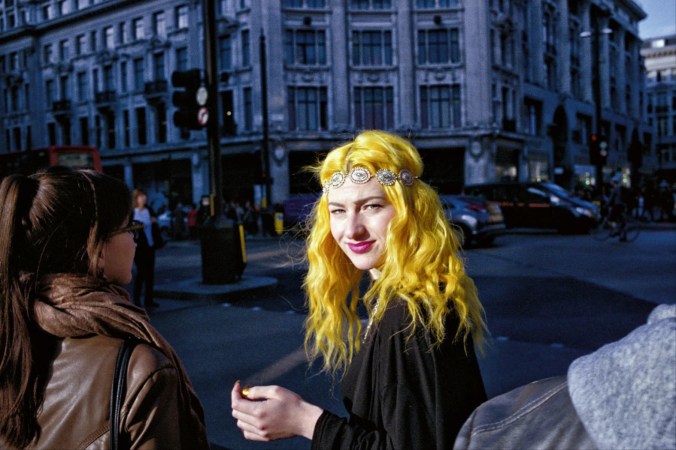
Is a British street photographer. He says he has a fascination with people and the way they live their lives and likes to make an honest, believable picture.  He shoots his own personal work everyday rather than taking assignments. There is an obvious attraction of colour to him, he says that this is the most important thing to him:

  (Lunn, 2016)

Stuart says in the photo above “I took that picture because there was a lot of colour that was coming at me” (Lunn, 2016). He explains that often something pops out at you, and when you look closer something else is going on.

His pictures are often humourous:

(Lunn, 2016)                     (All That Life Can Afford, 2020)

It is obvious that he looks very closely at things and sees things that might easily be missed; this helps the viewer to slow down and appreciate what’s in front of us.

       (All That Life Can Afford, 2020)

I was particularly interested in the advice he gives by describing how he photographs strangers. Stuart says he has learned to be quick and discreet and If ever stopped he tries to be polite and move on as quickly as possible (All That Life Can Afford, 2020); he also advices, smile!

He believes that everything is fair game to photograph anything as long as you don’t interfere with it (Lunn, 2016). Stuart applies some of the lessons that he learnt when skateboarding to street photography: keep trying, have fun, keep a positive attitude, look hard, forget about time and get into the zone, and even anticipate what might happen.

Stuart talks of the 3 F’s in street photography: Fish for photos (wait a long time), follow (take a short time following something), fuck (capture it right now). He also says you’ve got to give yourself time and keep a camera with you at all times.

My Learning:

  • Be confident when shooting strangers, smile and move on – easier said than done
  • When building a book build a narrative, even single images such as street photography you can use various criteria, weather, light, colour…
  • A book title should intrigue and beckon people to pick up the book.

References:

All That Life Can Afford (2020) At: https://www.magnumphotos.com/events/event/matt-stuart-life-afford/ (Accessed 14/09/2020).

Lunn, O. (2016) ​shooting the streets of london with magnum photographer matt stuart. At: https://i-d.vice.com/en_uk/article/kz84ge/shooting-the-streets-of-london-with-magnum-photographer-matt-stuart (Accessed 15/09/2020).

Smith, B. (2015) A Small Voice Podcast – 017 – Matt Stuart. At: https://bensmithphoto.com/asmallvoice/matt-stuart (Accessed 15/09/2020).

Anna Fox

Is another of the 1980s 90s colour documentary photographers who lists as one of her teachers Martin Parr, especially for lighting, flash and colour. I was lucky to have been on an OCA study day with her earlier this year, see my notes here: https://nkssite5.photo.blog/category/learning-log-research-and-reflection/photographer-talks/anna-fox-at-the-tvg-oca-meeting-16-5-20/

I have picked out some things that are pertinent to here surrealist colour photography.

Her first body of work Basingstoke 1985/86 was a story of Thatcher’s Britain in which . Here she uses  colour, flash and humour like Parr.  These images with texts which are captions taken from publicity material, were also influenced by her love of comedy and literature. Workstations the subject of Office life in London, again in Thatcher’s Britain, used images and texts, parodying the style of magazine journalism, giving a satirical view of contemporary Southern England.

Fox’s work Resort 1 and 2 made at Butlins (Anna Fox,2020) shows similar use of colour whist she depicts the theatrical nature of the place.

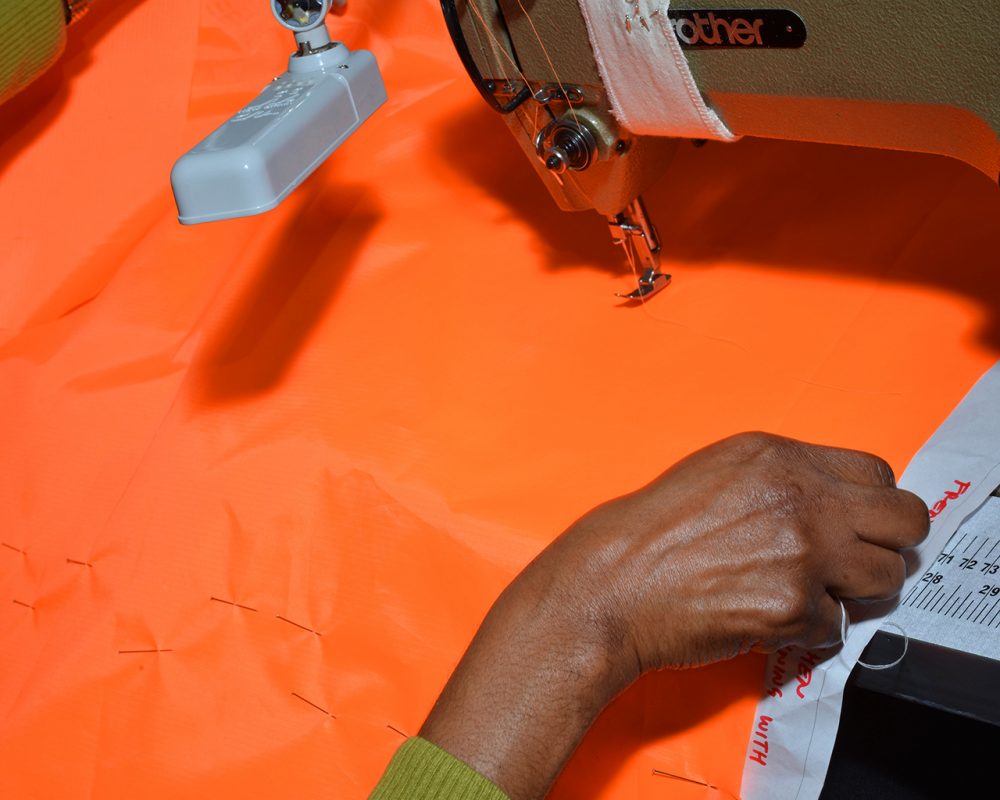
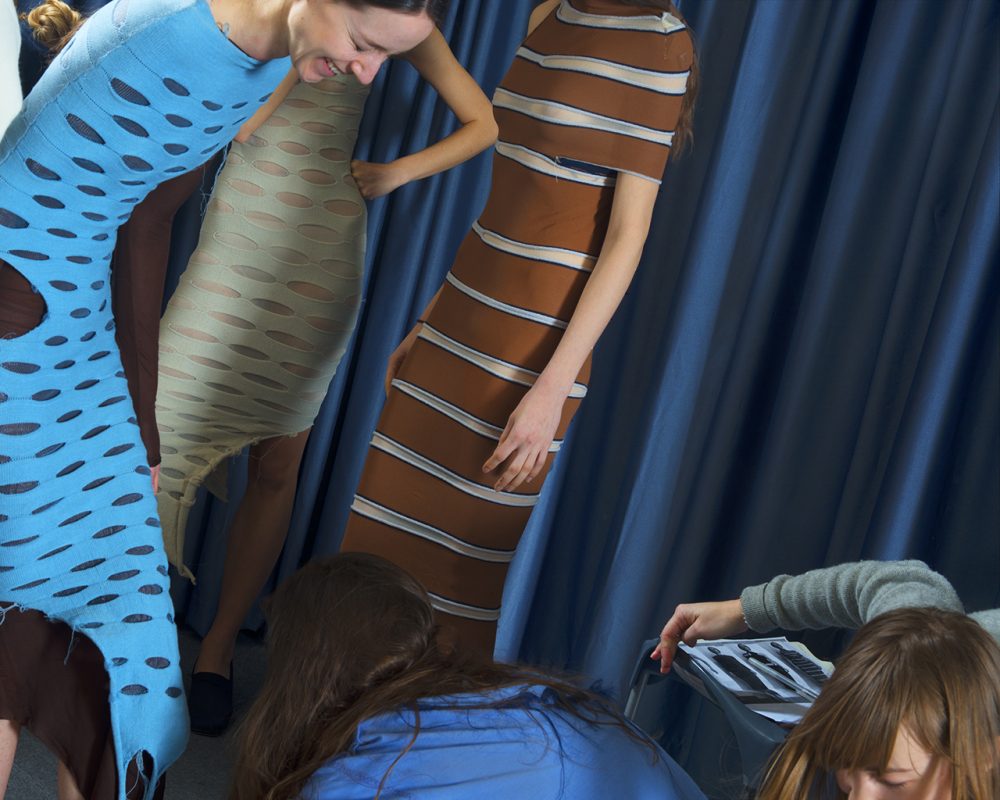
Her more recent work Blink, which documents The final MA student collections at St Martins, captures in colour the frenetic build up to their show; Fox uses abstract snippets of the work going on framing moments in unorthodox ways.

My Learning: Consider using publicity material for my assignment 3 book

Reference: Anna Fox (2020) At (Anna Fox (2020) At: https://annafox.co.uk/ (Accessed 29/10/2020). Accessed 15/9/2020).

Next Post: https://nkssite5.photo.blog/category/research/a3-research/peter-dench/

DOCUMENTARY JOURNAL EXTRACT

I don’t normally post my documentary journal in this thread, however as it has been a while since I finished assignment 2 and am now going to post Part 3 and assignment 3 and I thought it would be good to show the context I have been working in over this time:

28.10.20

I have been finishing the coursework intensely the past couple of weeks, between funeral planning and beginning probate work, and grief.

Today I’ve had an e mail from OCA telling me that my tutor will need to be replaced; this sent me into a spin as I’ve not heard from the course director who I ws advised to write to to explain my circumstances and request some breathing space. I hope to have a dialogue with student support today. My intention is to press on now to meet my end of this course deadline, but with all I’ve been through the past few months and now probate, selling and clearing my mother’s house and facing a final house move from Hampshire to Pembrokeshire in December myself, I think if I don’t have a lifeline of some extra time I may self combust!

I would like to continue from Part 3 and Assignment 3 in a manner in which I can enjoy what I’m doing.

20.10.20

Back at last. Its been a very difficult few months. Subsequent to submitting my assignment  moved house to Wales and my Husband has also been in and out of hospital. Just when I thought things were settling down my Mother (in England) was taken ill, so I rushed back and was there for a few weeks; she subsequently died.

I am now back in Pembrokeshire and hope to get going again. I did contact the OCA to see whether I could take time out if needed but have not had a response. I would rather try to get back on track so I’ll try to carry on and catch up. Throughout this period I have been working on assignment 3, joining in with forums and study days and sharing work and ideas. I have attended many virtual events, it is just that its been rather stop/start and that my coursework came to a halt towards the end.

Onwards and upwards!

10.8.20

I submitted my assignment on 6th July and I’ve had my feedback (24th July) which is useful and incisive. In the last month I’ve moved house and studying and photography has had to stop, but I hoping to be able to start again this week.

Next Post: https://nkssite5.photo.blog/category/coursework/part-3-a-colour-vision/project-colour-and-modernity/exercise-3-1-seeing-and-believing/

ASSIGNMENT 2: REFLECTION AGAINST ASSESSMENT CRITERIA

Demonstration of technical and visual skills

  • I went out looking and ready to shoot. with great curiosity, it was like looking with new eyes with a heightened awareness. It is possible that having been in hibernation my viewing was naturally enhanced.
  • Observation was everything to me in this project. I searched to find examples of economic scarring, that were accessible to me, and with time constraints with businesses able to open in 10 days, I made the most of every opportunity, looking carefully and at details.
  • I wanted to present images that a viewer would feel they’re looking themself rather than viewing a photograph; so once I found a subject I moved around a lot experimenting used framing, perspective, and depth of field  to construct an image that showed only what had caught my attention.
  • Interestingly I have since done hardly any cropping, maybe just a bit of straightening on one or two images. I used the framing as I shot to control what I show the viewer.
  • I believe that each image has enough elements to communicate its own individual narrative.

  Quality of outcome

  • One thing I picked up between assignment 1 and 2 is that when you’re feeling stuck or constrained it’s important to do work that’s meaningful for you.
  • Though “Economic scarring” is a concept, I was concerned whether it was abstract enough for the brief. However I felt strongly that this was something that needed recording, I could feel the scarring on this landscape myself when shooting and needed to share it; so I may have taken some licence form the brief but hope to anchor it by the way it’s presented.
  • I think there is also some discernment in the work because I stayed away from obvious Covid19 signs and clichés, though this introduces ambiguity and may mean that overtime there is some discontinuity,
  • Intention is important; I feel a huge concern for the future, especially the next generation and this brought an urgency to capture what I was seeing, and yet I had to combine this with patience to get it right.
  • I hope that these images will give the audience something to reflect on; I believe that they each show a sense of something not quite right, and I feel that this gives most some punctum.
  • When editing and forming the series I hope that the signs and symbols in the images along with the way I’ve presented them anchors my concept.

Demonstration of creativity

  • I was firm in my concept from the outset but kept my options on the style of the outcome fluid.
  • This was useful as I had taken on board so much photographic stimulus whilst in lockdown (mainly via zoom) that it gave it time to seep through me as I photographed.
  • Though I went out for my first shoot with the idea of using a surrealist style, I went with the flow and followed my instincts and my work developed its own style.
  • I have committed to my intuition this assignment, where normally I question myself and am not so confident in using my own style.
  • I had been keen following photographer talks such as Anna Fox to try some “FRICTION” (fact and fiction) but the only construction I needed here was in shaping the audiences view.
  • This was fortunate as something else I heard from photographers and the coursework across these weeks was the importance of integrity, and I’d managed to keep my photography honest.
  • I feel I have exercised my creative muscle.

Context

  • This was a very reflective period in my life, with so much changing all around me and this naturally carried into my work.
  • I engaged many times with students as usual but with wider networks as well, curtesy of zoom; in fact too much came to me via my laptop portal and in the end I had to call a stop to extra research and learning, so that I could post it and my work and my assignment.
  • I have digested and reflected on much extra research as well as the directed and my knowledge base has broadened considerably. 
  • Hence the context for the concept here is current and topical but my thought processes behind the work has been broad.

NEXT POST: https://nkssite5.photo.blog/2020/10/28/assignment-2-submission-single-image-narratives/

RESEARCH AND REFLECTION PART 2

MY LEARNING PART 2

Mark Neville Artist talk 4.4.20

This was an amazingly interesting and thought provoking interview. I think it will help to give me some extra purpose going forward and especially working towards and possibly when choosing my level 3 project:

  • Documentary photography can connect art and social documentary practices.
  • Tension between the moment/chance and construction can be very effective in documentary images.
  • It can be effective to mix several visual and practical styles within one body of work (e.g. staged, sly on the wall, fashion or classical painting in style).
  • Consider many different types of references for your own work, design, painting, fashion, newspaper….
  • Try using fill flash from the top side when taking portraits on the go (I could do this with a strobe and small soft box – maybe I need to get a stick to attach it to).
  • Can use lightening to align your work with your references for images.
  • Documentary photography may be about getting a good depth of field as documentary photography is about revealing detail.
  • A huge variety of material can be contained with a photographic project: images, texts, essays, letters, eye-witness accounts and so forth.
  • Think about the local role of any project – if it is about reality should it seek to change or just highlight something? Ask yourself should the photographs to service the community they are shot in?
  • There are many ways to exhibit work other than in a gallery.
  • It reminded of something I have discovered myself, that photographic work can be therapeutic to yourself.
  • Make sure you are really interested and believe in a project that will take a lot of time and energy before you start it.
  • Don’t worry if I change my mind where I’m going with a project once I immerse myself in it.

Anton Kusters Artist talk 30.4.20

  • Consider alternative ways of seeing
  • Give the opportunity for activating memory
  • Consider ways of exploring the limits of understanding and things that ae difficult to represent
  • Not to expect answers
  • Maximize the importance of a physical aspect of work and the possibility this changes
  • The importance of the presentation and the possibility of change in this to reactivate responses

Photography general student led virtual hangout 3.5.20

On personal voice:

  • Your voice is the how you’re recognized by others
  • It speaks to your values and the perspective and skill that you bring to the work
  • Often forged by following the inspiration on your influences and commit to your intuition

Stages to finding your voice might be:

Discovery phase– seeds are planted, often disappointed with your work, you so ask yourself:

  • What new ideas or skills are obsessing me right now?
  • Who are the practitioners that I can learn from here?
  • Emulation phase: Think about other’s work to immerse yourself in and how to practice the skills I want to improve/learn

Divergence phase – Once you’ve achieved enough mastery then you move on from emulation:

  • take intuitive steps and bend or break the rules you’ve learned.
  • Push yourself out of your comfort zone

Crisis phase – 

  • Push yourself out of your comfort zone even if it exposes vulnerabilities
  • refuse to settle for good enough- hone your skills

For motivation in these challenging times, Clive said that its important to do work that’s meaningful for you, find your bliss and follow it – I think that’s what I’m struggling with at the moment!

We were reminded by Clive that you can have mastery of techniques and/or mastery of voice.

The Photographers gallery Slow Looking Mohamed Bourouissa 16.5.20:

  • It can be difficult to tell whether a photograph is staged or not
  • A reminder to look carefully and at details
  • Examples of ways to act out your concepts including historical emulation
  • A reminder to be creative about how to show exhibit your work and possibilities to do it in relevant local ways
  • Interesting following the artist talk with Anna Fox and our discussions on whether it’s appropriate to stage images – in these cases it was integral to the concepts
  • Can photographs by connecting to your own habits
  • Your own locality can be a useful starting point and you can do something useful
  • The impact of ambiguity

13.5.20 OCA Tutor led hangout – Andrea Norrington – How to research:

  • It’s definitely okay to copy to learn
  • Remember to be critical of all sources
  • Use the OCA librarian as a resource
  • Note to self to make a personal index of research done on photographers across all courses
  • Checkout Evernote for storing you tube links?
  • Be curious – don’t let the course work stifle my curiosity; don’t feel guilty about taking time now to access all the virtual material available even if it slows me down

Thames Valley OCA meeting 16.5.20 – Anna Fox Photographer:

I learnt a lot about the possibilities for “FRICTION” the fusion of fiction and documentary photography. I also picked up many other ideas:

  • Consider using fiction to support ideas for my photography When using text and images integrate as one body of work.
  • Consider carefully, sentence breaks, font and emphasis.
  • Be aware of the variety of types of staging possibilities.
  • Think about all possibilities of book design, suit the design to the project.
  • Keep project proposals fluid, so that you can change it as it develops and then evaluate to justify your changes.
  • Remember that even for experienced photographers it can take a long time to get an effective shot.
  • Don’t forget to fully articulate your research.
  • Intention and integrity in your work is important
  • Ensure your work gives people something to speak about.

International Guest Lecture: Susan Bright – Collaboration and Creative Practice OCA 27.5.2To consider more carefully the role the curator plays

  • To consider working collaboratively – Though I do increasingly as I participate more and more in forums, hangouts and zoom meeting outside of the OCA.
  • Think creatively when planning gallery layouts – consider adapting work to suit the space it is showed in.

Tutor led session on research 17.6.20:

  • Keep taking risks, keep trusting your intuition and choices,
  • Remember to exercise my creative muscle
  • Take photographs that are like looking with conscious heightened attention.

AOP Breakfast Club Webinar 18.6.20 Carol Allen-Storey in conversation with Julia-Fullerton Batten, Othello De’ Souza-Hartley, & Lottie Davis -Fine Art Photography:

  • Stay simple in your approach
  • Use what’s around you
  • Build collaborations
  • Consider photography as a part of an installation in the future
  • Consider multi-media approaches
  • Let unexpected events like Covid release new creative journeys

AOP Breakfast Club – 23.6.20 Carol Allen-Storey in Conversation with Gideon Mendel, Simon Roberts, Jillian Edelstein, Liz Hingley- impact of Covid on work:

  • The benefits of having long term commitments photographic commitments
  • The benefits of collaboration
  • I am not so different to these photographers; the Covid situation stopped my creativity and productivity for a while, it has made me reflect on the importance and meaning of photography going forward.
  • Even professional photographers do not find it easy to engage people collaboratively on the street

AOP Breakfast Club – 23.6.20The impact of Covid on work

  • The benefits of having long term commitments photographic commitments
  • The benefits of collaboration

•  I am not so different to these photographers; the Covid situation stopped my creativity and productivity for a while, it has made me reflect on the importance and meaning of photography going forward.

RESEARCH

SOCIALLY RESPONSIBLE PHOTOGRAPHERS

RESEARCH POINT Surrealist photographers -key visual & conceptual characteristics:

  • Ambiguous images
  • Juxtapositions
  • Use of negative space
  • Use of shadows
  • Use of geometric patterns
  • Shot from unusual angles
  • Framed abruptly
  • Accidental compositions, use of chance.
  • Break traditional photographic rules of composition
  • See things differently and show us things differently
  • Disrupt our perceptions
  • Reveal the uncanny
  • Some dream like imagery
  • Fusion between the real and the imaginary
  • Capture surreal moments

Independent research into contemporary street photography:

  • Try to be aware of an emotional sense of the people
  • Consider using available street lighting, neon signage and smog to create atmosphere around subjects.
  • Don’t force things,
  • Follow your own instincts and leave thinking behind.
  • Crop lightly
  • Use ambiguity and surprise the viewer
  • Research to put you in the right frame of mind

COURSE EXERCISES:

PROJECT LEGACY FOR SOCIAL CHANGE

Exercise 2.2 Survival programmes

  • Although times were different then they still must have worked hard to build relationships and trust with the communities that they photographed to get so close to them
  • Reminds me again of the responsibility of the photographer to shoot with Integrity, the images are intimate but respectful.
  • The benefits of working as a team and having a shared ethos
  • The impact that sharing the truth can have when laid bare

Exercise 2.3 Bill Brandt

  • Remember the ability of a photograph to be presented for different purposes
  • Research Surrealist photographers further

Exercise 2.4 Mirror of visual culture

  • I should consider carefully visual literacy and how much the viewer has.
  • It was really useful to have these suggested stages/categories of documentary set out, it helps to clarify things for me.
  • I may use this as a starting point to develop some ideas for assignment 2, in particular to research further, documentary as art and manipulation and documentary for questioning images.

Exercise 2.5 Bleasdale

  • Consider taking inspiration from writers and fiction
  • Be aware of the power there can be in a single image when it comes from a part of a longer project
  • I come back again that respect for those you work with and them for you is paramount for the success of an image

PROJECT NARRATIVE

Exercise 2.6 Martin Shields

A reminder of the power of text to anchor an image or also the power of an image to be used perhaps out of context and have its meaning misappropriated.

Research point Semiotics – Short in summary suggests considering when presenting images:

  • Will the audience see all the images at once?
  • Do you want them to follow an identifiable sequence?
  • Will some pictures take more prominence than others?
  • Do you need a lead picture that sums up the intention?
  • Do you want to use visual punctuation? (size or shape)

“Ultimately the aim of narrative technique is to provide or anchor meaning and coherence for the image and its audience” (Short, 2011:109).

Short suggests these points should be considered with signs and symbols:

  • What is their function?
  • Are you introducing a new twist on an existing sign or symbol?
  • How do you introduce the meaning of the symbol?
  • Is it a reoccurring motif or symbolShould the audience have prior knowledge of the meaning of the sign or symbol? How are you framing their context?
  • Using any dynamics such as juxtaposition?

The pace and flow of narrative can be orchestrated by signs and symbols either significant in an image or a looser link in the overall visual language between images

Exercise 2.7/8 Robert Frank:

Really just a reminder about the possible use of symbols and how they can function within images.

Exercise 2.9 Mexican photographers:

  • Salgado represents his community picturesquely, though also showed alienation & estrangement. 
  • Salgado is and Lopez focused on death in common with other Mexican photographers.
  • Salgado shows the landscape as distressed.
  • Alvarez Bravo treats the landscape with humour.
  • Salgado put universal and eternal symbols above specifics in an image
  • Pedro Meyer captures juxtapositions relying on the decisive moment more than immersion
  • Salgado says reality is full of depth of field
  • Salgado went beyond the stereotypes to show the struggles of communities
  • Salgado used minimal explanations and context to allow viewers to form their own opinions

Exercise 2.10 Daniel Meadows:

  • Use curiosity about the world as a driver
  • Engage with others and mediate other’s stories
  • People will talk about their lives
  • The effectiveness of “actuality recording”
  • Listen carefully as silence is as telling as the spoken word

Exercise 2.12 Avedon and Oestervang – Documentary practice is a question of:

  • Context
  • Control
  • Manipulation
  • stereotyping
  • Bias
  • Social responsibility

I guess the important thing is to be aware of these issues and to take the approach that you think is socially and morally appropriate.

“Worktown” research Learning:

The intention, ethics and methods of photographing affect the validity and reception to a project.

Exercise 2.14 Curtis provides a useful framework for assessing a documentary photograph:

  • Who is the audience? As images can be moulded to fit the expectations and prejudices of the audience.
  • Why was the photograph taken- Motives?
  • How was the photograph taken – Equipment, Lighting, other restrictions?
  • What can companion images tell us – more background information and additional clues?
  • How was the photograph presented – Captions and text can direct the viewer?

FSA & exploitation:

  • Curtis suggests that documentary photographers posed as “fact gatherers” but were consciously persuading others.
  • The FSA photographers manipulated images to achieve their ends.
  • Did raise awareness of the impact of the Great Depression and raised investments for improvement projects.
  • The question of exploitation depends on the way in which it was done; Generally photographed their subjects with dignity, I doubt they felt exploited.
  • Acknowledge the photographers didn’t have editorial control over their images.
  • More questions should be directed towards Stryker where integrity is being questioned

Research point surrealist photographers – key visual and conceptual characteristics:

  • Ambiguous images
  • Juxtaposition
  • Use of negative space
  • Use of shadows
  • Use of geometric patterns
  • Shot from unusual angles
  • Framed abruptly
  • Accidental compositions, use of chance.
  • Break traditional photographic rules of composition
  • See things differently and show us things differently
  • Disrupt our perceptions
  • Reveal the uncanny
  • Some dream like imagery
  • Fusion between the real and the imaginary

Research point -Vivian Maier:

Much of Maier’s street photography shows clear surrealist elements, such as ambiguity, use of shadows, reflection, geometric patterns, unusual angles, juxtapositions, abrupt framing; some of the images are dreamlike and they certainly disrupt our perception.

The importance of her decisiveness and confidence.

Research point – Street photography:

  • Try to be aware of an emotional sense of the people
  • Consider using available street lighting, neon signage and smog to create atmosphere around subjects.
  • Don’t force things,
  • Follow your own instincts and leave thinking behind.
  • Crop lightly
  • Use ambiguity and surprise the viewer
  • Research to put you in the right frame of mind

Exercise 2.16 – Moriyama, Petersen and Sobol

The style of photography and some of the subject matter of the three photographers has similarities:

  • Interest in minutiae
  • Expressionist approach
  • Black and white format
  • High contrast -extremes of light and dark
  • Harsh tones
  • Strong emotion
  • Unconventional composition
  • Private/intimate and sexual connotations
  • Suggestive juxtaposition

NEXT POST: https://nkssite5.photo.blog/category/learning-log-assignments-2/assignment-2-single-image-narratives/a2-learning-log/

RESEARCH AND REFLECTION: PHOTOGRAPHER TALKS

AOP Breakfast Club – In Conversation with Carol Allen-Storey 23.6.20 via Zoom

with Gideon Mendel, Simon Roberts, Jillian Edelstein, Liz Hingley

Q: HOW HAS COVID IMPACTED ON THEIR WORK?

Gideon Mendel

is recognized as one of the world’s leading contemporary photographers, he has an intimate style of image-making and long-term commitment to socially engaged projects. He has for instance made collaborative film with HIV patients’ film by themselves

We are Living Here – Gideon Mendel (2020)

He calls himself an interloper, between documentary, street photography and portrait photographer; he likes the different controls in each. He talked about his Ridley road project, where he saw yellow lines being painted on the road and then shot people with the lines and signage and masks; he still returns and has shot 260 portraits so far. Returning makes you notice things like the different weather. He takes the subject’s e mail and then sends the photographs and their stories they have told him:

Liz Hingley

a photographer, anthropologist and curator works on cross-disciplinary projects that explore systems of belief and belonging in cities. She collaborates with academics on long term basis, and was working on a project exploring privacy in a public space with cell phones and digital culture – this has stopped, as has her work with families that have been rehoused for the new high speed train route:

Instead she has been out locally, noticing how people were engaging with her local Hampstead heath in different ways during Covid. She is now interested in small rituals, their physicality and impact: like hand washing. She proposed and been accepted by local hospitals to give photography workshops to staff to engage with how it’s been for them during Covid; they’ll take the photos and curate them, afterwards they’ll be hung in the hospital.

She talked about a new body of work on portraits of workers on ventilator production line and composite of their gestures when working on a part on the production line:

Her web site shows many interesting projects which I shall explore when I have more time:

Projects – Liz Hingley (2020) At: http://lizhingley.com/projects (Accessed 24/06/2020).

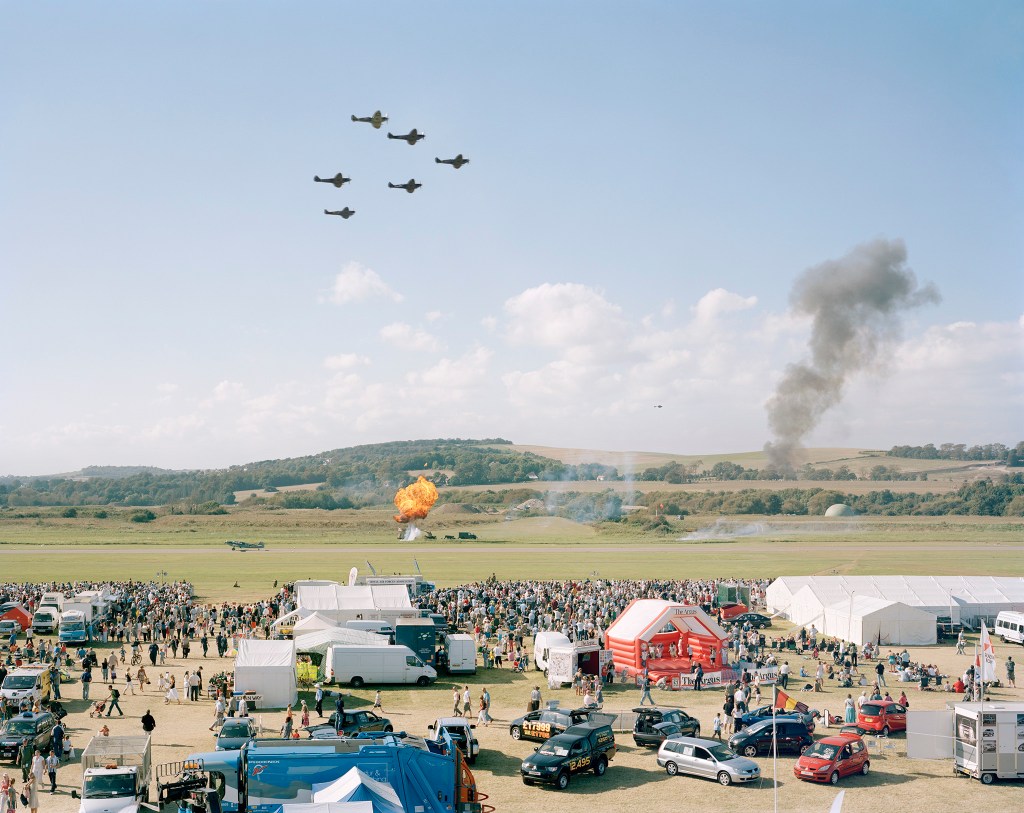
Simon Roberts

is a British photographer known for creating wide-ranging surveys of our time, which examine contemporary economic, cultural, and political landscapes.

Battle of Britain Memorial Flight, Shoreham Air Show, West Sussex, 15 September 2007

© Simon Roberts

He has previously done a lot of work about gatherings, working about how people interact with the space, but this has had to stop now, and has found it hard as cannot carry on with previous projects. He’s spent more time with his family and thinking about the new reality; how he will he make work in the future and how will we carry on as visual artists?

During the Covid crisis he took 56 seascapes through the 56 days of lockdown and sold them to raise money for the NHS.

NHS Covid-19 Fundraising Print – (Simon Roberts, 2020)

Jillian Edelstein

works in both portrait and documentary photography. She is currently working on finishing her feature documentary about the Bipolar afflicted, Academy Award nominated American screenwriter, Norman Wexler.

Before Covid she was working on a “The Lonka Project” related to holocaust survivors, who became a vulnerable group because of their age, so had to pause it.

(HOME | jillian-edelstein, 2020)

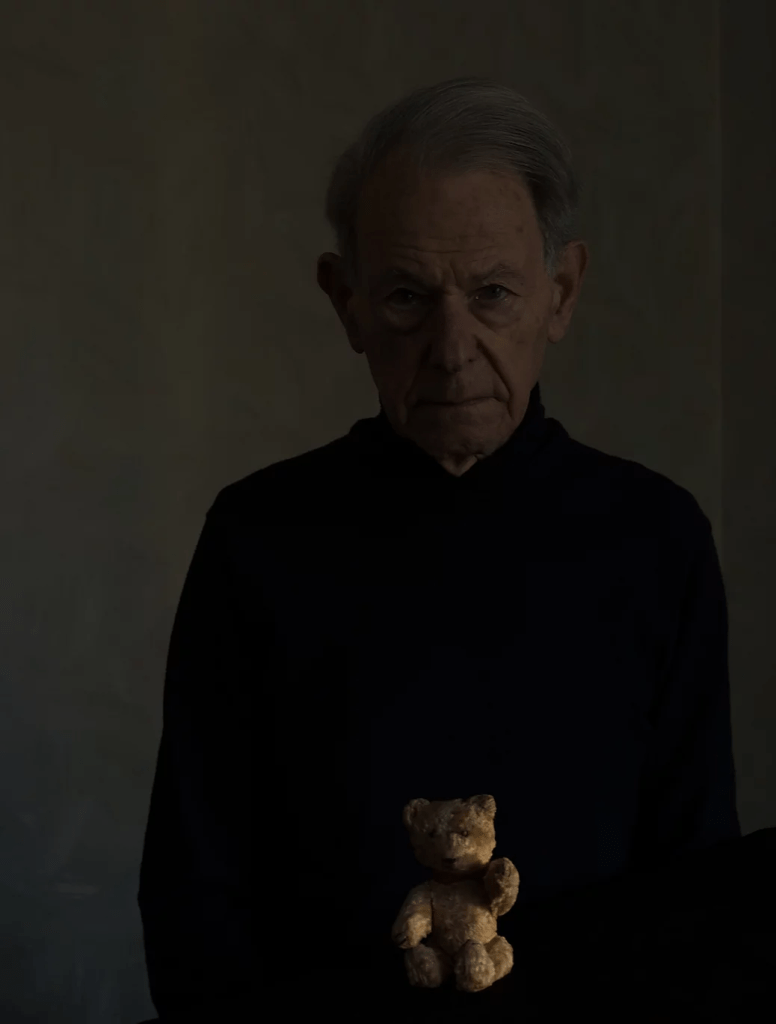
This portrait of John Hadju MBE, a survivor of the ghetto and the Holocaust in Hungary; he is with his teddy bear, ‘Teddy’, who came out of Hungary journeying with him as a refugee to the UK. This image will be included in an international collaboration of thirty professional photographers of all faiths who, since 2019, have each volunteered to donate one photograph of a survivor of the Holocaust to share their stories.

During Covid she tried photographing in Kilburn high Road, a multi-cultural community at the beginning of lockdown, but found most refused to have their photograph taken and stopped.

She has continued her ongoing series Affinities as ”Behind The Colorama” looking at past collaborations again now during a time of social distancing and self-isolation; to think about the richness and value of our relationships, friendships and creative associations. The videos include film clips made during the most recent shoots for the project.

(HOME | jillian-edelstein, 2020)

Asked what kind of legacy as storytellers’ photographers are going to be leaving behind, Edelstein said:

  • Collaborative bodies of work
  • Curating on Instagram accounts
  • Feeling the experience through other people’s photographs

My learning:

  • The benefits of having long term commitments photographic commitments
  • The benefits of collaboration
  • I am not so different to these photographers; the Covid situation stopped my creativity and productivity for a while, and it has made me reflect on the importance and meaning of photography going forward.
  • Even professional photographers do not find it easy to engage people collaboratively on the street

References:

HOME | jillian-edelstein (2020) At: https://www.jillianedelstein.co.uk/ (Accessed 24/06/2020).

NHS Covid-19 Fundraising Print – Simon Roberts (2020) At: https://www.simoncroberts.com/news/nhs-covid-19-fundraising-print/ (Accessed 24/06/2020)

Projects – Liz Hingley (2020) At: http://lizhingley.com/projects (Accessed 24/06/2020).

We are Living Here – Gideon Mendel (2020) At: http://gideonmendel.com/we-are-living-here/ (Accessed 24/06/2020).

Work – Simon Roberts (2020) At: https://www.simoncroberts.com/work/ (Accessed 24/06/2020).

NEXT POST: https://nkssite5.photo.blog/category/research/a2-research/a2-my-learning/