RESEARCH AND REFLECTION: ASSIGNMENT 4

When researching for my assignment, amongst others I identified the photographers below who I have researched in more detail to analyse where their work and practices would fit into my critical review.

Nick Danziger (b1958) is a British photographer and film maker.

He has photographed disadvantaged across the world and has been recognised as “raising public understanding of contemporary social, political and environmental issues through documentary films and photography”(Danziger, 2021).  Whilst doing this he often steps away from impartial reporting in order to “give a voice to those who rarely feature in the media” (Widewalls, 2021).

In 2001 he made a photographic study of people living in extreme poverty in eight countries to share the impact of armed conflict on women; this was to see what progress was being made towards meeting the eight ‘Millennium Development Goals’ set by the United Nations to eradicate poverty, end hunger, save lives and improve education by 2015. This work “Eleven Women Facing War” provided a powerful insight into the world of women caught up in vicious conflict in Bosnia, Kosovo, Israel, Gaza, Hebron (West Bank), Sierra Leone, Colombia and Afghanistan. Danziger said

We often talk about the victims of war,…I hope these images and stories are a tribute to these women’s indomitable spirit, endurance and bravery” (Imperial War Museum, 2016).

The International Red Cross (and promoter of international humanitarian law) called the images “incredibly powerful and a true testament to the horrors of war and the power of the human spirit” (Imperial War Museum, 2016). His images are illuminating:

(Widewalls, 2021)                  (Danziger, 2021)

However the power comes from their testimonies that he provides alongside his images. It is not clear from his images how other than by raising awareness, he has created impact; but there is evidence of impact. 10 years later he followed up the subjects to reveal their stories on short films and stories. One, Mariatu, whose hands were amputated by guerrilla soldiers in Sierra Leone, is now safe and well and living in Canada and has fulfilled her dream to be a Mother. Mahu Bibi, a 10 year old from Afghanistan, looking after her brothers against all odds, unfortunately was not found. He originally shot in black and white and shot a decade later in colour to show the passage of time, a useful idea.

In 2018 Danziger photographed substance-users and treatment centres around the world, focusing on issues surrounding substances that are often not illegal. His work was exhibited at the commission on Narcotic Drugs event in Vienna. He hopes that policy makers will be affected by the images “because of the people within the pictures…I think it’s really important to understand how …it shows a variety of individuals that have been users, or currently are dependent and receiving treatment” (anyoneschild, 2018), as a greater understanding could bring possibilities of rehabilitation through treatment centres where those are available – He hopes his pictures and the exhibition may lead to policy changes.

References:

anyoneschilddrugs (2018) Can photos lead to policy change? An interview with Nick Danziger. At: https://anyoneschild.org/2018/04/nick-danziger-interview-cnd/ (Accessed 29/01/2021).

Danziger, N. (2021) Biography. At: http://www.nickdanziger.com/nick-danziger/biography (Accessed 29/01/2021).

London’s Imperial War Museum (2016) Eleven Women Facing War: Exhibition at London’s Imperial War Museum. At: https://www.icrc.org/en/event/eleven-women-facing-war-danziger-exhibition-london-imperial-war-museum (Accessed 29/01/2021).

Rear Window (2017) – Eleven Women Facing War. At: https://www.youtube.com/watch?v=WFzwoZ01vlY (Accessed 29/01/2021).

Widewalls (2021) Nick Danziger. At: https://www.widewalls.ch/artists/nick-danziger (Accessed 29/01/2021).

Gideon Mendel (b1959)

I have reported on Mendel before when I attended an AOP breakfast Club meeting in June 2020 (South, 2020). My subsequent research has shown Mendel to use visual activist alternative ways of storytelling. When discussing his work he said he still believes that photography “has the ability to make positive change in the world”. His photographic projects have challenged apartheid in South Africa, perspectives on AIDS/HIV globally and latterly climate change (Tank Magazine, 2012).

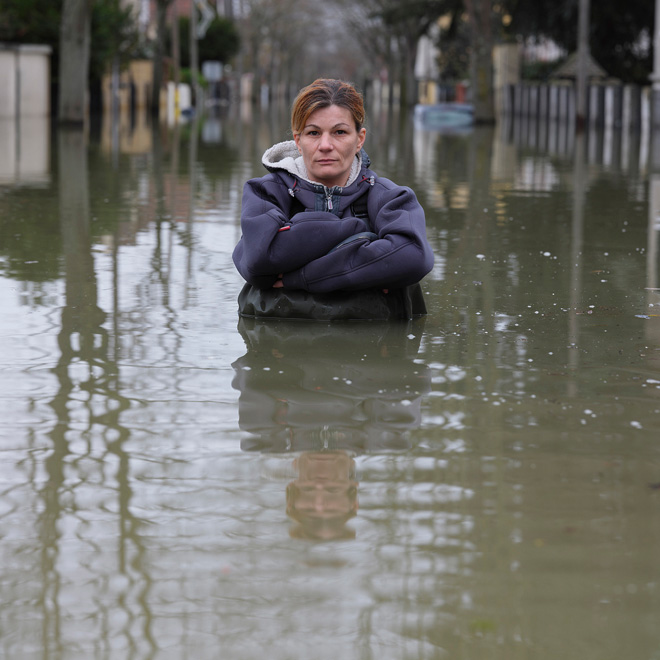
His work Drowning World begun in 2007 which he describes as an art and advocacy project about flooding, his personal response to the climate crisis (Mendel, 2021). This work has been used in climate change activism in collaboration with Greenpeace and Extinction Rebellion, exhibited in galleries and published in magazines. Interestingly Mendel combines conceptual and metaphorical photography with activism. Initially he shot images of two floods, one in the UK and one in India, but has since captured flood zones worldwide, poor and affluent. His work includes “submerged portraits”, symmetrical liquid reflections, water damaged photographs, video footage, as well as photographs of his images in actual demonstrations.
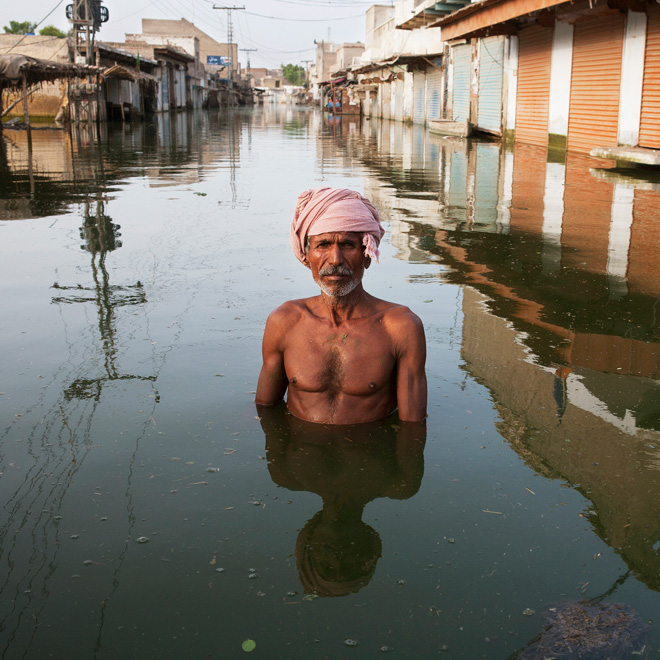
(Mendel, 2021)

In his video installation The Water Chapters explores individual, family and community responses to flooding, which also gives environmental context.

In the 1990s Mendel used an award to help him fund his work “Broken Landscape” documenting HIV/AIDS. He says that just as his ways of story telling broadened so he shifted from photojournalist to visual activist; in particular including individual’s stories in their own words with their own images.

A chapter of this work “Framing aids” was made into 13 posters which were used by organisations to raise awareness about HIV issues. Part of this project “We are living here” documents the effect of lifesaving antiretroviral treatment on poor rural communities, one of the key projects that established a model for widespread rollout of HIV treatment across South Africa. Mendel’s showcase of the positive impacts of the Anti-viral program set up by NGOS and the local health department, “provided a model that others could learn from and a reason to expand similar programs(Ritchen, 2013).

In 2003 he was approached by the HIV/AIDS alliance to photograph some of their projects world-wide, where he made documentary images to show their works including, testing, counselling, providing clean needles to injecting drug users and educational programs. The final chapter of this work “Through Positive Eyes” was a collaborative global advocacy project; here he gave the camera to HIV subjects, in seven cities around the world, so they could tell their own stories and add another layer to their representation to try to reduce the stigma which stops many from accessing medication.

(Mendel, 2021a)

Mendel says “I feel a personal responsibility to make this project speak as loudly as possible” (Mendel, 2021b). He shows long term commitment in his work and uses alternative ways of story telling to reach audiences, raise awareness o issues and stimulate others to take action.

References:

Mendel, G.(2021) Submerged Portraits – Gideon Mendel At: http://gideonmendel.com/submerged-portraits/ (Accessed 29/01/2021).

Tank Magazine (2012) Tank Magazine. At: https://tankmagazine.com/tank/2019/08/gideon-mendel/ (Accessed 30/01/2021).

Mendel, G.(2021a) Living Proof – Gideon Mendel At: http://gideonmendel.com/living-proof/ (Accessed 29/01/2021).

Mendel, G.(2021b) Biography – Gideon MendeAt: http://gideonmendel.com/biography-2/ (Accessed 29/01/2021).

South, N. (2020) AOP Breakfast club 23.6.20 – Photography 2: Documentary. At: https://nkssite5.photo.blog/category/learning-log-research-and-reflection/photographer-talks/aop-breakfast-club-23-6-20/ (Accessed 06/02/2021).

Ritchin, F. (2013) Bending the frame: Photojournalism, Documentary, and the Citizen. (s.l.): Aperture New York.

Marcus Bleasdale (b1968)

A British documentary photographer who increasingly uses his work to influence decision makers and global policy makers worldwide. He focuses on human rights issues using photographs to highlight issues and engage people, the issues are more important to him than the photographs (Durbanova, 2017).

His work on the conflict in the Democratic Republic of Congo, highlights the effects on the people of the exploitation of natural resources in a book “One Hundred Years Of Darkness” (2002). “The Rape of the Nation (2009) documents his work on the issues around minerals, their use in technical products and how they finance conflict. “The Unravelling” (2015) documents the brutal conflict in the central African Conflict.
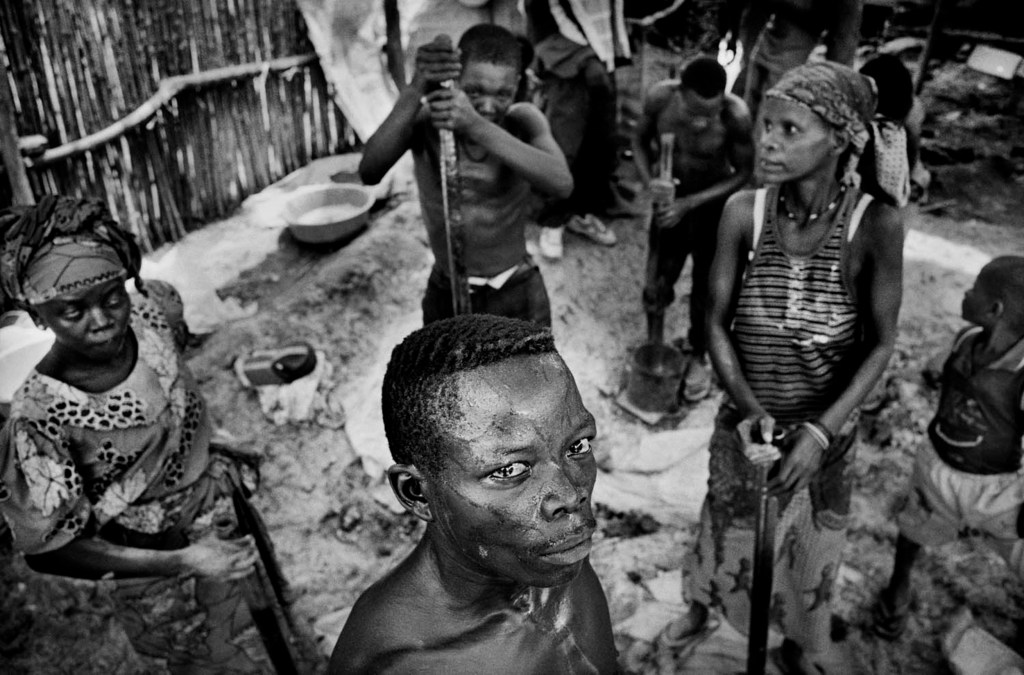
Bonded workers crush rocks in Mongbwalu, eastern Congo. Whole families work in slave conditions for warlords, controlling huge amounts of land, where gold is extracted to finance their military campaigns. 2004

The rape of the Nation, 2004 (Bleasdale, 2021)

Bonded workers crush rocks in Mongbwalu, eastern Congo. Whole families work in slave conditions for warlords, controlling huge amounts of land, where gold is extracted to finance their military campaigns.

Gold at a mine near Mabari. The rebels claim a share for “security”. Gold is plentiful in the Central African Republic, but corruption and political instability have kept the profits from benefiting the people.(Bleasdale,2021)

 The Unravelling, 2005 (Bleasdale, 2021) A Muslim rebel stands guard as men and boys dig for

He is a frequent collaborator with NGOS such as, Human rights Watch, Medecins Sans Frontieres. His previous profession in banking gives him useful insight into audiences, he gave up his half a million pound a year job to pursue photojournalism. When Bleasdale worked with Human Rights Watch on the exploitation of Gold Miners In the Democratic Republic of Congo he exhibited it in Geneva to the financiers of the industry (Ritchen, 2013:105). He believes its important to work with Human rights lawyers and advocacy groups and that the media should have a complementary relationship with them (Durbanova, 2017); then use social media and other avenues to communicate with impact.

He is great example of a photographer who knows how to target hie audiences effectively. His work on human rights and conflict has been shown at the US Senate, US House of Representatives, The United Nations and the Houses of parliament. Ritchen points out that such collaboration with NGOs helps to provide information and logistical access and credibility, “They can amplify the impact of what is produced” (Ritchen, 2013:105). In an e mail to Ritchen he explained “The work I have done over the past twelve years for Human Rights Watch is not about financial reward but about how effective we can make the work we produce” (Ritchen, 2013:105). He believes that photographers and NGOs/advocacy groups together can influence policy makers.

References:

Bleasdale, M. (2021) Marcus Bleasdale – Photographer At: http://www.marcusbleasdale.com/unravelling-gallery (Accessed 30/01/2021).

Durbanova, A. (2017) Conversation about conflicts and human rights with Marcus Bleasdale – Impakter. At: https://impakter.com/interview-marcus-bleasdale/ (Accessed 30/01/2021).

Ritchin, F. (2013) Bending the frame: Photojournalism, Documentary, and the Citizen. (s.l.): Aperture New York.

My learning:

This research has helped me to see different elements that exist in making impact with documentary photography.

Danziger’s work shows the power of the context, personal testimony from subjects and the text accompanying images. Mendel’s work speaks of the power of alternative ways of story telling to make impact and that of sharing positive actions. Bleasdale’s work exploits his networks and understanding of the business world to create collaboration and impact. All of these photographers believe in photographing to raise awareness of issues and collaborate with NGOS, advocacy organisations and then seek ways to communicate with impact.
Next Post: https://nkssite5.photo.blog/category/learning-log-assignments-2/assignment-4-critcal-review-learning-log-assignments/assignment-4-draft/

RESEARCH AND REFLECTION: PART FOUR

VISUAL STORY TELLING WITH NGOS, FOUNDATIONS AND NON PROFITS WITH ED KASHI – vii Insider

Ed Kashi is a photojournalist, filmmaker, speaker and educator of 40 years. I found this talk on the Vii website when researching for my assignment 4 essay.

INTRO: PAUL LOWE: on Ed, he’s always thinking about his audience when working, who is he trying to reach and what’s the best way.

ED KASHI:

His motivation as a visual storyteller is to engage with the world and issues that he cares about. He choses the projects that he engages with underreported issues or to take new angles with issues that we think we know about. Suggests that

we ask ourselves if we want to create work that has positive impact on the world work that has meaning outside of the media landscape” and says that “Sometimes its more important to reach a few thousand important people than 40 million people through the general media if you want to make change” (viiphoto.com).

He has learnt there were different outlets to get his work out, he’s a story teller not an activist ultimately but wants to effect change; so it’s important to partner yourself with the right organisations/people to effect change.   

Nigeria: Niger delta 2004-2007 consciously partnered with NGOs and international organisations like, Oxfam Amnesty International, non-profit and academia, that could really make a difference to oil exploitation in West Africa; Oxfam used images from his book Curse of the Black Gold (2010) its work to advocate for a bill to create more transparency in gas and mining industries that was pending in the USA, a bill that was passed.

A report by Amnesty International suggests in the past 50 years at least 9m barrels worth of oil have leaked into land and rivers in the region

An oil spill, polluting groundwater and ruining cropland, from a well owned by Shell that had been left abandoned for over 25 years

(Tregaskis, 2010)

Vietnam: Commissioned by the Vietnam Reporting Project in San Francisco as they wanted to report on Agent Orange; this is passed down genetically. Made a film paid for by Ford which compelled the congress to give 4 million dollars to a city to clear up a contaminated pond.

As editorials budgets started to shrink and opportunities changed so he worked more with organisations like National Geographic but with a more deliberate focus on advocacy.

  • The open society foundation in New York commissioned him to work on police force profiling in several European countries, and how people were being impacted. He took portraits and their testimonies, which he believes is an efficient and powerful way to share a story.
  • Landmines in Afghanistan commissioned by UNICEF to make 3 short videos for social media 
  • Work on the Kurds for National Geographic.
  • Malnutrition in Afghanistan, for UNICEF.
  • 2013 He decided he wanted to do a project on mental health in Syrian refugee youth, as it was an issue he was aware and upset about. He knew International Medical Corporation were operating in the region; he pitched his idea to them, they financed his trip for his work and once it was done he got it published in Time magazine – an example where the paradigm was turned upside down as usually he would go to a magazine to ask if they’ll commission and finance a story; later it might filter down into non profit and NGOs to use.  However some won’t publish work financd by an NGO because they think there may be a political agenda or it might not be objective.

(Kashi and Winokur, 2013)

  • A personal project on worldwide Chronic kidney disease around the world (CKDu a plague on the rural poor), that the Guardian have recently commissioned him to do a new piece; now there are some solutions happening.

Kashi says that when working with collaborative clients on advocacy work shine a spotlight an issue but  also show how its being solved, which he sees as a more constructive form of journalism, “ solution journalism”.

He was asked whether NGO work could be seen as abandoning your journalistic stance or be biased;  Kashi suggests that this can be countered  by keeping your radar up for any pushing of an agenda or amplifying a problem for their fundraising, and if so making an ethical decision on whether to do the work. He’s never experienced that, and points out that there are many problems that don’t have two sides and simply exist.

Asked whether there is tension between working with different types of clients, that puts off editors commissioning him, he says he hasn’t noticed. He’s happy as long as he maintains a truthful ethical approach to his work.

The cornerstone of his work is to initiate his own ideas, but to do this he has to go after grants.

He suggests that you think/feel what you care about and immerse in that and from that work will flow. As an already successful photograher it maybe that he can afford to be less money focused in his work, but he does believe that better paid work will come from less well paid work, “If you make the work the work will come to you”. 

“People out there care, and if you create powerful imagery it can make changes” (viiphoto.com).

He believes “deeply believe in the power of still images to change people’s minds. I’m driven by this fact; that the work of photojournalists and documentary photographers can have a positive impact on the world” (about- Kashi, 2021).

My learning:

  • It was good to hear how Kashi has suceessfully managed to work on issues that he finds important to create impact, especially with non-traditional editorial type clients.
  • His focus on authorship and maintaining creative independence.
  • How it is possible to effectively use the new paradigms for producing and financing projects and of expanding one’s skillsets to include audio and video as well as still photography. (viiphoto.com).
  • In a nutshell:

“It took me years to understand how my work was already having an impact, and that I could translate it more directly into collaborative relationships with NGOs, foundations, and nonprofits, and then utilize the media to reach a broader audience” (viiphoto.com).

References:

Kashi, E and Winokur, J (2013) Syria’s Lost Generation — Talking Eyes. At: https://talkingeyesmedia.org/syria-info (Accessed 09/02/2021).

Tregaskis, S. (2010) ‘In pictures: Curse of the Black Gold: 50 Years of Oil in the Niger Delta’ In: The Guardian 10/03/2010 At: http://www.theguardian.com/environment/gallery/2010/mar/05/curse-black-gold-nigeria (Accessed 09/02/2021).

Visual Storytelling with NGOs, Foundations and Non Profits with Ed Kashi (2021) At: https://viiphoto.com/resource/visual-storytelling-with-ngos-foundations-and-non-profits-with-ed-kashi/ (Accessed 27/01/2021).

Bibliography:

about — ED KASHI (s.d.) At: https://www.edkashi.com/about (Accessed 28/01/2021).

‘Curse of the Black Gold’ by Ed Kashi – VII Agency (s.d.) At: https://viiphoto.com/resource/curse-of-the-black-gold-by-ed-kashi/ (Accessed 28/01/2021).

During my research for assignment 4 critical review I listened to an interview with Ed Kashi on a podcast (Smith, 2018) and would like to add the following notes:

  • Kashi states that he is driven by the issue how can I contribute something to the world that is meaningful?”, “I want to have impact”. If asked to go somewhere wants it to be something he has an impact with.
  • Kashi says he’s fuelled by either “an anger or belief that there’s an issue or injustice that I want to learn more about, I wanna find a way to tell a story about, to raise awareness and now increasingly to be a part of that change”.
  • Tries to be smarter with decisions and strategies.
  • He enjoys proposing ideas and getting them accepted by editorial, NGOs or others.
  • He knows that he must have the right partners advocate for change.
  • Must be open to broad range of commissions that can take his work and advocate for change.

Kashi suggest that for those starting out as a storyteller you need to create a body of work that you care about and also shoot video and collect audio. He suggests finding a grant award or crowd funding or own publication, as media is the dissemination tool but not where you’re going to make much money. 

Reference:

Smith, B.(2018) A Small Voice Podcast – 083 – Ed Kashi. At: https://bensmithphoto.com/asmallvoice/ed-kashi (Accessed 04/02/2021).

Next Post: https://nkssite5.photo.blog/category/research/a4-research/danziger-mendel-bleasdale/

RESEARCH AND REFLECTION: ASSESSMENT DROP IN

Photography and Moving Image assessment advice drop in Zoom meeting: 26.1.21

I thought it was time that I engaged in preparing for assessment as I’ve not looked at submitting online assessment yet, as it has will be for my next assessment. I have heard peers discussing their online submissions and picked up some information.

Prior to this learning session I looked briefly at the digital assessment guideline.

Things that I noted:

  • Overall be intentional about what you share – self curate
  • The narrative about my assessment can be given in the learning log
  • On the creative 3 pieces of work: they can be across the course, no maximum of images
  • There was a question on the size of images (pixels) to submit which Dan couldn’t answer then – though apparently the G drive can easily cope with large image sizes.
  • Showing self-curation is important throughout the process; for instance you can share a body of work but cut down the number of images in it.
  • Upload images don’t give as links to learning log/blog, but then can link/ref to learning log; also could add relection/narrative why chosen these images in narrative presentation.
  • The learning log can be 12 entries, including 2-3 entries for each learning objective.
  • 1 learning log entry can be a guide to what I’m presenting. Or I can upload a document in the creative work folder (word doc) to act as a guide.
  • Word count / time limit for reflective presentation or evaluation is 6 mins, or 750 words Actions:

I should keep an eye on the forum for assessment: https://discuss.oca-student.com/t/2021-photography-assessment-support-forum/13817

March assessment drop recording: https://discuss.oca-student.com/t/photography-specific-adaptations-to-covid-19/11641/67

Padlet for assessment: https://oca.padlet.org/assessment4/a3ccu7pfbp21aivb

I must look again at the new OCA web site, especially as I will submit my next assignment on it.

Sign up for the 27th February study event where Sarah Jane Field (student) talks about her experience of assessment.

Next Post: https://nkssite5.photo.blog/category/research/a4-research/ed-kashi/

REFLECTION AND RESEARCH: STUDENT LED HANGOUT

OCA Documentary hangouts

4.2.21

We peer reviewed Neil’s assignment 5 work, bird hides in Scotland, in particular the colour treatment of them; its always good to hear other’s views. We often share work between meetings online so it has become a very supportive group.

I shared some initial thoughts about my assignment 5. I am considering using text that I’ve collected over the past year from social media and the press, mainly about the tensions between locals and tourists. I shared that I thought I would juxtaposition the text against local images that don’t support text. His idea was received positively. I then asked for ideas how I could present the work as a book was the obvious choice to me, but I was wary of presenting it as a book because assignment 3 had been a book. There were ideas that I could do it as a slide show with either text or audio overlaying it. Using power point and sound files was suggested as better than doing in lightroom, apparently each slide can have its own audio (soundbites). I always find the group useful for technical support.

7.1.21

We peer reviewed Bob’s project for assignment 5. It was useful to hear how he’d mocked up a whole gallery to show his work in virtually using photoshop and a perspective tool.

Then we discussed Jonathan’s work which I just contributed some personal text as a caption to one image, as he’d previously shared it at the a Thames Valley OCA meeting. We had a lively discussion about the possible interpretations of one image, which he’s now rethinking.

Some of the documentary students have now moved onto level 3 and we spent quite a bit of time discussing level 3 work and studying; for me looking ahead this is useful.

I’m already thinking ahead to level 3 and what I could base my work on; I’ve not had any significant brainwaves but am getting a flavour of what is required and this might help me.

As I’m working on my critical review no I had no work to share.

Next Post: https://nkssite5.photo.blog/category/learning-log-research-and-reflection/zoom-oca-meetings/oca-tutor-led/assessment-drop-in-26-1-21/

RESEARCH AND REFLECTION: LEARNING PART 4

THIS IS A SUMMARY OF THE MAIN LEARNING THAT I HAVE TAKEN AWAY FROM PART 4

PROJECT GAZE AND CONTROL

Reading On Foucault: Disciplinary Power and Photography by David Green (Exercise 4.1)

  • I had not thought of photography as a mechanisms of surveillance to observe/and classify people in order to normalise disciplinary power.
  • As Green suggests if this is so, we should develop alternative ways of working with photography.

The Photograph as an Intersection of Gazes ((Exercise 4.2)  

The seven types of gazes identified gives me something to reflect on I my work going forward:

  1. The photographer’s gaze: the camera’s eye which structures the image.
  2. The magazine gaze: chosen by editing for emphasis.  
  3. The reader’s gaze: a reader’s interpretation, influenced by their experience & imagination.
  4. The non-western subject gaze: confrontational/distanced look/ absent gaze.
  5. Explicit western looking: which is unusual as westerners usually look off camera.
  6. Returned or refracted gaze: usually by mirrors or cameras
  7. Academic gaze: a subtype of the reader’s gaze.

It’s an interesting concept that some photographers are experimenting inviting viewers to interpret them rather than accepting the photographers gaze as their own. I will be more aware going forward of the interplay and relationships of the various gazes and their potential effect on the viewer, and the ambiguity in the work in particular.

PROJECT DOCUMENTS OF CONFLICT AND SUFFERING

Reading  the articles ‘Walk the Line’ (Houghton, 2008) and ‘Imaging War’ (Kaplan, 2008( (Exercise 4.4) raises issues such as:

  • How far should we go with publishing images of war and disasters?
  • What images are suitable?
  • Are there any lines to be crossed?
  • Are the answers defined by ethic, commerce, respect for individuals or their families, politics, relationships between media companies and governments, or are they simply personal?

It is the photographer who must be mindful of the way the images may by used. I believe whether an image should be used or not I think, comes down to if using it adds impact to the story.

THE ETHICS OF AESTHETICS

‘Imaging Famine’ (Exercise 4.5) This research project in 2005 highlights issues that persisted in images of famine:

  • Stereotypical images of victims
  • Could positive images of people in need be presented?
  • Can photographers provide images with context, understanding and explanation?
  • Does immediacy enabled by technology cause simplified compositions?
  • Can just one picture share a good understanding of issues?
  • Are photographers simply image makers or do they have wider responsibilities?

To print or not to print (Exercise 4.7)  

When choosing what to include in an image I would:

  • Think about what I consider decent, is there consent?
  • Consider privacy, is it a public occasion seems to be the crux of this
  • Ask would the presence of the camera invite violence?

This was the first time that I’ve read The National Press Photographers Association, code of ethics (2017), in particular it  states that our primary role is to report visually on the significant event and varied viewpoints in our common world….the faithful and comprehensive depiction of the  subject at hand”. When photographing as documentary I must remember this.

REFLECTING ON THE WAR PHOTOGRAPHS

Has made me consider topics such as journalist embedding, staging for cameras, rapid publishing, post camera manipulation and their effects on the quality of media images.

PROJECT POST-COLONIAL ETHNOGRAPHY

It was good for me to reflect on colonial and post-colonial world especially certain “traps” that have been identified:

  • Nostalgia – Romanticism of primitive beauty
  • Imbalances of power between photographer and subjects
  • Disciplinary cataloguing and comparing
  • Primitivism
  • Decontextualising
  • Infantising of non-industrial people

I was pleased to find photographer’s work such as David Ju/’hoansi Bushmen (2021), George Rodgers (En Afrique, 2016) and Eduardo Masferré (1909 – 1995) who had avoided most of these traps – I will now be alert to them when viewing such work again.

Next Post: https://nkssite5.photo.blog/category/learning-log-research-and-reflection/zoom-oca-meetings/oca-student-led/7-1-21-4-2-21/

PART 4: ETHICS AND LOOKING AT THE OTHER

PROJECT POST-COLONIAL ETHNOGRAPHY

RESEARCH POINT

Do your own research into the bodies of work discussed in this project. Can you find any examples of work carried out amongst indigenous peoples that, in your view, honestly document the lives of their subjects without falling into some of the traps that we’ve been discussing here? If so, how has the photographer achieved this? (Open College of the Arts, 2014:64)

The “traps” that have been identified in Post colonial ethnographic photography:

  • Nostalgia – Romanticism of primitive beauty
  • Imbalances of power between photographer and subjects
  • Disciplinary cataloguing and comparing
  • Primitivism
  • Decontextualising
  • Infantising of non-industrial people

Peter Lavery’s work in “of humankind” does decontextualise his subjects; this seems to enhance the stereotyping, the power imbalance, cataloguing and comparing traps suggested above. Indeed even in the foreword of the book ‘Of Humankind’ by Robin Muir (2000) says that Lavery’s portraits remind us that photographers deal in things which are continually vanishing and which no contrivance on earth can bring back”, underlining the nostalgic element of his photography.

(Of Humankind, 2000)

Conversely David Bruce’s work though sometimes posed against a backdrop is aesthetic, shot with dignity, and his subjects look empowered and generally look to be enjoying themselves.

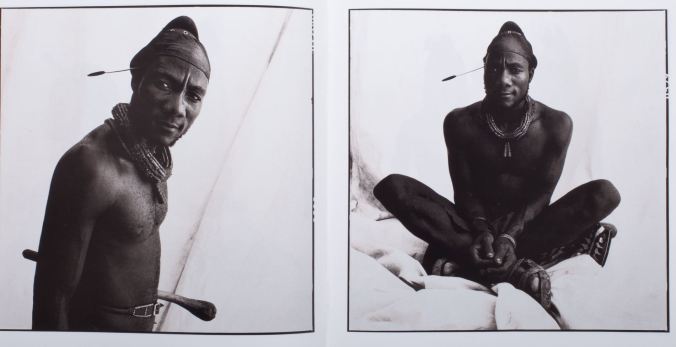
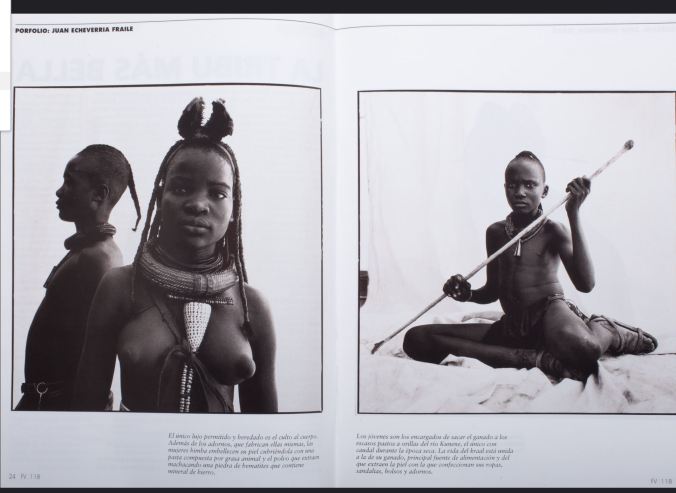
Juan Echeverrria’s images of the OvaHimba tribe in Namibia could be interpreted as voyeuristic and decontextualised; whilst they are taken out of context they do have a realism about them and the subjects share some character and assertiveness.

Namibia_Paisajes_desde_el_tren (2021)

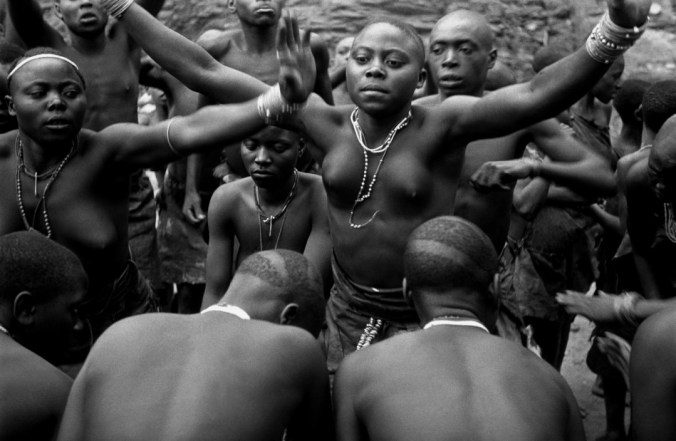
When searching for examples of work which don’t fall into the “traps” I returned to the work of George Rodger who took the image that struck me on the front of the Tribal Portraits catalogue. I was pleasantly surprised that although his work En Afrique was taken between 1947 and 1979 it avoids the pitfalls mentioned above; the nudity is in context, subjects are photographed in context and are certainly not romantised; indeed he gives detailed context with each image.

(En Afrique by George Rodger, 2016)

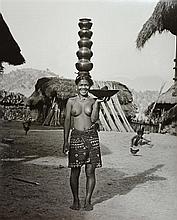
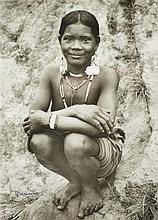
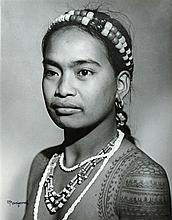
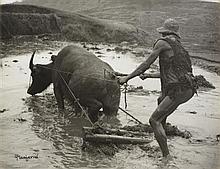
I also thought back to a photographer whose work I came across when in the Philippines a couple of years ago, Eduardo Masferré (1909 – 1995) a Filipino-Catalan who made documentary reports about the lifestyle of native people in the region of the Cordillera of the Philippines in the mid 1950s. I was very struck with his work at the time, which is contained in his book people of the Philippine Cordillera (1988) and was interested how I would view it now I have studied these aspects of tribal photography.

Eduardo Masferre Paintings & Artwork for Sale (2021)

I was pleased to see that although there is a fascination with subjects smoking pipes, most of his images are shot with context in a documentary style which gives information about their way of life. Where there is partial nudity it appears as a natural part of their dress and the emphasis of the photograph is clearly not on this but another aspect, such as the girl with the pots on her head and the smoking woman above. Though there is the occasional image which seems to have been shot simply for the beauty of the subject female, male, old or young, there is no suggestion of imbalance of power between him and his subjects or infantizing of them. For work which was shot between 1947 and 1959. I would say the work is sensitive to the people and a good documentary record and agree with the review from the book cover that the people are shown with “strong faces that meet one’s gaze with great integrity – Masferre preserved all of these in timeless images that transcend ethnography and imbue documentary fact with deeper meaning.” (Masferre and Devilla, 1988).

References:

Eduardo Masferre Paintings & Artwork for Sale (s.d.) At: https://www.invaluable.com/catalog/searchLots.cfm?scp=m&ad=DESC&alf=1&issc=1&artistref=3tvi2dj9ip&shw=50&ord=2&row=51 (Accessed 14/01/2021).

En Afrique by George Rodger (2016) At: https://www.magnumphotos.com/arts-culture/george-rodger-en-afrique/ (Accessed 13/01/2021).

Ju/’hoansi Bushmen (s.d.) At: https://davidbrucephotography.co.za/juhoansi-bushmen/ (Accessed 12/01/2021).

Masferré, E. and De Villa, J. G. (1988) People of the Philippine Cordillera: Photographs, 1934-1956. (s.l.): Devcon I.P. Incorporated.

Namibia_Paisajes_desde_el_tren (s.d.) At: https://www.flickr.com/photos/juan_echeverria_reportajes/sets/72157629307741656/show/ (Accessed 13/01/2021).

Namibia_Paisajes_desde_el_tren (s.d.) At: https://www.flickr.com/photos/juan_echeverria_reportajes/sets/72157629307741656/show/ (Accessed 13/01/2021).

Of Humankind (2000.) At: https://www.peterlavery.com/of-humankind (Accessed 13/01/2021).

Open College of the Arts (2014) Photography 2: Documentary-Fact and Fiction (Course Manual). Barnsley: Open College of the Arts.

Next Post: https://nkssite5.photo.blog/category/learning-log-research-and-reflection/reflection/a4-reflection/my-learning-part-4/

ASSIGNMENT 3 SUBMISSION: VISUAL STORYTELLING

REFLECTIONS ON FORMATIVE FEEDBACK

Tutor report: This was written feedback

I was pleased with the feedback from my new tutor, most especially as I seem to be living with this assignment for months; this has given me some distance which helps with reflection, but I was worried that it may have distorted my vision so to speak.

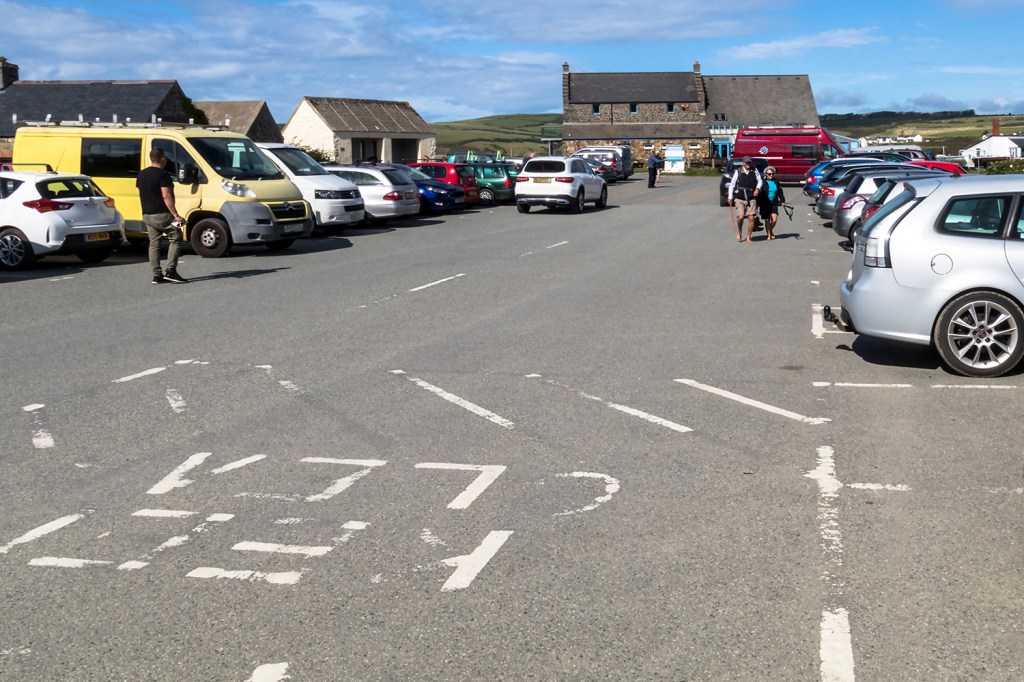
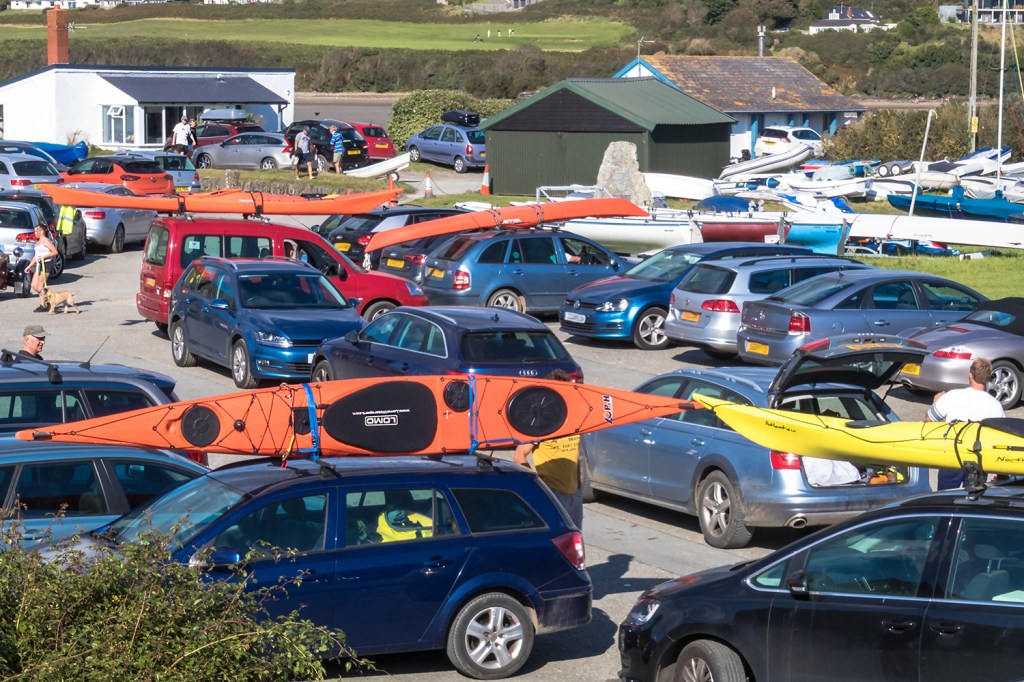
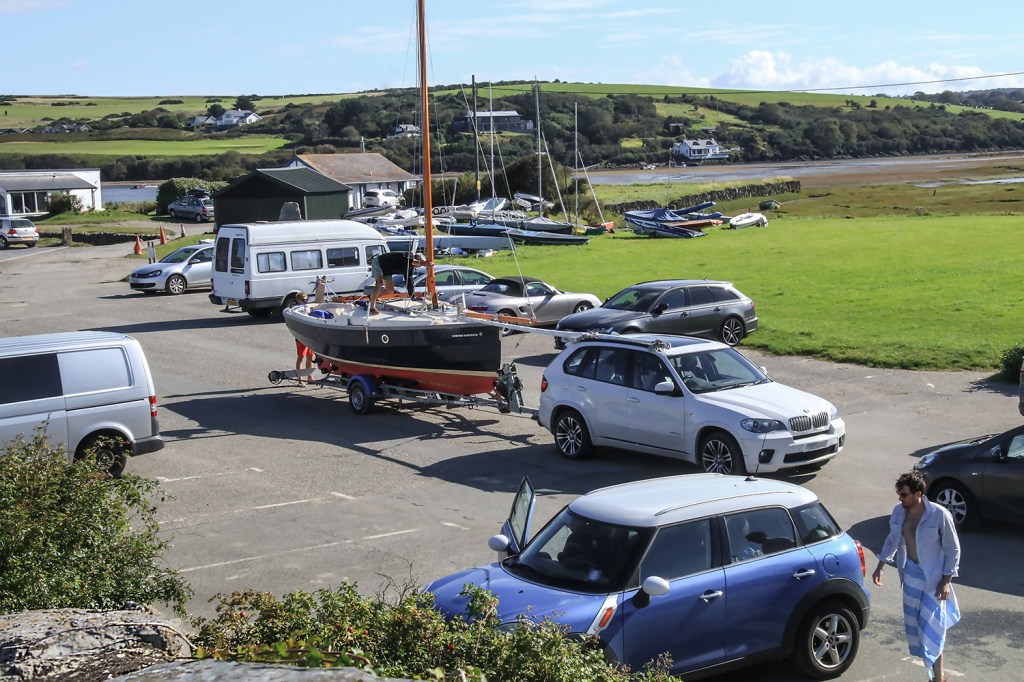
She suggested that I think about a variation to the story theoretically (as it probably wouldn’t fulfil the assignment criteria), such as documenting small specific areas of the car park and documenting their change – I will experiment with this as a side project, which I may well do using my I phone initially to access its usefulness.

For my submission I have rephotographed my final image and replaced it as my Tutor agreed with my reflection that it would be better as an empty car park. I have also rephotographed the 8th image which is the one I think my tutor suggested to try as an empty car park, without the van; however, having tried this in the sequence below I am choosing to stay with my original image. For my narrative I prefer to show the car park transitioning from full/busy to empty/quiet and I think that 3 empty car parks at the end is too much.

The sequence with empty 8th and 10th images as well as the 9th:

With the side-project mentioned above I will continue to experiment with the subject matter to explore further visual narratives.

Next post: https://nkssite5.photo.blog/category/submissions/a3-submission/

ASSIGNMENT THREE DRAFT: REFLECTIONS AGAINST ASSESSMENT CRITERIA

Demonstration of technical and visual skills

  • This assignment was shot over a few months and I observed the space much more than I shot, my observational skills sharpened as I worked into the project.
  • My framing became more deliberate through the shooting period, especially my awareness of what was outside of the frame.
  • I tried a variety of lens, perspective and shot at different times of day, in different weathers and through seasonal changes, to give visual variety; I had to learn to accommodate rather than hide inconsistencies in lighting and colour. My visual strategy incorporated these inconsistencies moving from saturated to less saturated duller images through the sequence.
  • To communicate my concept, I chose to present the images as small and “compressed” for the busy season to larger images gradually to larger images for the quiet season to narrate the feeling of breathing in to breathing out that occurs during this transition.
  • In retrospect I would make the text smaller on the cover,

Quality of outcome

  • My concept is straightforward but communicating it took quite a bit of experimenting. I settled on sharing the transition just from busy to quiet rather than beginning from quiet initially. I think this communicates the transition more strongly.
  • Campbell (2010) says that events have their meaning formed by the narrative, I hope my choice of images (edited many times) combined with the sequencing helps to give meaning.
  • I would like to reshoot the final image as a completely empty car park – which I am in a position to do.
  • It was important to me to have it recognised as being one space, one car park and I anchored this by including fixed elements such as the bus shelter in most images.
  • Though I considered using text I believe the book presentation of the images, sequencing, colour and size provides as much meaning as I need to; I think adding text would have over controlled interpretation.
  • If I had settled on my perspective earlier on when shooting I would have had more “busy” shots which fulfilled my needs; I had plenty but had to choose from only those which focused on the feeling of the space being compressed, rather than English/Welshness or surreality which I started out shooting,

Demonstration of creativity

  • With a conceptual starting point, I experimented with different ways of representing the issue, initially playing as Matt Stuart, Peter Dench, Paul Reas, and Marin Parr do with saturated colour and a slight irreverence to their subjects. I then moved onto exploring Englishness (and Welshness) influenced by Martin Parr, Simon Roberts and Anna Fox; but eventually settled on my own style, a quieter one. 
  • Though I say that I am in an unusual position understanding both the local and visitor response to the seasonal change, you can see my emotional response in the work. Parr says, “it’s the subjectivity not the subject matter that is important”,and I believe my personal voice is evident.
  • As I worked into the project the car park took became a character for me, and the bus shelter also as a part of the landscape. I could almost feel their tenseness during the busy time and their relief when their space became quiet again.

Context

  • This was a personal context to me from the outset. It explored a local issue but one that I was at this precise time able to see both as an insider and outsider being in the throes of transferring from a second homer to a resident. I had been excluded during the lockdown and returned as this ended to become a resident. I was privy to the local resentment to the tourists and to the excitement of the visitors. This transformation was heightened this year, and there will be a discontinuity to the work later however the issue will remain at a lesser level.
  • Though I understood the local issue from both sides as Campbell (2010) suggested it seemed impossible to present this objectively. I think my personal stance shows through in the document, but it will be interesting to see if the document is interpreted in different ways.
  • Personal circumstance meant that this was shot over a longer period than I planned but I used this to my advantage reflecting at length between shooting and between that and editing/presenting.
  • I reflected and fed my learning from my coursework and research into my work and was able to share my work with various OCA peer groups as it developed; this is evidenced in my learning log. As well as the research I have mentioned I was affected by that I did on senses of place Alex Webb, Mikael Subotzy, Marco Van Duyvendik, Laurel Chor, and Hannah Reyes Morales who underlined the importance of knowing a place well to capture it effectively. I also visited photographer’s work which though interesting was not relevant to my project though a similar subject matter such as Stephen Shore, Brice Gilden, Ed Ruscha and Martin Parr’s “Parking Spaces”; all research as an influence but it’s knowing which to discount as well as be led by.

My main regret is the time that it took me to complete this project due to events in my personal life. Looking for the positives, it did give me an extended shooting time, plenty of time to research and experiment and time to reflect between shooting and presenting the work.

References:

David Campbell – Narrative, Power and Responsibility (2010) At: https://soundcloud.com/mattjohnston/david-campbell (Accessed 15/08/2020)

Potter (2018) ‘Martin Parr interview (The World According To Parr, 2003) At: https://www.youtube.com/watch?v=MCRyB2SFQZ4&feature=youtu.be (Accessed 25/10/2020).

Next Post: https://nkssite5.photo.blog/category/submissions/a3-submission/

REFLECTION AND RESEARCH: ASSIGNMENT 3

David Campbell- Narrative, Power and responsibility  (2010)

He talked about the theory and concepts behind storytelling and narrative:

  • The point of narrative is to relay information.
  • Narrative is about making sense of something
  • Events have their meanings formed by the process of narration – the event is not what happens but what is narrated.
  • Narrative is about the relationship of story to an event, place or person which the photographer makes by providing a connection.
  • Context is important to narrative as mediation and representation- The event is not what happens but what is narrated.
  • There are limits to the narrative that can be given to certain events as narrative is based on a series of events where some things are included and somethings are not; the narrator will have a perspective and the narrative will never be complete.
  • Be aware of these limits and reflect on these
  • He commented that news happens in a day and is reported as a discrete event but is often not linked to context.

Traditional forms of narrative:

  • Time: Linear, or non-linear that breaks up time in certain ways
  • Characters/personification: who drive the story forwards
  • Connected events & drama
  • Space: Location
  • Causality: Accounts about how things came about
  • In narrative there will be moments of: Exposition – where things ae revealed or made clear
  • Conflict – climax or resolution
  • Campbell believes the most important thing in narrative is the relationship between characters and the context, how they reveal the story.

ASK YOURSELF, WHAT IS THE STORY YOU WANT TO TELL?

Why that place, location, time? What is the issue that motivates you? What are the characters? What is the context?

On power and responsibility and an image’s capacity for change and effect on the world:

  • Campbell suggests the more you can attend to context the more chance there is of change.
  • The amount of research that goes into a story will maximise the outcomes and prospect for change

My thoughts:

  • Any ideas of objectivity in documentary are false.
  • It was interesting that he mentions Marcus Bleasdale whose work I researched recently as a photographer whose work actually instigated change
  • I should follow up by researching Tod PapaGeorge’s work that he uses as an example.  

Reference:

David Campbell – Narrative, Power and Responsibility (2010) At: https://soundcloud.com/mattjohnston/david-campbell (Accessed 15/08/2020).

Next Post: https://nkssite5.photo.blog/category/learning-log-assignments-2/assignment-3-visual-storytelling-learning-log-assignments/a3-learning-log/

RESEARCH: ASSIGNMENT 3

Additional Research

This research came just after I began test shooting for assignment 3 focusing on the narrative of a small local car park. I was initially influenced by the work of Simon Roberts, in particular where he surveys scenes from elevated positions, Anna Fox’s focus on Englishness and the work of street photographers Peter Dench, Matt Stuart and Paul Rees.

See links to previous research:

Simon Roberts: https://nkssite5.photo.blog/category/1-exercise-we-english/

Anna Fox: https://nkssite5.photo.blog/category/learning-log-research-and-reflection/photographer-talks/anna-fox-at-the-tvg-oca-meeting-16-5-20/

Peter Dench: https://nkssite5.photo.blog/category/research/a3-research/peter-dench/

Surrealism and colour – Reas, Stuart and Fox :https://nkssite5.photo.blog/category/research/a3-research/surrealism-and-colour-photography/

I looked for other photographers and work to inspire me when this wasn’t working for me, and I realised I had strayed from my original idea of focusing on the car park rather than the people – It was then that I researched wider as below, and found the following photographer’s work:

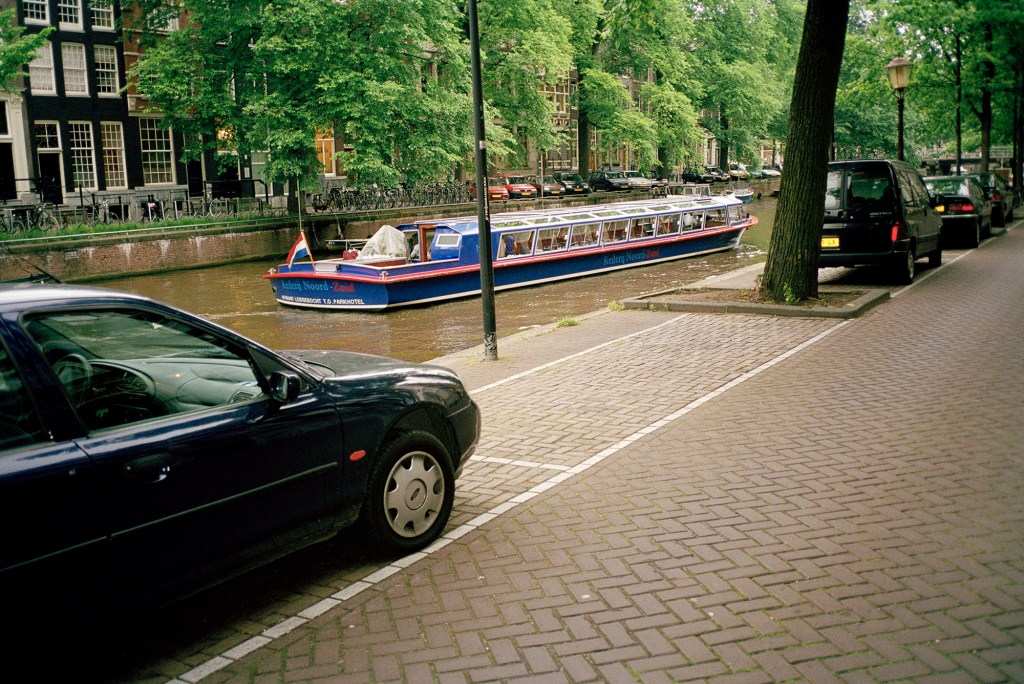
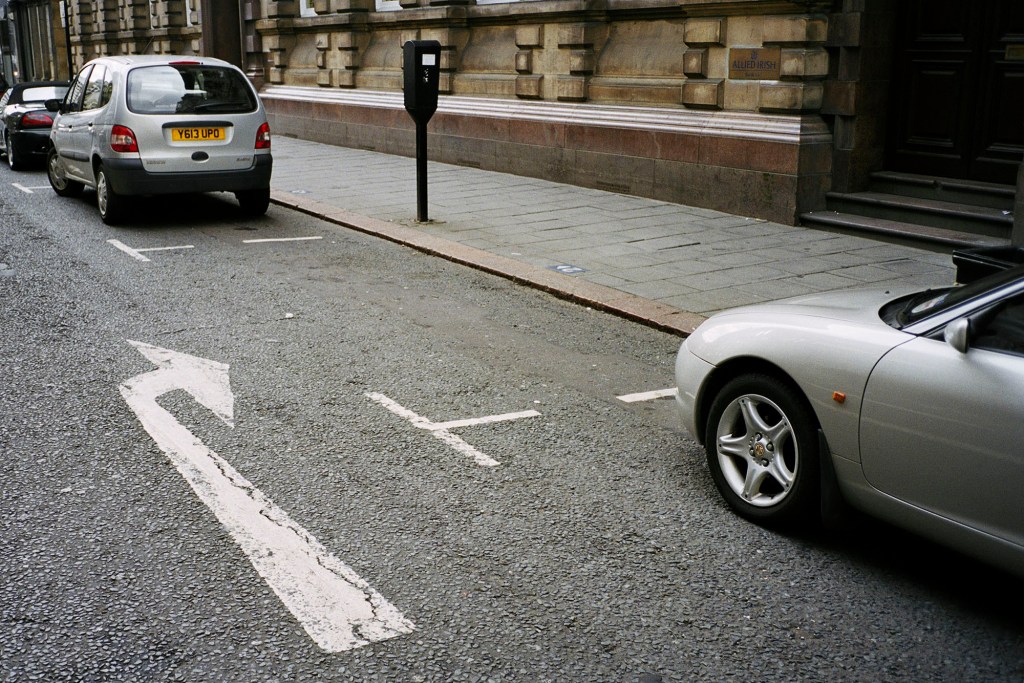
Martin Parr The last car parking space

Between 2002 and 2007 Parr looked at the problem of where to park a car and photographed the last car parking space in 41 countries; the frustration of finding a car parking space is apparently a global unifier of the middle classes (photo-eye Bookstore, 2020). His usual use of high-saturation colour produces images that may at first glance may seem mundane, but given a context they are profound.

(A Mini Tour of World Parking with Photographs from Martin Parr (2020)

(VIKA, 2020)

I particularly like his design concept where the book is presented as a wedding album, as something precious, just like a last parking space; this is genius. It points me towards more creative considerations of how to present m work.

References:

photo-eye Bookstore (2020) At: https://www.photoeye.com/bookstore/citation.cfm?catalog=ZD140 (Accessed 23/08/2020).

A Mini Tour of World Parking with Photographs from Martin Parr (2020) At: http://foxfinchtepper.com/a-mini-tour-of-world-parking-with-photographs-from-martin-parr/ (Accessed 23/8/2020).

VIKA (2020) At: https://designbyvictoria.com/project/parking-spaces-2/ (Accessed 01/11/2020).

Stephen Shore – Uncommon Places

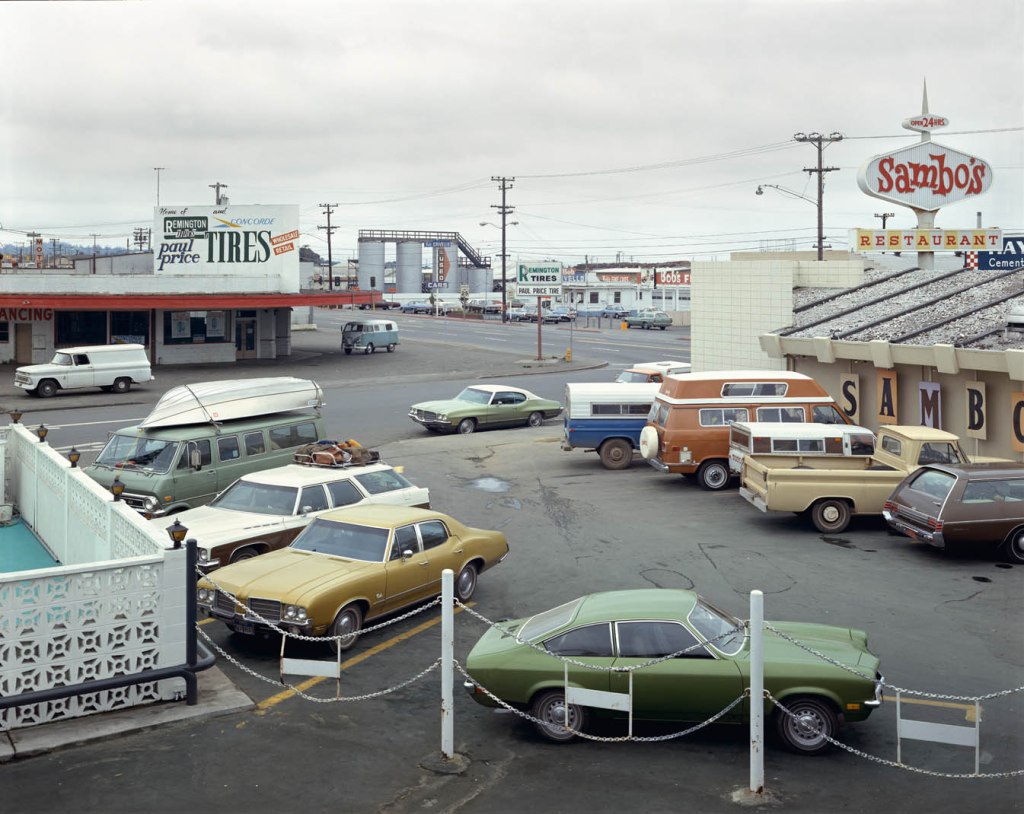
This book of 61 photographs of 1970s America Uncommon Places (1982) included images of parking lots. He was at the forefront of using colour when many thought it vulgar.

                                         Bengal, R. (2020)                    Edward Clay, D. (2018)

These images work much better in colour than they would in black and white, the colour adds a sureality and increases the already sharp detail I think. Shore describes how his then new large format camera made him work differently, with longer preparation time, allowing him to process large amounts of information which “condenses into an incredibly saturated and detailed image” (Editorial @ ASX, 2020); his work does have many sites of emphasis in each image, which takes time for viewers to unpack. Vogue described this as a time of seeing things in a new way (Bengal, 2020) in fact Shore described the work himself as “an autobiography of seeing” “the capture and projection of the delights of seeing” (Editorial @ ASX, 2020), which he transforms into fine art.

References:

Bengal, R. (2020) How Stephen Shore taught America to see. At: https://www.vogue.com/article/stephen-shore-selected-works-uncommon-places (Accessed 23/08/2020).

Editorial @ ASX (2020) Stephen Shore: ‘Uncommon Places’ (2004). At: https://americansuburbx.com/2010/12/stephen-shore-uncommon-places-2004.html (Accessed 23/08/2020).

Edward Clay, D. (2018) Stephen Shore: Uncommon Places. At: https://independent-photo.com/news/stephen-shore-uncommon-places/ (Accessed 23/08/2020).

Bruce Gilden-  People with masks grocery shopping during the Coronvirus Pandemic (2020)

Gilden has photographed people crossing parking lots during Covid 19. It was interesting to read how his work here changed from his usually candid style to him slightly directing subjects; particularly that he feels that subjects accept being photographed more so when wearing a  mask and yet with that aspect missing it is harder for him to make a good picture, “you always need to find a detail that’s strong in any picture”  (What Bruce Gilden Learnt Photographing in Grocery Store Parking Lots During COVID-19, 2020)

(What Bruce Gilden Learnt Photographing in Grocery Store Parking Lots During COVID-19, 2020)

He is know for getting up close to his subjects but of course he couldn’t do this quite so much in this work. I admire his forceful photography, but it is definitely not my style.

References:

What Bruce Gilden Learnt Photographing in Grocery Store Parking Lots During COVID-19 (2020) At: https://www.magnumphotos.com/newsroom/what-bruce-gilden-learnt-photographing-in-grocery-store-parking-lots-during-covid-19/ (Accessed 23/08/2020).

Ed Ruscha -Thirtyfour Parking Lots in Los Angeles 1967

This is aerial views of parking lots in black and white but not relevant o my current work

Chuck Anderson – Places you can’t imagine

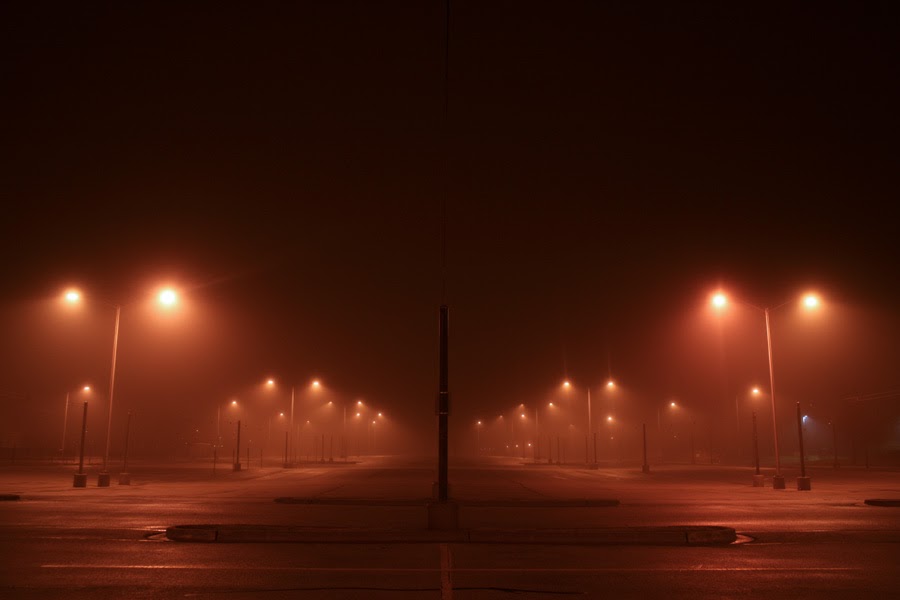
In my search for photographic work based in car parks I came across this work. Anderson is a multi media artist who here has digitally manipulated this image with tungsten streetlights often with creating rainbow splashes of colour and light in an empty parking lot. Again not relevant to my current project.

(How One Parking Lot Photograph Conquered The Internet, 2020)

Reference:

How One Parking Lot Photograph Conquered The Internet (2020) At: https://www.vice.com/en/article/78ebpy/how-one-parking-lot-photograph-conquered-the-whole-internet (Accessed 1/10/2020).

This concluded my research into parking lots as I realised I should look beyond the subject matter to my concept.

Research Continued with a suggestion from a peer:

Jack Latham – parliament of Owls:

It was suggested I looked at this work by a per when I was discussing how my work is essentially about absence and presence. Latham’s work does explore what happens when there is a vacuum of context.  It focuses on Bohemia Grove an elite men’s club, which is shrouded in secrecy, which Latham only gives brief glimpse to. It was interesting to read about and “The idea of a context vacuum is a fascinating one,” (Roberts, 2019) says Jack Latham, but the work isn’t relevant to my current project, though it make me think about how much context to provide, or not.

Reference:

Roberts, S. (2019) BJP International Photography Award: Jack Latham is our 2019 winner. At: https://www.bjp-online.com/2019/06/bjp-international-photography-award-jack-latham-is-our-2019-winner/?utm_campaign=International%20Photography%20Award%202020&utm_medium=email&_hsmi=95950872&_hsenc=p2ANqtz–a0oghdIRM-Nq7VKr1WKz6wrfCgCEfzOWMrGrxAC4_TX33T-Ia_hRTyY105v8l4ga-1fZDWTE80dej8AC-58yBHIffzg&utm_content=95950872&utm_source=hs_email (Accessed 01/11/2020).

Reflections:

I think I’ve now disappeared down enough rabbit holes with this extra research; with the research that I’ve done in my course work as well as the many photographers and photography panel talks that I’ve covered and commented on over the period I’ve been developing my project I have more than enough background to complete my assignment 3.

My learning for this research:

Shore: “use many sites of emphasis in each image, which takes time for viewers to unpack”.

Gilden: “you always need to find a detail that’s strong in any picture”

Parr: How you can make the mundane appear very interesting.

         The importance of a good concept, especially when you take this through to the presentation of a project.

Generally: The strength of saturated colours, to add to surreality and sharpness of detail.

POSTSCRIPT December 2020

Following this research I was more aware of the colour or lack of it in my subject/location and used this to communicate mood in assignment 3. I consciously tried both using many points of emphasis when shooting as well as looking for a detail that’s strong in each image, this wasn’t easy in a mundane subject. I asked myself the “Parr” question, how to make the mundane interesting?

Next Post: https://nkssite5.photo.blog/category/research/a3-research/david-campbell-on-narrative/