I observed for some time before beginning to photograph.
During my time of observing as when shooting, because of the Welsh Pandemic Lockdown, I was in an area of very restricted movement and only able to explore on foot. This limited my photographic area unless I was out running, at which times I shot exploratory images or occasionally as with the police car in the beach car park, had to shoot for the project with my I phone.
Once I’d completed my research, I had themes to focus on, and within a location I wanted to catch them as quiet as possible – though that was generally not hard.
When framing I kept in mind that there is a difference between what an eye sees and a camera records. However, I didn’t have to exclude from the frame items that would have changed the meaning; places were quiet and empty, but I did have to ensure that what I put in the frame would tell an obvious story, and to exclude any peripheral detail.
As a visual strategy I chose to present the images within a PowerPoint so that I had control over the way the images and text are viewed, so that I retain some control over the message, which is my voice. This I think was the best way to present the work on my blog as I must, however I am sure that if I were to show the images and text withing a gallery setting I could achieve the effect that I want.
I made a lot of changes to my first draft, mainly in response to my peer’s comments, though I knew that it contained too much material myself. I reduced the text, in some places separated text from the visuals, to let the visuals speak for myself, so that the images become my voice. I abandoned my initial idea of presenting facts with a white background, and opinions on grey background as that hadn’t worked and believe with my simpler presentation this separation will be self-evident. I did however present the press comments as in a newspaper column.
The photographs are extremely mundane, but it is the presentation that makes them interesting.
I have respected the visual elements and not added or subtracted from them.
Quality of outcome:
Once I had my concept it was challenging to think how to present it. I decided to take a tongue in cheek perspective, as I could then photograph what I saw, and shared the other layers of truth with the context and text I presented along-side the images.
The brief forced me to plan and execute the project methodically, this helped me to realise the project in a focused, timely, and coherent manner.
The brief of 15 images, when my plan suggested 4 to 5 themes, pushed me to find variations on subjects to achieve my plan.
I proved that the project had a wider scope than my previous work, both in the way that I expanded my search for context with research and recorded relevant information over a long duration.
Presenting my “truth” with just some trace of all the research that I’d done proved challenging. Initially I packed too much in, and then spent time paring the textual information down, discerning what was essential and what was distracting.
I hope that the current form and choice of images and text conceptualises my ideas effectively, and provides a complex narrative that viewers will be able to engage with it and even question.
Demonstration of creativity:
This was from the outset a personal project, chosen because the uncomfortableness of a situation, that gave me a purpose to look for the truth in of aspects of it.
I realised that as both an insider and outsider I was in a unique position to report on the issues and capitalised on this unusual position.
I knew that there were layers as well as shades of different types of truths contained in the opinions expressed by others, my feelings and the facts available. I decided to represent these layers of truth in a “tongue in cheek” style, to show my voice and to stimulate a response from the viewers.
My personal voice is represented in the images that I share, the text that I have chosen to accompany the photographs, and the way I have presented the work.
I have shown that images are open to those that want to take charge of them. However, I do think I’ve taken a risk and trodden a fine line as there must be some belief in the truth of photographs or they lose their value. I hope that the work does encourage questions.
The subjects photographed are mundane, but this is often the way with documentary photography- I hope the way I present them makes them interesting.
Context:
I believe that this time as I completed coursework and additional reading, I have traced the development of some of my thoughts and linked it to previous work and readings. This has helped me to contextualise my learning.
I have shown that I can synthesis and analyse information from many sources.
I really enjoyed the contextual research that I did, it was good to do self-directed research that served a self-designed purpose. I balanced information from the social media and press with more factual information from government sources and statistical reports. To obtain this balanced contextual background I covered political, social, and economic themes and enjoyed reading more widely around the truths in photography. This gave me a real meaning to the “cultural and political space of the photograph”. I was the author of the work in an knowledgeable and ethical manner.
As usual I reflected throughout the process, but more so as I contemplated the results of my research and moved into forming the presentation of my work.
Sharing with OCA peer groups throughout the process gave me challenge and support and encouraged regular reflection on my emerging work.
Continue working on your personal project and produce a photo essay of 15 images. Your work should demonstrate good research, a methodical approach and a wider scope than previous assignment work.
Decide on the best submission format for your work. Discuss your ideas with your tutor while you do the projects and exercises in Part Five. (Open College of the Arts, 2014:120)
Background information:
This personal project spans a year of reflection on the village of Newport (Tredraeth) Pembrokeshire. At the beginning of this time I was a second home owner, “exiled” from the village by the pandemic lockdown, observing the “temperature” of the place from afar. Mid way through the year I relocated there permanently. I have been an insider/outsider observer of the place for many years, known and accepted by many. Now that I have become a local, other’s experience tells me that it will take me years to be recognised as such.
As with everything this year, emotions have magnified, and voices have become louder. To rationalise what I was reading on social media and the press, I researched for facts to seek the cultural, political, social, and economic truths about the impact of visitors and second homeowners to this rural area, during the pandemic lockdown, and more generally as well.
Having discovered my “truth” I considered how to share this visually. My background reading of those such as Sekula, Tagg, Berger, Levi Strauss and Borge, increased my awareness that photographs are only representations of reality, part captured in the moment and the rest supplied by the photographer. Whilst I carry the responsibility and accountability of a documentary photographer to present reality, in this story I present various layers of truth, material, moral, impression and form. Images are never neutral, but having synthesised much information, as well as emotion, I have recorded and presented the truth as I understand it. I have recorded what my eyes saw. The text that accompanies the images is to support the truths I have discovered, rather than appropriate the images, as well as to provoke thoughts.
Photographs are not predictable communicators “they cannot carry meanings in any straightforward way” (Company, 202:8), but I have announced my path to this truth, and my position in it, though do hope that viewers will question the truths that I share.
References:
Campany, D. (2020) On Photographs. London: Thames and Hudson.
Open College of the Arts (2014) Photography 2: Documentary-Fact and Fiction (Course Manual). Barnsley: Open College of the Arts.
Artist statement:
This work is a personal reflection on aspects of a village, over a year. Though this has been an unusual time, the feelings and opinions felt and expressed, are simply magnifications of continued underlying tensions between locals and visiting outsiders. I have sought to uncover the truths that lie beneath these emotions, and share them here. These layers of truths are presented with integrity and research, though just as I have formed my own relationship with them, so may you.
Tutor hangout feedback meeting 25.2.21: This was to discuss my feedback on Assignment 4 Critical review, but we also discussed my proposal for assignment 5.
In her feedback my tutor queried several points about my assignment proposal. She asked me to:
Clarify my approach and undertaking in relation to the criteria: Critical and analytical skills, Develop intellectual understanding, Synthesis information, Communication skills
Would my proposal allow critical engagement with the blurring boundaries between fact and fiction/different truths?
How this assignment develops my work further from assignment 3?
When I first received my feedback I was puzzled, however I quickly saw that my proposal had not been explicit about these points and that much of the methodology, approach and workflow was in my head. By the time we had this discussion I think I had clarified the points myself and this is how I answered her questions:
I was able to explain how I realised that I hadn’t set out my methodology in my proposal: My intent is to move from the subjective social media comments that I have collected from face book, to collecting data and facts from various sources. Sources such as the Town council and government, press releases, property companies, census, and business owners. I will focus on facts about the house market (home ownership, house prices, rental opportunities), business demographics (proportion of income taken in the tourist season)and tourist demographics, to ascertain facts about the impacts of visitors to the community.
I explained that I will add to the collated social media comments from locals and visitors, demographic, economic and housing facts, from various gatekeepers. This will give me a better intellectual understanding of the situation and enable me to decide on my stance on the various issues. At the heart of this is a synthesising of the various voices, messages and information- the different truths- so that I can communicate my understanding of the concerns.
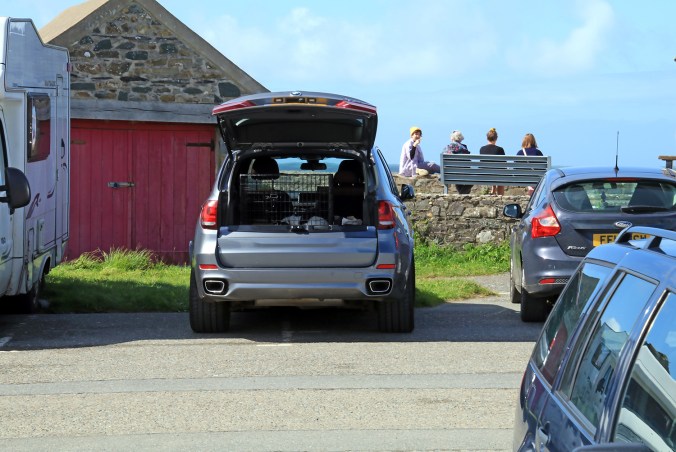
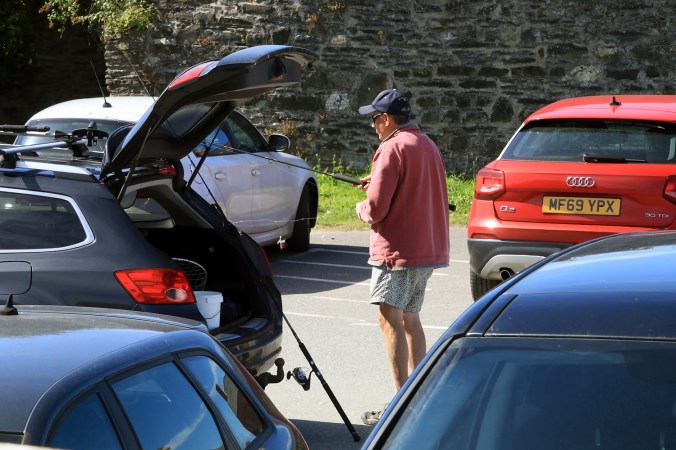
I described how this work is a progression from my assignment 3 work which identified the pressures of the rise in visitors to the town during the summer season, exemplified by the increased traffic in a car park. This work is of a much wider scope; assignment 3 was connotative of the issues, this expanded work allows me to denote more fully the concerns and issues arising from this phenomenon.
Extracts from my Assignment proposal:
Working title: Tensions arising from visitors.
Theme: Different sides of a story.
It’s a personal project, that began a year ago when I was in lockdown in England and not allowed to travel to my then “second home” in Pembrokeshire Wales. During this time I observed many discussions on social media about visitors to our “second” town, as well as Welsh national media highlighting lockdown infringements. The coverage was mostly one-sided and uncomfortable to read. As the year progressed and I travelled to my second home, I was able to gauge the real breadth of feeling from local residents to visitors; though not “local” I am well established in the community here and talk to people on both sides of the divide.
The second part of this year I have been resident here in what is now my only home where my research continued, capturing media articles and comments, knowing I would probably use the material for assignment 5. I added to this notes on conversations had, overheard and related.
Methodology: Photograph local contentious subjects such as, caravan parks, holiday houses, shops, roads, footpaths. Present images with short text/captions from research.
Further research: Photographers, and bodies of work to support my presentation approach, through websites, books, talks, and online interviews. I may also look at my archive of images, to compliment those that I shoot over the next month.
Approach: Probably a slideshow sharing images with overlaying text contradictory to each photograph, and possibly a third layer (perhaps audio) communicating another perspective on issues.
RESEARCH
I began with reading around “truth” in photography, investigating photographers’ who’ve written on the subject and photographic philosophies on the topic. I have written my responses to the thoughts of Allan Sekula, John Tagg, Levi Strauss, Borge and also explored other such as David Company “On photographs” (2020) and David bates Photography: The key concepts (2009).
I came away that there must be some belief in images or they lose their value. Therefore where there is power over an image the photographer, editor, curator, pubisher and so on there needs to be some transparency about their intention and influence. It is is also important that the viewers ask questions of an image, because a photograph can only be a representation of a reality, not reality itself.
My extended research led me down many rabbit holes, from a starting point of social media comments to Government web sites, Newspaper articles, council meeting minutes, letters from MPS, Tourism data sources, property information sources, and interviews with local business owners. I also attended some local virtual meetings.
My conclusion that there is a real trade off with local businesses and economies who need the income from tourists and the impact that this has local house prices and rental availability as well as some feelings of “invasion” at certain times of the year.
PHOTOGRAPHING
My work above showed emerging themes:
Tensions caused by tourism
Fears about Tourists and second home owners breading Covid lockdown rules
The dependency of the local economy on visitors
The impact of second home owners on the housing and rental markets.
I went out to photograph with these themes in mind. On the first 2 themes the evidence of tourists visiting was scant so I focused on representing this, empty streets, empty rental cottages, empty second homes, empty caravan and camping sites, empty car parks and so on.
For the 3rd theme, the local economy, again the visual evidence was different to many of the views expressed of food shortages and a lack of welcome by local businesses, as I photographed the local high street. The 4th theme, housing was different and I had to take a more representational approach as evidence of lack of affordable housing and long term rental housing is hard to capture.
I shot similar subjects and locations over a period of time to get the right light, weather and traffic (human and vehicular) conditions. They are all necessarily mundane subjects which I found less than inspiring to shoot so had to keep returning myself to the research and my intention to justify my photographing, but found the challenge of capturing the subjects in the manner that I wanted enough to maintain my momentum. At the time of shooting we were in a period of “Stay local” Covid 19 restrictions, which meant locally that you were not even allowed to drive for exercise, so I was restricted to photographing within walking distances. Most of my exploratory first images were taken on my I phone when out running or when walking locally for other purposes. I then returned with my larger camera on planned visits around, weather, light and time of day.
EDITING
During my editing I decided which images needed improving or taking from a different aspect. As I then began to put these to the text I had acquired I discovered where I had gaps and needed to photograph other subjects. My shooting was time limited as I needed to complete it before the area opened back up to tourists as this would have provided another perspective and a different story to that which I was writing. This was another story I could have written but it would have taken me past my course deadlines, it was a story that I already touched on in assignment 3. However it could be another project going forward.
PRESENTING
Early on I the work I thought that I would prefer to use four of five repeating images with varying text to show the different truths, Subjective social media, subjective press reports, Government and official reports, statistical data and my voice. However the brief is to use 15 images and having discussed this with my peers in an OCA hangout group I decided to present multiple images withina theme with different aspects against them.
This was my first draft of my power point documentary:
I shared my first draft with my peers in the Documentary/level 3 OCA hangout group. The feedback was really useful. I asked:
Should I give more context, perhaps in the title? but was told to keep the ambiguity.
Whether they could see my voice and what they thought my message was?
Some did realise that I was taking a tongue in cheek position and that the visuals are opposed to the text.
The fact that one peer asked me where I sat in the whole thing told me it wasn’t clear enough.
Some thought the message was about spreading corona virus, holiday homes
So I realised that my message wasn’t clear, nor was my voice.
No one had realised that I had put the subjective Facebook comments on a grey background, and facts on white background- so that hadn’t worked!
We discussed what I wanted to convey and how I could adjust to achieve this and to ensure the visuals come through. There were suggestions to:
Reduce the text
Separate the text in some places from the visuals
Put the facebook comments on ticker tape under the images
Present some facts without visuals on a text only page.
Afterwards I thought more about how to make it clear what my position is:
I need to really think about where I am in the story.
Let my voice speak in the visuals.
Make sure the work is really tongue in cheek.
Actions taken:
I pared down the text, by critically looking at each piece of text eliminating what is not essential.
I threw all the parts up in the air and looked at afresh, which enabled me to see it afresh and make decisions on what order was most effective for the various parts.
I chose to differentiate the factual text by giving the appearance of newspaper column print.
I experimented with ticker tape but then arrived at the idea that I’d like to viewers to see the images first and then with a delay provide the contradictory facebook comments. So I faded the text in after the image.
I reduced the backgrounds all to a simple white.
I have added an end note before the references to explain my unique position in the situation.
This is personal project. It began a year ago, I was in lockdown in England and not allowed to travel to my then “second home” in Wales. During this time, I observed many discussions on social media about visitors to our “second” town, as well as Welsh national media highlighting lockdown infringements. The coverage was mostly one-sided and uncomfortable to read. As the year progressed and I travelled to my second home, I was able to gauge the real breadth of feeling from local residents and visitors; though not “local” I am well established in the community here and talk to people on both sides of the divide.
The second part of this year I have been resident here in what is now my only home. I continued researching, capturing media articles and comments, knowing I would probably use the material for assignment 5. I have added to this note on conversations had, overheard and related. Now I need to develop a visual photographic response to this personal, and socio-political study. I would like to explore layers of truth, something that has interested me increasingly as I have progressed through the documentary course. Though my research has been during the coronavirus year 2020-2021, I don’t intend the work to focus on this; the research highlights local/societal/nationalist issues that exist normally, such as the economy, resources, housing, tourism, and hospitality businesses.
Working title: Tensions arising from visitors.
Theme: Different truths.
Methodology: Photograph local contentious subjects such as, caravan parks, holiday houses, shops, roads, footpaths. Present images with short text/captions from research.
Audience: Myself. I will create it for myself, depending on the outcome I might release to the community later as a healing tool; currently it would inflame the situation locally.
Further research: Photographers, and bodies of work to support my presentation approach, through websites, books, talks, and online interviews. I may also look at my archive of images, to compliment those that I shoot over the next month.
Approach: Probably a slideshow sharing images with overlaying text contradictory to each photograph, and possibly a third layer (perhaps audio) communicating another perspective on issues.
It is personal project. It began a year ago, I was in lockdown in England and not allowed to travel to my then “second home” in Wales. During this time, I observed many discussions on social media about visitors to our “second” town, as well as Welsh national media highlighting lockdown infringements. The coverage was mostly one-sided and uncomfortable to read. As the year progressed and I travelled to my second home, I was able to gauge the real breadth of feeling from local residents and visitors; though not “local” I am well established in the community here and talk to people on both sides of the divide.
The second part of this year I have been resident here in what is now my only home. I continued researching, capturing media articles and comments, knowing I would probably use the material for assignment 5. I have added to this note on conversations had, overheard and related. Now I need to develop a visual photographic response to this personal, and socio-political study. I would like to explore layers of truth, something that has interested me increasingly as I have progressed through the documentary course. Though my research has been during the coronavirus year 2020-2021, I don’t intend the work to focus on this; the research highlights local/societal/nationalist issues that exist normally, such as the economy, resources, housing, tourism, and hospitality businesses.
Working title: Tensions arising from visitors.
Theme: Different truths.
Methodology: Photograph local contentious subjects such as, caravan parks, holiday houses, shops, roads, footpaths. Present images with short text/captions from research.
Audience: Myself. I will create it for myself, depending on the outcome I might release to the community later as a healing tool; currently it would inflame the situation locally.
Further research: Photographers, and bodies of work to support my presentation approach, through websites, books, talks, and online interviews. I may also look at my archive of images, to compliment those that I shoot over the next month.
Approach: Probably a slideshow sharing images with overlaying text contradictory to each photograph, and possibly a third layer (perhaps audio) communicating another perspective on issues.
I have not found it as easy to evaluate the critical review against the assessment criteria as it is photographic assignments, however:
Context and demonstration of technical and visual skills
I have researched using secondary source material: facts, images, ideas, quotations, through reading, listening and participation in talks and lectures.
I have analysed the material and used it critically to construct and support my opinions about my subject.
In the essay I have brought in and engaged in some of the theoretical and particularly ethical issues I encountered during the course such as power, respect, context, intent, social and a photographer’s responsibilities.
My choice of subject was driven by learning during the coursework and interest that grew from several photographic talks form a year ago; particularly the Lumix Festival talks in June 2020 which focused on reconsidering perspectives in documentary photography.
The essay also grew from being inspired by the working ethics of particular photographers such as Mark Neville and Robert knoth whom I heard speak virtually; as well as commentators on documentary photography such as Fred Ritchen Michelle Borge and Stephen Mayes.
Demonstration of creativity
My personal thoughts on photographic practice stimulated by the course guided my choice of topic.
I chose my critical review subject so that I could delve deeper into particular types of working in documentary photography that I encountered during the course.
Following my research and analysis I have formed and given my own opinions on how a photographer can benefit the communities that they photograph.
I redrafted at the end of my writing many times to try to give my personal voice as well as using the work and practice of others for examples.
Quality of outcome
I have shared ideas of photographic practice to demonstrate how photography can helped communities photographed.
To do this I have related to wider social political and economic issues.
I have structured the essay using subtitles and signposting to guide the reader.
I have written the essay in an academic style and referenced all material used.
I have included photographic images as suggested in the brief although I don’t feel that they are essential to the critical review.
I hope that I have communicated my ideas and evidence clearly.
Write a 2,000-word critical essay on one of the many debates that you’ve explored so far in this course. You may use any of the research materials you’ve collated so far or do further research. (Open College of the Arts, 2014:95)
For assignment 4 I decided to explore how documentary photography can be effectively disseminated for the benefit of communities that it is photographed in. This was initially sparked when I first encountered the work of Mark Neville in: The Port Glasgow project, Deeds not words, Parade, and battle against stigma, when I was at a virtual artist’s talk at the Photographers Gallery in April 2020. Since then I have taken a particular interest in other photographers and photography projects that work with communities that try to ensure that the work benefits the people photographed.
This assignment was shot over a few months and I observed the space much more than I shot, my observational skills sharpened as I worked into the project.
My framing became more deliberate through the shooting period, especially my awareness of what was outside of the frame.
I tried a variety of lens, perspective and shot at different times of day, in different weathers and through seasonal changes, to give visual variety; I had to learn to accommodate rather than hide inconsistencies in lighting and colour. My visual strategy incorporated these inconsistencies moving from saturated to less saturated duller images through the sequence.
To communicate my concept, I chose to present the images as small and “compressed” for the busy season to larger images gradually to larger images for the quiet season to narrate the feeling of breathing in to breathing out that occurs during this transition.
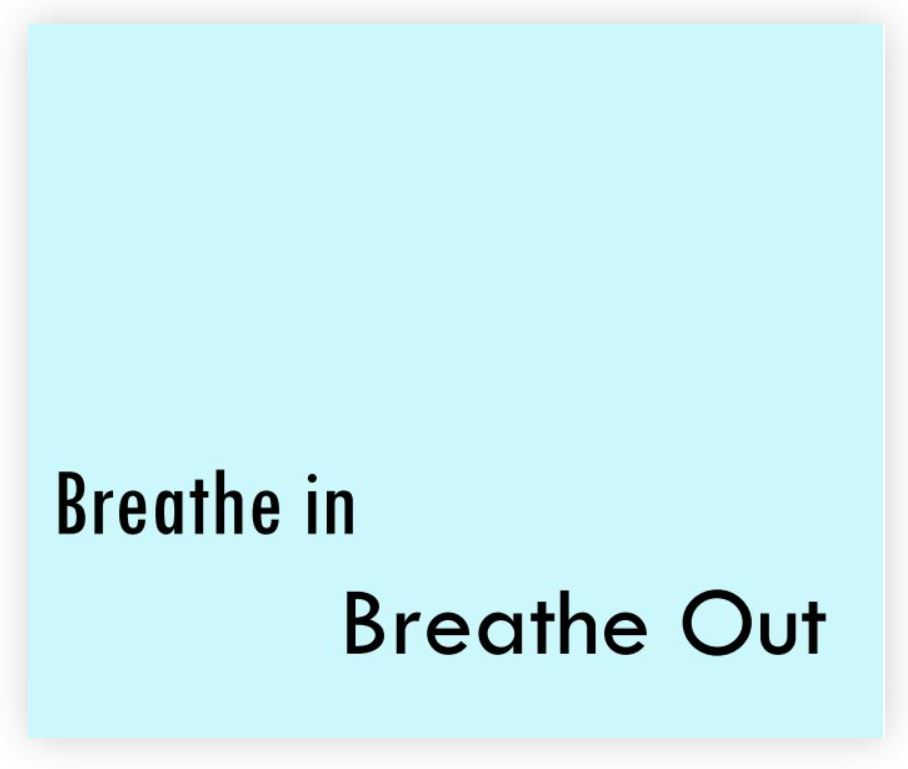
In retrospect I would make the text smaller on the cover,
Quality of outcome
My concept is straightforward but communicating it took quite a bit of experimenting. I settled on sharing the transition just from busy to quiet rather than beginning from quiet initially. I think this communicates the transition more strongly.
Campbell (2010) says that events have their meaning formed by the narrative, I hope my choice of images (edited many times) combined with the sequencing helps to give meaning.
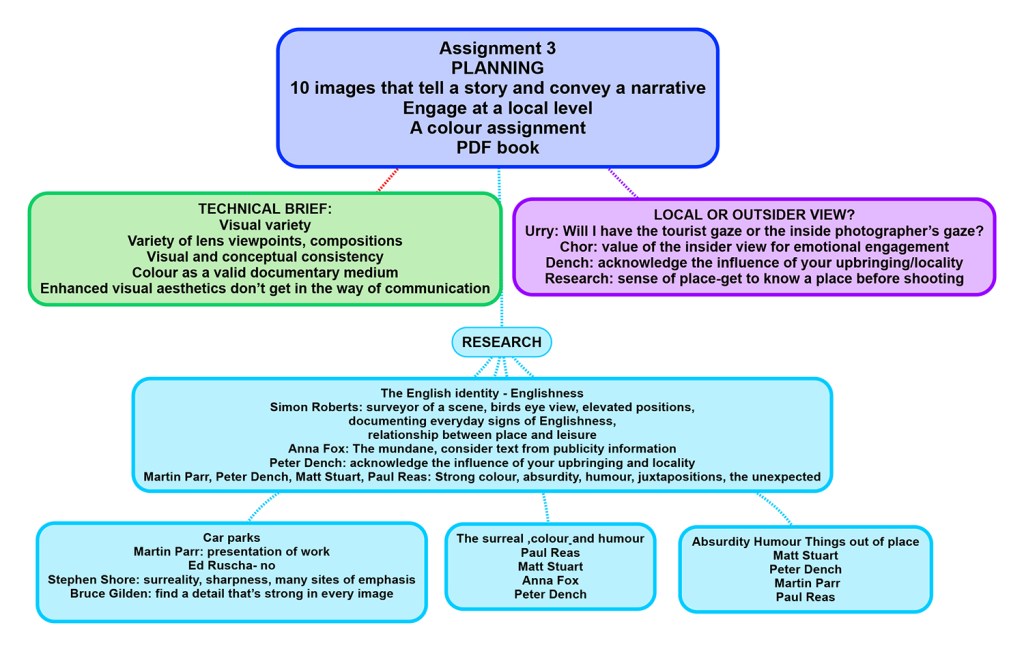
I would like to reshoot the final image as a completely empty car park – which I am in a position to do.
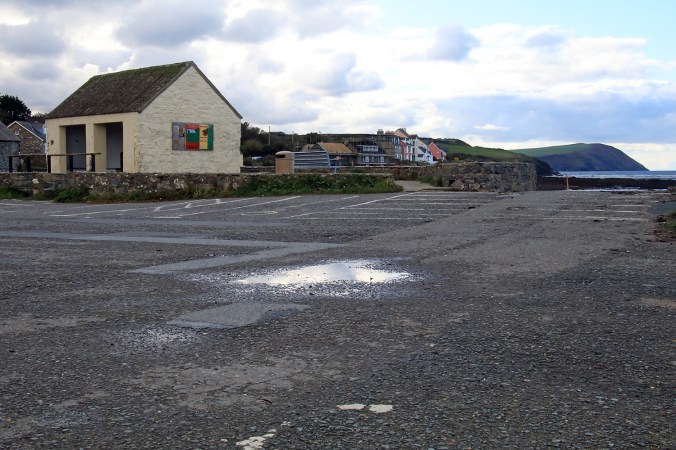
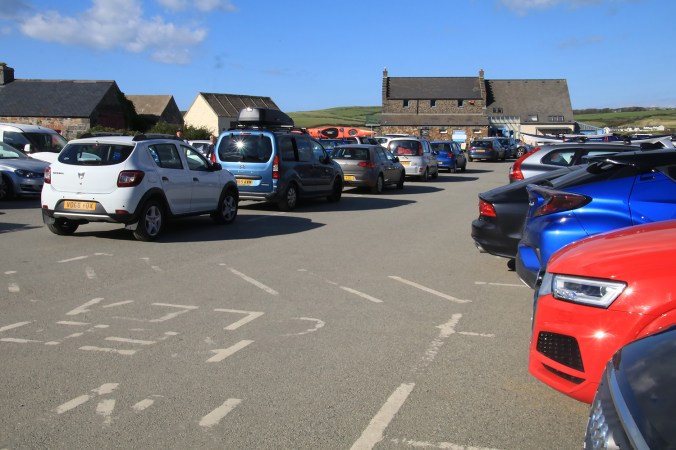
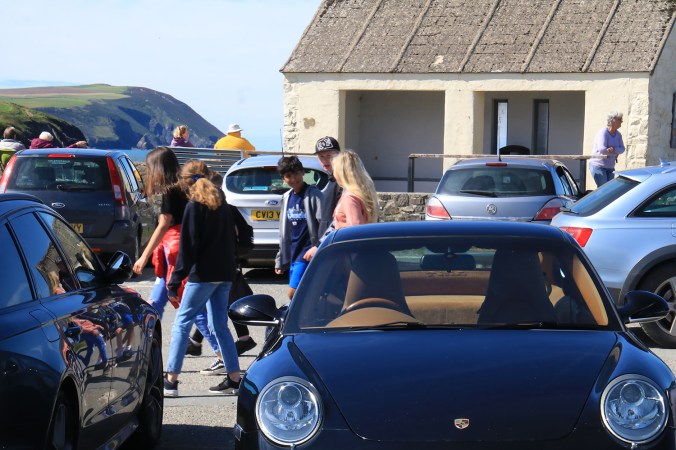
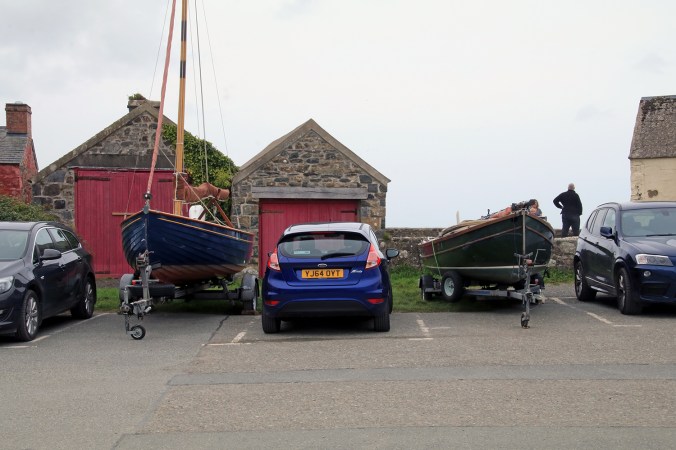
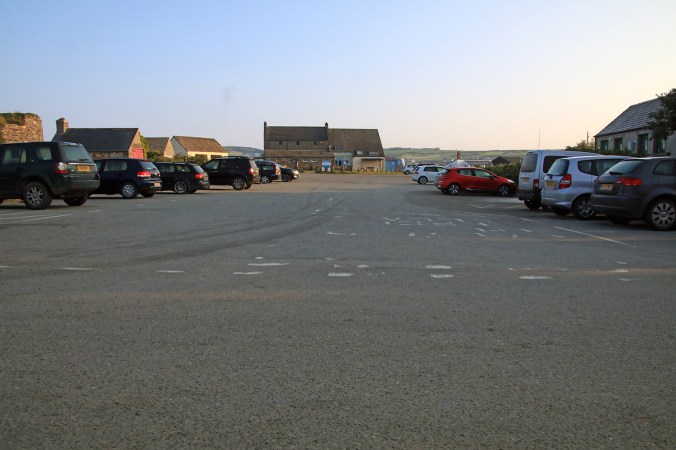
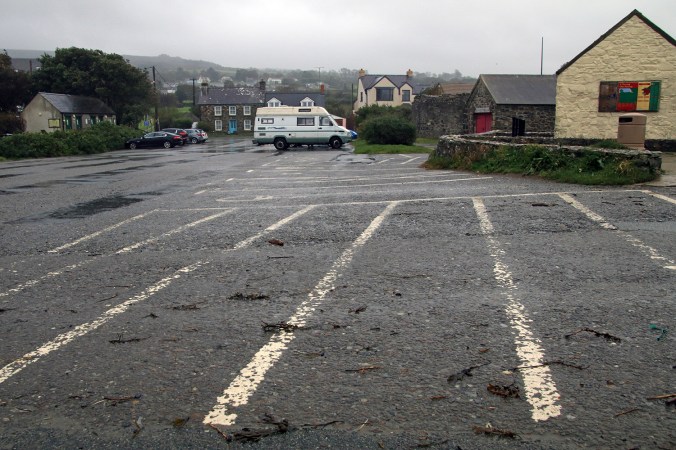
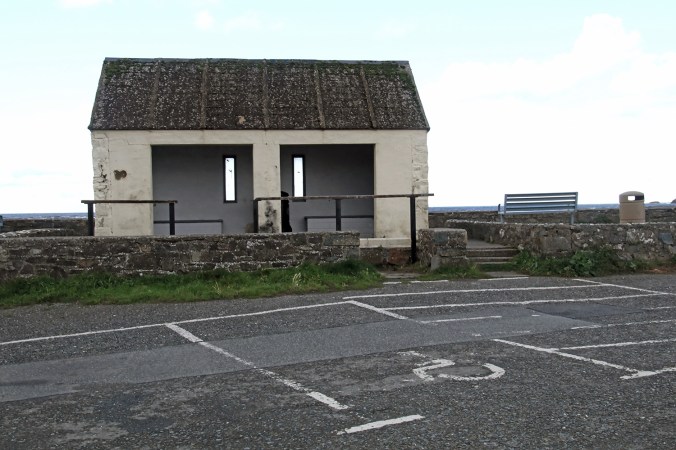
It was important to me to have it recognised as being one space, one car park and I anchored this by including fixed elements such as the bus shelter in most images.
Though I considered using text I believe the book presentation of the images, sequencing, colour and size provides as much meaning as I need to; I think adding text would have over controlled interpretation.
If I had settled on my perspective earlier on when shooting I would have had more “busy” shots which fulfilled my needs; I had plenty but had to choose from only those which focused on the feeling of the space being compressed, rather than English/Welshness or surreality which I started out shooting,
Demonstration of creativity
With a conceptual starting point, I experimented with different ways of representing the issue, initially playing as Matt Stuart, Peter Dench, Paul Reas, and Marin Parr do with saturated colour and a slight irreverence to their subjects. I then moved onto exploring Englishness (and Welshness) influenced by Martin Parr, Simon Roberts and Anna Fox; but eventually settled on my own style, a quieter one.
Though I say that I am in an unusual position understanding both the local and visitor response to the seasonal change, you can see my emotional response in the work. Parr says, “it’s the subjectivity not the subject matter that is important”,and I believe my personal voice is evident.
As I worked into the project the car park took became a character for me, and the bus shelter also as a part of the landscape. I could almost feel their tenseness during the busy time and their relief when their space became quiet again.
Context
This was a personal context to me from the outset. It explored a local issue but one that I was at this precise time able to see both as an insider and outsider being in the throes of transferring from a second homer to a resident. I had been excluded during the lockdown and returned as this ended to become a resident. I was privy to the local resentment to the tourists and to the excitement of the visitors. This transformation was heightened this year, and there will be a discontinuity to the work later however the issue will remain at a lesser level.
Though I understood the local issue from both sides as Campbell (2010) suggested it seemed impossible to present this objectively. I think my personal stance shows through in the document, but it will be interesting to see if the document is interpreted in different ways.
Personal circumstance meant that this was shot over a longer period than I planned but I used this to my advantage reflecting at length between shooting and between that and editing/presenting.
I reflected and fed my learning from my coursework and research into my work and was able to share my work with various OCA peer groups as it developed; this is evidenced in my learning log. As well as the research I have mentioned I was affected by that I did on senses of place Alex Webb, Mikael Subotzy, Marco Van Duyvendik, Laurel Chor, and Hannah Reyes Morales who underlined the importance of knowing a place well to capture it effectively. I also visited photographer’s work which though interesting was not relevant to my project though a similar subject matter such as Stephen Shore, Brice Gilden, Ed Ruscha and Martin Parr’s “Parking Spaces”; all research as an influence but it’s knowing which to discount as well as be led by.
My main regret is the time that it took me to complete this project due to events in my personal life. Looking for the positives, it did give me an extended shooting time, plenty of time to research and experiment and time to reflect between shooting and presenting the work.
Produce a photo story of 10 images that, as a set, tells a story and conveys a narrative.
Engage at local level.
Do this assignment in colour.
This is not a visual chronology unless your theme naturally has one. Structure your visual story as you would a written story. Present your viewer with the theme, further developments and complications and, finally, a resolution – or non-resolution that poses further questions. Edit and sequence your work accordingly.
Go for visual variety – use a variety of lenses, viewpoints and compositions – but ensure visual and conceptual consistency across the images. (Open College of the Arts, 2014:83)
BREATHE IN BREATHE OUT
COMMENTARY
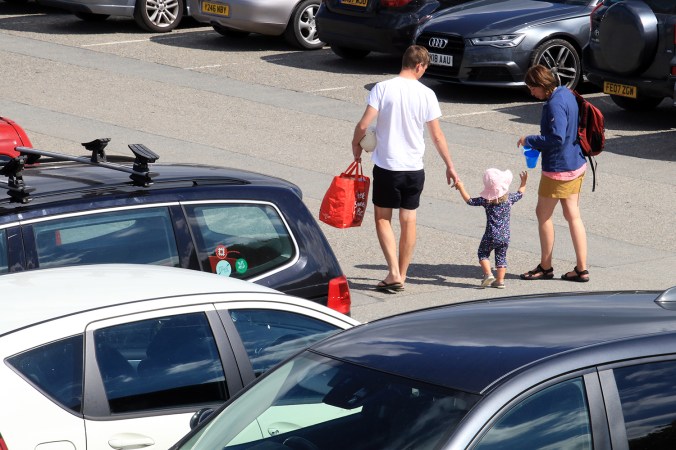
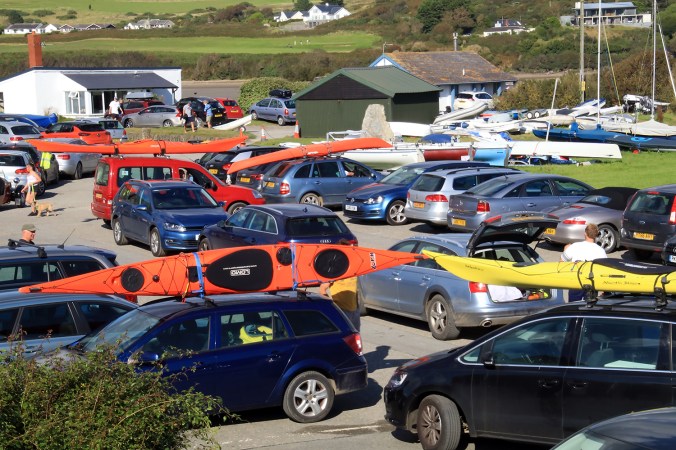
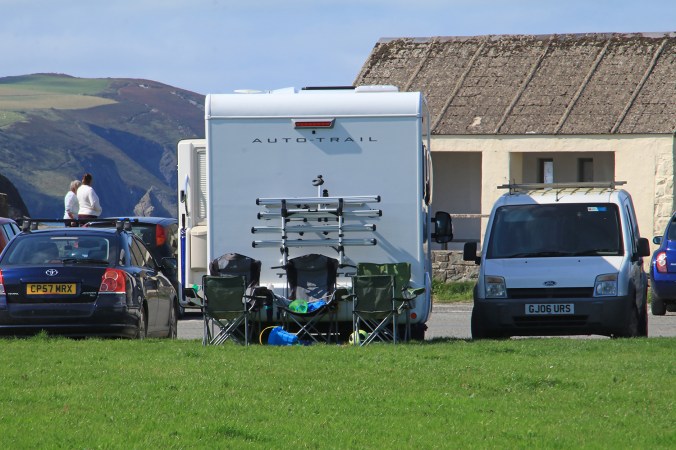
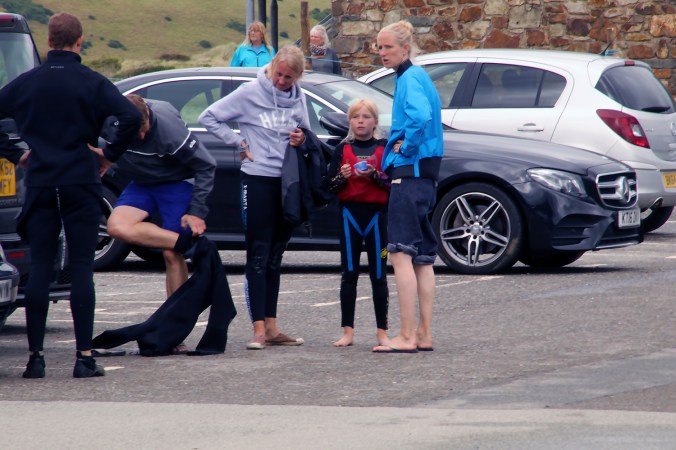
To engage at a local level, I focused in on a small car park, near the water and a boat club in my village in Pembrokeshire. My choice was influenced by the current national and local circumstances. The UK had just come out of a national lockdown and tourists were beginning to move around again. The village, the beach and waterside in particular, changes from sleepy in the winter to comparatively busy over the summer months. This car park is the springboard for many activities local and tourist and as such is a barometer of this transition.
I am currently both and insider and an outsider here, having just made this my main home when it has been my second home for many years. This gives me a unique perspective. I have enough inside information to have a photographer’s gaze rather than a tourist gaze; I understand both the frustrations and joys that the bustle brings to the area, but also share the excitement visitors experience on arrival and their sadness when they leave.
My research gave me much to consider; I have been deliberate in my framing, mindful that what is outside the frame is as important as what I am showing; what Paul Reas calls a conscious ordering of information. My narrative is linear in time though I have also used criteria such as colour to underline the transformation I am sharing. I have not used any text believing that in my framing, composing, choice of images and sequencing I have said what I want to, leaving some room for viewers to interpret the work.
It is a mundane place and my story documents mundane events, yet the feelings evoked and experienced there are rarely insignificant.
Open College of the Arts (2014) Photography 2: Documentary-Fact and Fiction (Course Manual). Barnsley: Open College of the Arts.
ARTIST STATEMENT
On a physical level the this is story of a car park, however the car park is also a manifestation of the seasonal increase in tourists which alters both the environment of the car park and the nature of the locality. This was a story I particularly wanted to tell this year, when combined with the impact of Coronavirus, lock downs, travel bans and social distancing, the arrival of visitors was felt more keenly by locals. It is a tale of two halves: absence and presence, hushed and busy, lively and dull, and peace and pressure.
In preparation we were asked to listen to a lecture on documentary and narrative by Professor David Campbell.
The brief: Produce a photo story of 10 images that, as a set, tells a story and conveys a narrative.
Engage at local level.
Do this assignment in colour.
This is not a visual chronology unless your theme naturally has one. Structure your visual story as you would a written story. Present your viewer with the theme, further developments and complications and, finally, a resolution – or non-resolution that poses further questions. Edit and sequence your work accordingly.
Go for visual variety – use a variety of lenses, viewpoints and compositions – but ensure visual and conceptual consistency across the images. (Open College of the Arts, 2014:83)
Planning
My initial idea was to focus on a small local car park, by the waterfront here, which is quiet and empty much of the year but becomes extremely busy in the summer season. I thought it would be interesting to observe and record this process from spring to Autumn as a manifestation of the invasion of tourists into an otherwise sleepy place.
I was influenced initially by Simon Roberts work, where he surveys scenes, often from elevated positions particularly his work We English (2009) documenting everyday signs of Englishness (1985/86) and by Anna Fox’s work Basingstoke (1985/86) particularly her emphasis on the mundane; however, by the time I started shooting I had researched the street photography of Peter Dench, Matt Stuart and Paul Reas and this fed into my first few shoots; thus, I strayed from my original intention focusing more on people in the car park subconsciously looking at characterising their tourist role.
I shared these images with some peers:
Planning mind map:
Shooting
Following peer feedback and my reflections I decided that I should return to my original intention and focus on the car park rather than the people, exploiting signs of presence and absence. I revisited my research on Martin Parr and Stephen Shore’s colour photographs of car parks noting the sharp detail, high colour saturation, and using the mundane to create meaning. I also considered how to show that this is one car park, whilst using a variety of viewpoints as required in the brief and decided to feature the bus shelter in most images to anchor this.
I thought more about my technical approach:
To use colour, vibrancy or the lack of it to communicate mood
Try different lens
Frame more forcefully, with an eye on what’s outside of the frame
Use good depth of field
Use perspective to magnify subtleties and choregraph information
These were the next set of images shared with peers on my documentary OCA hangout 8.10.20:
Shooting Mind map:
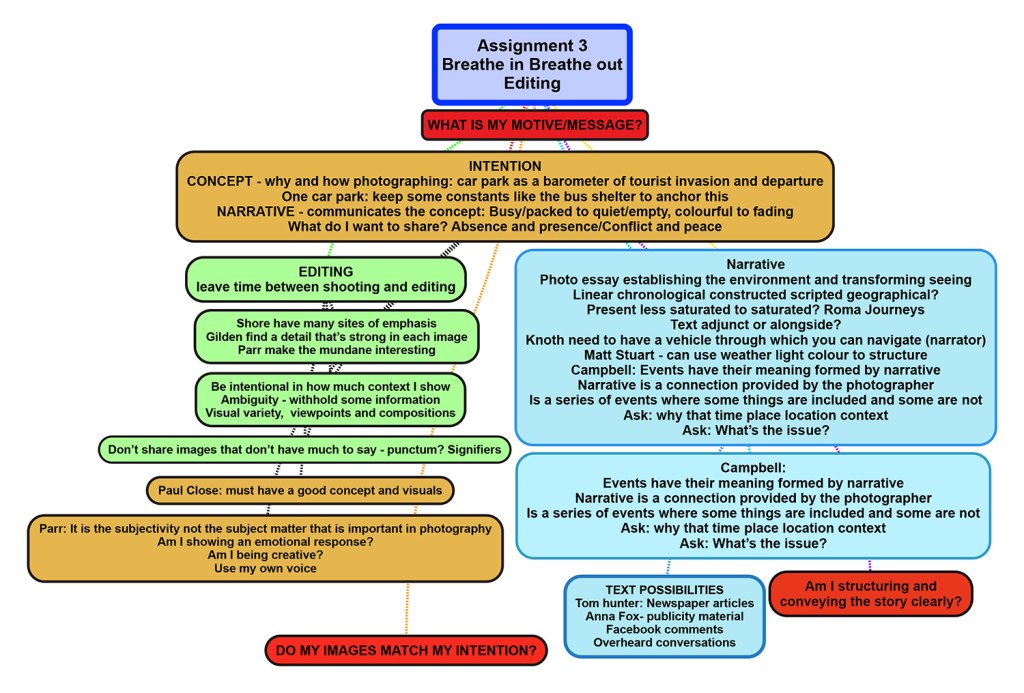
Editing
Because of personal events I had plenty of time between shooting and editing, which is not a bad thing, though I did feel my work was rather staccato. I made sure that I returned to my intention when choosing images and sequencing.
I thought about narrative seriously at this point, as this communicates the concept. David Campbell’s insights on narrative were helpful, that it is, to relay information, make sense of things, provide connections, and overall that the “event” is not what happens but what is narrated.
I asked myself whether my images match my intention, a car park as a barometer of absence and presence, invasion and peace and considered how to order them to get best effect and meaning. I had intended to show the process from quiet to busy to quiet again but realised that I could achieve my intention by simply starting from busy (which is actually when I started shooting) through to the quiet season.
I also asked myself whether the images made the mundane interesting as Parr suggests, had strong details in them (Gilden), different sites of emphasis (Shore), had visual variety, and that I was intentional in how much context I gave and ambiguity that then remained.
When I thought about sequencing, I considered not only the content but also colour, remembering how in the Roma Journeys (Eskildsen and Rinnes, 2007) images were presented less to more saturated; this has happened more or less in my work but as a consequence of the weather deteriorating and the light falling as the busy season exits, a natural consequence.
Editing mindmap:
Presentation
I had considered text that I could use at various points of the project: press statements as we went in and out of lockdown, publicity from tourist/local articles/Trip advisor, snippets I’d overheard in the car park, letters or Facebook comments from residents; but ultimately decided to let the images and their sequencing speak for themselves – to keep it simple and not impose my meaning on the viewer. I employed the technique of sequentially increasing the size of images on the book pages to emphasis the “breathing out” of the car park.
I’d had useful book making discussions with peers and decided to create mine in lightroom. I sent the book to blurb to see how it looks as a book and have taken screen shots of this, but also made a PDF which gives better quality images.
I then shared these with peers: Hangout 26.11.20. One asked me about how the visuals connect with the concept of breathing in and out, and questioned should there be one busy, then one quiet image to mimic breathing in and breathing out. My feeling and the group consensus was that this would destroy the flow and narrative. Following their comments, I did exchange the positions of the 4th and 5th images. I also considered creating a “flip” book with the breathe in at the front flipping the book upside down to the breathe out at the back; this seemed overcomplicated so in the end decided to move the title text completely to the front of the book, instead of having breathe in at the front and Breathe out at the back as I had originally.
1st draft
2nd draft
Editing and presenting Mind map:
References:
Anna Fox (2020) At (Anna Fox (2020) At: https://annafox.co.uk/ (Accessed 29/10/2020). Accessed 15/9/2020).











 Photography 2: Documentary