PART FOUR: ETHICS AND LOOKING AT THE OTHER

THE ETHICS OF AESTHETICS

Exercise 4.7

To print or not to print…

Read Claire Cozens’ Guardian article about Guerrero’s photograph: http://www.guardian.co.uk/media/2004/mar/12/pressandpublishing.spain

  • What would you have done had you been the editor of a British broadsheet newspaper?
  • A similar case revolving around a photograph of a dead Iraqi soldier in the Gulf War prompted Michael Ignatieff, the author of Magnum Degrees, to write and reflect on the ethics of photojournalism. Read ‘But Should You Print It?’ Core resources: ShouldYouPrint.pdf   (Open College of the Arts, 2014:89)

My response

Cozen’s article was a response to the various ways that a media photograph, by photographer Guerrero, for a Spanish newspaper of the Madrid train bombing was published; the controversy was about a severed limb which appeared in the original image. The British newspapers airbrushed, replaced with background stones or disguised it by bleeding the colour out; the Spanish newspaper published the image as taken.

Reuters say that they don’t like removals from photographs or anything that changes the editorial content. The Telegraph’s picture editor said it was a question of taste, removing the body part didn’t change the context and it didn’t add anything to the picture.

Michael Ignatieff in his paper “But Should You Print It?, mentions four areas of sensitivity:

  • Faking: the manipulation, which can’t be detected.
  • Decency: which is declining
  • Privacy: whether it’s is a public occasion seems to be the crux of this
  • Violence: would the presence of the camera invite violence?

Ignatief suggests we ask 4 questions and that 1 of them must be affirmed:

  • Is the event of such significance that the shock is worth it?
  • Is the objectionable detail necessary for a proper understanding of the event?
  • Does the subject freely consent?
  • Does the image express humanity?

He points out that despite all the wars we have seen and experienced “popular culture is still largely imbued with a romantic conception of war and resents a grimmer reality” (Ignatieff,nd).

The code of ethics (National Press Photographers Association, 2017) states that “our primary role is to report visually on the significant event and varied viewpoints in our common world….the faithful and comprehensive depiction of the  subject at hand”. In the detail it states that images should be accurate, unmanipulated, have context and shot with respect.

Having reflected on this my response would be to print the photograph I its entirety; as if you begin to manipulate images even to be sensitive, where do you draw the line; how much manipulation is ethical/correct? However from what I read in Cozen’s article it seems that the experience of the British papers is such that there would have been many complaints if the severed limb had been evident; as a British Newspaper I guess I would have stayed with the rest of the pack.

References:

Cozens, C. (2004) ‘Editors ‘clean up’ bomb photo’ In: The Guardian 12/03/2004 At: http://www.theguardian.com/media/2004/mar/12/pressandpublishing.spain (Accessed 10/01/2021).

Ignatieff, M. (s.d.) ‘But Should You Print It?’ At: https://www.oca-student.com/sites/default/files/oca-content/key-resources/res-files/shouldyouprint.pdf

National Press Photographers Association (2017) Code of Ethics. At: https://nppa.org/code-ethics (Accessed 10/01/2021).

Open College of the Arts (2014) Photography 2: Documentary-Fact and Fiction (Course Manual). Barnsley: Open College of the Arts.
Next Post: https://nkssite5.photo.blog/category/coursework/part-four-ethics-and-looking-at-the-other/reflecting-on-the-war-photograph/exercise-4-8-press-release/

PART 4: ETHICS AND LOOKING AT THE OTHER

The ethics of aesthetics

Exercise 4.6

Read the, WeAreOCA blog post The ethics of aesthetics, (http://www.weareoca.com/photography/the-ethics-of-aesthetics/) including all the replies to it, and write a comment both on the blog page and in your blog. Make sure that you visit all the links on the blog post. (Open College of the Arts, 2014:88)

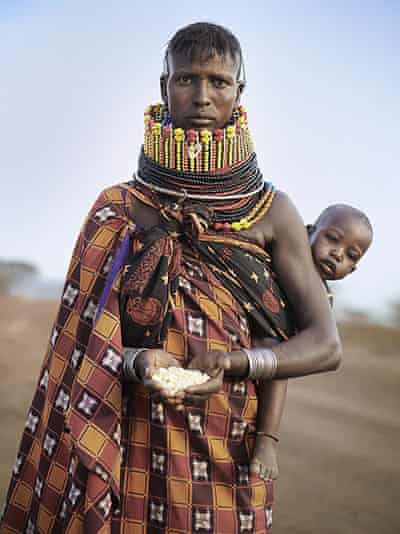
Rankin visited Turkana, Kenya for Oxfam’s Blog Action Day to meet some of the people facing drought and hunger in a region that has not had enough rain since 2005.

Rankin photographs famine in east Africa (2011)

He also worked with Oxfam in the war torn provinces of the democratic republic of Congo, where he choose to photograph them against a white background out of their environment to focus on their expressions, humanity.

Rankin in Congo: ‘Their humanity was what I wanted people to notice’ (2021)

Chaskielberg’s photographs for Oxfam in the Horn of Africa were all taken in the moonlight with added flash lighting and have as has become his trademark style. It’s interesting that Oxfam itself ran an article titled “Alejandro Chaskielberg’s moonlight photos: Too beautiful”. Oxfam finds them memorable and distinctive but that not all agree with this. Chaskielberg himself suggests that his subjects may look stiff and detached because they have to hold their pose for a time. Some felt the pictures were too beautiful for their situations; however Chaskielberg would like to break the idea that an aesthetic image detracts from its message.

We are also referred to Mraz’s comments relating to Sebastiao Salgado. Mraz that a documentary photograph should strive to achieve a balance between expression and information. The blog author says that if that balance is not right then the effectiveness of a photograph for visually sharing information is changed. He gives an example of an effective combination of the two as Tom Stoddard’s image of an emaciated woman in Ajiep, Sudan which he describes as a document and a symbol, “specific to the events it refers to and universal”, here I can see the ethics and the aesthetics of the image are working together.

AJIEP, SUDAN-JULY 1998: The emaciated legs of a girl at Ajiep, southern Sudan, during the famine of 1998. (Photo By Tom Stoddart/Getty Images)

© Tom Stoddard 2004 (Tom Stoddart Archive, 2022)

I agree with Rob Harris (31.10.20) who asks the point in reading 70 odd blog post responses, as they become repetitive. This is my response to the original post rather than reactions to other’s posts. Although I appreciate the aesthetics in Chaskielberg’s images and they make a refreshing change, I feel they have the appearance of studio shots, seem theatrical and staged and lack authenticity as images that are to portray people experiencing hunger and drought.

I can relate much better to Rankin’s images, where the people look real, dignified, not distressed but taut, and the food in their cupped hands brings us back to the reason for the image. Rankin also wanted his portraits to do something different, as he felt the stereotypical images of disaster zones have produced anesthetised audiences; in his Congo images that he wanted to depict their humanity and I believe he has done this.

I have to ask myself have become too used to more direct images like Tom Stoppard’s representing famine, and is this why I find Chasleilberg’s images too beautiful? Possibly. However if I was using images to provoke interest in fundraising and action I would use Rankin’s more realistic but dignified images as a fresh alternative to the more traditional Tom Stoddard famine images. I don’t believe Chaskielberg’s images will for most convey the necessary message.

References:

Kramer, A. (s.d.) Alejandro Chaskielberg’s moonlight photos: Too beautiful?. At: https://firstperson.oxfamamerica.org/alejandro-chaskielbergs-moonlight-photos-too-beautiful/ (Accessed 09/01/2021).

Open College of the Arts (2014) Photography 2: Documentary-Fact and Fiction (Course Manual). Barnsley: Open College of the Arts.

Rankin in Congo: ‘Their humanity was what I wanted people to notice’ (s.d.) At: https://www.oxfamamerica.org/explore/stories/rankin-in-congo-their-humanity-was-what-i-wanted-people-to-notice/ (Accessed 09/01/2021).

Rankin photographs famine in east Africa (2011) In: The Guardian 14/10/2011 At: http://www.theguardian.com/commentisfree/gallery/2011/oct/14/kenya-rankin-famine-in-pictures (Accessed 09/01/2021).

Tom Stoddart Archive (2022) The emaciated legs of a girl at Ajiep, southern Sudan, during the. At: https://www.gettyimages.co.uk/detail/news-photo/the-emaciated-legs-of-a-girl-at-ajiep-southern-sudan-during-news-photo/57485003 (Accessed 09/01/2021).

Next Post: https://nkssite5.photo.blog/category/coursework/part-four-ethics-and-looking-at-the-other/the-ethics-of-aesthetics/exercise-4-7-should-you-print/

PART FOUT: ETHICS AND LOOKING AT THE OTHER

The ethics of aesthetics

Exercise 4.5

Read the booklet ‘Imaging Famine’. Core resources: imagingFamine.pdf. Do some research across printed and online media and find examples that either illustrate or challenge the issues highlighted in the document. Add your findings to your learning log. (Open College of the Arts, 2014:87)

This research project in 2005 called for a debate and reconsideration of the power and purpose of disaster pictures. It highlighted issues that persisted in images of famine:

  • Stereotypical images of victims, that raise money but with short term benefits and long term disadvantage of embedding cultural and racial stereotypes?
  • Do negative images breed the sense that nothing can be done or are they necessary for fundraising?
  • Could positive images of people in need be presented?
  • Is an image negative if it produces a positive outcome?
  • Would such images be appropriate if they minimised the scale of suffering?
  • What is the purpose of text/captions?
  • Can photographers provide images with context, understanding and explanation?
  • Are foreign disasters only important if they are on a massive scale?
  • Is there compassion fatigue or do hard hitting images force governments to act?
  • Does immediacy enabled by technology cause simplified rather than impactful compositions?
  • Can one picture share a good understanding of issues?
  • Are photographers simply image makers or do they have wider responsibilities?
  • Does the ends justify the means?

My response:

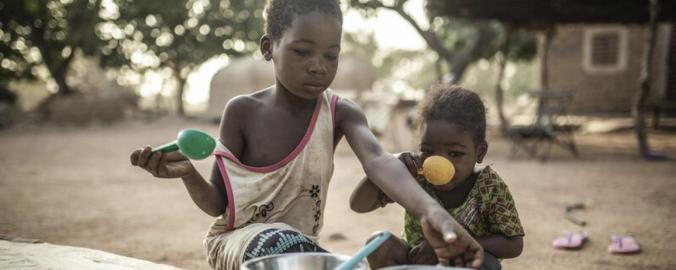
I began by looking at Aid Agency online posting. Oxfam International currently mainly uses positive single images with some smiling faces and a lot of context for its famine pages. They are certainly shot with respect, are not stereotypical and provide plenty of explanation.

Hunger crisis in South Sudan, 2020)
(Crisis in Democratic Republic of Congo, 2020)
(The fight against hunger must top the EU agenda for a fair and green recovery, 2020)

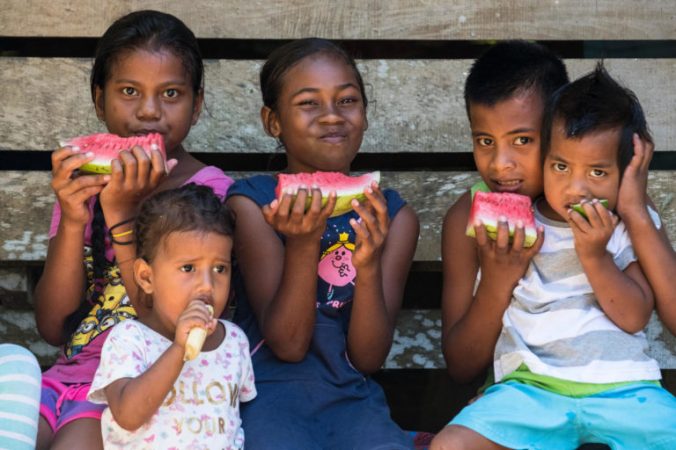
Feed the Children charity uses few images and those used are simply children’s smiling faces. UNICEF favours videos on its web site and where there are single images they are positive images such as the one below which is saying “look what we can achieve”:

Children eating watermelon and other fresh fruits in Lungga, East Honiara, Solomon Islands;

(Protecting Rohingya children in Bangladesh,2018)

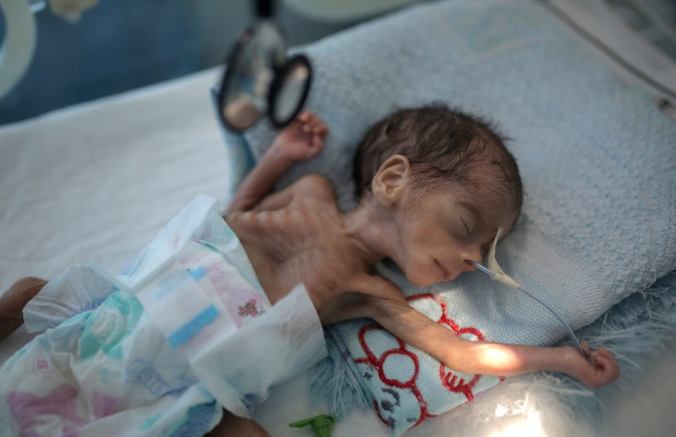
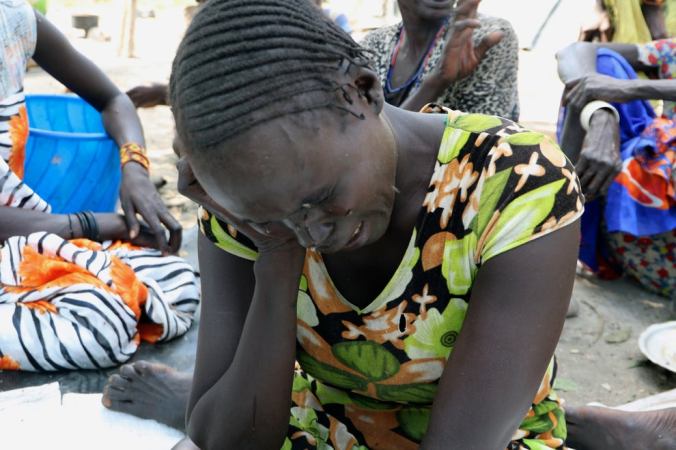
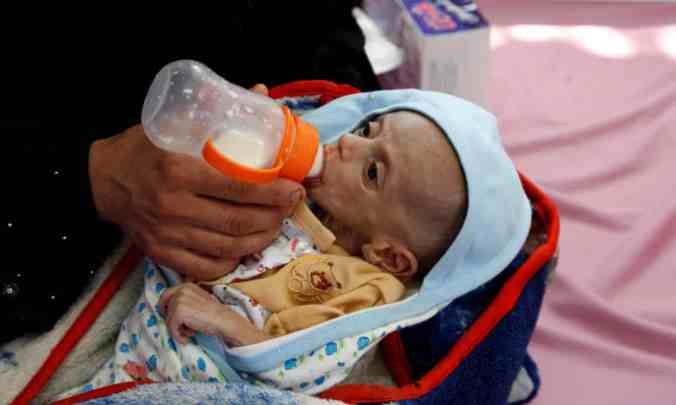
The tone of the images changed completely when I began to access media images of current stories; of which there were surprisingly few currently. In the Independent I found two recent articles about the hunger in Yemen. I was shocked that the first 2 articles I accessed used shocking images of babies with malnutrition in incubators. I am sharing one of these only as a contrast to the image used by UNICEF on the same topic:

The independent image (Via AP news wire, 2020)
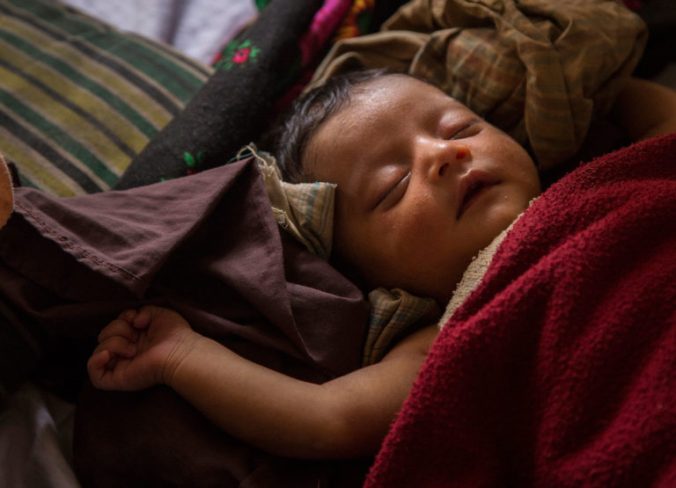
The UNICEF image Nutrition and life-saving food (2021)

These two images also highlight the effect lack of control over the publishing of information is also the Independent image above was added by the Independent to an article about the launch by UNICEF of its Yemen appeal. This would surely not have been UNICEF choice of image for the story.

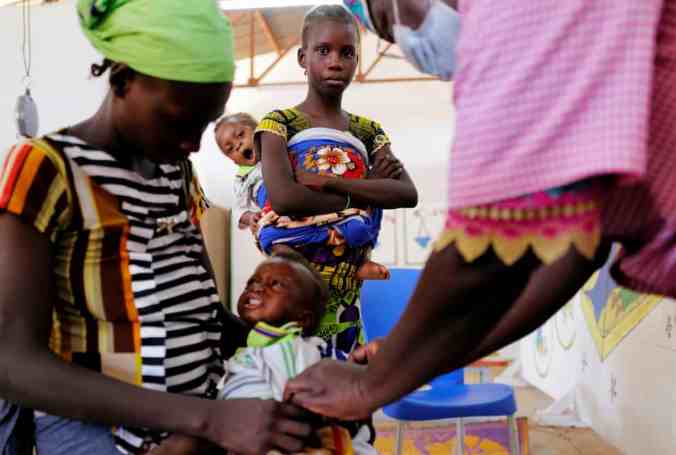
I did find some more positive, dignified and effect based images in the media, published with good context:

Via AP news wire (2020)

The BBC seems to use more videos than still images and I was surprised that there has been little recent coverage.

The paper Famine imaging by David Campany raised questions about ‘compassion fatigue’, iconic and stereotypical images, and the use of photographs for fundraising. From my current research it is obvious that different media use contrasting types of images to suit their consumers. Aid agencies are more respectful to their subjects and are keen to highlight the benefits of their projects particularly longer term. The images that I have found are less stereotypical than they were shown to be in the research paper of 2005, which is as you would expect, so approaches have moved on since that time. Whether this is because they have found that stereotypes have become less effective in raising aid and sympathy, or whether this is simply a response to increased ethics in photography and publishing I don’t know. I would assume that aid agencies have identified that it is not necessary to be forceful visually about the scale of suffering, as they can provide this in their accompanying text explanations.

References:

Ahmed, K. (2020) ‘UK pledges an extra £47m in aid as agencies warn of ‘catastrophic hunger’’ In: The Guardian 31/12/2020 At: http://www.theguardian.com/global-development/2020/dec/31/uk-pledges-an-extra-47m-in-aid-as-agencies-warn-of-catastrophic-hunger (Accessed 09/01/2021).

‘Imaging Famine’ (2005) At: http://www.imaging-famine.org/images/pdfs/famine_catalog.pdf (accessed 8.1.21)

Campbell, D.et al (2005) Imaging Famine, The Guardian. Available at:

Crisis in Democratic Republic of Congo (2020) At: https://www.oxfam.org/en/what-we-do/emergencies/crisis-democratic-republic-congo (Accessed 09/01/2021).

Hodal, K. (2020) ‘UN issues $100m emergency funding and calls for global effort to avert famine’ In: The Guardian 18/11/2020 At: http://www.theguardian.com/global-development/2020/nov/18/un-issues-100m-emergency-funding-and-calls-for-global-effort-to-avert-famine (Accessed 09/01/2021).

Hunger crisis in South Sudan (2020) At: https://www.oxfam.org/en/what-we-do/emergencies/hunger-crisis-south-sudan (Accessed 09/01/2021).

Nutrition and life-saving food (2021) At: https://www.unicef.org.uk/what-we-do/life-saving-food/ (Accessed 09/01/2021).

Open College of the Arts (2014) Photography 2: Documentary-Fact and Fiction (Course Manual). Barnsley: Open College of the Arts.

Protecting Rohingya children in Bangladesh (2018) At: https://www.unicef.org.uk/rohingya-refugee-bangladesh-myanmar/ (Accessed 09/01/2021).

The fight against hunger must top the EU agenda for a fair and green recovery (2020) At: https://www.oxfam.org/en/blogs/fight-against-hunger-must-top-eu-agenda-fair-and-green-recovery (Accessed 09/01/2021).

Via AP news wire (2020) ‘‘Mom, we need food’: Thousands in South Sudan near famine’ In: The Independent 24/12/2020 At: https://www.independent.co.uk/news/mom-we-need-food-thousands-in-south-sudan-near-famine-south-sudan-food-famine-children-government-b1778517.html (Accessed 09/01/2021).

Via AP news wire (2020) ‘Yemen ‘on edge of precipice’ as UNICEF launches aid appeal’ In: The Independent 07/12/2020 At: https://www.independent.co.uk/news/yemen-on-edge-of-precipice-as-unicef-launches-aid-appeal-yemen-unicef-children-sudan-edge-b1767542.html (Accessed 09/01/2021)

Next post: https://nkssite5.photo.blog/category/coursework/part-four-ethics-and-looking-at-the-other/the-ethics-of-aesthetics/exercise-4-6-the-ethics-of-aesthetics/