PART FIVE: NEW FORUMS FOR DOCUMENTARY

PROJECT THE DOCUMENTARY PROJECT

Documentary projects

Look at the digital version of Penny’s Blurb book on her blog: http://marmalade-cafe.blogspot.co.uk/2012/02/not-our-time.html

Listen to OCA assessors Clive White and Maggy Milner talking about the project on WeAreOCA: www.weareoca.com/photography/student-work-uncovered-penny-watson/   (Open College of the Arts, 2014:110)

We have been directed to look at some of the documentary projects of OCA photography students. Here are my observations:

Penny Watson-Not our Time

This a day in the life of her Nanna, I believe not long before her death. It is a sensitive, spy on the wall, project with mundane images of her Nanna’s everyday life.

Briony Campbell-The Dad Project

I have visited this work before. Its exploration of loss has similarities with Penny’s work. I find Briony’s work more explorative and conceptual than Penny’s. Perhaps I just subjectively prefer her visual images.

Harry Pearce-A Dozen Eggs

Here his family-based project has an added dimension of handwritten text provided by his family to accompany his image. Theas in Briony and Penny’s work is magnified, shared, and made interesting.

Beth Aston-Behind the scenes

A biographical self portrait focusing on her illness. This is a brave subject, shared honestly. Also, with a strong aesthetic quality, lent by the use of black and white, unusual perspective and a cohesiveness of presentation. It is good to be taken back in my mind to autobiographical work that I enjoyed doing particularly in my Identity and Place course, Mirror, Image and Text, and in my Context and Narrative course, Photographing the Unseen and Putting yourself in the picture. Though none of these were nearly so raw as Beth’s work, but I did find them reflective and cathartic.

The above works are contrasted with the following 2 projects.

Omar Camilleri- Feet

This project appears light-hearted, however there was a deep spiritual and conceptual process behind it. A collaboration between a painter artist, and the photographer and another who had a shared concept to see reality through visuals of feet. It shows how the good choice of a topic combined with honed observational skills can create an interesting body of work.

Tanya Ahmed-Living on 100th Street

This subject was photographed by Bruce Davison 40 years ago, Tanya photographed it as it is today to give a current portrait. It is her insider view of the street, focusing on the people rather than the environment, in a collaborative manner.

My learning:

I can see that these works are driven by strong strategies and where needed, careful research. They are of course technically strong. Though the projects are varied, they are all evidently personal and driven by a strong purpose, perhaps with the exception of Omar’s. I have discovered myself that being passionate about what you are photographing is important to the quality of the outcome, though to be honest because of the limitations of the pandemic I have not always been able to chose subjects that I am excited by during my documentary course. I realise that when working on level 3 I must ensure that I find subjects that I am passionate about. Won’t it be nice when our choice of subject is opened up again, when we can go inside buildings and get close to people.

References:

Camilleri, O (2010) Feet At: http://omarcamilleri.com/2010/09/23/feet-photographic-exhibition/  (Accessed 06/04/2021)

Campbell, B. (2011.) The Dad Project. At: http://www.brionycampbell.com/projects/the-dad-project/ (Accessed 06/04/2021).

Harry Pearce (2012) A dozen Eggs. At: https://www.harrypearce.co.uk/ (Accessed 06/04/2021).

Lomas, M. (2012) Student Work Uncovered – Penny Watson. At: https://www.oca.ac.uk/weareoca/photography/student-work-uncovered-penny-watson/ (Accessed 06/04/2021).

Open College of the Arts (2012) Student Work Uncovered – Tanya Ahmed. At: https://vimeo.com/42467929 (Accessed 06/04/2021).

Open College of the Arts (2012) Tanya Ahmed: Living on 100th Street. At: https://vimeo.com/43594038 (Accessed 06/04/2021).

Open College of the Arts (2014) Photography 2: Documentary-Fact and Fiction (Course Manual). Barnsley: Open College of the Arts.

Watson, P (2012) marmalade and Profile, V. my C. Not Our Time. At: http://marmalade-cafe.blogspot.com/2012/02/not-our-time.html (Accessed 06/04/2021).

Next Post: https://nkssite5.photo.blog/2021/04/08/research-and-reflection-visual-arts-data/

Next Post: https://nkssite5.photo.blog/2021/04/08/research-and-reflection-visual-arts-data/
PART FIVE: NEW FORUMS FOR DOCUMENTARY

PROJECT THE DOCUMENTARY PROJECT

5.5 Exercise

Visit the web pages of the Kingsmead Eyes project (http://gideonmendel.com/kingsmead-eyes/ or http://www.kingsmeadeyesspeak.org/).

Investigate the original 2009 project and the latest Kingsmead Eyes Speak project.

Write notes in your learning log about how the work is presented on the website, in particular the use of mixed media – stills, video and audio.  (Open College of the Arts, 2014:107)

Kingsmead eyes- Gideon Mendel

This was the result of a long collaboration with the Kingsmead Community school in Hackney when he was photographer in residence. He was partnered also by Crispin Hughes and the poet Joelle Taylor. Mendel engaged year 5 students in photography workshops encouraging them to be creative whilst sharing their lives and cultures and building bonds between communities and the school.

In Kingsmead eyes (2009) at the same time Mendel made portraits of each child and assembled them into composite images which he used in a video installation featuring their work and their words. Here in turn, they share their stories and backgrounds through visual and audio. Their mages are interestingly from a child’s perspective, the height (stairways, corridors) and the interest (their families, toys) and to us seem very creative like the inside of a box of chocolates – but this is the benefit of an untamed child’s view, which is great.

For his subsequent project Kingsmead eyes speak (2011), Mendel worked with fewer students for a shorter period. Their work is presented on different platforms both as slides/gallery with accompanying text and audio files as well as video presentations by the students.

I particularly like the way the students explain in whichever format, why they like their images and why they’ve shot some of them. The combination of various media gives the students a variety of opportunities to share their perspectives and ensures that it reaches their audience. It also ensures that viewers have the opportunity to be affected by what media touches them best.

I have researched Mendel’s work recently, notably his HIV /AIDs work in Africa and global warming work Drowning World. I found before that he uses alternative ways of storytelling to reach audiences. Mendel shows again in this work his belief that photography has the ability to make positive change in the world. He is also demonstrating his inclination to give long term commitment to projects to bring make impact.

References:

Kingsmead Eyes Speak (2011) Kingsmead Eyes Speak led by Gideon Mendel. At: http://www.kingsmeadeyesspeak.org/kingsmeadeyes/ (Accessed 06/04/2021).

Mendel, G (2009) Kingsmead Eyes At: http://gideonmendel.com/kingsmead-eyes/ (Accessed 06/04/2021).

Open College of the Arts (2014) Photography 2: Documentary-Fact and Fiction (Course Manual). Barnsley: Open College of the Arts.

Next Post: https://nkssite5.photo.blog/category/research/a5-research/research-point-crowd-funding/

PART FIVE: NEW FORUMS FOR DOCUMENTARY

PROJECT THE DOCUMENTARY PROJECT

RESEARCH POINT

Research the current activities of Photovoice (www.photovoice.org) and also look into archive projects such as New Londoners: Reflections on Home.

Briefly reflect on the documentary value and visual qualities of the work that you research. (Open College of the Arts, 2014:107)

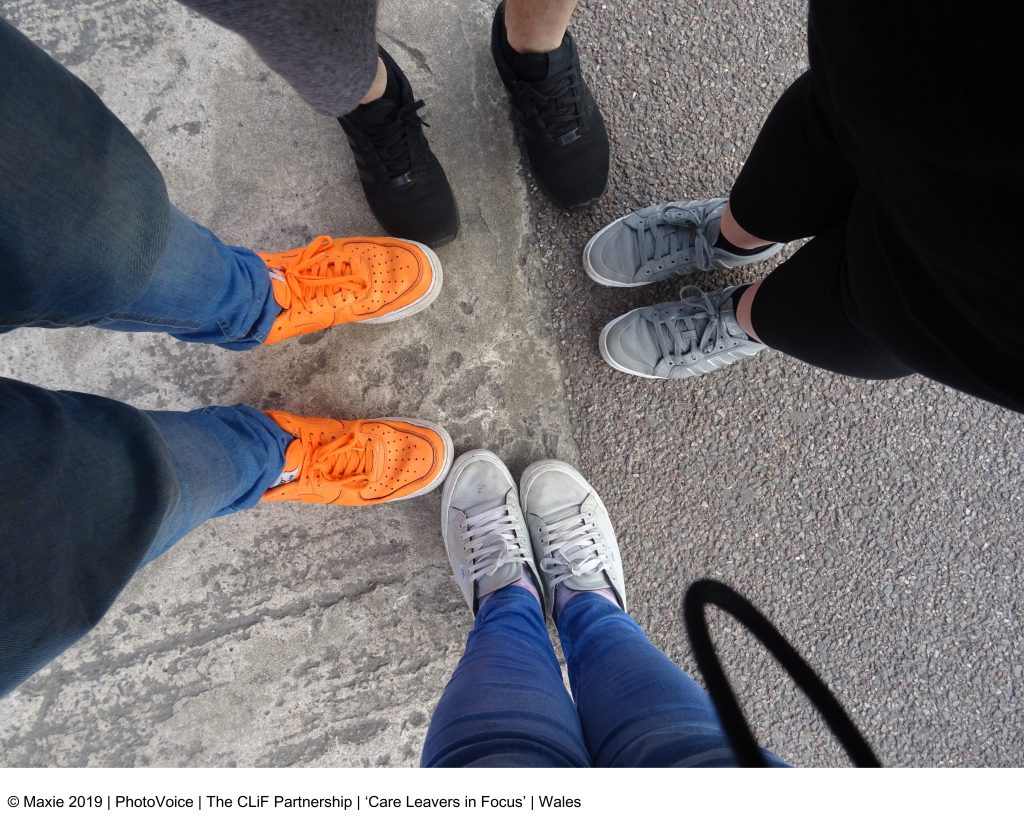
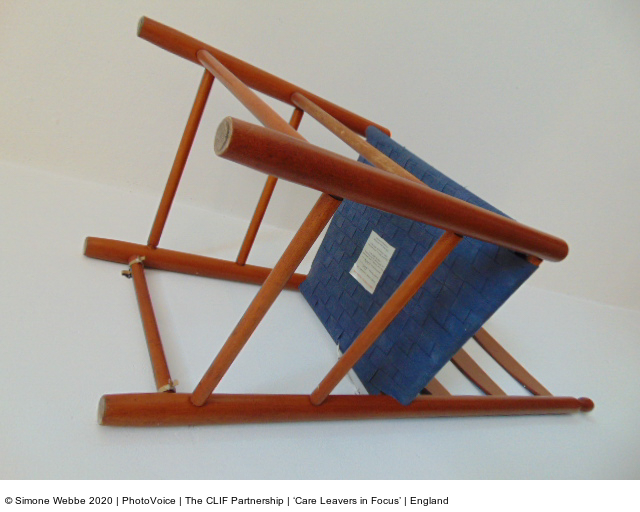
A current project is Care leavers in Focus (CLiF)

a 3-year project exploring the perspectives of those leaving care. Through workshops using photography and storytelling as a tool for self-expression, care leavers can reflect on what they need from support services and other providers. These insights are then shared with local authorities and organisations to improve their responses. Participants make captioned images with advocacy stories and images to share at exhibitions:

A message for other care experienced people: Your seat at the table might be upside down but you’re capable of turning it around. A message for policy makers: Sit us down, and listen. Don’t hinder opportunities for care experienced people.
Moving into my flat wasn’t easy but it wasn’t hard. It was a rocky road knowing you’re going to start a whole new journey all over again. Especially knowing myself in the big world we live in. Moving was the light at the end of the tunnel.
Friendships: Friends can have a really positive impact when you’re having a hard time but It’slonger in care and live independently, it can be really lonely. I feel I could be better supported to meet new people and form friendships so that I have that support network.

(PhotoVoice, 2008)

The visuals here are thought provoking and have punctum which causes you to stop and look for meaning, even without the text.

Looking through the archive projects I found that generally the overseas projects show less interesting photography than the UK projects; by interesting I mean unusual visual perspective or a more conceptual viewpoint.

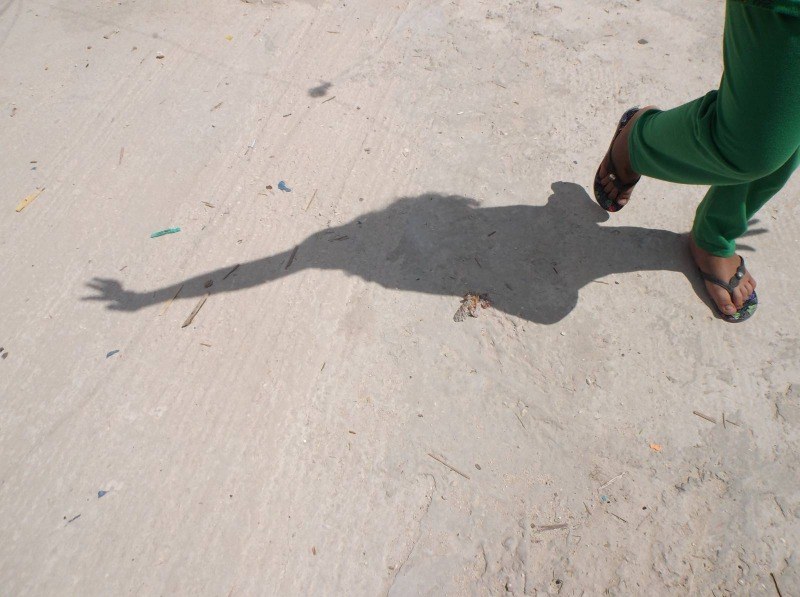
And We Shall Find Tales in the Shadows” project in Jordan in 2014.

An exception for me is this project. Here Photo voice worked with a group of 14–20-year-old Syrian refugees and their host community in Jordan.

(PhotoVoice, 2008)

Their work shares insights into the way I which their childhood has been snatched from them and they believed that “politicians would help change things & that if people listened to what they had to say, that the world might change and they may be able to one day, return home.”

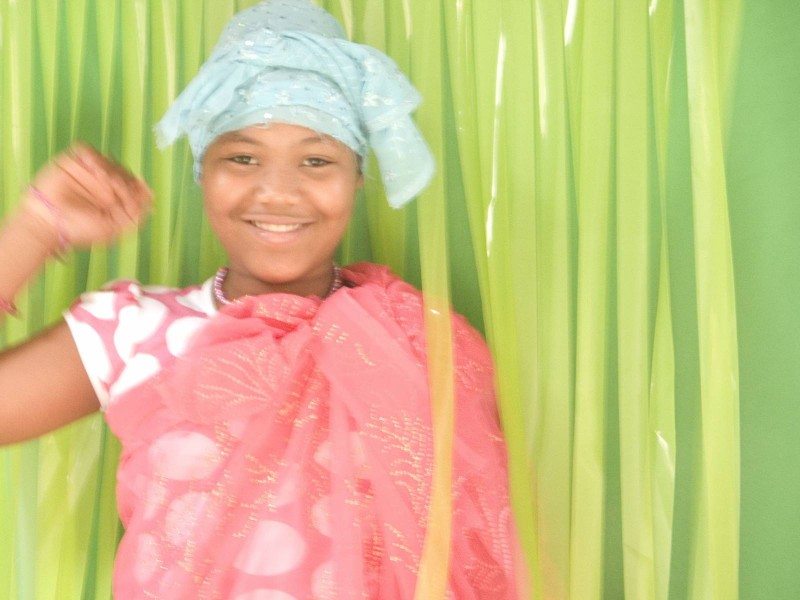
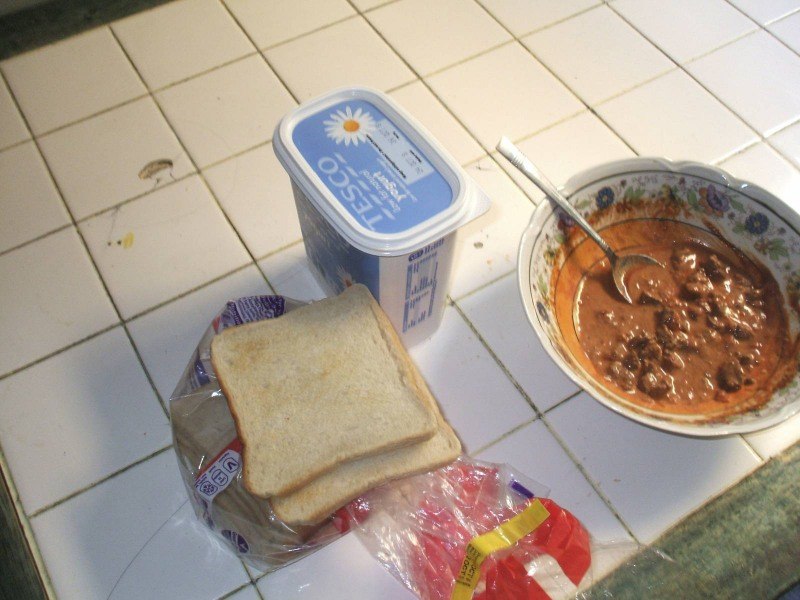
The New Londoners project (2006-8)

was a project with young refugees aged of 16 to 23, from over 10 countries as they settled and began to integrate into the UK. The aim was to help young people see themselves not as ‘New Londoners’ rather than refugees. This work shows more of a variety of quality and in the work, which is probably representational of the photographic work form across the projects:

(PhotoVoice, 2008)

This work is more of a mixture of quality, some being blurry and some well shot as well as some interesting representation of aspects they want to share.

Overall, the documentary value of the Photovoice projects is high, it presents a reality and a viewpoint. It gives people the tools and the skills to express themselves through photography and carries strong messages. The visual messages are strong and create impact whether they present as unskilled “snaps” or crafted images.

References:

Open College of the Arts (2014) Photography 2: Documentary-Fact and Fiction (Course Manual). Barnsley: Open College of the Arts.

PhotoVoice (2008) New Londoners. At: https://photovoice.org/new-londoners/ (Accessed 05/04/2021).

Next Post: https://nkssite5.photo.blog/category/coursework/part-five-new-forums-for-documentary/project-the-documentary-project/exercise-5-5-kingsmead-eyes/