3. Exercise: The Roma Journeys and Gypsies
Read the interview with Cia Rinne on The Roma Journeys. Core resources: CiaRinne.pdf. Research and compare Koudelka’s Gypsies (https://www.youtube.com/watch?v=ltPZd9EeQyo) and Eskildsen’s The Roma Journeys. Discuss aspects to do with the photographer’s intention and the distinctive aesthetics and approach of each body of work. (Open College of the Arts, 2014:69).
Eskildsen and Rinnes’s The Roma Journeys (2007) and Koudelka’s Gypsies (1975) are both bodies of work about The Roma Gypsies,; it’s an interesting exercise to compare elements of them:
Their intentions:
Koudelka was a Czechoslavakia, who left his country after producing photographs of the Soviet invasion in 1968. After this time he travelled and shot what interested him. This work has come together as a body of work since he photographed, he didn’t set out with the intention to publish a book or photo essay, it came together afterwards.
Eskildsen worked with a writer Rinne visiting seven countries to gain insights into the life of the Roma and the conditions they face, Hungary, Romania, India, Finland, Greece Russia France series; he set out with the intention to publish a photo book showing their lives and differences across their communities.
Their approach:
They were both long projects (six and nine years) shot across different countries, Koudelka covered Roma communities across Europe in Czechoslovakia, Romania, Hungary, France, and Spain. Both lived within the communities for a while.
Koudelka moved between the different villages sleeping outside, recording his encounters with individuals. He had an affinity with the people as he was also alienated and displaced from his homeland and had a theme of displacement “a defining reality of his own existence” (Josef Koudelka, 2017). This was at a time that the Roma’s were being pushed to assimilate into society and end their Nomadic lifestyle, they were resisting losing their identity; he identified with this as freedom was essential to him, including the freedom to do things in his own way (Josef Koudelka, 2017). Koudelka was helped he thinks by his love of their music which enabled him to bond with them.
Eskildsen also spent time with the communities, explained what he was doing and was helped by a female writer Rinne which may have helped him to communicate with them and access to the women in the communities. He was looking for the differences across their communities; he presents the images grouped into the countries they were shot in.
Gypsies includes more images of social gatherings, and ones that Koudelka seems to be in the middle of as well as plenty of interior shots with families; Roma Journey takes on more of a street photography style and is less intimate.
My thoughts on their aesthetics:
Gypsies was shot 40 years before Roma Journeys, and this accounts for some differences in the images such as backgrounds and the appearance of televisions cars and other modern elements. They both use a variety of perspective but more so Eskildsen, who also mixes photographs of different sizes. The framing is generally tighter on Koudelka’s work especially around the portraits.
Koudelka shot in the black and white of his time recording gritty, shadowy, grainy images in the traditional photo essay style and yet some of his images I feel were in a more modern black and white style with abrupt framing and dark tones. Eskildsen used the modern colour documentary style of photography, although I find it interesting that when you explore his work on his website he begins with a black and white shot and works his way to more saturated colour images; I wonder if he shot these in black and white initially? He also uses colour to an extent, to form cohesion to the work shown for each country.
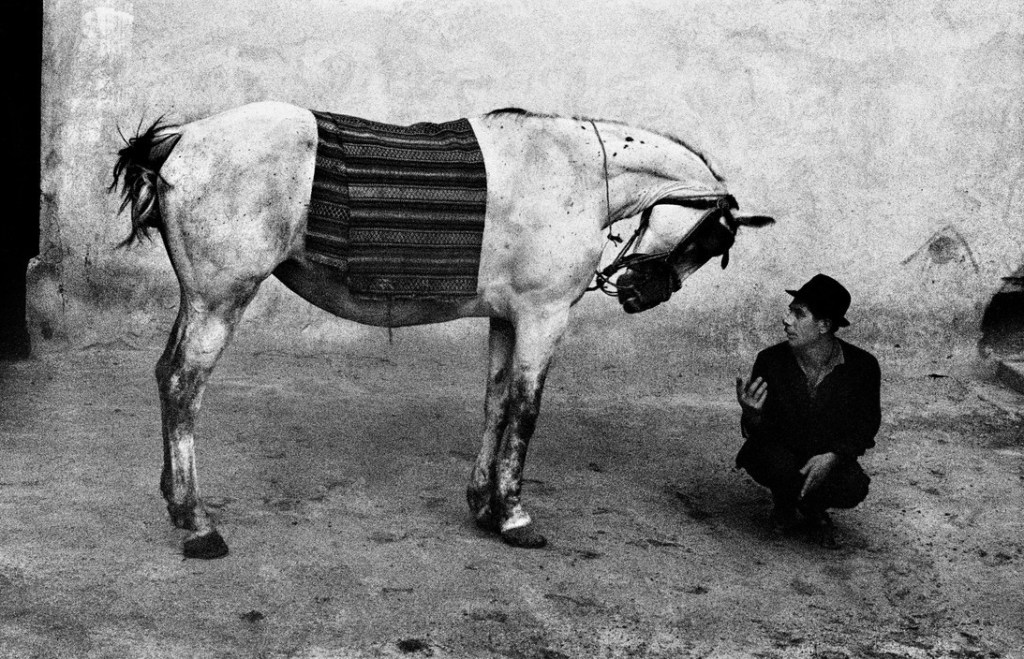
ROMANIA. 1968. 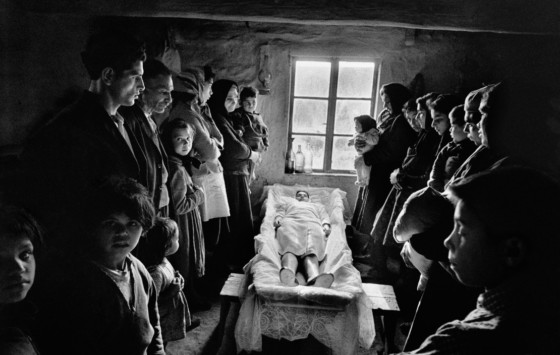
CZECHOSLOVAKIS. 1963 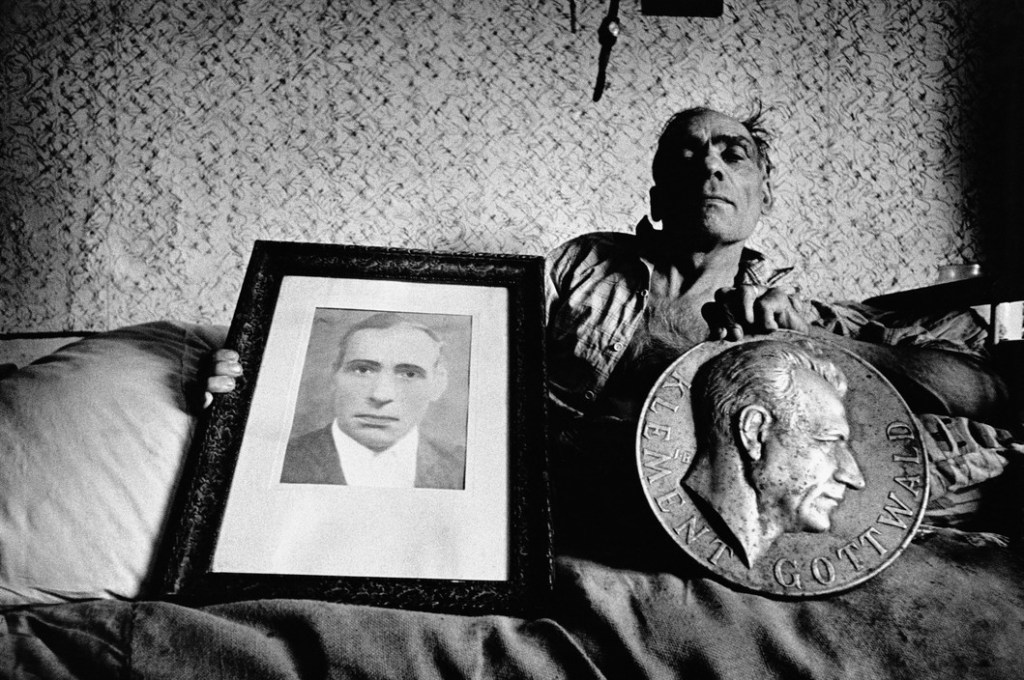
CZECHOSLOVAKIA. Gypsy. 
CZECHOSLOVAKIA. Kadan. 1963. Gypsies.

Ru 2544.27 001 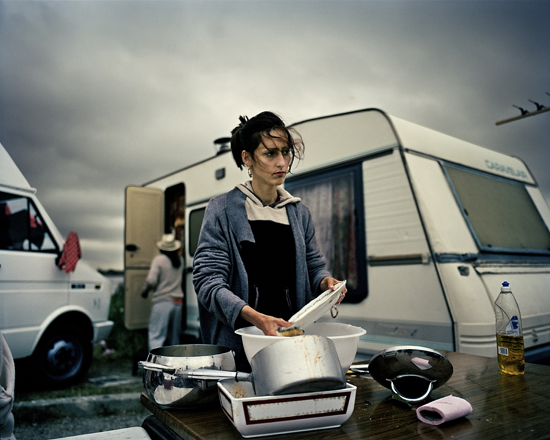
Fr 2246.10 001 
In 1871.4 001 
Hu 1550.6 001 
Ru 2596.7 001
Gypsies presents to me a more honest, insider view of the communities; I’m not saying that Roma Journeys isn’t honest, its just that looking at the images I feel that Koudelka gets under the skin of the people and presents the harsh reality of their lives face on. I suspect it is his background as a displaced person that enables him to do this so well; I can feel emotion in the pictures.
My Learning:
- Consider presenting unsaturated to increasingly saturated images
- Remember the value of taking time to get to know and gain respect from your subjects as well as the value of respect.
References:
Colberg, J. (2008) ‘A conversation with Joakim Eskilden’ At: http://www.joakimeskildsen.com/files/texts%20pdf/06colberg.pdf
Eskildsen, J. (2020) Joakim Eskildsen Photography At: http://www.joakimeskildsen.com/default.asp?Action=Menu&Item=104 (Accessed 28/10/2020).
Josef Koudelka: Gypsies (2017) At: https://www.magnumphotos.com/newsroom/society/josef-koudelka-gypsies/ (Accessed 28/10/2020).
Kim, E. (2013) 8 Rare Insights From an Interview with Josef Koudelka at Look3. At: https://erickimphotography.com/blog/2013/06/18/insights-from-a-rare-interview-with-josef-koudelka-at-look3/ (Accessed 28/10/2020).
Open College of the Arts (2014) Photography 2: Documentary-Fact and Fiction (Course Manual). Barnsley: Open College of the Arts.
Slabon, K. (2008) ‘Interview with Cia Rianne on the Roma project’ At: https://www.oca-student.com/sites/default/files/CiaRinne.pdf
Next Post: https://nkssite5.photo.blog/category/1-exercise-we-english/
 Photography 2: Documentary