PART 3 THE COLOUR VISION: PROJECT JOURNEYS

3. Exercise: The Roma Journeys and Gypsies

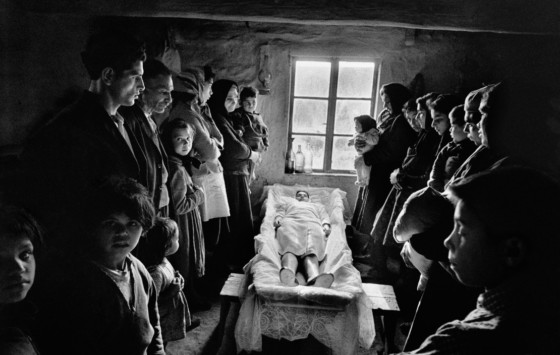
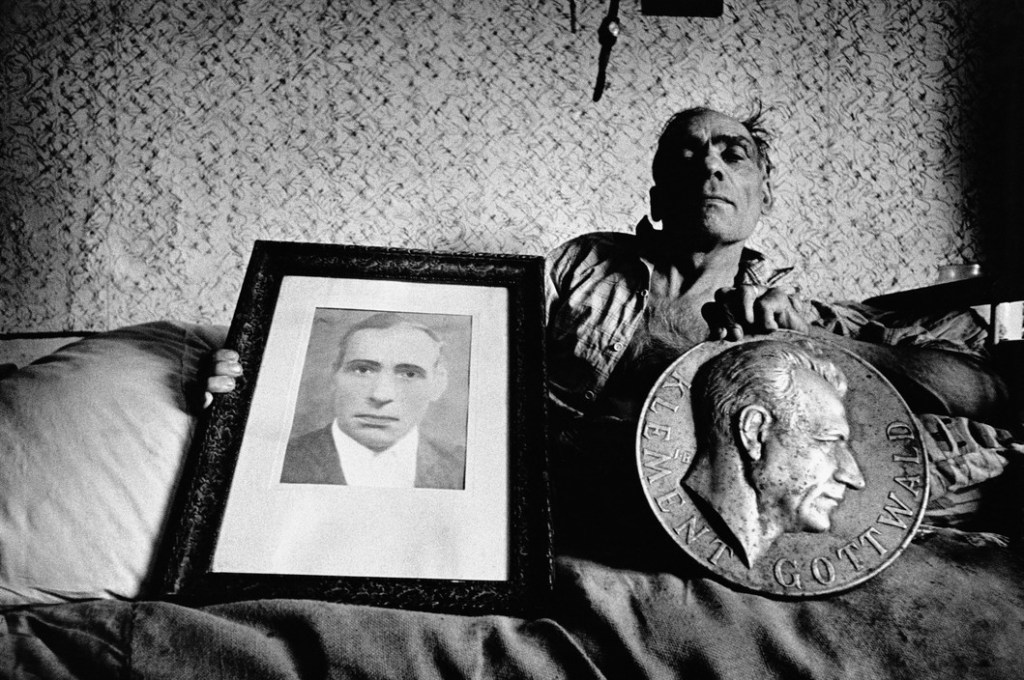
Read the interview with Cia Rinne on The Roma Journeys. Core resources: CiaRinne.pdf. Research and compare Koudelka’s Gypsies (https://www.youtube.com/watch?v=ltPZd9EeQyo) and Eskildsen’s The Roma Journeys. Discuss aspects to do with the photographer’s intention and the distinctive aesthetics and approach of each body of work.  (Open College of the Arts, 2014:69).

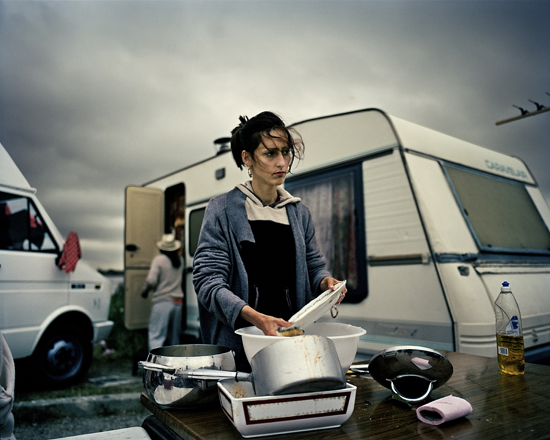
Eskildsen and Rinnes’s The Roma Journeys (2007) and Koudelka’s Gypsies (1975) are both bodies of work about The Roma Gypsies,; it’s an interesting exercise to compare elements of them:

Their intentions:

Koudelka was a Czechoslavakia, who left his country after producing photographs of the Soviet invasion in 1968. After this time he travelled and shot what interested him. This work has come together as a body of work since he photographed, he didn’t set out with the intention to publish a book or photo essay, it came together afterwards.

Eskildsen worked with a writer Rinne visiting seven countries to gain insights into the life of the Roma and the conditions they face, Hungary, Romania, India, Finland, Greece Russia France series; he set out with the intention to publish a photo book showing their lives and differences across their communities.

Their approach:

They were both long projects (six and nine years) shot across different countries, Koudelka covered Roma communities across Europe in Czechoslovakia, Romania, Hungary, France, and Spain. Both lived within the communities for a while.

Koudelka moved between the different villages sleeping outside, recording his encounters with individuals. He had an affinity with the people as he was also alienated and displaced from his homeland and had a theme of displacement “a defining reality of his own existence” (Josef Koudelka, 2017). This was at a time that the Roma’s were being pushed to assimilate into society and end their Nomadic lifestyle, they were resisting losing their identity; he identified with this as freedom was essential to him, including the freedom to do things in his own way (Josef Koudelka, 2017). Koudelka was helped he thinks by his love of their music which enabled him to bond with them.

Eskildsen also spent time with the communities, explained what he was doing and was helped by a female writer Rinne which may have helped him to communicate with them and access to the women in the communities. He was looking for the differences across their communities; he presents the images grouped into the countries they were shot in.

Gypsies includes more images of social gatherings, and ones that Koudelka seems to be in the middle of as well as plenty of interior shots with families; Roma Journey takes on more of a street photography style and is less intimate.

My thoughts on their aesthetics:

Gypsies was shot 40 years before Roma Journeys, and this accounts for some differences in the images such as backgrounds and the appearance of televisions cars and other modern elements. They both use a variety of perspective but more so Eskildsen, who also mixes photographs of different sizes. The framing is generally tighter on Koudelka’s work especially around the portraits.

Koudelka shot in the black and white of his time recording gritty, shadowy, grainy images in the traditional photo essay style and yet some of his images I feel were in a more modern black and white style with abrupt framing and dark tones. Eskildsen used the modern colour documentary style of photography, although I find it interesting that when you explore his work on his website he begins with a black and white shot and works his way to more saturated colour images; I wonder if he shot these in black and white initially? He also uses colour to an extent, to form cohesion to the work shown for each country.
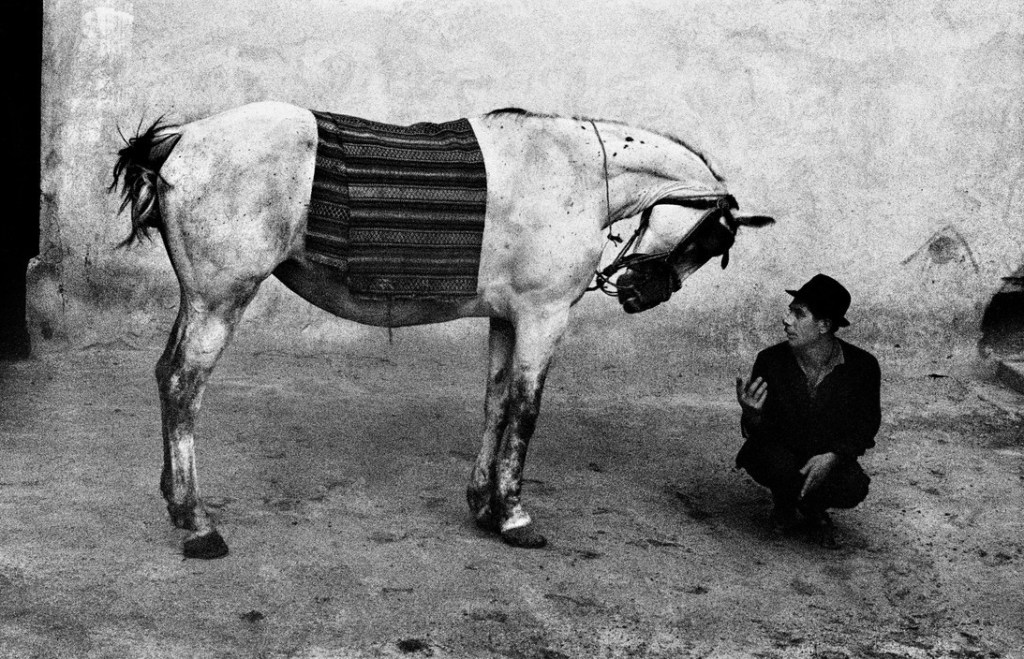
Gypsies presents to me a more honest, insider view of the communities; I’m not saying that Roma Journeys isn’t honest, its just that looking at the images I feel that Koudelka gets under the skin of the people and presents the harsh reality of their lives face on. I suspect it is his background as a displaced person that enables him to do this so well; I can feel emotion in the pictures.

 My Learning:

  • Consider presenting unsaturated to increasingly saturated images
  • Remember the value of taking time to get to know and gain respect from your subjects as well as the value of respect.

References:

Colberg, J. (2008) ‘A conversation with Joakim Eskilden’ At: http://www.joakimeskildsen.com/files/texts%20pdf/06colberg.pdf

Eskildsen, J. (2020) Joakim Eskildsen Photography At: http://www.joakimeskildsen.com/default.asp?Action=Menu&Item=104 (Accessed 28/10/2020).

Josef Koudelka: Gypsies (2017) At: https://www.magnumphotos.com/newsroom/society/josef-koudelka-gypsies/ (Accessed 28/10/2020).

Kim, E. (2013) 8 Rare Insights From an Interview with Josef Koudelka at Look3. At: https://erickimphotography.com/blog/2013/06/18/insights-from-a-rare-interview-with-josef-koudelka-at-look3/ (Accessed 28/10/2020).

Open College of the Arts (2014) Photography 2: Documentary-Fact and Fiction (Course Manual). Barnsley: Open College of the Arts.

Slabon, K. (2008) ‘Interview with Cia Rianne on the Roma project’ At: https://www.oca-student.com/sites/default/files/CiaRinne.pdf

Next Post: https://nkssite5.photo.blog/category/1-exercise-we-english/
PART 3 THE COLOUR VISION: PROJECT JOURNEYS

2. Exercise: Environmental Portraits

Go to: http://www.insight-visual.com/paul-exhibition.html and look at Paul Close’s environmental portraits. Analyse his visual style and consider whether the images work as documentary photographs and, if so, why. (Open College of the arts, 2014, 68).

Paul Close’s Environmental Portraits

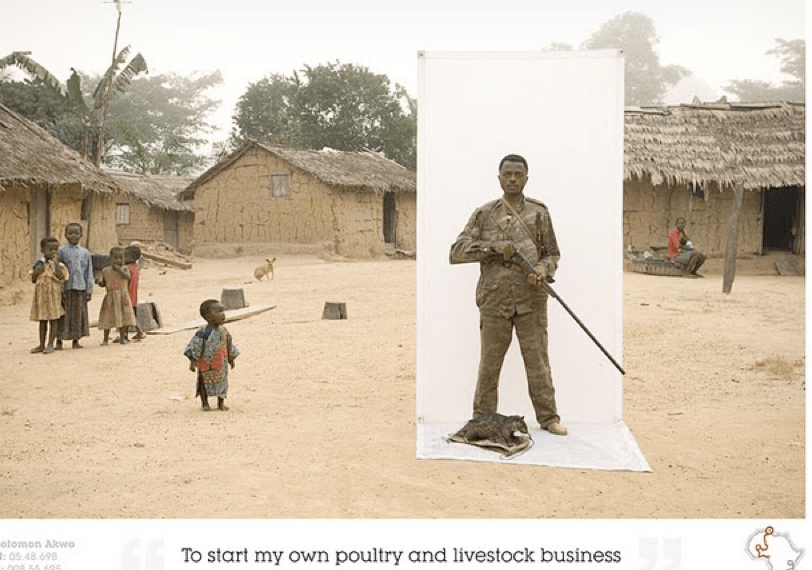
This project the Snakebox Odyssey is an exploration of people living in the Sahara. Close He photographed them against a white background, a sailcloth that he carried with him. Visually this is effective as it both frames them and separates them from their background, whilst leaving them in their context – a very interesting strategy. It remind me of August Sander’s “People of the 20th Century”. Visually I think Close’s use of colour gives the work more impact than if it had been shot in black and white

It could at this simple level have been a documentary of typologies or peoples, however Close asked each person he photographed as he travelled across Africa on his motor cycle “Is there one thing that could make your life better?” (Close, 2015). Conceptually the work then becomes more focused and interesting as we see individuals telling their own story as well as a series that shares the aspirations of these Africans with a wider world.

Close combines the images with captions, some, just words and some sentences; the texts add interest I think in particular as some are expressions of aspirations which from the context given you might expect, however some of the wishes they express would not be guessed from their photographs. It is interesting to see the contrasts between the simpler desires of subjects in more rural locations (some new clothes, have my own paddy, many camels, end to illness) to those in more built up places (to expand my business, my own petrol station, become a surgeon); it seems that everything is relative.

This series goes beyond “the tourist gaze”. Close provides the GPS coordinates and names of the subjects, with a map to give an idea of their location which adds to the authenticity of the work. It is real life, it appears honest, it is telling real stories and is sharing a message with an audience, it has been captured with a purpose. This is definitely documentary work.

Learning points

  • Work that is interesting both visually and conceptually has a good chance of success
  • Work that has impact, the possibility of effecting change or at least share a message is worthwhile.
  • A simple execution and concept can be very effective.

References:

Close, P. (2015) The Snakebox Odyssey – Magazine Edition by Paul Close. At: https://www.blurb.co.uk/b/6733920-the-snakebox-odyssey-magazine-edition (Accessed 22/08/2020).

Duckrabbit, W. by (2009) The Snakebox Oddessy by Paul Close (where it’s at) — duckrabbit. At: https://www.duckrabbit.info/blog/2009/09/the-snakebox-oddessy-by-paul-close-where-its-at/ (Accessed 22/08/2020).

Open College of the Arts (2014) Photography 2: Documentary-Fact and Fiction (Course Manual). Barnsley: Open College of the Arts.

Next Post: https://nkssite5.photo.blog/category/coursework/part-3-a-colour-vision/project-journeys/exercise-the-roma-journeys/

PART 3 THE COLOUR VISION: PROJECT JOURNEYS

1. Exercise: The Tourist Gaze

Read the first chapter of The Tourist Gaze. Core resources: Urry_TouristGaze.pdf Write a 200-word reflective commentary in your learning log about its relevance to documentary photography. (Open College of the Arts, 2014:67)

We were also directed to read Geographies of Tourist Photography (Larsen 2006). Here Larsen explores the roles of photography in tourism and how in tourism photography and place intersect; he asks how photography mediates tourism.

In His chapter in “The Tourist Gaze” Sociologist John Urry explores the image mediated way of seeing, as well as the imaginative views of tourist landscapes; he dates the birth of the “tourist gaze” to the same year that photography was invented (1839-1841). Urry calls the use of mobile photography, imaginative mobility, where these images become more important that the sight itself; indeed Larsen says that geographers now see photography as “world making”. It is certainly true that people go to locations to experience virtual places that have been idealised; in fact Larsen goes so far as to say that Tourist photography creates new realities.

I am particularly interested how Urry breaks down how the Tourist gaze is constructed:

  • Through anticipation and fantasy
  • Through signs
  • Directed towards landscape and townscape features

Though he questions the authenticity and the fickleness of the Tourist gaze.

He marks the Tourist gaze out as where there is a division between the ordinary/everyday and the extraordinary involving:

  • A unique object
  • Particular signs
  • Unfamiliar aspects
  • Ordinary aspects being undertaken by people in unusual contexts
  • Familiar tasks or activities in unusual visual environment
  • Seeing signs that indicate an ordinary object is in fact extraordinary
  • Day -dreaming or anticipation of different experiences

The Tourist Gaze is certainly relevant to documentary photography. Only by analysing the different components can images be directed towards to their intended audiences; these same elements could also form a list of what make a documentary image arresting. It may be that a documentary photograph is of something that is everyday or ordinary but interest is unlikely to be aroused in the image unless there is something that makes it extraordinary.

It is also important that when making documentary images that they are different from the idealised tourist mediated expectations of a place.; this is unlikely as documentary photographs ae usually founded on research and are likely to have a distinctive style and message.

My learning:

I’d not thought before about the tourist gaze, imaginative mobility, or that these images might create new realities. Its also been useful to me to breakdown that the tourist gaze is when there is a unique object, particular signs, unfamiliar aspects or contexts or anticipation of an experience. I wonder how this will apply to my assignment 3? Have I the tourist or photographer’s gaze?

References:

Larsen, J. (2006) Geographies of Tourist Photography in Falkheimer & Jansson, 2006, Chapter14 p.241-257)At: https://www.oca-student.com/sites/default/files/Larsen_Geographies.pdf (accessed 19.8.20).

Open College of the Arts (2014) Photography 2: Documentary-Fact and Fiction (Course Manual). Barnsley: Open College of the Arts.

Urry TouristGaze (2020) At: https://www.scribd.com/doc/108707270/Urry-TouristGaze?secret_password=tyvwrzrv2x061r6vhsz (Accessed 22/08/2020).

Next Post: https://nkssite5.photo.blog/category/coursework/part-3-a-colour-vision/project-journeys/exercise-2-environmental-portraits/