PART 2 THE B&W DOCUMENT: LEGACY DOCUMENTARY FOR SOCIAL CHANGE

Exercise 2:2 Survival programmes

Read the article ‘Survival Programmes’ in Eight magazine (V5N1, June 2006). (Open College of the Arts, 2014:32).

Between 1974 and 1979 three British photographers Nicholas Battye, Chris Steele-Perkins and Paul Trevor set up the Exit Photography Group to record life in some of Britain’s inner-city areas. This work was published their work in the book Survival Programmes in Britain’s Inner Cities (1982). They chose black and white photography as they thought its seriousness and visual authority would add to the seriousness of their message of the need for social reform for race, religion, class and justice. the medium would strengthen the message.

In aiming to create a lasting testimony that would resonate beyond the immediate political circumstances of the time, the three Exit photographers developed a complex and multi-layered response to the situation” (Survival Programmes: In Britain’s Inner Cities – Exit Photography Group, 2020).

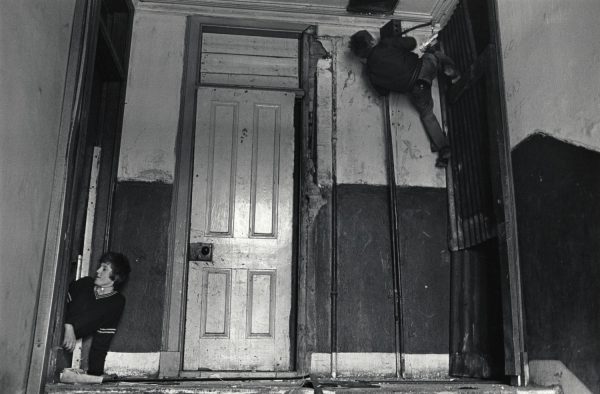
All images © Nicholas Battye, Chris Steele-Perkins or Paul Trevor

Sharing the same position that inner city poverty was endemic and leading to social disorder, they used oral evidence (people’s interviews) to capture such experiences. They worked in different cities, contacting community groups, walked around deprived districts, talked to people on the streets, and knocked on doors; Nicholas Battye commented that back then people were happy to talk to photographers. The images were sequences from frustration to anger on 4 chapters: through growth, promise, welfare to reaction. The book gave the same space to the interview transcripts as images, which they discussed and chose from together. I was interested to learn that they shot in black and white to save money. Their work certainly brought viewers really close to the truth.

MY LEARNING POINTS

  • Although times were different then they still must have worked hard to build relationships and trust with the communities that they photographed to get so close to them
  • Reminds me again of the responsibility of the photographer to shoot with Integrity, the images are intimate but respectful.
  • The benefits of working as a team and having a shared ethos
  • The impact that sharing the truth can have when laid bare

References:

New Writing: Exit Photography Group | Photoworks (2014) At: https://photoworks.org.uk/exit-photography-group/ (Accessed 13/05/2020).

Open College of the Arts (2014) Photography 2: Documentary-Fact and Fiction (Course Manual). Barnsley: Open College of the Arts.

Survival programmes in: Ei8ht magazine 5 (1) pp.12–19. Available online at: https://www.oca-student.com/sites/default/files/Foto85.1_SurvivalProgrammes.pdf (accessed 13.5.20)

Survival Programmes: In Britain’s Inner Cities – Exit Photography Group (2020) At: https://www.amber-online.com/collection/survival-programmes/ (Accessed 13/05/2020).

NEXT POST: https://nkssite5.photo.blog/category/exercise-2-3-brandt/

PART 2 THE B&W DOCUMENT: LEGACY DOCUMENTARY FOR SOCIAL CHANGE

Exercise 2.1

Read the 1939 article on documentary photography by Elizabeth McCausland. Write a short bullet list of McCausland’s main points in your learning log. Explain in your own words, in a single paragraph, why this article is relevant to this part of the course. (Open College of the Arts, 2014:31)

Notes on Elizabeth McCausland’s article:

  • Documentary photography has arisen from “creative impulses”
  • It uses photography to chronicle the external world, to expose serious issues, unlike previous applications which were comparatively romantic
  • Documentary photography uses realism using new eyes
  • Facts are more important to represent than a photographer’s personality though he can control the aesthetics by giving the facts a form
  • There are many opportunities for publishing honest images of everyday life
  • The work of the Farm Security Administration and the Federal Art Project “changing New York” series by Bernice Abbott ae the strongest precedent for documentary photography as the government has been the best sponsor of knowledge
  • Photography may have been confused with painting, is it art for instance; however, it is bound to realism, photographs give us truth.
  • Society now wants truth and even in art wants content and something that has something to say to an audience.
  • Photography can reveal much all at once and is not limited
  • Every subject is significant, and a documentary photographer should use technical ability to present in a simple and modest way the wider world, to inform people in a serious and sometimes shocking way.

My response: The premise of McCausland’s beliefs about documentary photography are that truth and honesty are paramount and that this takes precedence above a photographer expressing his personal voice. It must be recognised that this comes after the relaxed period of the 1920s before the serious times of WW2.

Nevertheless, this is mostly how documentary photography is perceived today. Truth, honesty and a message to communicate in the work holds true. I do believe however that we are now aware that it is naïve to believe that camera cannot lie and that a documentary photographer will always present absolute facts; in fact even in the work of the FSA cited as an exemplar by McCausland editorship and purpose was used to drive a certain narrative. Today we are more alert to the possible influences of purpose, editorship, audience and presentation on the bald facts. This article does however remind me of the importance of holding to an intention and my responsibility to the subject as a documentary photographer.

References:

McCausland, E. (1939) ‘Documentary Photography’ At: https://www.oca-student.com/sites/default/files/oca-content/key-resources/res-files/photonotes.pdf

Open College of the Arts (2014) Photography 2: Documentary-Fact and Fiction (Course Manual). Barnsley: Open College of the Arts.

NEXT POST: https://nkssite5.photo.blog/category/coursework/part-2-the-bw-legacy/project-legacy-for-social-change/exercise-2-2-survival-programes/