Read Miranda Gavin’s reviews of Anders Petersen’s French Kiss and Jacob Aue Sobol’s I, Tokyo for Hotshoe magazine and research the work of Daido Moriyama. Write a short reflective commentary about the connections between the styles of Moriyama, Petersen and Sobol. (Open College of the Arts, 2014:52).
My reflections:
I remember seeing some of Moriyama’s images at the London Photo Show last year which prompted me to buy the book Daido Moriyama (Nishi et al, 2001). As a co-founder of the 1960s magazine Provoke, he tested the conventions of photography, grainy and blurry images were more than acceptable and he pushed photography to the extreme (Nishi et al, 2001) and chaotic.
Looking at Peterson’s approach the influence of Moriyama is clear, in particular in Moriyama’s work Limited edition vintage prints; there is the same stream of consciousness in his images, one idea leaping to the seemingly unrelated next.
Jacob Aue Sobel and Anders Petersen, both Scandinavian photographers made the book “Veins”(2014) together where their work is presented in the same book but in two halves; with their subject matter and style it would be difficult to distinguish their work had it been mixed. They are both drawn to seediness, nudity, blood intimacy, and “human strangeness”, but Peterson’s work is a little softer. Sobel like Peterson uses full bleed images without captions, but they are less blurry.
Sobel said that Petersen showed him photography is a way of life in itself “Just the way he immerses himself in the subject. You look at his pictures and you feel that he had to make them. For him, photography is an obsession as well as an art form.” (O’Hagan, 2013).
Both the style of photography and some of the subject matter between the three photographers has similarities:
Interest in minutiae
Expressionist approach
Black and white format
High contrast -extremes of light and dark
Harsh tones
Strong emotion
Unconventional composition
Private/intimate and sexual connotations
Suggestive juxtaposition
Moriyama was the forerunner and Sobel created the later more contemporary work, they all photographed what could be called intimate documentary, however Peterson and Sobel developed their own styles from this. I have to say that though I was drawn to Moriyama’s work, I find Peterson and Sobel’s work disturbing and hard to find the same simplicity and beauty in.
DO SOME INDEPENDENT RESEARCH INTO STREET PHOTOGRAPHY
My response:
Street photography in the early days was staged, and was the extension of the studio, but with the advent of smaller less conspicuous cameras photographers were able to work on the street without being seen. Stephen McLaren editing “Magnum Streetwise” said the cornerstone of what is now known as street photography is “the impulse to take candid, unrehearsed pictures in the public realm” (2019).It normally features chance encounters and random accidents in public places, but doesn’t have to take place in the street. The French “Flaneur” the city walker was one of the earliest street photographers observing the streets closely for theatrical moments and inspiration. That said we are now aware that Street photography does not need the presence of a street or even an urban environment.
Street photography is prevalent again, with the work of photographers such as Vivian Maier, Chris Steele Perkins, and Martin Parr. I have in the past explored the photography of many photographers famous for their Street Photography; for instance Garry Winograd famous for his edgy close ups, William Klein whose work wasinnovative and intimate, often shot at eye level, Elliot Erwitt known for his wit in his images, and Cartier- Bresson of course. So here I will explore the street photography work of photographers who I’ve not researched before:
Christian Anderson
Is an American Magnum photographer who says his roots are in the classical street photography tradition especially influenced by Brice Davidson, and Moriyama. He has moved towards street photography that is relevant to him, working digitally and worrying less about the technical aspects and more about the emotional aspects of subjects. He crops hard to exclude extraneous contextual information.
USA. New York City, NY. 2014. Cherries spilled on crosswalk.
Capturing and “trying to be aware of an emotional sense of the people that I am photographing” (McLaren, 2019:48) is important to him. He describes how when working on the street he scans and then notices everything and wonders who people are and what they are thinking about. He uses the available street lighting, neon signage and smog to create atmosphere around his decontextualized subjects.
CHINA. Shanghai. 2017. Street portrait.
USA. NYC. 2017. Police in front of Trump Tower.
FRANCE. Sete. 2012. A red dot on the glass of a bus stop.
I do particularly like his use of colour as accent and for atmosphere, more especially knowing he what was naturally on the street; it’s hard to believe that some of his portraits are shot on the streets rather than in a studio.
Sergio Larrain
A Chilean photographer worked professionally only during the 1950s and 60s. He lived a solitary life, saying he only did work that he cared for. One such project was on the reclusive mafioso from the streets of Palermo, Corleone and Ustica. He believed that photography should be free of convention but not forced, you should “Don’t ever force things, otherwise the image would lose its poetry. Follow your own taste and nothing else” .(McLaren, 2019:251).
GREAT-BRITAIN. England. London. 1959.
Village on the way to Machu Picchu
Between the island of Chiloé and Puerto Montt, Chili, 1957 (Sergio Larrain, 2020)
Island of Chiloe, Chili, 1957
Santiago, Chili, 1963
His images are poetic but the thing that I take away from them the most is the unusual perspective he used, I guess this came from the freedom from constraint he valued and the value he put on following your instinct.
Constantine Manos
He shot initially in black and white, these are some of his first serious images taken when he was 18:
(Daufuskie Island, South Carolina, 1952)
Manos switched to colour after 30 years for his work “American Color” (1995), for which he deliberately sought out a different type of picture, he felt that American was waiting to be photographed differently; he continued this as he was enjoying it with American color 2:
(American Color 2, 2010)
In 2001 he shot in Havana, Cuba, 2001 walking the streets “There was much life in the streets, and people were not self-conscious. In their daily lives there was a poetry, not found in more materialistic and industrialized societies” (Havana, Cuba, 2001).
(Havana, Cuba, 2001)
He later returned to black and white with a digital Leica, he claimed he’d gone back to basics “Looking for remarkable moments that make you catch your breath” (McLaren,2019:281).
I read that he was against cropping, as he thought it made you lazy; you should move your feet instead. I feel the same way, in that I should get it right as I am looking at something, there and then. Often when you look at his photos, he has people in both the background, mid and foreground but rarely overlaps the bodies, this seems to sharpen his message. Manos said that “A successful picture is always a surprise” (McLaren,2019:281) and his images are full of ambiguity. There are a lot of small details in his photographs, maybe this is how he achieves the poetry in his images.
Jonas Bendiksen
I choose to look at Bendiksen because at first look his photography seems quite different to the other photographer’s I’ve reviewed above or maybe I expected it to be because of his Scandinavian origins?
Apparently, he thinks about his approach hard before shooting, saying the research puts you into the right frame of mind, but that when he shoots “I guess I’m a fairly simple photographer. There is very little hocus-pocus about what I do” (McLaren, 2019:69), it’s fairly instinctive.
GEORGIA. Abkhazia. Sukhum. 2005. Although Abkhazia is isolated, half-abandoned and still suffering war wounds due to its unrecognized status, both locals and Russian tourists are drawn to the warm waters of the Black Sea. This unrecognized country, on a lush stretch of Black Sea coast, won its independence from the former Soviet republic of Georgia after a fierce war in 1993.
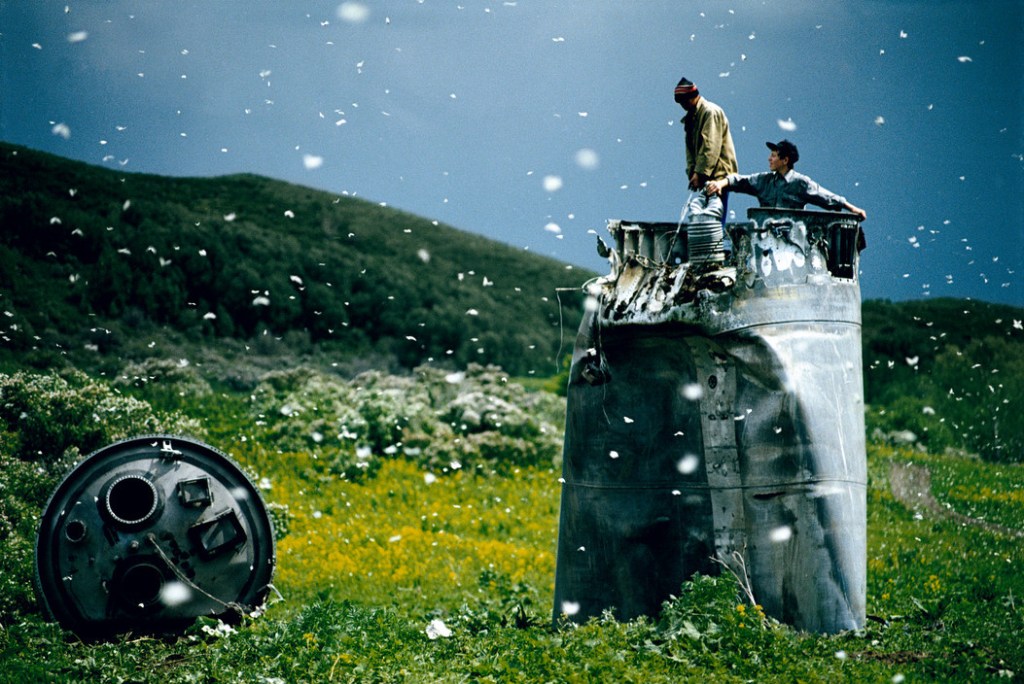
RUSSIA. Altai Territory. 2000. Villagers collecting scrap from a crashed spacecraft, surrounded by thousands of white butterflies. Environmentalists fear for the region’s future due to the toxic rocket fuel.
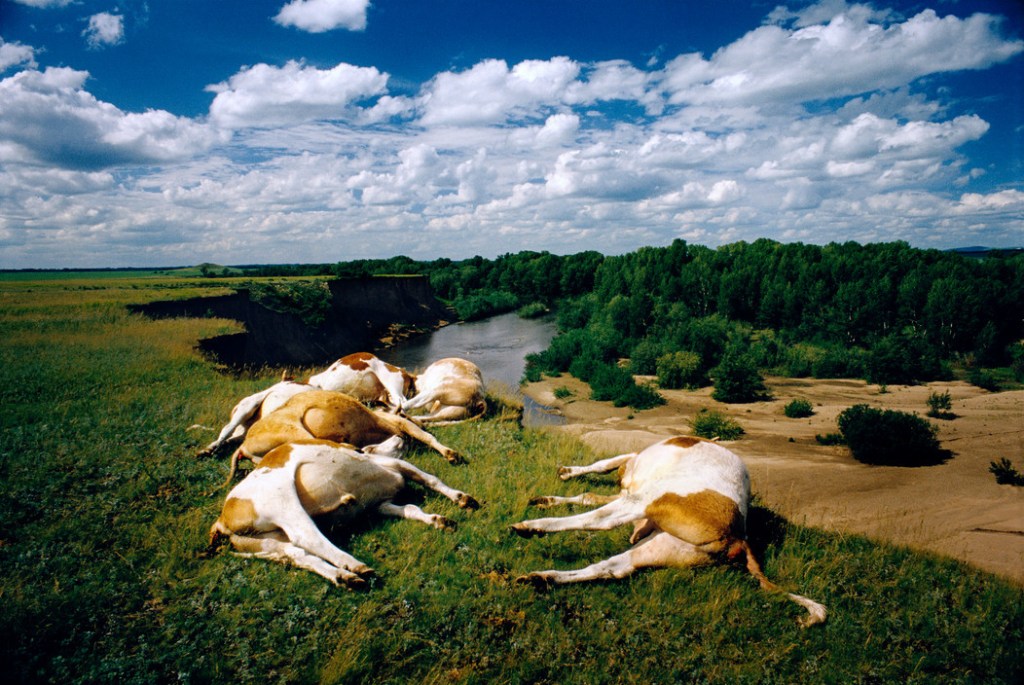
RUSSIA. Altai Territory. 2000. Dead cows lying on a cliff. The local population claim whole herds of cattle and sheep regularly die as a result of rocket fuel poisoned soil.
BANGLADESH. Asulia. 2010. Brick kilns marooned in water. They normally use the kilns 4-5 months a year in the driest seasons (from november approx). This type of brick kiln is ubiquitous in Bangladesh, but is a heavy polluter (as its coal-fired and ineffective), both in terms of CO2 and air quality. As I was shooting a storm came in with heavy winds and rainfall.
Workers digging up submerged bricks and throwing them up unto land for them to be collected and taken to the waiting boat.
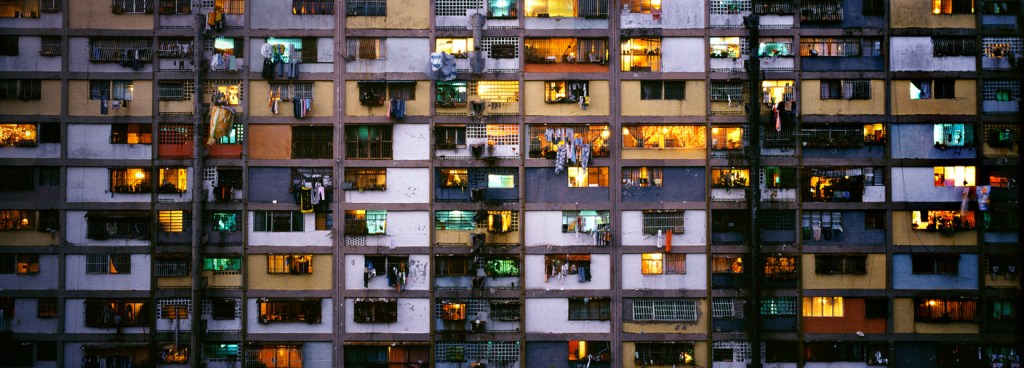
VENEZUELA. Caracas. 2006. The facade of an apartment building in Barrio 23 de Enero. The areas apartment blocks have been home to communities of squatters since the late 1950s, and the area has played impoortant role in social and political events in the country.
I’m interested in his work on urban development and future urban development, “when I’m out on the street, I try to leave all the thinking behind” (McLaren,2019:71).
MY LEARNING:
Try to be aware of an emotional sense of the people
Consider using the available street lighting, neon signage and smog to create atmosphere around subjects.
Don’t force things,
Follow your own instincts and leave thinking behind.
Vivian Maier, whose work was only recently discovered, built a vast collection of images of life in Chicago and New York. Her main body of work, taken in the 1950s, shows clear surrealist elements. Explore the Vivian Maier website (www.vivianmaier.com) and identify five street photographs that show the influence of surrealism. Write a short reflective commentary in your learning log(Open College of the Arts, 2014:50).
VIVIAN MAIER
Much of Maier’s street photography shows clear surrealist elements, such as ambiguity, use of shadows, reflection, geometric patterns, unusual angles, juxtapositions, abrupt framing;some of the images are dreamlike and they certainly disrupt our perception:
September 25, 1959. New York, NY
This image from “Street 5” illustrates the use of geometry, chance, reveals the uncanny and in doing so seems surreal
1955. New York, NY
This image from “Street 5” is certainly shot from an unusual perspective revealing something we’d have not seen in the same way otherwise and the abrupt framing captures a surreal figure.
.
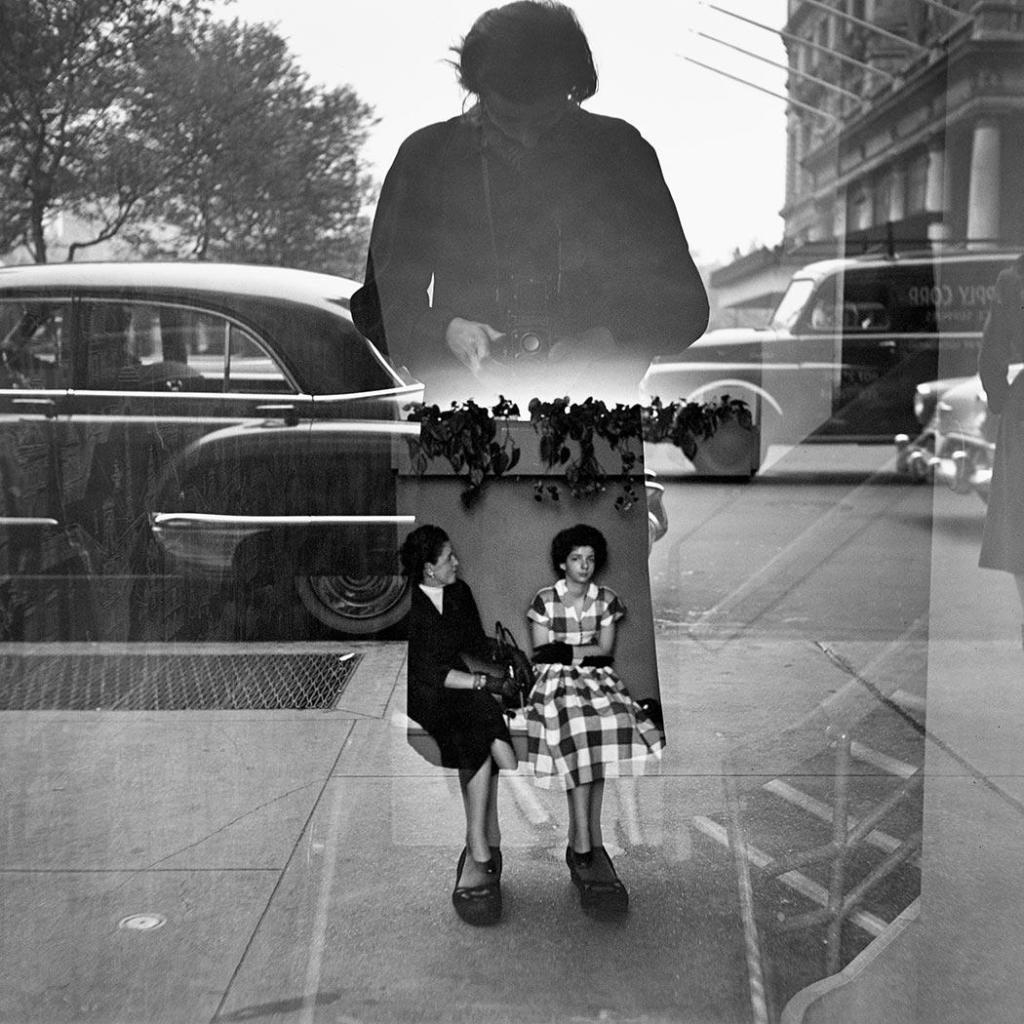
Self-Portrait, 1954
This self-portrait illustrates the use of reflections in a surreal way, the juxtaposition of the seated women onto her own reflection creates ambiguity.
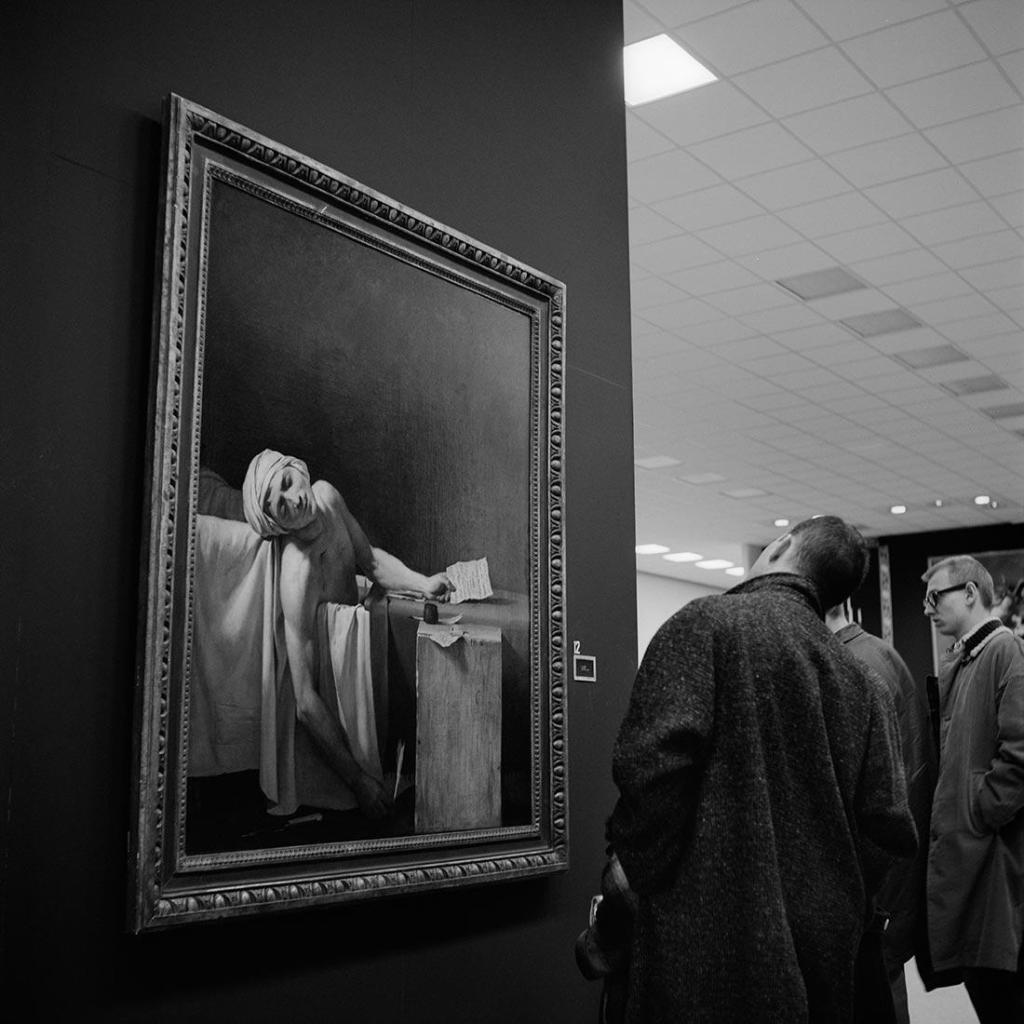
December 1962. Chicago, IL
Again, juxtaposition of the portrait and a viewer is important creating a surreal moment as he seems to reflect and adopt the portrait’s position in reverse.
August 1975
In this colour image it is the unusual angle she has shot from that is arresting at first, Maier has also seen and is sharing with us the theme of flowers not only in the bag, but on the bag and her handbag, they seem incongruous against her pristine pale skirt.
All images, Vivian Maier Photographer 2020:
I have just watched a presentation “The ever-intriguing Vivian Maier” on her work and life by Anna Sparham and Ann Marks for Photo London. It was useful to hear how some of her success came from her decisiveness and confidence; apparently, she would just take a shot and move straight on, knowing that she would have got what she needed. They describe her work as often ironic, with a sense of wit which she sometimes used colour to emphasis. They also showed many examples of her use of Juxtaposition, self-portraits using reflection and the way that her photography could in a surreal way change our perception of things.
Read the article ‘Cannon Fodder: Authoring Eugène Atget’ by Abigail Solomon-Godeau (in Photography at the Dock, 2009, pp.28–51). This article is provided as an Appendix at the back of this course. NOTE: If you are viewing this course digitally, and you do not have a copy of this recomended book, please email enquiries@oca.ac.uk to ask for a copy to be sent in the post. (Copyright restrictions allow single photocopies only) Research the work of the surrealist photographers mentioned above. In your learning log write a bullet list of key visual and conceptual characteristics that you think their work has in common.(Open College of The Art, 2012:48)
MY RESPONSE:
This essay though challenging to read led me to begin researching surrealism, something I admit I didn’t know much about. I think this is the beginning of a journey…
Surrealism emphasised artistic processes whereby the imaginary when recorded “would offer insights into the world of “thought” and therefore disrupt taken-for-granted perceptions and frames of reference” (Wells, 2015:315). Rather like replicating the world of dreams which were thought to be repressed by reason.
French poet Andre Breton the founder of the movement, called surrealism a desire to bring clarity to the “passionate consciousness of the world perceived by the senses” (Wells, 2025:316). Wells (2015) suggests that surrealism was radical because it aimed to disorientate the spectator, push conventional ways of seeing and challenge rational frameworks.
Surrealism seeks to reveal the uncanny beneath familiar everyday things, it encourages us to see the world differently; Dali said “Nothing proves the truth of surrealism so much as photography” (Franklin, 2016:151). Franklin suggests that surrealism sat easily with photography as the camera can instantly catch juxtapositions and incongruities that we don’t always see, as well as the ambiguity and visual poetry that photography can provide. It was embraced because of other … such as geometry, subversion, scope given to the subconscious, the role of chance and a reason the dawdle like a flaneur.
Certainly some of the roots of surrealism can be traced back to the 19th century idea of the “flaneur” or dawdling observer, and Surrealism offered the growing movement of street photography freedom from previous photographic traditions. The surrealists were inspired by Atget’s photographs of Paris. Atget’s focus in Paris was medieval and local, where everything was significant and there to be recorded. Atget’s Paris is mostly empty of human figures, showing only traces only of human habitation. Clarke (1997:91) calls it psychological mapping of the cities secrets, suggesting that Atget’s photographs “imbibe rather than photograph the city” citing the image Cour 41 Rue Broca (1912) as an example of attention to detail, lack of human figures, strange and expectant atmosphere and slightly surreal:
Cour 41 Rue Broca (1912 (Bunyan, 2020)
Atget does seem to be a forerunner of Surrealism shooting juxtapositioned reflections in shop windows and statues seemingly coming to life, indeed Franklin (p152) says that much of the visual language of street photography was invented by him. Indeed as the OCA coursebook explains Cartier-Bresson, André Kértész, George Brassaï and Man Ray all continued and developed some elements of the photographic style that Eugène Atget had experimented with in Paris a couple of decades previously.
References:
Wells, L. (2015) Photography: A Critical Introduction. Abingdon: Routledge.
Franklin, S. (2016) The Documentary Impulse: Phaidon Press.
Clarke, G. (1997) The Photograph: Oxford University Press.
Man Ray grew up in New York as a child and drawing and painting as he discovered artistic life, including the gallery of Alfred Stieglitz, who promoted artists as Cézanne, Matisse and Picasso. As he began painting he was cubist inspired. He moved to Paris in the 1920s, though originally a painter tending towards abstraction, he turned to photography in the 1920’s. He was a neighbour of Atget and part of the first joint surrealist exhibition in Paris; in 1925 he bought 42 photographs from Atget as he saw a surrealist style in the work. André Breton once described Man Ray as a ‘pre-Surrealist’; certainly in the mid 1920s, his work, influenced by Marcel Duchamp, had Surrealist undertones, and he continued to draw on surrealism, and is part of the first surrealist exhibition in Paris at the gallery Pierre with Jean Arp, Max Ernst, André Masson, Joan Miro and Picasso.
During the 1920’s, Man Ray revolutionised photography with his photogram technique he called “Rayography”, a way to make photography without camera, giving a ghost-like aspect as a result of three-dimensional effects of objects shadows. He photographed portraits for personalities as well as fashion photography. In 1931, Man Ray exposed a photographic negative for the second time by mistake, which was the beginning of his Sabattier effect, often mistaken for Solarisations; this appealed to surrealist demands for a fusion between the imaginary and the real as if dreams. In 1940, during the Military Occupation in Paris, Man Ray returned to the United-States.
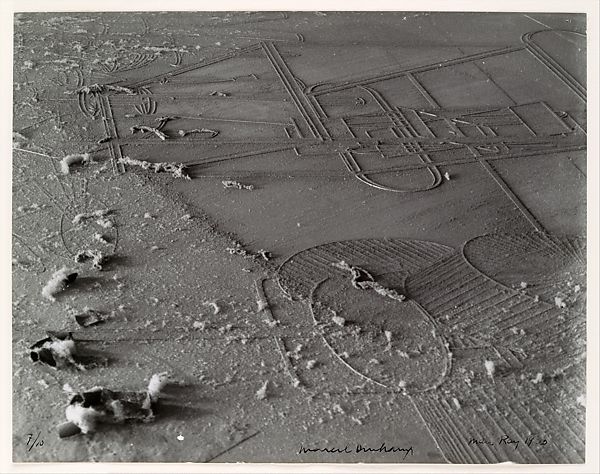
Dust Breeding 1920
I found it difficult to find what I would call documentary images from Man Ray, but as inspiration for abstract and conceptualism I have included the above image which is fascinating. This image is attributed to Man Ray and Marcel Duchamp. He was asked to photograph an artists work which was not exciting to him, he practiced on a sheet of glass with a year of dust on it with a 2 hour long exposure; from this image he removed the edge of the dusty glass and a little of the studio beyond from the original negative so that it became a separate entity.
Man Ray made much use of negative spaces, accidental compositions, and broke photographic rules. Mann ray said that he painted what couldn’t be photographed and photographed what couldn’t be painted, and it does seem that he consolidated a photographic style that Eugène Atget began.
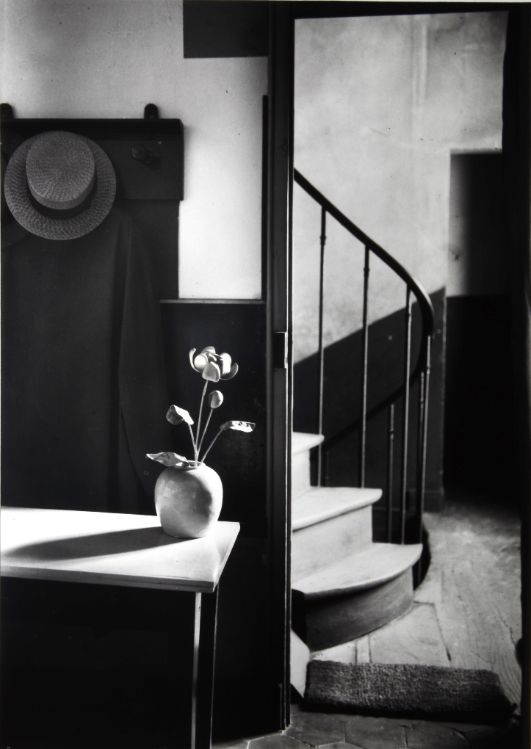
He arrived in Paris in 1925 from Budapest and joined in with its bohemian culture. In the 1920’s he met many of the Dadaists including the artist Piet Mondrain. He photographed both from his hotel window and by moving in the streets in the daytime. Clarke says that Kertesz “works on the margins and borders of our visual and mental awareness”, with chance juxtapositions and “unresolvable ironies” (Clarke, 1997: 92). It also seems that Kertesz has the perspective of an outsider, observing instead of showing that he knows the city well. He combined geometry and formal elements with suggestion and enigma resulting in ambiguous images that represented not just what his eye saw but what he felt. He observed subjects from various angles until the composition pleased his eye and valued emotional impact above technique.
Pont Des Arts, 1929 The Daisy Bar, Montmartre,
Chez Mondrian, Paris, 1926Paris, 1930 Meudon, 1928
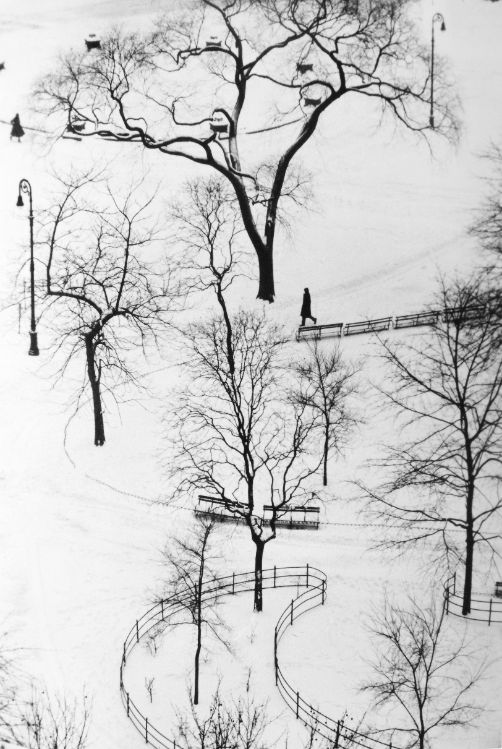
Eventually he fled France and it’s Jewish persecutions, emigrating to the United States. When in New York, Kertész he captured images of people reading, particularly in outside spaces such as parks, window ledges and balconies, particularly from the window of his 12th floor apartment near Washington Square.
Homing Ship, New York, 1944 Washington Square, New York, 1954
(André Kertész, 2020)
Using a telephoto lens, his views of snow-covered tracks and silhouettes became some of his best known images . After his wife’s death he was reclusive and relied on his telephoto lens to see the world, and took some of his most interesting, abstracted cityscapes. He also created surreal, still-life photographs of his possessions with a polaroid camera. His compositions are dynamically geometric and great examples of seeing things in a different way. All of this and he didn’t consider himself a surrealist but called himself a realist; he certainly made use of ambiguity, interesting framing, juxtapostions, geometric patterns and lines, imagery and negative space.
Brassai is well known for his images of Parisian life between the two world wars, which reveals the complexities and hidden sides of French society and culture. He was tutored by Andre Kertesz a fellow Hungarian and was friends with the city’s creative avante -garde such as Pablo Picasso, Salvador Dalí, and Henri Matisse, among others—and the city’s creative avant-garde.
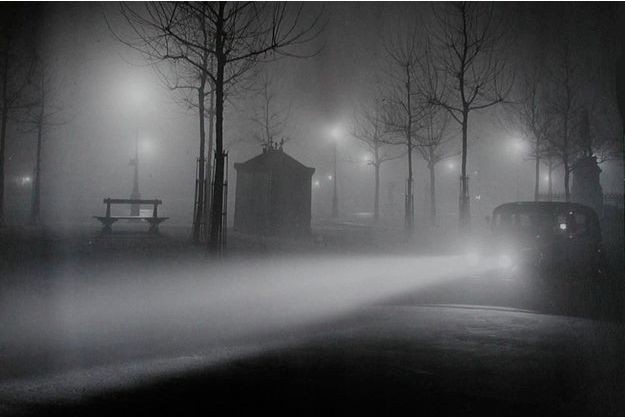
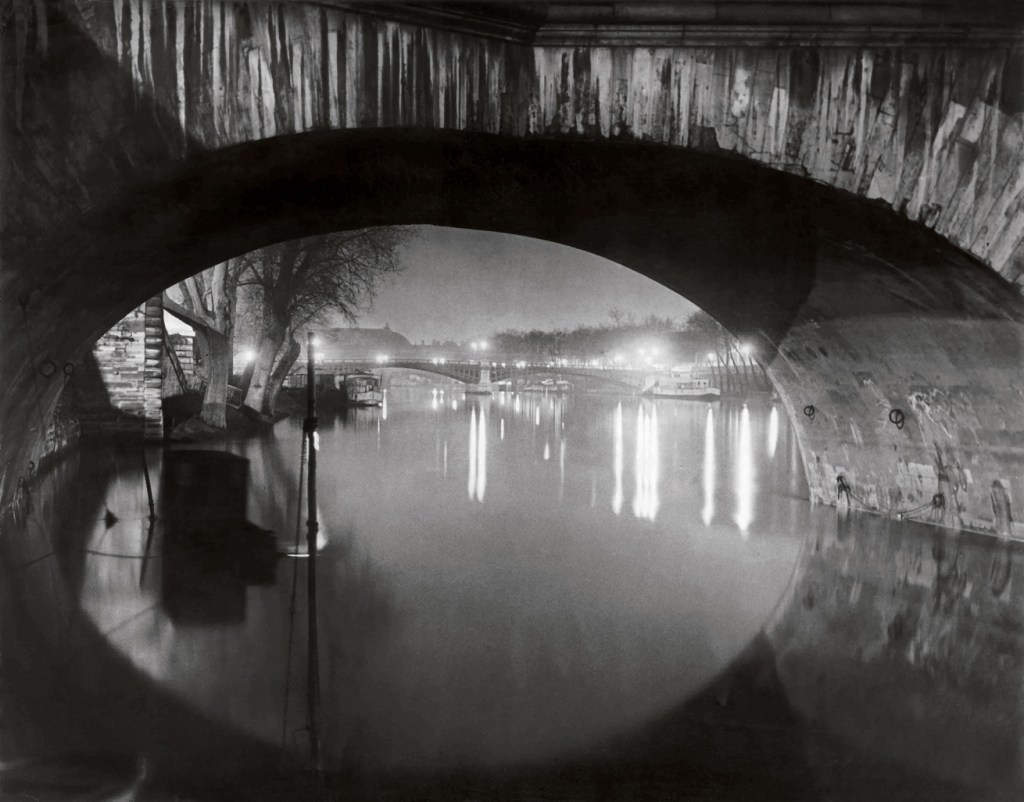
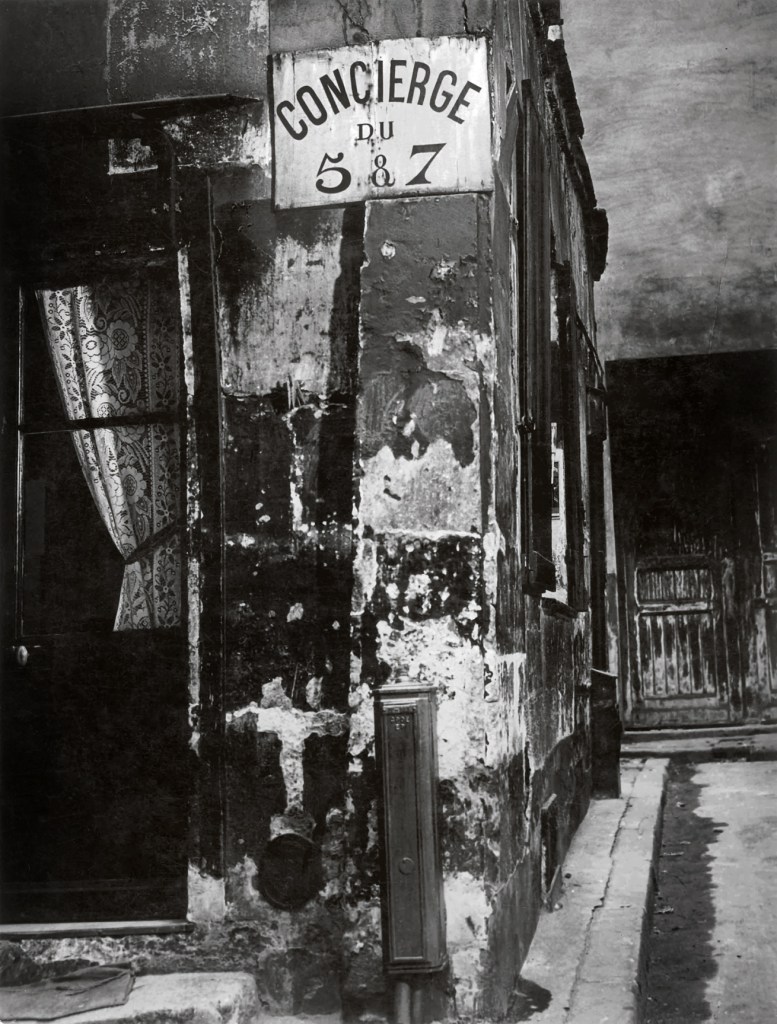
Brassai photographed like a voyeur on the streets of Paris, rather as Atget and Kertesz did, his work came to life at night when he took pictures of lovers, prostitutes, workers, social gatherings as well as empty streets and parks. Brassai explained “Night does not show things, it suggests them. It disturbs and surprises us with its strangeness. It liberates forces within us which are dominated by our reason during the daytime” (Bunyan, 2020). Clarke suggests that Brassai viewed Paris as a surreal event, bizarre and unexpected photographing at night “to suggest the darkest and deepest of the city’s needs and desires” (Clarke, 1997:92). From his series Paris after Dark (1933) this image allows the imagination psychological space and leaves a viewer uneasy:
(Photographer Brassaï at SFMOMA , 2020)
View through the pont Royal toward the pont Solférino c. 1933 Concierge’s Lodge, Paris 1933
The Eiffel Tower seen through the Gate of the Trocadéro 1930-32
(Bunyan, 2020)
Images like the above have a heavy atmosphere communicating much more than the eye can see alone. Brassai himself said ““In certain photographs, objects take on a particular light, a fascinating presence. Vision has fixed them “as they are in themselves” […]. It confers a density that is entirely foreign to their real existence.” (Brassaï, undated note).
Though the night was his greatest inspiration he also shot many images of the city in daylight, monuments, and details of everyday life. His Photographs from the thirties show his keenness for
geometric styles or abrupt cuts, shown in his famous cobblestone images of city streets.
(Lebowitz,2016)
Brassai was very interested in composition, where he combined documentary clarity with aesthetic experimentation; he shot from unusual angles, caught surreal moments and unstaged subjects, but with poetic intimacy. He shows how everything is worthy of portraying for those who know how to look as he captured the everyday, the magical, and the mysteries of common life, and made them into art. Brassaï saw things clearly, so that we can see them now:
“Most of the time I have drawn my images from the daily life around me. I think that is the most sincere and humble appreciation of reality, the most everyday event leads to the extraordinary” (Johnson et al,2012:535).
Having studied Cartier-Bresson much before I have confined myself here to the surrealist elements of his life and work.
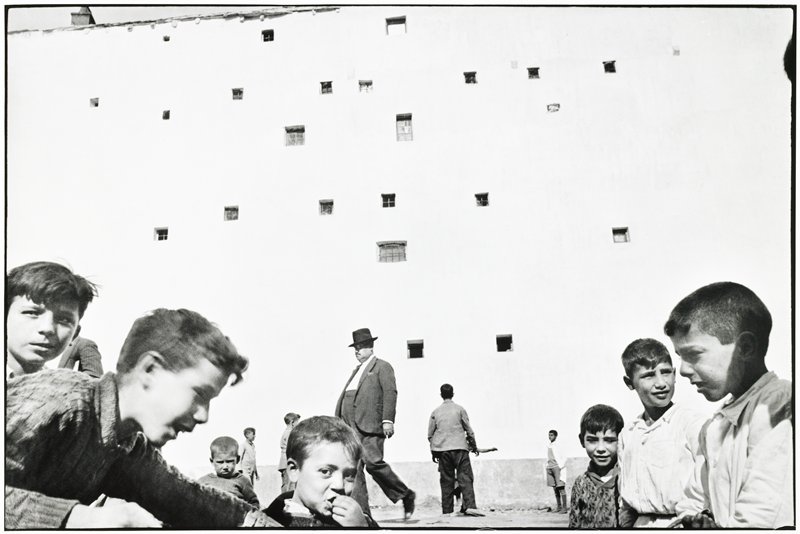
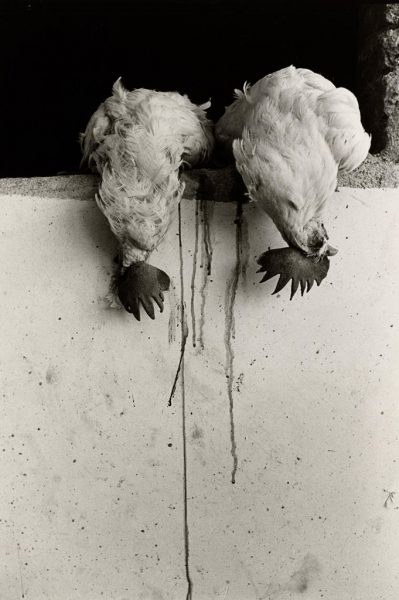
Cartier Bresson had connections to Atget and Man Ray, he was influenced by both Andre Breton (the founder of the surrealist movement who had travelled to Mexico in 1938) and the cubist painter Lhote who apparently taught him about the satisfaction in geometry, which he used along with the rules of the golden ratio (Franklin, 2016). Many of his images show that Cartier- Bresson embraced Surrealism using geometry, subversion, the subconscious, the role of chance and a reason to explore like a flaneur (by his decisive moments); however it is not so in all of his work especially his early reportage work for life magazine. These works show a surrealistic influence:
Henri Cartier-Bresson | Srinagar, Kashmir (1948) (Artsy, 2020) & V and A Children Playing in Ruins, Seville, Spain 1933 (Collections, 2020)
Arena at Valencia, Spain, 1933 (Minneapolis Institute of Art, 2020) & Madrid 1933 (Minneapolis Institute of Art, 2020.)
Cartier-Bresson wrote “I owe an allegiance to Surrealism… because it taught me to let the photographic lens look into the rubble of the unconscious and of chance “(Franklin, 2016:156). It has been suggested that the strength of Cartier-Bresson’s street photography is in “the perceptive grasp of the human condition and their ambiguity” (Franklin, 2016:156). Cartier-Bresson however said that he wasn’t totally focused on geometry as aesthetics, preferring a striving for “elegance”. I had not considered before the amount that surrealism influences are apparent in his work.
References:
Franklin, S. (2016) The Documentary Impulse. (London): Phaidon Press.
Collections (2020) Andalucía. Seville. 1933 | Cartier-Bresson, Henri | V&A Search the Collections. At: http://collections.vam.ac.uk/item/O93840 (Accessed 01/06/2020).
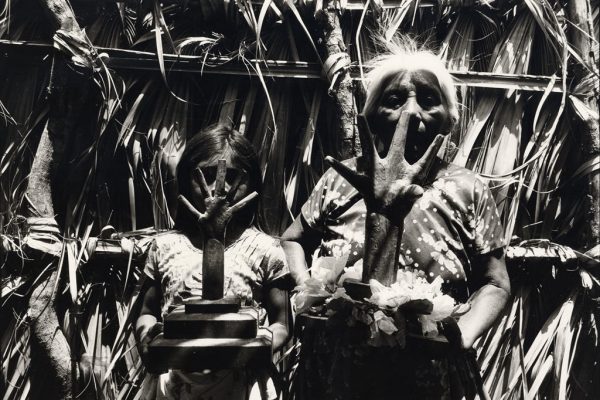
She photographed in Mexico fifty years after Cartier-Bresson. Her photography can be described as documentary, but fall into the genre of the constructed image and shows elements of surrealism.
GRACIELA ITURBIDE (2020)
Her images of Mexican society are both personal and poetic, while capturing everyday life visually. She was taught by Manuel Bravo Alvarez another photographer I need to explore more.
KEY VISUAL AND CONCEPTUAL CHARACTERISTICS IN THE WORK OF THE ABOVE PHOTOGRAPHERS
Ambiguous images
Juxtapostioning
Use of negative space
Use of shadows
Use of geometric patterns
Shot from unusual angles
Framed abruptly
Accidental compositions, use of chance.
Break traditional photographic rules of composition
See things differently and show us things differently
Disrupt our perceptions
Reveal the uncanny
Some dream like imagery
Fusion between the real and the imaginary
Capture surreal moments
MY LEARNING:
I have also read much about the surrealist movement in art at the same time as researching these photographers. I have always been particularly interesting in different ways of seeing, and unconscious ones in particular and so this has broadened my knowledge. It will be interesting how this might trickle into my photography.
Choose one of the weekly instructions given to contributors to the Street Photography Now Project in 2011 and build a small portfolio of B&W images on your chosen brief.
Publish a selection of five images from your portfolio on your blog. (Open College of the Arts, 2014:50)
My response:
“If you can smell the street by looking at the photo, it’s a street photograph” Bruce Gilden September 15, 2010
Reference:
Open College of the Arts (2014) Photography 2: Documentary-Fact and Fiction (Course Manual). Barnsley: Open College of the Arts.
Read the article ‘Making Sense of Documentary Photography’ by James Curtis.
Curtis contextualises the work of the FSA photographers within a tradition of early twentieth-century social documentary photography and touches on the issue of the FSA photographers’ methods and intentions.
What is your view on this? Is there any sense in which the FSA photographers exploited their subjects?(Open College of the Arts, 2014:45).
I found the article very enlightening. Curtis gives examples of areas to look at when examining a documentary photograph to determine their objectiveness and usefulness as historical evidence. He also explains the methods which some of the FSA photographers used to achieve their images; this I found particularly illuminating.
Curtis suggests that documentary photographers posed as “fact gatherers” but were consciously persuading others, using as examples the work of the Farm Security Administration (FSA) photographers.
Curtis presents many examples of how these photographers manipulated their images and provides a useful framework for assessing a documentary photograph:
Who is the audience? As images can be moulded to fit the expectations and prejudices of the audience.
Why was the photograph taken? For example, if they are for a social reform agency their goals would affect the work.
How was the photograph taken? If the equipment used at the time needed a long exposure then the shot would have to be posed to avoid blurring; if it needed lighting and flash powder was used, this would cause startled expressions and harsh lighting and shadows.
What can companion images tell us? The pictures shown are usually one of a part of a series of images taken the same day; these were often destroyed so as not to detract from the chosen image. However, if they are available, they often tell us more about the subject and can give clues as to other family members and so forth.
How was the photograph presented? Captions and text can direct the viewer where the photographer want them to go.
Did their methods and intentions did they exploit their subjects? My Response:
The FSA asserted the hard reality of their images, but they were not averse to invoking religious imagery (Marien, 2006:278) as they did in the “Migrant Mother” (Doreatha Lange 1936). I understand that for various reasons they had to control the subject and material they were photographing, the most obvious one being the limitations of long exposure times; however I find it unacceptable that they kept their constructions secret.
Jacob Riis one of the FSA photographers though once credible has since been found to have paid subjects to pose and set up scenarios as he asked; he also persuaded audiences what they were seeing by the use of pointed captions. His images have been debated “because of the photographer’s intrusion on the lives of the poor” and because of their interpretations (Marien, 2006:204).
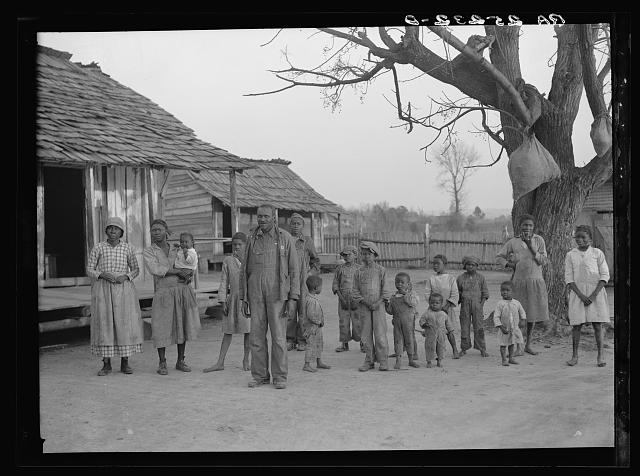
The pictures below are an example of exploitation in terms of posing and captioning without respect for the subjects. In this image, though the FSA had given help to the community, Rothstein was asked to photograph them as if they needed aid. Worse still the caption “Single family group” implies that the sole man in the image has fathered all of these children, and yet the man is actually the village elder stood proudly with his children, grandchildren and great grandchildren. This is a misleading caption.
Negroes, descendants of former slaves of the Pettway Plantation 1937 (Library of Congress, 2020)
Curtis points out that Walker Evans protested that he didn’t pose subjects for images, yet he used a tripod mounted camera which meant that subjects must have been asked to stay still. He suggested by his compositions such as the one below that his shots were candid, and yet in reality it would have involved a tripod and probably stopping he street traffic.
Vicksburg Negroes and shop fronts. Mississippi (Library of Congress, 2020)
Dorothea Lange 1936 world’s national icon of the depression, as we now know was constructed to a degree; even though she had a sense of social justice and thought that photography could reveal inequality and talked of “The contemplation of things as they are”. You could ask whether it is ethical that the subject has never had any financial compensation for sitting for Lange although Lange felt she had paid her subject by getting her camp improved at the time.
The FSA photographers certainly manipulated images to achieve their ends. However, they did raise awareness of the impact of the Great Depression and in turn raised investments for improvement projects. For me question of exploitation depends on the way in which it was done. I believe that they generally photographed their subjects with dignity, especially Lange and Evans and I doubt that at the time the subjects felt exploited, though we might say this retrospectively. We also have to acknowledge that the photographers didn’t have editorial control over their images. Possibly more questions should be directed towards Stryker where integrity is being questioned.
My Learning:
Curtis provides a useful framework for assessing a documentary photograph:
• Who is the audience? As images can be moulded to fit the expectations and prejudices of the audience.
• Why was the photograph taken– Motives?
• How was the photograph taken – Equipment, Lighting, other restrictions?
• What can companion images tell us – more background information and additional clues?
• How was the photograph presented – Captions and text can direct the viewer?
References:
Curtis, J. (2020) ‘Making sense of Documentary Photography’ In: History Matters Making sense of Evidence series pp.1–24. (Accessed 29.6.20)
Do your own research into the FSA project and the work of the photographers listed here and others.(Open College of the Arts, 2014:44).
The Farm Security Administration Photographic Project (1935-1942), the most famous of America’s documentary projects, was among President Roosevelts efforts to fight the depression as a rural relief effort. It began under the Resettlement Administration in 1935, that became the Farm Security administration (FSA) in 1937. Roy Stryker was the head of the historical section in the RA Information division and supervised roughly 20 people to make a pictorial record of the impact of the Great Depression on the people; his actual brief was to gather photographic evidence of the agencies good works and give these to the press (Marien, 2006:278) . Eighty thousand pictures were taken to “document the problems of the depression so that we could justify the New Deal Legislation that was designed to alleviate them” (Curtis, 2020:4).
Stryker understood the value of making a visual record and said that he could show depression without showing social strife, for instance strikes, however to me many of the images do exactly that. I have researched many of the FSA photographers before, such as Walker Evans, Dorothea Lange, Margaret Bourke-White and Arthur Rothstein, though I have turned up one or two new facts in this research. Walker Evans was dismissed after a year because his images were too uplifting and picturesque; whilst Rothstein was accused of fakery when he moved a Steer’s skull to make a better image and many of the photographers were charged with altering their photographs for impact. I had not heard before of Gordon Parkes and Esther Bubley, who were employed when the focus changed from rural to urban life, Parkes photographed the office cleaner and Esther Bubley women workers.
Ultimately many of the 175,000 images weren’t used especially if they didn’t fit Stryker’s objectives. Of the FSA photographers many such as Walker Evans, Paul Taylor and Dorothea Lange moved into gallery photography afterwards.
After my reading of Curtis’s piece below I am more aware that these documentary photographers posed as “fact gatherers” and were consciously persuading others.
References:
Curtis, J. (2020) ‘Making sense of Documentary Photography’ In: History Matters Making sense of Evidence series pp.1–24. (Accessed 29.6.20)
Open College of the Arts (2014) Photography 2: Documentary-Fact and Fiction (Course Manual). Barnsley: Open College of the Arts.Curtis, J. (2020) ‘Making sense of Documentary Photography’ In: History Matters Making sense of Evidence series pp.1–24. (Accessed 29.6.20)
Explore the website Humphrey Spender’s Worktown. Briefly reflect in your learning log on Humphrey Spender’s documentary style and the themes of Worktown, with particular emphasis on the ethics and purpose of the project. (Open College of the Arts, 2014:42).
Spender was the main photographer for the Mass observation project. This was begun by Tom Harrison, anthropologist and Humphrey Jennings, surrealist painter and Charles Madge, poet, in Bolton in 1937. It aimed to record the lifestyles of ordinary people and was dubbed “Anthropology at home”; He took approximately 850 images in Bolton and Blackpool between 1937 and 1938, its scale was unique.
Spender was keen that people shouldn’t be influenced by the presence of the camera as they might react artificially and also intended to avoid preconceived theories; so they shot in concealed ways which led to them being called “spies, pryers, mass-eavesdroppers, nosey-parkers, peeping toms, lopers, snoopers, envelope-steamers, keyhole artists, sex-maniacs, sissies, society playboys.” (Spender quoted on Bolton Worktown). He used a rangefinder camera with 35mm film which was unusual then as most were using large format cameras.
Library reading room, April 1937. Photograph: Humphrey Spender/Bolton Council, from the Collection of Bolton Library and Museum Services
The Mass Observation (MO) was influenced by various elements. Harrison believed in close observation and lived in the slums of Bolton with others who made daily observation. Whilst Spender had a strong social conscience and was concerned about social injustice (Bolton Worktown, 2020); he knew that his photographs could draw attention to inequalities in society. His photographs and did draw attention and he was recruited by the Daily Mirror as a travelling photographer. It has been said that their work laid the foundations for the welfare state (Jackson, 2015).
This style of candid photography is still popular today, however you could take it further and claim that the MO was a forerunner of today’s surveillance culture. I think that it is it’s firstly intention that ameliorates this; Harrison and Spender aimed to use the project to expose and educate the rest of the country and society to the realities of life in some places/sectors. I also think that the way Spender has recorded the issues that concerned him, with objectivity and integrity also ratifies his images and his contribution to the project.
It is probable that had they been overt in their methods of collecting and recording everyday life the results would not have been so honest.
My Learning:
The intention, ethics and methods of photographing affect the validity and reception to a project.
References:
Bolton Worktown – Photography and archives from Mass-Observation (2020) At: https://boltonworktown.co.uk/ (Accessed 29/06/2020).
Read ‘In the American East’ by Richard Bolton (in Bolton, 1992, pp.262–83) and write a 200-word reflective commentary on its relevance to documentary practice. Then look at the work of Charlotte Oestervang in Appalachia (Open College of the Arts, 2014:42).
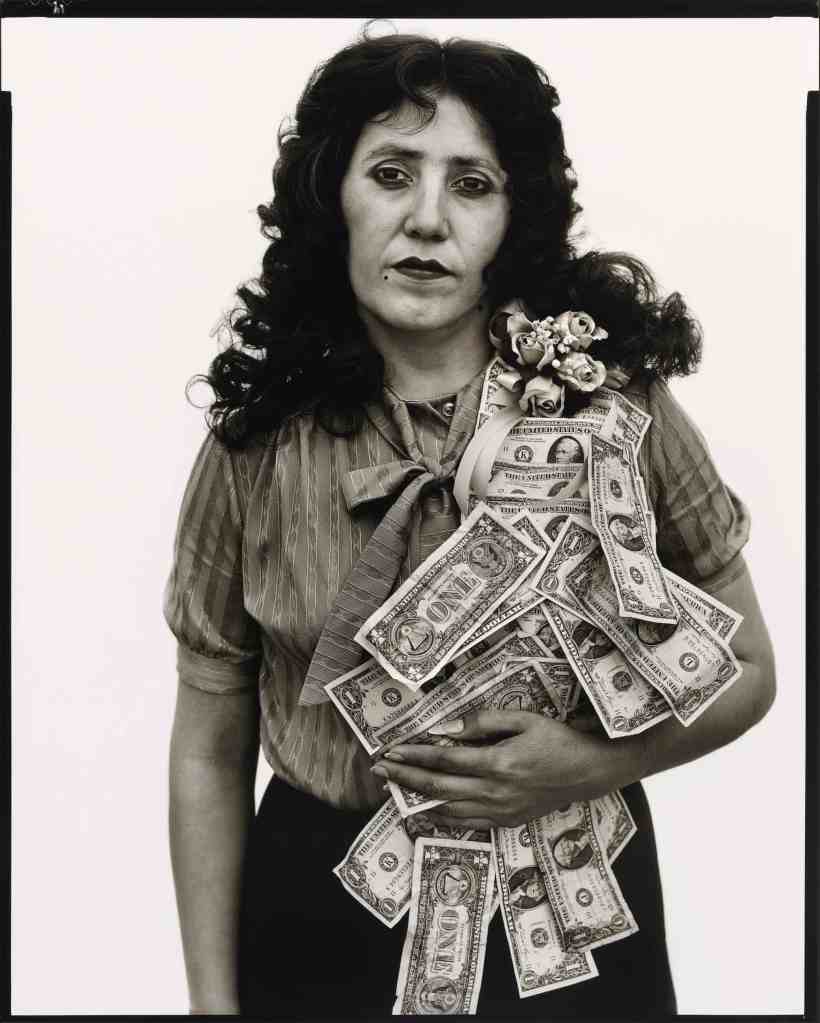
In 1979 Avedon began photographing the “marginal and dispossessed citizens of the West”, those in usually uncelebrated jobs. Bolton examines how Avedon “refashions this class” and how art is used in public relations.
Avedon decontextualized his subjects in front of a shadowed studio backdrop, reducing the 3D effect and exaggerated it further with post photographic processing. Bolton suggests this is to emphasis expected ugliness and sloppiness of such subjects and to effectively “render them mute”; Avedon says that a portrait is not a likeness and that his are truthful. Bolton goes so far as to say that Avedon “exploits members of a lower class for the edification of his own” (Bolton,1992:265), his view is that Avedon’s typologies are reduced to absurdity by formal devices and in particular repeating the subject’s “direct, uncomfortable, awkward, grim” look (Bolton, 199: 267).
(Richard Avedon: In the American West – in pictures, 2017)
Bolton goes on to suggest how the art press helped what he calls this constructivism, that it was a trail run for a different type of advertising and that the publicity that obsessively controlled it made it successful, that it became an “empty vessel” to promote the artist, the museum and the corporate sponsor.
Charlotte Oestervang’s portraits of people in Appalachia do give us some context as they are taken in their own surroundings; however I’m not sure that this shows them more respect, how do we know if she has manipulated their surroundings? They stare directly at the camera and are shot starkly rather like Avedon’s and still leave me uncomfortable.
(Foto, 2020)
My learning here in about the relevance of these works in relation to documentary practice is questions about:
Context
Control
Manipulation
stereotyping
Bias
Social responsibility
These are some of the same issues raised by Sander’s, Nelson and Penn’s work that I addressed below. I guess the important thing is to be aware of these issues and to take the approach that you think is socially and morally appropriate.
Read the information that accompanied August Sander’s exhibition People of the 20th Century at the San Francisco Museum of Modern Art. Write a 200-word reflective commentary on Sander’s seven-category system. Briefly discuss the implications of his classification system within the socio-cultural context of the time. Make connections with contemporary practice such as that of Zed Nelson, if appropriate.(Open College of the Arts, 2014:41)
Reflective commentary:
I saw 80 of Sander’s photographs from his same work “People of the 20th Century”, at an Exhibition at the National Museum Cardiff (13.12.19; it was great to see his work first hand, which I’d already studied when doing my Identity and place course.
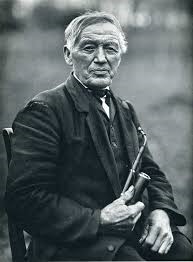
Sandler made posed portraits of ordinary people from across society, who he grouped to occupational, social or familial types; he then put these into seven archetypal categories: The farmer, The Skilled tradesman, The Woman, Classes and Professions, The Artists, The City and The Last People (the elderly and disabled).
These images were taken by August Sanders in the early 20th century and published in 1929 as Antlitz der Zeit (Face of Our Time). They have been put online by various galleries or on Pin interest and are used here in an educational context only.
Walter Benjamin in his “A short history of photography” suggested that people use Sander’s work to increase “physiognomic awareness” in what he described as dangerous times (Jeffery, 1981:132.) The author Alfred Doblin said the work had evidence of social tensions in classes and generations (Jeffery, 1981: 133), calling Sandler a realist. Jeffery suggests that there was some subversiveness about the work, as it is a history of Germany in transition, and maybe that is what I caused the Nazi authorities to disapprove of his categorisation and stop his work. Now, and possibly more so in the wake of the “Black lives matter” campaign and focus on discrimination, this scientific objectivity, including the separating of women would be seen disapprovingly, I think.
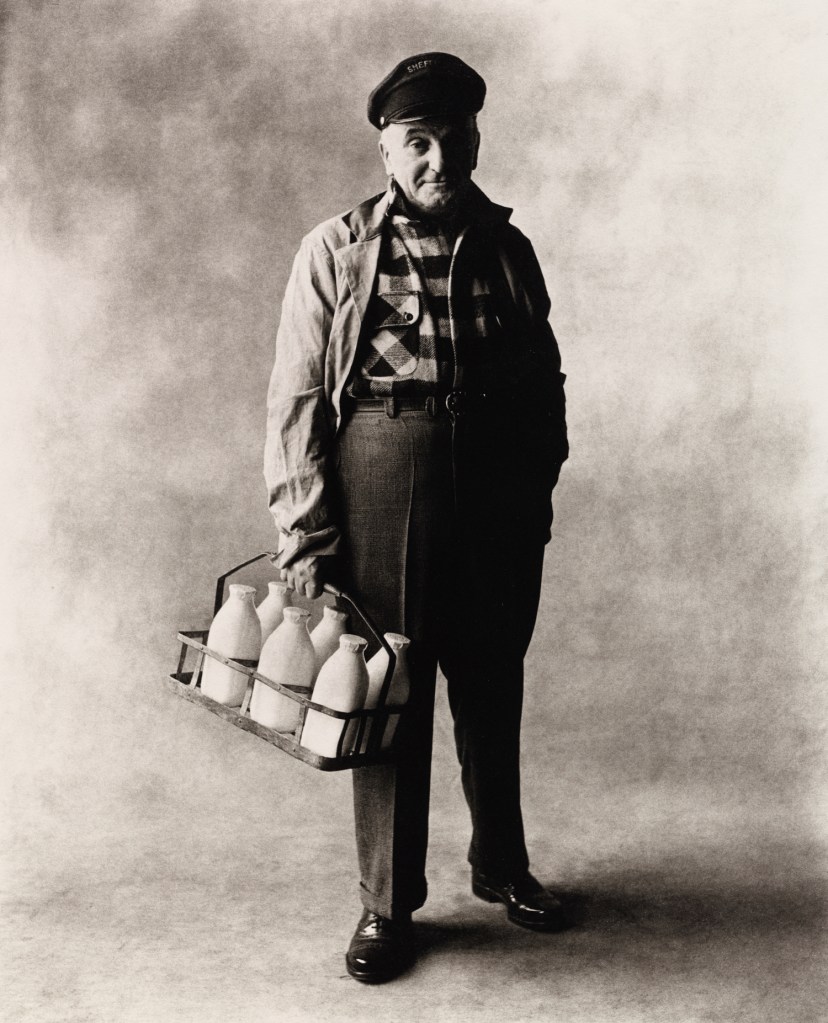
It is suggested by the OCA, that Zed Nelson’s Disappearing Britain and Small Trades by Irving Penn have some connections to Sander’s work. Certainly, Small Trades does document common occupations and in a straightforward manner, but these are not across society as Sanders did.
Milkman 1951 Pompier Paris 1950 (fireman) (The Irving Penn Foundation, 2020)
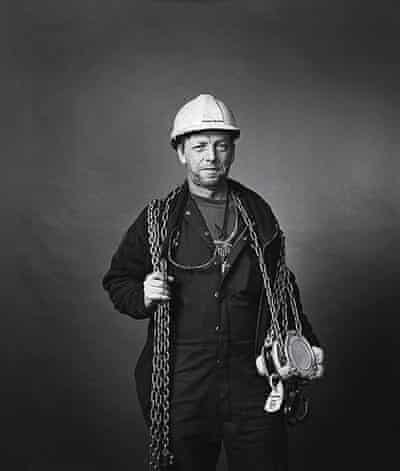
Nelson focuses on dying trades presenting them as art photography; his subjects usually stare into the camera proudly as do Penn’s. They have relevant props as Sanders portraits often did.
(Morrison, 2011)
Although contemporary with “Arty” lighting a sense of nostalgia pervades both of these works; they are both preserving the past rather than cataloguing the now as Sander did.
These photographers had different motives for photographing in what on the surface seems like a similar way.


























 Photography 2: Documentary