David Campbell- Narrative, Power and responsibility (2010)
He talked about the theory and concepts behind storytelling and narrative:
The point of narrative is to relay information.
Narrative is about making sense of something
Events have their meanings formed by the process of narration – the event is not what happens but what is narrated.
Narrative is about the relationship of story to an event, place or person which the photographer makes by providing a connection.
Context is important to narrative as mediation and representation- The event is not what happens but what is narrated.
There are limits to the narrative that can be given to certain events as narrative is based on a series of events where some things are included and somethings are not; the narrator will have a perspective and the narrative will never be complete.
Be aware of these limits and reflect on these
He commented that news happens in a day and is reported as a discrete event but is often not linked to context.
Traditional forms of narrative:
Time: Linear, or non-linear that breaks up time in certain ways
Characters/personification: who drive the story forwards
Connected events & drama
Space: Location
Causality: Accounts about how things came about
In narrative there will be moments of: Exposition – where things ae revealed or made clear
Conflict – climax or resolution
Campbell believes the most important thing in narrative is the relationship between characters and the context, how they reveal the story.
ASK YOURSELF, WHAT IS THE STORY YOU WANT TO TELL?
Why that place, location, time? What is the issue that motivates you? What are the characters? What is the context?
On power and responsibility and an image’s capacity for change and effect on the world:
Campbell suggests the more you can attend to context the more chance there is of change.
The amount of research that goes into a story will maximise the outcomes and prospect for change
My thoughts:
Any ideas of objectivity in documentary are false.
It was interesting that he mentions Marcus Bleasdale whose work I researched recently as a photographer whose work actually instigated change
I should follow up by researching Tod PapaGeorge’s work that he uses as an example.
This research came just after I began test shooting for assignment 3 focusing on the narrative of a small local car park. I was initially influenced by the work of Simon Roberts, in particular where he surveys scenes from elevated positions, Anna Fox’s focus on Englishness and the work of street photographers Peter Dench, Matt Stuart and Paul Rees.
I looked for other photographers and work to inspire me when this wasn’t working for me, and I realised I had strayed from my original idea of focusing on the car park rather than the people – It was then that I researched wider as below, and found the following photographer’s work:
Martin Parr The last car parking space
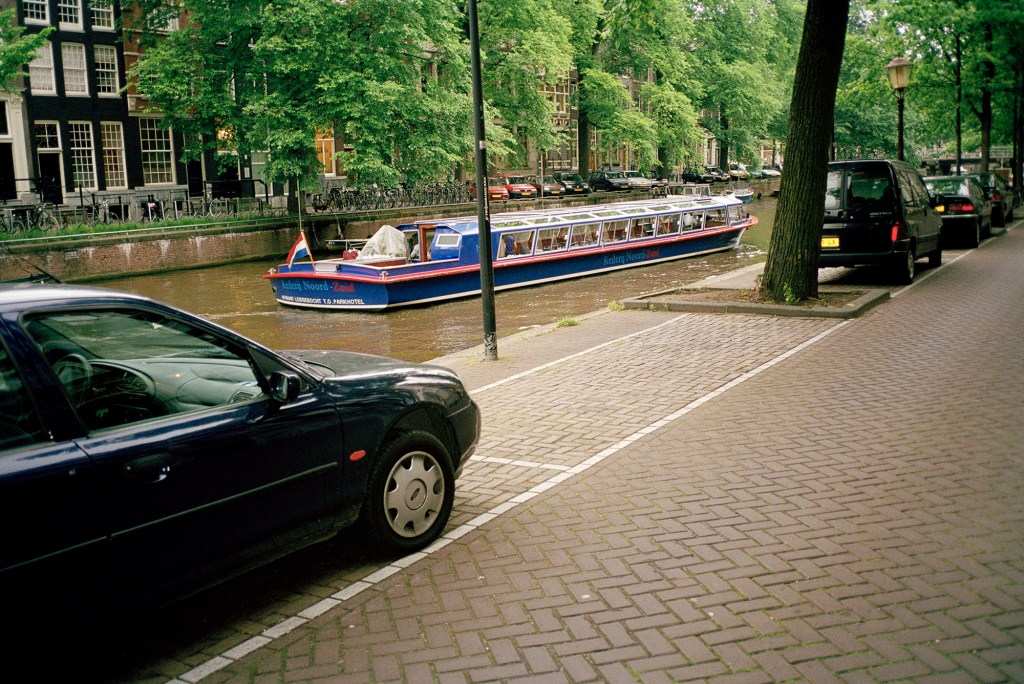
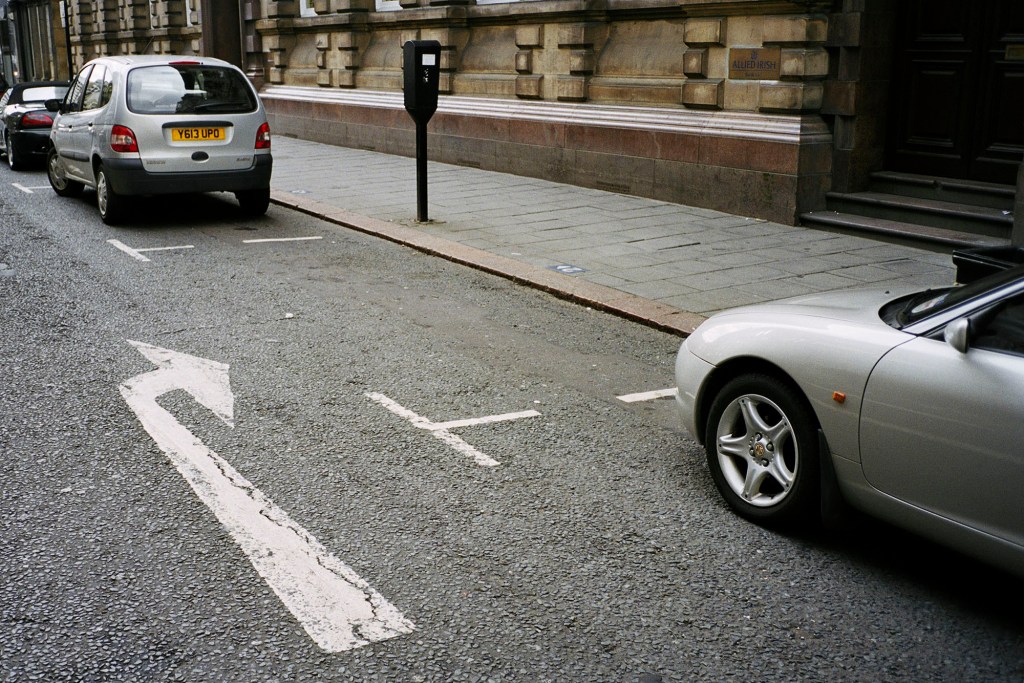
Between 2002 and 2007 Parr looked at the problem of where to park a car and photographed the last car parking space in 41 countries; the frustration of finding a car parking space is apparently a global unifier of the middle classes (photo-eye Bookstore, 2020). His usual use of high-saturation colour produces images that may at first glance may seem mundane, but given a context they are profound.
HOLLAND. Amsterdam. From ‘Parking Spaces’. 2002.
TURKEY. Istanbul. From ‘Parking Spaces’. 2002.
GB. England. Newcastle. From ‘Parking Spaces’. 2002.
(A Mini Tour of World Parking with Photographs from Martin Parr (2020)
(VIKA, 2020)
I particularly like his design concept where the book is presented as a wedding album, as something precious, just like a last parking space; this is genius. It points me towards more creative considerations of how to present m work.
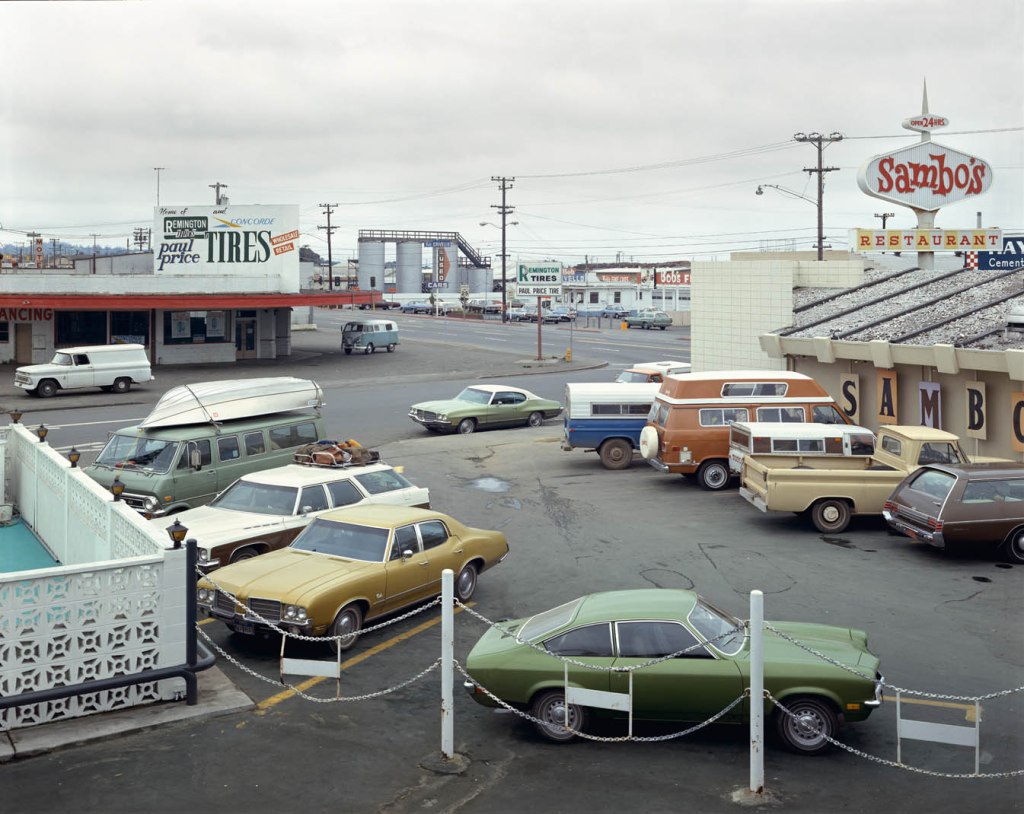
This book of 61 photographs of 1970s America Uncommon Places (1982) included images of parking lots. He was at the forefront of using colour when many thought it vulgar.
Bengal, R. (2020) Edward Clay, D. (2018)
These images work much better in colour than they would in black and white, the colour adds a sureality and increases the already sharp detail I think. Shore describes how his then new large format camera made him work differently, with longer preparation time, allowing him to process large amounts of information which “condenses into an incredibly saturated and detailed image” (Editorial @ ASX, 2020); his work does have many sites of emphasis in each image, which takes time for viewers to unpack. Vogue described this as a time of seeing things in a new way (Bengal, 2020) in fact Shore described the work himself as “an autobiography of seeing” “the capture and projection of the delights of seeing” (Editorial @ ASX, 2020), which he transforms into fine art.
Bruce Gilden- People with masks grocery shopping during the Coronvirus Pandemic (2020)
Gilden has photographed people crossing parking lots during Covid 19. It was interesting to read how his work here changed from his usually candid style to him slightly directing subjects; particularly that he feels that subjects accept being photographed more so when wearing a mask and yet with that aspect missing it is harder for him to make a good picture, “you always need to find a detail that’s strong in any picture” (What Bruce Gilden Learnt Photographing in Grocery Store Parking Lots During COVID-19, 2020)
USA. Hudson Valley, NY. 2020. People with masks grocery shopping during the Coronavirus Pandemic.
USA. Hudson Valley, New York. April 27, 2020. Shawn with a mask grocery shopping during the Coronavirus Pandemic.
USA. Hudson Valley, NY. 2020. People with masks grocery shopping during the Coronavirus Pandemic.
(What Bruce Gilden Learnt Photographing in Grocery Store Parking Lots During COVID-19, 2020)
He is know for getting up close to his subjects but of course he couldn’t do this quite so much in this work. I admire his forceful photography, but it is definitely not my style.
Ed Ruscha -Thirtyfour Parking Lots in Los Angeles 1967
This is aerial views of parking lots in black and white but not relevant o my current work
Chuck Anderson – Places you can’t imagine
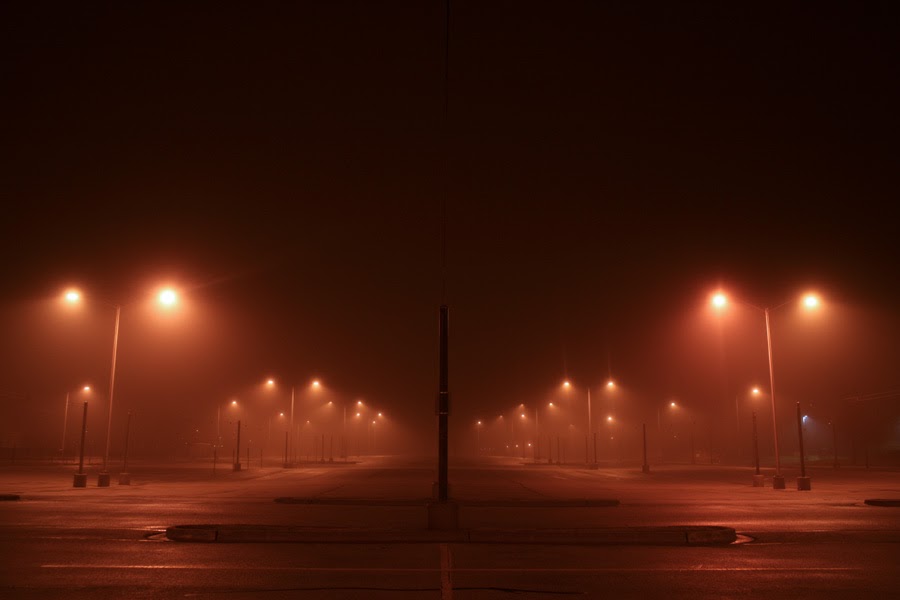
In my search for photographic work based in car parks I came across this work. Anderson is a multi media artist who here has digitally manipulated this image with tungsten streetlights often with creating rainbow splashes of colour and light in an empty parking lot. Again not relevant to my current project.
(How One Parking Lot Photograph Conquered The Internet, 2020)
This concluded my research into parking lots as I realised I should look beyond the subject matter to my concept.
Research Continued with a suggestion from a peer:
Jack Latham – parliament of Owls:
It was suggested I looked at this work by a per when I was discussing how my work is essentially about absence and presence. Latham’s work does explore what happens when there is a vacuum of context. It focuses on Bohemia Grove an elite men’s club, which is shrouded in secrecy, which Latham only gives brief glimpse to. It was interesting to read about and “The idea of a context vacuum is a fascinating one,” (Roberts, 2019) says Jack Latham, but the work isn’t relevant to my current project, though it make me think about how much context to provide, or not.
I think I’ve now disappeared down enough rabbit holes with this extra research; with the research that I’ve done in my course work as well as the many photographers and photography panel talks that I’ve covered and commented on over the period I’ve been developing my project I have more than enough background to complete my assignment 3.
My learning for this research:
Shore: “use many sites of emphasis in each image, which takes time for viewers to unpack”.
Gilden: “you always need to find a detail that’s strong in any picture”
Parr: How you can make the mundane appear very interesting.
The importance of a good concept, especially when you take this through to the presentation of a project.
Generally: The strength of saturated colours, to add to surreality and sharpness of detail.
POSTSCRIPT December 2020
Following this research I was more aware of the colour or lack of it in my subject/location and used this to communicate mood in assignment 3. I consciously tried both using many points of emphasis when shooting as well as looking for a detail that’s strong in each image, this wasn’t easy in a mundane subject. I asked myself the “Parr” question, how to make the mundane interesting?




 Photography 2: Documentary