I was lucky to be able to attend the lumix Festival virtually and captured 3 talks which were particularly thought provoking, this was the first one.
New Perspectives on Documentary Practices (virtual Lumix Festival 21.6.20)
HOW TO POSITION ONESELF IN A FRAGMENTED WORLD? A LIVE TALK: Iris Sikking in conversation with Lisa Barnard and Robert Knoth
The topic “New Perspectives on Documentary Practices” reflects on the changing role of journalistic photography in today’s world; current tendencies in visual-journalistic storytelling and the development of visual narrations that subvert the traditional viewing habits, expectations and stereotyping of classical documentary photographic narrative forms.
Lisa Barnard and Robert Knoth have broken away form the photojournalistic realm, finding their own visual approach in producing, conceptualising and presenting their projects. They discussed their choices for the presentation platforms, the value of in-depth research, and the tension between the hyper reality of journalism and the more abstract qualities of art and literature, which requires a self-reflexive documentary approach. The idea of fragmentation in society and representation is important in both their works.
ROBERT KNOTH
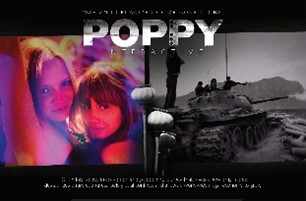
A Dutch photographer working with Antoinette de Jong produced Poppy-Trails of Afghanistan Heroin (2012) an exhibition video installation and book, then a few years later a web site:
- The story is about the effect of heroin rather than the drugs themselves; the framework behind the heroin trade, such as the war in Afghanistan which is largely funded by drugs trafficking, as are the Somalia, Kosovo, Pakistan, Ukraine, Albania wars.
- The Book has a non-linear timeline, with layered storytelling. It began as a show case for images of these trails, but this seemed dull, so they let go of traditional photography. They thought a visual urgency was needed for the work, and that it called for different types of photography, for instance different camera formats.
- The Installation has 4 different screens to bombard viewers as a replication of how people today consume news from several devices at a time; the work also moves around in a random way. It is “fragmentated”, they struggled with how to make the issues clear and present a cohesive narrative so created a broader narrative on the topic to show the layered complexity of social, economic or political issues and the impact on the lives of ordinary people.
Q: When working on new visual language, can you predict whether galleries/editors will accept it? He never thinks about if it will be liked, his only criteria is will it work?
Q: Do you have advice for emerging photographers working on personal projects?
- Collect your materials then get out into the field and see what works.
- Follow your instincts as a creative person
- Give yourself time to create your own narrative.
- Hang around and something will happen, improvise, sometimes being flexible leads to things that are better than what you planned; he often uses material he hadn’t planned to.
- There are always different ways of telling a story.
- You need to have a vehicle through which you can navigate, a person, narrator
Lisa Barnard – The canary and the hammer (2015)
This work was followed by a book and exhibition (2019) it is her personal journey through the world of gold, its value today and its history:
“Through a mix of image, text and archival material, Lisa Barnard provides an insight into the troubled history of gold and the complex ways it intersects with our global economy”.
The project began from the financial crisis 2008 which affected her personally. It’s essentially about whether photography can show what’s hidden. The investigative strategy, often used by photo journalists exposes a deep concern for the needs of the ordinary people, such as the “Pallaqueras” in Peru, who sort the ore on the surfaces for pieces containing gold, photographed for “The Canary and the Hammer”.


It moves in and out of the fictional and documentary narrative, because this is what happens; there are always multiple truths, hence many different styles of photography. The fragmented work signifies the impossibility of representation and getting to the truth as documentary photographers and for viewers; look at the fragments and present these, rather than shy away from a story that is easy to tell. The exhibition was intended to reveal the hidden aspects of gold in an unsettling and claustrophobic way. I was struck by the 1950s newsreel music in the video and the way you navigate it in many directions.
Barnard is less motivated by books, more by web docs, and says that work should be about the viewer. The need for funding forces you to think about your motives and intention (audience, where they will be viewing), she suggests you should be true to your concept and ideas but make them accessible (not too text heavy, too fragmented), as a visual artist the visuals have to come through. Show your work to outsiders to check it’s accessible. She also believes it’s important to give photos back to those you’ve taken.
Both these photographers realised that traditional journalism was not working for them and decided to follow a different approach; these stories are too big for papers and magazines, but galleries regard them as photojournalists.
My learning:
- Follow your instincts as a creative person.
- Collect your materials then get out into the field and see what works.
- Don’t make assumptions photograph everything otherwise you’ll miss the story that emerges – See laterally around the subject, improvise, being flexible may lead to things better than those planned.
- Give yourself time to create your own narrative.
- Work doesn’t have just one visual output and each work responds to the medium it’s presented with, this addresses the idea of fragmentation in society. There are always different ways of telling a story. look at the fragments and present these, rather than shy away from a story that is easy to tell
- Be true to your concept and ideas but make them accessible (not too text heavy or fragmented.
- In an exhibition you can tell well layered stories in non-linear ways.
- Web docs or interactive web sites are more flexible than books, as once books are done they’re done; also they make things accessible to you that is difficult to do in a book and are an important addition to the cannon of photography.
- As a visual artist the visuals must come through.
References:
Knoth, R. and de Jong, A. (2020) Robert Knoth and Antoinette De Jong. At: https://www.knothdejong.com (Accessed 24/06/2020).
New Perspectives on Documentary Practices | Lumix Festival für jungen Bildjournalismus (2020) At: https://lumix-festival.de/en/themen/neue-perspektiven-des-dokumentarischen/ (Accessed 24/06/2020).
News : Lisa Barnard (2020) At: http://lisabarnard.co.uk/news/ (Accessed 24/06/2020).
POPPY Interactive – Submarine Channel (2020) At: https://submarinechannel.com/poppy-interactive-documentary/ (Accessed 24/06/2020).
Warner, M. (2019) Lisa Barnard’s investigation into the troubled history of gold. At: https://www.bjp-online.com/2019/08/the-canary-and-the-hammer/ (Accessed 24/6/2020).
 Photography 2: Documentary