Research point: Surrealist elements in colour documentary
Paul Reas
Reas is one of the pioneering generation of social documentary photographers like Paul Graham, Martin Parr and Anna Fox, who depicted and critiqued British class and culture in the 1980s and 90s in colour. Reas’s tutor was Martin Parr who saw that he had the ability to go beyond literal photography to show more “ambiguous, illusory drama from the everyday narrative unfolding in the room” (Smyth,2018). His work was popular with picture editors and advertisers,
Like Peter Dench Reas was very much influenced by his working class background. Reas says “ “as a photographer, although you’re photographing other things, actually you’re only photographing your own life and your own experience” (Smyth,2018), because that’s where your interests lie.
His book I Can Help (1988) helped to establish him as one of the new style British documentarists, showing people’s real lives in an edgy way. This was his first project in colour which focused on the rise of consumer spending and new shopping malls, on the edges of cities. – the new cathedrals of consumption.
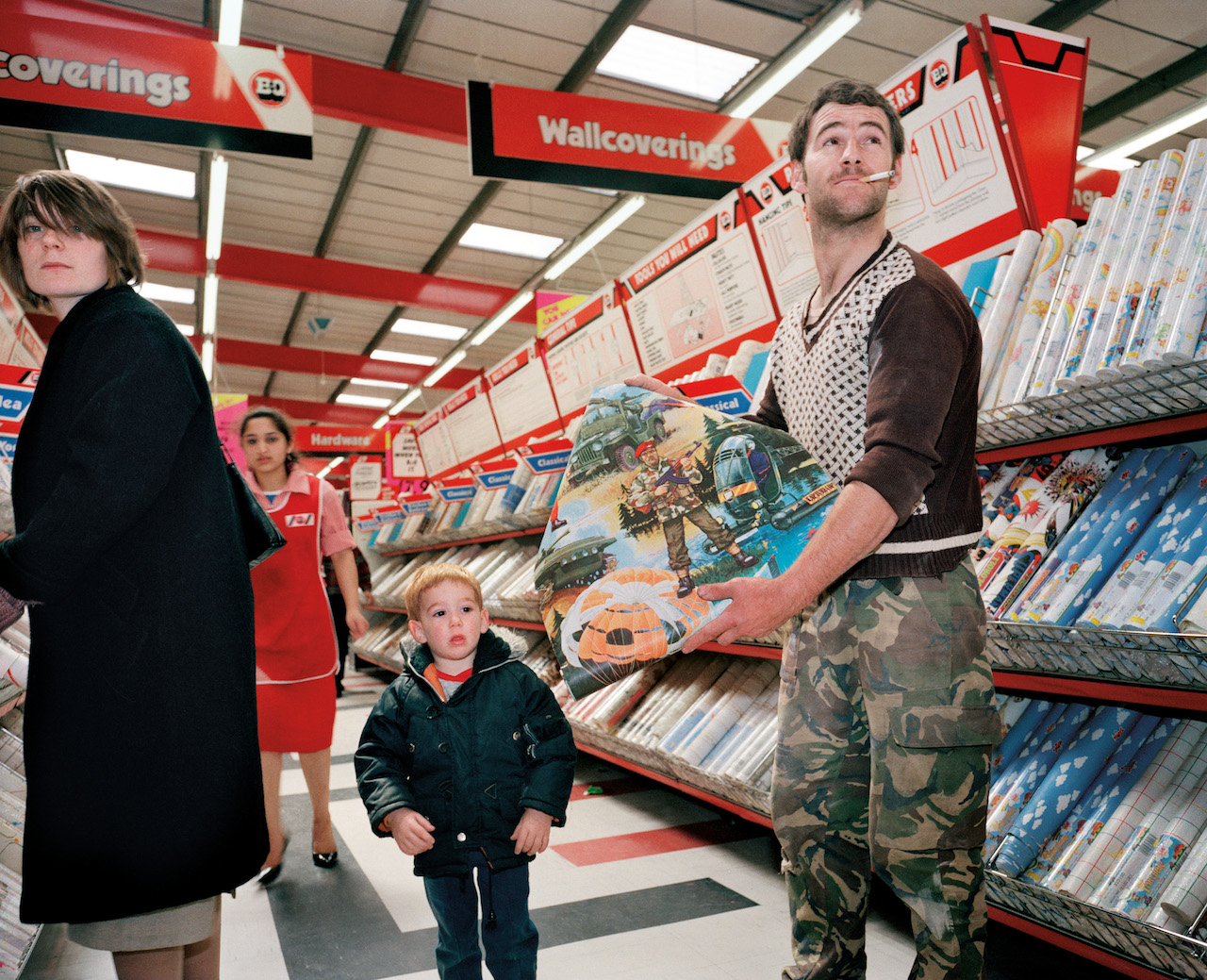
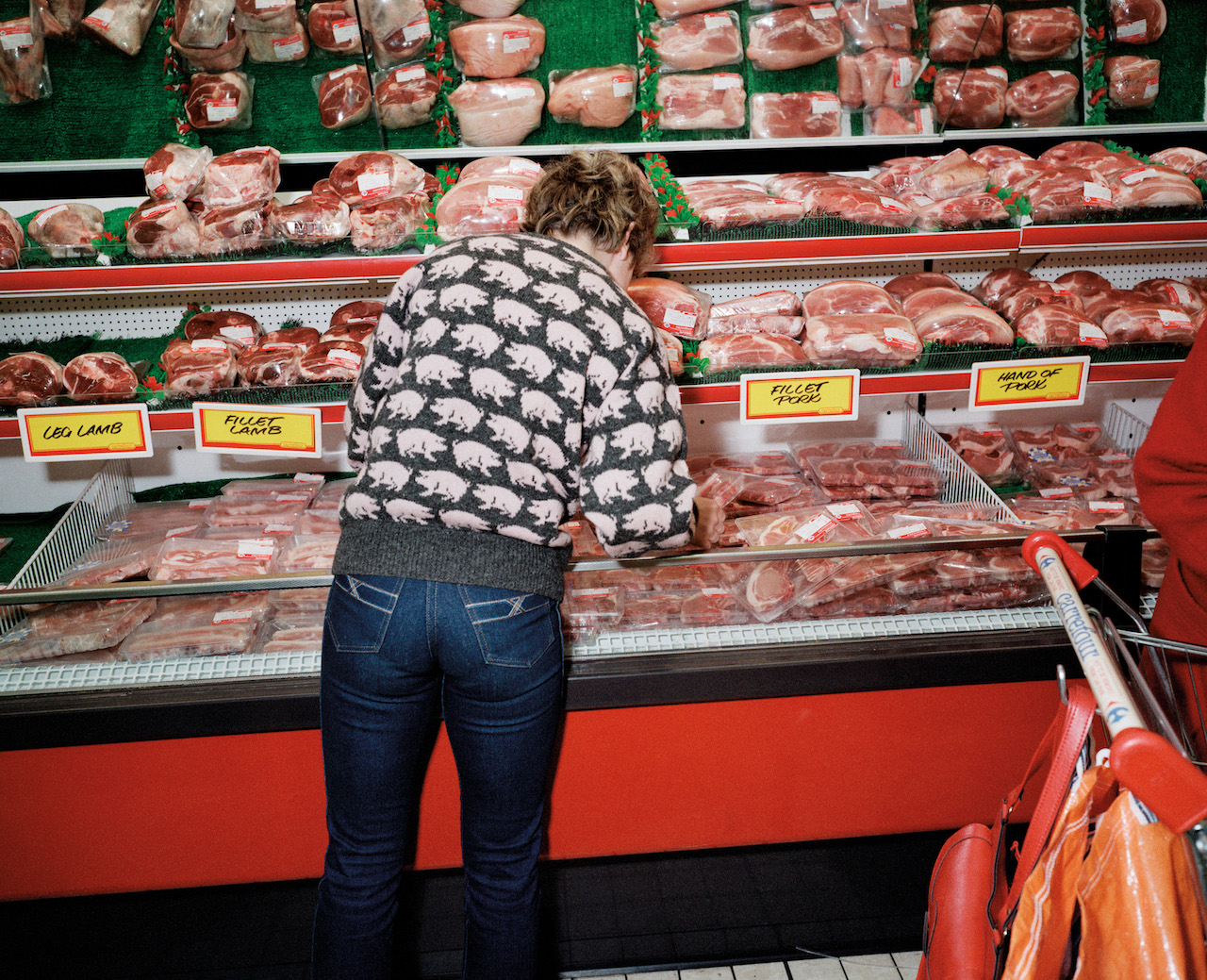

From the series I Can Help © Paul Reas (1984)
Here he used his sharp observation and humour. He was critised as mocking people in his work, as with many others using colour photography in the 1980s, and admits that they were very consciously using irony and humour and satire, however he didn’t intend to mock, “I was just reflecting the circumstances people found themselves in, in a way that was sometimes a bit unpalatable” (Smythe, 2018).
Whilst researching him I came across a podcast Ffoton Interviews hosted by David Hurn wich gave me further insights into his work. He greatly respects those who research their subject fully before photographing. They discussed this image that was pivatal to Reas:
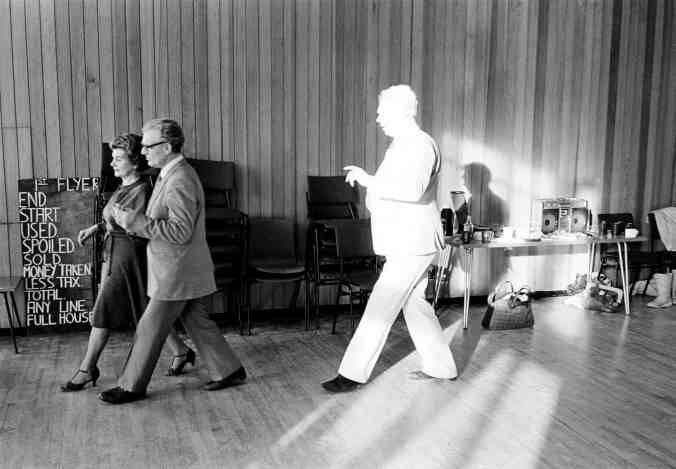
It was interesting to hear that he didn’t recognise its interest value at the time he took it. They agreed that you should move forward on pivotal moments immediately; Hurn added that tomorrow is never the same. .Reas remembers the day Parr picked the image out and he realised how “transforming” photography could be, photographing the real, but in some way occupying the space in a different way. Parr encouraged him to look at Winogrand, Freidlander, and Tony Ray Jones,
This is when his work stepped away from the different classes of photograph essays that David Hurn mentions: single pictures/portraits, relationships, those that establish the environment, to those that aspire to transform seeing. I love the way Reas describes the act photography as the conscious ordering of information, putting a rectangle or a square around the world in which we live, then managing the information that is contained in it and trying to choreograph it in some way that makes sense – essentially photography is about conveying information. Reas went on to say that he thinks the most effective photographers withhold information, provide ambiguity, and that what they don’t show in a situation is more important than they show. He also describes this a photographs that asks lost of questions but gives very few answers.
A theme that ran throughout this interview was his lack of confidence, which is one of the things that he says led him to photography as he can hide behind the camera.
The photographers he says that he most respects ae, Don McCullin Eugene Smith, Winogrand, Friedlander, Tony Ray Jones, Martin Parr, Taryn Simon (for her intellectual rigour).
My learning:
- Sharp observation is key.
- Subtle ambiguities can be magnified by perspective and even more so colour I think.
- I am learning where what I call irreverence comes from a photographer’s background as well as their intentions.
- Photography is transformative, it transforms seeing.
- What is in the frame is as important as what is outside of it, this is not new to me but a reminder.
- Research Tony Ray Jones (especially his Wimbledon man on steps photo Reas mentioned) and Taryn Simon.
- When you have a pivotal moment move on them immediately.
- Think of photo essays as classes of: single pictures/portraits, relationships, those that establish the environment, and those that aspire to transform seeing.
- Think of the act photography as consciously the ordering of information, putting a rectangle or a square around the world in which we live, then managing the information that is contained in it and trying to choreograph it in some way that makes sense – essentially photography is about conveying information.
- It’s very effective to withhold information, provide ambiguity, and what’s not shown in a situation is more important than what’s shown.
- Aim for photographs that ask lots of questions but gives few answers.
- To be a photographer you’ve got to be somewhere, you must be out and about. – tomorrow is never the same.
References:
The Guardian (2018) Coal, class and consumerism: Paul Reas’s Britain – in pictures (2018) In: The Guardian 04/12/2018 At: http://www.theguardian.com/artanddesign/gallery/2018/dec/04/paul-reas-britain-in-pictures (Accessed 14/09/2020).
Smyth, D. (2018) Paul Reas’ Fables of Faubus. At: https://www.bjp-online.com/2018/11/reas-faubus/ (Accessed 14/09/2020).
FfotonWales (2019) Paul Reas — ffoton. At: https://www.ffoton.wales/interviews/2019/4/paul-reas (Accessed 16/09/2020).
Matt Stuart
Is a British street photographer. He says he has a fascination with people and the way they live their lives and likes to make an honest, believable picture. He shoots his own personal work everyday rather than taking assignments. There is an obvious attraction of colour to him, he says that this is the most important thing to him:
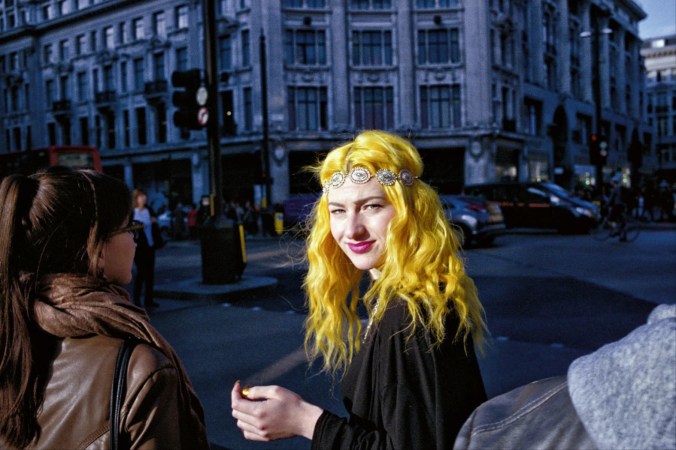
 (Lunn, 2016)
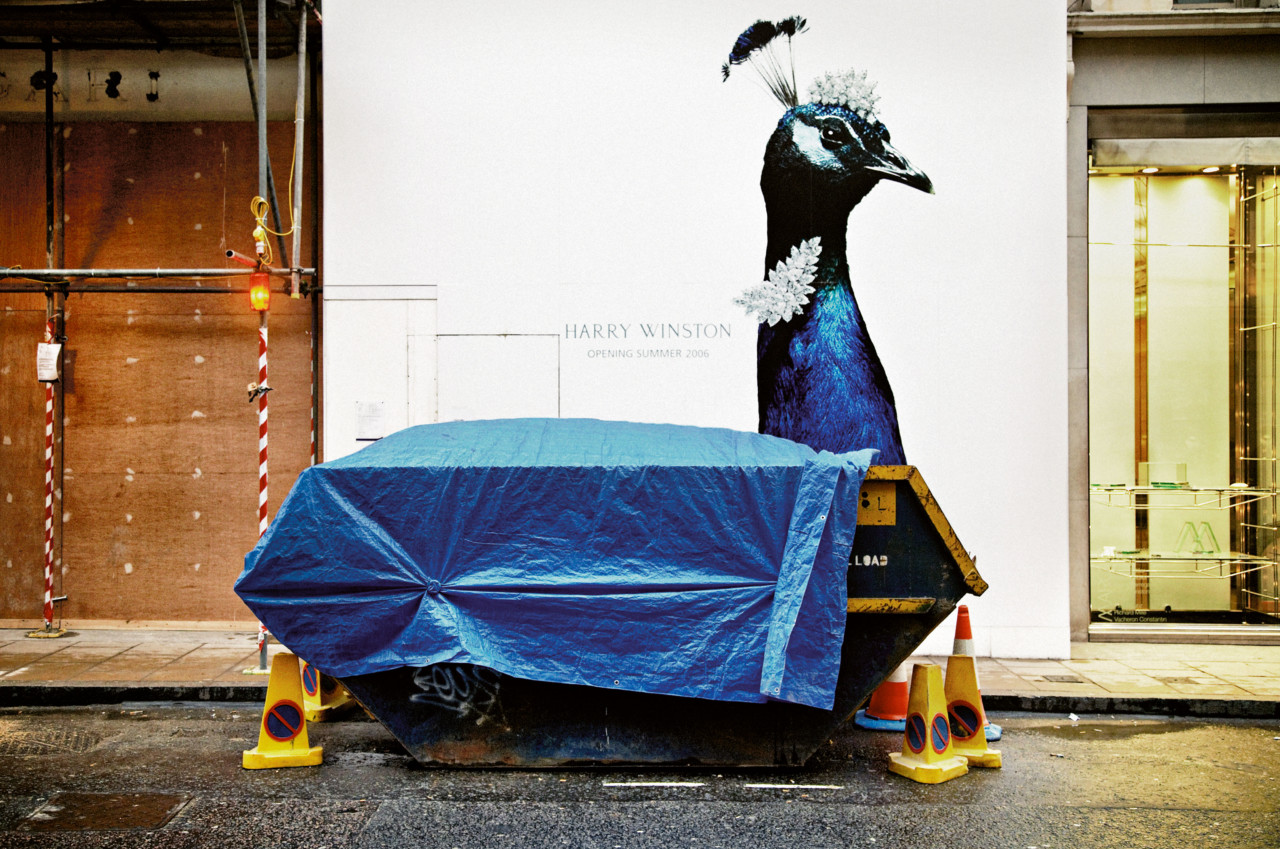
Stuart says in the photo above “I took that picture because there was a lot of colour that was coming at me” (Lunn, 2016). He explains that often something pops out at you, and when you look closer something else is going on.
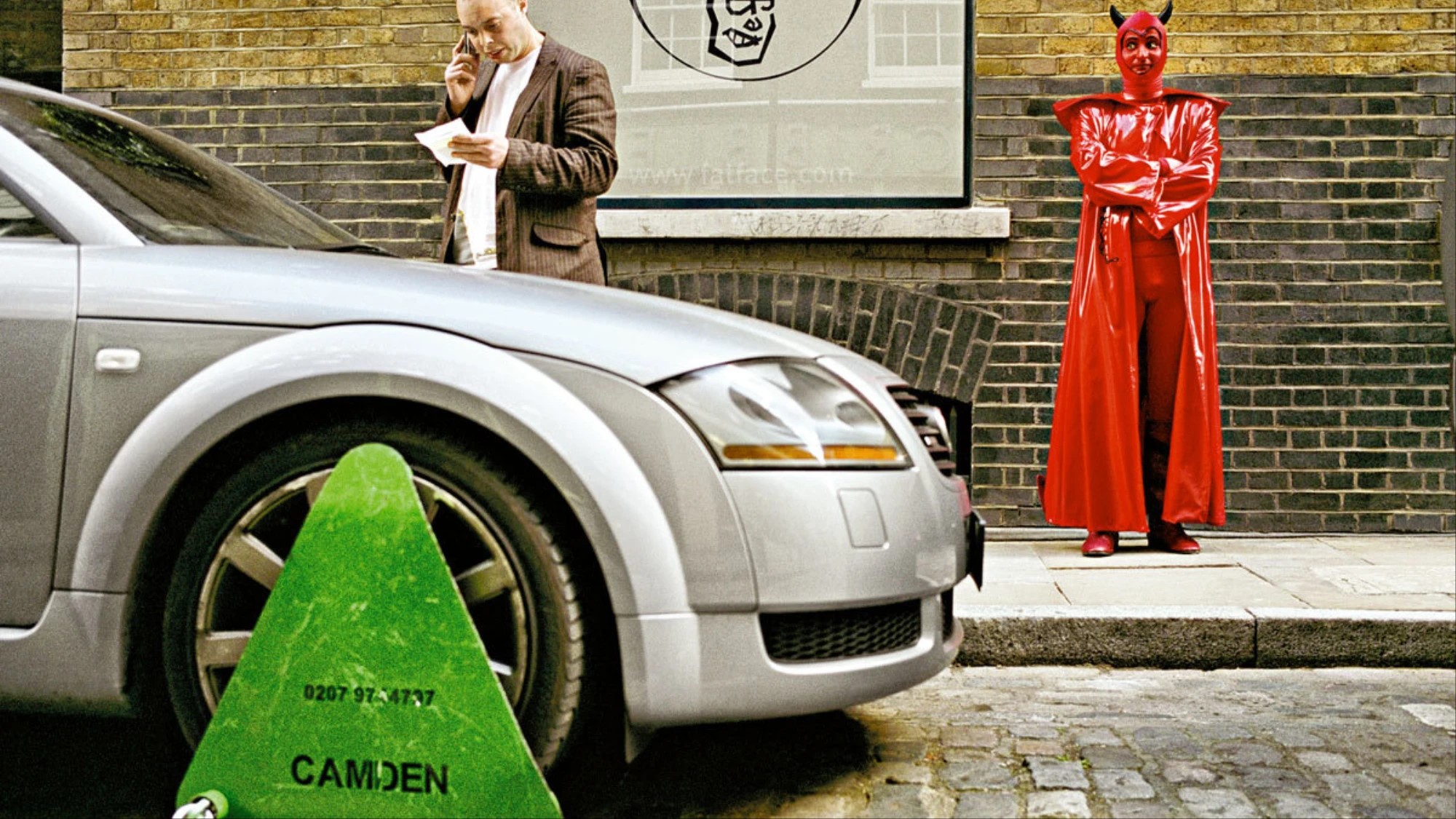
His pictures are often humourous:
(Lunn, 2016) (All That Life Can Afford, 2020)
It is obvious that he looks very closely at things and sees things that might easily be missed; this helps the viewer to slow down and appreciate what’s in front of us.

GB. England. London. 2008. Hyde Park. 
GB. England. London. 2013.
(All That Life Can Afford, 2020)
I was particularly interested in the advice he gives by describing how he photographs strangers. Stuart says he has learned to be quick and discreet and If ever stopped he tries to be polite and move on as quickly as possible (All That Life Can Afford, 2020); he also advices, smile!
He believes that everything is fair game to photograph anything as long as you don’t interfere with it (Lunn, 2016). Stuart applies some of the lessons that he learnt when skateboarding to street photography: keep trying, have fun, keep a positive attitude, look hard, forget about time and get into the zone, and even anticipate what might happen.
Stuart talks of the 3 F’s in street photography: Fish for photos (wait a long time), follow (take a short time following something), fuck (capture it right now). He also says you’ve got to give yourself time and keep a camera with you at all times.
My Learning:
- Be confident when shooting strangers, smile and move on – easier said than done
- When building a book build a narrative, even single images such as street photography you can use various criteria, weather, light, colour…
- A book title should intrigue and beckon people to pick up the book.
References:
All That Life Can Afford (2020) At: https://www.magnumphotos.com/events/event/matt-stuart-life-afford/ (Accessed 14/09/2020).
Lunn, O. (2016) shooting the streets of london with magnum photographer matt stuart. At: https://i-d.vice.com/en_uk/article/kz84ge/shooting-the-streets-of-london-with-magnum-photographer-matt-stuart (Accessed 15/09/2020).
Smith, B. (2015) A Small Voice Podcast – 017 – Matt Stuart. At: https://bensmithphoto.com/asmallvoice/matt-stuart (Accessed 15/09/2020).
Anna Fox
Is another of the 1980s 90s colour documentary photographers who lists as one of her teachers Martin Parr, especially for lighting, flash and colour. I was lucky to have been on an OCA study day with her earlier this year, see my notes here: https://nkssite5.photo.blog/category/learning-log-research-and-reflection/photographer-talks/anna-fox-at-the-tvg-oca-meeting-16-5-20/
I have picked out some things that are pertinent to here surrealist colour photography.
Her first body of work Basingstoke 1985/86 was a story of Thatcher’s Britain in which . Here she uses colour, flash and humour like Parr. These images with texts which are captions taken from publicity material, were also influenced by her love of comedy and literature. Workstations the subject of Office life in London, again in Thatcher’s Britain, used images and texts, parodying the style of magazine journalism, giving a satirical view of contemporary Southern England.


Fox’s work Resort 1 and 2 made at Butlins (Anna Fox,2020) shows similar use of colour whist she depicts the theatrical nature of the place.


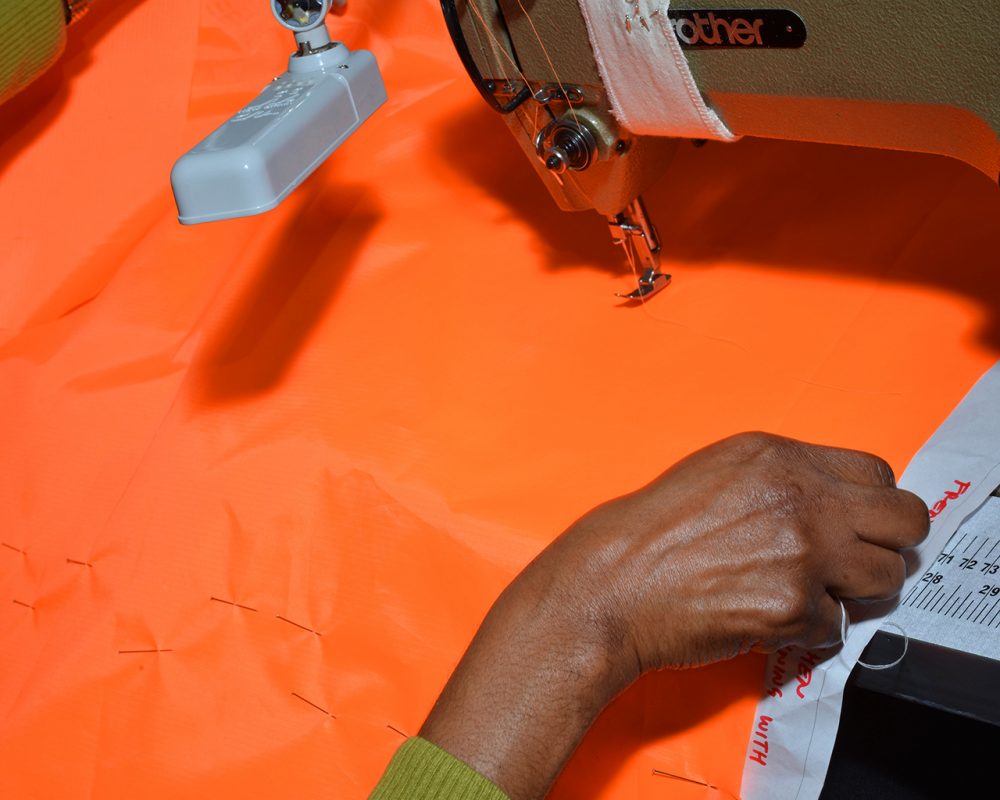
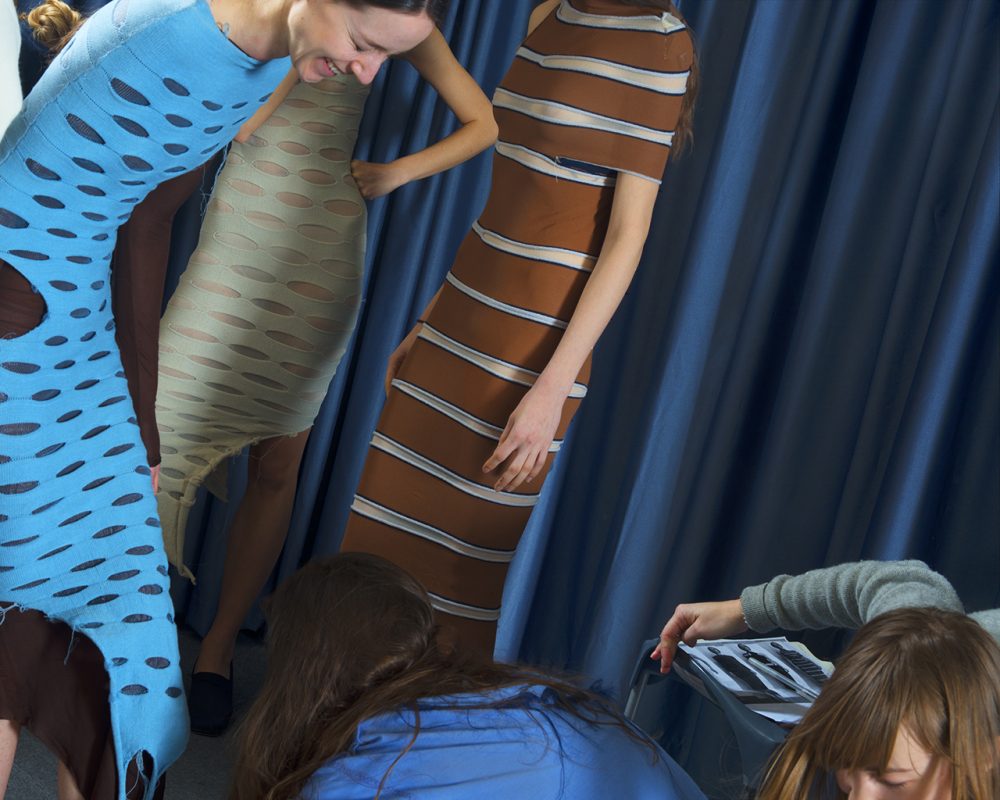
Her more recent work Blink, which documents The final MA student collections at St Martins, captures in colour the frenetic build up to their show; Fox uses abstract snippets of the work going on framing moments in unorthodox ways.
My Learning: Consider using publicity material for my assignment 3 book
Reference: Anna Fox (2020) At (Anna Fox (2020) At: https://annafox.co.uk/ (Accessed 29/10/2020). Accessed 15/9/2020).
Next Post: https://nkssite5.photo.blog/category/research/a3-research/peter-dench/
 Photography 2: Documentary