I have been involved in this group since I started Documentary, there are usually 6-8 of us in the discussion (1 member is now on level 3) and we have formed quite a close group. 2 more members have now submitted for assignment but we are going to stay as a group and it is already useful having conversations with peers who are working at level 3 as well as peers outside of the UK.
I normally post these sessions on my blog individually but thought I would post them in one chunk here as the form a useful digest of my learning progress whilst working n part 3.
Documentary fact and fiction hangout 2.7.20
We had some useful discussions on:
Putting images to music (Jack)
Personal voice
Blurb books versa lightroom for book making (Bob)
The recent Documentary Reconsidered zoom talk which some of us watched
I shared the scars that I’m intending to use for hash tags in assignment 2, they were found to be very lifelike which is good.
Documentary fact and fiction hangout 13.8.20
Bob shared his assignment 3 work based around his cat with dementia and we gave him feedback.
We spent much time discussing digital assessment. Jack particularly enjoyed curating his work for digital assessment and has subsequently built his own website (using Ben Smith from Small Voice podcasts). However Bob feels that printing your photographs is central to putting yourself into your work and its disappointing that we aren’t able to submit prints.
I should stay open to different approaches to exhibiting and curating work, especial for level 3.
I shared some initial thoughts that I’ve had on my assignment 3 work.
OCA Documentary photography hangout 24.9.20
I was booked on this hangout but my mother had been taken badly ill and consequently I’d not re-edited a series to show since my Thame Valley Meeting the previous week, so I was intending to just say hello and apologise and leave the hangout. In the event I stayed for the hangout, when I explained my position everyone was really supportive.
I had also just picked up the message from the OCA that my Tutor is no longer available, so I was in a bit of a spin, with that and all sorts of circumstances conspiring against me.
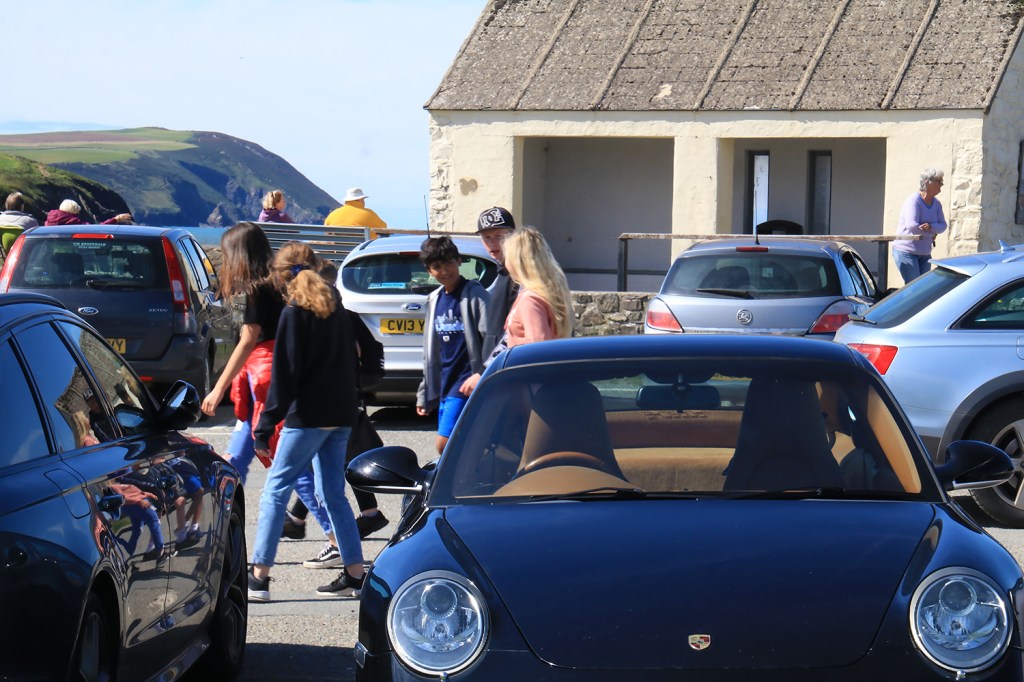
I talked about my intentions to return to photographing the carpark to exploit its mundaness, with the story being how it transitions from quiet, to busy, to quiet. Through this ideas came up such as places in vacuum (Jack Latham was suggested ) and those with no context and transience.
We also talked about possible text to put with the images, in particular incidents in carparks and what I’d been overhearing.
I’m going to follow up on a couple of works suggested: Jack Latham “Parilment of Owls” and Jan Svobada.
I’m also going to email to ask for a Tutor to submit to, and to contact Dan Robinson to ask for breathing space in view of circumstances should I need it.
OCA Documentary photography hangout 8.10.20
We talked a lot about level 3 work and one note I have made is possibly to link my assignment 5 to something that will share the work, like Instagram or even the village telegraph pole.
It was useful to talk about bookmaking; we discussed flipbooks, blurb books, and books made in lightroom, some feel the later are better quality than the pdf produced in draft for blurb.
I also reminded myself to look out the learning objectives and refer to these rather than the assessment criteria.
Since the last hangout I had returned to Pembrokeshire and had been able to photograph again for assignment 3.
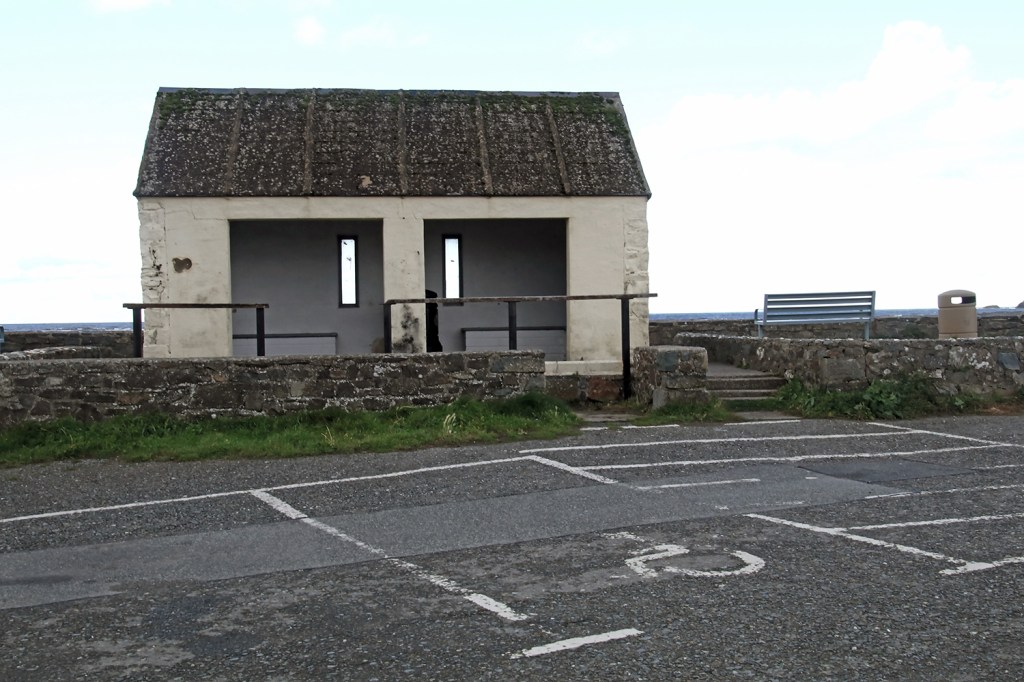
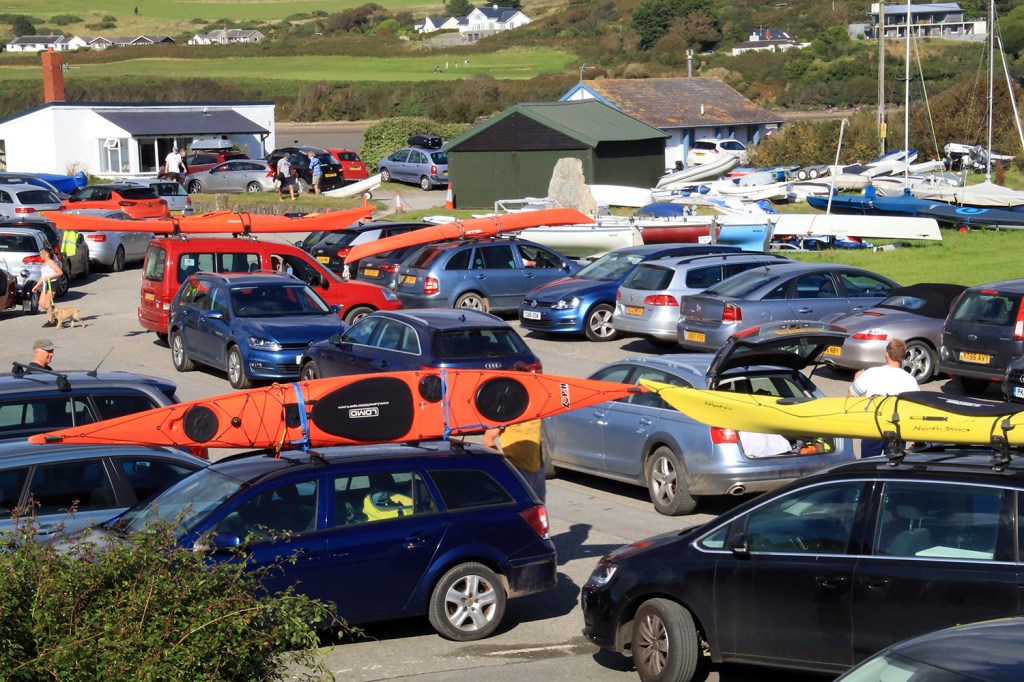
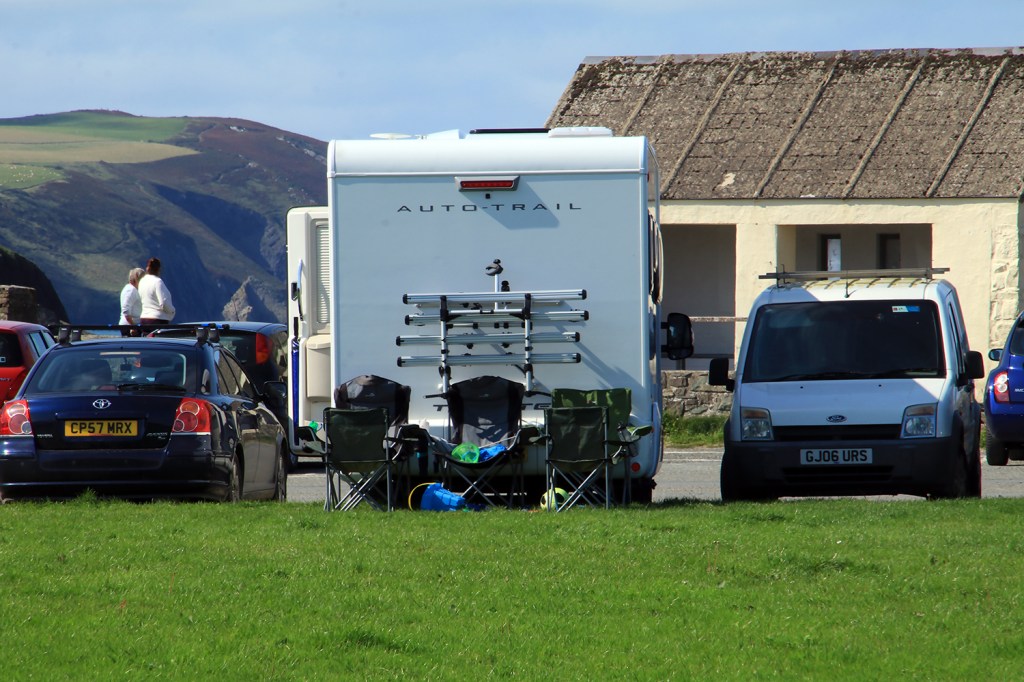
Following from the TVG meeting I introduced my reworked draft “Breathe in Breath out”. Since the TVG meeting I’d returned to my original idea of the car park as an entity to showcase the way the area goes from quite to busy to quiet; making the car park not the people my focus. I have also tried to contrast the flatness of the car park in bad weather as a contrast to the vibrancy of the height of the season shots.
I have also considered how to show that it is only one car park and have done this by including in most images the bus shelter to anchor the location; it now seems that this has become a monitor of the “breath in breathe out”.
Suggestions and questions:
Could I begin with the vibrant busy images and work down to the empty quiet images?
Do I need to have 10 images as briefs seem to be more flexible?
Consider exploiting the lines seen and no lines seen
Really focus on absence and presence
Actions following the meeting:
Rework again starting with the Kayak image, then review my contact sheets for other images.
Text wise I am still considering whether I should use statements from the press about lockdown or the local area a bit like Anna fox did in her Basingstoke work using press statements about the town.
One member who’d just started Documentary had taken photographs recently in Sicily and asked us to consider which assignment they would fit in; we did this however I wasn’t surprised that the tutor advice was to shoot images whilst working through the coursework. The course he’d been on in Italy was facilitated by Mimi Mollica and Martin Parr and he shared their thoughts that there no problem with mixing black and white or frame sizes within one series.
I was glad that Jayne Taylor re-emphasised that these sessions should be about uncompleted, unresolved work, when work is still in the developmental stage; as we can then be helped to reflect on our work and get support with the direction that we’ll go in.
I shared my work for assignment 3 which is certainly still in the developmental stage. I explained that I began the project with one idea but am now being tempted by another. My original idea was to use the car park as a barometer of the business of a local area; but as I’ve been shooting I’ve strayed into the concept of tourists in a car park, what they’re doing and why they’re there. I have probably been swayed by my research into photographers such as Simon Roberts, especially “We English” where he looks at the relationship between a place, leisure and identity. I have also been influenced by the street photography of Peter Dench, Matt Stuart and Paul Reas. So when editing to share with this group I chose the set below:
I explained that my shooting wasn’t complete and I was waiting to get shots of a quieter carpark and a rainy or flooded car park. I asked my peers what they thought the images were about and was asked:
Is it about the car park as a platform for activities? What brings people to the car park?
Is it about conflict in their activities?
Is it about the mundane-ness of the car park?
They asked me, what is it I’m most interested in saying? What is my focal point? Having thought about it, I am most interested in the car park as a barometer and manifestation of how busy the location is as the tourist season comes and goes “Breathe in breath out”, because this is a point of conflict locally, being “invaded” by tourists. On reflection I may have tried too hard to shoehorn closeups and images with strong colour having been influenced by the photographers such as Peter Dench, Paul Reas and Matt Stuart, when this was not my intended approach/subject.
So I will now to take my focus away from the people in the car park and back to the car park itself, and look for the mundane whilst expressing evidence of visitors in varied amounts.
I also shared my thoughts about using text with the images, possibly taken from publicity material and/or coronavirus text. Though I could combine welcoming publicity text with anti-second home text, I am going to try to avoid using anti-second home text as I hope to use this in assignment 5.
Actions:
Review contact sheets
Consider mundane aspects of the car park, possibly close ups of things like the potholes
Exploit the flatness of coming the bad weather for shots of an emptier car park as a contrast to the vibrancy of the height of the season shots.
Return to a subject of Breathe in breathe out and make the car park not the people my subject – focus on the mundane but different perspectives eg pothole, and quiet to busy.
Remember to think about what’s outside the frame.
Think about how to capture different perspectives use wide angle? Prime? Tripod in low light
Must blur out number plates
I received this feedback from a peer on the padlet after our meeting:
It was really interesting to talk through your work in progress. I certainly relate to your struggle with the germ of an idea and how best to shape it. I think bringing more contrasts in (e.g Image 1 for me has a strong contrast to Image 5) and experimenting with text might help. Your draft title is strong and I think will also give direction – breathing is both banal and unnoticed but essential! Good luck with the next iteration.
One other thing that arose at the meeting was assessment:
Students will be asked to present work that they think meets the learning outcomes specific to each course, so keep learning outcomes in mind
Work will now be seen by a second assessor as well as tutor at assessment
New OCA learn site, I must check out but consensus at the moment is that its not very good.
It’s all in the edit: Narrative and storytelling Tutor led 28.10.20
This is the last of a series of OCA tutor led talks which have been really useful.
The act of taking a picture is an act of editing, “I think photography is the art of editing” (Alec Sloth)
“in the end creativity isn’t just the things we chose to put in, it’s the things we chose to leave out” (Austin Kleon Show your work)
How to approach:
Leave time between shooting and editing
Don’t edit in camera – can make really bad choices
Live with projects in process, small prints, dummy books (play with the order of things) use issuu.com, book wright, apple pages then print to pdf, lightroom book tsb is alongside develop and print
You have to have a body of work to be able to edit
Plan:
Think what is the primary nature of the project? Subject matter or how to present?
Do you need to reshoot to fill a gap or change presentation to fit with images that you have?
Write about your decisions in your learning log as you produce.
Go with the flow: A writer of crime dramas shared she doesn’t know who is the victim when she starts
Narrative: Can be personal, scripted/constructed, linear/geographical/chronological, visual, or other
Do the research: Look at how other photographers work- Make notes when you look at work: Is there more than one narrative going on? Was it a planned structure or did it evolve or come from the editing process?
Story telling – to use text or not? Look at how other projects use text: Does the text adjunct? Are the images and text separate entities sat alongside each other
Functions of storytelling can be :
Within the work
About the work
About the production of the work
Watch photography discussions online listen to the narrative they use to discuss
Examples:
For most of it I have no words – Simon Norfolk.
Survivor– Harry Bordon. Photographs of survivors of the holocaust. Their story in their own words and biographies of those photographed
Gregory Crewdson article and video on An Eclipse of Moths
Hart Island– Melinda Hunt and Joel Sternfield – Andrea wrote about this project here and the significance of the mass graves footage in 2020.
If you do nothing else: • Stay open to new ideas, Keep exploring, Disappear down the rabbit holes …
Another Eye: Contemporary Women Photographers – Four corners project – Thursday, October 15, 2020 (Virtual)
Photographers Dragana Jurisic, Amak Mahmoodian and Eileen Perrier discussed their work and issues of identity, Britishness, exile and belonging as well as how their personal histories of migration and exile have influenced them. This talk runs alongside the exhibition ‘”Another Eye: Women Refugee Photographers in Britain after 19332″ (ANOTHER EYE: Women Refugee Photographers in Britain after 1933, 2020).
Dragana Jurisic – Visual artist who works with image, text and video
Yugoslavian, with Serb and creation parents, who moved to Ireland.
Learnt the power of photography over memory
Influenced by the writings of Rebecca West – Black Lamb and Grey Falcon. In her work “The lost country” she followed the ghost of this writer, who also experienced rejection, isolation, and was expressing her identity. This work freed her from needing a country or national identity.
Rejects being defined by nationally which is only an accident of birth
It is fascinating how she identified with a writer and followed her ghost for her work.
Amak Mahmoodian -Persian photographer who focuses on the effect of dreams on memory exile and photographs.
Her work Shenasnameh became known as a political statement, a “representation”, Photos and fingerprints of women in Iran where took photos of people she knew holding photos from archives, concealing their identities, thus was about women society and constructed identities. She used selected historical photographs as masks, asking her loved ones to hold the prints in front of them, framing her own kingdom and centring the sorrow of separation she feels for them because she lives and works three thousand miles away.
The images are surrounded by fragments of an imagined conversation – between Amak, and Princess Taj al-Saltanah, an Iranian princess who lived at the end of the 19th century. She found a mirror in al-Saltanah; these women find the opportunity to be vulnerable, sharing their individual experiences of family, distance, powerlessness, yearning, and hope.
A trailblazer for women’s rights in 19th century Iran, she defied her family and government and advocated for equality and democracy.
Mahmoodian is a curator and through the Ffotogallery touring exhibition Bi nam – Image and Identity in Iran she provided first European exposure for emergent Iranian artists and photographers, presenting work previously unseen outside Iran.
Has been forced into exile, but doesn’t think she’s lost her nationality
This work, though not relevant to me now, is very interesting; in particular her use of archive material alongside contemporary portraits. Her approach linking into a an imagined relationship with an Iranian Princess is unusual.
Eileen Perrier- Portrait artist, a Londoner of African descent whose work centers around identity Britishness and her roots.
Used her student loan to go to Ghana 1995/96 and using family photographs she revisited family there and developed this into portraits at home of her extended family.
Was taught by Anna Fox at Farnham
Recent commissions post degree: Afro hair and beauty 1998-2006, Grace 2000, her Africa remix work showed on the underground
When asked if nationality is negative how do you identify yourself? She answered “As human”.
These works focus on:
Imposed nationalities
Living with multiple identities
Women in societies breaking out of their national gender labels
Not being defined by your origins
Representations of borders
It was the bringing together of these artists and the discussions on how their work represents their feelings about identity, nationality, gender whilst also attempting to break out of these boundaries which I found thought provoking.
Interestingly they believe they should be assessed as artists free of these boundaries.
Photo London OCTOBER 2020Nikon School: At home with Ben Moore 8.10.20
This was the only talk that I picked from this virtual event.; I chose it as I enjoy shooting contemporary architecture and I thought I might pick up some tips.
Moore an experienced urban architecture photographer explained that architecture is usually a tight brief without room for self expression and that though he began like this, as his work developed he was able to photographed to his own brief where he tried to be unique in order to be noticed.
Moore suggests to elevate your photography:
Research
Explore
Create
Train your eye to see interesting imagery
Reshoot if you know there was better image in a location
Need to see growth and improvement in your photography
Important to keep people looking around an image
This was a disappointing session as I was hoping for more practical tips however it underlined for me don’ t hesitate to reshoot and to remember to present images that viewers will keep looking around.
Seeing Vs Looking What does it mean to be a photographer and other topics – Tutor led by Andrea Norrington 16.9.20
This topic has become of increasing interest to me particularly since I started level 2. Andrea shared a blog post from Grant Scott on the difference between looking and seeing:
“I believe that it is the photographer’s responsibility to define the difference between someone who looks and someone who see’s. Looking is relatively easy and therefore open to all, seeing is more difficult and requires the eye to be trained and regularly exercised.” (Scott,2020).
We discussed “Slow looking” and I shared my experiences with the photograher’s Gallery which I’ve already documented on my blog. Maria Gainza, a 43-year-old Argentinian art writer, whose writing is sometimes compared to John Berger also writes about slow looking; she writes about how we are never looking at just one thing: we are always looking at the relation between things and ourselves, “As Thoreau wrote, ‘It’s not what you look at that matters, it’s what you see’ (Haig, 2020)
In letters from Toven, Jansson the writer of Momins suggest how you should look slowly:
“ In a church say, don’t go systematically round the walls casting an eye on every Madonna or crucifix and find you remember none of them. But just stand where it is at it’s most beautiful and drink in the feeling of the church.” (Letters from Tove, 2019)
As a photographer:
Learn to see through the clutter
Take one subject and really focus on it
Have a familiar place or subject that you photograph
So how do we see differently?
Beau Lotto Deviate book was suggested again! I have it – I must read it!
Mona Lisa’s smile film! Watch! Where the students learn to really see.
Think about emotionally experiencing as well looking.
David Suchet photographs and describes how his father taught him Photography:
The most important lens on your camera is your eye
Don’t take what you see, take your emotional reaction
Note how you react to what you see and see if you can replicate what you feel when you see it.
You need to keep exercising the visual muscle by taking images; indeed I was listening to a podcast by David Hurn (FfotonWales, 2016) where he said exactly the same thing.
The session underlined the view that I’d already developed, but was useful.
PHOTOGRAPHY DURING A GLOBAL PANDEMIC. Facilitator Arpita Shah OCA Tutor: 11.9.20
AIM: To explore the creative ways contemporary photographers have been working to make inspiring and meaningful photography work in these unprecedented times.
Some of the photographer’s work that we explored was similar to work that I’d already come across, what I found interesting here are their methods and motivations:
This work I found less innovative, inspiring:
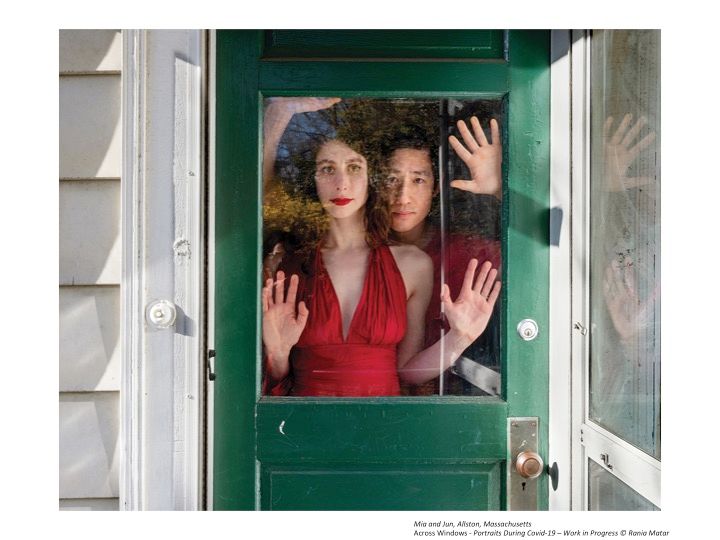
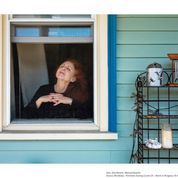
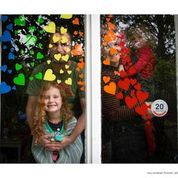
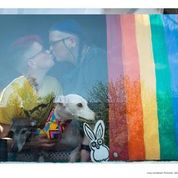
Rania Matar a Lebanese/Palestinian and American photographer she straddles cultures and identities. “Across windows” Portraits During Covid 19 – work in progress, this was shot through windows of people at home with the windows acting like a stage. It is interesting that she describes the connection between her and her subjects, a blurring between outside/and inside and “looking in, but seeing the outside reflected onto the person in front of me”.I didn’t find this work innovative.
(Across Windows (2020)
Clara Leeming “Levy lockdown portraits” (260 portraits over 38 days) similarly has shot through windows documenting communities, migrants, travellers. In her case she likes the surreal visual metaphor that the glass gives and that she can get close to them as the glass is between them. She has to work fast as she is shooting while walking with her kids; this gives the unstaged look that they have. The style here is a little different to other’s I’ve seen.
(Locked down, 2020)
Eleanor Carucci’s work “A Photographer’s Diary of Life in Isolation” doesn’t do it for me. They are every day and intimate images of her daily lockdown life in New York, though I can appreciate the way she has used flash to create strong shadows and give the images a strong documentary feel.
(Carucci, 2020)
Jan Enklemann a documentary travel photographer began photographing March 23rd the evening lockdown was announced. She takes advantage of a city devoid of people , the images show the stillness of a city in artificial ambient lighting which makes them look like film sets to me.
(Lockdown London, 2020)
Reuben Radding Street photographer “Corona Diary 2” is B/W images, this is normal to him, but of people on the streets in masks. To me it’s a typical photographic take on the streets in the time of Coronavirus.
(Reuben Radding photographer, 2020)
Rinko Kawauchi’s‘ “Keeping the fire going: a visual response to coronavirus’ was to click the shutter when he felt like it as a response to the situation saying that his images drag her notions from his subconscious. The work seems very typical of her usual work to me:
(Kawauchi, 2020)
Celine Marchbank shot 70 images over 7 weeks of flowers blooming and dying giving them the appearance of old masters still lives (Shot in Isolation, 2020). it is one way of representing isolation in lockdown.
Amy Elkins an American self- portraitist, continued her work by photographing herself during the global pandemic wearing things gathered from her house, with lists of what she shot with and why alongside the images. This reminds me of feminist work I have researched previously.
(@thisisamyelkins)
These next works I found more original:
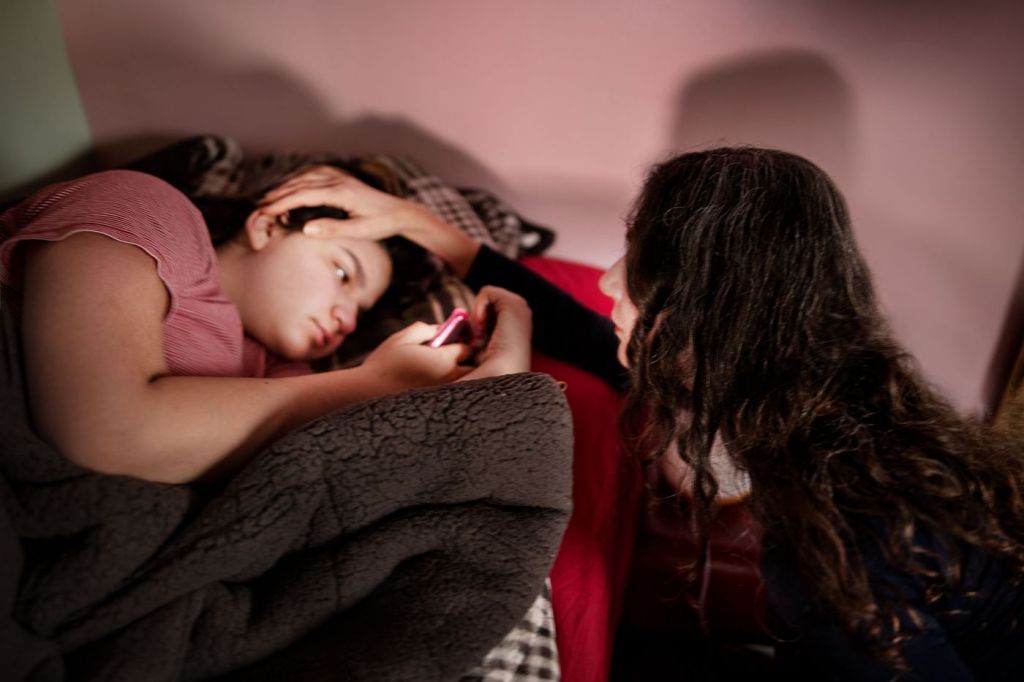
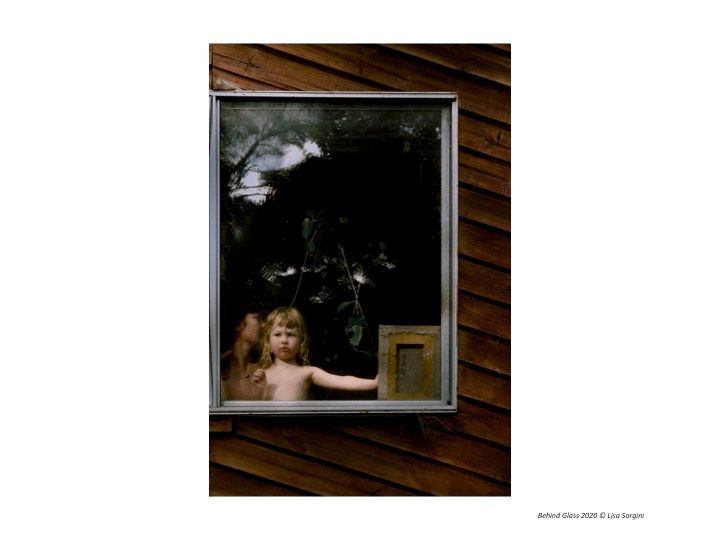
Lisa Sorgini an Australian whose work focuses on the relationships between mother and child and the notion of home. She prefers to work with natural light her images are dreamy, painterly and tender. Her work “Behind Glass”, documents 25 mothers and their children in home isolation. She says that she intends to make the invisible role of parenting visible”. I notice that she composes her images at angles and crops in an unusual way; is this her reflecting herself on the images? “
(Lisa Sorgini, 2020)
Don Ripper “In the time of corona virus portrait series, people in masks; in fact he was documenting the effect of social distancing on individuals and couples. It struck me that I’ve not seen much work in B/W in the time of Covid 19. They appear rather like Victorian posed portraits, which when you learn that he used a 2014 Petzal lens adapted for digital cameras derived from the first portrait objective lens of 1840. They do express alienation and uncertainty and isolation; he believes they also show unification, but I don’t see that, see much sadness and loneliness.
(A Pandemic Portrait, 2020)
Some of the photographers work took me back to photographers that I’ve been researching for assignment 3 such as Martin Parr, Simon Roberts, Anna Fox and Paul Reas:
Agnes Sanvito’s London Queues is very straight forward and is remenisant of the work of Martin Parr and Simon Roberts. I love the saturated colour images and wondered if and why not queues haven’t been shot in Britain before as it’s such a British thing. However I read that she was shooting queues before Covid, perhaps because as an Italian Queuing is alien, though now there is social distancing in the queues. Apparently she is fascinated by the behaviours in queues, and this makes me think about other behaviours Britsih or otherwise that would be interesting to shoot.
(Design Exchange, 2020)
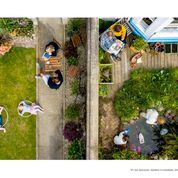
Robert Ormerod shot his Edinburgh neighbours in their gardens using a drone for “It’s our Sanctuary”Gardens in lockdown as seen by a drone. The grass lawns are a common feature, but the drone perspective creates interesting juxtapositions. He says it’s a record of the time and symbols of recreation, relaxation and domesticity however I think it is also a showcase of Britishness.
(Cosslett, 2020)
Some of the work really inspired me, I found it aesthetically and conceptually appealing:
Neha Hirve is an Indian Photographer so that immediately got my interest. The work “both your memories are birds” was shot in his childhood home in Pune. He talks about the pressure cooker of life, the flow of misinformation and news and represents this time and his childhood memories with images of his home, mudane objects and settings interspersed with portraits and anatomy close ups. The mixture of black and white in a variety of tones with colour images works well and I find the images both evocative of India and a strong narrative of personal space.
(Hirve, 2020)
Alexia Webster a South African photographer also works with childhood memories. In “Contact tracing” she moved into her childhood home and projected archival photographs around her home exploring the relationship of her family with their house. I find this an interesting project, the method she has used. She also relates her work to exposing the deep inequalities inherited from Apartheid, so like Hirve is showing us on the inside of her home reflections of the outside world.
(Webster, 2020)
Devin Yalkin, another photographer we explored led me to this work. Yalkin spent lockdown in a house on the Jersey shore. I absolutely love the way that rather like Hirve he takes B/W photographs of the mundane, some with touches of people. He describes how he had time to photograph his surroundings constantly “There’s more clarity in being able to just look and watch things occur, especially in such a liminal space”. I find the work hugely evocative of time and place.
(Ruben, and Webster, 2020)
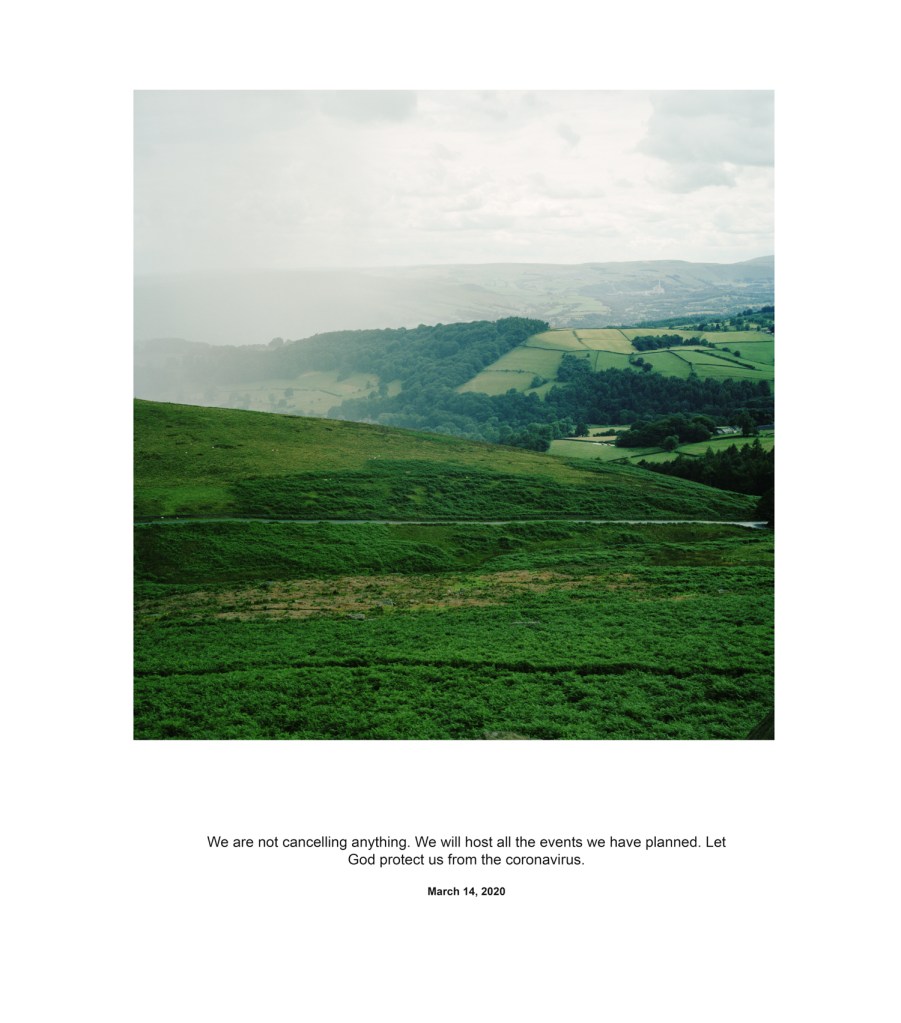
George Selley’s Lock down project “Pubs shut til Xmas” interests me in the way he combines image and sound from landscapes in what first seems an unlikely alliance-locations of where first human species were found in the UK with anonymous quotes from world leaders. I am considering what text I might put with my car park images so this is particularly interesting. He explains that the photographs and sounds demonstrate metaphorically and literally, our temporality.
(Warner, 2020)
My learning points:
This was a lot of photographers and work to look at in one sitting, however it was useful because while reflecting I was able to determine which had had an impact on me such as Yalkin, Hirve and Webster and why. With Yalkin and Hirve I was struck by their representation of consciousness through the mundane and their mixing of different focal lengths, the inclusion of humans sometimes and sometimes not – I find their work very evocative, and would like to explore and try something similar myself.
I was also helped by coming across the work of George Selly and his use of juxtapostioned text and images.
I was also able to filter out work that I consider more mainstream and less interesting, and feel that I used a critical eye.
Mock-ups of exhibition spaces, Ceramics, Fabrics, T-Shirts …. and other BUT must suit the message of the piece. Should not dilute the work.
Slideshow/Presentations:
Research other’s, and share examples in chat or on Forum thread.
How do they use titles, text, music/spoken word?
What works? What doesn’t? How long?
Be prepared to put in the time to edit BUT a worthwhile skill to learn.
Exhibition considerations:
Physical or online?
Think how to record digitally.
Research with galleries large and small showing work online; what works, what doesn’t? Make notes and bookmark/take screen shots/recordings of good examples.
Pace the work:
Get input into your work before you deem it ‘complete’.
Leave time to work on an assignment – it needs to breathe between shoots/edits.
Reflect on your work regularly and then action plan where next – use your learning log to record this.
My learning:
This was a really useful session, especially on book making which I need to do for assignment 3. I will also revisit the considerations on exhibitions when I need it.
THE PHOTOGRAPHERS GALLERY Talk: Laurel Chor (Zoom) 22.7.20
What can photography tell us about a city and its people at a time of political and social unrest?
Laurel Chor is a photojournalist and conservationist. She has documented the Rohingya refugee crisis, the earthquake and tsunami in Indonesia in 2018, and recently the protests in her home Hong Kong. She was previously the Asia reporter/producer for VICE News Tonight on HBO, and says it has been different for her to tell a documentary photo story, but she has been able to because this work is a personal story about anger and hope of people fighting against their democratic rights.
Here she discusses the power of images, and how they can tell a story:
She shared with us many of her 2019 images, commenting that these images of protest are unlikely to be taken again in the light of the new rules imposed by China on Hong Kong. She describes it as a very visual movement, with lots of activity designed to be photographed by the media, saying they have a “a collective savviness”.
Her aim initially was to document and catch up as well as there was so much going on; though now she says it’s more challenging to tell the story as there’s not so many events, she is looking for more conceptual ways to tell the story, to convey a sense of loss, nostalgia, and defeat. She captured this elderly lady pleading with the police to go home. Chore was accused of egging the woman on and using perspective and photoshop to capture this moment, which disheartened her.
Laurel Chor (2020)
Laurel explains that protests followed the incident above when masked “thugs” attacked people on the streets with no provocation:
Laurel Chor (2020)
She asked advice of John Vaughn who took an iconic image at the Mexican border of a girl watching her mum being searched, for advice and he said “make sure your captions are accurate”.
She was asked by the chair (writer and editor En Liang Khong) :
Q: What were the challenges of covering this story? There were many photojournalists, local and international also telling the story; a local person can immerse themselves more and have their own emotions to invest,
Q: Is it still safe to document these things? There hasn’t been an overt crack down in the wake of the national security law, but journalist credentials are being checked carefully.
Q: Is there a place or context that you like this work shown? This is difficult under current constraints; in terms of audiences she would like to reach out and open a dialogue with other countries with similar rights problems.
My learning:
This work reinforces my subsequent learning on the value of “insider” documentary photography as I doubt she would have captured so much emotion in her work had she not been native to Hong Kong.
I will definitely follow her work from now on. During her time at VICE News, she produced the special episode “Year of the Dog” about migrant workers traveling home for Chinese New Year, and worked on stories such as the Chinese social credit system, the assassination of Kim Jong Un’s half-brother to Chinese “boy” bands.
Being Critical Tutor led by Andrea Norrington 20th July 2020
This was a really useful session, we discussed:
Bring critical on:
On the work you read – by peers and other academics/writers.
On the work you view – by peers and other artists.
On your own work in progress – use reflective practice to evaluate and move forward with projects.
On selecting work for assignment/assessment. Don’t rush decisions, it’s good to live with work before submitting. But when you submit be final in your choice, don’t leave it to tutor/assessor to decide on edits for you.
Being critical is not being negative. It is not designed to pick faults but rather to be a process where you engage with work and move forward:
How do particular texts work?
What effects do they have on the reader?
Who has produced the text, under what circumstances, and for which readers?
What’s missing from this account?
How could it be told differently?
Think: What? Who? Where? When? How? Why? And then move onto: • What if • So what • What next
This process allows to work through the following stages:
• Describe define terms: say exactly what is involved
• Analyse examine how parts fit into a whole: give reasons, compare and contrast
• Evaluate judgements: on success/failure, conclusions, recommendations
Critical thinking can also be used to ask questions about and assess other people’s writing. Try asking questions about a text to see how scholarly or scientific it is: What does it claim to be true? Can you believe its claims? Does it provide you with good reasons, evidence, or both to support its claims? And how ‘good’ are the reasons, or is it ‘good’ evidence?
Four questions to frame critique:
Describe- what do you see- explaining only what is in front of the audience
Analyse -how has it been done: techniques, formal elements
Interpret– what do the audience get from it, meanings, visual communication, mood, how do they feel about the work?
Judgement– now the audience know the facts what do they think? Does it work, what else can be done for it to be engaging?-
An important way to demonstrate the quality of your arguments, or evidence, is by referring to work by others:
“The status of work depends on how authoritative it is, look for ‘authority’ in references to relevant supporting work which has been published in academic journals, or text books (the content has been ‘peer-reviewed’, it should be independently evaluated by another qualified academic); this is unlike the material which may often be found in newspapers, magazines or from many online sources, where the content may not have been checked by anyone else, or where the work simply puts forward one person’s opinion.”
(Learning Development, 2010) The Critical Thinking PDF from Plymouth University is a very clear resource.
Suggestion: (Ossian Ward, writer on contemporary art)
(T) Time – stand still for a few minutes
(A) Association – can you relate to work
(B) Background – understanding context but no need to be an expert
(U) Understand – maybe you are just one step away from understanding
(L) Look again – second look, use background to inform
(A) Assessment –subjective but the process above allows for understanding and maybe appreciation
Make sure you have the whole picture before making judgments/conclusions
Have you got all the information you need?
How does the work fit as part of a series?
In evaluations/summaries you can highlight gaps in knowledge
My learning:
My notes from this session are now pinned to my wall, I shall try to integrate this line of thinking into my practice when researching and looking at photography – invaluable!




















 Laurel Chor (2020)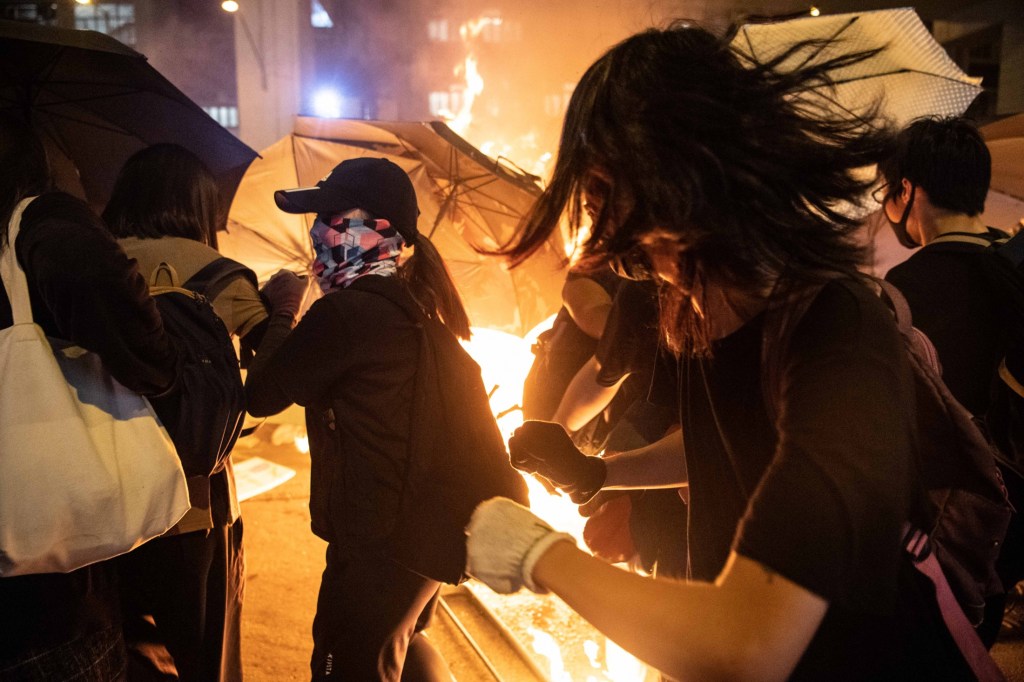


 Photography 2: Documentary